Quick Answer
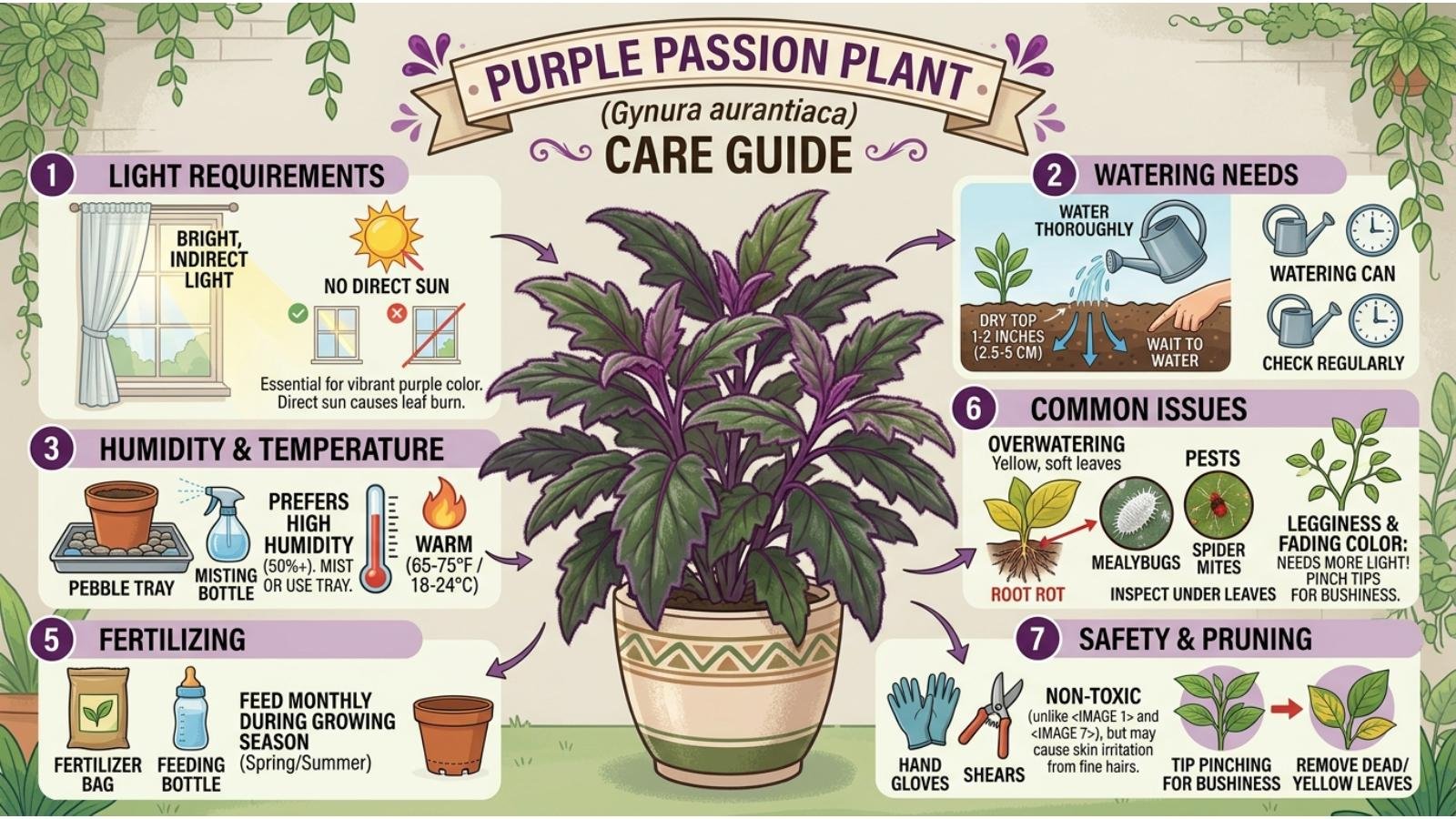
Purple passion plant care is easiest when you provide bright, indirect light, evenly moist but well-drained soil, moderate humidity, and warm temperatures. Water when the top inch of soil begins to dry, avoid soggy roots, and pinch growing tips to maintain a bushy shape. Its velvety purple hairs look best with adequate light, while harsh direct sun can scorch the foliage.
Introduction
The purple passion plant, commonly known as Gynura aurantiaca, is prized for its striking green leaves covered with soft purple hairs. Unlike many ordinary houseplants, it can add intense color and texture to an indoor collection without requiring complicated care.
The challenge is keeping its foliage healthy and attractive. Too little light can make the stems stretched and sparse, while consistently wet soil can lead to root problems. Older plants can also become leggy if they are never pruned.
The good news is that purple passion plant care becomes straightforward once you understand how light, watering, soil, humidity, and pruning work together.
Purple Passion Plant Care at a Glance
| Care Requirement | Best Practice |
|---|---|
| Light | Bright, indirect light |
| Water | Water when the upper soil begins to dry |
| Soil | Loose, well-draining potting mix |
| Humidity | Moderate humidity |
| Temperature | Warm indoor conditions |
| Fertilizer | Balanced fertilizer during active growth |
| Pruning | Regularly pinch stems for bushier growth |
| Repotting | When roots become crowded or soil drainage declines |
| Growth habit | Fast-growing, branching herbaceous plant |
| Main problems | Leggy growth, overwatering, pests, leaf scorch |
Understanding the Purple Passion Plant
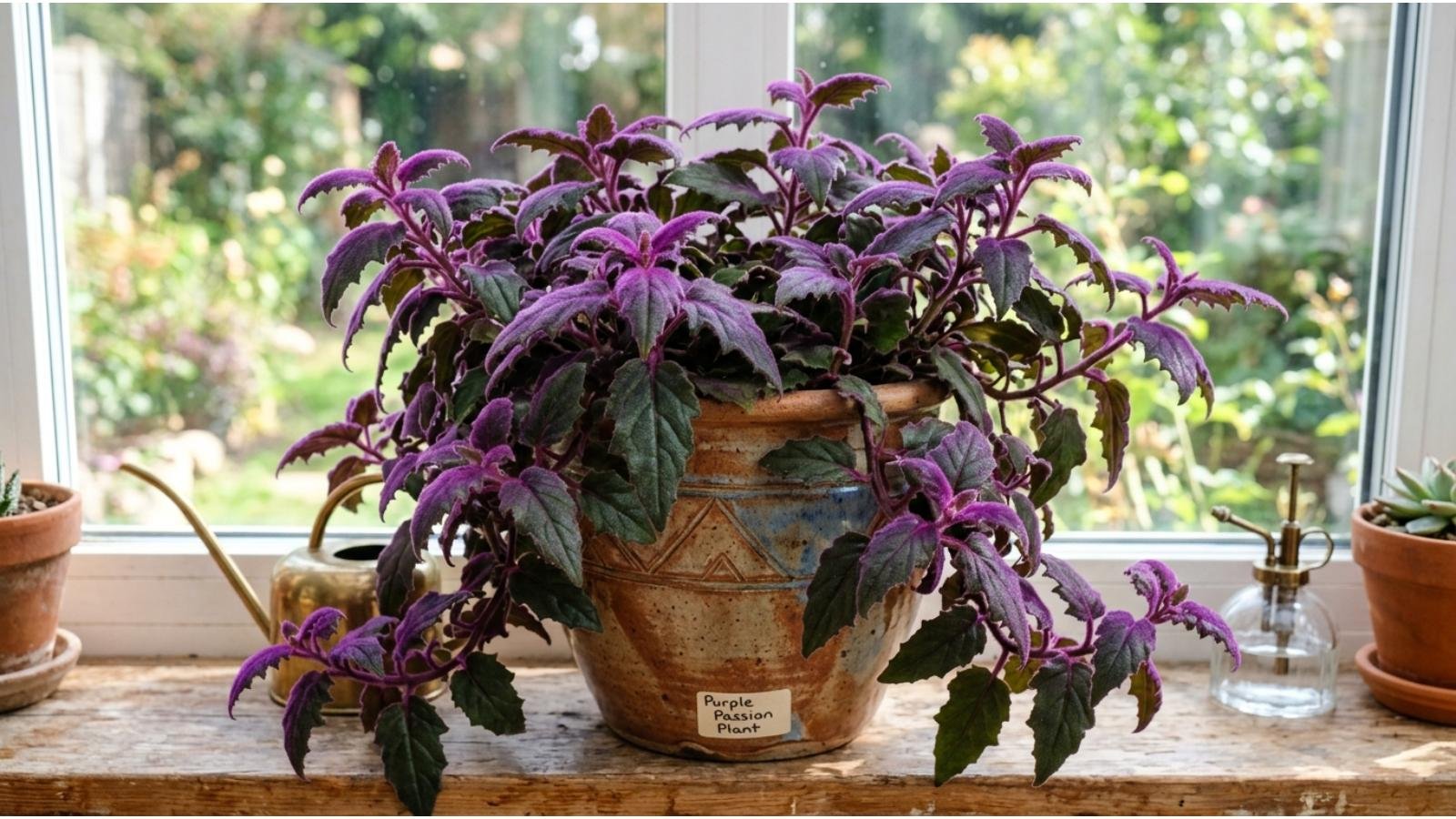
The purple passion plant is a tropical-looking houseplant grown primarily for its unusual foliage. Its leaves and stems are covered in fine hairs that can appear purple, violet, or reddish-purple depending on the plant and growing conditions.
Young growth often has especially vivid coloration. As the plant ages, individual stems can become elongated, so regular trimming is useful for maintaining a compact appearance.
Why the Purple Color Changes
The purple coloration is influenced by the plant’s natural pigments and growing conditions. Light plays an important role in how intense the foliage appears.
If a normally colorful plant suddenly looks mostly green, consider whether it is receiving enough bright, indirect light. However, increasing light does not mean placing it immediately in strong afternoon sunlight.
Practical tip: Move a plant gradually when changing its light conditions. Sudden exposure to intense direct sun can cause leaf damage.
Image Suggestion: Close-up comparison of vibrant purple foliage and a greener, low-light-grown plant.
How Much Light Does a Purple Passion Plant Need?
Purple passion plants generally perform best in bright, indirect light.
A location near a bright window can work well when the plant is protected from intense direct sunlight, especially during the hottest part of the day.
Signs of Too Little Light
Watch for:
- Long spaces between leaves.
- Weak or floppy stems.
- Reduced purple coloration.
- Slow or uneven growth.
- A plant that becomes noticeably sparse.
When these symptoms appear, increase the amount of bright filtered light gradually.
Signs of Excessive Direct Sun
Too much intense sunlight can cause:
- Brown or crispy patches.
- Faded foliage.
- Scorched leaf edges.
- Sudden leaf damage after moving the plant outdoors.
A sheer curtain can help diffuse strong sunlight through a bright window.
Watering Purple Passion Plant Correctly
Watering is one of the most important parts of purple passion plant care.
The goal is to keep the soil consistently lightly moist without leaving the roots saturated.
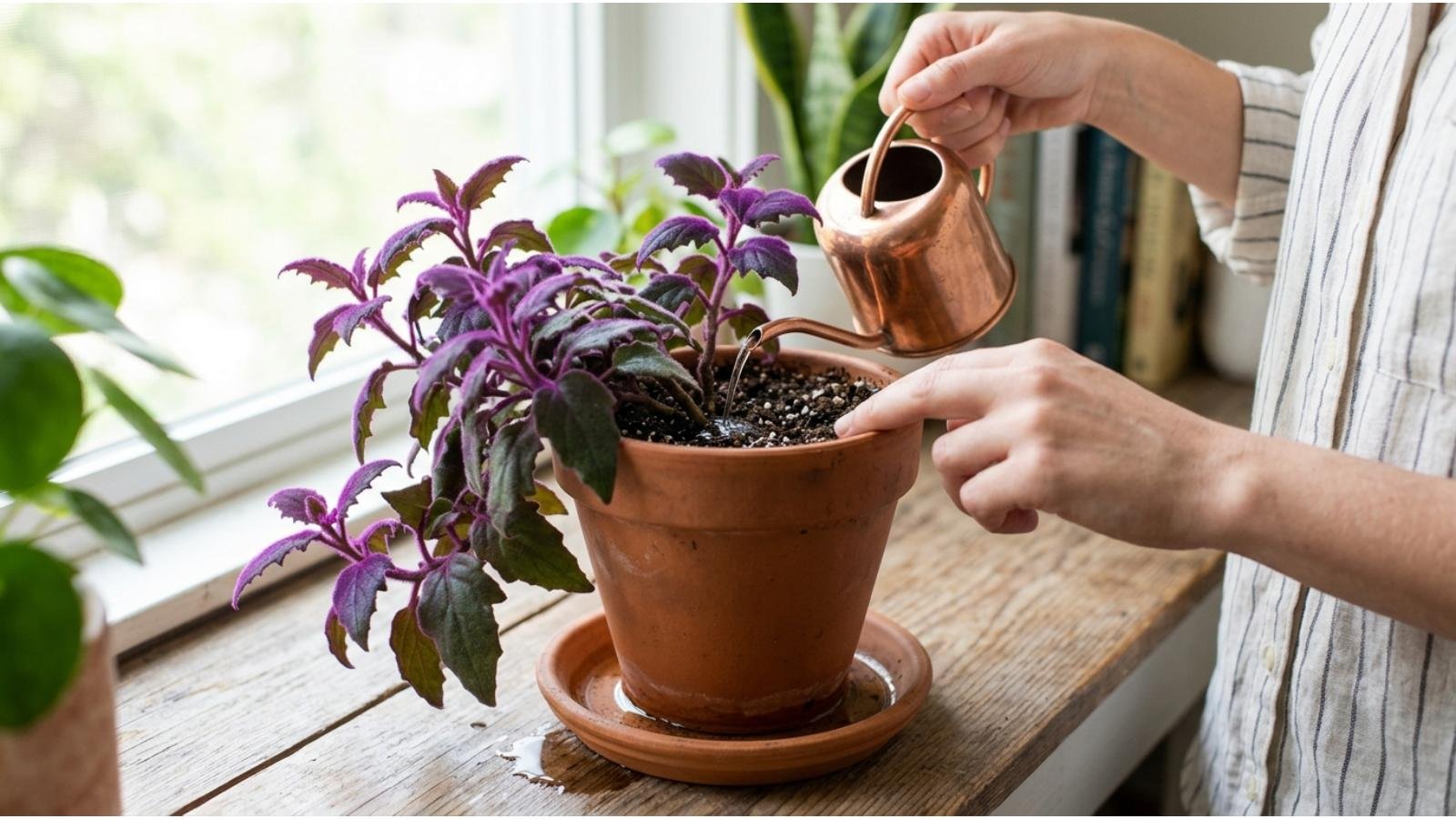
Check the top layer of soil with your finger. If the upper inch feels dry, it is generally time to check whether the plant needs watering.
When watering:
- Pour water evenly over the soil.
- Continue until excess water drains from the bottom.
- Empty standing water from the saucer.
- Allow the soil to begin drying slightly before watering again.
Do not follow a rigid schedule such as watering every Monday. Indoor conditions change with temperature, light, pot size, season, and airflow.
Why Overwatering Causes Problems
Beginners sometimes assume a plant with soft leaves needs more water. That can be misleading.
If the roots remain in saturated soil for extended periods, oxygen availability around the roots decreases. The plant may then develop yellowing, wilting, unpleasant-smelling soil, or declining growth.
Better approach: Check the soil before watering rather than watering simply because several days have passed.
Best Soil for Purple Passion Plant
Use a light, well-draining potting mix that retains some moisture but does not stay waterlogged.
A practical mix can include:
- Quality indoor potting soil.
- Perlite for improved drainage.
- A small amount of organic material such as coco coir or similar moisture-retaining material.
The exact recipe is less important than the final texture. When watered, excess moisture should be able to move through the container rather than remaining trapped around the roots.
Choose the Right Pot
A container should have drainage holes.
Avoid placing a small plant into an unnecessarily large pot. Excess soil can remain wet for a long time after watering, particularly when the plant’s roots occupy only a small portion of the container.
Image Suggestion: Cross-section diagram showing a purple passion plant in a pot with drainage holes and an airy soil mix.
Humidity Requirements
Purple passion plants appreciate moderate humidity, but you do not necessarily need a specialized greenhouse environment.
Normal indoor humidity can be adequate when other growing conditions are good.
If the air is exceptionally dry, particularly during prolonged heating or air-conditioning, you may notice:
- Dry leaf edges.
- Increased stress.
- Slower growth.
Instead of relying on frequent misting, focus on consistent watering, suitable temperature, and good airflow.
If using a humidity tray or humidifier, make sure the surrounding environment does not become stagnant and excessively damp.
Ideal Temperature
Keep the plant in a warm indoor environment away from cold drafts and sudden temperature changes.
Avoid placing it directly beside:
- Air-conditioning vents.
- Heating vents.
- Frequently opened cold windows.
- Very cold exterior doors.
Stable conditions are generally easier for the plant than repeated temperature fluctuations.
Fertilizing Purple Passion Plant
Purple passion plants can grow actively when conditions are favorable, so nutrients can support healthy foliage and new growth.
During active growth, use a balanced houseplant fertilizer according to the product’s label directions.
Avoid assuming that more fertilizer means faster or healthier growth. Excess fertilizer can contribute to salt buildup and root stress.
A sensible approach is:
- Fertilize during active growth.
- Reduce or pause feeding when growth naturally slows.
- Water appropriately.
- Follow the fertilizer manufacturer’s dilution instructions.
Pruning for Bushier Growth
Pruning is especially useful because purple passion plants can become leggy as they mature.
When a stem becomes too long, pinch or trim it just above a leaf node. This encourages branching and can help produce a fuller plant.
Simple Pruning Routine
- Inspect the longest stems.
- Identify a healthy leaf node.
- Cut just above the node using clean scissors.
- Remove weak or damaged growth.
- Repeat lightly rather than removing excessive foliage at once.
Regular light pruning is usually easier than waiting until the plant becomes extremely elongated.
Expert-style observation: A plant can be perfectly healthy while still looking unattractive because of long, bare stems. Pruning is not only about removing unhealthy growth; it is also a way to manage the plant’s shape.
How to Propagate Purple Passion Plant
Stem cuttings are a practical way to propagate purple passion plants.
Propagation by Stem Cuttings
- Select a healthy stem with several leaves.
- Cut a section below a suitable node.
- Remove lower leaves if necessary.
- Place the cutting into a suitable propagation medium.
- Keep the medium lightly moist.
- Provide bright, indirect light.
- Wait for roots and new growth to develop.
Avoid keeping the propagation medium constantly saturated.
Once the cutting has developed a useful root system and shows active growth, it can be transferred into a suitable container.
Repotting Purple Passion Plant
Repot when the plant has become noticeably root-bound or when the existing soil no longer drains properly.
Possible signs include:
- Roots emerging from drainage holes.
- Water moving through the pot unusually quickly.
- Growth slowing despite appropriate care.
- The plant drying out much faster than before.
Choose a new container only moderately larger than the current one.
After repotting, water thoroughly and return the plant to bright, indirect light while it adjusts.
Common Purple Passion Plant Problems
Purple Passion Plant Leaves Turning Green
Reduced purple coloration can occur when the plant is not receiving enough suitable light.
Move it toward a brighter location gradually and observe the new growth rather than expecting old leaves to change dramatically.
Leaves Turning Yellow
Yellow leaves can have several causes, but consistently wet soil is an important one to investigate.
Check:
- Soil moisture.
- Drainage holes.
- Pot size.
- Watering frequency.
- Root condition if the problem persists.
Do not automatically add fertilizer when leaves turn yellow.
Purple Passion Plant Becoming Leggy
Leggy growth usually means the plant is not receiving enough usable light or needs pruning.
Increase suitable light and pinch elongated stems to encourage branching.
Brown or Crispy Leaves
Possible causes include excessive direct sunlight, very dry conditions, inconsistent watering, or other environmental stress.
Look at the entire growing environment rather than treating the brown leaf as a single isolated problem.
Wilting Despite Wet Soil
This is an especially important warning sign.
A plant can wilt even when its soil is wet because damaged roots may no longer function normally.
Check the roots and soil condition if wilting continues despite consistently moist soil.
Purple Passion Plant Pests
Like other houseplants, purple passion plants can experience pest problems.
Common indoor pests may include:
- Aphids.
- Spider mites.
- Whiteflies.
- Mealybugs.
Inspect the undersides of leaves and new growth regularly.
Early detection is much easier to manage than a large infestation.
For a minor infestation, physically removing visible pests and isolating the affected plant can be useful first steps. If treatment is necessary, use a product labeled for the specific pest and plant, following its instructions carefully.
Image Suggestion: Close-up infographic identifying common pests on purple passion plant leaves.
Seasonal Purple Passion Plant Care
Spring and Summer
Active growth may increase as light and temperatures improve.
Focus on:
- Consistent moisture.
- Regular but appropriate fertilization.
- Bright indirect light.
- Pruning.
- Pest inspections.
Fall and Winter
Growth may slow as indoor light levels decrease.
You may need to:
- Water less frequently.
- Reduce or stop fertilizer.
- Move the plant closer to an appropriate bright window.
- Protect it from cold drafts.
The important point is that watering should respond to soil moisture and plant growth, not simply the calendar.
Common Mistakes to Avoid
Watering on a Fixed Schedule
A calendar cannot account for changing indoor conditions. Check the soil instead.
Keeping the Plant in Deep Shade
Low light can reduce compact growth and make the plant lose some of its visual appeal.
Exposing It Suddenly to Strong Sun
A plant accustomed to indoor filtered light can suffer leaf scorch after abrupt exposure to intense sunlight.
Using a Pot Without Drainage
This makes proper watering much more difficult and increases the risk of prolonged wet soil.
Neglecting Pruning
Allowing every stem to grow unchecked can result in a sparse, tangled appearance.
Overfertilizing
Extra fertilizer is not a substitute for adequate light, watering, or healthy roots.
A Simple Weekly Care Check
Instead of following a complicated routine, inspect your plant regularly.
This five-minute inspection can catch many problems before they become serious.
Frequently Asked Questions
Is a purple passion plant easy to care for?
Yes. It can be a manageable houseplant when given bright indirect light, appropriate watering, well-draining soil, and regular pruning.
How often should I water a purple passion plant?
Water when the upper portion of the soil begins to dry rather than following a fixed weekly schedule. Indoor conditions determine how quickly the soil dries.
Does purple passion plant need direct sunlight?
It benefits from bright light but can be damaged by intense direct sunlight. Filtered or indirect light is generally a safer choice indoors.
Why is my purple passion plant losing its purple color?
Insufficient light can contribute to reduced coloration. Check whether the plant has been moved farther from a bright window or is receiving less light than previously.
Should I mist a purple passion plant?
Misting is not essential for successful care. Maintaining appropriate watering, airflow, and overall humidity is more useful than relying on frequent misting.
How do I make a purple passion plant bushier?
Pinch or prune elongated stems just above healthy leaf nodes. Regular light pruning encourages branching and helps maintain a fuller shape.
Can purple passion plants grow indoors?
Yes. Their attractive foliage and manageable size make them suitable for indoor growing when lighting and watering are appropriate.
Can I propagate purple passion plant from cuttings?
Yes. Healthy stem cuttings can be propagated under suitable warm, bright, and consistently moist conditions.
Why is my purple passion plant wilting?
Wilting can result from underwatering, excessive heat, root problems, or other stress. If the soil is already very wet, investigate drainage and root health before adding more water.
Internal Linking Opportunities
For a broader plant-care content cluster, natural related articles could include:
- Indoor plant care for beginners.
- How to water houseplants correctly.
- Best soil for indoor plants.
- How to prune houseplants.
- How to propagate plants from stem cuttings.
- Indoor plant pest identification.
- How to fix leggy houseplants.
- Bright indirect light for indoor plants.
Final Takeaways
Successful purple passion plant care comes down to balance. Give the plant bright indirect light, keep the soil lightly and evenly moist without creating soggy conditions, use a well-draining pot, and prune regularly to maintain compact growth.
Pay particular attention to changes in leaf color, soil moisture, and stem length. These visual clues often tell you more about what the plant needs than a rigid watering or fertilizing schedule. With consistent conditions and occasional pruning, the plant can maintain the vivid, velvety foliage that makes it such an unusual houseplant.