Quick Answer
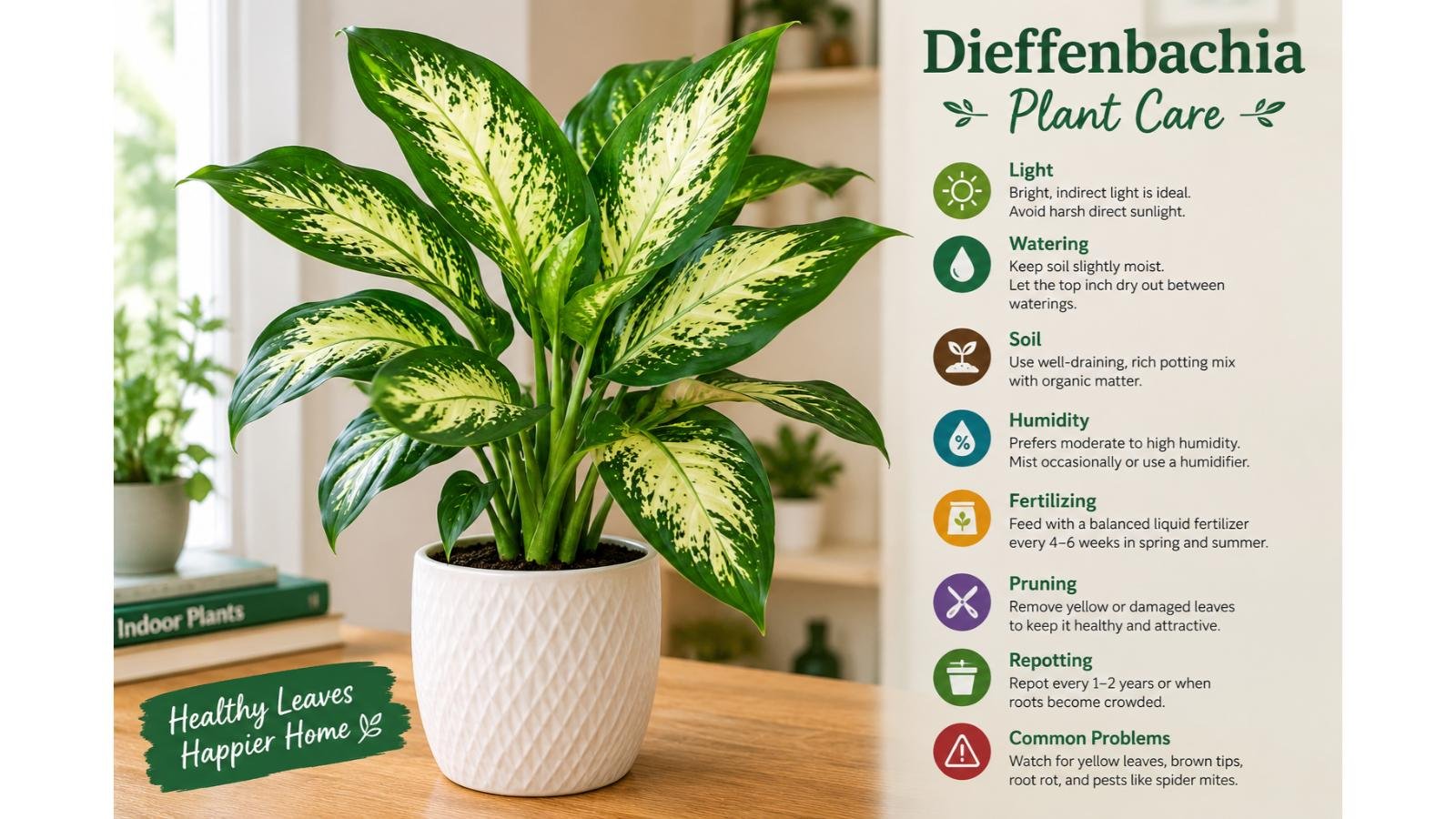
Dieffenbachia plant care is mainly about providing bright, indirect light, well-draining soil, moderate moisture, warmth, and reasonable humidity. Water thoroughly when the upper layer of soil has dried, but never leave the roots sitting in water. Avoid harsh direct sunlight, cold drafts, and excessive fertilizer. With consistent care, Dieffenbachia can produce large, attractive leaves and remain a striking indoor foliage plant.
Introduction
Dieffenbachia is popular for a simple reason: its large leaves can make an indoor space look lush without requiring the intense sunlight that many flowering plants need. The challenge is that its tolerance for lower light can sometimes encourage poor watering habits. A plant sitting in a dim corner may use water slowly, so watering it on a rigid schedule can leave the potting mix wet for too long.
Successful Dieffenbachia plant care is therefore less about following a calendar and more about watching the plant and its growing conditions. Light, soil moisture, temperature, humidity, and pot drainage all work together. Once those factors are balanced, many common problems become much easier to prevent.
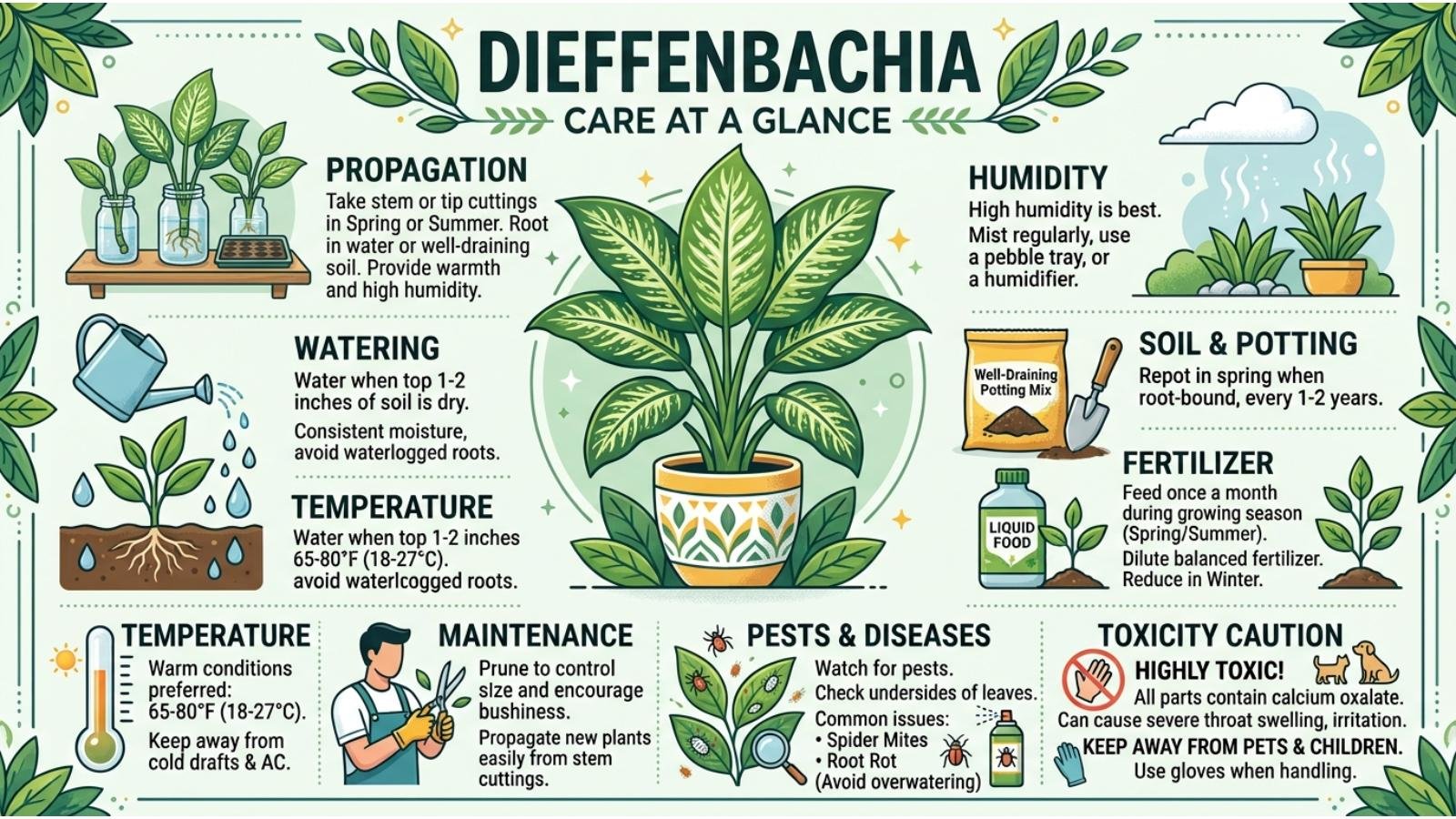
Dieffenbachia Care at a Glance
| Care factor | What Dieffenbachia needs |
|---|---|
| Light | Bright, indirect light is ideal |
| Water | Thorough watering followed by partial drying |
| Soil | Loose, fertile, well-draining potting mix |
| Humidity | Moderate to relatively high humidity is beneficial |
| Temperature | Warm indoor conditions; protect from cold |
| Fertilizer | Regular feeding during active growth |
| Repotting | When roots become crowded or the mix deteriorates |
| Pruning | Remove damaged growth and cut back leggy stems when necessary |
| Propagation | Stem cuttings and other vegetative methods |
| Safety | Keep away from children and pets because the plant is toxic if chewed or ingested |
These requirements are consistent with university horticultural guidance for Dieffenbachia.
Understanding Dieffenbachia Before You Start
Dieffenbachia is a tropical foliage plant grown primarily for its broad, patterned leaves. Cultivars can differ considerably in leaf color and variegation, but their indoor-care requirements are broadly similar.
The plant is commonly called dumb cane. Its large leaves can tolerate lower-light interiors, but there is an important distinction between surviving in low light and growing vigorously in low light. Dieffenbachia generally produces stronger growth when it receives good-quality indirect light.
Image Suggestion: Close-up labeled illustration showing Dieffenbachia leaves, stems, nodes, soil surface, and root zone.
How Much Light Does Dieffenbachia Need?
Bright, indirect light is usually the best starting point for Dieffenbachia.
Place the plant near a bright window where sunlight is filtered through a curtain or reaches the plant indirectly. Lower-light conditions can be tolerated, but growth may slow and the plant can become stretched or lose lower leaves over time.
Signs Your Dieffenbachia Needs More Light
Watch for:
- Slow or minimal new growth.
- Long spaces between leaves.
- A plant leaning noticeably toward one direction.
- Lower leaves gradually dropping.
- Less attractive growth on one side.
If the plant is stretching toward a window, rotate the pot periodically so growth remains more balanced.
Can Dieffenbachia Handle Direct Sun?
Strong direct sunlight can damage the leaves, particularly when a plant has been growing in lower light. Excessive exposure can result in bleached or scorched foliage.
A common mistake is moving a Dieffenbachia from a dim room directly into intense sunlight. If you need to increase its light, make the change gradually and choose filtered or indirect light.
Image Suggestion: Comparison of healthy Dieffenbachia in bright indirect light versus leaves showing sun scorch.
How to Water Dieffenbachia Correctly
Watering is one of the most important parts of Dieffenbachia plant care—and one of the easiest places to make a mistake.
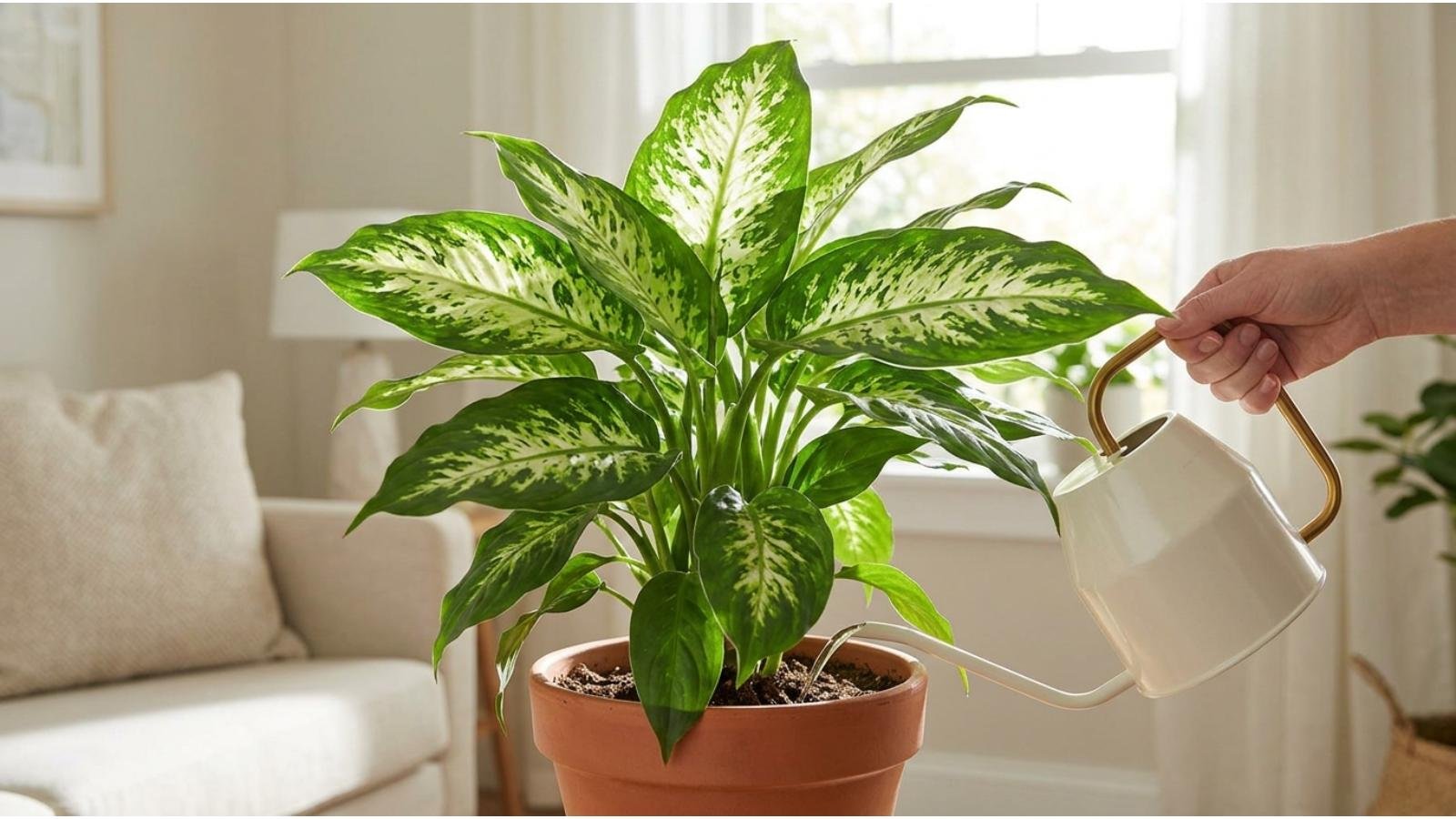
Instead of watering because a certain number of days have passed, check the growing medium. When the upper portion of the soil has dried, water the plant thoroughly. Then allow excess water to drain away completely. Dieffenbachia should not remain in constantly waterlogged soil.
A Simple Watering Method
- Check the soil with your finger before watering.
- If the surface has dried, examine deeper into the pot rather than judging only the top few millimeters.
- Water thoroughly until excess moisture drains from the bottom.
- Empty standing water from the saucer or outer container.
- Wait until the soil has dried sufficiently before watering again.
The exact interval varies according to light, temperature, pot size, soil, season, and indoor humidity.
Why Overwatering Is So Common
A Dieffenbachia in low light may use water more slowly than a plant growing vigorously in bright indirect light. If both plants are watered on the same schedule, the lower-light plant can stay wet for too long.
Excess moisture can contribute to yellowing leaves and root or stem problems.
Image Suggestion: Step-by-step graphic showing how to test soil moisture before watering.
How to Tell If You Are Underwatering
A thirsty Dieffenbachia may develop:
- Drooping foliage.
- Dry-looking leaves.
- Brown tips or edges.
- Soil pulling away from the sides of the pot.
- Reduced growth.
Drooping does not automatically mean the plant needs water, however. Cold temperatures, root problems, and other environmental stresses can also cause drooping.
Check the soil before reaching for the watering can.
Best Soil for Dieffenbachia
Dieffenbachia prefers a growing medium that holds some moisture while still allowing excess water to escape.
A suitable indoor mix should be:
- Loose rather than compacted.
- Rich in organic material.
- Well drained.
- Capable of retaining moderate moisture without becoming waterlogged.
Poor drainage is particularly problematic because frequent moisture around the roots can encourage root deterioration.
What Matters More Than a Perfect Soil Recipe?
Drainage.
There is no single magical potting-mix formula. A practical mix should balance water retention and aeration. If water sits around the roots for a long time, changing the watering schedule alone may not solve the problem.
Choosing the Right Pot
Use a container with drainage holes.
A decorative container without drainage may look attractive, but it can make moisture management much harder. The roots need access to water, but they also need air-filled spaces within the growing medium.
When moving Dieffenbachia into a larger pot, avoid choosing a container dramatically larger than the root system. An oversized container can hold a large volume of wet soil for longer than necessary.
Humidity Requirements
Dieffenbachia generally appreciates a relatively humid environment, especially when indoor air becomes hot and dry. Large leaves can lose moisture quickly under unfavorable conditions.
Useful ways to improve the surrounding environment include:
- Grouping compatible plants together.
- Using a humidifier when indoor air is consistently dry.
- Keeping the plant away from drying heat sources.
- Maintaining appropriate watering rather than compensating for dry air with constantly wet soil.
Humidity and soil moisture are not interchangeable. Increasing humidity does not mean the roots should remain saturated.
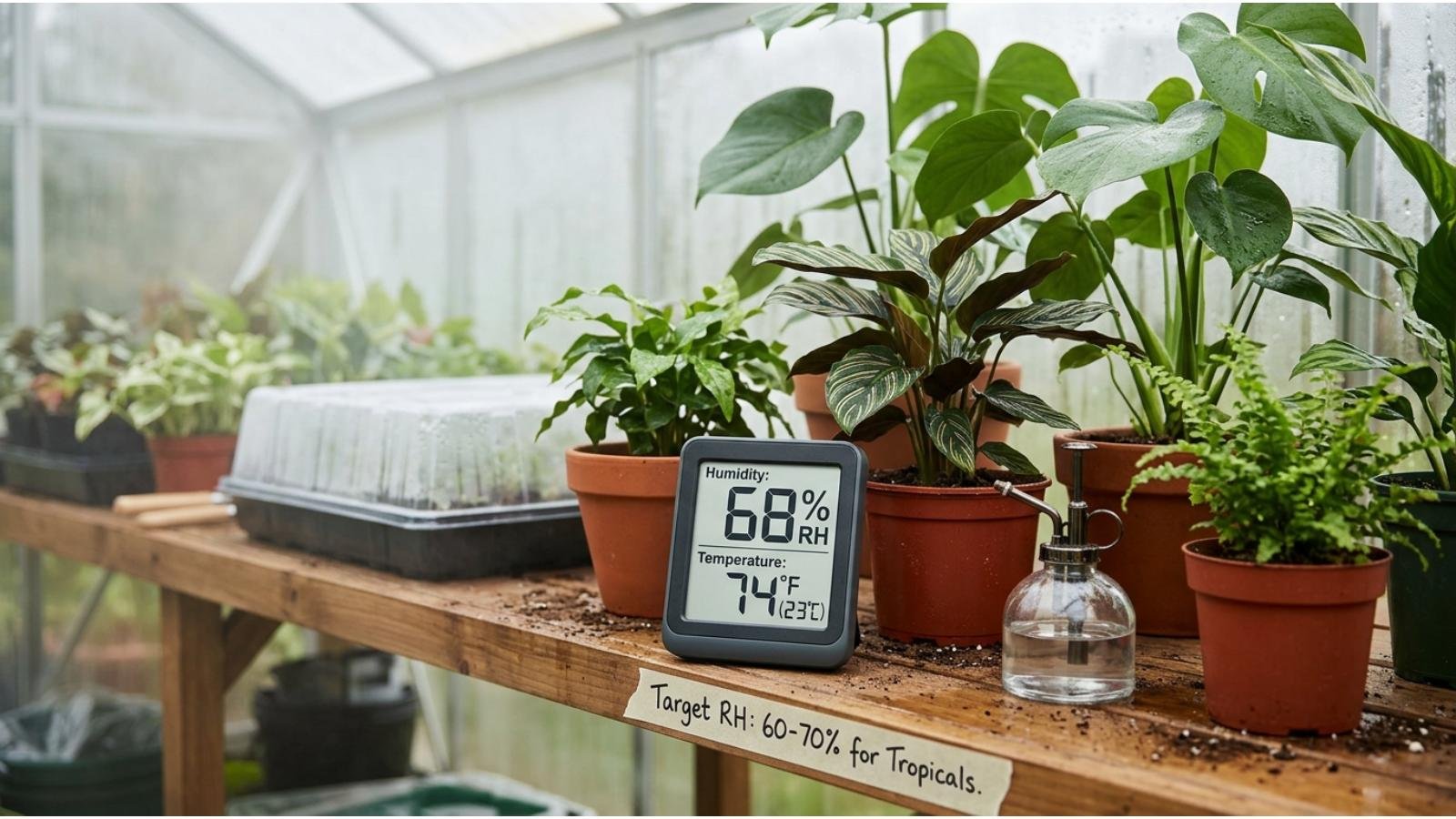
Temperature for Healthy Dieffenbachia Growth
Warm, stable indoor temperatures are generally suitable.
University guidance places ideal growth around 65–75°F (18–24°C) and recommends protecting Dieffenbachia from temperatures below about 50°F (10°C).
Avoid placing the plant where it receives:
- Cold drafts.
- Sudden temperature changes.
- Direct blasts from heating or cooling equipment.
- Very cold air near doors or windows.
Cold stress can appear as drooping, discoloration, or damaged foliage.
Fertilizing Dieffenbachia
Dieffenbachia can benefit from regular fertilizer during active growth, particularly when it is producing new foliage.
A balanced complete fertilizer can be used according to its label directions. One horticultural guide recommends feeding approximately every four to six weeks during active growth, while reducing feeding when growth is limited.
More fertilizer is not automatically better.
Excess fertilizer can cause salt accumulation and contribute to brown or damaged leaf margins. If fertilizer has been overapplied, thoroughly watering the growing medium so excess salts can drain away may help, while fertilizer applications should be reduced until the plant recovers.
When Should You Repot Dieffenbachia?
Repot when the plant has genuinely outgrown its container or when the growing medium has deteriorated.
Possible signs include:
- Roots filling much of the container.
- Roots emerging through drainage holes.
- Water passing through unusually quickly because the root mass has become crowded.
- The pot becoming unstable because the plant has become top-heavy.
- Soil structure breaking down.
Repotting is not something that needs to happen every year simply because the calendar says so.
When repotting, use fresh, well-draining growing medium and a container appropriate for the size of the root system.
Pruning Dieffenbachia
Pruning is useful when the plant becomes too tall, bare, uneven, or damaged.
Older Dieffenbachia can sometimes lose lower leaves and develop a bare stem. Rather than automatically discarding the plant, the remaining stem can be cut back, and healthy sections can potentially be propagated.
Basic Pruning Steps
- Inspect the plant and identify damaged or unwanted growth.
- Use clean cutting equipment.
- Remove yellow or badly damaged leaves.
- If the plant has become excessively tall, cut the stem at an appropriate point.
- Handle the cut material carefully because the sap can irritate skin.
- Wash your hands and clean equipment after handling the plant.
Safety Tip: Wear gloves when pruning and avoid touching your eyes or mouth while handling Dieffenbachia.
How to Propagate Dieffenbachia
Dieffenbachia can be propagated through stem cuttings, and larger or bare stems can be divided into sections containing viable buds. Air layering is another option for suitable plants.
Stem Cutting Method
- Select a healthy section of stem.
- Make a clean cut.
- Allow the cutting to be handled carefully and prepared for rooting.
- Place the cutting into an appropriate rooting medium.
- Keep the medium appropriately moist rather than saturated.
- Provide warmth and suitable indirect light.
- Wait for roots and new growth to develop.
Stem sections containing active buds are particularly useful because new shoots can emerge from these points.
Image Suggestion: Illustrated propagation guide showing a Dieffenbachia stem, nodes, cutting sections, and new root development.
Common Dieffenbachia Problems and Solutions
Yellow Leaves
Yellowing lower leaves can occur for several reasons, but excessive moisture is a major concern.
Check:
- How frequently you water.
- Whether the soil remains wet for long periods.
- Whether the container has drainage holes.
- Whether the plant is receiving adequate light.
Overwatering is specifically associated with yellowing lower leaves and basal or root problems in Dieffenbachia.
Drooping Leaves
Drooping may result from insufficient water, cold conditions, or root problems.
First check the soil. If it is dry, watering may solve the immediate issue. If the soil is already wet, adding more water could make the underlying problem worse.
Brown Leaf Tips
Brown tips can be associated with inconsistent watering and environmental stress.
Check moisture levels and make sure the plant is not repeatedly swinging between very dry and very wet conditions. Also consider whether the room is unusually dry.
Brown or Curled Leaf Edges
If leaf edges curl and turn brown, consider fertilizer buildup as well as watering and humidity.
Excess fertilizer can cause salt-related damage. If overfertilization is suspected, flush the growing medium with clean water while improving future fertilizer practices.
Leggy Growth
A Dieffenbachia that becomes tall and sparse may not be receiving enough useful light.
Move it gradually toward a brighter location with indirect light and rotate the container periodically to encourage more even growth.
Slow Growth
Slow growth is not necessarily a disease.
Low light naturally reduces growth. Before adding more fertilizer, evaluate the plant’s light, temperature, watering, and root conditions. Fertilizing a plant that lacks adequate light will not necessarily fix the underlying problem.
Dieffenbachia Pests
Common indoor pests can include mealybugs and spider mites.
Mealybugs
Look for small cottony masses around stems, leaf joints, and undersides of leaves.
Early detection is much easier to manage than a widespread infestation. Inspect the plant regularly, especially when bringing a new plant into a collection.
Spider Mites
Spider mites can cause pale or stressed foliage and fine webbing, particularly on leaf undersides.
If an infestation is suspected, isolate the affected plant so pests have less opportunity to spread. A strong stream of water can help dislodge mites, while more serious infestations may require an appropriately labeled treatment.
Image Suggestion: Close-up identification chart showing mealybugs and spider-mite symptoms on Dieffenbachia.
Seasonal Dieffenbachia Care
Spring and Summer
When growth is active:
- Check soil moisture regularly.
- Provide bright indirect light.
- Maintain suitable warmth.
- Feed according to the fertilizer label.
- Monitor new growth for pests.
Fall and Winter
Indoor conditions often change during cooler months.
Growth may slow, meaning the plant may use water more slowly. Avoid automatically maintaining a summer watering schedule when the plant’s environmental conditions have changed.
Also protect Dieffenbachia from cold drafts and very low temperatures.
The Most Common Dieffenbachia Care Mistakes
Watering on a Fixed Calendar
A plant does not know that it is supposed to be watered every Sunday.
Check the soil and consider light, temperature, pot size, and season instead.
Keeping the Soil Permanently Wet
Dieffenbachia likes moisture but does not like waterlogged roots. Constantly wet soil can contribute to root and stem problems.
Putting It in Harsh Sun
A brighter location is not always better if the brightness comes from intense direct sunlight.
Aim for bright, filtered or indirect light.
Ignoring Drainage
Even a carefully chosen watering routine cannot compensate for a container that traps excess water.
Fertilizing a Stressed Plant Too Aggressively
Yellow leaves or slow growth do not automatically mean fertilizer deficiency. Diagnose the growing conditions first.
Forgetting to Rotate the Plant
A Dieffenbachia positioned toward one light source can develop uneven growth. Rotating it periodically helps expose different sides to the available light.
Is Dieffenbachia Toxic?
Yes. Dieffenbachia contains insoluble calcium oxalates and other irritating compounds. Chewing or ingesting the plant can cause significant irritation of the mouth and digestive tract, including drooling, vomiting, and difficulty swallowing. Severe swelling can also occur.
Because of this, keep Dieffenbachia away from:
- Young children.
- Dogs.
- Cats.
- Other animals that may chew plants.
Wear appropriate protection when pruning or handling damaged stems, avoid contact with the sap, and wash your hands after working with the plant.
If a child or pet has chewed or swallowed Dieffenbachia, seek appropriate medical or veterinary advice promptly, particularly if swelling, difficulty swallowing, breathing problems, or significant irritation occurs.
A Simple Dieffenbachia Care Routine
For beginners, the following routine keeps care straightforward:
Weekly:
Inspect leaves, stems, and soil. Look for pests, unusual discoloration, and changes in moisture.
When the soil dries sufficiently:
Water thoroughly and allow excess water to drain.
Every few weeks during active growth:
Check whether the plant needs feeding according to the fertilizer label and its growth rate.
Regularly:
Rotate the container for more even growth and remove damaged leaves.
When necessary:
Repot, prune, or propagate instead of following an arbitrary calendar.
The goal is not to make the plant fit a rigid schedule. The goal is to make the environment fit the plant.
Dieffenbachia Plant Care Troubleshooting Checklist
If your Dieffenbachia suddenly looks unhealthy, work through these questions:
- Is the soil too wet?
If yes, reduce watering and investigate drainage. - Is the soil extremely dry?
If yes, thoroughly water the plant and reassess your watering routine. - Is the plant receiving useful indirect light?
Low light can slow growth and contribute to legginess. - Is it exposed to direct, intense sunlight?
Move it away from harsh rays if leaves show scorching. - Is the room too cold?
Protect the plant from cold drafts and sudden temperature changes. - Is the air extremely dry?
Consider improving humidity, particularly during hot or dry indoor conditions. - Are there visible pests?
Check stems, leaf joints, and leaf undersides. - Have you recently fertilized heavily?
Excess fertilizer can contribute to leaf-edge damage.
This diagnostic approach is more useful than treating every yellow or brown leaf as the same problem.
Frequently Asked Questions
How often should I water Dieffenbachia?
Water when the upper portion of the growing medium has dried rather than following a strict weekly schedule. Water thoroughly and allow excess water to drain completely. The interval depends on light, temperature, humidity, soil, and container size.
Does Dieffenbachia need direct sunlight?
No. Bright, indirect light is generally preferable. Dieffenbachia can tolerate lower light, but growth may slow. Strong direct sunlight can damage the leaves.
Why are my Dieffenbachia leaves turning yellow?
Overwatering is a common cause, especially when several lower leaves begin yellowing. Check soil moisture, drainage, and light before watering again.
Why is my Dieffenbachia drooping?
Drooping can occur when the plant is too dry, but cold temperatures and root problems can also produce similar symptoms. Check the soil before deciding to water.
Why are the leaves turning brown?
Brown tips or edges may be associated with inconsistent watering, dry indoor conditions, or fertilizer-related problems. Examine the overall growing environment rather than treating the symptom alone.
Can Dieffenbachia grow in low light?
Yes, Dieffenbachia can tolerate relatively low-light conditions, but growth will generally be slower than in brighter indirect light. Insufficient light can also contribute to sparse or uneven growth.
Does Dieffenbachia like humidity?
Yes. A relatively humid environment can encourage vigorous growth and help prevent excessive drying of the large leaves.
Should I mist my Dieffenbachia?
Misting is not a substitute for maintaining an appropriate growing environment. If the indoor air is consistently dry, improving ambient humidity is a more dependable approach.
Can I propagate Dieffenbachia from a cutting?
Yes. Dieffenbachia can be propagated using stem cuttings, including sections containing viable buds.
Is Dieffenbachia safe for cats and dogs?
No. Dieffenbachia is toxic to cats and dogs if ingested and can cause oral irritation, excessive drooling, vomiting, and difficulty swallowing. Keep the plant inaccessible to pets.
Why is my Dieffenbachia becoming tall and bare?
Insufficient light can contribute to leggy growth and lower-leaf loss. Older plants can also naturally lose some lower leaves. Pruning and propagation can help rejuvenate an overly bare plant.
Conclusion
Successful Dieffenbachia plant care comes down to balance. Give the plant bright indirect light without exposing it to harsh sun, keep the soil appropriately moist without leaving the roots waterlogged, provide warmth and reasonable humidity, and fertilize during active growth without overdoing it.
Most importantly, learn to diagnose the plant rather than relying on a fixed watering calendar. A yellow leaf, drooping stem, or brown edge is a clue—not a diagnosis. Check the soil, light, temperature, humidity, drainage, and recent care before making a change.
With that approach, Dieffenbachia can remain a healthy, vigorous foliage plant and continue producing the large, patterned leaves that make it such a popular indoor plant.