Quick Answer
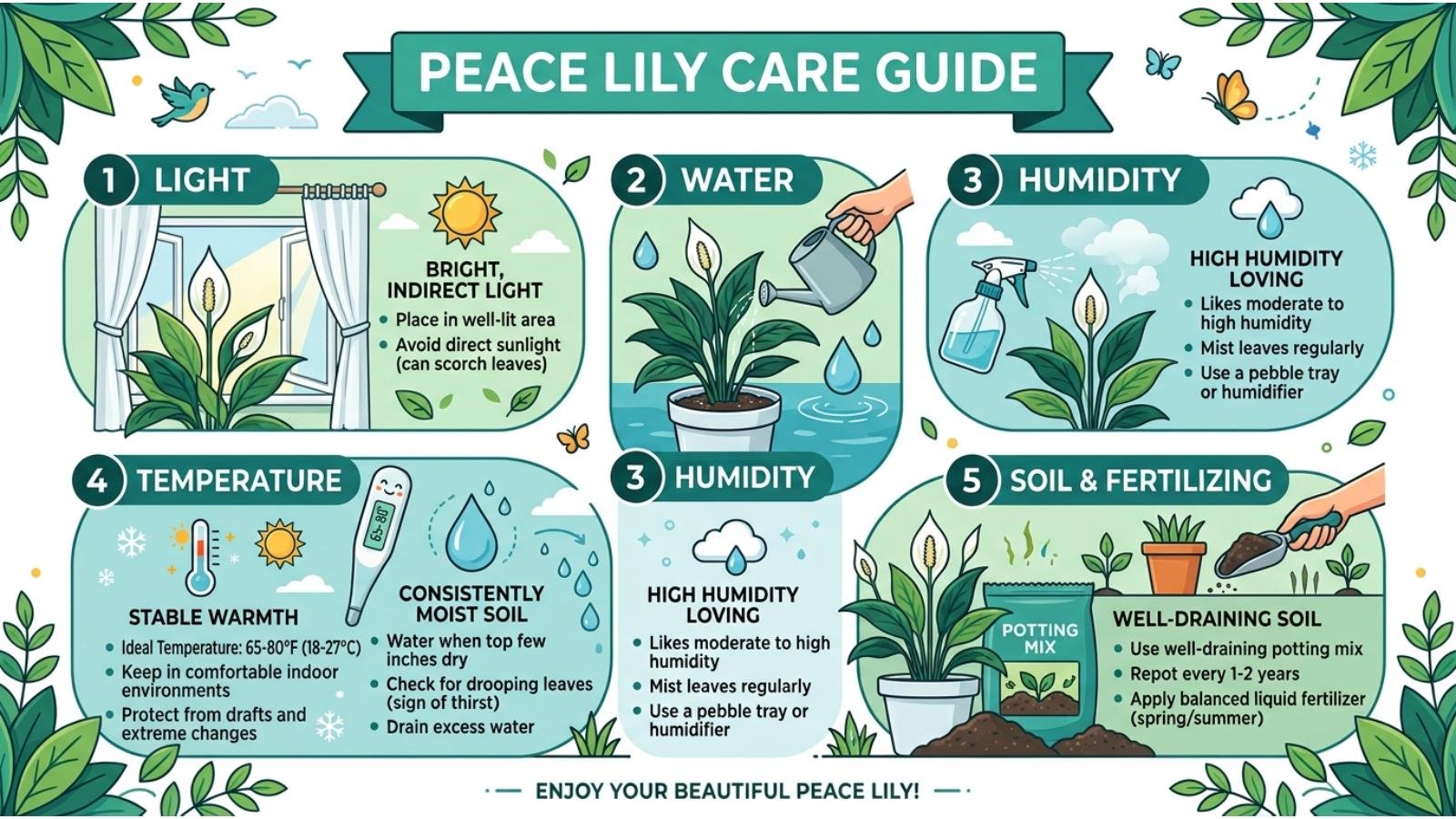
Peace lily plant care is simple when you provide the right balance of light, water, humidity, and drainage. Place your peace lily in bright, indirect light, keep the soil lightly and consistently moist without making it soggy, and use a pot with drainage holes. Avoid harsh direct sunlight, cold drafts, and excessive fertilizer. Check the soil before watering rather than following a strict schedule.
Introduction
Peace lilies are popular indoor plants because of their attractive dark-green leaves, elegant white blooms, and ability to adapt to typical indoor environments. However, even an easy-care peace lily can develop yellow leaves, brown tips, drooping foliage, or fewer flowers when its growing conditions are not right.
The key to successful peace lily plant care is understanding what the plant needs rather than simply reacting whenever the leaves start to droop. In particular, watering requires attention because both underwatering and excessive moisture can create problems.
With the right light, well-draining soil, appropriate watering, and regular observation, a peace lily can remain attractive and healthy for many years.
Understanding the Peace Lily
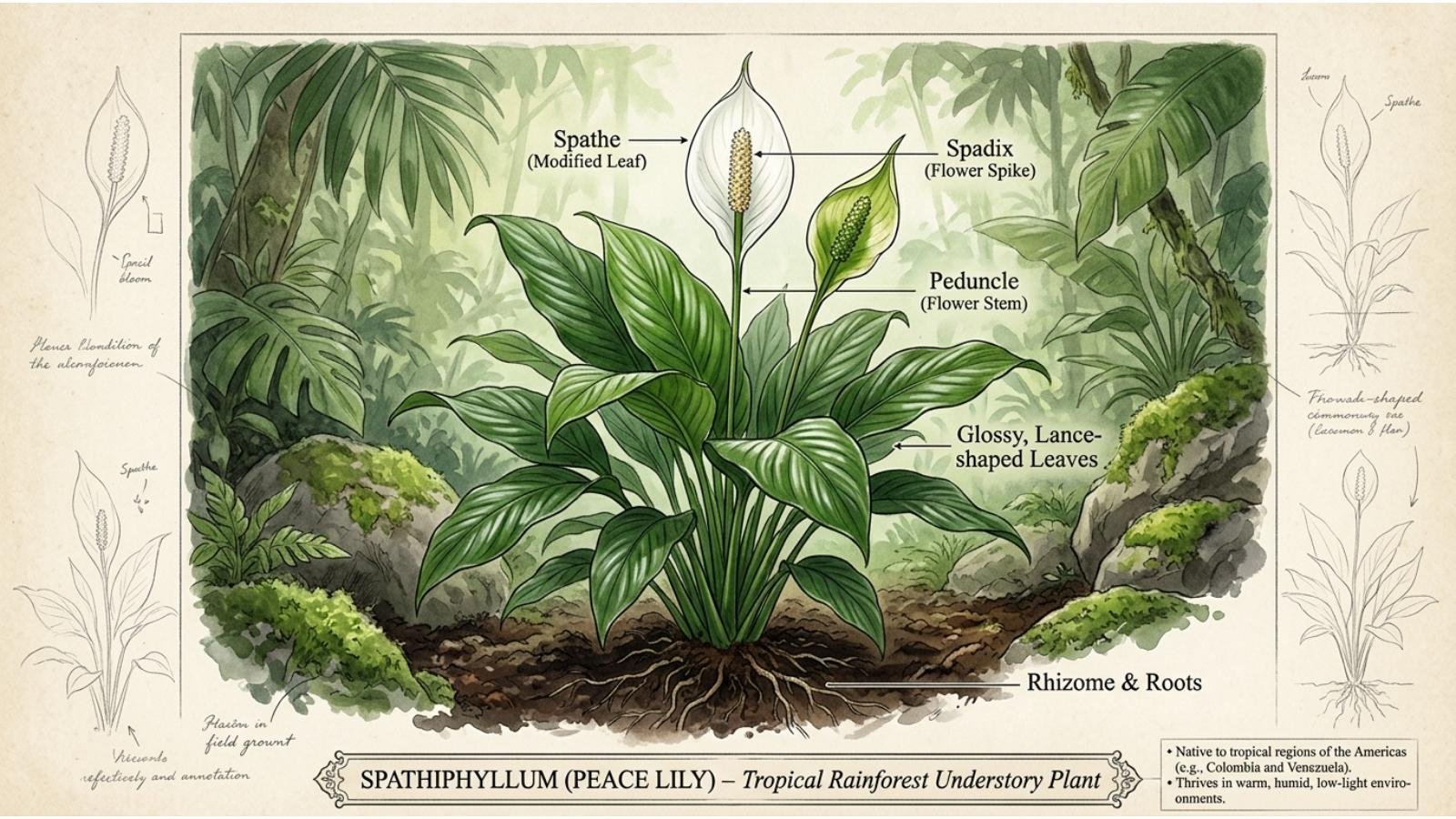
Peace lilies belong to the genus Spathiphyllum and are tropical plants valued primarily as ornamental houseplants.
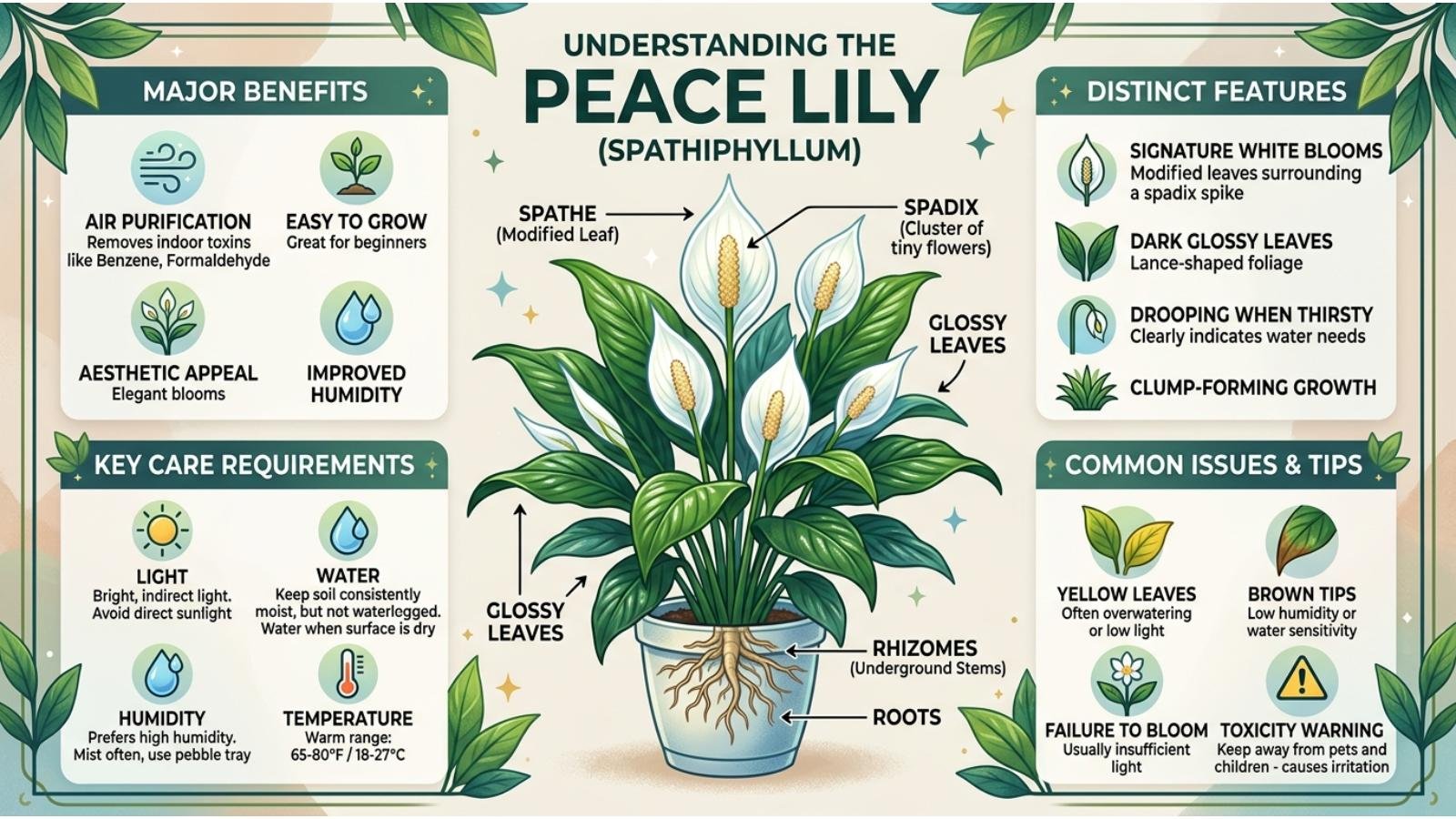
The familiar white “flower” is actually a modified leaf called a spathe. The small flowers are located along the central structure called the spadix.
This distinction is useful because an older spathe may gradually turn green or lose its bright appearance without meaning that the entire plant is unhealthy.
Peace lilies naturally prefer warm, humid environments, which explains why they generally perform well indoors when protected from cold temperatures and extremely dry conditions.
Image Suggestion: Labeled peace lily illustration showing leaves, spathe, spadix, stems, soil, and roots.
How Much Light Does a Peace Lily Need?
Peace lilies grow best in bright, indirect light.
They can tolerate lower-light conditions, but low light may result in slower growth and fewer flowers. On the other hand, strong direct sunlight can scorch the leaves.
A good location is:
- Near a bright window with filtered sunlight.
- Behind a sheer curtain.
- A few feet away from a very sunny window.
- In a bright room where intense afternoon rays do not hit the leaves directly.
Signs of Too Much Light
Watch for:
- Brown or crispy patches.
- Bleached-looking leaves.
- Pale areas on foliage.
- Leaf damage concentrated on the side facing the window.
Signs of Too Little Light
You may notice:
- Slow growth.
- Very few flowers.
- Smaller new leaves.
- Long, weak-looking growth.
A common mistake is assuming a peace lily belongs in the darkest corner of the house because it tolerates shade. It can survive lower light, but survival and vigorous growth are not the same thing.
How Often Should You Water a Peace Lily?
There is no perfect watering schedule for every peace lily.
Instead, check the moisture of the potting mix before watering. Environmental conditions such as temperature, humidity, light, pot size, and soil type all influence how quickly the plant uses water.
Water when the upper portion of the soil has started to dry while the deeper root zone still has some moisture.
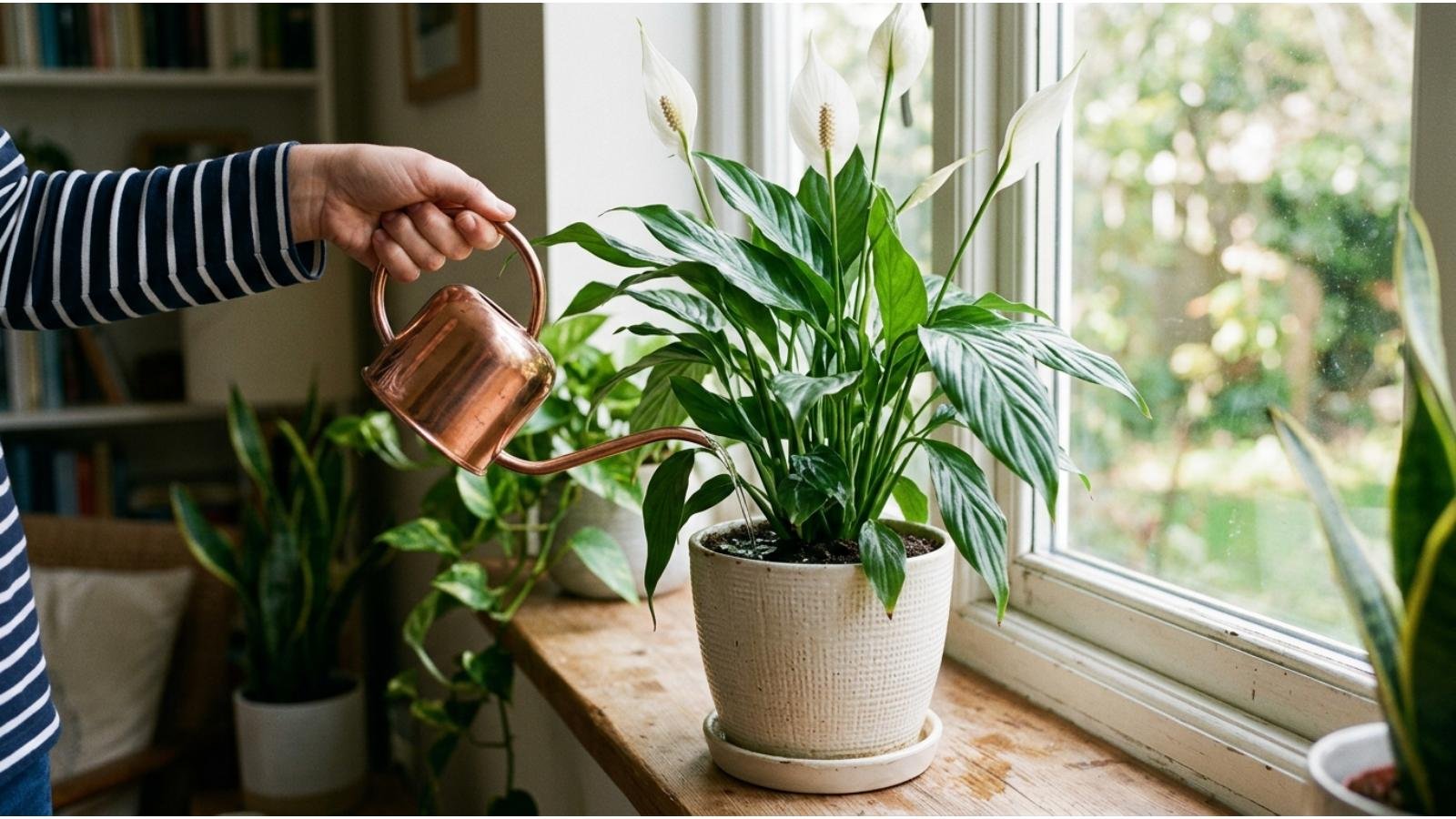
When watering:
- Pour water slowly and evenly over the soil.
- Continue until some water drains from the bottom.
- Allow excess water to leave the container.
- Empty water sitting in a saucer or decorative outer pot.
- Return the plant to its normal location.
Why Fixed Watering Schedules Can Fail
A plant that needs water today may not need it next week.
For example, a peace lily in a warm room with bright indirect light may dry out much faster than one sitting in a cool, dim room.
Instead of asking, “Is it watering day?” ask, “What is the soil telling me?”
That small change can prevent many common watering problems.
Why Is My Peace Lily Drooping?
Drooping leaves are one of the most recognizable characteristics of a peace lily.
When the plant becomes too dry, the foliage can wilt dramatically. After receiving appropriate water, a mildly dehydrated plant may recover noticeably.
But drooping does not always mean underwatering.
If the soil is constantly wet, the roots may become stressed. Damaged roots cannot function properly, and the plant may eventually wilt even though the soil contains plenty of moisture.
Before watering a drooping peace lily, check:
- Is the soil dry or wet?
- Does the pot have drainage holes?
- Is water remaining in the saucer?
- Has the plant recently been moved?
- Is it receiving excessive sunlight?
- Has the room become unusually hot or cold?
This simple inspection is more reliable than automatically adding more water.
Choosing Soil for a Peace Lily
Peace lilies prefer a growing medium that holds enough moisture for the roots while allowing excess water to drain away.
A quality indoor potting mix containing organic material is a practical choice.
The most important feature is good drainage.
Avoid compacted soil that remains saturated for long periods. Waterlogged conditions reduce the air available around the roots and can contribute to root problems.
What Makes a Good Peace Lily Pot?
Choose a container with:
- Drainage holes.
- Enough room for the current root system.
- A stable base for larger plants.
- A size appropriate for the plant.
A decorative container can be used as an outer pot, but make sure water does not remain trapped around the growing container.
How to Repot a Peace Lily
Peace lilies do not necessarily need repotting every year.
Consider repotting when:
- Roots are growing from drainage holes.
- The root ball has become extremely crowded.
- The plant dries out unusually quickly.
- Growth has slowed despite good care.
- The existing container is clearly too small.
Choose a new container only slightly larger than the current one. Moving a small plant into a very large pot can leave a large amount of unused soil around the roots, which may remain wet for too long.
Repotting Steps
- Water the plant lightly if the soil is extremely dry.
- Carefully remove the plant from its container.
- Examine the roots.
- Remove obviously damaged or unhealthy material when appropriate.
- Place the plant at approximately the same depth as before.
- Fill around the root ball with fresh potting mix.
- Water thoroughly.
- Allow excess water to drain.
Image Suggestion: Step-by-step peace lily repotting diagram showing root inspection and placement in a new container.
Temperature Requirements
Peace lilies are tropical plants, so they prefer warm indoor conditions.
Keep them away from sudden temperature changes and prolonged exposure to cold.
Avoid placing your plant directly beside:
- Air-conditioning vents.
- Heating vents.
- Frequently opened exterior doors.
- Cold windows.
- Drafty areas.
Cold stress can slow growth and cause foliage to deteriorate.
A stable indoor environment is generally more beneficial than constantly moving the plant from one location to another.
Does a Peace Lily Need High Humidity?
Peace lilies appreciate moderate to high humidity because they originate from tropical environments.
Dry indoor air can contribute to brown leaf edges, especially when combined with inconsistent watering or other environmental stress.
You can improve humidity by:
- Grouping several plants together.
- Using a humidifier.
- Keeping the plant away from strong heating airflow.
- Maintaining appropriate soil moisture.
Avoid assuming that misting the leaves is a complete solution for very dry air. Surface moisture disappears quickly, so consistent environmental humidity is generally more useful.
How to Fertilize a Peace Lily
Peace lilies are not heavy feeders.
A balanced indoor-plant fertilizer can be used during active growth according to the manufacturer’s recommended dilution and frequency.
More fertilizer is not necessarily better.
Excessive feeding can cause salt accumulation in the soil and may lead to damaged roots or brown leaf tips.
A sensible approach is:
- Fertilize conservatively.
- Follow the label instructions.
- Avoid repeatedly using stronger concentrations.
- Do not heavily fertilize a severely stressed plant.
- Focus on light, water, and root health first.
How to Encourage Peace Lily Flowers
One of the biggest frustrations for peace lily owners is having a healthy-looking plant that rarely flowers.
Light is an important factor.
A plant receiving insufficient light may produce attractive green foliage but few blooms.
To encourage flowering:
- Provide bright indirect light.
- Avoid intense direct sunlight.
- Maintain consistent moisture.
- Use well-draining soil.
- Keep temperatures comfortably warm.
- Provide moderate humidity.
- Avoid excessive fertilizer.
Do not move a low-light peace lily directly into harsh sunlight simply because it is not flowering. Increase light gradually and choose a bright filtered location.
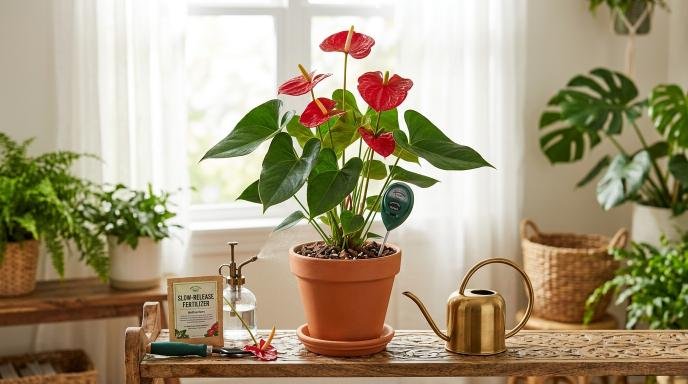
Image Suggestion: Healthy flowering peace lily positioned near a bright window with filtered light.
Why Are Peace Lily Leaves Turning Brown?
Brown leaves or tips can have several causes.
Common possibilities include:
- Dry indoor air.
- Inconsistent watering.
- Excessive fertilizer.
- Salt buildup.
- Too much direct sunlight.
- Root problems.
- Temperature stress.
The pattern can provide useful clues.
The only a few older leaves have brown sections, natural aging may be involved. If many leaves develop brown tips while the plant is sitting in very dry air, environmental dryness may be contributing.
If the soil stays wet for long periods and the plant is declining, investigate the root environment rather than simply watering more.
Why Are Peace Lily Leaves Turning Yellow?
Yellow leaves are another common peace lily problem.
One older leaf gradually becoming yellow can be part of the plant’s natural aging process.
Multiple yellow leaves appearing at once deserve closer inspection.
Check:
- Soil moisture.
- Drainage.
- Light levels.
- Temperature.
- Fertilizer use.
- Recent changes in plant location.
A frequent mistake is diagnosing every yellow leaf as overwatering. Plant problems rarely have one universal symptom-to-cause relationship.
Look at the whole growing environment before making a major change.
Peace Lily Leaf Curling
Curling leaves can occur when the plant experiences environmental stress.
Possible factors include:
- Low soil moisture.
- Excessive sunlight.
- Dry air.
- Heat stress.
- Root problems.
- Sudden environmental changes.
Check the soil first, then examine the plant’s location.
If the soil is dry, water appropriately. If the soil is wet, adding more water is unlikely to solve the problem.
Pruning a Peace Lily
Pruning helps maintain a clean appearance and removes damaged or aging foliage.
Use clean, sharp scissors or pruning shears.
Remove:
- Completely dead leaves.
- Severely damaged foliage.
- Spent flower structures.
- Yellowing leaves that are clearly declining.
Cut damaged leaves close to their base without unnecessarily injuring nearby healthy stems.
Regularly removing old foliage also makes it easier to inspect the plant for pests and other problems.
Cleaning Peace Lily Leaves
Large peace lily leaves can collect dust indoors.
Dust can make the foliage look dull and may interfere with the plant’s normal leaf surface function.
Gently wipe the leaves with a soft, damp cloth.
Work carefully from the base toward the tip and support the leaf rather than pulling on it.
Avoid using household cleaning products, oils, or shiny-leaf products unless they are specifically intended for plants.
Common Peace Lily Care Mistakes
Watering on a Calendar
Watering every few days simply because the schedule says so can lead to unnecessary watering.
Better approach: Check the soil first.
Keeping the Soil Permanently Wet
Moist soil and saturated soil are not the same.
Better approach: Water thoroughly, then allow excess water to drain.
Putting the Plant in Harsh Sunlight
Peace lilies appreciate light but can suffer from intense direct sunlight.
Better approach: Choose bright filtered or indirect light.
Using Too Much Fertilizer
Extra fertilizer does not automatically produce extra flowers.
Better approach: Follow conservative feeding instructions.
Using a Pot Without Drainage
A container that cannot release excess water creates unnecessary root-zone problems.
Better approach: Always provide a way for excess water to escape.
Reacting to Drooping Without Checking the Soil
Drooping is a clue, not a diagnosis.
Better approach: Inspect soil moisture before watering.
A Simple Peace Lily Care Routine
Every Few Days
Look at the plant rather than automatically doing something to it.
Check whether:
- The leaves look firm.
- The soil is drying.
- The plant is receiving appropriate light.
Weekly
Inspect:
- Leaves.
- Stems.
- Soil.
- Drainage.
- New growth.
Look underneath leaves for signs of insects.
When the Soil Starts Drying
Water thoroughly and allow excess water to drain.
During Active Growth
Monitor growth and consider feeding according to the plant’s needs and fertilizer instructions.
When Growth Becomes Crowded
Inspect the roots and determine whether repotting or division is appropriate.
Peace Lily Care Through the Seasons
Spring
As daylight increases, your peace lily may begin producing more new growth. Monitor soil moisture because water use can increase.
Summer
Warm conditions can cause soil to dry faster. Keep the plant away from harsh direct sunlight while maintaining bright indirect light.
Autumn
As daylight decreases, growth may slow. Avoid continuing a heavy summer watering routine without checking the soil.
Winter
Indoor heating can dry the air, while cold windows can expose the plant to temperature stress. Keep the plant away from cold drafts and heating vents.
Can a Peace Lily Grow Outdoors?
Peace lilies can grow outdoors in warm, suitable climates.
If you move one outdoors, choose a protected location with shade or filtered light. Avoid exposing an indoor-grown peace lily suddenly to intense sunlight.
Outdoor conditions also require attention to rainfall and drainage. A container that drains well indoors can still become excessively wet outdoors during prolonged rain.
If temperatures become too cold for a tropical peace lily, bring the plant indoors before cold damage occurs.
How to Propagate a Peace Lily
Peace lilies are generally propagated through division.
A mature plant may develop multiple growth points. These can sometimes be separated carefully while retaining healthy roots with each division.
Basic Division Method
- Remove the plant carefully from its container.
- Examine the root ball.
- Identify separate growth sections.
- Gently separate suitable sections.
- Make sure each division has roots attached.
- Plant each section in an appropriately sized container.
- Water thoroughly.
- Place the new plants in bright indirect light.
Propagation is best attempted when the parent plant is healthy and actively growing.
Image Suggestion: Peace lily propagation infographic showing a mature root ball being separated into two or three rooted divisions.
Peace Lily Pests
Peace lilies can occasionally attract common indoor plant pests such as:
- Mealybugs.
- Scale insects.
- Spider mites.
- Aphids.
Inspect the undersides of leaves, leaf joints, and new growth.
Early detection makes pest problems much easier to manage.
If pests appear, separate the affected plant from nearby houseplants when possible and identify the pest before choosing a treatment.
Peace Lily Care Checklist
| Care Factor | Recommended Approach |
|---|---|
| Light | Bright, indirect light |
| Direct Sun | Avoid intense direct sunlight |
| Water | Water when the soil begins to dry |
| Soil | Moisture-retentive but well-draining |
| Pot | Container with drainage holes |
| Humidity | Moderate to high humidity is beneficial |
| Temperature | Warm and stable |
| Fertilizer | Conservative feeding during active growth |
| Pruning | Remove dead, damaged, or declining foliage |
| Repotting | Repot when the plant becomes significantly crowded |
| Cleaning | Gently wipe dusty leaves |
| Pests | Inspect regularly |
Are Peace Lilies Safe Around Pets?
Peace lilies contain insoluble calcium oxalate crystals.
If a cat or dog chews the plant, these crystals can cause irritation of the mouth and digestive tract. Possible signs include drooling, oral discomfort, vomiting, and difficulty swallowing.
Peace lilies should therefore be kept away from pets that are likely to chew plants.
It is also important not to confuse peace lilies with true lilies. They are different plants and do not pose the same type of toxicity risk associated with true lilies in cats. Nevertheless, peace lilies should still be treated as plants that pets should not ingest.
Frequently Asked Questions
How often should I water a peace lily?
Check the soil rather than following a fixed schedule. Water when the upper portion has started to dry, then water thoroughly and allow excess moisture to drain.
Why does my peace lily keep drooping?
Dry soil can cause drooping, but constantly wet soil can also lead to root stress and poor water uptake. Always check the soil before watering.
Does a peace lily need direct sunlight?
No. Bright indirect light is generally more suitable. Strong direct sunlight can scorch the foliage.
How can I make my peace lily bloom?
Give it adequate bright indirect light, consistent moisture, warm temperatures, and appropriate nutrition. Low light is a common reason for limited flowering.
Why are my peace lily leaves turning brown?
Brown tips may be associated with dry air, inconsistent watering, excessive fertilizer, salt buildup, strong sunlight, or root stress. Examine the entire growing environment.
Why are my peace lily leaves turning yellow?
Yellowing can result from natural aging or environmental stress. Check watering, drainage, light, temperature, and fertilizer use before deciding on the cause.
Can peace lilies live in low light?
They can tolerate lower-light conditions, but insufficient light can reduce growth and flowering. A bright room with indirect light is generally preferable.
Should I cut off dead peace lily leaves?
Yes. Remove completely dead or badly damaged leaves using clean scissors or pruning shears.
Can I propagate a peace lily from a leaf?
A single leaf generally will not produce a new peace lily. Division of established plant sections is the practical propagation method.
How do I know if my peace lily needs repotting?
Check for severely crowded roots, roots emerging from drainage holes, unusually rapid drying, or declining growth despite otherwise suitable care.
Can I put my peace lily outside?
Yes, if the climate is warm enough and the plant is protected from harsh direct sunlight and cold temperatures.
Are peace lilies poisonous to cats and dogs?
Peace lilies contain insoluble calcium oxalates that can cause irritation if chewed or swallowed. Keep them away from pets that may eat plants.
Conclusion
Successful peace lily plant care does not require a complicated routine. The most important habits are providing bright indirect light, maintaining appropriate soil moisture, using good drainage, protecting the plant from temperature extremes, and avoiding excessive fertilizer.
The biggest improvement most beginners can make is learning to inspect the plant before reacting. A drooping peace lily may need water, but it may also be suffering because its roots have remained too wet. Brown tips may involve humidity, fertilizer, sunlight, or watering rather than one single cause.
Treat the plant as a living system. Check its soil, observe its leaves, consider its environment, and make changes gradually. With consistent conditions and thoughtful care, a peace lily can remain a healthy and attractive indoor plant for years.