Quick Answer
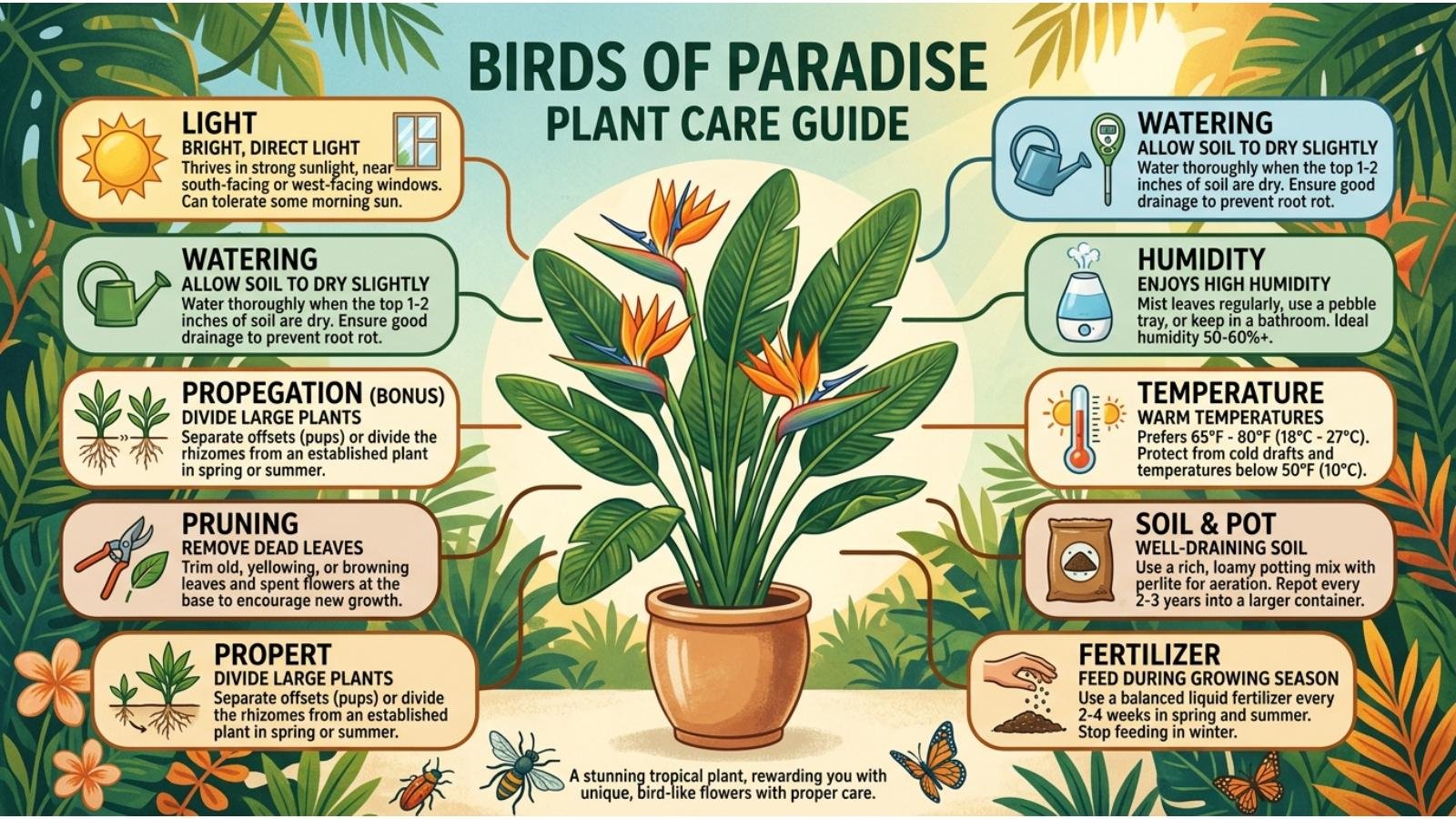
Birds of paradise plants thrive in bright light, warm temperatures, moderate to high humidity, and well-draining soil that stays lightly moist without becoming soggy. Water when the top layer of soil begins to dry, fertilize during active growth, and protect the plant from cold drafts and harsh wind. With enough light, space, and consistent care, a bird of paradise can produce large, healthy leaves and, when mature, spectacular flowers.
Introduction
Birds of paradise plant care is relatively simple once you understand what this tropical-looking plant actually needs. Its huge leaves and dramatic shape make it a popular indoor and outdoor plant, but those large leaves can also reveal problems quickly. Brown edges, curling leaves, slow growth, splitting foliage, and a lack of flowers are common concerns.
The biggest mistake beginners make is treating a bird of paradise like an ordinary low-light houseplant. This plant wants lots of bright light, enough water to stay hydrated, excellent drainage, warmth, and room for its roots and leaves to develop. Once those basic conditions are right, maintaining the plant becomes much easier.
What Is a Bird of Paradise Plant?
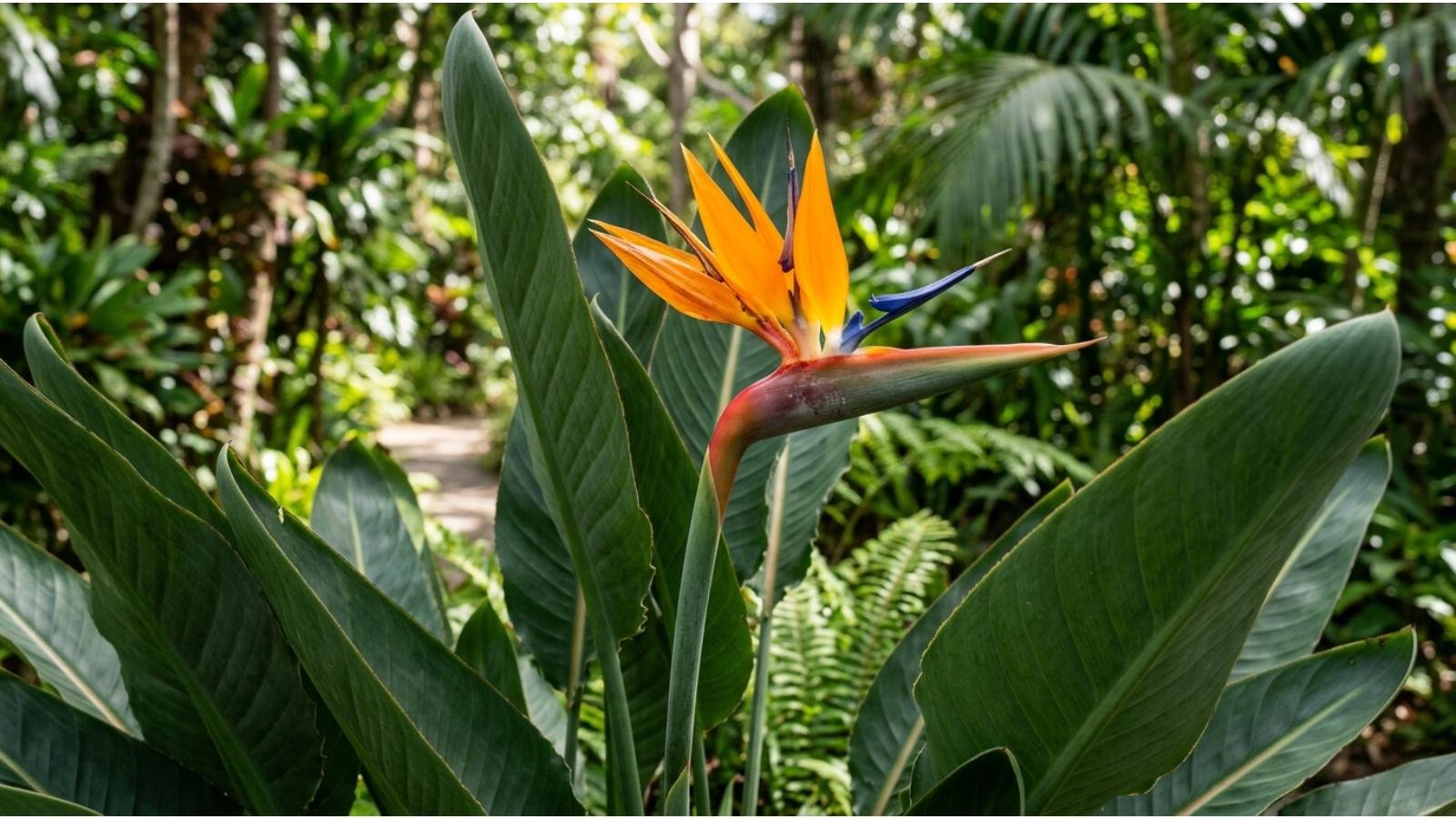
Bird of paradise is the common name for plants in the Strelitzia genus. The most familiar species include Strelitzia reginae and Strelitzia nicolai.
Strelitzia reginae is known for its distinctive orange and blue flowers, while Strelitzia nicolai is often grown for its enormous tropical foliage.
Depending on the species and growing environment, a bird of paradise can become a substantial plant. This is important when choosing a location because a small nursery plant can eventually require considerably more floor space.
Bird of paradise at a glance
| Feature | Details |
|---|---|
| Plant type | Tropical-looking perennial |
| Common genus | Strelitzia |
| Light | Bright light to direct sun |
| Water | Moderate and consistent |
| Soil | Fertile and well draining |
| Humidity | Moderate to high |
| Temperature | Warm conditions preferred |
| Growth | Moderate to vigorous in good conditions |
| Flowers | More likely on mature plants |
| Indoor size | Can become quite large |
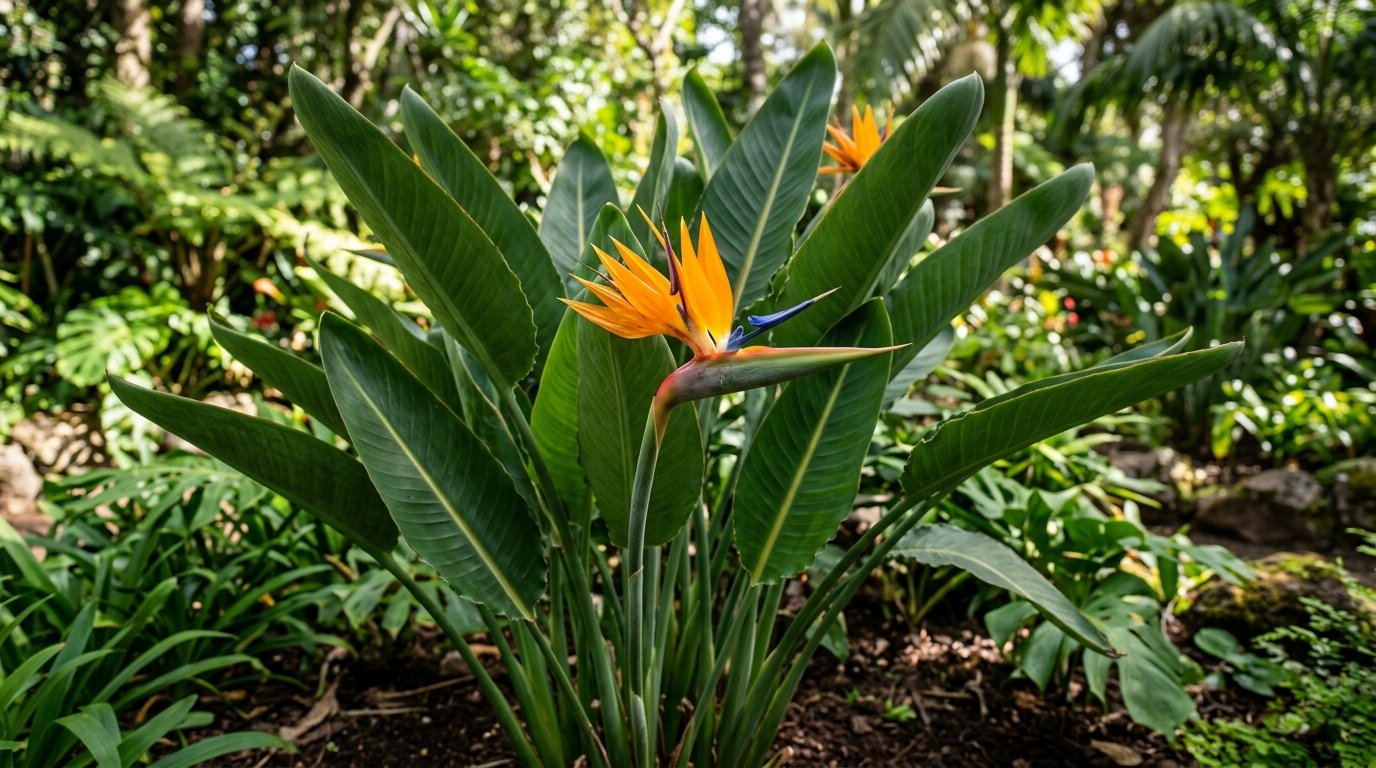
How Much Light Does a Bird of Paradise Need?
Light is one of the most important factors in successful bird of paradise plant care.
Give your plant the brightest location available. A position near a large sunny window is usually much better than a dim corner several feet away from the window.
Birds of paradise can handle substantial sunlight, but plants that have been growing indoors in lower light should be introduced to stronger direct sunlight gradually. A sudden change can cause leaf scorching.
Signs your plant needs more light
Look for:
- Slow or stalled growth.
- Small new leaves.
- Leaves leaning toward the window.
- Long gaps between leaves.
- Weak-looking growth.
- Failure to flower on an otherwise mature plant.
If your bird of paradise is healthy but barely growing, check the light before reaching for fertilizer.
Fertilizer cannot compensate for inadequate light.
Best indoor placement
A bright south-, southeast-, or west-facing window can work well, depending on the intensity of sunlight in your location.
If the sun is extremely strong through glass, use gradual acclimation or light filtering to prevent sudden leaf damage.
Image Suggestion: Healthy bird of paradise growing beside a bright window with large green leaves.
How Often Should You Water a Bird of Paradise?
Birds of paradise prefer consistent moisture during active growth, but they do not want permanently saturated soil.
Instead of watering according to a fixed schedule, check the growing medium first.
Follow this simple method
- Check the top layer of soil with your finger.
- If it still feels noticeably wet, wait.
- If the upper layer has begun to dry, water thoroughly.
- Allow excess water to escape through the drainage holes.
- Empty water collected beneath the pot.
The exact watering frequency depends on light, temperature, humidity, pot size, soil type, and season.
A plant sitting in bright sunlight may use water much faster than one growing in a cool, dim room.
Why overwatering is dangerous
One of the most common mistakes is assuming that a tropical plant should always have wet soil.
Birds of paradise enjoy moisture, but their roots also require oxygen. Soil that stays saturated for long periods can create conditions that damage the root system.
The goal is moist but well-drained soil, not constantly wet soil.
Best Soil for Bird of Paradise
A good bird of paradise soil should retain enough moisture to support healthy growth while allowing excess water to drain quickly.
A practical container mix can include:
- Quality potting soil.
- Compost or other organic material.
- Perlite or pumice.
- A coarse drainage component if needed.
The exact recipe is less important than the result.
When you water, the soil should absorb moisture without turning into a heavy, waterlogged mass. Excess water should be able to leave the container easily.
What poor soil can cause
Heavy, poorly draining soil can contribute to:
- Constantly wet roots.
- Yellowing leaves.
- Slow growth.
- Root damage.
- Unpleasant-smelling soil.
- General decline.
Always use a container with drainage holes.
Humidity Requirements for Bird of Paradise
Birds of paradise appreciate moderate to high humidity, especially indoors where heating or air conditioning can make the air very dry.
Low humidity may contribute to:
- Brown leaf edges.
- Crispy tips.
- Dry-looking foliage.
- Increased water stress.
How to increase humidity
Useful options include:
- A room humidifier.
- Grouping several plants together.
- Placing the plant in a naturally humid room.
- Using a pebble tray correctly.
- Keeping the plant away from strong heating vents.
Avoid placing the pot directly in standing water. Increasing humidity should never mean keeping the roots constantly wet.
Humidity is not everything
A common misconception is that humidity alone will make a bird of paradise thrive.
It will not.
A plant with high humidity but inadequate light, poor drainage, or damaged roots can still struggle.
Think of humidity as one part of the growing environment rather than a cure for every leaf problem.
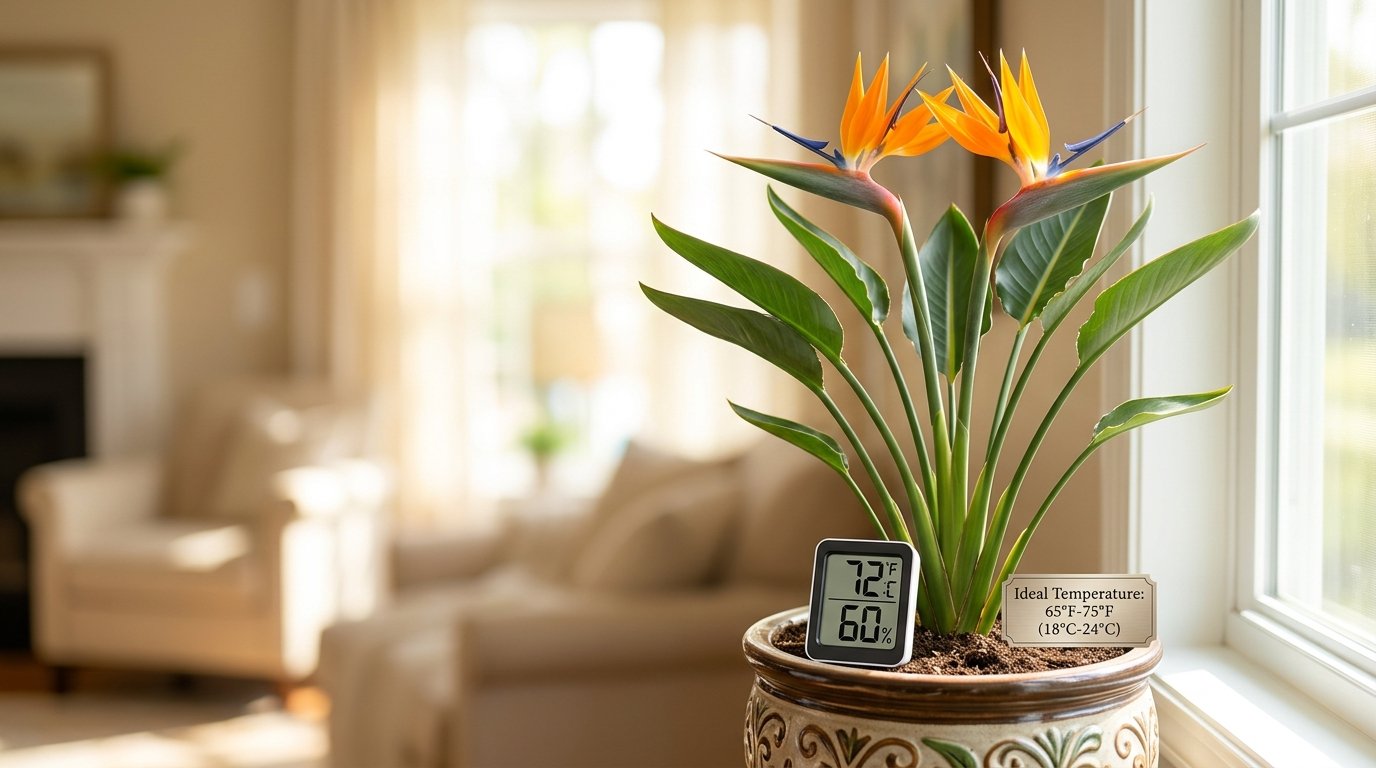
Ideal Temperature for Bird of Paradise
Birds of paradise prefer warm conditions and can suffer when exposed to prolonged cold.
Protect the plant from:
- Cold drafts.
- Freezing temperatures.
- Cold windows.
- Air-conditioning vents.
- Sudden temperature changes.
- Cold outdoor nights.
For indoor plants, a comfortably warm room is usually suitable.
If you move a bird of paradise outdoors during warm weather, bring it back into protection before temperatures become too cold.
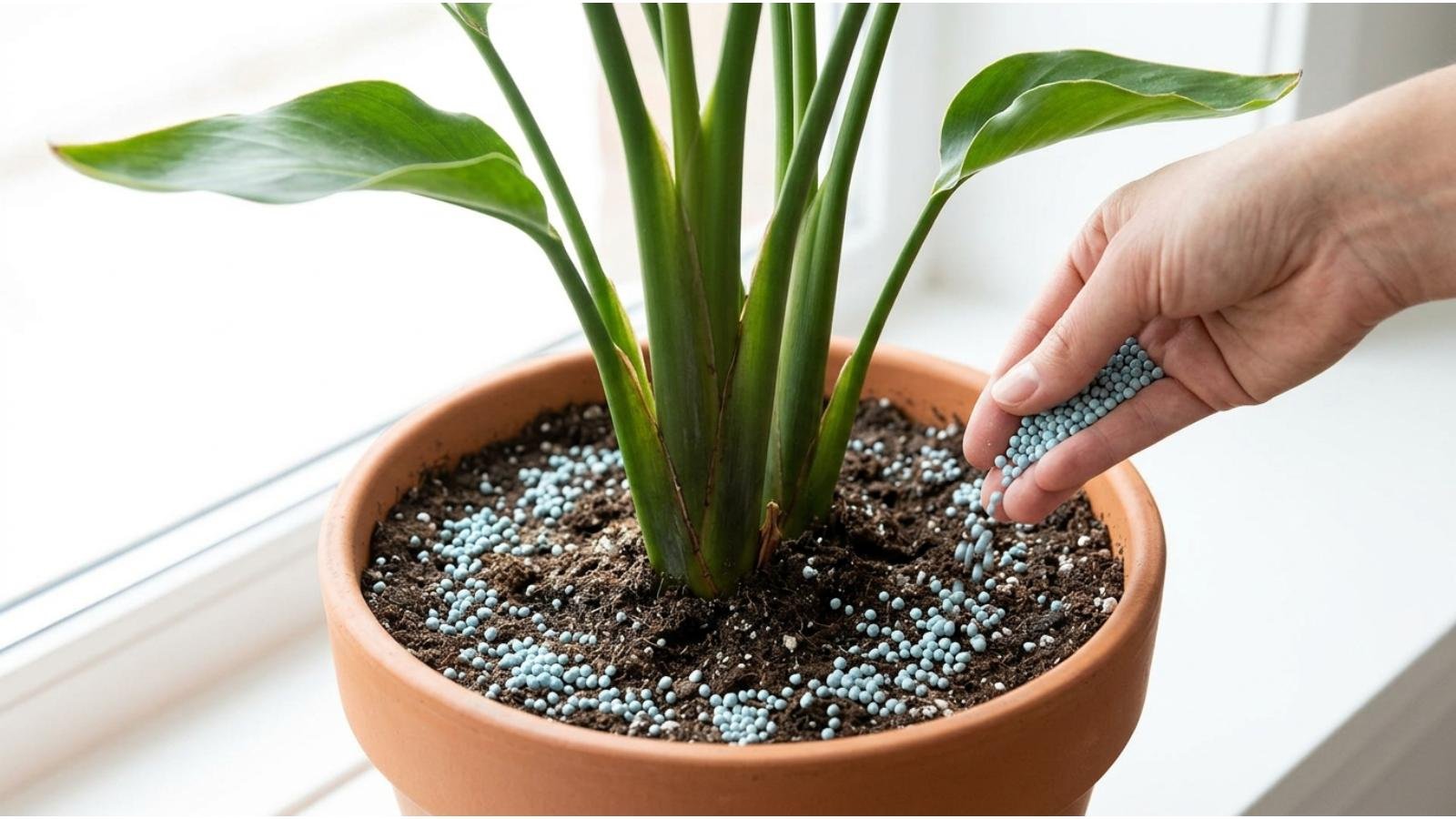
How to Fertilize Bird of Paradise
Birds of paradise can grow vigorously when they receive enough light, water, warmth, and nutrients.
During active growth, use a balanced fertilizer according to the product’s instructions.
Regular feeding can support:
- New leaf development.
- Strong foliage.
- Healthy stems.
- Overall plant growth.
- Flower production in mature plants.
Avoid overfertilizing
More fertilizer does not automatically mean faster growth.
Excessive fertilizer can cause salt buildup in the soil and may damage roots.
If your plant is not growing well, investigate light, watering, temperature, and roots before dramatically increasing fertilizer.
Expert Tip: A bird of paradise receiving insufficient light will not become healthy simply because you give it more fertilizer.
When Should You Repot a Bird of Paradise?
Birds of paradise do not need to be repotted every year.
They can tolerate becoming somewhat root-bound, and mature plants may actually perform well when their roots have filled the container without being severely restricted.
Consider repotting when:
- Roots are emerging from drainage holes.
- The root ball has become extremely crowded.
- Water passes through the pot unusually quickly.
- Growth has slowed because the container is restrictive.
- The soil has broken down significantly.
Choose the right pot size
Do not automatically move a small plant into a huge container.
A container that is dramatically larger than the root system can hold excess moisture for longer periods.
Instead, choose a pot only moderately larger than the current container.
Image Suggestion: Bird of paradise root ball showing when repotting is necessary.
How to Prune Bird of Paradise
Birds of paradise generally require only light pruning.
Remove:
- Completely dead leaves.
- Severely damaged leaves.
- Old flower stalks after flowering.
- Leaves that have become badly discolored or unhealthy.
Use clean, sharp pruning tools to make neat cuts.
Should you cut leaves with splits?
Not necessarily.
Splitting is common with bird of paradise leaves and does not automatically mean something is wrong.
Large leaves can naturally tear as they mature, and outdoor plants may develop additional splits when exposed to strong wind.
If the plant otherwise looks healthy, a few splits are usually not a reason to panic.
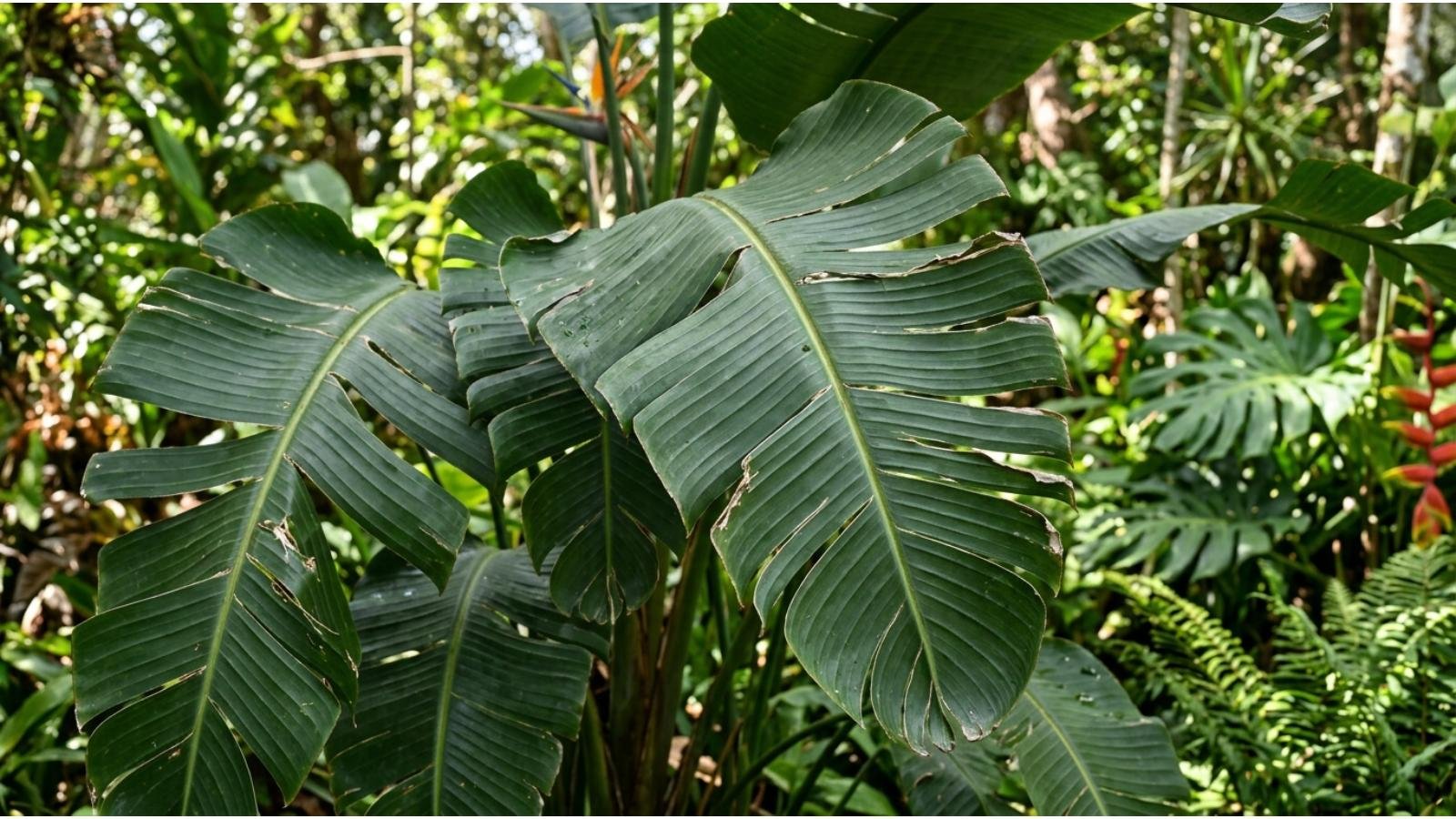
Why Are Bird of Paradise Leaves Splitting?
Leaf splitting is one of the most recognizable characteristics of bird of paradise.
Large leaves can naturally develop tears that allow air to move through the foliage. Outdoor plants exposed to strong wind may develop considerably more splitting.
Normal splitting
Some leaf splits are simply part of the plant’s natural appearance.
When splitting deserves attention
Investigate further if splitting occurs together with:
- Severe browning.
- Curling.
- Wilting.
- Sudden leaf loss.
- Pest activity.
- Very dry soil.
- Rapid deterioration.
Do not treat every split as evidence of disease.
Why Are Bird of Paradise Leaves Turning Brown?
Brown leaves can have several causes, so it is important to diagnose the entire situation.
Common causes include
| Symptom | Possible reason |
|---|---|
| Crispy brown edges | Dry air or inconsistent moisture |
| Brown tips | Dry conditions or watering stress |
| Brown patches | Environmental stress or sudden strong sunlight |
| Brown leaves with wet soil | Possible root-zone problem |
| Wind-damaged leaves | Physical damage |
| Brown foliage with insects | Pest activity |
What to check first
Before adding more water, inspect:
- Soil moisture.
- Drainage.
- Light exposure.
- Humidity.
- Temperature.
- Roots.
- Leaves for pests.
This prevents a common mistake: watering a plant simply because its leaves are brown.
Sometimes the plant is already too wet.
Why Is My Bird of Paradise Not Growing?
Slow growth usually means one or more important growing conditions need improvement.
Start with light.
Birds of paradise require plenty of light to support vigorous foliage production. If the plant is sitting in a dark room, moving it to a brighter location may make a significant difference.
Also check:
- Soil moisture.
- Root crowding.
- Drainage.
- Temperature.
- Fertilization.
- Pest problems.
- Recent environmental changes.
Give changes time
Plants do not respond instantly.
If you move your bird of paradise into a brighter location, do not expect a new leaf overnight. Good care needs consistency before you can accurately judge the result.
Why Is My Bird of Paradise Not Flowering?
A bird of paradise can be healthy and still refuse to flower.
The most important reasons include:
- The plant is too young.
- Light is insufficient.
- The plant has not reached flowering maturity.
- Nutrition is inadequate.
- Growing conditions fluctuate significantly.
Flowering is much more likely when the plant receives strong light and consistent care.
Age matters
One of the biggest misconceptions is expecting a young nursery plant to flower immediately.
Some bird of paradise plants need several years to reach flowering maturity.
If your plant is young, focus on building a strong root system and healthy foliage rather than forcing flowers.
Do not overfeed to force flowers
Excess fertilizer is not a shortcut to flowering.
If light is inadequate, increasing fertilizer will not solve the underlying problem.
Bird of Paradise Outdoor Care
Birds of paradise can make excellent outdoor plants in warm climates.
Choose a location with:
- Bright sunlight.
- Warm temperatures.
- Good drainage.
- Protection from strong winds.
- Enough room for mature growth.
Protect it from strong wind
Large leaves catch wind easily.
Strong winds can tear and shred the foliage, leaving the plant looking damaged even when its roots are perfectly healthy.
A sheltered outdoor location can make a major difference to the appearance of the plant.
Transition indoor plants gradually
If your bird of paradise has been indoors, do not immediately place it under intense outdoor sunlight for an entire day.
Gradually increase exposure so the leaves can adjust.
Bird of Paradise Winter Care
Winter usually requires a change in routine.
As light levels and growth decrease:
- Water less frequently when the soil stays wet longer.
- Avoid keeping the soil constantly saturated.
- Provide the brightest available light.
- Protect the plant from cold drafts.
- Reduce feeding when growth slows substantially.
- Keep the plant away from cold windows.
The important principle is simple:
Less active growth usually means less water and less fertilizer are needed.
Do not continue a summer watering routine automatically throughout winter.
Bird of Paradise Care During Summer
Summer can be the most active growing period.
During warm, bright conditions:
- Monitor soil moisture more frequently.
- Provide plenty of light.
- Feed during active growth.
- Maintain good airflow.
- Watch carefully for pests.
- Protect outdoor plants from extreme wind.
A bird of paradise may use considerably more water during hot weather than it does during a cool winter period.
Always let the plant tell you what it needs by checking the soil rather than relying entirely on a calendar.
Common Bird of Paradise Care Mistakes
Keeping It in Low Light
A bird of paradise may survive in low light, but survival does not mean vigorous growth.
Better approach: Give it the brightest suitable location available.
Watering Every Few Days Automatically
Fixed watering schedules ignore seasonal and environmental differences.
Better approach: Check the soil before watering.
Using a Pot Without Drainage
Excess water needs an escape route.
Better approach: Always use a container with drainage holes.
Putting a Small Plant in a Huge Pot
Too much soil around a small root system can remain wet for too long.
Better approach: Increase pot size gradually.
Expecting Young Plants to Flower
Flowering depends partly on maturity.
Better approach: Concentrate on strong light and healthy growth.
Cutting Every Split Leaf
Splitting is often natural.
Better approach: Remove leaves only when they are dead or severely damaged.
Using Fertilizer to Fix Poor Light
Nutrients cannot replace sunlight.
Better approach: Correct light first.
Ignoring Pests
Large leaves can hide insects, particularly underneath the foliage.
Better approach: Inspect both sides of leaves regularly.
Bird of Paradise Pests
Birds of paradise can experience several common houseplant pests, including:
- Scale.
- Mealybugs.
- Spider mites.
Inspect your plant regularly, particularly around:
- Leaf undersides.
- New growth.
- Leaf joints.
- Stems.
- Crowded areas of the plant.
Early detection matters
A small pest problem is much easier to manage than a widespread infestation.
If you find insects, isolate the affected plant from nearby houseplants when practical and begin treatment promptly using an appropriate method for the pest involved.
Cleaning large leaves occasionally can also remove dust and make it easier to notice pests early.
How to Clean Bird of Paradise Leaves
Because the leaves are large, dust can accumulate quickly.
To clean them:
- Support the leaf gently.
- Wipe the surface with a soft, damp cloth.
- Clean both sides where practical.
- Avoid aggressive rubbing.
- Allow the leaves to dry naturally.
Clean foliage looks better and makes it easier to inspect for pests and other problems.
Avoid relying on oily leaf-shine products. They are unnecessary for healthy growth and may interfere with the natural surface of the foliage.
A Simple Bird of Paradise Care Routine
Weekly
- Check the soil.
- Inspect leaves for pests.
- Look at new growth.
- Check for signs of stress.
- Rotate the pot if the plant is leaning toward the light.
During Active Growth
- Water when the soil begins to dry.
- Fertilize according to your chosen fertilizer’s instructions.
- Monitor new leaves.
- Check whether roots are becoming crowded.
Monthly
- Clean dusty foliage.
- Inspect the plant carefully for insects.
- Reassess light exposure.
- Check drainage.
Seasonally
- Increase monitoring during warm, bright growth periods.
- Reduce watering when growth slows.
- Reduce feeding during periods of limited growth.
- Protect outdoor plants from cold weather.
- Move containers when necessary.
Bird of Paradise Care Chart
| Care Need | Recommended Approach |
|---|---|
| Light | Very bright light, including suitable direct sun |
| Water | Water when the upper soil layer begins drying |
| Soil | Fertile, airy, well-draining mix |
| Humidity | Moderate to high humidity is beneficial |
| Temperature | Warm and stable conditions |
| Fertilizer | Feed during active growth |
| Repotting | Repot when roots substantially fill the container |
| Pruning | Remove dead and severely damaged foliage |
| Cleaning | Wipe dusty leaves gently |
| Outdoor care | Bright, warm, sheltered location |
| Flowering | Requires maturity and suitable growing conditions |
How to Make Bird of Paradise Grow Fuller
A fuller bird of paradise usually comes from improving overall growing conditions rather than repeatedly pruning the plant.
Focus on:
Bright light
Strong light supports better leaf production.
Consistent moisture
Avoid extreme cycles of drought followed by excessive watering.
Adequate nutrition
Feed during active growth without overfertilizing.
Enough space
Allow the root system and foliage to develop.
Proper temperature
Avoid prolonged exposure to cold.
Regular rotation
Rotate indoor plants occasionally so growth is not concentrated toward one direction.
Remember that a fuller plant takes time. You cannot force several years of growth into a few weeks.
How to Encourage New Leaves
If your bird of paradise has stopped producing new leaves, examine the fundamentals.
First, check light
Move the plant toward a brighter location if necessary.
Next, check watering
Make sure the soil is not staying soaked or becoming bone dry for extended periods.
Then check roots
If the container is severely crowded, repotting may help.
Finally, consider nutrition
If the plant is actively growing and the other conditions are appropriate, regular feeding may support continued development.
A new leaf can take time to emerge and unfurl, especially after environmental changes.
What Healthy Bird of Paradise Growth Looks Like
A healthy bird of paradise commonly shows:
- Firm green leaves.
- New leaves emerging from the center.
- Strong upright growth.
- Gradual production of larger foliage.
- Healthy roots.
- Consistent growth during favorable conditions.
Some leaf splitting is normal.
A few brown edges do not automatically mean the plant is dying either.
The overall pattern is more useful than judging the plant by a single imperfect leaf.
Frequently Asked Questions
How often should I water a bird of paradise?
Water when the upper portion of the soil begins to dry. Water thoroughly and allow excess water to drain completely. Adjust the frequency according to light, temperature, humidity, pot size, and season.
Does bird of paradise need direct sunlight?
It benefits from very bright light and can tolerate substantial sunlight. Indoor plants should be gradually acclimated before being exposed to significantly stronger direct sunlight.
Can bird of paradise grow in low light?
It may survive in low light, but growth is usually much weaker than it would be under bright conditions. A bright location is preferable for healthy development.
Why are my bird of paradise leaves splitting?
Some splitting is completely normal. Large leaves naturally develop tears, and outdoor plants can experience additional splitting from wind.
Why are the leaves turning brown?
Possible causes include dry air, inconsistent watering, poor drainage, intense sunlight after sudden exposure, temperature stress, pests, or physical damage. Check the entire growing environment before changing your watering routine.
Why is my bird of paradise not growing?
Insufficient light is one of the first things to investigate. Also check watering, drainage, temperature, root crowding, nutrition, and pests.
How can I make my bird of paradise grow faster?
Provide strong light, appropriate moisture, warm temperatures, good drainage, adequate nutrition, and enough space for root development. Avoid trying to accelerate growth with excessive fertilizer.
Why is my bird of paradise not flowering?
The plant may be too young, receiving insufficient light, or growing under inconsistent conditions. Flowering usually requires maturity and favorable growing conditions.
How long does a bird of paradise take to flower?
Flowering can take several years because plants generally need to reach maturity before they produce flowers. A young plant may remain focused on foliage growth for a long time.
Should I cut off brown leaves?
Remove leaves that are completely dead or severely damaged. If only the tips or edges are brown, you can trim the damaged portions for appearance while investigating the underlying cause.
Can I grow bird of paradise outdoors?
Yes, provided the climate is warm enough. Outdoor plants need bright light, good drainage, adequate space, and protection from severe cold and strong winds.
Does bird of paradise like to be root-bound?
It can tolerate being somewhat root-bound and does not need annual repotting. Repot when the roots become substantially crowded or the container begins restricting healthy growth.
How do I keep bird of paradise leaves healthy?
Provide bright light, consistent but controlled watering, good drainage, suitable humidity, warm temperatures, adequate nutrition, and regular pest inspections.
Final Thoughts
Successful birds of paradise plant care comes down to creating a stable growing environment rather than following a complicated schedule. Give your plant plenty of bright light, water it according to soil moisture, use well-draining soil, maintain warm conditions, provide adequate humidity, and feed it during active growth.
When problems appear, avoid changing everything at once. Start with the fundamentals: light, water, drainage, temperature, roots, and pests. These factors explain many of the most common problems, from brown leaves and slow growth to splitting foliage and missing flowers.
Most importantly, give your bird of paradise time. Healthy plants develop gradually, and mature plants can become spectacular specimens when their basic needs are consistently met.