Quick Answer
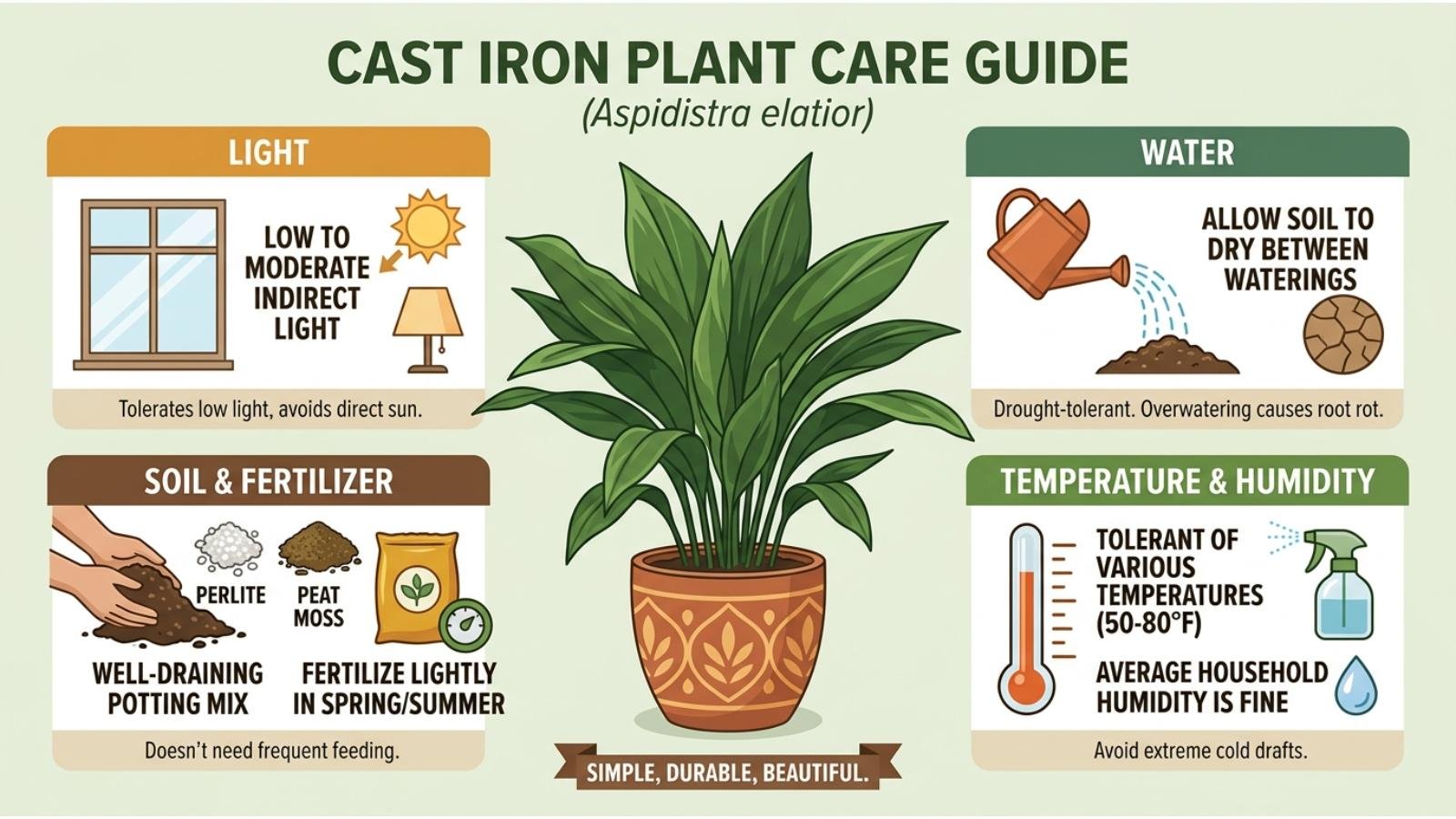
Cast iron plant care is simple because this tough, evergreen houseplant tolerates low light, occasional missed waterings, and a range of indoor conditions. Grow it in well-draining soil, place it in low to moderate indirect light, and water when the top 1–2 inches of soil feel dry. Keep it away from harsh direct sunlight, avoid constantly wet soil, and maintain normal indoor temperatures for steady, healthy growth.
Introduction
If you want a beautiful houseplant that does not demand constant attention, the cast iron plant is an excellent option to consider. Known for its long, dark green leaves and impressive tolerance for less-than-perfect conditions, this plant can bring lasting greenery to living rooms, offices, hallways, and shaded corners.
However, being a low-maintenance plant does not mean it is impossible to damage. Overwatering, poor drainage, harsh sunlight, and unsuitable temperatures can still cause yellow leaves, brown tips, and slow growth.
Understanding the fundamentals of cast iron plant care will help you keep your plant healthy without creating an unnecessarily complicated maintenance routine.
In this guide, you will learn how to provide the right light, water, soil, humidity, and temperature, along with practical advice for repotting, propagation, seasonal maintenance, and troubleshooting common problems.
Understanding the Cast Iron Plant


The cast iron plant, botanically known as Aspidistra elatior, is a slow-growing, evergreen perennial admired for its ability to survive conditions that challenge many other houseplants.
It produces long, lance-shaped leaves that emerge from underground rhizomes. These rhizomes store energy and help the plant spread gradually over time.
Why is it called a cast iron plant?
Its common name comes from its reputation for tolerating neglect and less-than-ideal growing conditions. It can handle relatively low light, inconsistent watering, and ordinary indoor humidity better than many tropical foliage plants.
Nevertheless, it still needs suitable care to maintain attractive leaves and healthy roots.
Cast iron plant characteristics
| Feature | Description |
|---|---|
| Botanical name | Aspidistra elatior |
| Common name | Cast iron plant |
| Plant type | Evergreen perennial |
| Foliage | Long, leathery, arching leaves |
| Growth rate | Slow |
| Light preference | Low to moderate indirect light |
| Water requirement | Moderate; allow the soil to partially dry |
| Soil preference | Well-draining potting mix |
| Mature size | Often around 2 feet tall indoors, sometimes larger depending on conditions |
| Pet safety | Generally considered non-toxic to cats and dogs |
Practical insight: Do not judge this plant’s health by how quickly it produces new leaves. Cast iron plants naturally grow slowly. A plant that produces only a few new leaves during a growing season may still be perfectly healthy.
Image suggestion: A labeled botanical illustration showing the leaves, underground rhizomes, roots, and new shoots of a cast iron plant.
Choosing the Right Light
Light is one of the most important factors in successful cast iron plant care. Although this plant tolerates low-light conditions, it still needs some light to maintain its foliage and produce new growth.
How much light does a cast iron plant need?
The plant generally grows well in:
- Low indirect light.
- Moderate indirect light.
- Filtered light near a window.
- Shaded outdoor locations protected from intense sunlight.
Moderate indirect light is often a useful starting point because it provides enough illumination for gradual growth without exposing the foliage to excessive sun.
Can cast iron plants grow in low light?
Yes. Cast iron plants can tolerate low-light rooms, offices, and shaded corners.
However, tolerating low light is not the same as thriving in darkness. In very dim conditions, growth may become extremely slow, and the soil may take longer to dry after watering.
If your plant has stopped producing new leaves, consider whether it receives enough natural or suitable artificial light.
Can cast iron plants tolerate direct sunlight?
Strong direct sunlight can scorch the leaves, particularly when the plant has been growing indoors in shade.
Signs of excessive sunlight include:
- Pale or bleached patches.
- Dry, brown areas on exposed leaves.
- Faded foliage.
- Leaves that appear scorched after a sudden change in placement.
A little gentle morning sunlight may be tolerated in some conditions, but avoid intense afternoon sun.
Best placement indoors
Consider these locations:
| Location | Suitability |
|---|---|
| Bright room with filtered light | Very suitable |
| North-facing window area | Often suitable |
| A few feet from a bright window | Suitable if enough indirect light reaches the plant |
| Dim hallway with some ambient light | May work, but growth can be very slow |
| Window receiving strong afternoon sun | Usually unsuitable without protection |
| Completely dark room | Unsuitable for sustained healthy growth |
Expert tip: If you move a cast iron plant from a dim room to a brighter location, make the change gradually. Sudden exposure to stronger sunlight can damage leaves that have adapted to shade.
Image suggestion: A simple light-placement diagram showing suitable indirect light, low light, and areas where intense direct sunlight should be avoided.
Watering Cast Iron Plants Correctly
Overwatering is one of the most common mistakes in cast iron plant care.
Because the plant grows slowly and tolerates some dryness, it generally does not need frequent watering. Keeping its roots constantly wet can encourage root damage and rot.
How often should you water a cast iron plant?
There is no single watering schedule that works for every plant.
Watering frequency depends on:
- Light levels.
- Room temperature.
- Pot size.
- Soil composition.
- Drainage.
- Season.
- Whether the plant is actively growing.
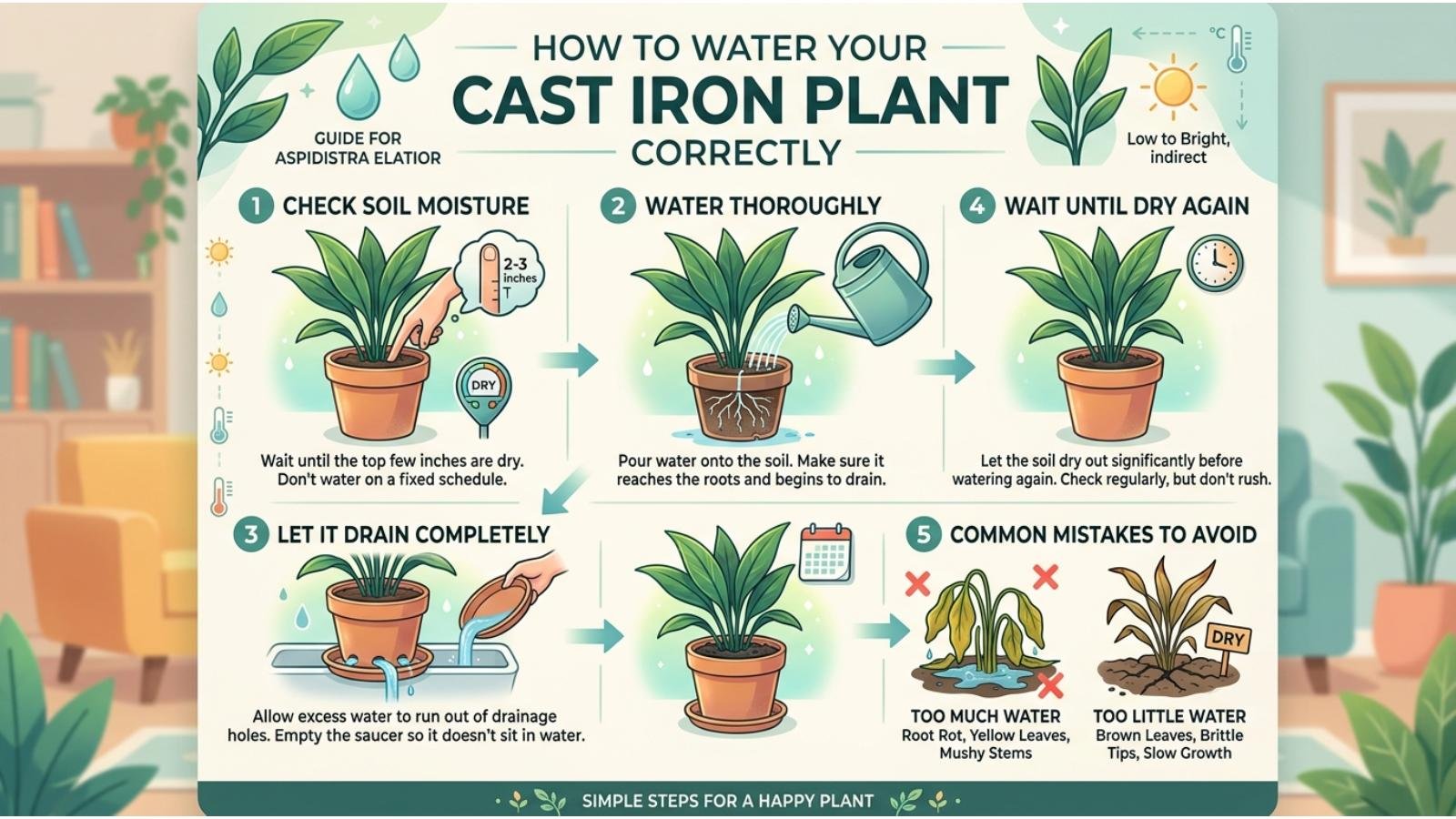
Instead of watering on a fixed day, check the soil before adding water.
The correct watering method
- Insert your finger approximately 1–2 inches into the potting mix.
- If the soil still feels noticeably moist, wait before watering.
- If the upper layer has dried, check the deeper soil to make sure the root zone is not still saturated.
- When watering is needed, water thoroughly until excess moisture drains from the bottom.
- Empty the saucer or decorative outer pot so the roots are not left standing in water.
The goal is to provide enough moisture for the roots while allowing excess water to escape.
Should you let a cast iron plant dry out completely?
Avoid keeping the plant constantly wet, but do not make a habit of allowing the entire root ball to become bone-dry for extended periods.
A little drying between waterings is beneficial. Severe, repeated drought can lead to drooping, dry leaf edges, and damaged foliage.
Seasonal watering adjustments
| Season | Watering approach |
|---|---|
| Spring | Check soil regularly as new growth begins |
| Summer | Monitor moisture more frequently if conditions are warm and the plant is actively growing |
| Autumn | Reduce watering as growth slows |
| Winter | Water less frequently when light levels and temperatures are lower |
These are general guidelines rather than a fixed calendar. A plant in a warm, bright room may dry out faster than one in a cool, dim location.
Common mistake: Giving a plant a small splash of water every few days can keep the upper soil damp while leaving other parts of the root ball unevenly hydrated. When watering is needed, thorough watering followed by proper drainage is usually more effective.
Image suggestion: A step-by-step watering illustration showing soil moisture testing, thorough watering, drainage, and emptying the saucer.
Choosing the Best Soil and Pot
Cast iron plants are adaptable, but their roots still need oxygen. Soil that remains saturated for long periods can create conditions that encourage root rot.
What is the best soil for a cast iron plant?
Choose a potting mix that holds some moisture while draining excess water efficiently.
A suitable starting mix could contain:
- Two parts quality indoor potting mix.
- One part perlite or pumice.
- One part fine orchid bark or another suitable material that improves structure and aeration.
This is a practical starting point rather than a mandatory formula. A commercial indoor potting mix that drains well may also work.
If your existing mix stays wet for many days, improve its drainage and structure rather than watering more frequently.
What type of pot should you use?
A pot with drainage holes is essential.
Suitable options include:
- Terracotta pots, which allow moisture to evaporate through their walls.
- Plastic nursery pots with adequate drainage.
- Glazed ceramic pots with drainage holes.
Terracotta may be helpful in a home where soil dries slowly. Plastic pots retain moisture longer, which can be useful in warmer, drier conditions but requires careful watering.
Should cast iron plants be root-bound?
Cast iron plants can tolerate being somewhat root-bound, so there is usually no need to move them into a much larger container every year.
Repot when:
- Roots are emerging extensively through drainage holes.
- The root ball has become extremely crowded.
- The soil structure has deteriorated.
- Water runs through the pot without adequately moistening the root ball.
- The plant dries out unusually quickly because roots occupy most of the container.
Choose a new pot only modestly larger than the existing root ball. An oversized container holds more soil than the roots can use efficiently, increasing the risk of prolonged wetness.
Image suggestion: A comparison of well-draining potting mix, compacted wet soil, and a pot with proper drainage holes.
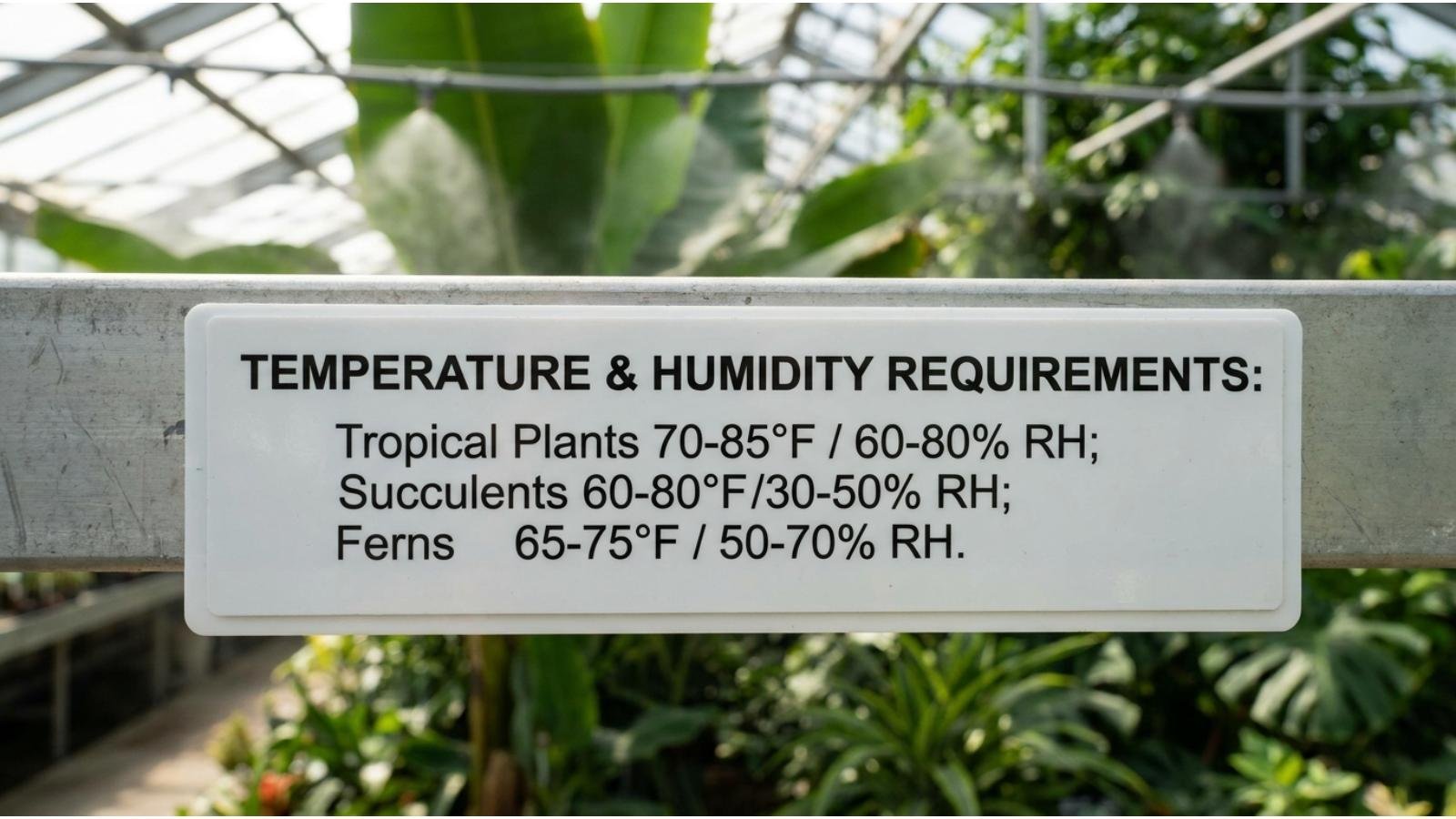
Temperature and Humidity Requirements
Cast iron plants are comfortable in many ordinary indoor environments, making them suitable for homes and offices.
Ideal temperature
Aim for normal, comfortable indoor temperatures, approximately 60–75°F (16–24°C).
The plant can tolerate some variation, but prolonged exposure to cold conditions can damage its foliage.
Avoid placing it:
- Directly beside cold, drafty windows during winter.
- Against heating vents that blow hot, dry air.
- Near air conditioners that produce strong cold drafts.
- Outdoors where temperatures may fall below its tolerance.
Although established plants can tolerate some cool conditions, protecting them from frost and prolonged cold is important.
Does a cast iron plant need high humidity?
No. High humidity is not essential for this plant.
It generally adapts well to typical household humidity, so you do not need to purchase a humidifier solely for its benefit.
If the air is exceptionally dry, monitor the leaf edges for browning. However, brown tips can also result from watering problems, root damage, or accumulated salts, so humidity should not automatically be blamed.
Practical tip: Avoid frequent misting as a solution to brown leaves. Misting does not reliably correct the underlying cause of leaf damage and is unnecessary for most healthy cast iron plants.
Fertilizing for Healthy Growth
Cast iron plants are not heavy feeders. Too much fertilizer can cause more problems than it solves, particularly when growth is slow.
When should you fertilize?
During active growth in spring and summer, you can apply a balanced houseplant fertilizer at a reduced strength according to the product’s instructions.
A cautious approach is to:
- Wait until the plant is showing signs of active growth.
- Use a balanced fertilizer diluted according to its label.
- Apply it to appropriately moist soil rather than severely dry soil.
- Avoid repeated applications when the plant is not actively growing.
Reduce or stop fertilizing during winter if growth has slowed substantially.
Can you fertilize a cast iron plant every month?
Monthly feeding during active growth may be appropriate for some diluted fertilizers, but it is not a universal requirement.
The plant’s growth rate, soil mix, and fertilizer concentration all matter.
If your plant is healthy and producing normal foliage, there is no need to increase fertilizer simply because new leaves appear slowly.
Signs of overfertilization
Watch for:
- Brown leaf tips or margins.
- A crust of mineral salts on the soil surface.
- Declining root health.
- Foliage damage following repeated heavy feeding.
If you suspect excess fertilizer, stop feeding and review the plant’s watering and drainage. Where drainage is good, flushing the potting mix with water may help remove accumulated soluble salts.
Pruning and Routine Maintenance
Cast iron plants do not require frequent pruning to maintain their shape.
Most routine maintenance involves removing damaged leaves and keeping the foliage clean.
How to prune a cast iron plant
- Inspect the plant for completely yellow, brown, or badly damaged leaves.
- Use clean, sharp pruning scissors.
- Cut unwanted leaves close to the soil line without damaging nearby shoots.
- Remove dead plant material from the pot.
- Check the plant for signs of pests or recurring leaf damage.
Avoid cutting healthy leaves simply to encourage faster growth. Removing too much foliage can reduce the plant’s ability to support new growth.
Should you trim brown leaf tips?
If only the tips are brown, you can trim the damaged portions for appearance.
Follow the natural shape of the leaf and avoid cutting deeply into healthy green tissue.
However, trimming does not resolve the cause. If several leaves develop brown tips, review watering, drainage, fertilizer use, and environmental conditions.
Cleaning the leaves
Dust can accumulate on the broad leaf surfaces.
To clean them:
- Wipe the leaves gently with a soft, damp cloth.
- Support each leaf while cleaning.
- Avoid abrasive materials.
- Do not use household cleaning chemicals or leaf-shine products that may leave unwanted residues.
Clean foliage is easier to inspect for pests and damage.
Image suggestion: A close-up showing how to remove a damaged cast iron plant leaf at its base using clean pruning scissors.
How to Repot a Cast Iron Plant
Repotting is best done when the plant needs additional space or its potting mix has deteriorated.
Because cast iron plants grow slowly, repotting is often an occasional task rather than an annual requirement.
Step-by-step repotting guide
Step 1: Choose an appropriate time.
Spring or early summer is generally convenient because the plant can resume growth under favorable conditions.
Step 2: Prepare the new pot.
Select a container with drainage holes that is only modestly larger than the current root ball.
Step 3: Remove the plant carefully.
Ease the plant out of its container without pulling forcefully on the leaves.
Step 4: Inspect the roots.
Healthy roots should be firm. Remove clearly dead or rotten roots with clean tools, taking care not to damage healthy tissue unnecessarily.
Step 5: Position the plant.
Place it at approximately the same depth it was growing previously.
Step 6: Add fresh potting mix.
Fill around the root ball, keeping the mix loose enough to allow drainage and aeration.
Step 7: Water appropriately.
Water the plant if the soil and root condition call for it, allowing excess water to drain completely.
Step 8: Return it to a suitable location.
Keep the plant in indirect light and avoid strong sunlight while it settles into its new container.
What should you do after repotting?
Some temporary slowing of growth is normal after root disturbance.
Avoid immediately applying strong fertilizer or repeatedly watering the plant in an attempt to encourage new leaves.
Instead, maintain stable conditions and monitor soil moisture.
Expert insight: If your cast iron plant is healthy and the pot is not overcrowded, leaving it undisturbed is often preferable to repotting simply because a certain amount of time has passed.
Propagating Cast Iron Plants
Cast iron plants are most commonly propagated by dividing their underground rhizomes.
Propagation from individual leaf cuttings is not the usual reliable method for producing a complete new plant.
When should you divide a cast iron plant?
Consider division when:
- The plant has become large enough to separate into sections.
- You are repotting an overcrowded specimen.
- You want to produce another plant from a healthy established clump.
Because growth is slow, avoid dividing a small or struggling plant unnecessarily.
Step-by-step propagation by division
- Remove the plant from its pot.
- Gently loosen enough soil to expose the rhizomes and roots.
- Identify a healthy section containing roots and viable growing points.
- Separate the section using clean tools if necessary.
- Plant each division in an appropriately sized pot with well-draining mix.
- Keep the divisions in indirect light.
- Water carefully and allow the soil to partially dry between waterings.
Each division needs sufficient roots and a viable growing point to establish successfully.
How long does propagation take?
New growth may take time to appear. A newly divided plant can spend a period establishing its roots before producing noticeable foliage.
Do not assume propagation has failed simply because no new leaf appears immediately.
However, a division without viable roots or a growing point may not establish successfully.
Image suggestion: A three-panel propagation diagram showing an established cast iron plant, a rhizome division with roots, and the newly potted division.
Growing Cast Iron Plants Outdoors
Cast iron plants can also be grown outdoors in suitable climates and shaded garden locations.
Their tolerance for shade makes them useful for planting beneath trees, along sheltered borders, and in areas where many sun-loving plants struggle.
Where should you plant a cast iron plant outdoors?
Look for a location with:
- Full shade or filtered shade.
- Protection from intense afternoon sunlight.
- Well-draining soil.
- Protection from harsh cold and frost.
- Enough room for the clump to spread gradually.
Although the plant tolerates shade, very dry soil beneath trees can still cause stress. Tree roots may compete with the plant for available moisture.
Can cast iron plants grow in full sun?
Full sun is generally unsuitable, particularly in hot climates.
Strong sunlight can scorch the leaves, creating bleached or brown patches.
If your outdoor plant has been growing in shade, do not suddenly move it into direct sunlight.
Growing cast iron plants in containers outdoors
Container-grown plants can work well on shaded patios and porches.
Use a pot with drainage holes and monitor moisture more closely during hot weather. Outdoor wind, temperature, and rainfall can change how quickly the potting mix dries.
During cold weather, protect container-grown plants because their roots are more exposed to temperature fluctuations than plants growing in the ground.
Common Cast Iron Plant Problems and How to Fix Them
Even a resilient plant can develop problems. The key is to identify the pattern of damage and examine the growing conditions before changing several things at once.
Cast iron plant leaves turning yellow
Yellow leaves can have several causes.
| Possible cause | What to look for | What to do |
|---|---|---|
| Overwatering | Soil remains wet, sometimes accompanied by declining roots | Allow the mix to dry appropriately and improve drainage |
| Underwatering | Very dry soil, wilting, or crispy foliage | Water thoroughly when the root ball needs moisture |
| Natural aging | An occasional older leaf yellows while the rest of the plant looks healthy | Remove the declining leaf when it has finished dying back |
| Poor drainage | Water remains around the roots for extended periods | Check drainage holes and consider improving the potting mix |
| Environmental stress | Yellowing follows a major change in light or temperature | Return the plant to stable, suitable conditions |
Important: Yellow leaves alone do not prove that a plant needs more water. Check the soil first.
Brown leaf tips
Brown tips can result from:
- Inconsistent watering.
- Excess fertilizer or mineral accumulation.
- Root stress.
- Very dry environmental conditions.
- Physical damage.
Review recent care changes before deciding which cause is responsible.
If the soil remains wet, do not respond to brown tips by watering more frequently.
Brown or scorched patches
Large brown patches on the side of the plant facing a window may indicate sun damage.
Move the plant away from harsh direct sunlight and maintain a consistent light environment.
Damaged leaf tissue will not become green again, but new growth may emerge normally once conditions improve.
Drooping leaves
Drooping can occur when the plant is severely dry, when roots are damaged, or after substantial root disturbance.
Check the moisture level before watering.
If the soil is wet and the leaves are drooping, investigate drainage and root health instead of adding more water.
Slow or absent new growth
Slow growth is normal for this species, especially in low light and during cooler months.
However, if the plant has not produced new leaves for an extended period, consider:
- Whether the light level is extremely low.
- Whether the plant is receiving appropriate seasonal care.
- Whether the roots are overcrowded.
- Whether the soil has become compacted or poorly draining.
- Whether the plant has been exposed to cold or other stress.
Make gradual adjustments rather than applying extra fertilizer or water without identifying the likely cause.
Pests affecting cast iron plants
Cast iron plants are generally resilient, but indoor specimens can still experience pest problems.
Potential pests include:
- Spider mites.
- Mealybugs.
- Scale insects.
Inspect the undersides of leaves, leaf bases, and sheltered areas where pests may hide.
If you find pests, isolate the affected plant where practical, remove visible insects, and use a treatment labeled for the pest and plant type. Follow all product instructions.
Image suggestion: A troubleshooting infographic comparing yellow leaves from overwatering, brown tips, sun-scorched patches, and healthy foliage.
Cast Iron Plant Care Mistakes to Avoid
The plant’s reputation for toughness can sometimes encourage careless habits. Avoiding a few common mistakes will help prevent unnecessary damage.
Mistake 1: Watering too frequently
A cast iron plant does not need constantly moist soil.
Better approach: Check the soil before watering and make sure the pot drains properly.
Mistake 2: Assuming low light means no light
The plant tolerates low light but still needs illumination to support healthy growth.
Better approach: Choose a naturally lit room or provide suitable artificial light if necessary.
Mistake 3: Using an oversized pot
Excess soil can remain wet for too long when the root system is small.
Better approach: Increase pot size gradually as the plant grows.
Mistake 4: Fertilizing to force faster growth
Heavy feeding does not overcome the plant’s naturally slow growth rate.
Better approach: Use moderate feeding during active growth and avoid unnecessary fertilizer applications.
Mistake 5: Ignoring drainage
Even a drought-tolerant plant can develop root problems when its roots remain waterlogged.
Better approach: Use a pot with drainage holes and a mix that allows excess water to escape.
Mistake 6: Moving the plant suddenly into strong sunlight
Leaves adapted to shade can suffer when exposed to intense direct sunlight.
Better approach: Keep the plant in filtered light or introduce brighter conditions gradually.
Seasonal Cast Iron Plant Care Calendar
A simple seasonal routine can make plant maintenance easier without encouraging unnecessary watering or feeding.
| Season | Main priorities |
|---|---|
| Spring | Check for new growth, assess whether repotting is needed, and resume moderate feeding if the plant is actively growing |
| Summer | Monitor soil moisture, protect leaves from harsh direct sunlight, and inspect for pests |
| Autumn | Reduce fertilizer as growth slows and adjust watering to changing conditions |
| Winter | Avoid cold drafts, reduce watering when the soil dries more slowly, and pause routine feeding if growth has stopped |
A simple monthly maintenance routine
Once a month, take a few minutes to:
- Inspect leaves for yellowing, brown patches, or pests.
- Check whether the potting mix is draining properly.
- Remove fully dead or badly damaged leaves.
- Wipe dust from the foliage.
- Review the plant’s position if its lighting or temperature conditions have changed.
You do not need to perform every task every month. Use the plant’s condition to decide what actually needs attention.
Cast Iron Plant Varieties
Although the classic green cast iron plant is widely recognized, several cultivated forms offer different foliage patterns.


Common varieties to know
| Variety | Appearance |
|---|---|
| Aspidistra elatior | Broad, deep green leaves |
| ‘Variegata’ | Green leaves with cream or pale stripes |
| ‘Milky Way’ | Green foliage marked with pale speckles |
| ‘Asahi’ | Green leaves with pale or whitish tips as they mature |
Variegated varieties may require brighter indirect light than solid-green forms to maintain their distinctive markings. However, strong direct sunlight can still damage their foliage.
When purchasing a named variety, check that the plant’s identification is reliable, since foliage patterns can vary.
Is the Cast Iron Plant Safe for Pets?
The cast iron plant is generally regarded as non-toxic to cats and dogs.
This makes it a useful option for households looking for decorative foliage without choosing a plant known to be poisonous to common household pets.
However, non-toxic does not mean that eating large quantities of plant material is advisable. Chewing leaves can still cause mild stomach upset or irritation in some animals.
If a pet develops concerning symptoms after eating a plant, contact a veterinarian for appropriate advice.
Frequently Asked Questions About Cast Iron Plant Care
How often should I water my cast iron plant?
Water when the upper 1–2 inches of soil feel dry, while checking that the deeper root zone is not still saturated. Water thoroughly and allow excess water to drain. The exact frequency depends on light, temperature, pot size, and soil conditions.
Can a cast iron plant survive in a dark room?
It can tolerate low-light conditions, but a completely dark room cannot support sustained healthy growth. Choose a location with some natural or suitable artificial light.
Why is my cast iron plant not growing?
Slow growth is normal. Very low light, cold conditions, damaged roots, overcrowding, and poor soil conditions can slow growth further. Check the growing environment before increasing water or fertilizer.
Should I mist my cast iron plant?
Routine misting is generally unnecessary. The plant usually adapts well to ordinary indoor humidity. Focus instead on appropriate watering, drainage, and stable temperatures.
Do cast iron plants like to be root-bound?
They tolerate being somewhat root-bound and do not require frequent repotting. Repot when the roots become excessively crowded, the soil deteriorates, or the container no longer supports healthy growth.
Can I grow a cast iron plant in a bathroom?
Yes, if the bathroom receives some suitable light and has reasonable air circulation. A very dark bathroom may not provide enough light for sustained growth.
Can cast iron plants grow in water?
They are normally grown in soil or another suitable growing medium. Keeping the roots permanently submerged is not the standard recommended growing method and can create problems if the roots are not adapted to those conditions.
How do I make my cast iron plant bushier?
Provide suitable indirect light, healthy roots, and consistent care. As the plant matures, its rhizomes can produce additional shoots. Division can also create separate plants, but it does not instantly make a small plant fuller.
Why are my cast iron plant leaves turning brown?
Brown areas may result from sun scorch, inconsistent watering, root problems, or excess fertilizer salts. Examine the pattern of damage and check soil moisture before deciding how to respond.
Can I grow a cast iron plant outside?
Yes, in suitable climates and shaded locations. Protect it from intense direct sunlight, frost, and poorly drained soil.
Is the cast iron plant suitable for beginners?
Yes. Its tolerance for low light and occasional missed watering makes it a forgiving choice for beginners, provided its basic needs for light, drainage, and appropriate watering are met.
How long do cast iron plants live?
With suitable conditions, cast iron plants can remain established for many years. Their longevity depends on the growing environment, root health, and ongoing care.
Related Plant Care Topics for Internal Linking
If you are building a plant-care website, these related articles can help readers explore other plants with similar growing requirements.
Suggested internal links:
- Snake Plant Care: A Guide to Growing Healthy Snake Plants.
- ZZ Plant Care: Light, Watering, and Maintenance Tips.
- Peace Lily Care: How to Maintain Healthy Leaves and Flowers.
- Pothos Plant Care: Growing and Maintaining Beautiful Vining Plants.
- Spider Plant Care: Watering, Lighting, and Propagation.
- Chinese Evergreen Care: A Guide to Growing Aglaonema Indoors.
- Dracaena Plant Care: Indoor Growing and Troubleshooting Tips.
These topics are particularly relevant to readers who want low-maintenance indoor plants or are learning how to manage light, watering, and soil conditions.
Conclusion
Successful cast iron plant care comes down to providing the right growing conditions without overcomplicating the routine. Give your plant low to moderate indirect light, use a well-draining potting mix, water when the soil has partially dried, and protect it from harsh sunlight and prolonged cold.
Remember that this plant naturally grows slowly. A lack of rapid new growth does not necessarily indicate a problem, especially when the foliage remains healthy.
Your most important task is to avoid keeping the roots constantly wet. Check the soil before watering, use a container with drainage holes, and make adjustments according to the plant’s actual condition rather than following a rigid schedule.
With these simple habits, your cast iron plant can remain an attractive, long-lasting addition to your indoor plant collection.