Quick Answer
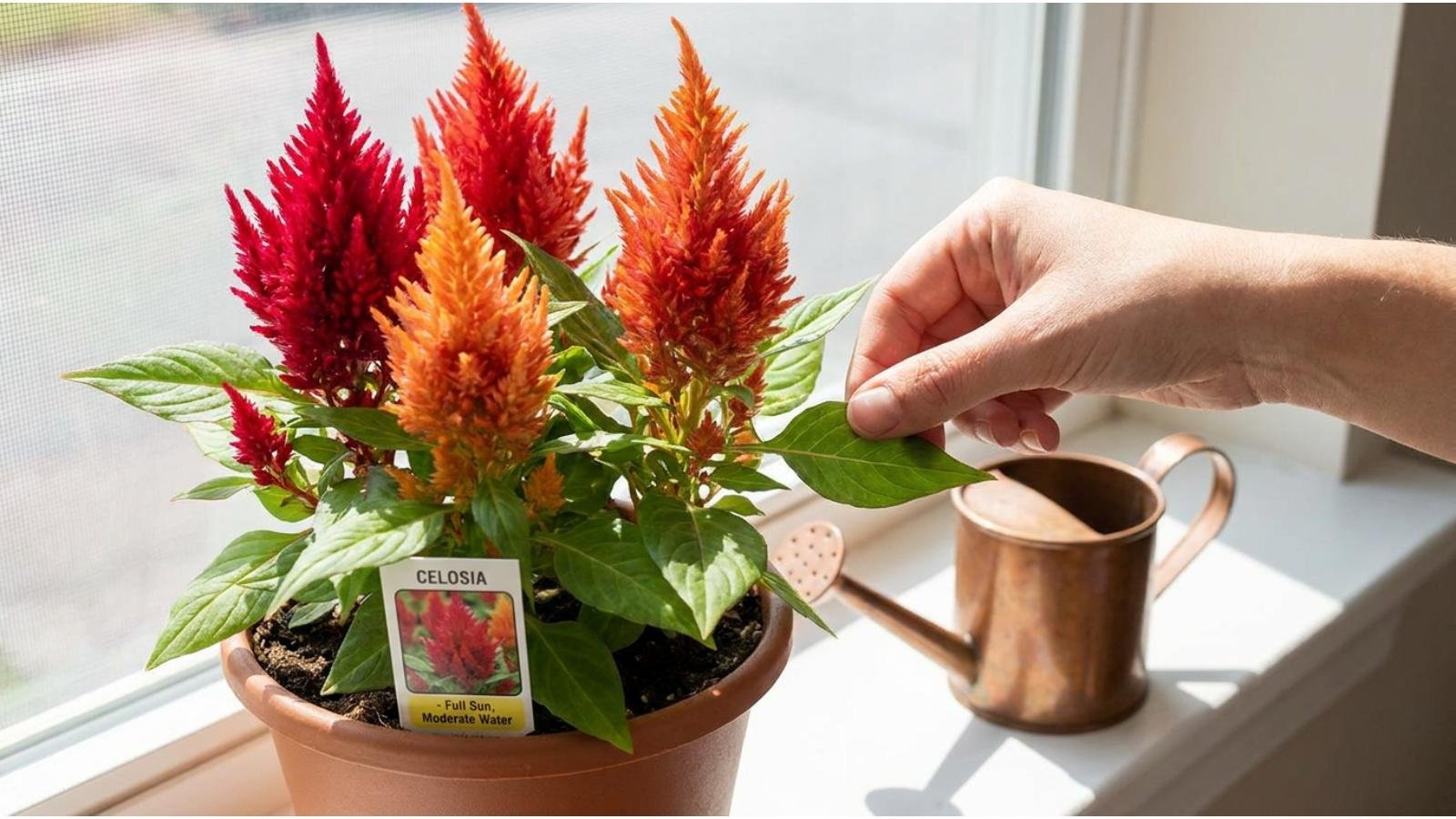
Celosia plant care is simple when you provide plenty of sunlight, warm temperatures, well-draining soil, and consistent moisture. Water when the soil begins to dry rather than keeping it constantly wet. Feed during active growth, remove faded flowers when needed, and protect the plant from cold temperatures. With the right conditions, celosia can produce colorful, long-lasting flowers throughout the warm growing season.
Introduction
Celosia is one of those flowering plants that can transform an ordinary garden bed or container into a bright display of color. Its unusual flowers come in forms that resemble flames, feathers, wheat spikes, or even a colorful brain. Red, pink, orange, yellow, purple, and other shades make celosia especially attractive for summer gardens.
Successful celosia plant care does not require complicated techniques. The biggest difference between a thriving plant and a struggling one usually comes down to sunlight, watering, soil drainage, temperature, and feeding.
A common beginner mistake is assuming that a heat-loving plant needs constantly wet soil. Celosia enjoys moisture during active growth, but waterlogged roots can create more problems than dry soil. Learning how to balance moisture with drainage is one of the most useful skills for growing healthy celosia.
What Is Celosia?
Celosia is a flowering plant known for its distinctive flowers and vibrant colors. It is commonly grown as a warm-season annual, although its behavior can vary depending on the climate and type.
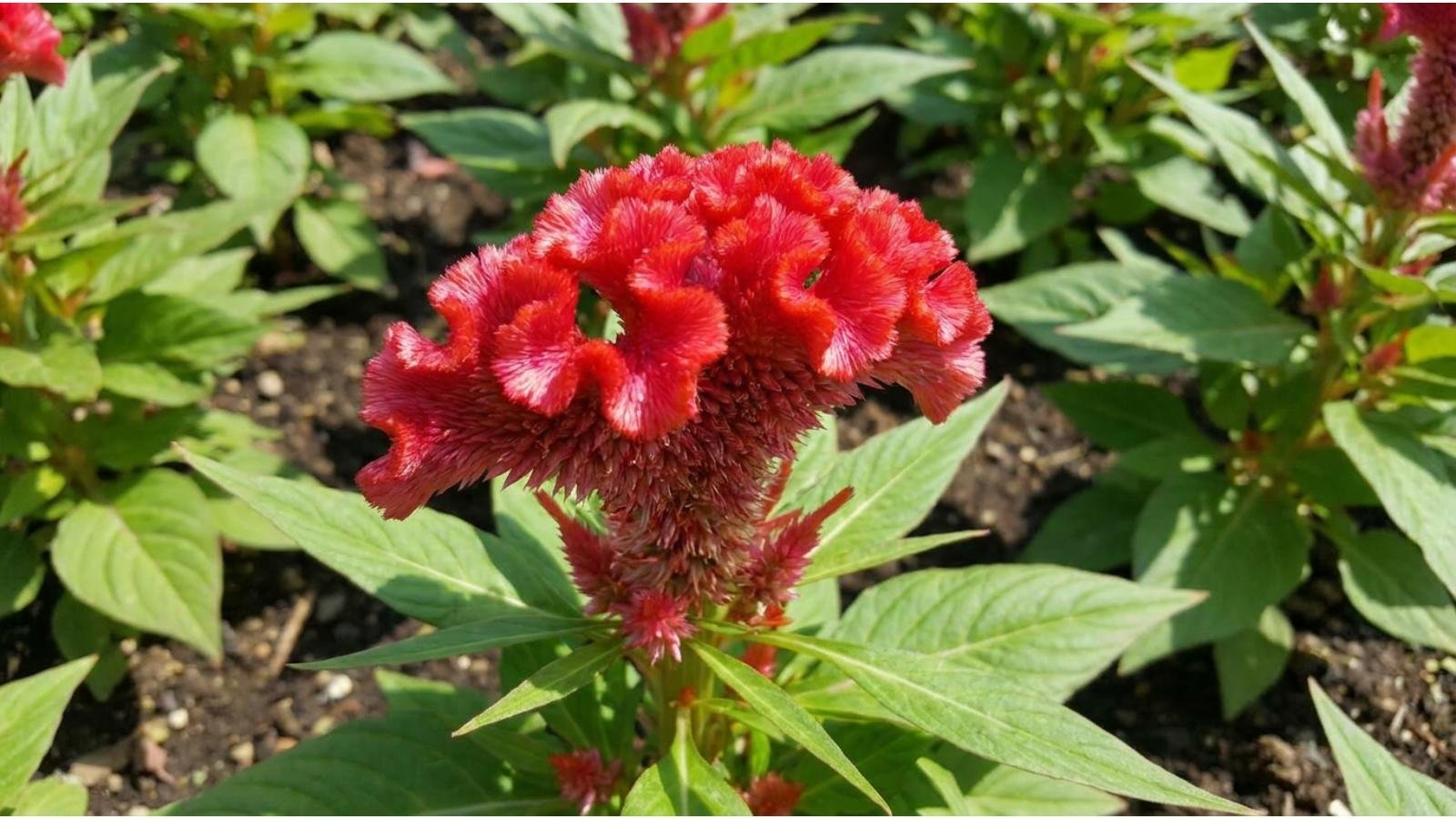
Celosia flowers generally fall into several recognizable forms:
| Celosia Type | Flower Appearance | Best Use |
|---|---|---|
| Cockscomb | Crested and folded | Containers and flower beds |
| Plume | Feather-like upright flowers | Borders and mass planting |
| Wheat | Narrow upright spikes | Vertical interest and cut flowers |
The foliage can also vary between varieties, with some plants producing green leaves and others developing attractive reddish or bronze tones.
Image Suggestion: Show three different celosia flower forms side by side with labels for cockscomb, plume, and wheat types.
How Much Sun Does Celosia Need?
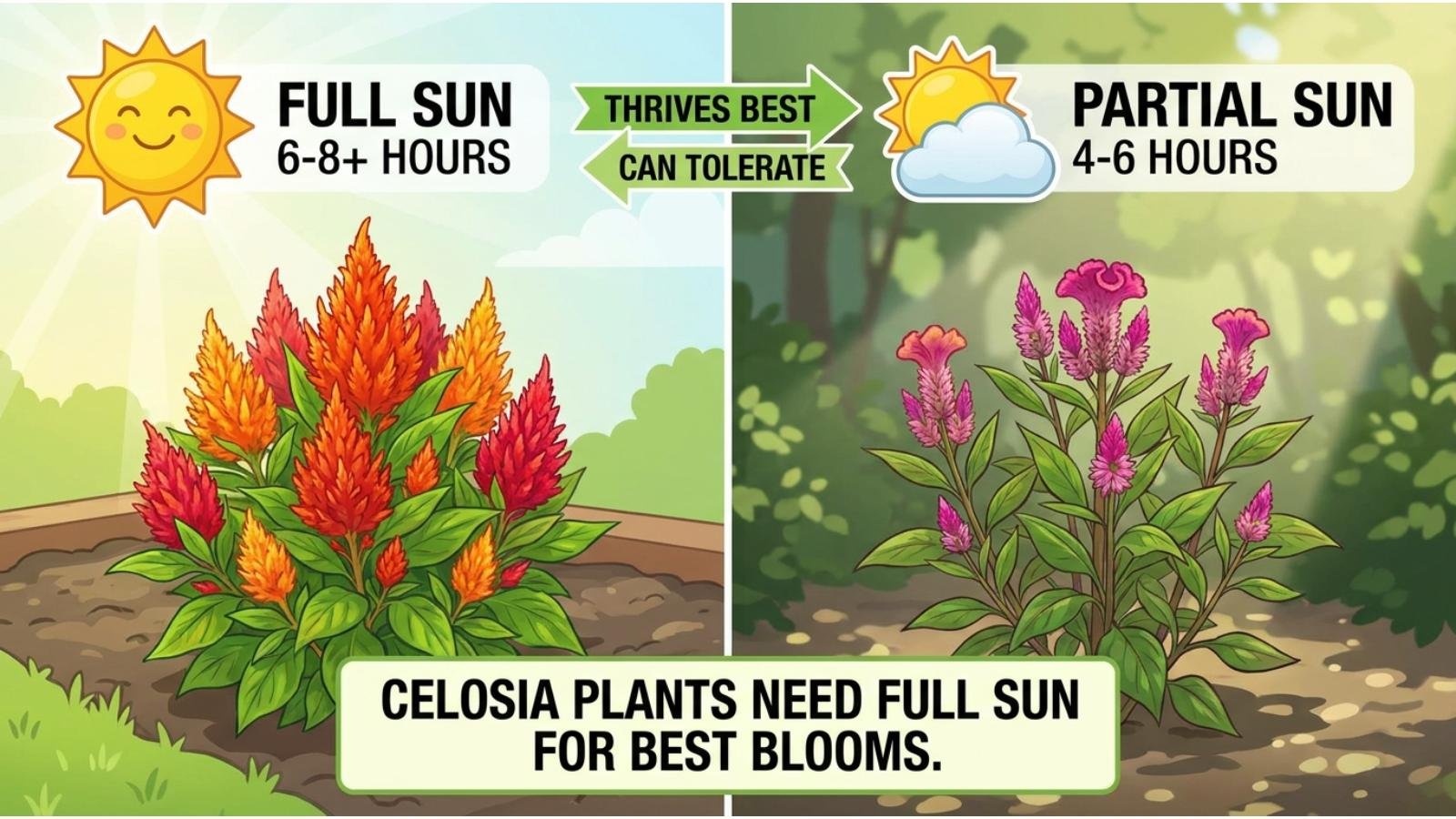
Celosia performs best in full sun. Aim for around six or more hours of direct sunlight each day whenever possible.
Strong sunlight helps celosia develop:
- Stronger stems.
- Fuller growth.
- Better flower production.
- More intense flower colors.
- More compact plants.
A plant growing in insufficient light may become tall, thin, and weak. It may also produce fewer flowers.
Where Should You Plant Celosia?
Choose a location that receives abundant direct sunlight and has good drainage.
A suitable location should:
- Receive several hours of direct sunlight.
- Drain quickly after rain.
- Have good air circulation.
- Provide enough room for the plant to spread.
- Be protected from cold temperatures.
If you are growing celosia in a container, place it somewhere bright rather than leaving it in a shaded corner.
Best Soil for Celosia
Celosia prefers fertile, well-draining soil that can hold some moisture without becoming saturated.
Good drainage is particularly important because constantly wet soil can damage the roots.
Before planting, improve heavy soil with suitable organic material if necessary. For containers, choose a quality potting mix that drains freely rather than using dense garden soil alone.
What Good Celosia Soil Should Do
Healthy soil should:
- Hold enough moisture for the roots.
- Drain excess water.
- Allow air to reach the roots.
- Support steady nutrient availability.
- Avoid becoming compacted.
A useful rule is simple: moist soil is good; permanently soggy soil is not.
How Often Should You Water Celosia?
Celosia needs regular moisture during active growth, especially when the weather is hot and the plant is flowering.
However, watering should be based on soil conditions rather than a strict calendar.
A Simple Watering Routine
- Check the top layer of soil.
- If it has started to dry, check deeper around the root zone.
- Water thoroughly when the plant needs moisture.
- Allow excess water to drain away.
- Check the plant more frequently during very hot weather.
Young plants generally need more consistent attention than established plants.
Container-grown celosia may also require more frequent watering because pots dry out faster than garden beds.
Signs of Underwatering
A thirsty celosia may show:
- Drooping leaves.
- Soft or wilted stems.
- Dry soil.
- Reduced flower quality.
- Slow growth.
Signs of Too Much Water
Overwatering may cause:
- Yellowing leaves.
- Weak growth.
- Constantly wet soil.
- Root problems.
- Wilting despite wet soil.
If the soil is already saturated, adding more water is unlikely to solve the problem.
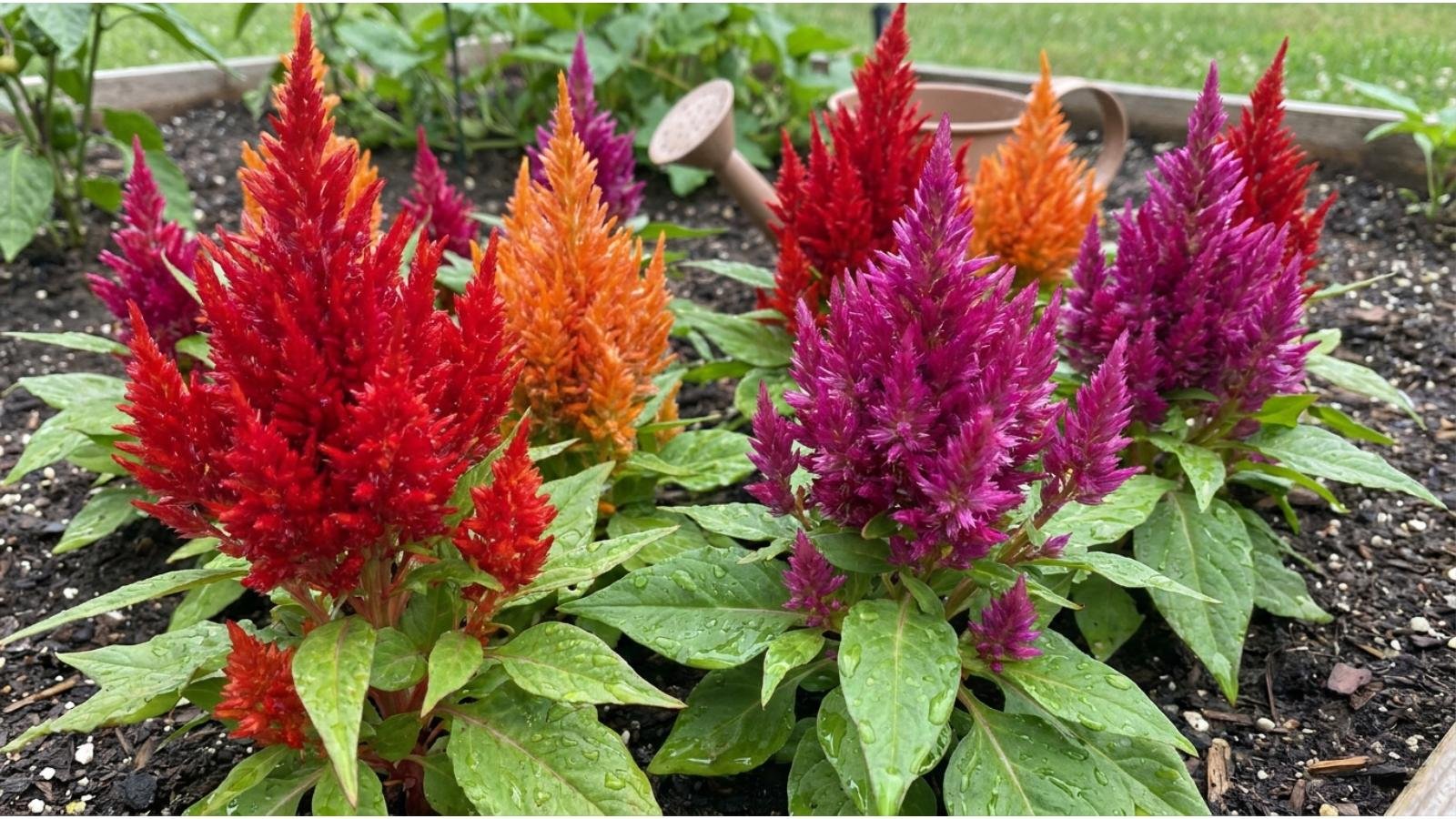
Temperature Requirements for Celosia
Celosia is a warm-season plant and performs best when temperatures remain comfortably warm.
Cold conditions can slow growth and may cause serious stress, particularly in young plants.
Avoid planting celosia outdoors too early in spring when nighttime temperatures remain low.
Warm Weather Tips
During hot weather:
- Keep the soil from becoming completely dry for extended periods.
- Water deeply when necessary.
- Provide good air circulation.
- Watch container plants carefully.
- Protect young plants from sudden temperature changes.
Celosia generally appreciates summer warmth, making it a useful choice for hot-season gardens.
How to Fertilize Celosia
Celosia benefits from adequate nutrients during active growth.
A balanced fertilizer can be useful, particularly when plants are grown in containers or nutrient-poor soil. Follow the fertilizer label carefully rather than assuming that a larger amount will produce more flowers.
Fertilizing Tips
- Feed during active growth.
- Use a balanced fertilizer according to directions.
- Avoid excessive fertilizer.
- Water appropriately after applying granular fertilizer.
- Reduce feeding when growth naturally slows.
Too much fertilizer can encourage excessive leafy growth and may contribute to nutrient problems.
For container-grown celosia, regular feeding can be particularly useful because nutrients can gradually be depleted from the potting mix.
Does Celosia Need Pruning?
Celosia generally does not require heavy pruning.
Basic maintenance usually involves removing damaged growth and faded flowers.
Deadheading Celosia
Deadheading means removing flowers after they have finished blooming.
It can help:
- Keep the plant looking tidy.
- Remove unattractive old flowers.
- Reduce unwanted seed production.
- Encourage a cleaner appearance.
If you want celosia to produce seeds and potentially reseed itself, leave some mature flowers on the plant.
Should You Pinch Celosia?
Pinching can be useful with certain celosia varieties when you want a bushier plant with more branching.
When a suitable young plant has developed several sets of leaves, pinch or trim the growing tip above a healthy set of leaves. New side shoots can then develop from lower points on the stem.
However, pinching is not always necessary.
If your goal is a particularly large main flower, allowing the primary growing point to develop may be preferable.
Pinching Is Best For
- Creating bushier plants.
- Encouraging side branches.
- Producing multiple flower stems.
- Improving the overall shape of suitable varieties.
Image Suggestion: Create a simple diagram showing where to pinch a young celosia stem and how side branches develop afterward.
Growing Celosia in Containers
Celosia is an excellent container plant.
Its colorful flowers work particularly well in:
- Patio containers.
- Window boxes.
- Balcony planters.
- Decorative pots.
- Mixed summer containers.
Choose the Right Container
Use a container with drainage holes and enough space for the plant’s mature size.
Avoid containers that hold water around the roots.
A good container setup includes:
- Drainage holes.
- Quality potting mix.
- Adequate root space.
- A sunny location.
- Regular monitoring of moisture.
Why Container Celosia Needs More Attention
Container soil can dry out much faster than garden soil, especially during hot weather.
Check the pot regularly rather than assuming that yesterday’s watering means the plant will remain hydrated today.
How to Grow Celosia From Seed
Growing celosia from seed is a practical way to produce several plants at once.
The seeds are small, so handle them carefully when sowing.
Step-by-Step Seed Starting
- Fill a clean seed tray or small container with a suitable seed-starting mix.
- Moisten the growing medium.
- Sow the seeds according to the recommended planting depth.
- Keep the growing medium evenly moist.
- Provide warmth for germination.
- Give seedlings strong light after emergence.
- Allow seedlings to become established.
- Harden them gradually before planting outdoors.
- Transplant after cold conditions have passed.
Why Warmth Matters
Celosia is a warm-season plant, and seedlings can struggle when exposed to cold conditions.
Starting seeds in a warm environment gives young plants a better opportunity to establish strong roots and healthy stems.
When Should You Plant Celosia Outdoors?
Plant celosia outdoors after the danger of frost has passed and the weather has become reliably warm.
Do not rely only on warm afternoons. Young celosia can be damaged by cold nights.
Before transplanting:
- Harden seedlings gradually.
- Choose a sunny location.
- Prepare well-drained soil.
- Water the young plants appropriately.
- Avoid disturbing the roots unnecessarily.
Giving seedlings time to adjust to outdoor conditions can reduce transplant stress.
How to Make Celosia Bloom More
If your celosia is producing lots of leaves but few flowers, review its growing conditions before adding extra fertilizer.
1. Increase Sunlight
Insufficient sunlight can reduce flowering. Move container plants to a brighter location if necessary.
2. Avoid Excessive Nitrogen
Too much nitrogen can encourage leafy growth rather than the balanced development you want from a flowering plant.
3. Maintain Consistent Moisture
Severe drought stress can affect growth and flower development.
4. Keep Roots Healthy
Poor drainage can weaken the plant and interfere with normal growth.
5. Keep the Plant Warm
Cold conditions can slow development.
6. Consider Pinching
For suitable varieties, early pinching can encourage additional branches and flower stems.
Common Celosia Problems and Solutions
Celosia Is Wilting
Wilting can have several causes.
First, check the soil.
If the soil is dry, the plant may need water. If the soil is already wet, investigate drainage or root problems before watering again.
Heat, transplant stress, and damaged roots can also contribute to wilting.
Celosia Leaves Are Turning Yellow
Yellow leaves can occur because of:
- Excessive watering.
- Poor drainage.
- Root stress.
- Nutrient deficiencies.
- Natural aging.
- Environmental stress.
Do not immediately assume that fertilizer is the solution. Check the soil moisture and roots first.
Celosia Is Not Flowering
When celosia fails to flower, check:
- Sunlight.
- Temperature.
- Soil moisture.
- Fertilizer use.
- Overall plant health.
A plant growing in too much shade may produce plenty of foliage but lack the flowering performance expected from a healthy sun-loving celosia.
Celosia Is Growing Too Tall
Leggy growth often indicates insufficient light.
Move container plants to a brighter location when possible.
If the variety responds well to pinching, early pruning can also encourage branching and a fuller shape.
Celosia Is Falling Over
Some varieties naturally grow taller than others.
Heavy flower heads, wind, weak stems, or insufficient sunlight can contribute to falling plants.
For tall varieties, provide support early rather than waiting until the plant is already leaning heavily.
Celosia Pests and Diseases
Celosia can encounter common garden pests and fungal problems, particularly when growing conditions are unfavorable.
Possible issues include:
- Aphids.
- Mites.
- Whiteflies.
- Leaf spots.
- Root problems.
- Gray mold.
- Powdery mildew.
How to Reduce Problems
Healthy growing conditions are the first line of defense.
Try to:
- Avoid constantly wet soil.
- Provide adequate spacing.
- Improve air circulation.
- Remove badly damaged leaves.
- Inspect plants regularly.
- Avoid unnecessary overhead watering.
- Keep the growing area clean.
Regular inspection makes it easier to identify problems before they become severe.
Seasonal Celosia Care
Spring
Spring is the time to start seeds and prepare the garden.
Focus on:
- Warm seed-starting conditions.
- Strong light for seedlings.
- Gradual hardening.
- Well-drained soil.
- Waiting for reliably warm weather.
Summer
Summer is usually the main growing and flowering period.
Focus on:
- Full sun.
- Consistent moisture.
- Regular feeding.
- Deadheading.
- Pest inspection.
- Supporting tall varieties if necessary.
Fall
As temperatures change, flowering may gradually decline.
If you want to grow celosia again, allow selected flower heads to mature and collect seeds when they are ready.
Winter
In climates with frost or freezing temperatures, outdoor celosia generally will not survive the winter.
If you live in a warm climate, plants may behave differently depending on the variety and local conditions.
Celosia Care Checklist
| Care Requirement | Best Practice |
|---|---|
| Light | Full sun |
| Soil | Fertile and well draining |
| Water | Consistent moisture without waterlogging |
| Temperature | Warm conditions |
| Fertilizer | Feed during active growth |
| Pruning | Minimal pruning usually needed |
| Pinching | Useful for suitable varieties |
| Propagation | Commonly grown from seed |
| Containers | Excellent choice |
| Cold | Protect from frost and cold temperatures |
Frequently Asked Questions
Is celosia easy to grow?
Yes. Celosia is generally easy to grow when it receives plenty of sunlight, warm temperatures, appropriate moisture, and well-draining soil.
Does celosia need full sun?
Celosia performs best in full sun. Plenty of direct light encourages stronger growth and better flowering.
How often should I water celosia?
Water when the soil begins to dry rather than following a strict schedule. During hot weather, container plants may need more frequent watering.
Can celosia grow in pots?
Yes. Celosia grows very well in containers when the pot has drainage holes, the soil drains properly, and the plant receives plenty of sunlight.
Why is my celosia wilting even though I water it?
If the soil is wet but the plant is still wilting, excessive moisture or root problems may be responsible. Check the drainage before adding more water.
Why is my celosia not flowering?
Insufficient sunlight, cold temperatures, excessive nitrogen, moisture stress, or general plant stress can reduce flowering.
Should I deadhead celosia?
Deadheading is optional. Remove faded flowers to keep the plant tidy and reduce unwanted seed production.
Can celosia survive winter?
Celosia is commonly grown as a warm-season annual and is sensitive to frost. Winter survival depends on the climate and variety.
Can I grow celosia from seed?
Yes. Celosia is commonly propagated from seed. Warm conditions and consistent moisture help young seedlings establish successfully.
Does celosia need fertilizer?
Celosia benefits from adequate nutrients during active growth. Use an appropriate fertilizer according to its instructions rather than overfeeding.
How do I make celosia bushier?
For varieties that respond well to pinching, removing the young growing tip can encourage side branching and produce a fuller plant.
How long does celosia bloom?
Celosia can provide flowers for much of the warm growing season when it receives adequate sunlight, moisture, nutrition, and warmth. Exact flowering duration varies by variety and growing conditions.
Final Thoughts
Successful celosia plant care starts with the basics: give the plant plenty of sunlight, keep its roots in well-draining soil, provide consistent moisture without overwatering, and protect it from cold temperatures.
Once those conditions are right, simple maintenance such as feeding, deadheading, and selective pinching can help you get the appearance you want. The most important lesson is not to treat every problem with more water or fertilizer. Check the plant’s environment first.
With the right balance of sun, warmth, moisture, drainage, and nutrition, celosia can become one of the most colorful and rewarding plants in a summer garden or container.