Quick Answer
A nursery pot is a lightweight container, usually made from plastic, designed primarily for growing, transporting, and selling plants. Its most important features are adequate drainage, appropriate size, and enough room for healthy root development. For most houseplants, choose a nursery pot only slightly larger than the existing root ball rather than dramatically increasing the container size.
Introduction
A nursery pot may look simple, but the container surrounding your plant has a major effect on watering, root health, stability, and how easily the plant can be transplanted. The familiar thin black plastic pot from a garden center is designed to be practical rather than decorative, making it inexpensive, lightweight, stackable, and easy to remove when a plant needs a new home.
The biggest mistake is assuming that a larger pot is automatically better. In reality, the right nursery pot should match the plant’s root system, growing habits, moisture requirements, and growing environment. A pot that is too large can leave excess potting mix wet for too long, while one that is too small can restrict roots and increase watering demands.
What Is a Nursery Pot?
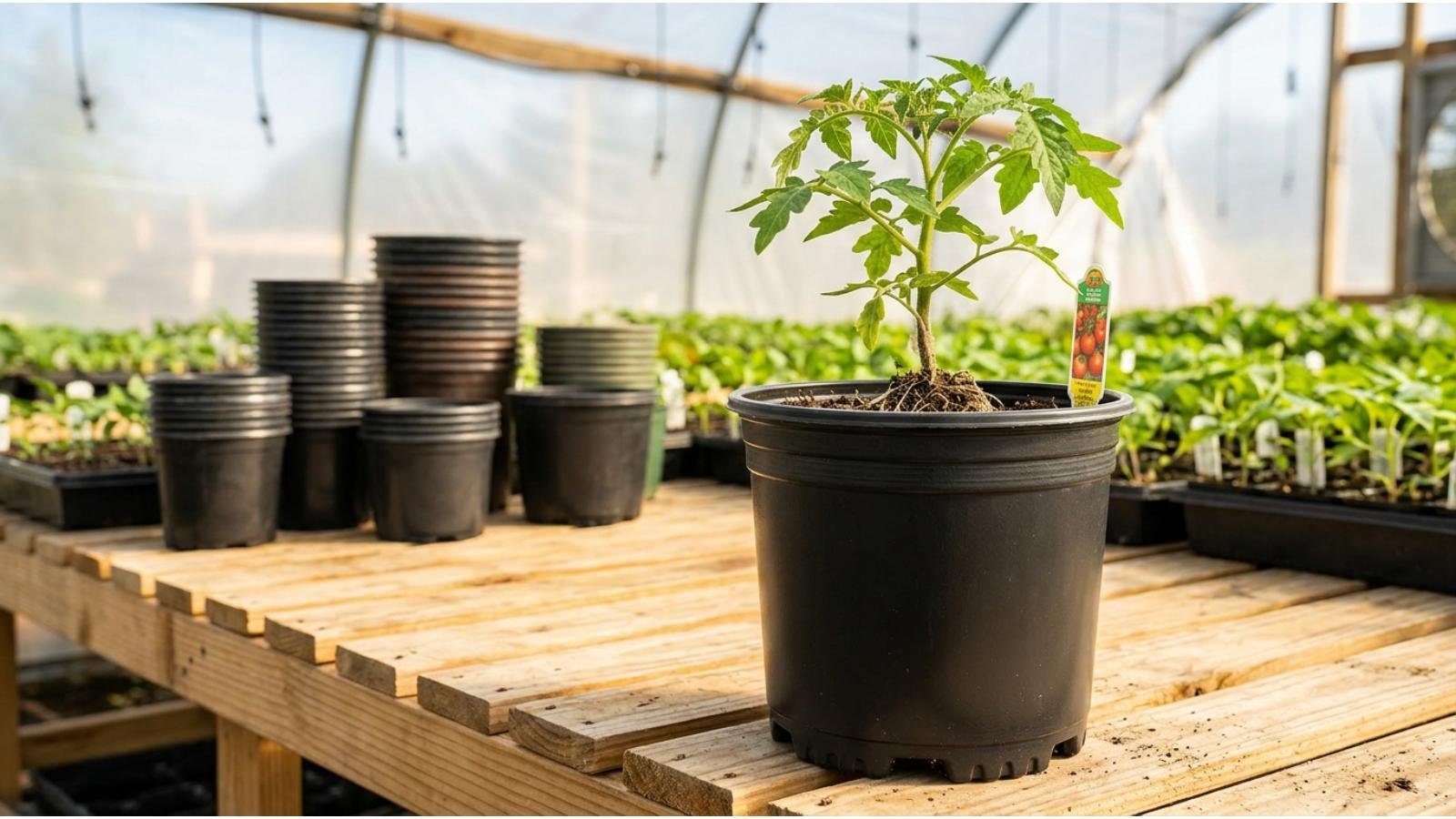
A nursery pot is a functional growing container used by plant nurseries, growers, gardeners, and houseplant owners. Most are made from lightweight plastic and include drainage holes at the bottom.
Unlike a decorative planter, its primary purpose is plant production and root management, not appearance.
Nursery pots are commonly used for:
- Seedlings and young plants
- Houseplants
- Cuttings and propagated plants
- Herbs and vegetables
- Perennials
- Shrubs and young trees
- Plants awaiting transplantation
- Plants placed inside decorative cachepots
Many nursery containers are tapered, making it easier to remove the root ball without damaging it unnecessarily.
Image Suggestion: Photograph showing a plant inside a plain nursery pot beside the same plant inside a decorative ceramic planter.
Nursery Pot vs. Decorative Plant Pot
These two containers can look similar, but they serve different purposes.
| Feature | Nursery Pot | Decorative Pot |
|---|---|---|
| Main purpose | Growing and transporting plants | Display |
| Weight | Usually lightweight | Often heavier |
| Drainage | Usually designed with drainage holes | May or may not have holes |
| Cost | Generally inexpensive | Often more expensive |
| Appearance | Functional | Decorative |
| Transplanting | Easy to remove | Can be difficult depending on shape |
| Common material | Plastic | Ceramic, terracotta, metal, resin, etc. |
A particularly useful setup is double potting: keep the plant in a drainage-equipped nursery pot and place that pot inside a decorative container. This gives you the appearance of a decorative planter without sacrificing drainage.
Why Drainage Holes Matter More Than Appearance
If you remember only one thing about choosing a nursery pot, make it this: water needs somewhere to escape.
After watering, excess moisture should drain away from the root zone. Without adequate drainage, the growing medium can remain saturated, reducing the air available around roots and increasing the risk of root problems.
Before using a nursery pot, inspect the bottom.
Look for:
- Multiple drainage openings
- Holes that are actually open
- No plastic covering the openings
- A base that allows water to escape freely
Do not assume a pot drains simply because it was sold as a plant container. Manufacturing plugs or blocked openings can interfere with drainage. Oklahoma State University Extension specifically recommends checking that drainage holes are clear.
A common drainage myth
Adding gravel or stones to the bottom of a pot is not a substitute for drainage holes. Extension guidance indicates that a gravel layer can actually create an undesirable saturated zone rather than improving drainage.
How to Choose the Right Nursery Pot Size
Pot size should be based primarily on the plant’s root system rather than simply choosing the largest container available.
For many houseplants, a practical starting point is moving up approximately 1–2 inches in diameter when the current container has become too small.
Use this simple checklist
Choose a larger nursery pot when:
- Roots are tightly circling the root ball.
- Roots are emerging heavily from drainage holes.
- The plant dries out unusually quickly.
- The plant has become unstable in its current container.
- The existing root system has filled most of the available medium.
Avoid dramatically increasing pot size just because the plant is growing.
A small plant placed into a huge container has a relatively small root system surrounded by a large amount of moist potting mix. That unused mix can stay wet longer, making watering management more difficult and potentially increasing root problems.
Practical example
Suppose your houseplant is currently in a 4-inch nursery pot and has clearly filled the container with roots. Moving it into a roughly 5- or 6-inch pot may be reasonable depending on the root ball and plant species.
Moving directly into a 12-inch container, however, is usually unnecessary.
Does Nursery Pot Shape Affect Plant Health?
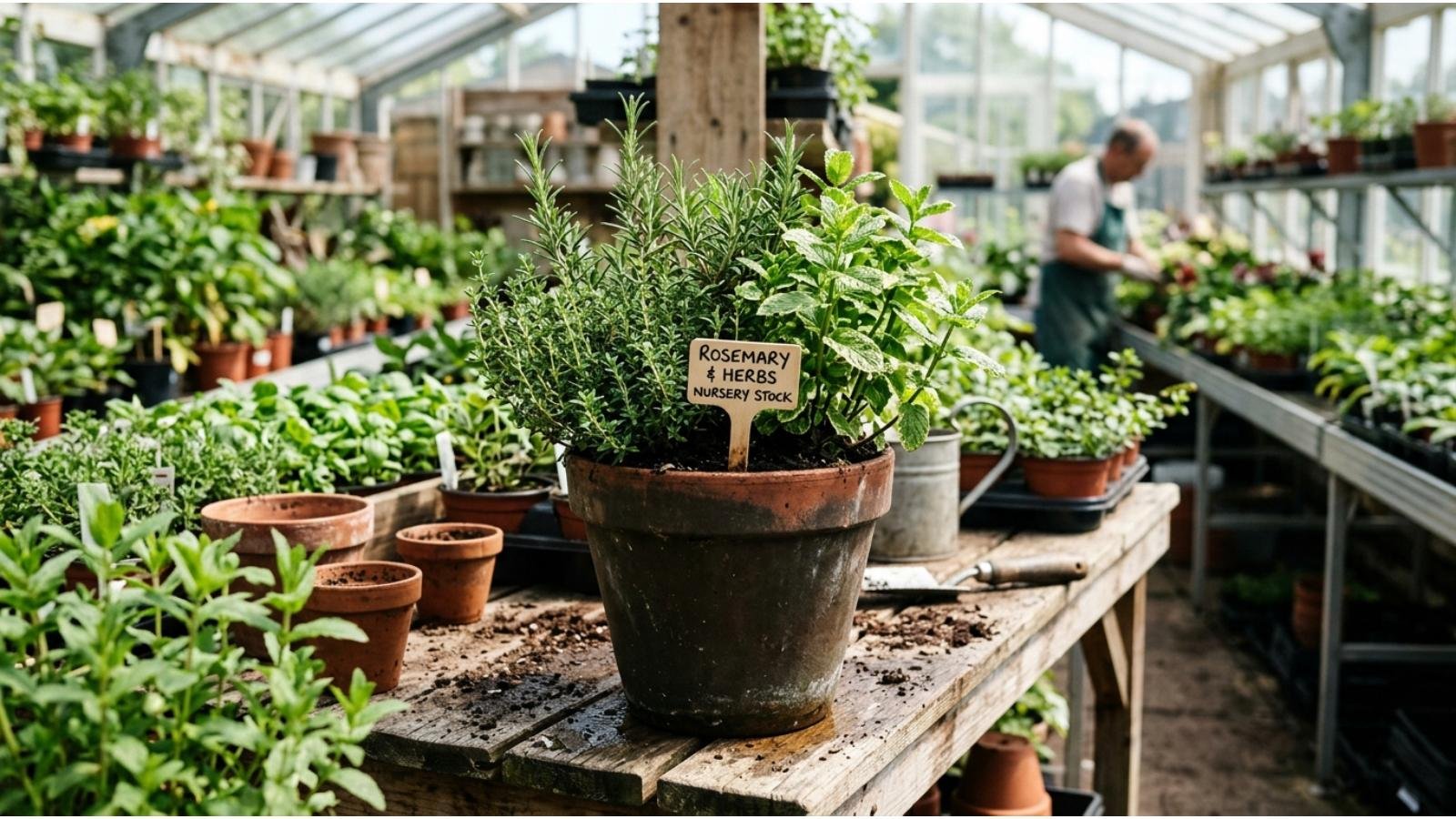
Yes. Height and shape can influence water behavior, stability, and root development.
Taller containers generally provide better drainage characteristics than very shallow containers when the same growing medium is used, because the extra height creates more space above the saturated portion of the medium.
But taller does not automatically mean better.
Consider the plant.
Choose based on the root system
Deep-rooted or tall plants:
A deeper container can provide useful root space and improve stability.
Shallow-rooted plants:
A shallower container may be more practical, provided it still offers appropriate drainage.
Top-heavy plants:
A wider, stable base can help prevent tipping.
Oklahoma State University notes that container depth, width, volume, and shape all affect nursery production, with stability needing to be balanced against drainage and root requirements.
Image Suggestion: Diagram comparing shallow, standard, and deep nursery pots with arrows showing root space and drainage behavior.
Plastic Nursery Pots: Are They Good for Plants?
Plastic nursery pots are popular for good reasons.
Advantages
- Lightweight
- Affordable
- Easy to move
- Reusable when properly cleaned
- Easy to stack
- Usually available in many sizes
- Convenient for transplanting
Plastic also tends to retain moisture longer than porous materials such as unglazed clay. That can be helpful for plants that dislike drying quickly but requires attention to watering.
Material alone, however, does not determine whether a pot is suitable. Drainage, size, plant requirements, temperature, and watering habits all matter.
For outdoor growing, dark-colored containers can become particularly hot in strong sunlight. Extension guidance notes that dark containers may increase temperatures around young roots.
How to Repot a Plant From a Nursery Pot
Repotting does not have to be complicated. The goal is to move the plant into an appropriately sized container while minimizing unnecessary root disturbance.
Step 1: Select the new container
Choose a nursery pot with drainage holes and only modestly more room than the existing root system requires.
Step 2: Prepare fresh potting mix
Use a potting medium appropriate for the plant rather than ordinary garden soil for most container-grown houseplants.
Step 3: Remove the plant carefully
Gently squeeze or flex the nursery pot and support the plant near the root ball. Avoid pulling forcefully on the stem.
Step 4: Inspect the roots
Look for:
- Healthy, firm roots
- Dense circling
- Dead or damaged roots
- Signs of excessive moisture
Step 5: Position the plant
Place the root ball at an appropriate depth. Avoid burying the stem or crown deeper than the plant naturally grew.
Step 6: Add potting mix
Fill around the root ball and lightly settle the medium. Do not compress it excessively.
Step 7: Water appropriately
Water according to the plant’s requirements and allow excess water to drain completely.
Step 8: Monitor the plant
After repotting, watch moisture levels rather than automatically watering on a fixed schedule.
Should You Put a Nursery Pot Inside a Decorative Pot?
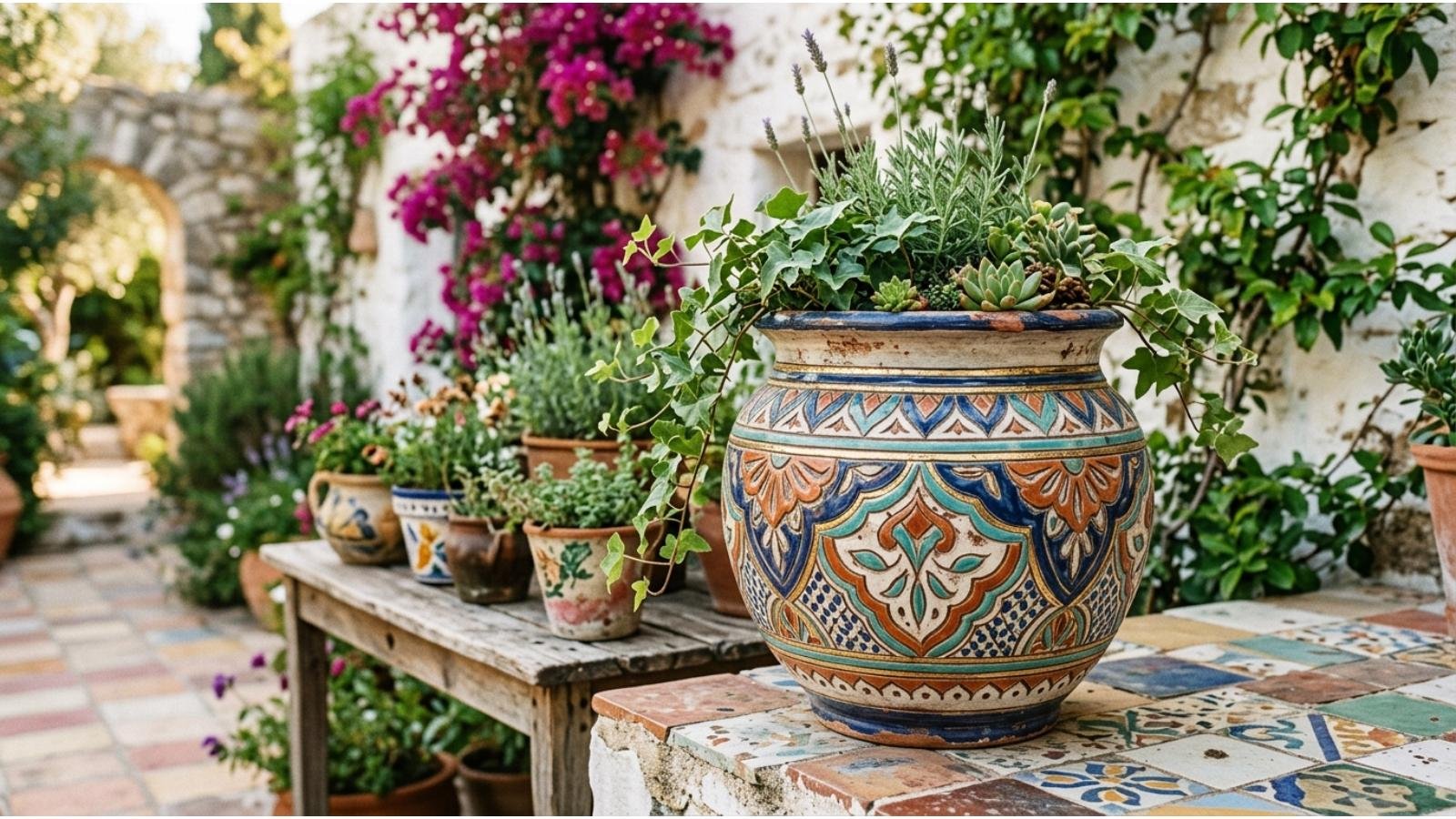
Yes. This is one of the most useful ways to combine plant health with attractive presentation.
The nursery pot acts as the functional growing container, while the decorative pot acts as the outer display container.
This setup is often called a cachepot or double-pot system.
Benefits
- Better drainage control
- Easier repotting
- Easier plant removal
- Protects furniture and floors
- Allows you to change decorative containers without disturbing roots
One important rule: do not allow the nursery pot to sit permanently in accumulated water inside the outer container. Empty excess water after watering when necessary.
Iowa State University Extension specifically recommends double-potting when you want to use a decorative container without drainage holes.
Common Nursery Pot Mistakes to Avoid
Even experienced plant owners occasionally make container mistakes. These are some of the most common.
1. Choosing the biggest pot available
More soil does not automatically mean more growth.
The extra medium can remain wet longer and make moisture management harder.
2. Ignoring drainage
A beautiful container with poor drainage can become a serious plant-health problem.
3. Covering drainage holes
Decorative liners, compacted soil, or manufacturing plugs can interfere with water movement.
4. Adding gravel to “improve” drainage
This popular technique does not solve the underlying problem of inadequate drainage and can worsen water retention patterns.
5. Leaving plants root-bound too long
A nursery container is not intended to hold every plant indefinitely. Some plants need to be shifted into a larger container as their root systems develop.
6. Choosing a pot without considering temperature
A dark plastic pot exposed to intense sunlight can become considerably hotter than the surrounding air, which may stress roots.
7. Reusing dirty pots
Old containers can carry leftover soil, pests, or plant pathogens. If a previous plant suffered from disease, clean and disinfect reusable containers before using them again. University of Wisconsin guidance recommends cleaning reused containers, particularly when previous plants experienced root disease or damping-off.
How to Reuse Nursery Pots Safely
Good-quality nursery pots can often be reused, which makes them useful for propagation and seasonal gardening.
Before reuse:
- Remove all old potting material.
- Rinse away soil and debris.
- Inspect for cracks and blocked drainage holes.
- Clean the container thoroughly.
- Disinfect when disease has previously been an issue.
- Rinse appropriately before planting again.
Do not automatically reuse a container from a diseased plant without cleaning it first.
For routine reuse, also check whether plastic has become brittle from prolonged sun exposure. Outdoor plastics can deteriorate over time.
Nursery Pot Size Guide: What the Numbers Mean
One confusing aspect of shopping for plant containers is that pot labels do not always describe size in the same way.
A listing might use:
- Inches
- Gallons
- Liters
- Quarts
- Nursery industry size numbers
- Product-specific dimensions
For that reason, measurements are often more useful than the label alone, particularly when you need a nursery pot to fit inside a decorative planter.
When purchasing online, check:
- Top diameter
- Overall height
- Base diameter
- Internal dimensions
- Approximate capacity
- Drainage design
A “6-inch pot” generally refers to a dimensional measurement rather than guaranteeing a particular volume. Container sizing systems can vary among manufacturers.
Nursery Pots for Indoor Plants
Nursery pots are especially convenient for indoor plants because they can be combined with attractive outer containers.
For indoor growing, focus on three things:
Drainage: Excess water must be able to leave the root zone.
Size: Avoid unnecessarily large containers.
Water management: Indoor environments often dry differently from outdoor spaces, so judge watering by the plant, potting medium, light, temperature, and moisture level rather than following an arbitrary calendar.
Illinois Extension recommends moving houseplants up only one pot size at a time in many situations, with approximately 1–2 inches of additional diameter.
Image Suggestion: Cross-section illustration of a houseplant in a nursery pot sitting inside a decorative cachepot.
Nursery Pots for Vegetables and Herbs
Nursery pots can also be useful for starting vegetables and herbs before moving plants into larger containers or garden beds.
The final container needs to provide enough root volume and depth for the mature crop.
For example, University of Wisconsin Extension recommends containers at least 5 gallons and roughly 12–18 inches deep for larger container vegetables such as tomatoes, peppers, eggplants, squash, cucumbers, and bush beans.
The lesson is important: the best nursery pot for a seedling is not necessarily the best final container for a mature vegetable.
Plan for the plant’s eventual size rather than judging the container only by the plant’s current appearance.
Expert Tips for Choosing a Better Nursery Pot
If you’re comparing several nursery pots, prioritize them in this order:
- Suitable drainage
- Correct size
- Appropriate depth
- Stable construction
- Material suited to the growing environment
- Ease of transplanting
- Durability
- Price
Don’t pay extra simply because a pot looks sophisticated.
For most plants, a basic nursery pot with effective drainage and the correct dimensions can outperform a much more expensive container that does not suit the plant’s growing conditions.
The University of Florida’s Extension guidance similarly emphasizes that pot selection should consider the plant, the pot’s function, and the gardener’s watering habits—not simply appearance or material.
Frequently Asked Questions
Can I keep a plant in a nursery pot permanently?
Yes, in some cases. A plant can remain in a nursery pot as long as the container provides adequate space, drainage, and suitable growing conditions. However, plants that outgrow their containers eventually need repotting or shifting into a larger container.
Are nursery pots good for indoor plants?
Yes. They are particularly useful indoors because they usually provide drainage and can be placed inside decorative cachepots.
What size nursery pot should I use?
Choose a size appropriate for the existing root system. For many houseplants, moving up about 1–2 inches in diameter is a practical starting point rather than jumping to a dramatically larger pot.
Do nursery pots need drainage holes?
For most ordinary container plants, yes. Drainage allows excess water to escape and helps maintain healthier air and moisture conditions around roots.
Is a bigger nursery pot better?
Not necessarily. An oversized container can hold more unused potting mix and may remain wet for longer, making root problems more likely under poorly managed watering conditions.
Can I put a nursery pot inside a ceramic pot?
Yes. This is a common double-potting method. Keep the plant in the drainage-equipped nursery pot and use the ceramic container as the outer decorative pot.
Can nursery pots be reused?
Yes, provided they are structurally sound and properly cleaned. Extra care is warranted when reusing pots that previously contained diseased plants.
Is black plastic safe for plants?
Generally, yes, but black containers can become very hot under strong sunlight. In hot outdoor conditions, container temperature should be considered when selecting a pot and growing location.
Should I put rocks in the bottom of a nursery pot?
No. A drainage hole and an appropriate potting mix are more important. Adding a gravel layer does not reliably improve drainage and can increase water retention in the root zone.
How do I know when a plant needs a bigger nursery pot?
Look for a root system that has substantially filled the existing container, roots emerging extensively from drainage holes, unusually rapid drying, or a plant that has become unstable or restricted in its current pot.
Final Takeaway
The best nursery pot is not necessarily the largest, cheapest, or most attractive one. It is the container that gives the plant enough root space while providing reliable drainage, appropriate depth, stability, and manageable moisture conditions.
For most gardeners, the winning formula is simple: match the container to the root system, prioritize drainage, avoid unnecessary overpotting, and choose the material and shape according to the plant and growing environment.
A basic nursery pot can be an excellent long-term growing tool when it is correctly matched to the plant. The container itself does not make a healthy plant—the right combination of pot size, drainage, growing medium, watering, light, and ongoing observation does.
Related Topics Worth Linking Internally
- Houseplant Pot Size Guide
- How to Repot Indoor Plants
- Best Potting Soil for Houseplants
- How to Improve Container Drainage
- Root Bound Plants: Signs and Solutions
- Indoor Plant Watering Guide
- Nursery Pots vs. Grow Bags
- Best Containers for Vegetable Gardening
SEO note: The strongest search intent for “nursery pot” is primarily informational/commercial-investigation: users typically want to understand what nursery pots are, how they differ from decorative planters, which size to choose, whether they provide adequate drainage, and how to use them successfully. The article above is structured around those practical decisions rather than treating the keyword as a generic definition.