Quick Answer
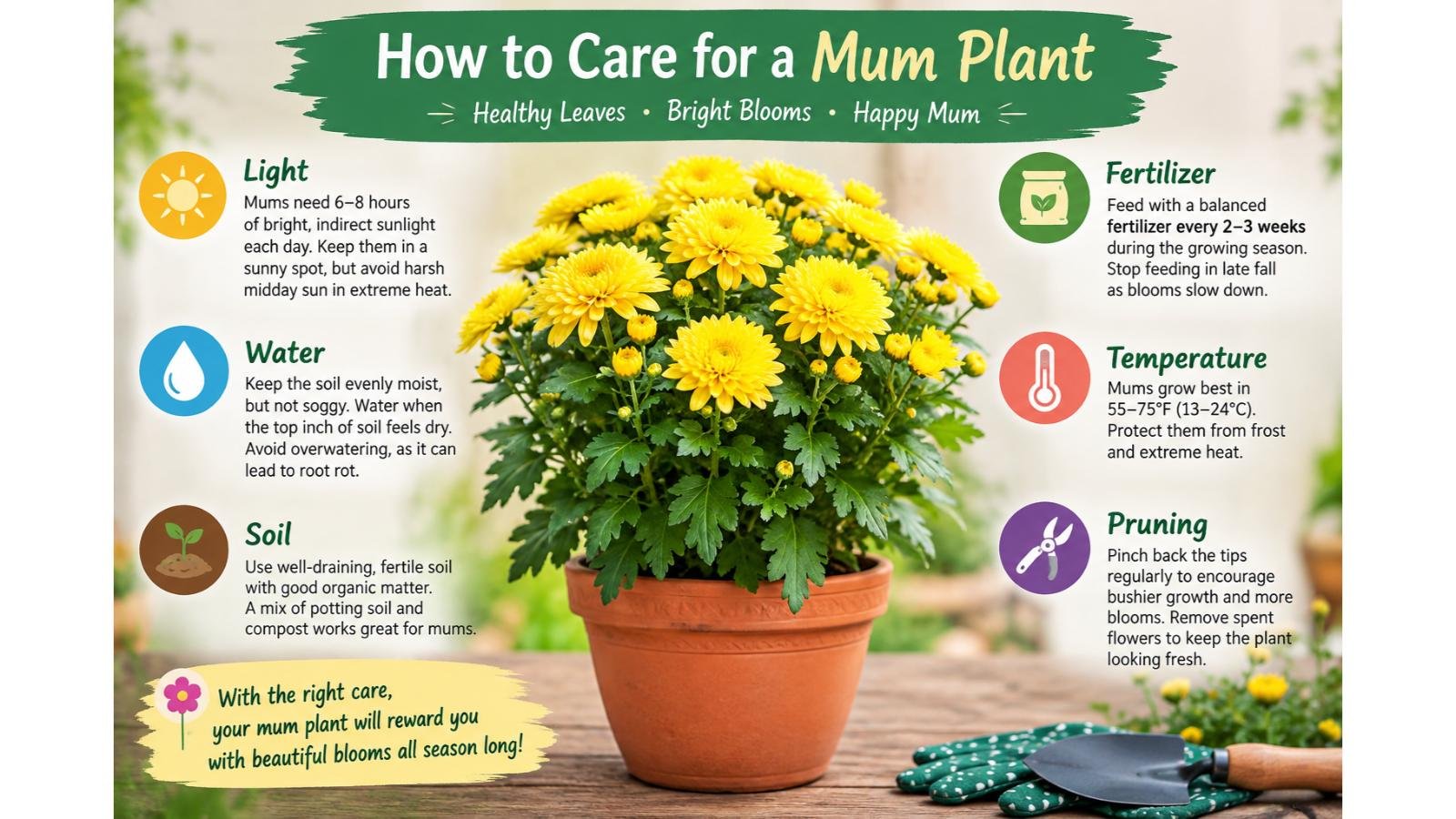
To care for a mum plant, give it bright light, well-draining soil, consistent moisture, and good air circulation.
Water when the top inch of soil begins to dry, but never leave the roots sitting in water. Pinch growing tips in spring and early summer to encourage a bushier plant with more flowers. After blooming, remove faded flowers and protect perennial mums from severe winter conditions.
Introduction
Learning how to care for a mum plant is fairly simple once you understand what chrysanthemums need throughout the year. Mums can produce an impressive display of flowers, but plants that look perfect at the garden center sometimes struggle after being brought home.
The biggest problems usually come from inconsistent watering, poor drainage, insufficient sunlight, overcrowding, or treating a seasonal flowering mum exactly like a permanent indoor houseplant.
The good news is that chrysanthemums are adaptable plants. With the right combination of sunlight, moisture, pruning, feeding, and seasonal care, a mum can stay compact and attractive while producing flowers year after year.
What Is a Mum Plant?
A mum plant is a chrysanthemum, a flowering plant grown for its colorful blooms. Depending on the variety, mums can have daisy-like, button, pom-pom, spider, or decorative flowers.
Garden mums are generally grown outdoors and can return for multiple seasons in suitable climates. Florist mums are commonly sold as temporary decorative plants and may require extra care if you want to keep them growing after flowering.
Mums are available in colors including:
- Yellow
- White
- Pink
- Red
- Orange
- Purple
- Bronze
The care requirements vary somewhat by variety, but the fundamentals remain similar: strong light, drainage, appropriate watering, and regular maintenance.
How Much Sun Does a Mum Plant Need?
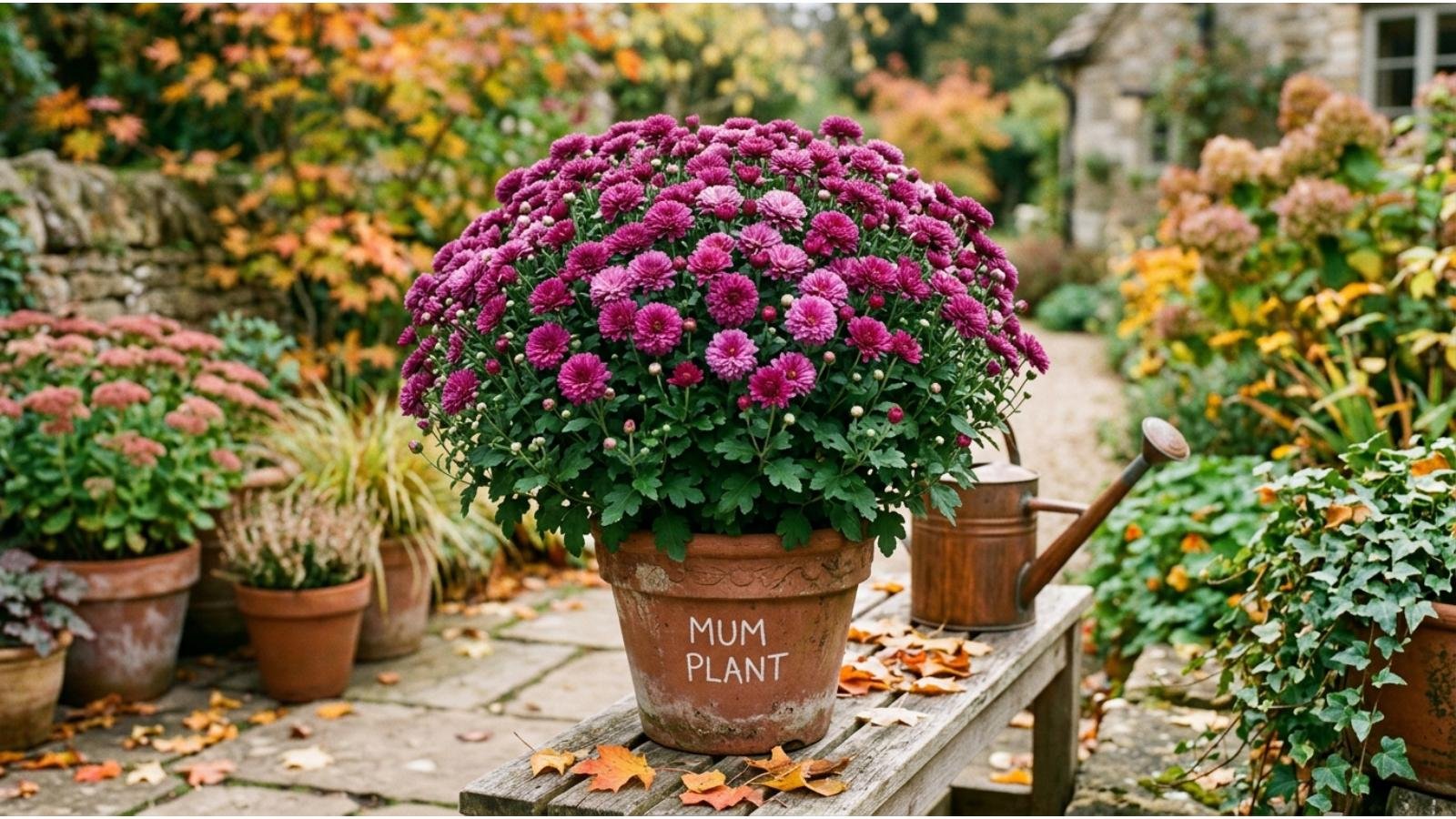
Mums generally perform best with about 6 hours or more of bright sunlight each day.
Outdoor mums should ideally receive morning and afternoon sunlight while having some protection from extreme heat in very hot climates.
Too little light can cause:
- Weak, stretched stems
- Fewer flowers
- Smaller blooms
- Floppy growth
- Delayed flowering
On the other hand, extremely intense afternoon heat can stress plants, particularly container-grown mums whose roots can heat up quickly.
Indoor Mum Light
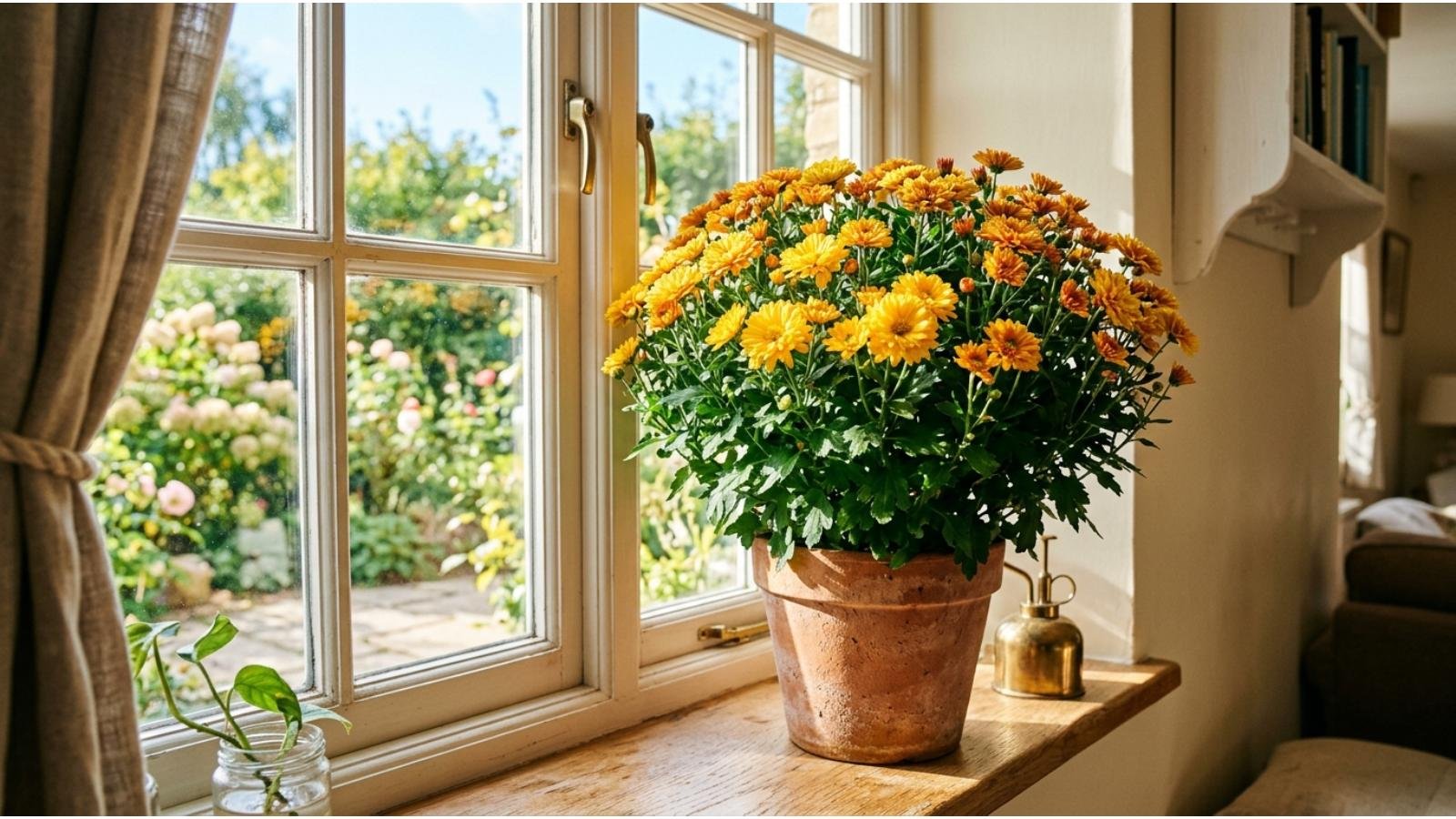
If you are keeping a mum indoors temporarily, place it near a bright, sunny window. A south- or east-facing window can provide useful natural light, depending on the local conditions.
If the plant receives very little natural light, flowering may decline after the original blooms fade.
Practical tip: Rotate a container mum every few days if it is growing toward the window. This helps maintain more even growth.
How Often Should You Water a Mum Plant?
Mums prefer consistently moist but not waterlogged soil.
Instead of watering according to a rigid calendar, check the soil first. Insert your finger about an inch into the soil. If the surface has begun to dry, water thoroughly.
When watering:
- Pour water slowly around the base of the plant.
- Continue until excess water drains from the bottom of the container.
- Empty any standing water collected in a saucer.
- Allow the upper layer of soil to dry slightly before watering again.
The exact frequency depends on temperature, sunlight, pot size, soil, and whether the plant is indoors or outdoors.
Avoid the Most Common Watering Mistake
A common mistake is assuming a flowering plant needs frequent watering simply because it is blooming.
Mums can suffer when their roots remain constantly wet. Poor drainage can lead to yellowing leaves, weak growth, root problems, and eventually plant decline.
At the same time, allowing the plant to become completely dry for long periods can cause wilting and premature flower loss.
The goal is consistency, not saturation.
How to Choose Soil for a Mum Plant
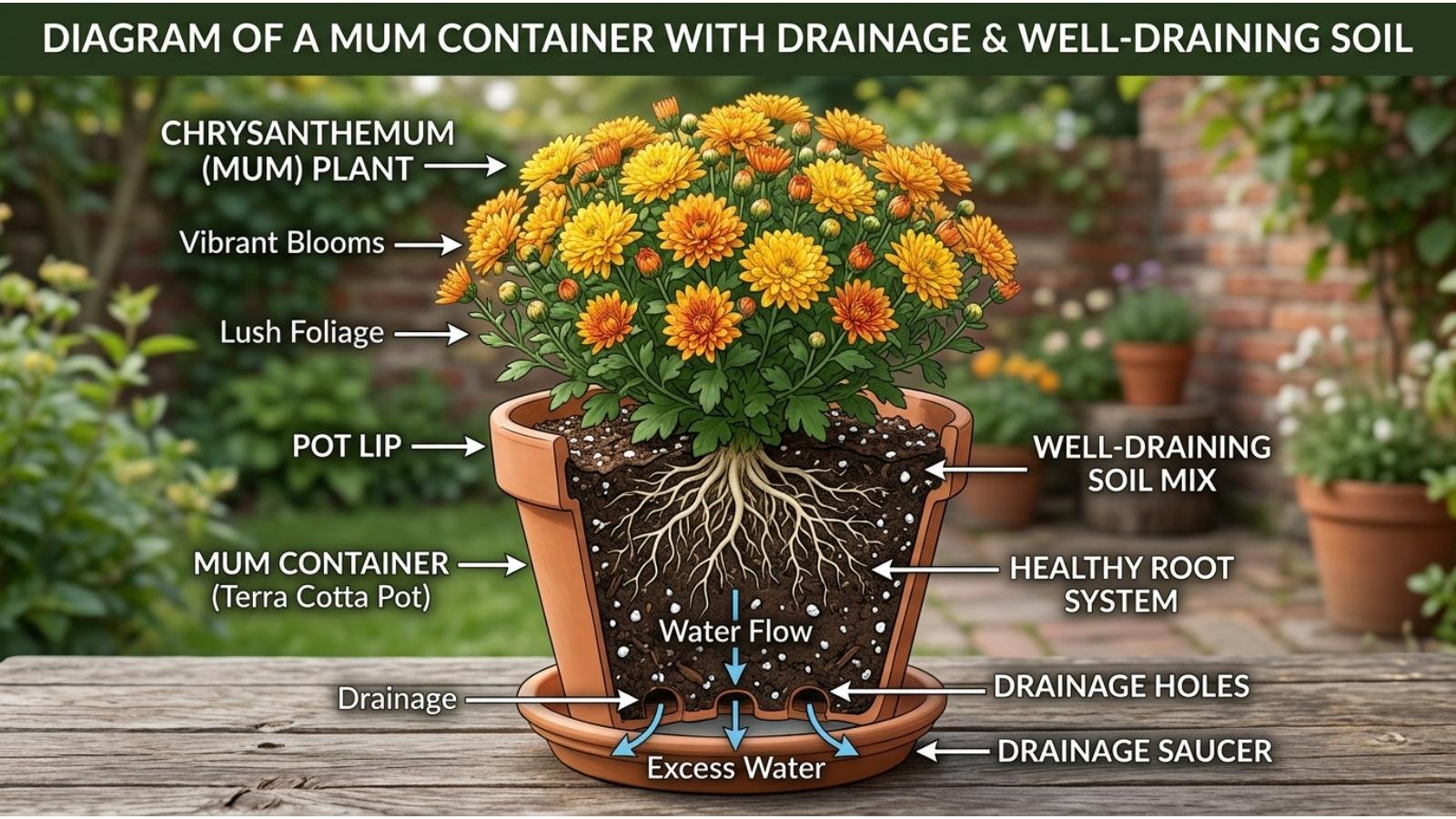
Mums need soil that drains efficiently while retaining enough moisture for healthy growth.
A good container mix should be:
- Well-draining
- Loose rather than compacted
- Rich in organic matter
- Capable of holding moderate moisture
Avoid heavy garden soil in containers because it can compact around the roots and restrict drainage.
A container should also have drainage holes. Even excellent soil cannot compensate for a pot that traps excess water.
Why Drainage Matters
Mum roots need access to both moisture and oxygen. Permanently saturated soil reduces the air available around the roots.
This is why a plant can sometimes look thirsty even though its pot is wet.
What Type of Pot Does a Mum Plant Need?
Choose a container with drainage holes and enough room for the root system to develop.
If a mum is severely root-bound, water may move through the pot too quickly without properly soaking the root ball.
However, avoid moving a small plant into an excessively large container. A very large volume of wet soil can remain moist for too long.
When repotting, choose a container only moderately larger than the existing root system.
How to Fertilize Mums
Mums benefit from regular nutrition during active growth, particularly before flowering.
A balanced fertilizer can support healthy foliage and flowering when used according to its label instructions.
Avoid the temptation to apply excessive fertilizer. More fertilizer does not automatically mean more flowers.
During active growth:
- Fertilize according to the product directions.
- Water appropriately after applying granular fertilizer if the product instructions require it.
- Reduce or stop routine feeding when the plant is dormant or growth has slowed significantly.
- Avoid heavily fertilizing a stressed or severely dehydrated plant.
A healthy root system and adequate sunlight are just as important as fertilizer.
How to Make a Mum Plant Bushier
If your goal is a compact, full-looking mum rather than a tall, sparse plant, pinching the growing tips is one of the most useful techniques.
Pinching encourages the plant to produce additional side branches. More branches can eventually mean more flowering points.
How to Pinch a Mum
During active vegetative growth:
- Identify a growing stem.
- Pinch or cut off the soft growing tip.
- Leave several sets of leaves below the cut.
- Allow new side shoots to develop.
- Repeat as needed while the plant is actively growing.
Do not continue aggressive pinching once the plant has begun setting flower buds if your goal is to enjoy the current flowering period.
Practical observation: A mum that is pinched several times during early growth can develop a much fuller shape than one allowed to grow upward without pruning.
When Should You Prune a Mum Plant?
Pruning depends on the plant’s growth stage.
During Active Growth
Light pinching helps create a compact, branching plant.
During Flowering
Remove spent flowers to keep the plant looking tidy. Deadheading can also redirect the plant’s energy away from old blooms.
After Flowering
Once flowering has finished, remove dead or damaged growth. Avoid cutting the entire plant excessively if it is an outdoor perennial that needs to survive winter.
Leaving some healthy stems can provide additional protection to the crown during colder conditions.
How to Deadhead Mums
Deadheading is simple and can make a flowering mum look considerably better.
Find flowers that have faded, browned, or begun losing their petals. Cut or pinch them off just below the spent flower head.
Remove damaged leaves at the same time, but avoid removing large amounts of healthy foliage unnecessarily.
Regularly removing faded flowers is especially useful when you want a container mum to remain attractive for as long as possible.
How to Care for Mums in Containers
Container mums need slightly more attention than plants growing directly in garden soil because containers dry out and heat up more quickly.
Check container mums frequently during warm weather.
Pay particular attention to:
- Soil moisture
- Drainage
- Root crowding
- Excessive heat
- Wind exposure
- Fading flowers
A small container may require watering more frequently than a larger pot, while a large container can retain moisture for considerably longer.
Do not use the appearance of the flowers alone to determine when to water. Check the soil.
How to Care for a Mum Plant Indoors
Florist mums are often purchased for indoor decoration, but chrysanthemums generally prefer bright light and good air circulation.
If keeping one indoors:
- Place it near a bright window.
- Keep the soil moderately moist.
- Use a pot with drainage.
- Keep it away from intense heat sources.
- Provide some air circulation.
- Remove faded flowers.
- Watch carefully for pests.
Avoid placing the plant directly beside radiators, heaters, or strong air-conditioning vents. Rapid temperature changes and dry air can stress the plant.
Can a Mum Stay Indoors Permanently?
It can survive indoors under suitable conditions, but many mums perform better outdoors where they can receive stronger natural light and better air circulation.
If your goal is long-term growth and repeat flowering, choose a suitable garden mum and gradually acclimate it to outdoor conditions rather than expecting a florist mum to thrive indefinitely inside.
How to Care for Mums Outdoors
Outdoor mums generally benefit from:
- Plenty of sunlight
- Well-drained soil
- Regular watering
- Good air circulation
- Adequate spacing
- Occasional feeding during active growth
- Seasonal pruning
Planting in a location with poor drainage can cause more problems than a lack of fertilizer.
Give each plant enough space for air to move around the foliage. Crowded plants stay damp for longer after rain or watering, increasing the likelihood of fungal problems.
How to Care for Mums in Hot Weather
High temperatures can cause mums to lose moisture rapidly, especially when growing in containers.
During hot periods:
- Check soil moisture more frequently.
- Water deeply when the soil begins drying.
- Protect container roots from extreme heat where necessary.
- Provide strong light while avoiding excessive heat stress.
- Maintain good air circulation.
- Do not allow plants to sit in standing water.
Morning watering is often practical because it allows foliage and surrounding surfaces to dry during the day.
If the plant wilts during extreme heat but the soil remains moist, do not automatically add more water. Investigate heat stress, root problems, or poor drainage first.
How to Care for Mums in Winter
Winter care depends heavily on the mum variety and local climate.
Garden mums can survive winter in many regions when planted in the ground, while container-grown plants are generally more exposed to freezing temperatures.
Before severe cold arrives:
- Remove obviously dead flowers.
- Avoid excessive pruning late in the season.
- Maintain reasonable soil moisture before the ground freezes.
- Add an appropriate layer of mulch around outdoor plants.
- Protect containers from severe freezing when necessary.
Do not keep the soil continuously wet during cold weather. Cold, saturated soil can be particularly stressful for roots.
How to Keep Mums Blooming Longer
Several factors influence how long mum flowers remain attractive.
Provide Adequate Light
Strong light supports healthy flowering and keeps stems from becoming weak.
Water Consistently
Both severe drought and chronic overwatering can shorten the plant’s attractive period.
Remove Faded Flowers
Deadheading keeps the plant looking fresh and prevents old blooms from dominating its appearance.
Avoid Excessive Heat
Extremely hot conditions can cause flowers to fade more quickly.
Don’t Overfertilize
Heavy feeding during flowering is not a shortcut to continuous blooms.
Why Is My Mum Plant Wilting?
Wilting does not always mean the plant needs water.
Check the soil first.
If the Soil Is Dry
The plant may be dehydrated. Water thoroughly and allow excess water to drain.
If the Soil Is Wet
Do not automatically water again. Wet soil combined with wilting can indicate root stress or poor drainage.
Other Possible Causes
- Excessive heat
- Root damage
- Transplant stress
- Poor drainage
- Severe pest activity
- Sudden environmental changes
A useful troubleshooting habit is to check the roots and soil before changing your watering routine.
Why Are My Mum Leaves Turning Yellow?
Yellow leaves can have several causes.
Common possibilities include:
- Overwatering
- Poor drainage
- Natural aging of older leaves
- Insufficient light
- Root problems
- Nutritional stress
If many leaves are turning yellow and the soil stays wet for long periods, investigate drainage before adding fertilizer.
If only a few of the oldest leaves are yellow while the rest of the plant looks healthy, occasional leaf aging may be normal.
Why Is My Mum Plant Not Flowering?
A mum that produces plenty of foliage but few flowers may not be receiving the conditions it needs for flowering.
Possible causes include:
- Insufficient sunlight
- Incorrect pruning timing
- Excessive nitrogen
- Immature growth
- Environmental stress
- Variety-specific flowering behavior
Mums also respond to changes in day length, which is one reason they naturally flower during particular seasons.
If you are growing a mum for fall flowers, avoid repeatedly pruning it once flower formation has begun.
Why Are My Mum Flowers Turning Brown?
Brown flowers can result from natural aging, environmental stress, excessive heat, or prolonged moisture.
First determine whether only individual old flowers are browning or the entire plant is deteriorating.
If only older blooms are affected, deadheading is usually all that is needed.
If flowers are browning rapidly throughout the plant, examine watering, sunlight, temperature, and air circulation.
Common Mum Plant Care Mistakes
Watering on a Fixed Schedule
Watering every day simply because it is “plant watering day” can keep the soil unnecessarily wet.
Better approach: Check the soil before watering.
Using a Pot Without Drainage
A decorative container without drainage can trap excess water around the roots.
Better approach: Use a container with drainage holes and place a decorative cover pot underneath if needed.
Giving Too Little Light
Mums need substantial light to maintain strong growth and flowering.
Better approach: Provide a bright location appropriate for the plant and local climate.
Pruning at the Wrong Time
Repeatedly cutting a plant after it begins preparing to flower can interfere with the display you are trying to achieve.
Better approach: Use pinching during vegetative growth and stop when flowering preparation begins.
Keeping Indoor Mums in Poor Airflow
Stagnant, humid conditions can create an environment where foliage problems develop more easily.
Better approach: Provide reasonable air circulation without exposing the plant to damaging drafts.
Mum Plant Care at a Glance
| Care Factor | What Mums Prefer |
|---|---|
| Light | Bright light with substantial sunlight |
| Water | Consistent moisture without waterlogging |
| Soil | Fertile, loose, well-draining soil |
| Pot | Drainage holes are essential |
| Fertilizer | Regular feeding during active growth when appropriate |
| Pruning | Pinch early growth for bushiness |
| Deadheading | Remove faded flowers |
| Airflow | Good circulation around foliage |
| Outdoor care | Sunlight, drainage, spacing, seasonal protection |
| Winter care | Protect roots and containers from severe cold |
A Simple Mum Plant Care Routine
If you want a straightforward routine, use this checklist.
Weekly
- Check the soil moisture.
- Inspect leaves for pests or unusual discoloration.
- Remove dead flowers.
- Check that drainage holes are not blocked.
- Look for wilted or damaged growth.
During Active Growth
- Provide sufficient sunlight.
- Pinch growing tips to encourage branching.
- Feed according to the needs of the plant and fertilizer directions.
- Maintain consistent moisture.
Before Flowering
- Stop unnecessary pruning.
- Maintain adequate light and moisture.
- Monitor for pests and disease.
- Avoid major environmental changes.
After Flowering
- Remove spent blooms.
- Clean up dead growth.
- Adjust watering as growth slows.
- Prepare outdoor perennial mums for the coming season.
How Long Do Mum Plants Live?
The lifespan depends on the type of mum and growing conditions.
A potted florist mum may be sold primarily as a seasonal flowering plant, while a suitable garden mum can return for multiple years when grown in an appropriate climate.
Long-term survival depends on factors such as:
- Variety
- Winter temperature
- Drainage
- Soil conditions
- Planting location
- Root health
- Seasonal maintenance
Therefore, buying a mum in bloom does not automatically tell you how well it will perform as a long-term perennial.
Can You Grow Mums From Cuttings?
Yes. Healthy chrysanthemums can be propagated from stem cuttings.
Choose a healthy, non-flowering shoot and take a suitable cutting using clean equipment. Remove lower leaves and place the cutting into an appropriate rooting medium.
Maintain adequate moisture without saturating the medium.
Once roots develop and the young plant establishes itself, it can be gradually transitioned into a larger container or suitable garden location.
Propagation is particularly useful when you have a healthy mum with growth characteristics you want to reproduce.
What to Do When You Bring a Mum Home From the Store
A newly purchased mum may experience environmental stress after moving from a greenhouse, nursery, or garden center to your home.
Instead of immediately making several major changes:
- Place it in a bright location.
- Check the soil before watering.
- Make sure excess water can drain.
- Remove obviously damaged flowers or leaves.
- Give the plant time to adjust.
- Gradually introduce it to significantly different outdoor conditions.
If the plant is being moved from an indoor retail environment to direct outdoor sunlight, gradual acclimation can help reduce stress.
Image Suggestion: Step-by-step illustration showing a newly purchased mum being acclimated to outdoor light.
When Should You Plant Mums in the Garden?
For perennial garden mums, planting earlier in the growing season generally gives the plant more time to establish roots before difficult weather arrives.
Fall is a popular time to purchase flowering mums, but a plant bought late in the season may have less time to establish before winter.
If long-term survival is the priority, focus not only on flower color but also on:
- Plant health
- Root condition
- Drainage
- Local climate
- Planting time
- Winter protection
A healthy root system is more important for long-term establishment than simply buying the plant with the most flowers.
Frequently Asked Questions
How often should I water a mum plant?
Check the top inch of soil regularly and water when it begins to dry. Water thoroughly until excess drains from the container, then allow the soil to dry slightly before watering again.
Do mum plants need full sun?
Mums generally perform best with substantial sunlight. Around six or more hours of bright light is often beneficial, although protection from extreme heat may be necessary in very hot climates.
Can I keep a mum plant indoors?
Yes, particularly as a temporary flowering plant. Give it a bright location, appropriate watering, drainage, and good air circulation. Long-term growth may be more successful outdoors for suitable garden varieties.
Why is my mum dying after I bought it?
Common causes include inconsistent watering, poor drainage, insufficient light, transplant stress, excessive heat, or root problems. Check the soil and drainage before changing your care routine.
Should I cut back mums after they bloom?
Remove spent flowers and dead growth, but avoid aggressive pruning at the wrong time if the plant is an outdoor perennial that needs to prepare for winter.
How do I make my mum plant fuller?
Pinch the growing tips during active vegetative growth. This encourages side branching and can produce a fuller, more compact plant.
Do mums come back every year?
Garden mums can return for multiple seasons in suitable climates. Florist mums may be less reliable as long-term garden plants, depending on their variety and growing conditions.
Can mums survive winter?
Many garden mums can survive winter when planted in suitable locations, but severe cold can damage them. Container plants are generally more vulnerable because their roots are exposed to colder temperatures.
Should I remove dead mum flowers?
Yes. Removing faded flowers keeps the plant looking cleaner and can help maintain a longer-lasting ornamental display.
Why are my mum leaves turning yellow?
Yellow leaves can be caused by overwatering, poor drainage, insufficient light, root stress, nutritional problems, or normal aging of older foliage. Examine the entire plant rather than assuming yellow leaves always mean fertilizer is needed.
Can mums grow in pots?
Yes. Mums grow well in containers when the pot has drainage holes and the growing medium drains properly. Container plants usually need closer monitoring because their soil can dry out faster.
What is the biggest mistake when caring for mums?
One of the most common mistakes is keeping the soil constantly wet. Mums need moisture, but their roots also need oxygen and proper drainage.
Final Thoughts
Successful mum plant care comes down to getting a few fundamentals right: provide plenty of appropriate light, keep the soil consistently but moderately moist, use good drainage, feed during active growth when appropriate, and prune at the correct stage.
The most important lesson is to respond to the plant rather than follow a rigid watering calendar. A mum growing in a small pot during hot weather may need attention much more frequently than one planted in cool, well-drained garden soil.
If you want a fuller plant, start pinching early. If you want longer-lasting flowers, provide good light and remove fading blooms. And if a mum begins wilting or turning yellow, check the soil and roots before assuming it simply needs more water.
With these habits, chrysanthemums can remain healthy, attractive, and capable of producing an impressive seasonal flower display.
If you want, I can also turn this into a more SEO-aggressive version with secondary keywords, semantic keywords, PAA questions, image prompts, meta description, and SEO tags while keeping the article natural.