Quick Answer
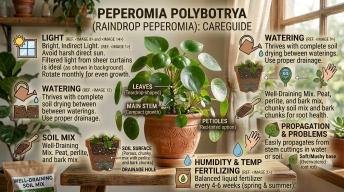
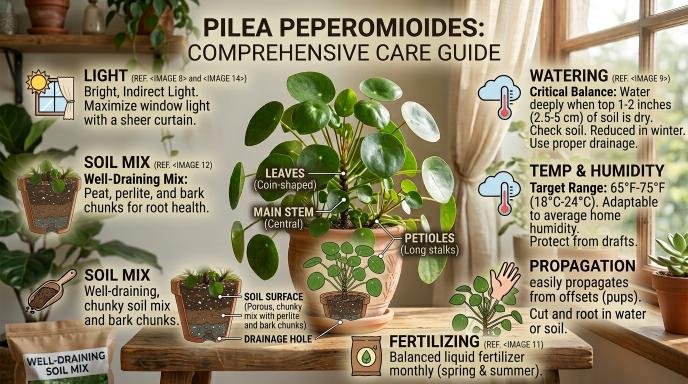
Peperomia obtusifolia, commonly called baby rubber plant, is an easy-care tropical houseplant that prefers bright, indirect light, well-draining soil, and moderate watering. Let the top portion of the soil dry before watering again, and avoid keeping the roots constantly wet. Maintain warm temperatures, average indoor humidity, and occasional feeding during active growth for healthy leaves and steady development.
Introduction
Peperomia obtusifolia care is relatively simple, making this compact plant a good choice for beginners and experienced indoor gardeners alike. Its thick, glossy leaves store water, so it generally handles occasional dryness better than consistently wet soil.
The biggest challenge is usually overwatering. Because the leaves can remain firm and healthy-looking even when problems are developing below the soil, it is easy to water on a fixed schedule and accidentally create root problems. Learning to judge moisture, light, and the plant’s growth pattern is much more reliable than watering every few days.
This guide explains how to care for Peperomia obtusifolia throughout the year, including watering, lighting, soil, fertilizing, repotting, propagation, pruning, and troubleshooting.
Understanding Peperomia Obtusifolia
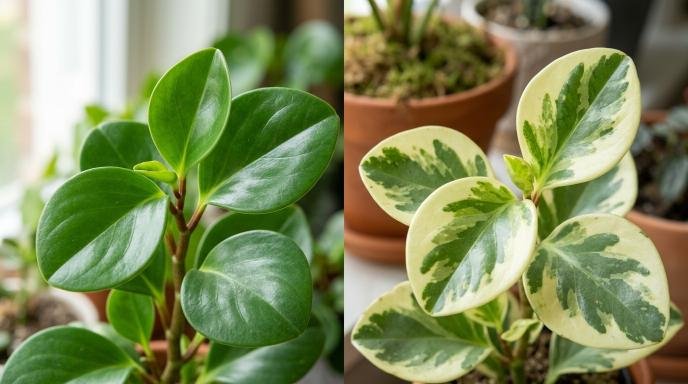
Peperomia obtusifolia is a compact tropical plant recognized by its thick, rounded leaves and succulent-like appearance. The foliage may be solid green or variegated, depending on the variety.
Its fleshy leaves and stems hold moisture, which explains an important part of its care requirements: it does not need constantly moist soil.
This plant generally grows slowly to moderately indoors. If it appears to be growing slowly despite looking healthy, that is not necessarily a problem. Healthy roots and firm foliage are more useful indicators than rapid growth.
Why its thick leaves matter
The leaves allow the plant to tolerate short periods of dryness. However, this does not mean it should be treated exactly like a cactus or succulent.
Peperomia obtusifolia still appreciates regular moisture during active growth, but the roots need oxygen between waterings. Poor drainage combined with frequent watering is much more dangerous than allowing the soil to become slightly dry.
How Much Light Does Peperomia Obtusifolia Need?
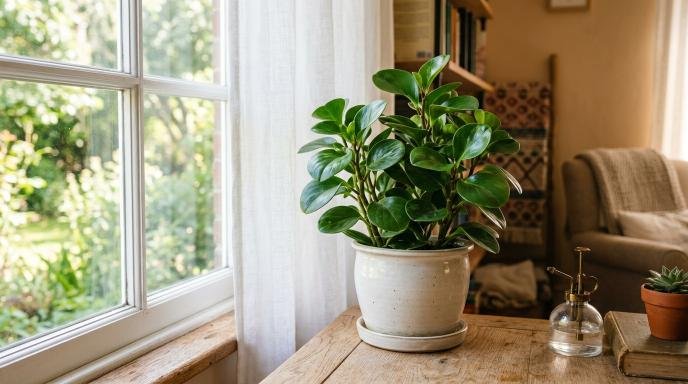
The best light for Peperomia obtusifolia is bright, indirect light.
A location near a bright window is usually suitable, provided strong direct afternoon sunlight does not continuously hit the leaves.
Signs of good lighting
With appropriate light, you may notice:
- Firm, healthy leaves.
- Compact growth.
- New leaves developing normally.
- Good coloration in variegated varieties.
- Less stretching between leaves.
What happens with too little light?
Low light can cause slower growth and longer gaps between leaves. Variegated plants may also produce less pronounced coloring.
Move the plant gradually toward a brighter location rather than suddenly placing it in intense sunlight.
Can it tolerate direct sunlight?
Some gentle morning sunlight can be tolerated, particularly through a window, but intense direct sun can scorch foliage.
If leaves develop pale, bleached, brown, or crispy patches on the side facing the window, excessive light or heat may be involved.
Practical tip: Instead of asking whether the plant is getting “enough sunlight,” observe its growth. A healthy plant receiving suitable light generally maintains compact growth and produces new leaves without repeated scorching.
Watering Peperomia Obtusifolia Correctly
Watering is the most important part of successful peperomia obtusifolia care.
Do not water simply because a certain number of days have passed. Check the soil first.
Allow the upper portion of the potting mix to dry before watering thoroughly again. The exact interval varies with temperature, light, pot size, soil composition, and season.
A simple watering method
- Check the soil with your finger or a moisture meter.
- If the upper layer is still noticeably moist, wait.
- When the soil has dried sufficiently, water slowly and thoroughly.
- Allow excess water to drain from the pot.
- Empty standing water from a saucer or decorative container.
The goal is thorough watering followed by a period of partial drying, rather than tiny amounts of water every few days.
Why overwatering is dangerous
Overwatering does not simply mean giving too much water once. More commonly, it means watering too frequently so the root zone stays wet for too long.
Continually saturated soil reduces air around the roots and can contribute to root deterioration.
Common warning signs include:
- Yellowing leaves.
- Soft or collapsing stems.
- Leaves dropping unexpectedly.
- A persistently wet potting mix.
- An unpleasant smell from the soil.
- Dark or damaged roots when inspected.
What underwatering looks like
A plant that has become too dry may develop:
- Limp or slightly wrinkled leaves.
- Dry potting soil pulling away from the pot.
- Leaf drop.
- Slower growth.
One missed watering is usually less concerning than repeatedly keeping the root system saturated.
Expert tip: Always consider the pot size. A small plant in a large container can stay wet for much longer than expected because the roots cannot use the available moisture quickly.
Best Soil for Peperomia Obtusifolia
Peperomia obtusifolia needs a potting mix that drains efficiently while still retaining enough moisture for healthy roots.
A practical mix can contain:
- Quality indoor potting mix.
- Perlite or another aerating material.
- A small amount of coarse material such as orchid bark if needed.
The exact recipe is less important than the result: water should move through the mix rather than remain trapped around the roots.
Why drainage matters
Heavy, compacted soil can remain wet for extended periods. Even if you follow a sensible watering routine, poor soil can create an excessively wet root environment.
If water takes a long time to drain or the soil remains wet for many days, improve the growing medium rather than simply reducing each watering.
Choosing the Right Pot
A pot with drainage holes is strongly recommended.
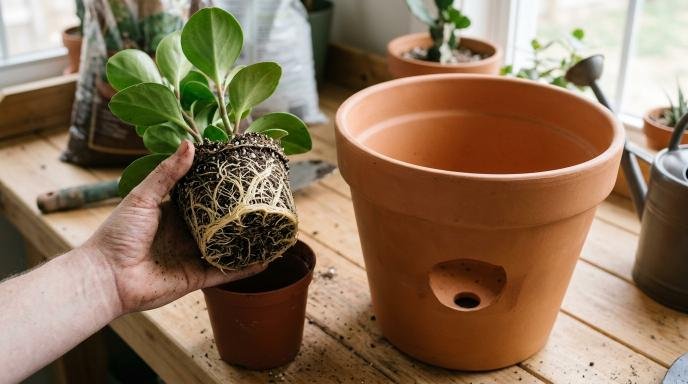
Choose a container only slightly larger than the current root system when repotting. Moving a small peperomia into a dramatically larger pot can increase the amount of soil that stays wet around the roots.
When to repot
Repot when:
- Roots are becoming tightly crowded.
- Water runs through the pot unusually quickly because the root mass has filled the container.
- Growth has become restricted.
- The potting mix has deteriorated significantly.
- The plant repeatedly dries out extremely quickly.
Repotting does not need to happen every year simply because the calendar says so.
Temperature and Humidity
Peperomia obtusifolia prefers warm indoor conditions and should be protected from cold drafts and sudden temperature changes.
Normal comfortable household conditions are often adequate.
Avoid placing it:
- Directly beside a strong air-conditioning vent.
- Against a very cold window during winter.
- Next to a heater or radiator.
- In an area with repeated hot-and-cold fluctuations.
Does Peperomia Obtusifolia Need High Humidity?
It can appreciate moderate humidity, but extremely high humidity is usually unnecessary in a typical home.
If the plant is otherwise healthy, there is no need to constantly mist the leaves.
Good watering, airflow, appropriate light, and well-draining soil generally matter more than trying to create tropical humidity indoors.
Fertilizing Peperomia Obtusifolia
Feed Peperomia obtusifolia lightly during periods of active growth.
A balanced, diluted houseplant fertilizer can be applied according to its label instructions. Avoid applying concentrated fertilizer to dry soil because it can stress the roots.
During slower growth, particularly in cooler or darker conditions, fertilizer needs are reduced.
Signs of excessive fertilizer
Too much fertilizer can contribute to:
- Brown leaf edges.
- Salt buildup on the soil surface.
- Root stress.
- Poor-looking foliage.
More fertilizer does not automatically mean more growth. Peperomia is generally better served by consistent basic care than aggressive feeding.
Pruning and Maintaining Shape
Pruning is not essential for survival, but it can help maintain a compact shape.
Remove:
- Dead leaves.
- Damaged growth.
- Weak or excessively stretched stems.
- Unwanted branches.
Use clean, sharp scissors or pruning shears.
If the plant has become leggy because of insufficient light, pruning alone will not solve the underlying issue. Improve the lighting as well.
How to Propagate Peperomia Obtusifolia
Peperomia obtusifolia can be propagated from healthy plant material.
Stem cuttings are a practical method for producing new plants.
Basic propagation process
- Select a healthy stem with several leaves.
- Make a clean cutting using sanitized scissors.
- Remove unnecessary lower foliage.
- Place the cutting in an appropriate propagation medium.
- Keep it warm with bright, indirect light.
- Maintain moderate moisture without creating soggy conditions.
- Once roots and new growth are established, move the young plant into suitable potting soil.
Propagation success depends on healthy cuttings, warmth, moisture control, and adequate light.
Common Peperomia Obtusifolia Care Problems
Yellow Leaves
Yellow leaves can have several causes, but frequent watering and poorly draining soil are common possibilities.
Check the moisture level before watering again. If the soil remains wet for a long time, examine the drainage and root environment.
Leaves Dropping
Sudden leaf drop may result from watering problems, temperature stress, inadequate light, or root damage.
Look at the entire growing environment rather than treating leaf drop as a single symptom with one universal solution.
Soft or Mushy Stems
Soft stems are a serious warning sign, particularly when the soil is consistently wet.
Inspect the roots if root problems are suspected. Healthy roots should not be extensively soft, dark, or deteriorating.
Brown Leaf Tips
Brown tips can result from inconsistent moisture, excessive fertilizer, very dry conditions, or environmental stress.
Check several factors before changing the watering routine dramatically.
Wrinkled Leaves
Wrinkled foliage often indicates that the plant needs moisture, although damaged roots can also prevent a plant from absorbing water properly.
If the soil is dry, water thoroughly. If the soil is already wet and the leaves remain wrinkled, investigate the root system rather than watering again.
Leggy Growth
Long spaces between leaves usually indicate insufficient light.
Move the plant toward brighter indirect light and prune excessively stretched growth if necessary.
Peperomia Obtusifolia Care Through the Seasons
Spring
Spring usually brings increasing light and active growth.
- Check the soil more frequently as growth increases.
- Begin regular light fertilization if the plant is actively growing.
- Consider repotting if the roots have become crowded.
- Propagate healthy cuttings.
Summer
Higher temperatures and brighter light may increase water use.
However, do not automatically water more often without checking the soil.
Monitor the plant closely if it is near a hot window.
Fall
As daylight decreases, growth may slow.
Reduce watering frequency when the soil begins drying more slowly. Fertilizer can also be reduced as active growth declines.
Winter
Indoor heating and reduced sunlight create an unusual combination: the air can become dry while the soil remains wet because the plant is using less water.
This is a common time to make the mistake of watering too frequently.
Keep the plant away from cold drafts and monitor soil moisture carefully.
Common Mistakes to Avoid
Watering on a Fixed Schedule
A calendar cannot account for changes in temperature, light, soil, or pot size.
Better approach: Check the soil before watering.
Using a Container Without Drainage
Excess water needs somewhere to escape.
Better approach: Use a pot with drainage holes and avoid allowing the plant to sit in collected water.
Putting the Plant in Harsh Sun
Bright does not always mean intense direct sunlight.
Better approach: Provide bright filtered or indirect light and introduce stronger light gradually.
Repotting Into an Oversized Container
A much larger pot can hold more moisture than the root system can use.
Better approach: Increase pot size gradually.
Fertilizing a Struggling Plant Aggressively
Fertilizer cannot fix root rot, poor lighting, or watering problems.
Better approach: Correct the environmental problem first.
Treating Every Yellow Leaf the Same Way
Yellowing is a symptom, not a diagnosis.
Better approach: Check soil moisture, roots, light, temperature, and recent care changes.
A Simple Peperomia Obtusifolia Care Routine
For beginners, this routine keeps things straightforward:
Weekly:
Check the soil and inspect leaves for unusual changes.
When the soil dries sufficiently:
Water thoroughly and allow excess water to drain.
During active growth:
Provide suitable light and occasional diluted fertilizer.
Every few months:
Rotate the pot if growth is becoming uneven and remove dead foliage.
When necessary:
Repot only when the plant or root system actually needs more space or fresh growing medium.
The key is observation. A plant that looks healthy does not need intervention simply because it has been a certain number of weeks since the last repotting or pruning.
Frequently Asked Questions
Is Peperomia obtusifolia easy to care for?
Yes. It is generally considered an easy indoor plant because its thick foliage tolerates occasional dryness and it does not require complicated humidity management.
How often should I water Peperomia obtusifolia?
There is no universal schedule. Water when the appropriate upper portion of the soil has dried rather than watering according to a fixed number of days.
Does Peperomia obtusifolia need direct sunlight?
Not necessarily. Bright, indirect light is usually the safest choice. Gentle morning sunlight may be tolerated, but strong direct sunlight can damage the leaves.
Why are my Peperomia obtusifolia leaves turning yellow?
Overwatering is one possibility, particularly when the soil stays wet for long periods. Check drainage, watering frequency, light, and the condition of the roots before deciding on a treatment.
Can Peperomia obtusifolia grow in low light?
It can tolerate lower-light conditions, but growth may become slower and less compact. Brighter indirect light generally produces better growth.
Should I mist Peperomia obtusifolia?
Regular misting is not essential. Maintaining appropriate soil moisture, drainage, light, temperature, and airflow is more important.
How do I make Peperomia obtusifolia bushier?
Provide adequate bright indirect light and prune excessively long stems above appropriate growth points. Better light helps prevent new growth from becoming stretched.
Why is my Peperomia obtusifolia dropping leaves?
Check watering, root health, temperature changes, light levels, and recent environmental changes. Sudden changes in conditions can cause stress-related leaf drop.
Can Peperomia obtusifolia grow indoors year-round?
Yes. It can grow indoors throughout the year when provided with suitable light, warmth, drainage, and watering practices.
Final Thoughts
Successful peperomia obtusifolia care is less about following a rigid schedule and more about understanding the plant’s signals. Give it bright indirect light, a well-draining growing medium, a pot with drainage, and water only when the soil has dried sufficiently.
Most problems can be prevented by avoiding the temptation to overwater. If growth slows, leaves change color, or stems become soft, investigate the growing conditions before adding fertilizer or making another major change.
For a healthy Peperomia obtusifolia, good drainage, sensible watering, and appropriate light matter far more than complicated routines.