Quick Answer
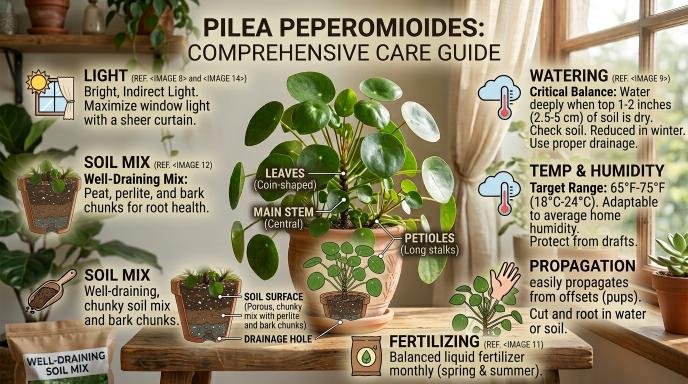
Pilea plant care is mainly about providing bright, indirect light, moderate watering, well-draining soil, warm temperatures, and reasonable humidity.
Let the top layer of soil dry before watering again, and use a pot with drainage holes. Rotate the plant regularly for even growth, remove damaged leaves, and avoid keeping the roots constantly wet. With consistent conditions, pilea can produce attractive, round leaves and healthy new growth.
Introduction
Pilea plants are popular indoor plants because of their distinctive round leaves, compact growth, and relatively straightforward care requirements. However, “easy-care” does not mean completely maintenance-free. Problems such as yellow leaves, curling foliage, weak stems, leaf drop, and slow growth usually appear when light, watering, or soil conditions are inconsistent.
Good pilea plant care is less about following a rigid watering schedule and more about learning how the plant responds to its environment. A pilea sitting beside a bright window may need water much sooner than one several feet away from the same window.
This guide explains how to care for a pilea from planting and watering through propagation, seasonal changes, pruning, and troubleshooting.
Understanding the Pilea Plant
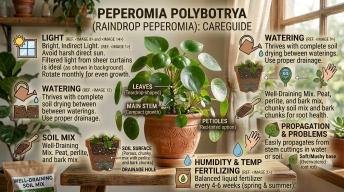
Pilea is a diverse plant genus containing many species grown as houseplants. One of the best-known varieties is Pilea peperomioides, commonly recognized for its round, coin-shaped leaves and upright stems.
Its appearance can tell you a surprising amount about its growing conditions.
Healthy pilea generally develops:
- Firm, evenly colored leaves.
- New growth from the center and stem tips.
- Strong petioles that hold leaves reasonably upright.
- A compact shape when exposed to adequate light.
- Gradual growth rather than sudden, stretched stems.
When conditions are poor, the plant may become leggy, lose lower leaves, or develop yellow and soft foliage.
How Much Light Does Pilea Need?
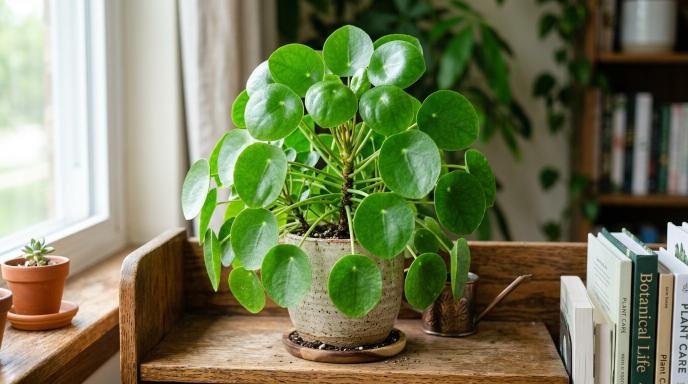
Pilea generally performs best in bright, indirect light.
Place it near a bright window where it receives plenty of ambient daylight but is protected from harsh, prolonged direct afternoon sunlight. Gentle morning sunlight can often be tolerated, while intense sunlight through glass may scorch leaves.
Signs your pilea needs more light
Watch for:
- Long gaps between leaves.
- Thin or weak stems.
- Small new leaves.
- Growth leaning strongly toward a window.
- A generally sparse appearance.
When a pilea becomes stretched, moving it immediately into intense direct sunlight is not the best solution. Increase light gradually to reduce the chance of leaf damage.
Rotate your pilea regularly
Pilea naturally grows toward its strongest light source. Rotating the pot every few days or once a week can encourage more balanced growth.
This is particularly useful for plants kept permanently beside windows.
Expert Tip: If your pilea repeatedly leans toward the same direction, the problem is often uneven light rather than a structural weakness in the plant.
Pilea Watering: How Often Should You Water?
There is no universal number of days between waterings because indoor conditions vary.
Instead, check the soil.
Insert your finger into the upper portion of the potting mix. If the surface and upper layer have dried noticeably, it may be time to water. If the soil is still wet, wait longer.
When watering:
- Water slowly and thoroughly.
- Continue until excess water drains from the bottom.
- Allow the pot to drain completely.
- Empty standing water from the saucer or outer container.
- Wait until the soil has dried appropriately before watering again.
The biggest mistake is not simply “watering too much.” It is watering again before the existing moisture has been used or drained.
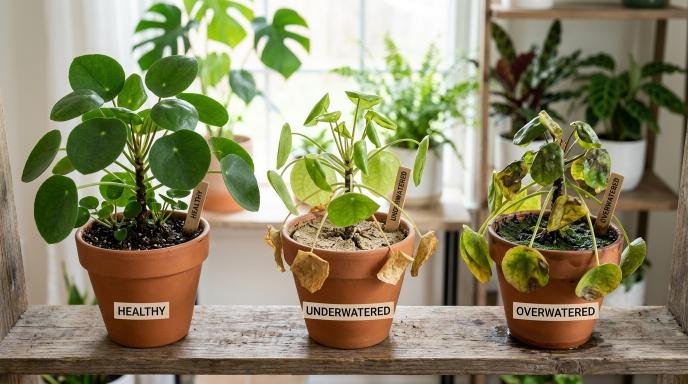
Signs of overwatering
Possible symptoms include:
- Yellowing leaves.
- Soft or drooping foliage.
- Persistently wet soil.
- Unpleasant-smelling soil.
- Stem or root deterioration.
- Sudden leaf loss.
Signs of underwatering
A thirsty pilea may show:
- Limp leaves.
- Dry, shrinking soil.
- Crispy leaf edges.
- Leaves curling or drooping.
- Rapid recovery after thorough watering.
One symptom alone is not always enough to diagnose the problem. Check the soil moisture, roots, light, and recent watering history together.
Choosing the Right Soil for Pilea
Pilea needs a potting mix that balances moisture retention with drainage and air around the roots.
A practical indoor mix can contain:
- Quality indoor potting soil.
- Perlite or another drainage-enhancing material.
- A small amount of coarse organic material if needed to improve structure.
The goal is not to create extremely dry soil. Pilea still needs moisture. The goal is to prevent the root zone from remaining saturated for long periods.
Why drainage matters
Roots need oxygen as well as water. When soil stays saturated, the air spaces around the roots become limited, creating conditions that can encourage root problems.
Heavy garden soil is therefore generally unsuitable for container-grown pilea.
Choosing the Best Pilea Pot
The pot should have drainage holes.
This is one of the simplest ways to reduce watering problems.
Avoid moving a small pilea into a dramatically oversized container simply because you want it to grow faster. A very large volume of soil can remain wet for longer after watering.
When repotting, choose a container only moderately larger than the existing root system.
Should you use a plastic or terracotta pot?
Both can work.
Plastic pots retain moisture longer and are lightweight.
Terracotta pots are porous and can allow the growing medium to dry somewhat faster.
If you frequently overwater, a more breathable setup may be helpful. If your indoor environment is exceptionally dry and the plant dries rapidly, a container that retains moisture somewhat longer may be convenient.
The important factors are drainage, appropriate sizing, and your watering habits.
Temperature and Humidity
Pilea generally prefers normal warm indoor conditions and does not appreciate prolonged exposure to cold drafts.
Keep it away from:
- Cold windows during chilly weather.
- Air-conditioning vents.
- Strong heating vents.
- Sudden temperature fluctuations.
Moderate household humidity is usually sufficient when other growing conditions are good.
You do not necessarily need a humidifier simply because you own a pilea. If your home is very dry, however, improving humidity may help reduce stress, particularly when combined with adequate watering and appropriate temperatures.
Expert Tip: Avoid placing the plant directly beside a heater and then compensating by constantly misting it. Stable environmental conditions are usually more useful than frequent leaf misting.
Fertilizing Pilea for Strong Growth
Pilea can benefit from fertilizer during periods of active growth.
Use a balanced, diluted houseplant fertilizer according to the product’s instructions. Applying fertilizer to already dry, stressed, or unhealthy roots can increase the risk of root damage.
A practical approach is to:
- Fertilize during active growth.
- Reduce or stop routine feeding when growth slows significantly.
- Avoid repeatedly applying stronger fertilizer in an attempt to accelerate growth.
- Water appropriately before or around feeding according to the fertilizer instructions.
More fertilizer does not automatically produce a healthier plant. Excess salts can accumulate in the growing medium and damage roots.
How to Repot a Pilea
Repot when the plant has outgrown its container or the existing soil has deteriorated.
Signs that repotting may be appropriate include:
- Roots emerging from drainage holes.
- Soil drying unusually quickly.
- Roots densely filling the container.
- Water running through the pot unusually quickly.
- The plant becoming unstable in a small container.
Repotting steps
- Select a pot with drainage holes.
- Choose a container only modestly larger than the current one.
- Prepare fresh, well-draining potting mix.
- Gently remove the pilea from its old container.
- Inspect the roots for obvious damage or decay.
- Place the plant at approximately the same depth as before.
- Fill around the root ball with fresh mix.
- Water appropriately and allow excess water to drain.
Avoid aggressively disturbing healthy roots simply because you are repotting.
How to Prune Pilea
Pruning is useful for removing damaged growth and managing the plant’s shape.
Use clean, sharp scissors or pruning snips.
Remove:
- Completely dead leaves.
- Severely damaged foliage.
- Weak or unwanted growth.
- Stems that make the plant excessively uneven.
Do not remove large amounts of healthy foliage unnecessarily. Leaves contribute to photosynthesis and help the plant produce energy for new growth.
If your pilea has become tall and sparse because of inadequate light, pruning alone will not solve the problem. Correct the lighting conditions as well.
How to Make Pilea Grow Bushier
Many owners want a pilea with a fuller appearance rather than a single tall stem.
Start with light.
A plant receiving insufficient light often becomes stretched and sparse. Once lighting is appropriate, pruning can help manage the shape.
You can also:
- Rotate the plant regularly.
- Remove excessively weak growth.
- Encourage healthy new shoots.
- Maintain consistent watering.
- Avoid excessive fertilizer.
- Give the root system appropriate space.
Pilea pups can also develop around the base, naturally creating a fuller-looking container.
Pilea Propagation
One of the most enjoyable aspects of pilea care is propagation.
Healthy pilea can produce offsets or pups near the base of the plant.
Propagating from a pup
When an offset has developed enough to support itself:
- Inspect where it connects to the parent plant.
- Separate it carefully using a clean cutting tool if necessary.
- Ensure the young plant has suitable roots when possible.
- Place it into an appropriately sized container.
- Use a well-draining growing medium.
- Keep the developing plant in bright, indirect light.
- Maintain moderate moisture without keeping the soil saturated.
Young plants are especially vulnerable to overwatering because their small root systems may not use moisture quickly.
Common Pilea Problems and Solutions
Yellow Leaves
Yellow leaves can result from several factors, but excessive moisture is a common concern.
Check:
- How frequently you water.
- Whether the soil stays wet.
- Whether the container drains freely.
- How much light the plant receives.
- Whether older leaves are naturally aging.
Do not automatically water a yellowing pilea. First determine whether the soil is actually dry.
Brown or Crispy Leaf Edges
Brown edges can occur when the plant experiences significant dryness, environmental stress, or other unfavorable conditions.
Check the soil moisture and surrounding environment before changing several variables at once.
If the soil is extremely dry, rehydrate the root ball thoroughly rather than repeatedly adding tiny amounts of water.
Curling Leaves
Curling can be associated with moisture stress, excessive light, heat, or environmental changes.
Look at the plant’s location first. A pilea sitting in hot direct sunlight may behave very differently from one receiving bright filtered light.
Drooping Leaves
Drooping does not automatically mean the plant needs water.
Check the soil.
- Dry soil + drooping: underwatering is possible.
- Wet soil + drooping: overwatering or root stress may be involved.
- Wet soil + yellowing: investigate drainage and root health.
This simple soil check prevents one of the most common mistakes: adding more water to a plant that is already too wet.
Leggy Growth
Leggy growth is usually a lighting issue.
Move the plant toward a brighter location with suitable indirect light and rotate it regularly. Once new growth develops under better conditions, the plant can gradually regain a more attractive shape.
Pilea Pests
Indoor pilea can occasionally experience common houseplant pests such as:
- Spider mites.
- Mealybugs.
- Scale insects.
- Aphids.
- Fungus gnats, particularly when soil remains excessively wet.
Inspect leaves, stems, and new growth regularly.
Early detection makes pest management much easier. If you see insects, isolate the affected plant from nearby houseplants while you investigate and treat the problem.
For fungus gnats, review watering habits and allow the growing medium to dry appropriately rather than simply treating the insects while keeping the underlying moisture problem unchanged.
Seasonal Pilea Care
Spring and Summer
As growth becomes more active:
- Monitor soil moisture more frequently.
- Provide strong indirect light.
- Consider regular but moderate fertilization.
- Watch for rapid drying.
- Propagate healthy offsets if desired.
Fall and Winter
Growth may slow considerably.
Reduce watering frequency based on actual soil moisture rather than continuing a summer schedule. Lower light and cooler temperatures can cause soil to remain wet longer.
Keep the plant away from cold drafts and heating vents.
Common Pilea Care Mistakes
Watering on a Fixed Calendar
“Water every Sunday” sounds simple but ignores changes in temperature, light, humidity, pot size, and soil moisture.
Better approach: Check the soil before watering.
Keeping the Plant in a Dark Corner
Pilea may survive for some time in low light, but survival is not the same as vigorous growth.
Better approach: Give it bright, indirect light.
Using a Pot Without Drainage
Excess water has nowhere to escape.
Better approach: Always prioritize drainage.
Using a Huge Pot
A large pot can hold a large amount of moisture around a relatively small root system.
Better approach: Increase pot size gradually as the plant grows.
Fertilizing a Struggling Plant
Fertilizer is not medicine for poor lighting, root damage, or severe watering problems.
Better approach: Correct the environmental problem first.
A Simple Pilea Care Routine
For beginners, this routine is easy to follow:
Weekly
- Check the soil moisture.
- Inspect leaves for pests.
- Rotate the pot if necessary.
- Look for new growth or unusual symptoms.
Every few weeks
- Check whether roots are becoming crowded.
- Clean dusty leaves gently if needed.
- Reassess whether the plant is receiving adequate light.
During active growth
- Fertilize appropriately.
- Watch for faster soil drying.
- Propagate healthy offsets if desired.
Seasonally
- Adjust watering according to growth and environmental conditions.
- Move the plant if temperature or light conditions change significantly.
Frequently Asked Questions
How often should I water a pilea plant?
Water when the upper portion of the potting mix has dried rather than following a strict calendar. Environmental conditions determine how quickly the soil loses moisture.
Does pilea need direct sunlight?
Pilea generally prefers bright, indirect light. Gentle direct morning light may be tolerated, but strong prolonged sunlight can scorch foliage.
Why are my pilea leaves turning yellow?
Yellow leaves can have several causes, but consistently wet soil is an important one to investigate. Check moisture, drainage, light, and root condition before increasing or decreasing watering.
Why is my pilea leaning?
Pilea often leans toward its strongest light source. Rotate the pot regularly and provide brighter, more evenly distributed indirect light.
Can pilea grow in low light?
It may tolerate lower light for a period, but insufficient light can lead to slower growth, smaller leaves, and stretched stems. Brighter indirect light is generally better.
How do I make my pilea bushier?
Provide adequate light, rotate the plant, maintain healthy growing conditions, and prune strategically. Healthy offsets can also make the container appear fuller.
Can pilea grow indoors?
Yes. Pilea is well suited to indoor growing when provided with appropriate light, drainage, watering, and temperature conditions.
Should I mist my pilea?
Routine misting is generally not necessary. If your environment is very dry, address overall humidity and watering conditions rather than relying on frequent leaf misting.
Why is my pilea dropping leaves?
Leaf drop can result from watering problems, environmental stress, inadequate light, pests, or natural aging of older leaves. Examine the soil and growing conditions before deciding on a solution.
Does pilea need fertilizer?
Pilea can benefit from diluted houseplant fertilizer during active growth. Avoid excessive feeding, particularly when the plant is stressed or growth has slowed.
Conclusion
Successful pilea plant care comes down to consistency rather than complicated techniques. Give your plant bright indirect light, use well-draining soil and a pot with drainage holes, water according to soil moisture, and avoid keeping the roots constantly saturated.
The most useful habit is to look at the plant and its soil before taking action. Yellow leaves do not automatically mean more water, and drooping leaves do not automatically mean the soil is dry. Understanding those signals will help you diagnose problems earlier and maintain stronger, more attractive pilea growth over time.