Quick Answer
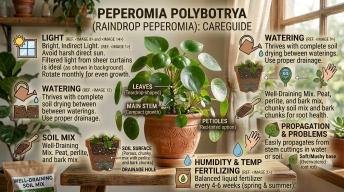
Raindrop peperomia care is relatively easy because this compact tropical plant prefers bright, indirect light, well-draining soil, and moderate watering.
Let the top portion of the soil dry before watering again, and avoid keeping the roots constantly wet. Keep it warm, provide moderate humidity, and fertilize lightly during active growth. The biggest mistake is usually overwatering, which can lead to yellow leaves, root problems, and leaf drop.
Introduction
Raindrop peperomia is a popular indoor plant known for its thick, glossy, teardrop-shaped leaves and compact growth. It is attractive enough to stand out on a desk or shelf, yet forgiving enough for beginners who are still learning how to care for houseplants.
The key to successful raindrop peperomia care is understanding that its thick leaves and stems hold moisture. That means it does not need frequent watering like many thin-leaved tropical plants. In practice, giving it a little too much attention can be more harmful than occasionally letting the soil become somewhat dry.
With the right balance of light, watering, soil, temperature, and feeding, raindrop peperomia can remain healthy and produce attractive new growth for years.
What Is a Raindrop Peperomia?
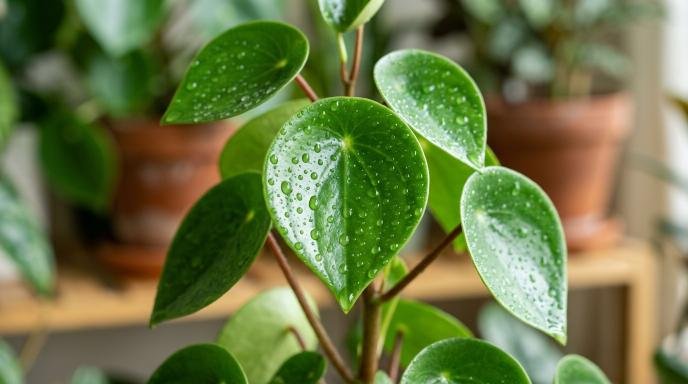
Raindrop peperomia is commonly known as Peperomia polybotrya. It is a compact tropical perennial grown primarily for its distinctive foliage.
Its leaves are thick, smooth, and rounded toward the base while narrowing toward the tip, giving them a shape that resembles a falling raindrop. The plant generally stays relatively compact, making it particularly useful for indoor spaces where a large houseplant would be inconvenient.
Unlike plants that require constantly moist soil, raindrop peperomia stores some water in its fleshy tissues. This is one reason watering habits have such a major influence on its health.
Raindrop Peperomia Care Requirements at a Glance
| Care factor | Best condition |
|---|---|
| Light | Bright, indirect light |
| Direct sunlight | Gentle morning sun can work; avoid harsh afternoon sun |
| Water | Water when the upper soil has dried |
| Soil | Loose, well-draining potting mix |
| Humidity | Average indoor humidity is usually adequate |
| Temperature | Warm, stable indoor temperatures |
| Fertilizer | Light feeding during active growth |
| Pot | Drainage hole strongly recommended |
| Repotting | Only when the plant becomes root-bound or soil deteriorates |
| Growth | Compact and moderately slow |
The most important point is that these conditions work together. For example, a plant in lower light generally uses water more slowly, so following a rigid weekly watering schedule can easily result in overwatering.
How Much Light Does Raindrop Peperomia Need?
Bright, indirect light is usually ideal for raindrop peperomia.
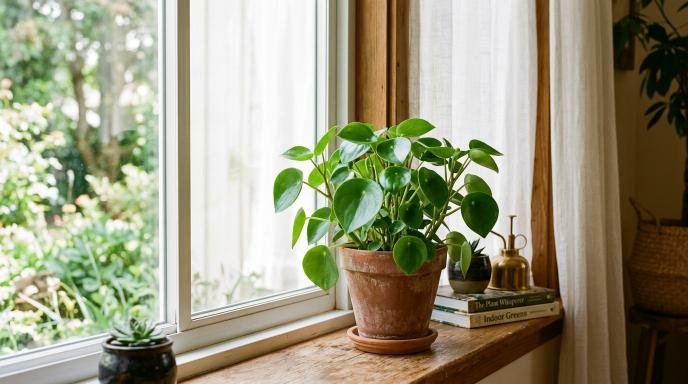
Place the plant near a bright window where it receives plenty of filtered or reflected light. A few hours of mild morning sunlight may be tolerated, but intense direct afternoon sunlight can scorch the leaves.
Signs of insufficient light
A raindrop peperomia receiving too little light may show:
- Slow or weak new growth.
- Longer spaces between leaves.
- Smaller new leaves.
- A tendency to lean toward the light source.
- Soil that stays wet for unusually long periods.
That last sign is easy to overlook. Low light reduces photosynthetic activity and can also slow water use, leaving the roots surrounded by moisture longer.
Signs of excessive light
Too much intense direct sunlight may cause:
- Bleached-looking leaves.
- Brown or crispy patches.
- Faded foliage.
- Dry, scorched areas on leaves.
Practical tip: If your plant is getting strong sunlight through a south- or west-facing window, move it farther from the glass or filter the light with a sheer curtain.
How to Water Raindrop Peperomia
Watering is probably the most important part of raindrop peperomia care.
Instead of watering according to a calendar, check the soil. Allow the upper portion of the potting mix to dry before watering again.
When it is time to water:
- Check the soil with your finger.
- If the upper layer has dried, prepare to water.
- Water thoroughly until excess moisture begins draining from the bottom.
- Empty water collected in the saucer.
- Allow the soil to dry again before the next watering.
This approach is much safer than giving the plant a small amount of water every few days.
Why overwatering causes problems
Raindrop peperomia has fleshy tissues that retain moisture. Constantly wet soil can deprive the roots of adequate air and create conditions that encourage root deterioration.
Common symptoms include:
- Yellowing leaves.
- Soft or mushy stems.
- Sudden leaf drop.
- Darkened roots.
- A persistently wet-smelling or poorly draining pot.
What if the leaves become wrinkled?
Wrinkled or slightly limp leaves can indicate that the plant needs water, especially if the soil is very dry.
However, don’t automatically assume every wrinkled leaf means dehydration. Root damage caused by prolonged overwatering can also prevent a plant from taking up water properly.
Expert tip: Always check the soil and roots before increasing your watering frequency.
What Soil Is Best for Raindrop Peperomia?
Raindrop peperomia performs best in a loose, well-draining growing medium that does not remain saturated for long periods.
A practical mix can contain:
- Quality indoor potting soil.
- Perlite or pumice for additional aeration.
- A small amount of orchid bark or another coarse material.
The goal isn’t simply to make the soil dry quickly. The goal is to create a balance where the roots receive moisture while excess water can escape.
Why drainage matters
Dense soil can stay wet around the roots for too long. Even if you are watering correctly, poor drainage can make the plant behave as though it is being overwatered.
If water sits on the surface for a long time instead of moving through the mix, the soil structure may need improvement.
Choosing the Right Pot
A pot with a drainage hole is one of the simplest ways to reduce watering problems.
The container should not be dramatically larger than the root system. Oversized pots hold a greater volume of wet soil, which can take longer to dry.
When selecting a container, prioritize:
- Drainage holes.
- A suitable size for the existing root system.
- Stable construction.
- A potting mix that drains freely.
Decorative cachepots are fine, but if the plant sits inside one, make sure excess water is removed after watering.
Temperature and Humidity
Raindrop peperomia prefers warm, stable conditions similar to those found in many comfortable indoor environments.
Protect it from:
- Cold drafts.
- Sudden temperature changes.
- Direct blasts from heating vents.
- Strong air-conditioning airflow.
- Prolonged exposure to cold temperatures.
Does it need high humidity?
Not necessarily.
Average household humidity is often sufficient, especially when the plant receives good light and proper watering.
Increasing humidity may be useful if indoor air is extremely dry, but humidity alone cannot compensate for poor light, compacted soil, or excessive watering.
Practical tip: Don’t rely on misting as the main humidity solution. Improving the surrounding environment is generally more useful than repeatedly spraying the leaves.
How to Fertilize Raindrop Peperomia
Raindrop peperomia does not require heavy feeding.
During active growth, use a balanced houseplant fertilizer at a conservative strength according to the product’s directions.
Avoid repeatedly applying concentrated fertilizer because excess salts can accumulate in the soil and damage roots.
A simple feeding strategy
- Feed primarily during active growth.
- Use diluted fertilizer rather than excessive amounts.
- Avoid fertilizing a severely stressed or recently repotted plant.
- Water appropriately so fertilizer salts do not continually accumulate.
Healthy leaves and steady new growth are better indicators of success than trying to force rapid growth with extra fertilizer.
When Should You Repot Raindrop Peperomia?
Raindrop peperomia generally does not need frequent repotting.
Consider repotting when:
- Roots are tightly circling the root ball.
- Roots are emerging through drainage holes.
- Water runs through the pot unusually quickly because the root mass has become dense.
- The potting mix has broken down significantly.
- The plant repeatedly dries out much faster than expected.
Choose a container only slightly larger than the previous one.
Common mistake: Moving a small peperomia into a much larger pot simply because the plant has grown. The extra soil can retain moisture around the roots and increase the risk of watering problems.
How to Prune Raindrop Peperomia
Pruning is usually simple.
Remove:
- Yellow or badly damaged leaves.
- Dead stems.
- Weak or unattractive growth.
- Diseased portions when necessary.
Use clean, sharp scissors or pruning shears.
If the plant becomes uneven or leggy, selectively trimming longer stems can encourage a more balanced appearance. Avoid removing large amounts of healthy foliage at once unless there is a specific reason.
How to Propagate Raindrop Peperomia
Raindrop peperomia can be propagated using suitable healthy plant material.
Stem cutting method
- Choose a healthy stem with leaves.
- Make a clean cut using sanitized scissors.
- Allow the cutting to be prepared according to the propagation medium you are using.
- Place it in an appropriate propagation medium.
- Keep the medium lightly moist rather than saturated.
- Provide bright, indirect light.
- Wait for root development before moving the new plant into a regular potting mix.
Propagation success depends on the health of the cutting, warmth, moisture balance, and light.
Expert tip: A cutting sitting in excessively wet conditions is not necessarily rooting faster. Too much moisture can instead cause the cutting to deteriorate.
Why Are Raindrop Peperomia Leaves Turning Yellow?
Yellow leaves can have several causes, but watering problems are among the first things to investigate.
Possible causes
Overwatering:
If the soil stays wet for a long time and multiple leaves turn yellow, inspect the roots and drainage.
Insufficient light:
Low light can slow growth and water use, indirectly contributing to prolonged soil moisture.
Natural aging:
An occasional older leaf turning yellow can be normal, especially when the rest of the plant looks healthy.
Root problems:
Damaged roots may prevent proper water and nutrient uptake.
The important clue is the overall pattern rather than one yellow leaf.
Why Is My Raindrop Peperomia Dropping Leaves?
Leaf drop can result from environmental stress.
Possible triggers include:
- Overwatering.
- Sudden changes in temperature.
- Very low light.
- Root damage.
- Severe underwatering.
- Moving the plant repeatedly between very different environments.
If leaves are falling while the soil remains consistently wet, investigate the root zone before simply adding more water.
If the soil is bone dry and leaves are limp or wrinkled, dehydration is more likely.
Why Are the Leaves Curling or Wrinkling?
Wrinkled leaves often indicate a moisture problem, but the underlying cause can vary.
If the soil is extremely dry
The plant may simply need a thorough watering.
If the soil is constantly wet
The roots may be struggling, preventing normal water uptake despite abundant moisture in the pot.
If the plant is exposed to intense sunlight
Excessive light and heat can increase water loss and stress the foliage.
Check soil moisture, roots, light, and temperature together rather than treating the leaves alone.
Why Is My Raindrop Peperomia Not Growing?
Slow growth is not always a sign that something is wrong.
Raindrop peperomia is naturally compact, and growth may slow considerably during periods of low light or cooler conditions.
Check these factors:
- Is the plant receiving enough bright indirect light?
- Does the potting mix drain properly?
- Are you watering only after the soil has partially dried?
- Is the plant exposed to cold drafts?
- Does it have healthy roots?
- Has it been heavily pruned recently?
If the plant is healthy but producing new leaves slowly, patience may be more appropriate than adding more fertilizer.
Common Raindrop Peperomia Care Mistakes
Watering on a fixed schedule
A plant doesn’t know that it is supposed to be watered every Sunday. Indoor conditions change with season, light, temperature, pot size, and soil composition.
Better approach: Check the soil before watering.
Using a pot without drainage
Even careful watering becomes harder when excess water has nowhere to escape.
Better approach: Use a container with drainage.
Giving it intense afternoon sun
Bright light is helpful, but harsh direct sunlight can damage foliage.
Better approach: Provide bright filtered or indirect light.
Using heavy garden soil
Dense soil can restrict drainage and air movement around the roots.
Better approach: Use a loose indoor potting mix amended with an aerating material.
Fertilizing a struggling plant
Adding fertilizer to a stressed plant can create additional root stress.
Better approach: Fix the underlying light, water, temperature, or root problem first.
Raindrop Peperomia Care Through the Seasons
Spring
As growth increases, the plant may begin using water more quickly. Check soil moisture regularly rather than immediately increasing the watering schedule.
Summer
Bright light and warmer temperatures can increase water use. At the same time, strong direct sunlight through windows can scorch leaves.
Fall
Growth may slow as light levels decrease. The plant may therefore need watering less frequently.
Winter
Lower light and cooler indoor conditions can make the soil stay wet longer. Reduce watering frequency when necessary rather than maintaining a summer schedule.
How to Tell if Your Raindrop Peperomia Is Healthy
A healthy plant generally has:
- Firm, glossy leaves.
- Consistent foliage color.
- Strong stems.
- New growth during favorable conditions.
- A stable, compact shape.
- Soil that dries appropriately between waterings.
- No persistent foul odor from the root zone.
Don’t judge the plant by one leaf alone. Look at trends over several weeks.
A plant that produces healthy new leaves while an occasional old leaf ages naturally is often doing much better than a plant with lush-looking foliage but constantly wet soil.
Raindrop Peperomia vs Other Peperomias
Raindrop peperomia shares many care characteristics with other peperomia varieties, including a preference for well-draining soil and careful watering.
Its thick foliage means it can tolerate some drying between waterings, but this does not mean it should be treated like a desert succulent.
The safest approach is to think of it as a moisture-efficient tropical houseplant: provide adequate water when needed, but avoid keeping the root zone permanently wet.
Frequently Asked Questions
Is raindrop peperomia easy to care for?
Yes. It is generally beginner-friendly when grown in bright indirect light, well-draining soil, and a container with drainage.
How often should I water raindrop peperomia?
There is no reliable universal schedule. Check the soil and water when the upper portion has dried. Environmental conditions can make watering frequency vary considerably.
Does raindrop peperomia need direct sunlight?
It prefers bright indirect light. Gentle morning sunlight may be tolerated, but strong direct afternoon sunlight can scorch its leaves.
Can raindrop peperomia grow in low light?
It can survive in lower light, but growth is usually better with brighter indirect light. Low light can also cause the soil to remain wet longer.
Why are my raindrop peperomia leaves yellow?
Overwatering, poor drainage, insufficient light, root problems, and normal aging can all contribute. Examine the soil moisture and overall plant condition before changing your care routine.
Should I mist my raindrop peperomia?
Regular misting is generally unnecessary. If the indoor air is very dry, focus on improving the surrounding humidity rather than relying only on leaf misting.
Does raindrop peperomia like small pots?
It generally does well without excessive root space. A pot that is appropriately sized and has drainage is preferable to a very large container filled with slow-drying soil.
How can I make raindrop peperomia grow faster?
Provide bright indirect light, healthy roots, suitable soil, appropriate watering, warm conditions, and moderate feeding during active growth. Avoid trying to accelerate growth through excessive fertilizer or watering.
Is raindrop peperomia toxic to pets?
Raindrop peperomia is generally considered a pet-friendly houseplant. However, individual animals can still experience digestive upset after chewing plant material, so preventing excessive plant chewing is sensible.
Final Thoughts
Successful raindrop peperomia care comes down to balance rather than constant attention. Give the plant bright indirect light, an airy potting mix, good drainage, and water only when the soil has partially dried.
If you remember just three things, remember these: don’t keep the roots constantly wet, don’t expose the leaves to harsh direct sun, and don’t follow a rigid watering calendar. Once those basics are right, raindrop peperomia is a relatively low-maintenance plant that can provide attractive foliage for a long time.