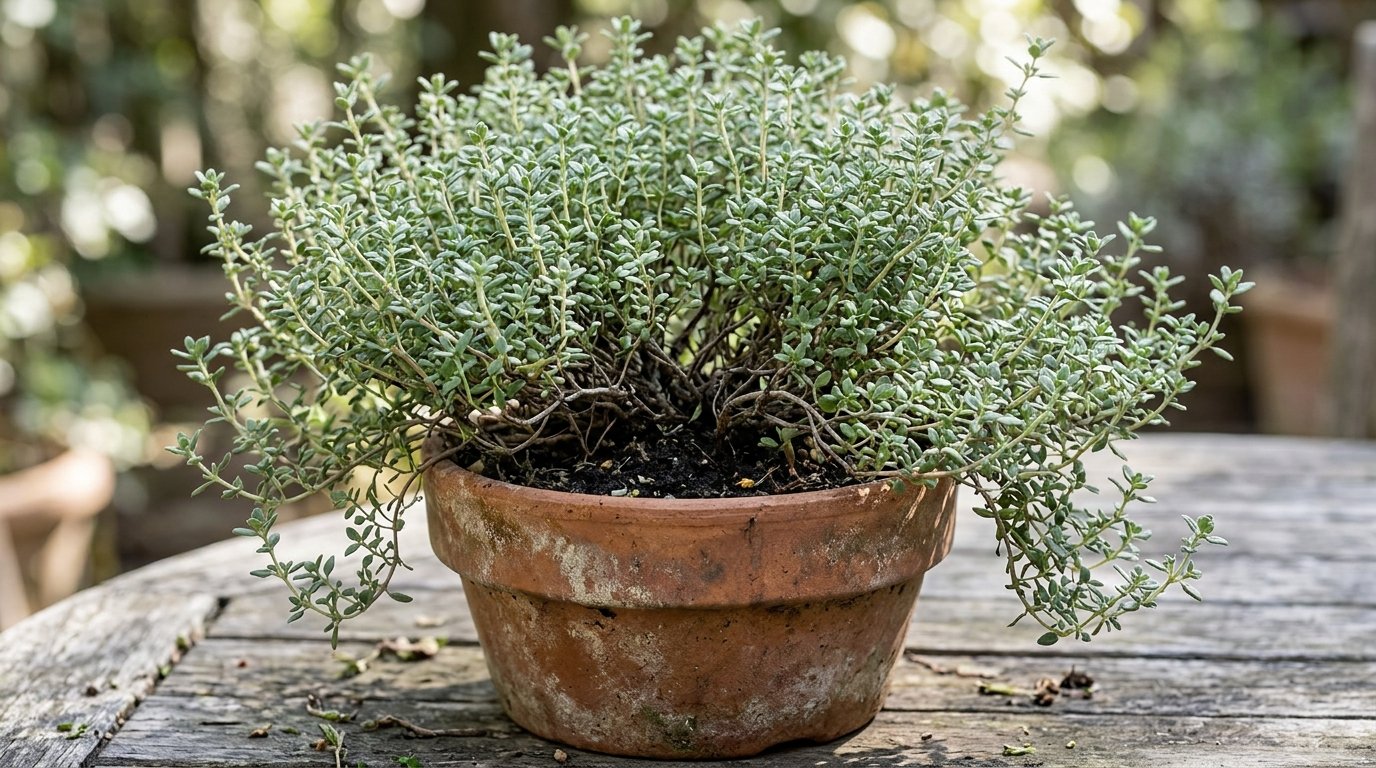
Thyme is a popular aromatic herb known for its fragrant leaves, culinary uses, and attractive appearance. Whether you grow it in a garden, raised bed, or container, this Mediterranean herb is relatively easy to maintain when its basic needs are met. However, poor drainage, insufficient sunlight, and overwatering can quickly affect its growth.
Understanding thyme plant care helps you grow a healthy, bushy plant with flavorful leaves throughout the growing season. With the right watering routine, well-draining soil, regular harvesting, and seasonal attention, thyme can thrive for years.
Quick Answer:
Thyme grows best in full sunlight, well-draining soil, and moderate watering. Give it at least 6 hours of direct sunlight daily, allow the soil to dry between waterings, and avoid heavy, waterlogged soil. Prune lightly after flowering to encourage compact, healthy growth.
Understanding the Thyme Plant
Thyme (Thymus vulgaris) is a perennial herb in the mint family (Lamiaceae). It originates from the Mediterranean region, where it naturally grows in sunny, dry conditions and rocky, well-drained soil.
Its small, aromatic leaves grow on woody stems, and mature plants may produce tiny pink, purple, or white flowers depending on the variety.
Thyme is commonly grown for:
- Fresh and dried culinary herbs.
- Fragrant garden borders.
- Container herb gardens.
- Rock gardens and sunny landscapes.
- Attracting bees and other pollinators when flowering.
One important thing to understand is that thyme prefers conditions that are slightly dry rather than consistently moist. Giving it too much water is one of the easiest ways to damage an otherwise healthy plant.
Best Growing Conditions for Thyme
Providing the right growing environment is the foundation of successful thyme plant care. This herb is adaptable, but it performs best when its natural Mediterranean growing conditions are recreated.
1. Sunlight Requirements
Thyme needs plenty of sunlight to develop strong stems, dense foliage, and aromatic leaves.
Choose a location that receives at least 6–8 hours of direct sunlight daily. Outdoor plants generally grow well in sunny garden beds, balconies, patios, and containers.
If you grow thyme indoors, place it near a bright south-facing or west-facing window where it receives several hours of direct sunlight.
Signs of insufficient sunlight include:
- Long, weak, stretched stems.
- Sparse foliage.
- Slow growth.
- Less compact plant development.
Expert Tip: Rotate indoor thyme pots occasionally so different sides receive adequate light. If natural sunlight is insufficient, a suitable grow light can help maintain healthy growth.
2. Ideal Temperature and Humidity
Thyme prefers warm, relatively dry conditions. It generally grows actively during spring and summer when temperatures are comfortable.
| Growing Condition | Recommended Environment |
|---|---|
| Ideal temperature | Around 60–80°F (16–27°C) |
| Sunlight | 6–8 hours daily |
| Humidity | Low to moderate |
| Growing season | Spring and summer |
| Soil condition | Well-draining |
Established common thyme is reasonably cold-hardy, although winter tolerance varies by cultivar, climate, and drainage.
In areas with freezing winters, protect container-grown thyme from prolonged severe cold. Avoid bringing outdoor plants into warm, poorly lit rooms because the sudden change can cause stress.
3. Best Soil for Thyme
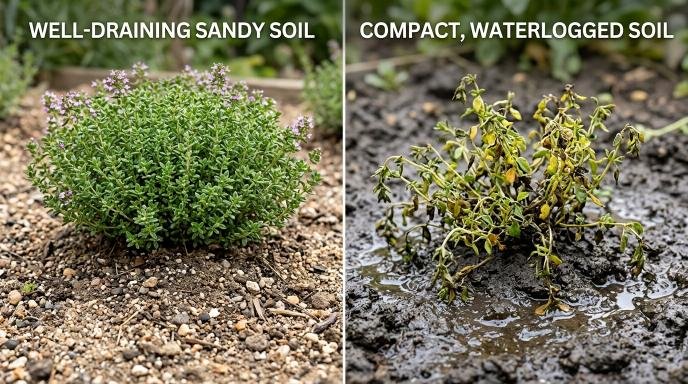
Soil drainage is especially important for thyme. Its roots do not tolerate prolonged waterlogging, which can encourage root rot.
Use light, loose, well-draining soil with a slightly alkaline to neutral pH. A pH of approximately 6.0–8.0 is generally suitable.
For container growing, consider a mixture containing:
- Two parts quality potting mix.
- One part coarse horticultural sand or perlite.
- Additional fine gravel or another suitable drainage amendment if needed.
For garden beds, improve heavy clay soil with suitable organic and mineral amendments, or grow thyme in a raised bed.
Avoid planting thyme in dense soil that remains wet after rainfall or watering.
How to Water Thyme Plants Correctly
Watering is one of the most important parts of thyme plant care. Although young plants need regular moisture while establishing their roots, mature thyme is relatively drought-tolerant.
The goal is to provide enough water for healthy root development without keeping the soil continuously wet.
How Often Should You Water Thyme?
There is no fixed watering schedule that works for every plant. Frequency depends on temperature, pot size, soil type, sunlight, and rainfall.
Follow these guidelines:
- Check the top 1–2 inches of soil before watering.
- If the soil feels dry, water thoroughly.
- Allow excess water to drain from the container.
- Wait until the soil dries again before watering.
- Reduce watering during cool weather and winter dormancy.
Plants growing in small containers may need water more frequently than those planted directly in the ground.
Signs of Overwatering
Overwatering is a common problem, especially when thyme is grown indoors.
Look for these warning signs:
- Yellowing leaves.
- Soft or dark stems.
- Wilting despite wet soil.
- Unpleasant-smelling soil.
- Brown or mushy roots.
If you notice these symptoms, check the roots and soil moisture. Remove severely damaged roots, improve drainage, and allow the soil to dry appropriately before watering again.
Signs of Underwatering
Although thyme tolerates dry conditions, prolonged drought can still affect its growth.
Possible symptoms include:
- Dry, crispy leaves.
- Drooping stems.
- Reduced new growth.
- Excessive leaf shedding.
Water thoroughly when the root zone becomes dry, especially during hot summer weather.
Expert Tip: Do not water thyme simply because the surface looks dry. Check the soil slightly below the surface to understand whether the root zone actually needs moisture.
Fertilizing Thyme for Healthy Growth
Thyme does not require heavy feeding. In fact, excessive fertilizer can encourage soft, leafy growth and may reduce the concentration of aromatic compounds in the foliage.
For garden-grown thyme, moderately fertile soil is usually sufficient.
For container-grown plants:
- Apply a balanced liquid fertilizer at half strength during active spring growth if needed.
- Fertilize sparingly, usually once every 4–6 weeks during active growth.
- Avoid fertilizing during winter dormancy.
- Do not apply excessive nitrogen fertilizer.
If your plant is already growing well and producing healthy foliage, additional fertilizer may not be necessary.
Pruning and Harvesting Thyme
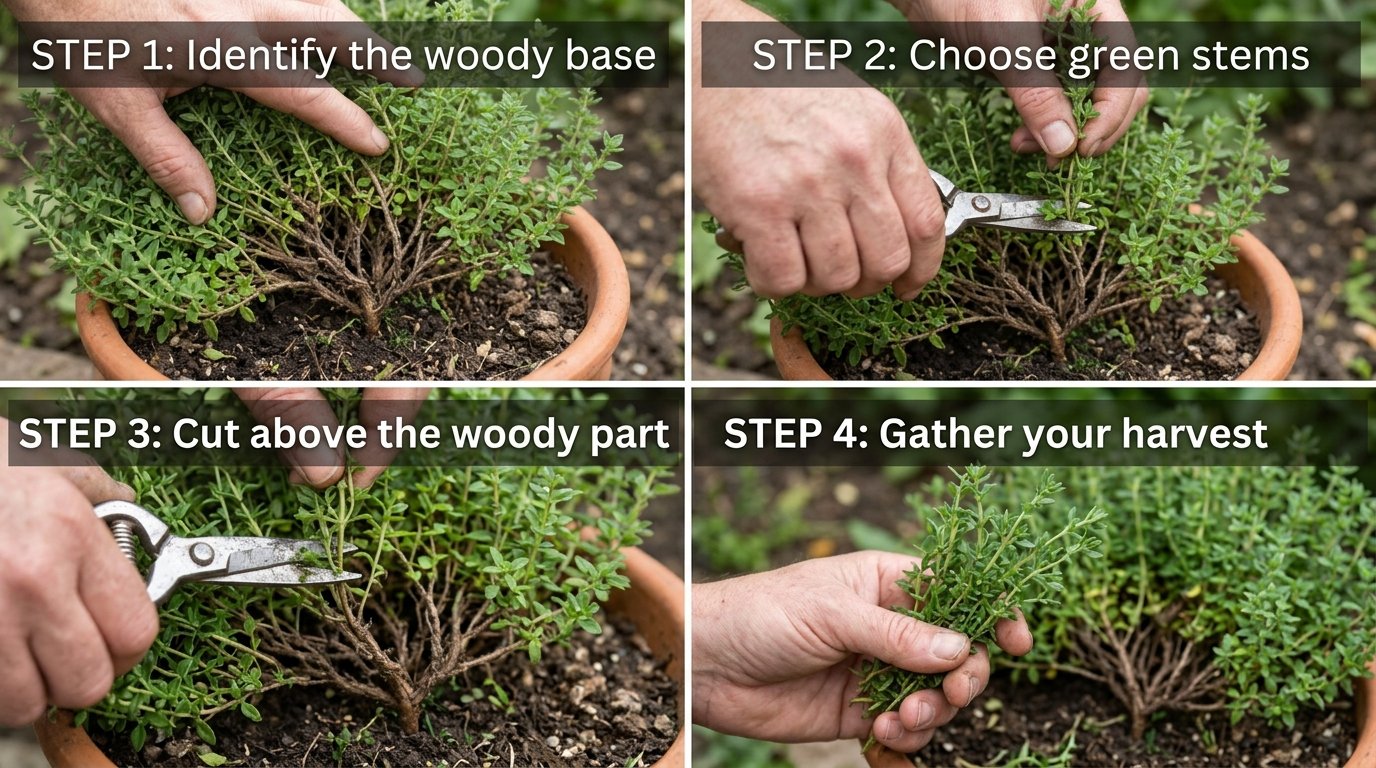
Regular harvesting helps maintain a compact shape and provides fresh leaves for cooking.
Thyme develops woody stems as it matures. Light pruning encourages branching, while neglecting pruning can result in an open, leggy appearance.
How to Prune Thyme
Follow these simple steps:
- Use clean, sharp pruning scissors.
- Trim the soft green growing tips.
- Remove dead, damaged, or weak stems.
- Shape the plant lightly to maintain a compact appearance.
- Avoid cutting deeply into old, leafless woody stems because they may not produce new growth.
The best time for major shaping is generally after flowering or during active growing periods when the plant can recover.
When and How to Harvest Thyme
You can harvest thyme once the plant is established and has enough healthy growth to tolerate trimming.
For the best flavor:
- Harvest in the morning after the dew has dried.
- Cut young, healthy stems.
- Avoid removing more than one-third of the plant at once.
- Leave sufficient foliage for continued growth.
Thyme leaves can be used fresh or dried for later use. To dry them, hang small bundles in a warm, dry, well-ventilated location away from direct sunlight.
Growing Thyme in Pots and Containers
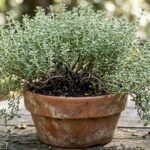
Thyme is an excellent choice for container gardening because it has a relatively compact growth habit and does not need a large amount of space.
A sunny balcony, patio, or windowsill can provide a suitable growing location.
Choosing the Right Pot
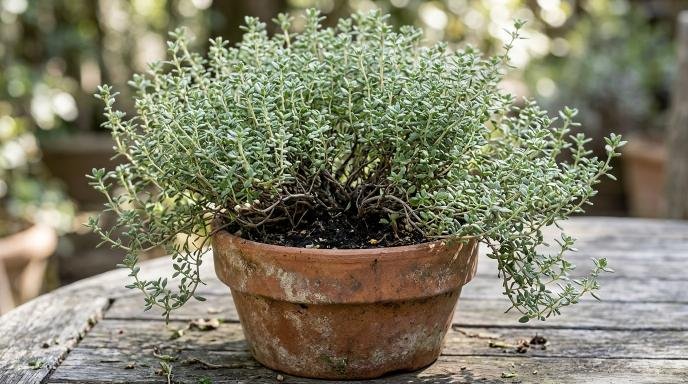
Select a container with drainage holes at the bottom. A pot approximately 6–10 inches wide is a reasonable starting size for one young thyme plant.
As the plant grows, move it into a larger container if its roots become crowded.
Terracotta pots are particularly useful because their porous sides allow moisture to evaporate more easily.
Container Growing Tips
- Use a loose, well-draining potting mixture.
- Avoid oversized containers filled with excess wet soil.
- Place the pot in a sunny location.
- Water when the soil has dried sufficiently.
- Empty standing water from the saucer.
- Trim stems regularly to encourage a bushier shape.
Container-grown thyme generally dries faster than garden-grown thyme, so check its soil moisture more frequently during summer.
How to Grow Thyme Indoors
Growing thyme indoors is possible, but insufficient sunlight is often the biggest challenge.
Unlike some shade-tolerant houseplants, thyme needs strong light to maintain compact growth and aromatic foliage.
For successful indoor growing:
- Select a sunny windowsill.
- Use a pot with drainage holes.
- Choose a well-draining growing medium.
- Allow the soil to dry between waterings.
- Provide good air circulation.
- Harvest lightly to encourage branching.
If your indoor thyme becomes stretched and weak, move it to a brighter location or supplement natural light with a grow light.
Avoid placing the pot in a humid bathroom or directly beside a frequently used kitchen sink where moisture may remain excessive.
How to Propagate Thyme
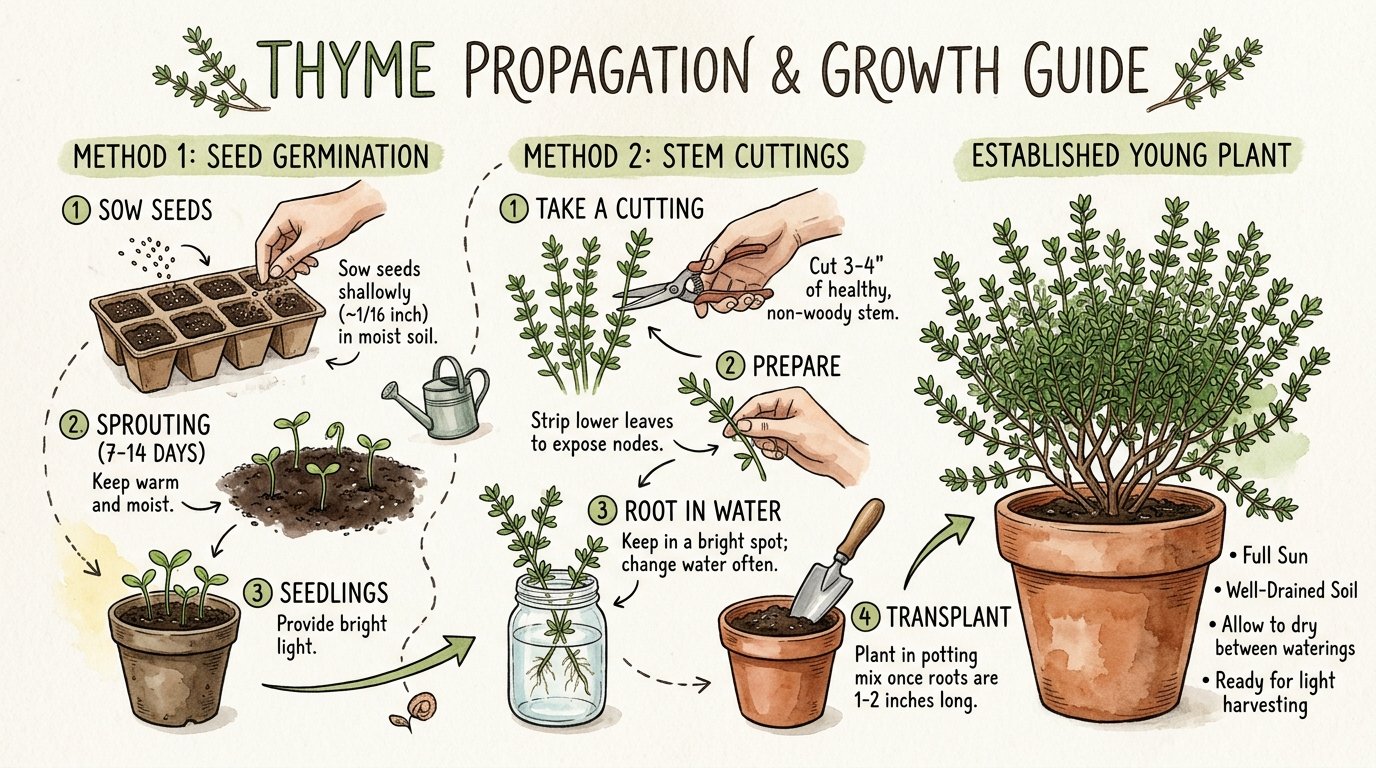
You can grow new thyme plants through stem cuttings, division, or seeds. Stem cuttings are particularly useful when you want new plants with the same characteristics as the parent plant.
Propagating Thyme From Stem Cuttings
- Select a healthy, non-flowering stem.
- Cut a section approximately 3–4 inches long.
- Remove the lower leaves.
- Place the cutting in moist, well-draining propagation medium.
- Keep it in bright, indirect light.
- Maintain light moisture without saturating the medium.
- Once roots develop, transplant it into a suitable container.
Root development can take several weeks depending on temperature, humidity, and the condition of the cutting.
Growing Thyme From Seeds
Thyme can also be grown from seeds, although germination and early growth can be slow.
- Sow seeds on the surface of a seed-starting mix.
- Press them gently into the growing medium.
- Provide bright light and consistent light moisture.
- Avoid burying the tiny seeds too deeply.
- Transplant seedlings when they are large enough to handle.
Seed-grown plants may vary in growth characteristics, especially when the seeds come from hybrid varieties.
Common Thyme Plant Problems and Solutions
Even though thyme is relatively low-maintenance, unsuitable growing conditions can cause several problems.
Understanding the symptoms helps you identify the cause before the plant becomes severely damaged.
| Problem | Possible Cause | Practical Solution |
|---|---|---|
| Yellow leaves | Overwatering or poor drainage | Check soil moisture and improve drainage |
| Brown, crispy leaves | Prolonged dryness or heat stress | Water appropriately and check root moisture |
| Leggy growth | Insufficient sunlight | Move the plant to a sunnier location |
| Weak aroma | Low light or excessive nitrogen | Improve sunlight and reduce fertilizing |
| Root rot | Waterlogged soil | Remove damaged roots and replace wet soil |
| Woody stems | Natural aging or insufficient pruning | Prune lightly during active growth |
| Leaf spots | Excess moisture or fungal disease | Improve airflow and avoid wetting foliage |
Why Is My Thyme Plant Turning Brown?
Brown thyme leaves can develop for several reasons, including underwatering, root damage, winter injury, or fungal problems.
Start by checking the soil.
If it is completely dry, water the plant thoroughly. If it is wet and smells unpleasant, inspect the roots for rot.
Also check whether the plant receives enough sunlight and whether its container drains properly.
Why Is My Thyme Plant Dying?
A declining thyme plant often has a problem with its growing environment rather than a need for additional fertilizer.
Check these factors first:
- Is the soil staying wet for too long?
- Does the pot have drainage holes?
- Is the plant receiving enough sunlight?
- Are the roots healthy?
- Has the plant experienced extreme cold or heat?
Correct the underlying problem instead of applying several treatments at once.
Common Pests That Affect Thyme
Thyme is generally not highly attractive to many common garden pests, but infestations can still occur.
Potential problems include:
- Aphids.
- Spider mites.
- Whiteflies.
- Mealybugs.
Inspect the undersides of leaves and growing tips regularly.
For small infestations, remove affected parts and wash pests away with a gentle stream of water. If necessary, use an appropriate insecticidal soap according to its label directions.
Avoid spraying plants in intense sunlight or applying treatments without checking that they are suitable for edible herbs.
Seasonal Thyme Plant Care
Thyme is a perennial herb, so its maintenance requirements change throughout the year.
Spring Care
Spring is an excellent time to encourage new growth.
- Remove dead or damaged stems.
- Check drainage after winter rainfall.
- Start regular harvesting when new growth develops.
- Propagate plants using healthy cuttings.
- Apply light fertilizer only if necessary.
Summer Care
Warm weather encourages active growth, but container-grown plants can dry out quickly.
- Monitor soil moisture during heat waves.
- Maintain adequate sunlight.
- Harvest young stems regularly.
- Avoid excessive pruning during extreme heat.
- Check for pests and leaf damage.
Fall Care
As temperatures become cooler, thyme growth generally slows.
- Reduce watering as evaporation decreases.
- Remove dead foliage.
- Avoid heavy late-season pruning.
- Check container drainage.
- Prepare outdoor plants for winter conditions.
Winter Care
Established thyme plants can survive cold conditions, depending on the variety and climate.
- Reduce watering during dormancy.
- Avoid waterlogged winter soil.
- Protect container plants from prolonged severe freezing.
- Do not fertilize dormant plants.
- Remove damaged growth when conditions improve.
In regions with mild winters, thyme may remain green and continue growing slowly throughout the season.
Best Thyme Varieties to Grow at Home
There are several thyme varieties available for home gardens. Choosing the right one depends on whether you want culinary herbs, attractive ground cover, or ornamental flowers.
| Thyme Variety | Main Characteristics | Best Use |
|---|---|---|
| Common Thyme (Thymus vulgaris) | Upright growth and aromatic leaves | Cooking |
| Lemon Thyme (Thymus × citriodorus) | Leaves with a citrus-like fragrance | Cooking and containers |
| Creeping Thyme (Thymus serpyllum) | Low-growing spreading habit | Ground cover |
| Woolly Thyme (Thymus pseudolanuginosus) | Soft, fuzzy foliage | Rock gardens |
| Caraway Thyme (Thymus herba-barona) | Distinctive caraway-like aroma | Culinary gardens |
For beginners, common thyme is an excellent starting choice because it is widely grown for culinary use and responds well to sunny, well-drained growing conditions.
Benefits and Uses of Thyme Plants
Thyme is more than an attractive garden herb. Its leaves have a long history of culinary use, and its flowers can provide a useful nectar source for pollinators.
Culinary Uses
Fresh and dried thyme leaves are commonly used in:
- Soups and stews.
- Roasted vegetables.
- Chicken and fish dishes.
- Meat marinades.
- Sauces and seasoning blends.
- Herbal teas and infusions.
Its flavor pairs particularly well with garlic, lemon, rosemary, and other Mediterranean herbs.
Garden Benefits
Thyme can also be useful in landscaping.
- Creeping varieties work well between stepping stones.
- Flowering plants attract bees and other pollinators.
- Compact varieties suit container gardens.
- Its fragrance adds interest to herb borders.
Although thyme has traditional medicinal uses, culinary use should not be confused with proven medical treatment. Concentrated thyme essential oil is different from ordinary culinary thyme and should not be consumed casually.
Common Mistakes to Avoid When Growing Thyme
Even experienced gardeners can struggle with thyme when its natural growing preferences are overlooked.
Here are some mistakes worth avoiding:
1. Watering Too Frequently
Thyme prefers soil that dries between waterings. Constantly moist soil can damage its roots.
2. Growing in Heavy Soil
Dense clay soil holds excess moisture and can increase the risk of root rot.
3. Providing Too Little Sunlight
Thyme needs strong light to grow compactly and develop its characteristic aroma.
4. Using Too Much Fertilizer
Excessive feeding can encourage weak, soft growth instead of a compact plant.
5. Cutting Into Old Woody Stems
Severe pruning into leafless old wood may prevent successful regrowth.
6. Using Containers Without Drainage
Even a well-formulated potting mix can become waterlogged if excess water cannot escape.
7. Neglecting Air Circulation
Crowded plants and persistently damp foliage can encourage fungal problems.
Frequently Asked Questions About Thyme Plant Care
Does Thyme Need Full Sun or Shade?
Thyme grows best in full sun and generally needs at least 6 hours of direct sunlight daily. Partial shade may be tolerated in hot climates, but too little light can produce weak, stretched growth.
How Often Should I Water a Thyme Plant?
Water when the upper 1–2 inches of soil have dried. The exact frequency depends on weather, container size, soil drainage, and plant maturity.
Can Thyme Grow Indoors?
Yes. Thyme can grow indoors when provided with strong sunlight, good air circulation, and well-draining soil. A sunny windowsill or suitable grow light is important.
Does Thyme Come Back Every Year?
Common thyme is a perennial herb and can return year after year in suitable growing conditions. Its longevity depends on the variety, climate, drainage, and winter protection.
Why Is My Thyme Plant Turning Yellow?
Yellow leaves commonly indicate overwatering or poor drainage, although nutrient problems and natural aging can also contribute. Check the soil and roots before changing your watering routine.
What Is the Best Soil for Thyme?
Thyme prefers loose, well-draining soil with a neutral to slightly alkaline pH. Sandy or gritty growing mixtures are often suitable because they allow excess water to drain.
Should I Cut Back Thyme After Flowering?
Light pruning after flowering helps maintain a compact shape and encourages fresh growth. Avoid cutting deeply into old, leafless woody stems.
Can Thyme Survive Winter Outdoors?
Many common thyme varieties tolerate cold winters once established. However, severe freezing, prolonged wet soil, and poor drainage can cause damage. Container plants may need additional protection.
How Do I Make My Thyme Plant Bushier?
Provide plenty of sunlight and regularly pinch or trim the soft growing tips. Light pruning encourages branching and helps maintain a compact appearance.
Can I Grow Thyme From Store-Bought Cuttings?
Yes, provided the stems are fresh and healthy. Remove the lower leaves and place the cuttings in a suitable moist propagation medium until roots develop.
Conclusion
Successful thyme plant care depends on understanding what this Mediterranean herb naturally prefers: plenty of sunlight, well-draining soil, moderate watering, and occasional pruning.
Whether you grow common thyme in a garden bed or lemon thyme in a container, avoid keeping the roots constantly wet and provide enough light to maintain healthy growth.
Start with a sunny location, choose a pot with drainage holes if growing in containers, and harvest lightly as the plant becomes established. With consistent but simple care, thyme can provide fragrant foliage, attractive flowers, and fresh seasoning for your kitchen year after year.
Related Articles to Consider for Internal Linking:
- Rosemary Plant Care
- Sage Plant Care
- Oregano Plant Care
- Mint Plant Care
- Indoor Herb Garden Ideas
- How to Grow Herbs in Pots
Add a clear planting sectionClarify garden versus container watering