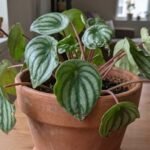
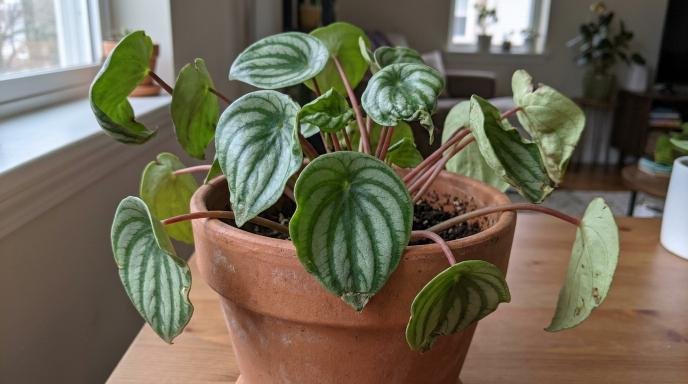
Watermelon Peperomia leaves curl when the plant is stressed. The most common cause is underwatering, but overwatering, too much light, and low humidity can also cause curling.
If your leaves are curling inwards, it is a light or water problem. If they are curling outwards and turning yellow, it is usually overwatering.
This is a part of our complete Watermelon Peperomia Care Guide. For water, soil, and light, read that guide after this.
Quick Answer
Watermelon peperomia leaves curl when the plant experiences water stress, unsuitable light, temperature changes, or pest damage. Check the soil moisture first. Dry soil usually indicates underwatering, while consistently wet soil may suggest overwatering and root problems. Move the plant into bright, indirect light, maintain comfortable indoor temperatures, and inspect the leaves for pests. Correcting the underlying problem helps new growth develop normally.
7 Common Causes of Watermelon Peperomia Leaves Curling
Understanding the symptoms is the first step toward fixing curled leaves. Here are seven possible causes and what you can do about each one.
Underwatering and Dry Soil
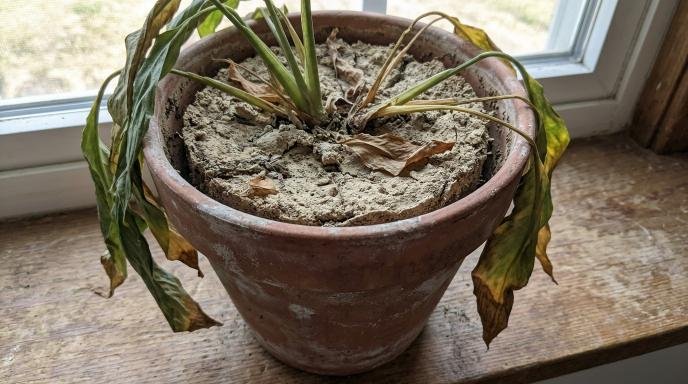
Underwatering is one of the most common reasons watermelon peperomia leaves curl. This plant stores some moisture in its thick leaves, but it still needs regular watering to maintain healthy growth.
When the soil becomes too dry, the roots cannot absorb enough water. As a result, leaves may curl inward, become thinner, feel soft, or develop dry brown edges.
Signs of underwatering:
- Leaves curl inward or look folded.
- Soil feels completely dry several inches below the surface.
- Leaves become slightly limp or wrinkled.
- Leaf edges may turn brown and crispy.
How to fix it:
Water your watermelon peperomia thoroughly when the upper portion of the soil has dried. Allow excess water to drain through the drainage holes.
Avoid giving it frequent tiny amounts of water because this may not moisten the entire root ball. Check soil moisture regularly, especially during warm weather.
Overwatering and Root Rot
Overwatering can also cause watermelon peperomia leaves to curl. Although the plant needs moisture, its roots cannot tolerate constantly waterlogged soil.
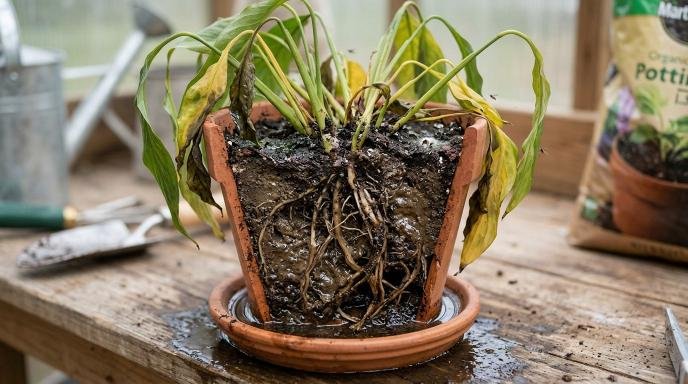
When the soil remains wet for too long, roots may become damaged or develop root rot. Damaged roots struggle to absorb water and nutrients, causing leaves to curl, droop, or turn yellow.
Signs of overwatering:
- Leaves curl and become soft or mushy.
- Lower leaves turn yellow.
- Soil remains wet for several days.
- Stems become weak or soft.
- The soil may develop an unpleasant smell.
How to fix it:
Stop watering until the soil begins to dry. Check the drainage holes and make sure the pot is not sitting in a tray filled with water.
If you notice mushy roots, remove the plant from its pot and inspect the root system. Trim damaged, dark, mushy roots using clean scissors and repot the plant in fresh, well-draining soil.
A mixture of indoor potting soil, perlite, and orchid bark can help improve drainage.
Too Much Direct Sunlight
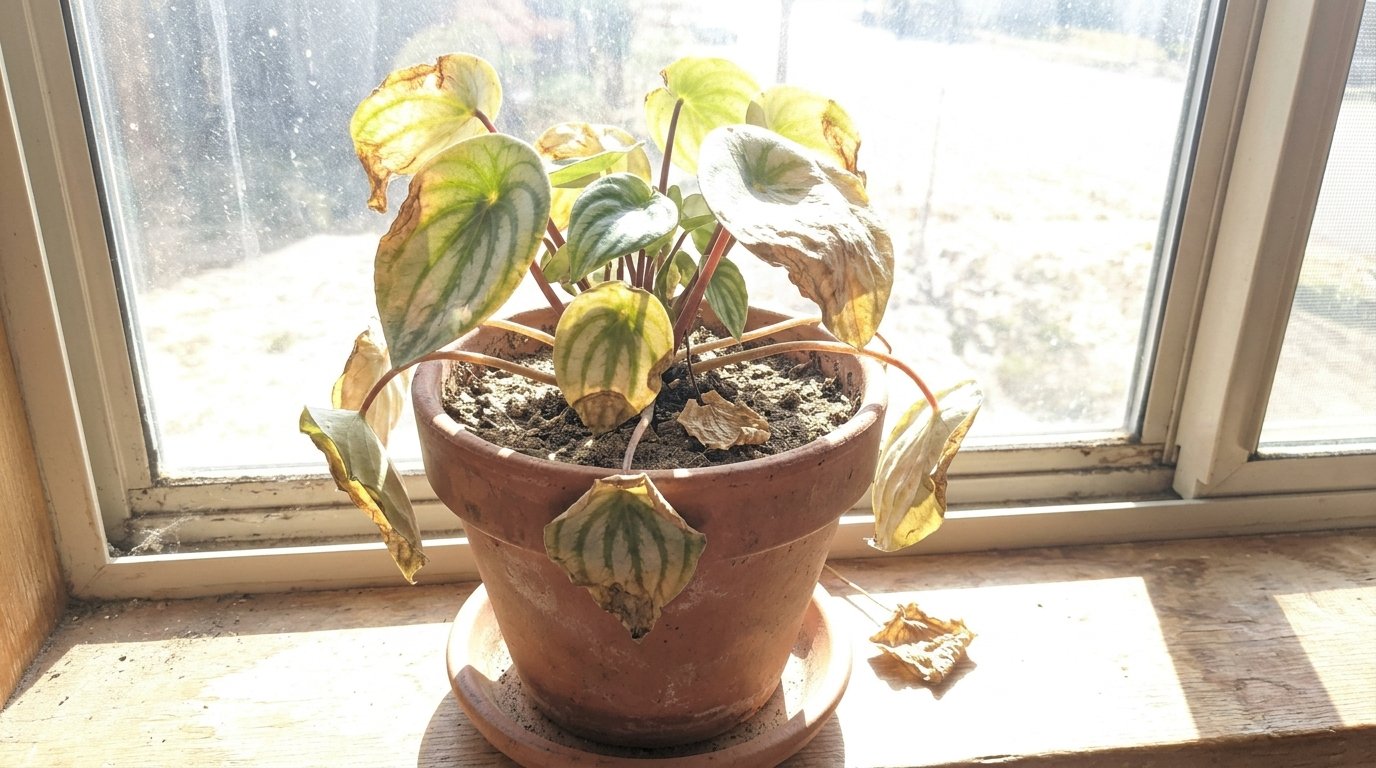
Watermelon peperomia prefers bright, indirect sunlight. Direct afternoon sunlight can damage its delicate leaves, causing curling, fading, and brown patches.
When the plant receives too much intense sunlight, its leaves lose moisture faster than the roots can replace it. This can lead to dehydration and leaf damage.
Signs of excessive sunlight:
- Leaves curl upward or inward.
- Brown, dry patches appear on leaf surfaces.
- Green and silver patterns begin to fade.
- Leaves feel dry and crispy.
- The plant looks stressed after afternoon sun exposure.
How to fix it:
Move your plant away from direct sunlight and place it near an east-facing window or a few feet away from a bright south- or west-facing window.
If natural light is limited, a grow light can provide additional illumination. Avoid moving the plant suddenly from a dark corner into intense sunlight.
Low Humidity and Dry Indoor Air
Low humidity is another possible reason for curling watermelon peperomia leaves. Although this plant can tolerate average household humidity, extremely dry air may cause moisture loss and leaf stress.
This problem is particularly common during winter when indoor heating systems reduce humidity.
Signs of low humidity:
- Leaf edges become dry or slightly crispy.
- Leaves curl inward.
- New leaves may develop smaller than usual.
- The plant looks less fresh despite appropriate watering.
How to fix it:
Try to maintain moderate humidity around your watermelon peperomia. A humidity level of approximately 40–60% is generally suitable for indoor growth.
You can increase humidity by:
- Using a small room humidifier.
- Grouping several houseplants together.
- Keeping the plant away from heating vents.
- Monitoring humidity with a digital hygrometer.
Avoid leaving water sitting around the plant’s roots to increase humidity. A humidifier is generally a more reliable solution.
Temperature Stress and Sudden Changes
Watermelon peperomia grows best in comfortably warm indoor conditions. Sudden temperature changes can stress the plant and cause its leaves to curl or droop.
Cold drafts, air conditioners, open windows, and heating vents can all create unsuitable conditions.
Signs of temperature stress:
- Leaves curl shortly after a temperature change.
- Growth becomes slower than usual.
- Leaves may droop or develop damaged edges.
- New leaves sometimes emerge distorted.
How to fix it:
Keep your watermelon peperomia in a room with temperatures around 65–80°F (18–27°C).
Avoid placing the plant directly beside:
- Air-conditioning units.
- Cold windows during winter.
- Radiators and heaters.
- Frequently opened exterior doors.
Try to maintain stable temperatures rather than exposing the plant to sudden hot and cold conditions.
Pest Infestations
Small pests can damage watermelon peperomia leaves by feeding on plant tissues. Spider mites, thrips, and mealybugs are common houseplant pests that may cause leaf curling and distorted growth.
These insects are sometimes difficult to notice because they hide underneath leaves, around stems, or near the growing points.
Signs of pest damage:
- Leaves curl or become distorted.
- Tiny yellow or pale spots appear.
- Fine webbing develops underneath leaves.
- Small insects gather around stems and leaf joints.
- New growth appears damaged or unusually shaped.
How to fix it:
- Isolate the affected plant from other houseplants.
- Inspect both sides of the leaves and the stems.
- Remove visible insects using a damp cloth or gentle water spray.
- Apply insecticidal soap according to its label directions.
- Repeat treatment as directed because some pests require multiple applications.
Always test a small area before applying any spray to the entire plant. Avoid treating the leaves under direct sunlight.
Nutrient Deficiency or Excess Fertilizer
Watermelon peperomia does not need heavy feeding, but it benefits from occasional fertilization during active growth.
Nutrient deficiencies can contribute to weak growth, pale leaves, and unusual leaf development. On the other hand, excessive fertilizer can cause salt buildup around the roots, damaging them and contributing to leaf curling.
Signs of nutrient-related problems:
- New leaves appear smaller than normal.
- Older leaves develop yellowing.
- Growth becomes unusually slow.
- Leaf edges turn brown.
- White fertilizer deposits appear on the soil surface.
How to fix it:
Feed your plant with a balanced liquid houseplant fertilizer diluted to half the recommended strength during spring and summer.
Apply fertilizer only when the soil is slightly moist to reduce the risk of root damage.
Avoid fertilizing during winter when growth naturally slows. If you suspect fertilizer buildup, flush the soil with clean water and allow it to drain completely. For severely damaged roots or heavily affected soil, repotting may be necessary.
How to Identify the Exact Cause of Curling Leaves
Different problems can create similar symptoms, so checking the leaves alone is not always enough. Examine the soil, roots, growing environment, and leaf texture before changing your care routine.
| Symptoms | Possible cause | Recommended action |
|---|---|---|
| Dry, crispy curled leaves | Underwatering | Water thoroughly |
| Soft, yellow curling leaves | Overwatering | Allow soil to dry |
| Brown sun-damaged patches | Excessive sunlight | Move to indirect light |
| Dry leaf edges | Low humidity | Increase humidity |
| Curling after temperature changes | Temperature stress | Stabilize conditions |
| Tiny spots and webbing | Pest infestation | Inspect and treat leaves |
| Pale leaves and weak growth | Nutrient problems | Adjust fertilization |
How to Prevent Watermelon Peperomia Leaves From Curling
Preventing leaf curling is easier than treating an already stressed plant. Consistent care helps maintain healthy foliage and encourages attractive new growth.
Follow these simple care practices:
- Water correctly: Allow the top layer of soil to dry before watering again.
- Provide indirect light: Choose a bright location without harsh direct afternoon sunlight.
- Maintain humidity: Keep indoor humidity at a comfortable moderate level.
- Avoid temperature fluctuations: Protect the plant from cold drafts and hot air.
- Use well-draining soil: Choose a loose potting mixture that does not hold excessive moisture.
- Check for pests: Inspect the undersides of leaves regularly.
- Fertilize carefully: Use diluted fertilizer during the active growing season.
A consistent routine is more beneficial than frequently changing the plant’s location, watering schedule, or growing conditions.
Can Curled Watermelon Peperomia Leaves Recover?
Yes, watermelon peperomia can recover from leaf curling if the underlying problem is corrected before serious damage occurs.
Leaves that have curled because of temporary underwatering or mild environmental stress may gradually improve after proper care.
However, leaves with severe sunburn, dead tissue, or extensive pest damage may not return to their original appearance.
What to expect during recovery:
- The plant may regain firmness after correcting watering problems.
- New leaves should gradually develop with a normal shape.
- Existing damaged leaves may remain curled or discolored.
- Healthy new growth is usually a better indicator of recovery than older damaged foliage.
Give your plant time to adjust. Avoid excessive watering or fertilizing in an attempt to speed up recovery.
Frequently Asked Questions
1. Why Are My Watermelon Peperomia Leaves Curling Inward?
Leaves commonly curl inward because of underwatering, excessive sunlight, or environmental stress. Check the soil first. If it is very dry, water the plant thoroughly. If the soil is already wet, investigate possible root problems.
2. Should I Cut Off Curled Watermelon Peperomia Leaves?
You do not need to remove every curled leaf. Keep leaves that are still green and healthy. Remove severely damaged, yellow, mushy, or completely dead leaves using clean scissors.
3. Can Overwatering Cause Watermelon Peperomia Leaves to Curl?
Yes. Overwatering can damage roots and reduce their ability to absorb water and nutrients. This may cause leaves to curl, droop, soften, or turn yellow.
4. How Often Should I Water Watermelon Peperomia?
There is no fixed watering schedule because soil, temperature, light, and pot size affect how quickly the plant dries. Check the soil regularly and water when the upper portion has dried.
5. Do Watermelon Peperomia Plants Like Direct Sunlight?
No. They prefer bright, indirect light. A little gentle morning sunlight may be tolerated, but intense afternoon sunlight can burn leaves and cause curling.
6. Why Are My New Watermelon Peperomia Leaves Curling?
New leaves may curl temporarily while unfolding. However, persistent distortion can indicate inconsistent watering, pest damage, unsuitable temperatures, or other environmental stress.
7. How Long Does It Take for Watermelon Peperomia to Recover?
Recovery depends on the cause and severity of the damage. Mild dehydration may improve relatively quickly after watering, while root damage and pest problems can take several weeks or longer to resolve.
Final Thoughts
Watermelon peperomia leaves curling is usually a sign that your plant is experiencing environmental or watering stress. The seven most common causes include underwatering, overwatering, excessive sunlight, low humidity, temperature stress, pests, and fertilizer problems.
Start by checking soil moisture and inspecting the leaves for pests or damage. Then adjust the plant’s lighting, watering, and humidity according to its needs.