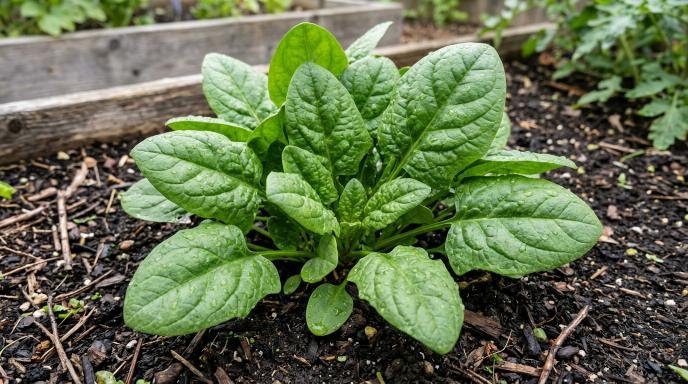
Growing spinach at home is a rewarding way to enjoy fresh, nutritious leaves throughout the cooler months. However, spinach plants need the right balance of sunlight, water, soil, and temperature to produce tender, healthy growth. Poor watering, excessive heat, and overcrowding can cause yellow leaves, slow growth, or premature bolting.
Whether you are growing spinach in a backyard garden, raised bed, or container, understanding proper spinach plants care will help you enjoy a healthier and more productive harvest. With a few practical techniques, even beginners can grow fresh spinach successfully.
Quick Answer
Spinach plants grow best in cool weather, fertile, well-draining soil, and a location receiving 4–6 hours of sunlight daily. Keep the soil consistently moist without making it waterlogged. Plant seeds about ½ inch deep, thin seedlings to 3–6 inches apart, and harvest outer leaves when they are large enough to eat.
Understanding Spinach Plant Growing Requirements
Spinach (Spinacia oleracea) is a cool-season leafy vegetable grown for its tender, edible leaves. It develops quickly when environmental conditions are suitable and can produce multiple harvests if you pick the outer leaves carefully.
Before planting, understand its basic growing requirements.
| Growing Factor | Ideal Conditions |
|---|---|
| Sunlight | 4–6 hours of sunlight |
| Temperature | 50–70°F |
| Soil pH | 6.0–7.5 |
| Watering | Consistently moist soil |
| Soil Type | Fertile, well-draining soil |
| Plant Spacing | 3–6 inches |
| Germination Time | 5–14 days |
| Harvest Time | Approximately 35–50 days |
Spinach generally performs best during spring and fall. Hot weather can cause plants to bolt, which means they produce flower stalks and become less productive.
Choose the Right Location for Growing Spinach
Location plays an important role in spinach growth. Although spinach needs sunlight for healthy leaf development, excessive heat and intense afternoon sunlight can stress the plants.
Choose a location that receives approximately 4–6 hours of sunlight. In cooler climates, spinach can tolerate more direct sunlight. In warmer regions, partial afternoon shade helps keep the soil cool and prevents premature flowering.
Practical Tips:
- Select a location with good air circulation.
- Avoid areas where water collects after rain.
- Provide afternoon shade during warmer weather.
- Keep spinach away from plants that create excessive shade.
If you are growing spinach in containers, place them somewhere they receive morning sunlight and protection from harsh afternoon heat.
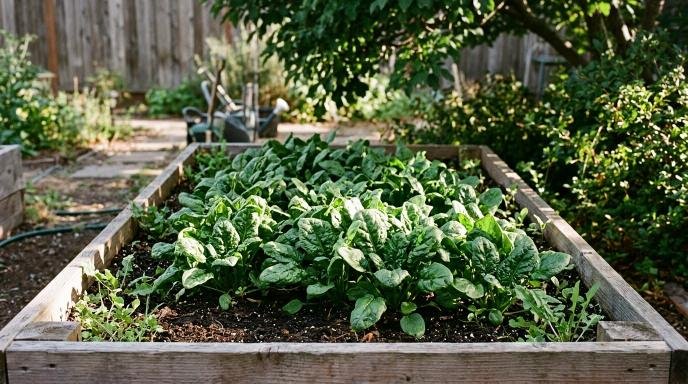
Prepare the Best Soil for Spinach Plants
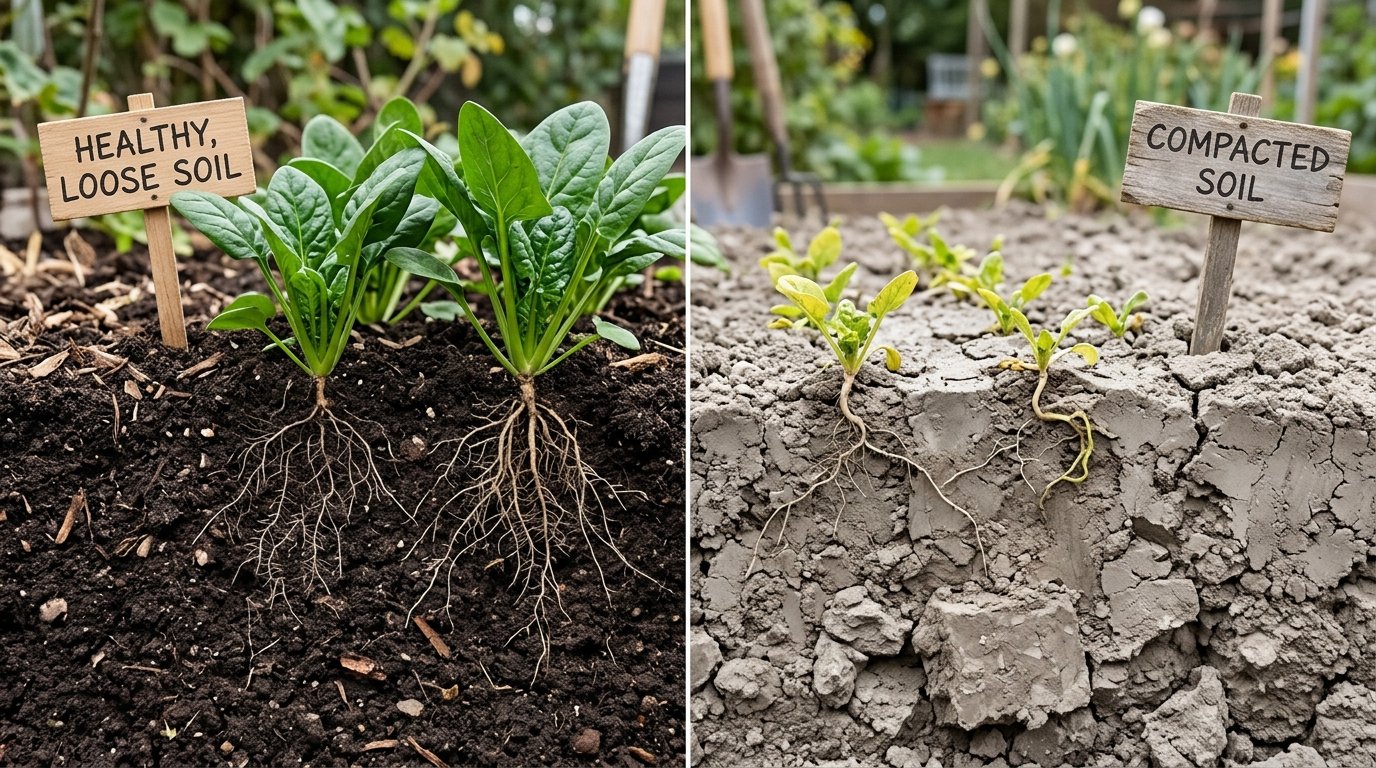
Healthy soil supports strong roots and encourages the development of tender leaves. Spinach prefers fertile, loose soil that holds enough moisture without becoming waterlogged.
Before planting, loosen the soil approximately 8–10 inches deep. Remove stones, weeds, and other debris that may interfere with root development.
Mix in mature compost or well-rotted organic matter to improve soil structure and nutrient availability.
Ideal Soil Conditions
- Soil pH between 6.0 and 7.5.
- Good drainage to prevent root problems.
- Plenty of organic matter.
- A loose texture that allows roots to develop easily.
Avoid planting spinach in heavy, compacted soil. Poor drainage can cause root damage and encourage fungal diseases.
For container gardening, use a quality vegetable potting mix rather than ordinary garden soil. Garden soil can become compacted inside pots and restrict root growth.
How to Plant Spinach Seeds Properly
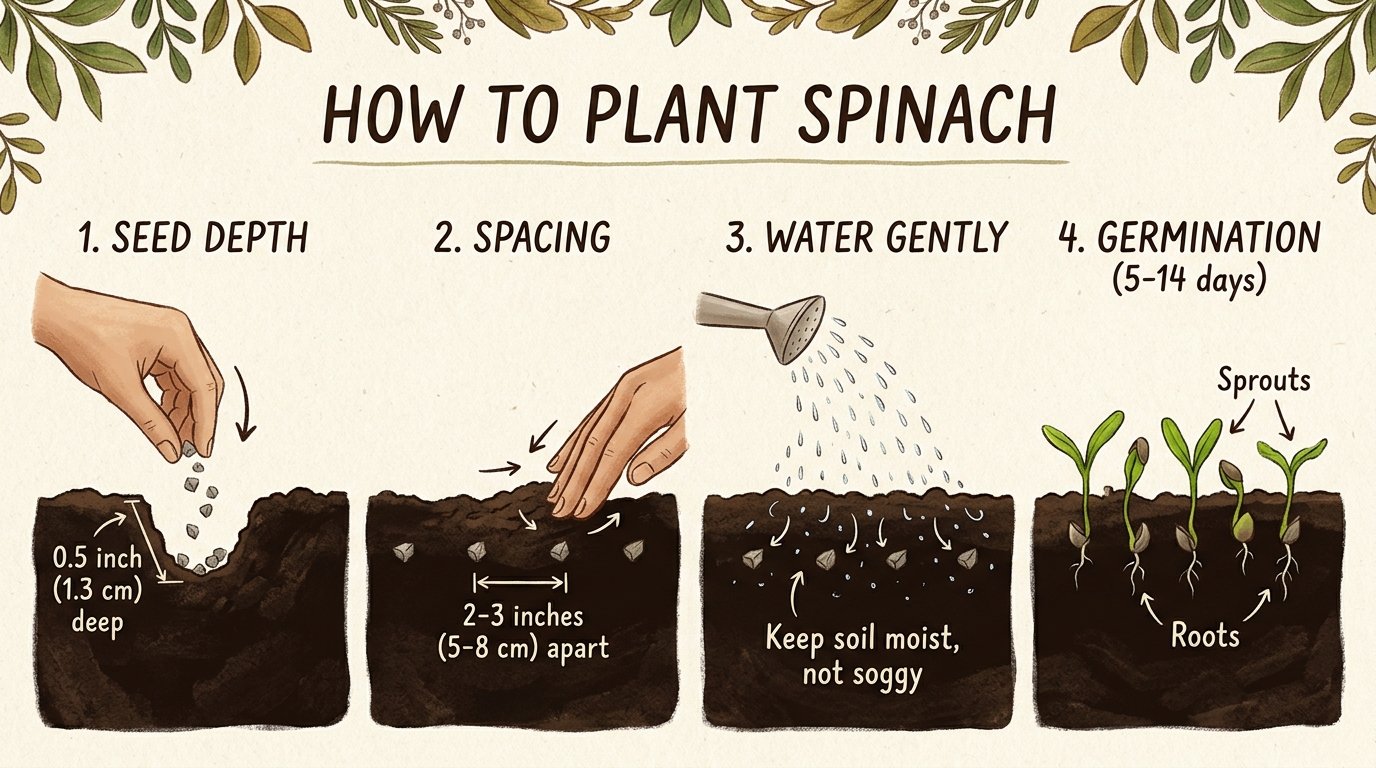
Growing spinach from seeds is inexpensive and straightforward. Direct sowing is generally recommended because spinach develops a sensitive root system and may not respond well to unnecessary transplanting.
Follow these steps:
- Prepare the garden bed by loosening the soil and removing weeds.
- Create shallow rows approximately ½ inch deep.
- Sow spinach seeds about 1 inch apart.
- Cover the seeds lightly with soil.
- Water gently to keep the soil evenly moist.
- Watch for seedlings, which usually emerge within 5–14 days.
Once seedlings develop several true leaves, thin them to approximately 3–6 inches apart, depending on the variety and desired leaf size.
Proper spacing improves airflow, reduces competition, and allows leaves to develop more freely.
Expert Tip: If you want a continuous supply of fresh spinach, sow a small new batch of seeds every 2–3 weeks during the growing season instead of planting everything at once.
Spinach Plants Care: Watering Requirements
Water is essential for producing soft, flavorful spinach leaves. Inconsistent watering can slow growth and make leaves tougher or more bitter.
Spinach prefers consistently moist soil, especially during germination and early development.
How Often Should You Water Spinach?
Water whenever the upper layer of soil begins to dry. Depending on weather, soil type, and container size, this may mean watering several times per week.
During hot or windy conditions, containers may need daily attention.
Follow these watering practices:
- Water deeply enough to reach the root zone.
- Check soil moisture before watering again.
- Water near the soil rather than constantly wetting foliage.
- Avoid standing water around the roots.
- Use mulch to reduce moisture loss.
Overwatering is another common mistake. If the soil remains soggy, roots may struggle to receive enough oxygen, increasing the risk of root rot.
Image Suggestion: Healthy spinach plants being watered at soil level using a watering can.
Provide the Right Amount of Sunlight
Sunlight helps spinach produce the energy required for healthy leaf development. However, spinach is not a fan of extreme summer heat.
For the best results, provide approximately 4–6 hours of direct sunlight daily.
In cooler weather, a sunnier location can encourage faster growth. In warmer climates, partial shade during the afternoon helps prevent heat stress.
Signs of Too Much Sunlight
- Leaves begin wilting during hot afternoons.
- Soil dries out very quickly.
- Plants develop flower stalks prematurely.
- Leaves become tougher or develop a bitter taste.
If you notice these problems, consider using shade cloth or relocating container-grown spinach to a cooler position.
Temperature and Seasonal Requirements
Temperature is one of the most important factors in successful spinach cultivation.
Spinach is a cool-season vegetable that grows best when temperatures remain moderate. Warm conditions can accelerate bolting, particularly when days become longer.
| Temperature | Effect on Spinach |
|---|---|
| 40–50°F | Slow but generally healthy growth |
| 50–70°F | Excellent growing conditions |
| 70–75°F | Growth may slow |
| Above 80°F | Increased heat stress and bolting risk |
| Freezing conditions | Established plants may tolerate light frost, depending on variety and conditions |
When Should You Plant Spinach?
Spring: Sow seeds as soon as the soil becomes workable and temperatures are suitable.
Fall: Plant spinach when summer temperatures begin declining. Fall planting often produces excellent results because cooler conditions support tender leaf development.
Winter: In mild climates, spinach can continue growing outdoors. In colder areas, use row covers or a cold frame for additional protection.
For gardeners in warmer regions, fall and winter are often more reliable growing seasons than summer.
Fertilizing Spinach for Healthy Leaf Growth
Spinach needs nutrients to produce large, green leaves. Nitrogen is particularly important because it supports leafy growth.
However, applying too much fertilizer can create excessive soft growth and may negatively affect plant health.
Before planting, mix compost into the soil to provide organic matter and a gradual supply of nutrients.
If plants show slow growth or pale leaves, consider using a balanced vegetable fertilizer according to its label directions.
Fertilizing Tips
- Prepare soil with mature compost before sowing.
- Use a balanced fertilizer when soil nutrients are insufficient.
- Avoid excessive nitrogen applications.
- Do not apply fresh manure directly around growing plants.
- Water after applying granular fertilizer when the product instructions recommend it.
Healthy green leaves and steady growth generally indicate that spinach is receiving adequate nutrients.
Growing Spinach in Containers
You do not need a large garden to grow fresh spinach. Containers, pots, and balcony planters can all support healthy spinach plants.
Choose a container at least 6–8 inches deep with drainage holes. Wider containers are especially useful because they allow you to grow several plants together.
Container Growing Instructions
- Select a suitable pot with drainage holes.
- Fill it with quality vegetable potting mix.
- Sow seeds approximately ½ inch deep.
- Thin seedlings to provide adequate growing space.
- Place the container in a location with suitable sunlight.
- Keep the soil consistently moist.
- Harvest mature outer leaves regularly.
Container-grown spinach often dries out faster than garden-grown spinach. Check soil moisture regularly, especially during sunny weather.
Expert Tip: Avoid placing dark-colored containers on extremely hot concrete or metal surfaces during warm weather. Excessive heat around the root zone can stress spinach plants.
Common Spinach Plant Problems and How to Fix Them
Even when you provide proper growing conditions, spinach can experience several problems. Identifying symptoms early makes it easier to protect your crop.
| Problem | Possible Cause | Solution |
|---|---|---|
| Yellow leaves | Watering problems or nutrient deficiency | Check drainage and soil nutrients |
| Wilting leaves | Heat stress or dry soil | Water appropriately and provide shade |
| Brown leaf edges | Heat, drought, or fertilizer injury | Check moisture and fertilizer use |
| Slow growth | Poor soil or unsuitable temperatures | Improve soil and adjust planting time |
| Bitter leaves | Heat stress or plant maturity | Harvest earlier and grow in cooler weather |
| Small leaves | Overcrowding or poor nutrition | Thin plants and improve soil conditions |
| Root rot | Waterlogged soil | Improve drainage and avoid overwatering |
Why Are My Spinach Leaves Turning Yellow?
Yellow leaves can develop because of several factors, including excessive watering, poor drainage, nutrient deficiencies, or disease.
Check the soil before adding fertilizer. If it is constantly wet, reduce watering and improve drainage. If the soil is healthy but older leaves remain pale, consider whether the plants need additional nutrients.
Why Is My Spinach Plant Bolting?
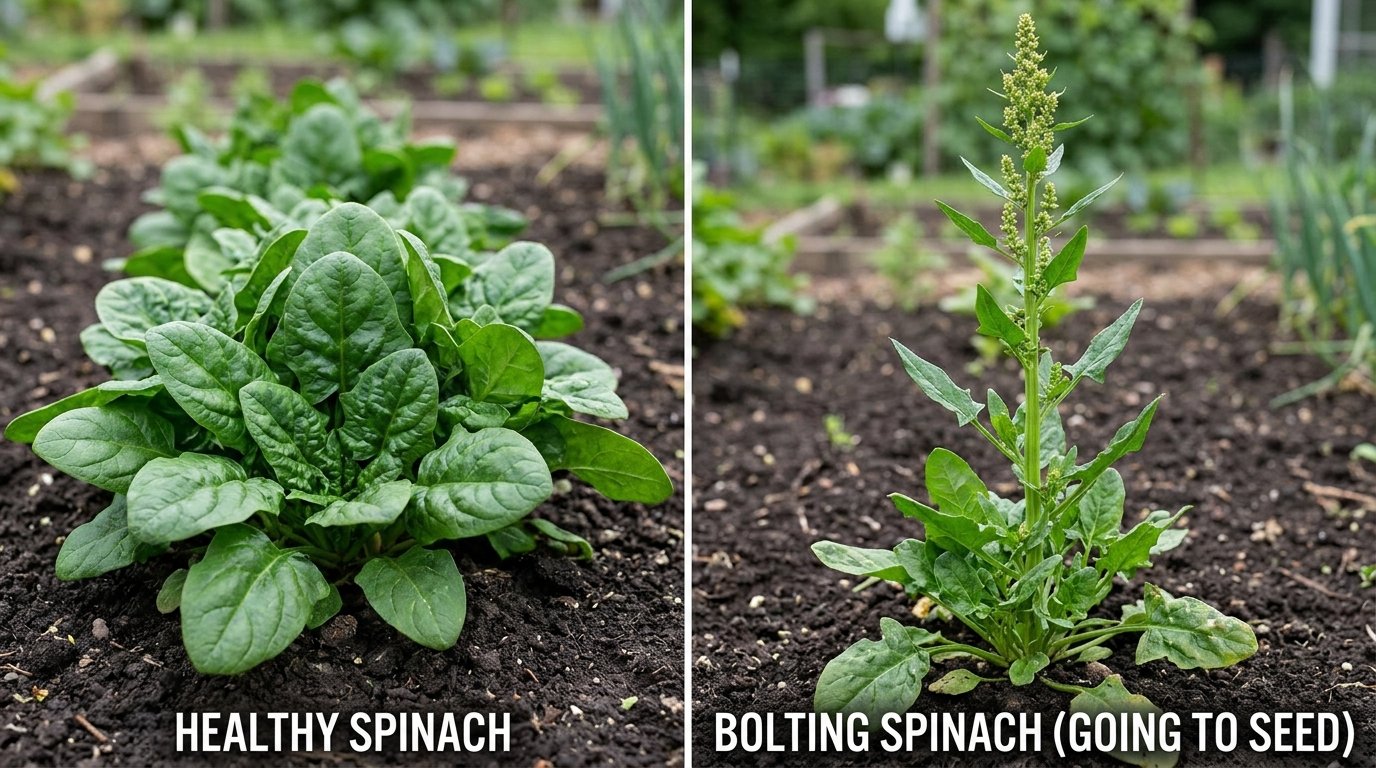
Bolting occurs when spinach produces a flower stalk instead of continuing leafy growth.
Common triggers include:
- High temperatures.
- Increasing day length.
- Plant stress.
- Advanced plant maturity.
Once spinach bolts, its leaves may become less tender and more bitter.
Harvest remaining usable leaves and sow a fresh batch when cooler conditions return.
Protect Spinach Plants From Pests and Diseases
Spinach can attract several garden pests that damage leaves and weaken plants.
Regularly inspect the undersides of leaves and the growing tips. Early detection is especially important because leafy vegetables are harvested for consumption.
Common Spinach Pests
Aphids: These small insects gather on young leaves and stems, sucking plant sap. Remove small infestations with a gentle stream of water.
Leaf Miners: Their larvae create winding tunnels inside leaves. Remove and dispose of heavily affected foliage.
Slugs and Snails: These pests chew irregular holes in leaves, particularly during damp weather. Hand-pick them and reduce hiding places around plants.
Caterpillars: Some caterpillars feed directly on spinach leaves. Inspect plants regularly and remove visible pests.
Common Diseases
- Downy mildew.
- Damping-off.
- Leaf spot.
- Root rot.
To reduce disease problems, follow these practices:
- Avoid overcrowding plants.
- Provide good air circulation.
- Water near the soil surface.
- Remove infected plant material.
- Use clean containers and gardening tools.
- Choose disease-resistant spinach varieties when available.
When and How to Harvest Spinach
Harvesting at the right time helps maintain leaf quality and encourages additional growth.
Many spinach varieties are ready for harvesting approximately 35–50 days after sowing, although maturity depends on the variety and growing conditions.
You can begin harvesting baby spinach leaves when they reach a suitable size for eating.
Best Way to Harvest Spinach
- Choose healthy outer leaves that are large enough to harvest.
- Use clean scissors or gently remove individual leaves.
- Leave the central growing point undamaged.
- Allow smaller inner leaves to continue developing.
- Harvest regularly to enjoy tender foliage.
If you want a larger harvest, you can cut the entire plant slightly above the soil level, provided the growing point remains intact.
However, not every plant will regrow successfully after a complete cut.
How to Keep Spinach Fresh After Harvesting
- Remove damaged or yellow leaves.
- Wash the leaves before use.
- Dry them thoroughly.
- Store them in the refrigerator in a suitable container.
- Avoid keeping wet leaves sealed for extended periods.
Best Spinach Varieties to Grow at Home
Choosing the right variety can make a noticeable difference in growing success. Some spinach varieties are better suited to warmer conditions, while others perform particularly well in cool weather.
| Spinach Variety | Main Characteristics |
|---|---|
| Bloomsdale Long Standing | Savoy-type leaves with a textured appearance |
| Space | Smooth leaves and relatively fast growth |
| Tyee | Dark green, savoy-type foliage |
| Baby’s Leaf | Suitable for harvesting young leaves |
| Giant Nobel | Large leaves and vigorous growth |
| New Zealand Spinach | Heat-tolerant leafy green, but a different species from true spinach |
Important: New Zealand spinach (Tetragonia tetragonioides) is not true spinach. It is a separate leafy vegetable that tolerates warmer conditions and can be useful when ordinary spinach struggles in summer.
For beginners, Space and Bloomsdale Long Standing are useful varieties to consider.
Companion Plants That Grow Well With Spinach
Companion planting can help you use garden space efficiently and create a more diverse vegetable garden.
Spinach generally grows well alongside plants that have different growth habits and do not compete heavily for nutrients or sunlight.
Good companion choices include:
- Radishes.
- Lettuce.
- Strawberries.
- Onions.
- Garlic.
- Peas.
Radishes mature quickly and can be harvested while spinach is still developing. Peas can also be useful because they grow vertically and may provide some shade when properly positioned.
Avoid overcrowding spinach with larger plants that block sunlight and restrict airflow.
Common Mistakes to Avoid When Growing Spinach
Even experienced gardeners sometimes make mistakes that reduce spinach production.
Here are some problems worth avoiding:
Planting During Extreme Heat: Spinach prefers cool weather. Planting during hot conditions can cause poor germination and premature bolting.
Overwatering: Constantly wet soil damages roots. Always check soil moisture before watering.
Ignoring Plant Spacing: Crowded spinach plants compete for sunlight, water, and nutrients. Thin seedlings when necessary.
Using Poor-Quality Soil: Compact soil restricts root growth and drainage. Add mature compost and use suitable growing media.
Applying Too Much Fertilizer: Excessive feeding can cause imbalanced growth. Follow fertilizer instructions and avoid unnecessary applications.
Waiting Too Long to Harvest: Mature leaves can become less tender, particularly when temperatures increase. Harvest regularly while foliage is young and healthy.
Overlooking Pests: Small infestations can spread quickly. Inspect plants every few days, especially during warm and humid weather.
Frequently Asked Questions About Spinach Plants Care
1. How often should I water spinach plants?
Water spinach whenever the upper layer of soil begins to dry. Keep the growing medium consistently moist but avoid waterlogging. Hot weather and container growing may require more frequent watering.
2. Does spinach need full sun or shade?
Spinach grows well with approximately 4–6 hours of sunlight daily. In cooler climates, it can tolerate more direct sunlight, while afternoon shade is helpful in warmer regions.
3. How long does spinach take to grow?
Most spinach varieties can be harvested approximately 35–50 days after planting. Baby leaves may be ready earlier, depending on the variety and growing conditions.
4. Can spinach grow in pots?
Yes, spinach grows successfully in containers. Use a pot at least 6–8 inches deep with drainage holes, quality potting mix, and enough space for proper leaf development.
5. Why is my spinach growing slowly?
Slow growth can result from unsuitable temperatures, poor soil, insufficient sunlight, overcrowding, or nutrient deficiencies. Check growing conditions before applying additional fertilizer.
6. Can spinach grow in hot weather?
Spinach prefers cool weather and often struggles during hot summers. Heat-tolerant alternatives such as New Zealand spinach may be more suitable for warmer growing conditions.
7. How do I prevent spinach from bolting?
Plant spinach during cooler seasons, maintain consistent soil moisture, provide afternoon shade in warm climates, and choose slow-bolting varieties.
8. What is the best fertilizer for spinach?
A balanced vegetable fertilizer can support spinach growth when soil nutrients are insufficient. Mature compost is also useful for improving soil fertility and structure.
9. Can spinach grow indoors?
Yes, spinach can grow indoors if it receives sufficient light, suitable temperatures, and proper watering. A sunny window or supplemental grow light can help maintain healthy growth.
10. Does spinach grow back after cutting?
Spinach can produce additional leaves when you harvest outer foliage and leave the central growing point undamaged. Complete harvesting may reduce the chance of regrowth.
11. What causes bitter spinach leaves?
High temperatures, plant maturity, and bolting can contribute to bitter-tasting spinach. Growing during cooler weather and harvesting young leaves can improve flavor.
12. What is the best month to plant spinach?
The best planting month depends on your climate. In many regions, early spring and fall are ideal. In warmer areas, fall and winter planting often provide better results.
Conclusion
Successful spinach plants care starts with choosing the right planting season, preparing fertile soil, and maintaining consistent moisture. Spinach does not require complicated maintenance, but it does need cool temperatures, suitable sunlight, proper spacing, and regular harvesting.
For the healthiest plants, avoid excessive watering, protect foliage from intense afternoon heat, and inspect leaves regularly for pests and diseases. Whether you grow spinach in garden beds or containers, these practical techniques can help you enjoy fresh, tender leaves throughout the growing season.
Start with a small batch of seeds, observe how your plants respond to local weather, and adjust your care routine as they develop.