Quick Answer
Habanero plant care involves providing at least 6–8 hours of direct sunlight, warm temperatures, well-draining soil, consistent moisture, and regular feeding during active growth.
Grow habaneros in a sunny location with temperatures around 70–85°F (21–29°C), avoid waterlogged roots, and use a container with drainage holes if growing in pots. With proper care, habanero plants can produce flavorful, intensely hot peppers throughout the growing season.
Introduction
Growing habanero peppers at home can be incredibly rewarding. These compact pepper plants produce colorful, fiery fruits that add distinctive flavor and heat to homemade sauces, salsas, marinades, and other dishes.
However, successful habanero plant care requires more than simply planting a seed and watering occasionally. Habaneros are warm-season plants that need plenty of sunlight, suitable soil, consistent moisture, and enough nutrients to support flowering and fruit production.
One common mistake is treating habaneros like ordinary houseplants. Keeping their soil constantly wet, placing them in insufficient light, or exposing them to cold temperatures can slow growth and reduce harvests.
The good news is that habaneros can grow successfully in garden beds, raised beds, containers, and even sunny patios when their basic needs are met.
This guide explains how to grow healthy habanero plants, encourage flowering, prevent common problems, and harvest peppers at the right time.
1. Understanding the Habanero Pepper Plant
The habanero is a hot pepper belonging to the species Capsicum chinense. Despite its name, this species includes several pepper varieties with different shapes, colors, flavors, and heat levels.
Habanero plants are generally bushy, warm-season perennials in suitable climates, although gardeners commonly grow them as annuals in regions with cold winters.
What makes habaneros different?
Habanero plants are known for:
- High heat: Their fruits contain substantial amounts of capsaicin, the compound responsible for the burning sensation associated with hot peppers.
- Distinctive flavor: Many varieties have fruity, citrus-like, or floral flavor notes alongside their heat.
- Warm-weather preferences: They grow best when temperatures remain comfortably warm.
- Long growing seasons: Plants may need several months from planting to produce ripe peppers, depending on the variety and growing conditions.
- Potentially extended production: In frost-free conditions, healthy plants can continue producing for an extended period.
Habaneros are not necessarily difficult to grow, but they are sensitive to cold, poor drainage, and inconsistent growing conditions.
Understanding these characteristics makes it easier to provide the right care from the beginning.
Image Suggestion: A labeled botanical illustration of a mature habanero plant showing its leaves, flowers, stems, and colorful peppers.
2. Choosing the Right Habanero Variety
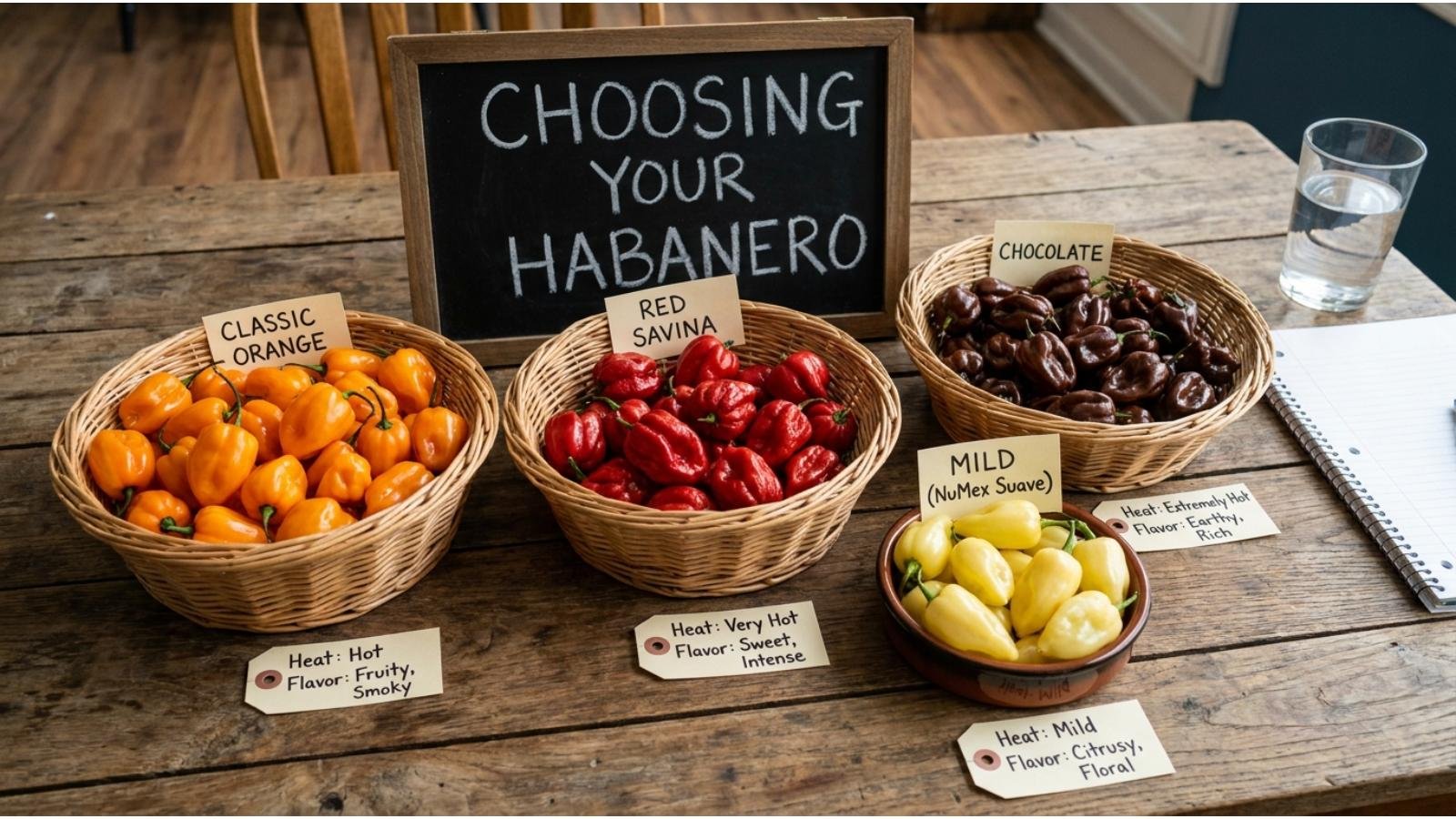
Different habanero varieties can vary in fruit color, shape, flavor, plant size, and maturation time.
Choosing a variety suited to your growing space can make plant care considerably easier.
| Habanero variety | Typical fruit characteristics | Growing considerations |
|---|---|---|
| Orange Habanero | Orange fruits with fruity, citrus-like flavor | A familiar choice for home gardens and hot sauces |
| Red Habanero | Red fruits with intense heat and distinctive flavor | Check the seed packet for the variety’s expected maturity time |
| Chocolate Habanero | Dark brown fruits, often with rich, earthy flavor notes | Needs a sufficiently long, warm growing season |
| White Habanero | Pale cream or whitish fruits | Variety characteristics and maturation time can differ |
| Caribbean Red | Bright red fruits with very high heat | Requires warm conditions and careful handling during harvest |
Variety names sometimes refer to different strains, so plant size, yield, and maturation time should be checked against the specific seed or plant label.
Which variety should beginners grow?
An orange habanero is a practical starting point because it is widely recognized and commonly grown.
However, the best choice depends on your climate, available growing season, preferred flavor, and the amount of heat you enjoy.
If your growing season is relatively short, look for a variety with a suitable maturity period and consider starting seeds indoors before outdoor conditions become favorable.
3. Best Growing Conditions for Habanero Plants
Habaneros thrive when their growing environment provides warmth, light, airflow, and balanced moisture.
The following table summarizes their main requirements.
| Growing factor | Recommended conditions |
|---|---|
| Sunlight | At least 6–8 hours of direct sunlight daily |
| Preferred temperature | Approximately 70–85°F (21–29°C) |
| Soil | Fertile, well-draining soil |
| Soil pH | Approximately 6.0–6.8 |
| Watering | Water when the upper layer of soil begins to dry |
| Humidity | Moderate humidity with good airflow |
| Fertilizer | Balanced feeding during early growth, followed by appropriate fruiting support |
| Container | A pot with drainage holes, ideally around 3–5 gallons or larger for a mature plant |
| Planting season | After frost danger has passed and the soil has warmed |
These are practical starting points rather than absolute limits. Variety, local climate, container size, and growing conditions can change how a plant responds.
4. How Much Sunlight Do Habanero Plants Need?
Sunlight is one of the most important factors in successful habanero plant care.
Habaneros need plenty of light to develop sturdy stems, healthy foliage, flowers, and peppers.
Ideal sunlight requirements
Aim for at least 6–8 hours of direct sunlight each day.
In many climates, a location receiving 8 hours of sunlight is particularly useful for productive growth, provided the plant does not become excessively stressed by extreme heat.
Good locations include:
- A sunny garden bed.
- A south-facing or otherwise sun-exposed patio.
- A bright balcony with several hours of direct sunlight.
- A greenhouse with sufficient ventilation and protection from excessive heat.
Signs your plant needs more light
Insufficient sunlight may cause:
- Long, weak stems.
- Sparse foliage.
- Slow growth.
- Reduced flowering.
- Fewer fruits than expected.
If your plant is stretching toward a window or producing unusually thin stems, inadequate light may be contributing to the problem.
What if the sunlight is too intense?
Habaneros enjoy sunlight, but intense heat combined with dry soil can stress plants.
During exceptionally hot weather, afternoon shade may help reduce stress, especially for container-grown plants.
Avoid moving a plant abruptly from a sheltered indoor location into intense outdoor sunlight. Gradually introduce it to stronger light over approximately 7–10 days.
This process, called hardening off, helps reduce the risk of leaf scorch and transplant shock.
Image Suggestion: A comparison showing a healthy, compact habanero plant growing in full sunlight beside a leggy plant receiving insufficient light.
5. Best Soil for Habanero Plant Care
Habanero plants need soil that holds enough moisture for healthy growth but drains excess water efficiently.
Heavy, waterlogged soil can deprive roots of oxygen and increase the risk of root problems.
Ideal soil characteristics
Look for soil that is:
- Loose and well-draining.
- Rich in organic matter.
- Moderately fertile.
- Able to retain some moisture without remaining soggy.
- Slightly acidic to nearly neutral, with a pH around 6.0–6.8.
Growing habaneros in garden soil
Before planting, loosen the soil and incorporate mature compost if the soil needs improvement.
If your garden has heavy clay soil or tends to remain wet after rainfall, consider using a raised bed or improving drainage before planting.
Avoid placing habaneros in a low spot where water regularly collects.
Growing habaneros in containers
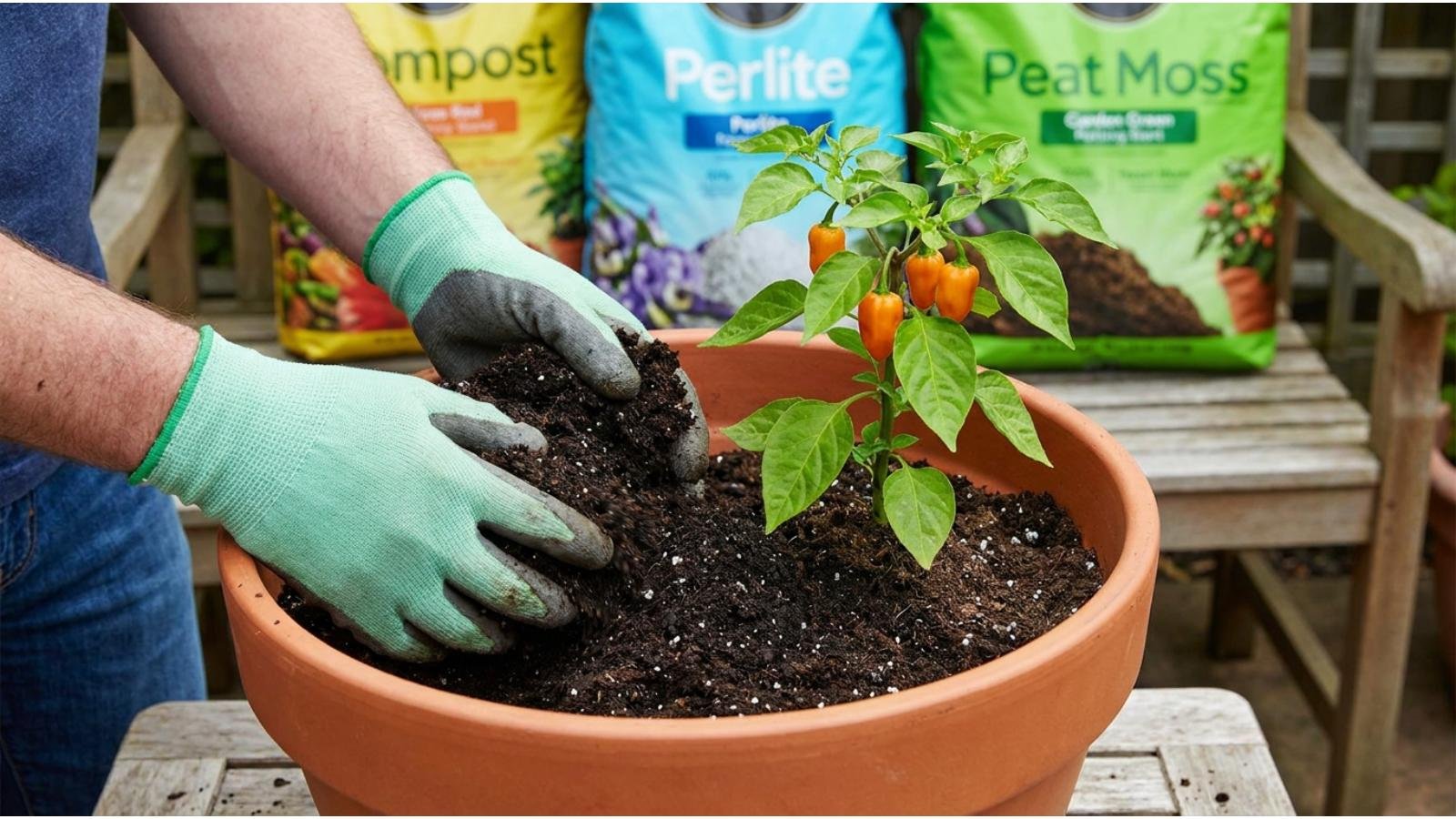
Container-grown habaneros benefit from a quality potting mix designed for vegetables or outdoor container plants.
A practical mix should provide both moisture retention and aeration.
Avoid using dense garden soil by itself in a pot because it may compact and drain poorly.
Practical Tip: If water remains on the soil surface for a long time or the pot stays excessively heavy and wet, check the drainage holes and growing medium before increasing your watering frequency.
6. How to Water Habanero Plants Properly
Watering is one of the most important parts of habanero plant care, and getting the balance right can prevent several common problems.
Habaneros need consistent moisture, especially during flowering and fruit development. However, they do not appreciate constantly saturated soil.
How often should you water habanero plants?
There is no single watering schedule that works for every plant.
Your watering frequency depends on:
- Temperature.
- Sunlight exposure.
- Container size.
- Soil composition.
- Plant size.
- Rainfall.
- Wind and humidity.
During hot weather, a container-grown habanero may need watering much more frequently than a plant growing in a garden bed.
Instead of watering automatically every day, check the soil first.
A practical watering method
- Insert your finger approximately 1–2 inches into the soil.
- If the soil feels noticeably moist, wait and check again later.
- If the upper layer has started to dry, water thoroughly.
- Allow excess water to drain away.
- Check the plant again during particularly hot or windy weather.
For larger containers, lifting the pot can also help you judge moisture levels. A pot that feels substantially lighter than usual may need water.
Why deep watering helps
When you water thoroughly, moisture reaches more of the root zone instead of wetting only the surface.
This encourages roots to develop throughout the available growing medium.
However, deep watering does not mean keeping the soil permanently wet. Allow the upper layer to dry somewhat between waterings while avoiding severe, repeated wilting.
Common watering mistakes
Overwatering: Constantly wet soil can reduce oxygen around the roots and encourage root rot.
Underwatering: Severe dryness can cause wilting, flower drop, and problems with fruit development.
Frequent shallow watering: Light splashes may wet the surface without adequately moistening the root zone.
Ignoring drainage: Even a careful watering routine can fail if excess water cannot escape.
Practical Tip: If your habanero wilts during a hot afternoon, check the soil before watering. A plant in dry soil may need water, but a plant with waterlogged roots may also wilt because damaged roots cannot absorb moisture properly.
7. Temperature and Humidity Requirements
Habaneros are warm-season peppers that grow best when temperatures remain comfortably warm.
Cold conditions can slow growth, interfere with flowering, and damage the plant.
Ideal temperatures
A useful growing range is approximately 70–85°F (21–29°C).
Habaneros can tolerate some variation, but prolonged cold or excessive heat can affect their performance.
| Temperature condition | Possible effect |
|---|---|
| Below approximately 55°F (13°C) | Growth may slow considerably |
| Around 70–85°F (21–29°C) | Generally favorable conditions for growth |
| Prolonged temperatures above approximately 90–95°F (32–35°C) | Heat stress and flower drop may occur |
| Frost | Can severely damage or kill the plant |
These ranges are approximate. The plant’s response also depends on nighttime temperatures, watering, sunlight, and the particular variety.
How to protect habaneros from cold
If nighttime temperatures are becoming too low:
- Move container plants into a protected location.
- Use suitable frost protection for plants in the garden.
- Avoid transplanting outdoors until frost danger has passed.
- Bring potted plants indoors before frost if you intend to overwinter them.
What about humidity?
Moderate humidity and good airflow generally support healthy growth.
Very humid, poorly ventilated conditions can encourage certain fungal and bacterial problems.
On the other hand, extremely dry conditions combined with heat can increase water stress.
Avoid crowding plants together, and water the soil rather than routinely soaking the foliage.
Image Suggestion: An infographic showing habanero temperature preferences, cold stress, and heat-related flower drop.
8. How to Plant Habanero Seeds
Growing habaneros from seed gives you access to more varieties and allows you to start plants before outdoor growing conditions become favorable.
However, pepper seeds can take time to germinate, so patience is important.
Step 1: Choose fresh, suitable seeds
Purchase seeds from a reliable supplier or use properly stored seeds from a known variety.
Label your seeds so you can track the variety and planting date.
Step 2: Prepare a seed-starting mix
Use a clean, fine-textured seed-starting medium that drains well.
Avoid heavy garden soil, which may compact around delicate seedlings.
Step 3: Sow the seeds
Plant seeds approximately ¼ inch (6 mm) deep.
Lightly cover them with the growing medium and moisten the mix without saturating it.
Step 4: Maintain warm conditions
Pepper seeds generally germinate more successfully in warm conditions.
Aim for a medium temperature around 80–85°F (27–29°C), if possible.
A seedling heat mat can help maintain consistent warmth, but follow its instructions and monitor the growing medium to prevent overheating or excessive drying.
Step 5: Keep the medium lightly moist
Check the seed tray regularly.
The growing medium should remain lightly moist but should not become waterlogged.
Step 6: Provide light after germination
Once seedlings emerge, place them under strong light.
A sunny window may work, but seedlings can become leggy if the light is insufficient.
An appropriately positioned grow light can provide more consistent illumination.
Step 7: Transplant carefully
When seedlings have developed several true leaves and are large enough to handle, transplant them into individual containers.
Avoid damaging their roots.
Before moving them outdoors permanently, gradually acclimate them to outdoor sunlight and temperatures.
How long do habanero seeds take to germinate?
Germination may take approximately 1–3 weeks under suitable conditions, although some seeds take longer.
Cool temperatures, old seeds, excessive moisture, and unsuitable growing media can delay germination.
Practical Tip: Do not discard a seed tray too quickly just because nothing has emerged after a few days. Habaneros can germinate more slowly than some familiar garden vegetables.
9. Transplanting Habanero Plants Outdoors
Moving seedlings outdoors at the right time helps prevent cold damage and transplant shock.
Habaneros should generally be transplanted after the danger of frost has passed and the soil has warmed.
Before transplanting
Check that:
- The seedlings are healthy and reasonably sturdy.
- Outdoor temperatures are suitable.
- The soil drains well.
- The planting location receives adequate sunlight.
- The seedlings have been hardened off.
How to transplant
- Water the seedling lightly before transplanting if its growing medium is dry.
- Prepare a planting hole slightly larger than the root ball.
- Carefully remove the seedling from its container.
- Position it at approximately the same depth it was growing previously.
- Backfill with soil and gently firm it around the roots.
- Water thoroughly to settle the soil.
- Monitor the plant during the following days for signs of transplant stress.
Avoid heavily disturbing the roots.
How far apart should habanero plants be?
Spacing depends on the variety and growing environment.
For many home gardens, approximately 18–24 inches (45–60 cm) between plants is a practical starting point.
Larger or especially vigorous varieties may need more room.
Adequate spacing improves airflow, makes harvesting easier, and reduces crowding.
Image Suggestion: A step-by-step illustration showing how to transplant a habanero seedling into a garden bed.
10. Growing Habanero Peppers in Pots
Habaneros can grow successfully in containers, making them suitable for patios, balconies, and other sunny spaces.
Container growing also allows gardeners to move plants when temperatures become unsuitable.
Choosing the right pot
For a mature habanero plant, a container holding approximately 3–5 gallons (11–19 liters) is a useful starting point.
A larger container may be beneficial for vigorous varieties or in locations where plants experience intense summer heat.
Choose a pot with drainage holes.
Plastic containers often retain moisture longer than unglazed terracotta pots, so watering needs may differ depending on the material.
Container-growing tips
- Use a quality, well-draining potting mix.
- Place the pot where the plant receives sufficient sunlight.
- Check soil moisture regularly during hot weather.
- Avoid leaving the container standing in water.
- Provide support if the plant becomes top-heavy with fruit.
- Feed appropriately during active growth.
- Move the pot to a protected location when temperatures become too cold.
Why container size matters
A small pot can dry out quickly and restrict root development.
This may lead to frequent wilting, inconsistent moisture, and reduced growth.
A sufficiently large container provides more room for roots and generally makes moisture management easier.
However, a larger pot is not automatically better if its growing medium stays wet for too long.
Practical Tip: If a container-grown habanero repeatedly wilts despite regular watering, check whether the roots have filled the pot and whether the growing medium is drying too quickly.
Image Suggestion: A healthy habanero plant growing in a container with drainage holes, labeled with pot size, soil level, and sunlight requirements.
11. Fertilizing Habanero Plants for Healthy Growth
Habaneros need nutrients to develop leaves, stems, flowers, and peppers.
However, giving a plant more fertilizer than it needs does not guarantee a larger harvest.
Excessive nitrogen can encourage leafy growth at the expense of balanced flowering and fruiting.
Which fertilizer should you use?
A balanced vegetable fertilizer can be suitable during early growth.
Once the plant begins flowering and producing fruit, a fertilizer appropriate for fruiting vegetables may be useful.
Follow the product label rather than applying fertilizer more frequently than recommended.
Fertilizing through the growing season
Early growth: Provide balanced nutrition to support healthy leaves, roots, and stems.
Before flowering: Continue appropriate feeding while monitoring the plant’s growth and foliage color.
Flowering and fruiting: Maintain adequate nutrition without excessive nitrogen.
Late season: Reduce or stop feeding when the plant is no longer actively growing, following the fertilizer instructions and the plant’s condition.
Signs of nutrient problems
| Symptom | Possible explanation |
|---|---|
| Older leaves turning yellow | Nitrogen deficiency, root stress, or other growing problems |
| Poor growth and pale foliage | Insufficient nutrients, inadequate light, cold conditions, or damaged roots |
| Excessively leafy growth with limited flowering | Too much nitrogen, insufficient light, or unsuitable temperatures |
| Leaf-edge damage | Fertilizer salt buildup, watering problems, or other environmental stress |
These symptoms are not definitive diagnoses. Several problems can produce similar signs, so examine the roots, soil moisture, light exposure, and fertilizer history before changing your feeding routine.
Should you use compost?
Mature compost can improve soil structure and contribute nutrients.
However, compost varies in nutrient content, so it should not automatically be treated as a complete replacement for a balanced fertilizer.
Practical Tip: If your habanero is growing vigorously but producing few flowers, do not immediately add more fertilizer. First check sunlight, temperature, watering, and whether the plant is receiving excessive nitrogen.
12. Pruning and Supporting Habanero Plants
Pruning is not always necessary for healthy habanero growth.
Many plants develop a naturally branching structure without extensive intervention.
However, light pruning and suitable support can help manage plant shape and reduce the risk of branches breaking under the weight of fruit.
When should you prune?
Prune when necessary to:
- Remove dead or damaged branches.
- Improve airflow in a crowded plant.
- Remove diseased growth.
- Manage the plant’s size.
- Remove low branches that repeatedly touch wet soil.
Avoid removing large amounts of healthy foliage without a clear reason.
Leaves provide energy for plant growth and fruit development.
Should you pinch habanero seedlings?
Some gardeners pinch young pepper plants to encourage branching.
However, this is optional rather than essential.
Pinching can delay flowering and fruiting while the plant develops additional branches.
If your growing season is short, allowing the plant to continue growing without unnecessary pruning may be more practical.
Supporting mature plants
A heavily loaded habanero plant may benefit from a stake or small plant cage.
Install support carefully to avoid damaging the roots.
Tie branches loosely using soft garden ties if additional support is needed.
Image Suggestion: A comparison of an unsupported habanero plant with a mature plant supported by a stake.
13. How to Encourage Habanero Plants to Flower and Produce Peppers
A healthy habanero plant can still produce fewer peppers than expected if its growing conditions are unsuitable.
Flowering and fruit production depend on several interacting factors.
Provide sufficient sunlight
Plants receiving inadequate light may grow slowly and produce fewer flowers.
Move container plants to a sunnier location if they are not receiving enough direct sunlight.
Maintain suitable temperatures
Very hot conditions can interfere with pollen function and cause flowers to drop.
Cold nights can also slow growth and disrupt flowering.
During heat waves, maintain consistent soil moisture and consider temporary afternoon shade where appropriate.
Avoid excessive nitrogen
Too much nitrogen may encourage lush foliage without supporting balanced reproductive growth.
Use fertilizer according to the label and avoid repeated heavy applications.
Maintain consistent moisture
Severe drying followed by excessive watering can stress plants.
Try to maintain reasonably consistent soil moisture, particularly when flowers and fruits are developing.
Encourage pollination
Habanero flowers generally contain both male and female reproductive structures and can self-pollinate.
However, pollination may be less reliable when plants are stressed or when conditions interfere with pollen movement.
If a plant is flowering indoors, gentle shaking of the flowering branches or a soft brush may help move pollen between flowers.
Outdoor plants often receive assistance from natural air movement and visiting insects.
Avoid unnecessary disturbance
Moving a flowering plant repeatedly between very different environments can create stress.
Try to maintain stable growing conditions once the plant begins producing flowers.
Practical Tip: If your habanero has plenty of flowers but very few peppers, examine temperature, moisture consistency, and light exposure before assuming that it needs more fertilizer.
14. Habanero Plant Growth Stages
Understanding the plant’s growth stages helps you adjust care as its needs change.
| Growth stage | What to expect | Care priorities |
|---|---|---|
| Germination | Seeds begin producing roots and shoots | Warmth, moisture, and suitable seed-starting conditions |
| Seedling | First leaves develop and the plant begins growing | Strong light, careful watering, and gentle handling |
| Vegetative growth | Stems and foliage expand | Sunlight, balanced nutrition, and appropriate watering |
| Flowering | Small flowers appear | Stable temperatures, adequate light, and consistent moisture |
| Fruit development | Small peppers form and enlarge | Continued moisture management, suitable nutrition, and branch support when needed |
| Ripening | Peppers develop their mature variety-specific color | Maintain healthy foliage and harvest ripe fruits carefully |
The timing of each stage varies with variety, climate, planting date, and growing conditions.
A plant started indoors early may reach flowering sooner after transplanting than one started outdoors late in the season.
15. How Long Does It Take to Grow Habanero Peppers?
Habaneros generally require a relatively long growing season.
Depending on the variety and conditions, plants may take several months from seed sowing to produce ripe peppers.
Some varieties mature more quickly than others, and cool temperatures can significantly delay development.
Typical growing timeline
A simplified timeline may look like this:
- Weeks 1–3: Germination under suitable warm conditions.
- Following several weeks: Seedling development and early vegetative growth.
- After transplanting: Continued growth as the plant establishes itself outdoors.
- During the growing season: Flowering and fruit formation begin when conditions are suitable.
- Later in the season: Peppers gradually mature and develop their characteristic colors.
These are broad estimates, not a guaranteed schedule.
Check the seed packet for the variety’s stated days to maturity. Keep in mind that these figures often refer to a particular starting point, such as transplanting, rather than the day the seed is first planted.
Why might your plant be growing slowly?
Slow growth can result from:
- Cold soil or cool nighttime temperatures.
- Insufficient sunlight.
- Waterlogged roots.
- Severe underwatering.
- Nutrient deficiencies.
- Transplant shock.
- A naturally slow-growing variety.
Correct the underlying growing conditions instead of automatically adding fertilizer.
16. Common Habanero Plant Problems and How to Fix Them
Even healthy plants can experience problems during the growing season.
The most useful approach is to identify the pattern of symptoms and inspect the growing environment before treating the plant.
Problem 1: Yellow Leaves
Yellow leaves can develop for several reasons.
Possible causes include:
- Overwatering.
- Poor drainage.
- Nitrogen deficiency.
- Insufficient light.
- Cold stress.
- Natural aging of older leaves.
How to fix it:
Check the soil moisture and drainage first.
If the soil remains wet for prolonged periods, reduce watering frequency and investigate whether the roots are healthy.
If the soil is consistently too dry, adjust your watering routine.
Only consider fertilizer deficiency after checking the plant’s growing conditions.
Problem 2: Flowers Falling Off
Flower drop can be particularly frustrating when a plant appears otherwise healthy.
Possible causes include:
- Excessive heat.
- Cold temperatures.
- Water stress.
- Inadequate light.
- Excessive nitrogen.
- Transplant or environmental stress.
How to fix it:
Maintain suitable temperatures, provide sufficient sunlight, and avoid severe fluctuations in soil moisture.
If the plant is exposed to intense afternoon heat, temporary shade may help.
Do not assume that every dropped flower indicates a disease.
Problem 3: Leaves Wilting
Wilting may indicate insufficient water, excessive heat, root damage, or a problem with water uptake.
How to fix it:
Check the soil before watering.
If the soil is dry, water thoroughly and monitor recovery.
If the soil is wet, investigate drainage and possible root damage instead of adding more water.
A plant that remains wilted despite moist soil needs closer inspection.
Problem 4: Brown or Scorched Leaves
Leaf scorch may develop when plants are exposed to intense sunlight too quickly, especially after being grown indoors or in shade.
Heat stress and watering problems can also contribute.
How to fix it:
Introduce plants to stronger sunlight gradually.
Maintain appropriate soil moisture and consider temporary protection during extreme heat.
Problem 5: Few or No Peppers
A plant may produce foliage and flowers but fail to develop many fruits.
Possible causes include:
- Insufficient sunlight.
- Unsuitable temperatures.
- Inconsistent watering.
- Poor pollination.
- Excessive nitrogen.
- A short growing season.
How to fix it:
Review the plant’s light exposure, temperature, watering, and feeding routine.
If the plant is growing indoors, consider whether it receives enough light and whether gentle assistance with pollination may help.
Problem 6: Small Peppers
Small fruits are not always a sign of poor care.
Some varieties naturally produce smaller peppers.
However, undersized fruits may also result from environmental stress, inadequate nutrition, limited root space, or insufficient light.
How to fix it:
Check the expected fruit size for your variety.
Then evaluate the plant’s growing conditions and correct any obvious problems.
Problem 7: Root Rot
Root rot is often associated with prolonged waterlogging and damaged roots.
Possible symptoms include:
- Persistent wilting.
- Yellowing foliage.
- Slow growth.
- Soft or discolored roots.
- Soil that remains excessively wet.
How to fix it:
Improve drainage and allow the growing medium to dry appropriately between waterings.
If root rot is suspected, inspect the roots and remove severely damaged tissue using clean tools when practical.
Repotting into fresh, well-draining medium may be necessary for container plants.
Severely damaged plants may not recover.
17. Habanero Pests and Diseases
Habanero plants can be affected by several common garden pests and diseases.
Regular inspection helps you detect problems before they become severe.
Common pests
| Pest | Signs to look for | Practical response |
|---|---|---|
| Aphids | Small insects clustered on tender growth, curled leaves, or sticky residue | Remove small infestations with a gentle water spray and inspect new growth regularly |
| Spider mites | Fine webbing, tiny speckling, and damaged leaves | Check leaf undersides, reduce excessive plant stress, and use an appropriate treatment if needed |
| Whiteflies | Small white insects that fly up when foliage is disturbed | Inspect leaf undersides and use suitable monitoring and control methods |
| Thrips | Silvery leaf damage, distorted growth, or scarring on fruits | Inspect flowers and foliage, remove badly affected material when appropriate, and use targeted control |
| Caterpillars | Chewed leaves or damaged fruit | Inspect plants regularly and remove caterpillars by hand when practical |
Managing pests safely
Start with the least disruptive effective approach.
Depending on the pest, this may include:
- Removing heavily infested leaves.
- Washing pests off with water.
- Improving plant spacing and airflow.
- Using insect-exclusion netting where suitable.
- Applying an appropriate pesticide according to its label.
Always check that a pesticide is approved for the intended plant and pest.
Follow its directions regarding protective equipment, application rates, and the interval required before harvesting edible peppers.
Common diseases
Habaneros may experience problems such as:
- Root rot associated with poor drainage.
- Bacterial leaf spot.
- Powdery mildew.
- Certain viral diseases.
Disease symptoms can overlap with nutrient deficiencies and environmental stress.
Avoid diagnosing a disease based on one symptom alone.
Prevention tips
- Use healthy seedlings and suitable growing media.
- Avoid working with plants when foliage is wet.
- Maintain good airflow.
- Remove fallen leaves and diseased plant material.
- Clean tools between plants when disease is suspected.
- Avoid unnecessary overhead watering.
- Rotate pepper-family crops when practical to reduce the buildup of certain soilborne problems.
Image Suggestion: A diagnostic chart showing common habanero problems, including aphids, spider mites, yellow leaves, and root rot.
18. Harvesting Habanero Peppers
Harvesting at the right time helps you enjoy the flavor and heat characteristics associated with your chosen variety.
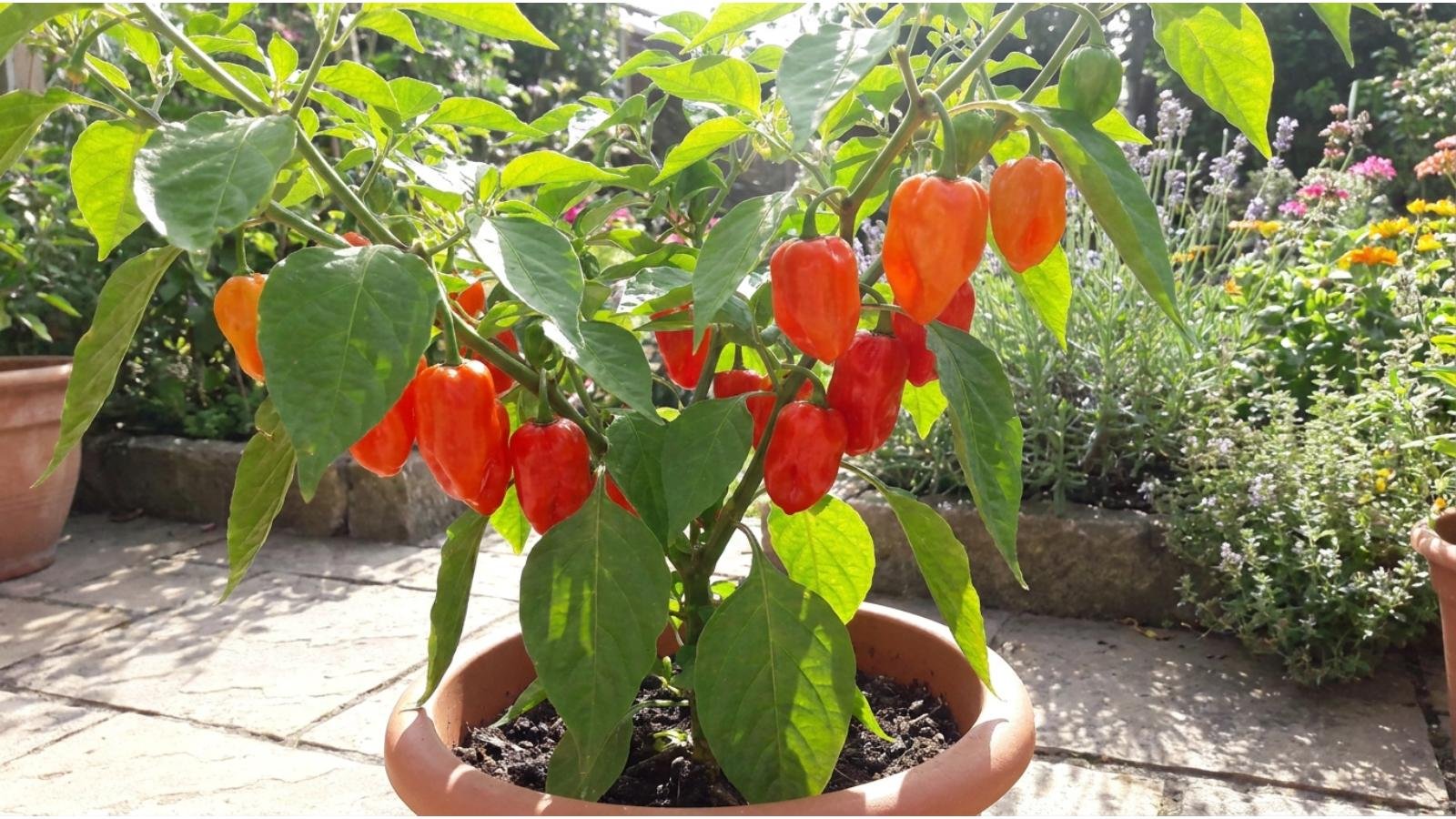
Habanero fruits often begin green and develop their mature color as they ripen.
Depending on the variety, mature colors may include orange, red, chocolate brown, cream, or other shades.
When are habaneros ready to harvest?
Check the expected mature color and approximate maturation time for your variety.
A ripe pepper will generally have developed its characteristic mature color and reached a suitable size.
Do not rely on color alone if you are growing an unusual variety.
How to harvest peppers safely
- Inspect the plant for fruits that have reached their mature color.
- Wear gloves if you are handling hot peppers, especially if you have sensitive skin.
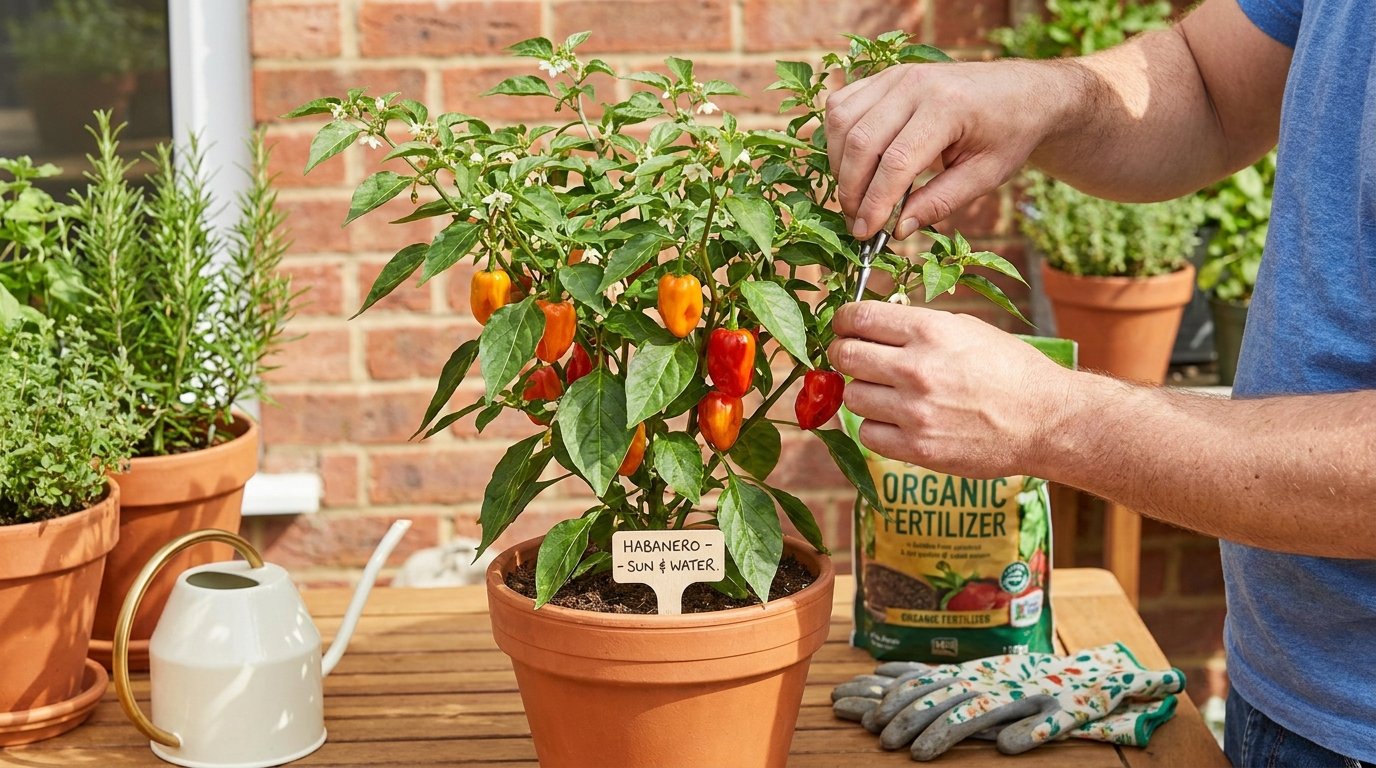
- Use clean scissors or pruning snips to cut the fruit from the plant.
- Avoid pulling forcefully on branches.
- Place harvested peppers in a clean container.
- Wash your hands and tools after handling the fruit.
Capsaicin can irritate the skin and eyes.
Avoid touching your face while harvesting or preparing habaneros.
Should you harvest green habaneros?
Green habaneros can be harvested and eaten, but their flavor and heat characteristics may differ from those of fully mature fruits.
If you want the variety’s typical ripe color and flavor, allow the peppers to mature on the plant when conditions permit.
Does harvesting encourage more peppers?
Regular harvesting can help keep the plant manageable and prevent ripe fruit from remaining on the branches unnecessarily.
However, it does not guarantee continuous production.
Flowering and new fruit development still depend on sunlight, temperature, plant health, and the remaining growing season.
Image Suggestion: A close-up showing green, partially ripened, and fully mature habanero peppers on the same plant.
19. How to Store Fresh Habanero Peppers
Freshly harvested habaneros can be stored in several ways, depending on how quickly you intend to use them.
Short-term storage
Store fresh, unwashed peppers in the refrigerator until you are ready to use them.
Keep them in a suitable container or produce bag that allows appropriate storage conditions.
Discard peppers that become moldy, excessively soft, or show signs of spoilage.
Freezing habaneros
Freezing is a convenient way to preserve peppers for later cooking.
A practical method is to:
- Select healthy, undamaged peppers.
- Wash and dry them thoroughly.
- Remove any damaged portions.
- Freeze them whole or chopped in suitable freezer-safe packaging.
- Label the package with the variety and date.
Frozen peppers may become softer after thawing, so they are often more suitable for sauces, soups, and cooked dishes than for recipes requiring crisp fresh peppers.
Drying habaneros
Habaneros can also be dried using a suitable food dehydrator or another safe drying method.
Because peppers are hot, take care to avoid breathing irritating fumes or dust during preparation.
Store completely dried peppers in an airtight container in a cool, dry location.
20. Can You Grow Habanero Plants Indoors?
Yes, habaneros can be grown indoors, but providing enough light is often the biggest challenge.
A bright windowsill may work if it receives several hours of direct sunlight.
However, many indoor locations do not provide enough light for strong growth and reliable fruit production.
Indoor growing requirements
For better results:
- Choose a compact variety.
- Use a container with drainage holes.
- Provide strong light, potentially with a suitable grow light.
- Maintain warm temperatures.
- Water according to soil moisture.
- Ensure adequate airflow.
- Check regularly for pests.
- Assist pollination if flowers are not setting fruit reliably.
Why indoor habaneros may not produce peppers
An indoor plant may grow leaves but produce few fruits if its light exposure is insufficient.
Other possible causes include excessive nitrogen, unsuitable temperatures, or inconsistent moisture.
If your plant is healthy but flowering poorly, evaluate the light intensity and daily light exposure before changing several aspects of its care at once.
Practical Tip: If you use a grow light, follow the manufacturer’s recommendations for distance and duration. A light that is too weak may not support productive growth, while excessive intensity or heat can damage foliage.
21. Can Habanero Plants Survive Winter?
Habaneros are warm-season plants that can sometimes be maintained for multiple years in frost-free or suitably protected environments.
In climates with cold winters, outdoor plants may be damaged or killed by frost.
Overwintering container-grown habaneros
If you want to keep a plant through winter:
- Inspect it carefully for pests.
- Remove dead or damaged foliage.
- Move the plant into a protected location before cold weather becomes severe.
- Provide sufficient light.
- Reduce watering as growth slows.
- Avoid keeping the roots constantly wet.
- Resume more active watering and feeding when new growth begins.
Plants may grow slowly during winter, particularly when light levels are low.
Do not assume a plant is dead simply because it stops producing new leaves during a cooler, darker period.
However, persistent stem damage, extensive root rot, or severe frost injury may prevent recovery.
Should you prune before winter?
Light pruning may help manage the plant’s size, but avoid unnecessary severe pruning.
The appropriate approach depends on the plant’s condition, available indoor space, and overwintering environment.
22. Growing Habaneros in Hot Climates
Hot climates can provide a long growing season, but extreme temperatures create their own challenges.
Habaneros appreciate warmth, yet prolonged excessive heat can interfere with flowering and fruit development.
Managing intense summer heat
During very hot weather:
- Maintain consistent soil moisture.
- Use mulch around garden-grown plants where appropriate.
- Consider afternoon shade during extreme heat.
- Avoid placing containers on surfaces that become excessively hot.
- Check container moisture more frequently.
- Maintain adequate airflow.
Why container plants need extra attention
Pots can heat up and dry out more quickly than garden soil.
A plant growing in a small, dark container on a hot patio may experience considerably more root-zone heat than a plant growing in the ground.
Using a suitably sized container and monitoring moisture can help reduce stress.
Should you water more during a heat wave?
Possibly, but the decision should depend on the soil.
Hot weather increases water loss, so plants may need more frequent watering.
However, watering already saturated soil can worsen root problems.
Check moisture and drainage rather than following a fixed schedule.
23. Common Habanero Growing Mistakes to Avoid
Even experienced gardeners can make mistakes when growing peppers.
Avoiding the following problems can make your growing season more manageable.
Mistake 1: Planting outdoors too early
Cold soil and chilly nights can slow establishment.
Better approach: Wait until frost danger has passed and conditions are consistently warm.
Mistake 2: Giving the plant too little sunlight
Insufficient light can produce weak growth and limited flowering.
Better approach: Choose a sunny location and introduce plants to stronger sunlight gradually.
Mistake 3: Keeping the soil constantly wet
Excess moisture can damage roots and reduce plant health.
Better approach: Check soil moisture and allow excess water to drain.
Mistake 4: Applying too much nitrogen fertilizer
Excessive nitrogen may encourage leafy growth without balanced fruit production.
Better approach: Use a suitable fertilizer at the recommended rate.
Mistake 5: Using a container that is too small
Restricted roots and rapid drying can make watering difficult.
Better approach: Choose a suitably sized container for the expected mature plant.
Mistake 6: Ignoring temperature stress
Extreme heat and cold can interfere with flowering and growth.
Better approach: Monitor weather conditions and provide suitable protection when necessary.
Mistake 7: Overpruning healthy growth
Removing too many leaves can reduce the plant’s ability to support fruit development.
Better approach: Prune selectively and retain healthy foliage.
Mistake 8: Assuming every problem needs fertilizer
Yellowing, wilting, and slow growth can have several causes.
Better approach: Check light, water, temperature, drainage, and roots before applying additional nutrients.
Mistake 9: Harvesting without protection
Capsaicin can irritate skin and eyes.
Better approach: Use gloves when handling hot peppers and wash your hands and tools carefully afterward.
24. Habanero Plant Care Checklist
Use this checklist to review your plant’s growing conditions.
| Care task | What to check |
|---|---|
| Sunlight | Is the plant receiving at least 6–8 hours of direct sunlight when practical? |
| Soil | Is the growing medium fertile and well-draining? |
| Watering | Does the soil dry appropriately between waterings without becoming severely dry? |
| Temperature | Are conditions warm enough for active growth? |
| Fertilizer | Is the plant receiving appropriate nutrition without excessive nitrogen? |
| Container | Is the pot large enough, with functional drainage holes? |
| Plant health | Are leaves, stems, flowers, and roots showing signs of stress or pest damage? |
| Flowering | Are light, moisture, and temperatures suitable for fruit development? |
| Harvesting | Are peppers being harvested at the appropriate maturity stage? |
| Seasonal care | Is the plant protected from frost and extreme weather when necessary? |
Reviewing these points regularly can help you identify problems before they significantly affect plant growth.
25. Frequently Asked Questions About Habanero Plant Care
How often should I water a habanero plant?
Water when the upper layer of soil begins to dry, then allow excess water to drain. The frequency depends on temperature, sunlight, soil, container size, and rainfall. Container plants may need more frequent watering during hot weather.
Do habanero plants need full sun?
Habaneros generally grow best with at least 6–8 hours of direct sunlight daily. Strong sunlight supports healthy growth and fruit production, although temporary afternoon shade may help during extreme heat.
How long does it take for habanero peppers to grow?
Habaneros generally need several months to develop from seed into plants producing ripe peppers. The exact timing depends on the variety, temperature, planting date, and growing conditions.
Why is my habanero plant flowering but not producing peppers?
Flower drop or poor fruit set may result from excessive heat, cold temperatures, inconsistent watering, insufficient sunlight, or pollination problems. Check the growing conditions before changing the fertilizer routine.
Can habanero plants grow in pots?
Yes. Habaneros can grow successfully in containers with sufficient root space, well-draining potting mix, adequate sunlight, and appropriate watering. A 3–5-gallon pot is a useful starting point for many mature plants.
What is the best fertilizer for habanero plants?
A balanced vegetable fertilizer can support early growth. During flowering and fruiting, a suitable fertilizer for fruiting vegetables may be helpful. Follow the label and avoid excessive nitrogen.
Why are the leaves on my habanero plant turning yellow?
Yellow leaves may indicate overwatering, poor drainage, nutrient deficiencies, insufficient light, cold stress, or natural aging. Check the soil moisture and growing environment before treating the plant.
Why is my habanero plant wilting even though the soil is wet?
Wet-soil wilting can indicate waterlogged roots or root damage. Check the drainage holes, inspect the growing medium, and examine the roots if the problem persists. Adding more water may make the situation worse.
Can habanero plants survive winter outdoors?
Habaneros are sensitive to frost. In cold climates, outdoor plants may not survive winter. Container plants can sometimes be overwintered indoors in a warm, suitably lit location.
Do habanero plants need pruning?
Pruning is optional. Remove dead, damaged, or diseased growth and selectively improve airflow when necessary. Avoid removing excessive healthy foliage because leaves help support plant growth and fruit production.
How do I know when habanero peppers are ripe?
Check the mature color and expected fruit characteristics of your variety. Many habaneros change from green to orange, red, or another mature color as they ripen.
Can I grow habaneros indoors year-round?
Yes, provided you can maintain suitable warmth, strong light, appropriate watering, and good airflow. Indoor plants may need grow lights and assistance with pollination to produce peppers reliably.
How can I make my habanero plant produce more peppers?
Provide sufficient sunlight, maintain suitable temperatures, water consistently, avoid excessive nitrogen, and keep the plant healthy. Good growing conditions support production, but the final yield also depends on variety and growing season.
Are habanero plants perennials?
Habaneros can behave as perennials in frost-free climates. In regions with cold winters, they are often grown as annuals or moved indoors for overwintering.
Should I remove the first flowers from my habanero plant?
Removing early flowers is not essential. Some gardeners remove early flowers to encourage additional vegetative growth, but this can delay fruit production. For plants with a short growing season, allowing healthy plants to flower naturally may be preferable.
26. Related Plant Care Topics
Readers interested in growing habaneros may also benefit from learning about other edible plants and vegetables.
Consider creating related articles covering:
- Jalapeño plant care.
- Bell pepper plant care.
- Cayenne pepper plant care.
- Chili pepper plant care.
- Tomato plant care.
- Rosemary plant care.
- Basil plant care.
- Growing vegetables in containers.
- Starting vegetable seeds indoors.
- Common pepper plant pests and diseases.
These topics can support a useful internal linking structure for a gardening website.
Conclusion
Successful habanero plant care comes down to providing warmth, strong sunlight, well-draining soil, consistent moisture, and appropriate nutrition.
Start with a suitable variety, plant it at the right time, and choose a location that receives plenty of direct sunlight. Pay particular attention to watering and temperature because both excessive moisture and environmental stress can interfere with healthy growth and fruit production.
If your plant develops yellow leaves, drops flowers, or produces fewer peppers than expected, investigate its growing conditions before automatically adding fertilizer or water.
With attentive care, suitable growing conditions, and regular harvesting, habanero plants can reward you with colorful, flavorful peppers for homemade sauces, salsas, and other dishes.
The most useful habit is to observe your plant regularly and adjust its care according to what the soil, leaves, flowers, and developing fruits are telling you.