Quick Answer
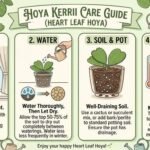
To care for a Hoya plant, provide bright, indirect light, a well-draining potting mix, and a pot with drainage holes. Water thoroughly when the upper portion of the soil has dried, then allow excess water to drain away.
Maintain warm temperatures, moderate to high humidity, and light feeding during active growth. Avoid overwatering, excessively dense soil, and frequent repotting. With suitable conditions and patience, many Hoyas develop attractive foliage and clusters of fragrant, star-shaped flowers.
Introduction
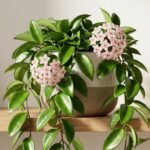
Hoyas are popular houseplants known for their attractive foliage, trailing or climbing growth habits, and distinctive clusters of waxy flowers. Some varieties have thick, succulent-like leaves, while others feature thin, delicate foliage, unusual patterns, or beautifully curled leaves.
Although Hoyas are often described as easy-care plants, they have a few specific requirements. Their roots need oxygen, their leaves benefit from appropriate lighting, and many varieties grow best when their potting mix is allowed to dry partially between waterings.
Understanding these needs makes it easier to avoid common problems such as yellowing leaves, root rot, slow growth, and a plant that produces plenty of foliage but never flowers.
This guide explains how to care for a Hoya plant indoors, from choosing the right location and watering routine to encouraging flowering and troubleshooting common growing problems.
Understanding the Hoya Plant
Hoyas belong to the genus Hoya, a group of tropical and subtropical plants in the dogbane family, Apocynaceae. Many species naturally grow as epiphytes or climbers, using trees and other structures for support rather than growing in dense garden soil.
Their natural growth habits help explain why ordinary houseplant care sometimes causes problems. A Hoya planted in heavy, consistently wet soil may struggle because its roots need both moisture and air.
Depending on the species and cultivar, Hoyas may have:
- Thick, waxy leaves that store some moisture.
- Thin leaves that dry out more quickly.
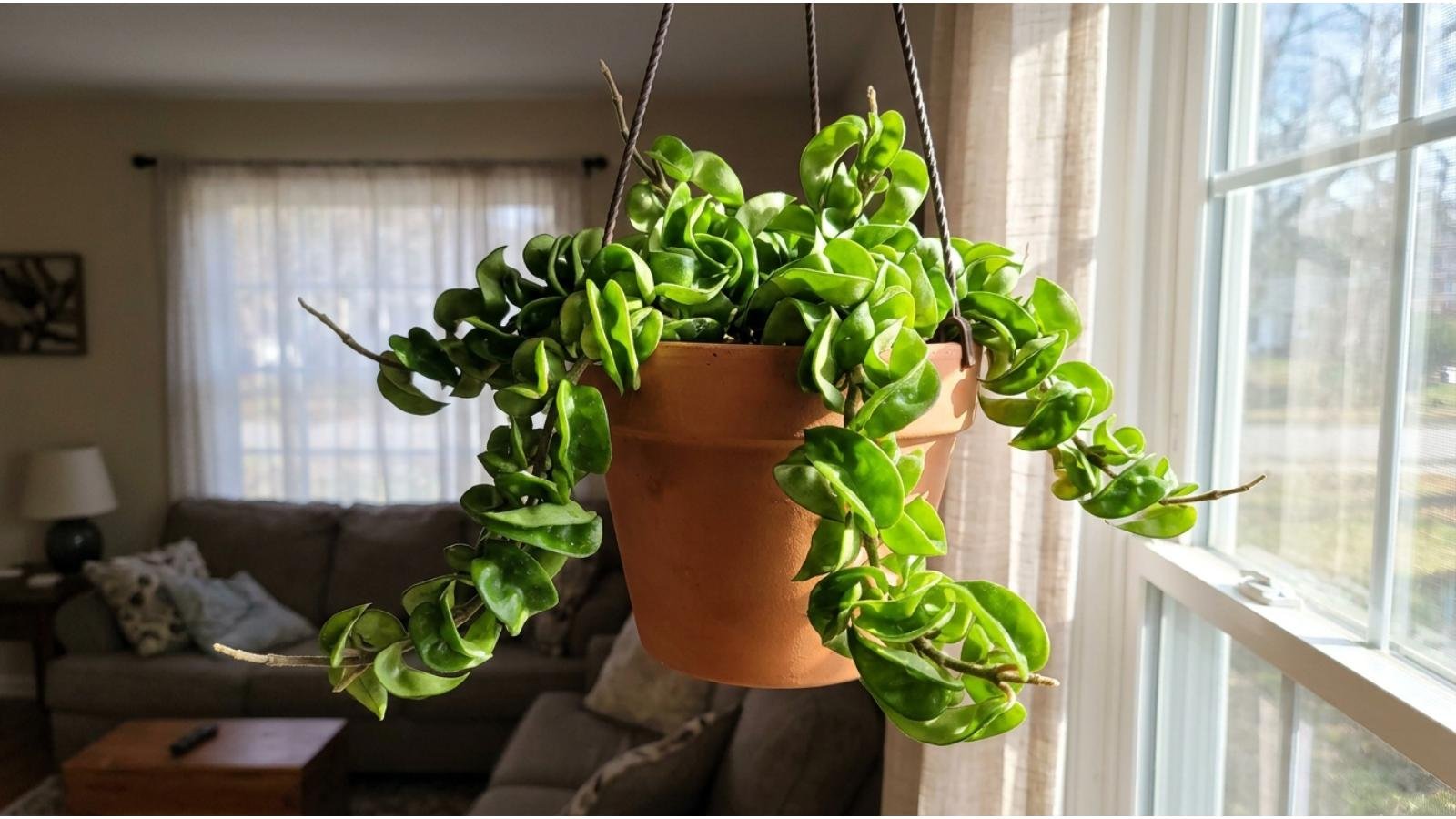
- Trailing stems suitable for hanging baskets.
- Climbing stems that benefit from a trellis.
- Variegated foliage with cream, yellow, pink, or white markings.
- Rounded flower clusters made up of small, often star-shaped blooms.
Important: Not every Hoya has identical care requirements. Thick-leaved varieties generally tolerate slightly more drying than thin-leaved varieties, and some species require more specialized conditions. The recommendations below are a practical starting point for commonly grown indoor Hoyas.
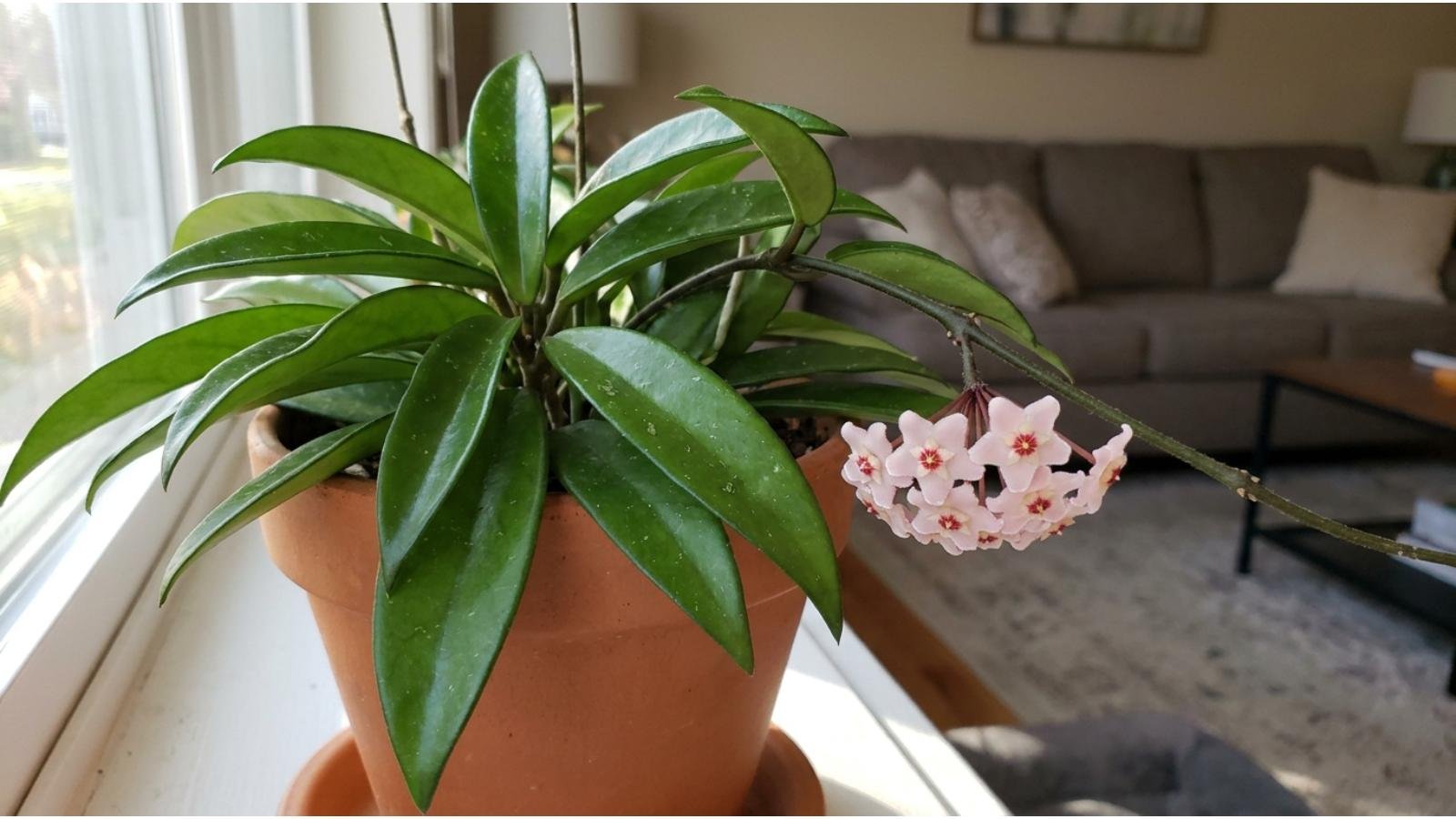
Best Growing Conditions for Hoya Plants
| Growing factor | General recommendation |
|---|---|
| Light | Bright, indirect light |
| Water | Water when the upper soil has dried sufficiently |
| Soil | Airy, well-draining potting mix |
| Pot | Container with drainage holes |
| Temperature | Generally around 65–80°F (18–27°C) |
| Humidity | Moderate humidity; many tropical varieties appreciate higher humidity |
| Fertilizer | Balanced, diluted fertilizer during active growth |
| Growth habit | Trailing or climbing, depending on the variety |
These conditions provide a useful foundation, but adjust them according to your particular Hoya, its growth rate, and the environment in your home.
Give Your Hoya the Right Amount of Light
Light is one of the most important factors in successful Hoya care. It affects leaf growth, stem development, and the plant’s ability to produce flowers.
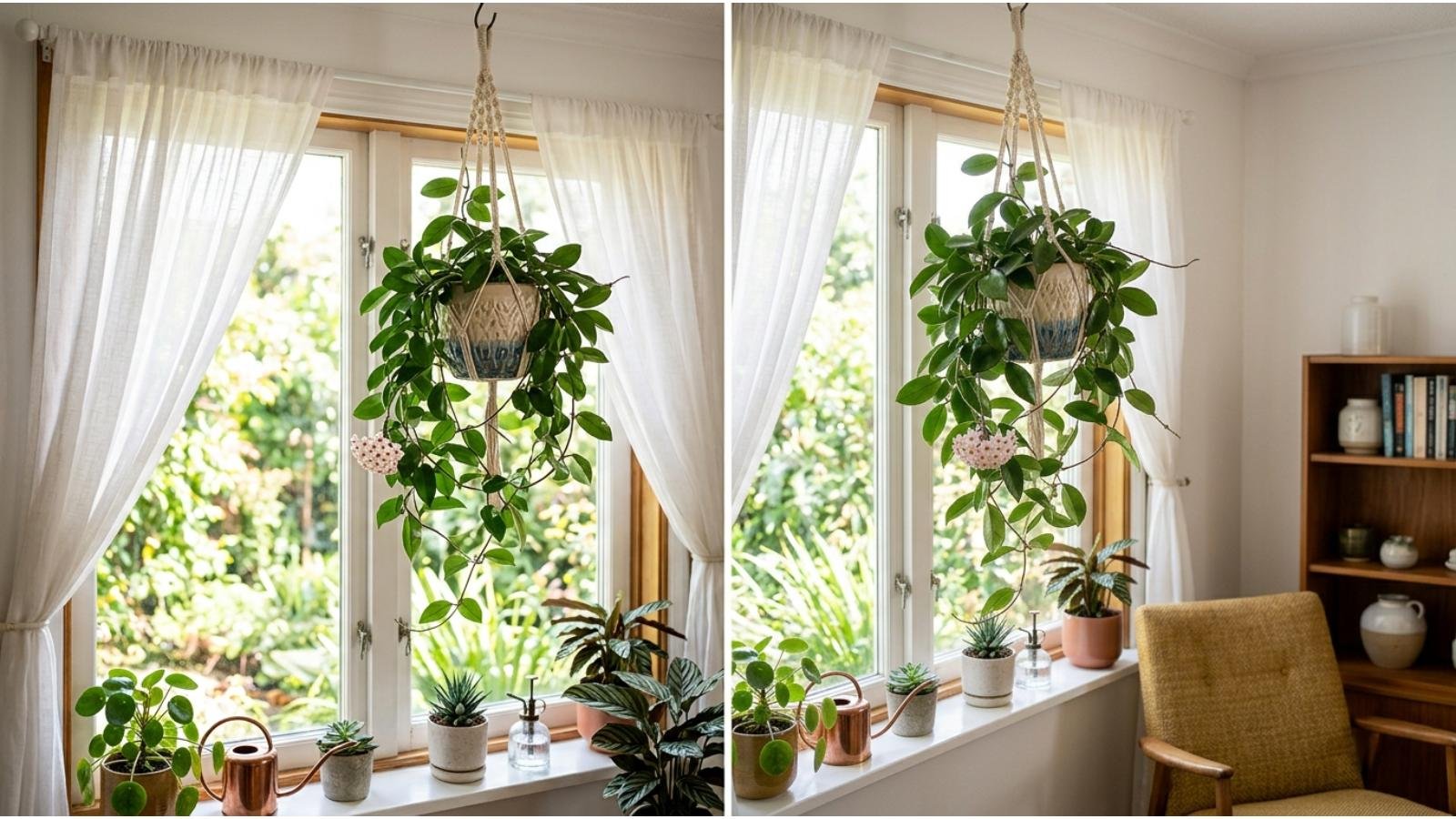
Bright, indirect light is ideal
Place your Hoya near a bright window where it receives plenty of natural light without prolonged exposure to harsh, scorching sunlight.
Suitable locations may include:
- Near an east-facing window with gentle morning sunshine.
- A short distance from a bright south-facing window, depending on the climate and season.
- Near a west-facing window where intense afternoon sunlight is filtered by a sheer curtain.
- Under a suitable full-spectrum grow light when natural light is insufficient.
Some Hoyas can tolerate gentle direct sunlight, particularly after gradual acclimation. However, sudden exposure to strong sunlight can scorch leaves, especially when a plant has previously grown in a dim location.
How to tell if your Hoya needs more light
Watch for these signs:
- New growth becomes unusually stretched or widely spaced.
- The plant grows slowly despite receiving suitable water and nutrients.
- Variegated foliage loses some of its characteristic color patterns.
- The plant produces healthy leaves but does not flower despite being mature enough to bloom.
Insufficient light is one possible explanation for these symptoms, but it is not the only one. Root health, temperature, watering, and plant maturity also influence growth and flowering.
How to prevent sun damage
If you move a Hoya to a brighter location, increase its exposure gradually over several days or weeks.
Watch for bleached patches, dry brown areas, or leaves that become unusually warm in direct sunlight. These signs suggest the plant may need protection from intense exposure.
Practical tip: Rather than repeatedly moving your Hoya around the house, choose a bright location and observe how the plant responds over several weeks. Consistent conditions make it easier to identify whether your care routine is working.
Water Your Hoya Without Overwatering
Watering is one of the most common challenges for Hoya owners. Because many Hoyas have thick leaves, people sometimes assume they should be treated exactly like desert succulents. Others water them frequently because they are tropical plants.
Neither approach works equally well for every Hoya.
The goal is to provide enough water for healthy roots while allowing excess moisture to escape and air to return to the potting mix.
When should you water a Hoya?
Do not follow a rigid watering schedule without checking the soil.
Instead:
- Check the upper portion of the potting mix with your finger or a suitable moisture meter.
- Assess how quickly the soil is drying and consider the thickness of your Hoya’s leaves.
- Water when the mix has dried sufficiently for that particular variety and growing environment.
- Water thoroughly so the root zone receives moisture.
- Allow excess water to drain completely.
- Empty any standing water from the saucer or decorative outer pot.
Thick-leaved Hoyas generally tolerate a greater degree of drying than thin-leaved species. Thin-leaved varieties may need more frequent attention, particularly in warm, dry rooms.
How often should you water a Hoya plant?
There is no universal watering interval.
A Hoya growing in a warm, bright room with an airy potting mix may dry much faster than one growing in a cool room with lower light.
Watering frequency depends on:
- Plant species and leaf thickness.
- Pot size and material.
- Potting mix composition.
- Temperature and humidity.
- Light intensity.
- Season and active growth.
- Root development and overall plant size.
During active growth, a Hoya may use water more quickly. During cooler months or periods of slower growth, the soil may remain moist for longer.
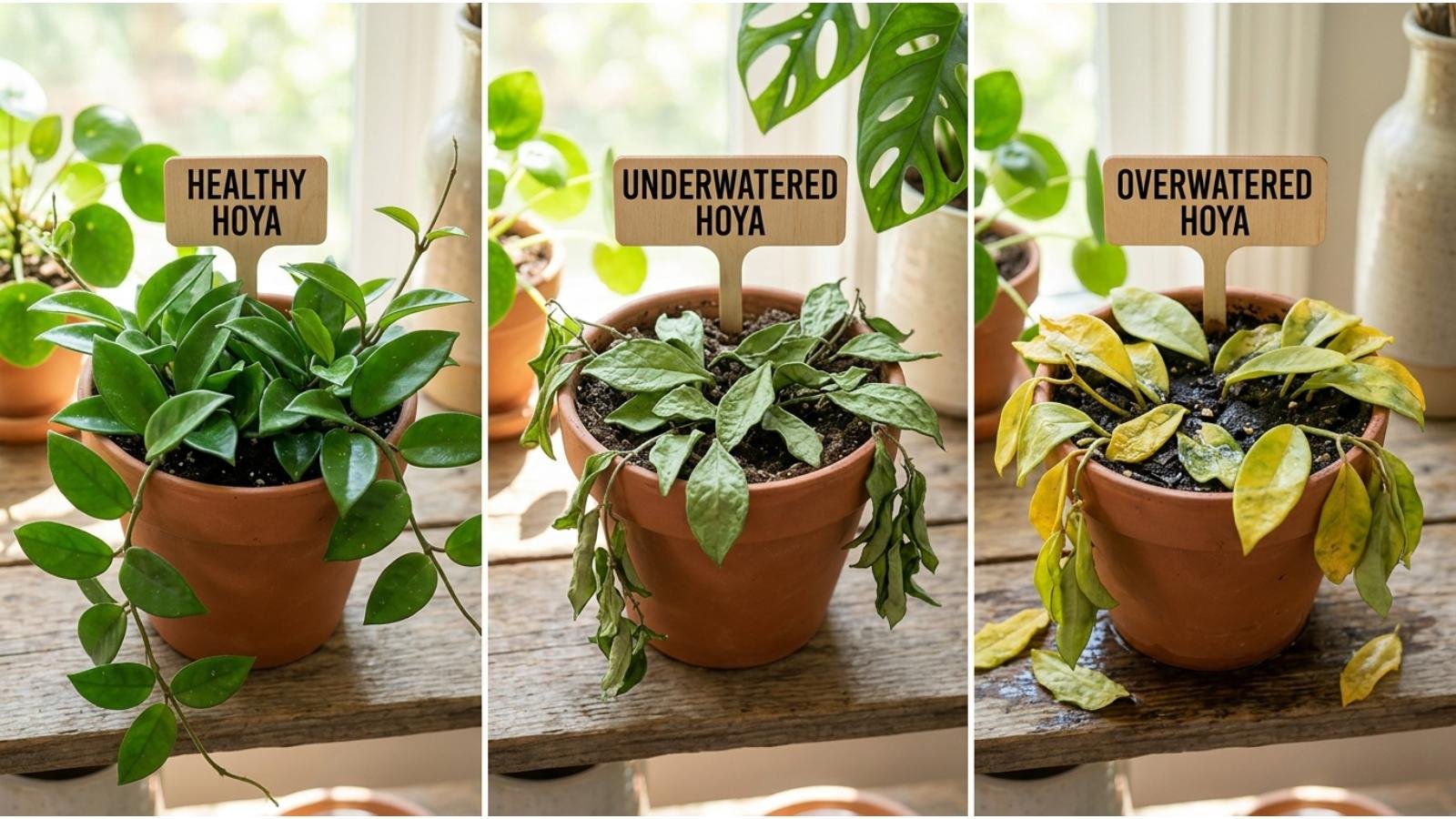
Signs of overwatering
Possible symptoms include:
- Yellowing leaves.
- Soft or mushy stems.
- Persistently wet potting mix.
- A sour or unpleasant smell from the root zone.
- Brown, mushy roots.
- Leaves dropping despite the soil remaining wet.
Yellow leaves alone do not prove overwatering. Nutrient problems, environmental stress, aging leaves, and other issues can produce similar symptoms.
Signs of underwatering
A Hoya that is too dry may develop:
- Wrinkled or limp leaves.
- Dry, brittle foliage.
- A potting mix that has pulled away from the sides of the container.
- Slower growth.
- Leaves that lose firmness.
If the soil has become extremely dry and water runs straight through without soaking in, apply water slowly in several passes to help rehydrate the mix.
Expert tip: When a Hoya looks unhealthy, check the soil and roots before adding more water. A dehydrated plant and a plant with damaged roots can sometimes look surprisingly similar above the soil.
3. Choose a Well-Draining Potting Mix
Hoyas generally grow better in a potting mix that holds some moisture but does not remain dense and waterlogged.
A heavy, compacted mix can restrict airflow around the roots. When the root zone stays wet for too long, the risk of root damage and rot increases.
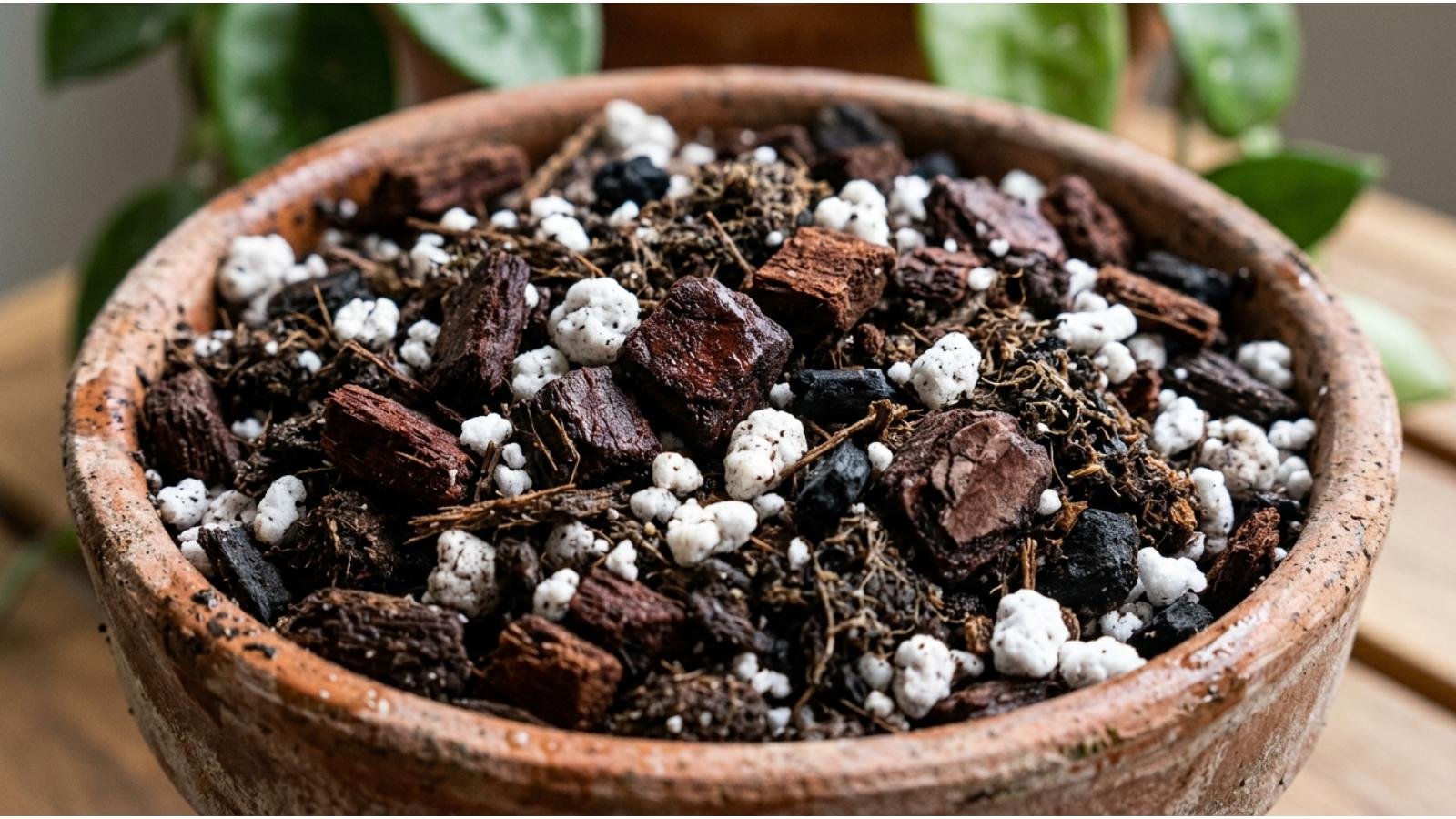
What soil is best for Hoya plants?
A useful starting mix for many commonly grown Hoyas includes:
- Two parts quality indoor potting mix.
- One part orchid bark.
- One part perlite or pumice.
This is a starting recipe rather than a universal formula. Adjust the proportions to suit your plant and conditions.
For example:
- In a humid environment where the mix dries slowly, a chunkier, airier mix may be helpful.
- In a warm, dry room, a mix with slightly greater moisture retention may be more suitable.
- Thin-leaved species may appreciate a different balance from thick-leaved varieties.
The finished mix should allow water to move through it while retaining enough moisture for the roots to absorb.
Can you use ordinary potting soil?
You can use a quality potting mix as a base, but ordinary potting soil may need amendments to improve drainage and aeration.
Avoid using dense garden soil by itself in an indoor container. It can compact, drain poorly, and make watering more difficult to manage.
Practical tip: If your Hoya’s potting mix remains wet for many days under normal indoor conditions, investigate the pot size, soil structure, drainage, and light level rather than simply waiting longer between waterings.
Select a Pot With Proper Drainage
A suitable pot helps prevent water from accumulating around the roots.
Choose a container with drainage holes at the bottom. The size should accommodate the root system without leaving a large volume of unused, wet potting mix.
Should Hoyas be root-bound?
Hoyas often grow and flower well when their roots fit relatively snugly in a pot. However, being severely root-bound is not a requirement for healthy growth or flowering.
A plant that is slightly snug in its container may be perfectly happy, provided the roots are healthy and the potting mix drains appropriately.
Repot when:
- Roots densely fill the container.
- Water passes through the pot unusually quickly because the root ball occupies most of the space.
- The potting mix has broken down or become compacted.
- The plant is unstable or the container is damaged.
- Root health requires inspection and treatment.
When repotting, choose a pot only modestly larger than the existing root ball. A very large pot can hold excess moisture for longer than the plant can use.
Plastic, terracotta, or ceramic?
Each material has advantages.
| Pot material | Potential benefit | What to watch for |
|---|---|---|
| Plastic | Retains moisture longer and is lightweight | Soil may take longer to dry |
| Terracotta | Allows moisture to evaporate through the pot walls | Mix may dry quickly in warm, dry conditions |
| Glazed ceramic | Offers stability and decorative options | Must have drainage holes or an appropriate draining inner pot |
The best choice depends on your environment and watering habits.
Maintain Suitable Temperature and Humidity
Most commonly grown tropical Hoyas appreciate warm, stable indoor conditions.
A temperature range around 65–80°F (18–27°C) is a reasonable general target for many popular varieties. Species-specific needs may differ, and prolonged exposure to cold can damage tropical plants.
Avoid temperature extremes
Keep your Hoya away from:
- Cold drafts.
- Freezing temperatures.
- Direct contact with air-conditioning vents.
- Strong heating vents that repeatedly dry the foliage.
- Sudden changes in temperature.
Some Hoyas tolerate modest seasonal variation, but abrupt environmental changes can stress a plant.
Does a Hoya need high humidity?
Many tropical Hoyas appreciate moderate to higher humidity, especially thin-leaved varieties.
However, humidity requirements vary. Thick-leaved varieties may tolerate ordinary household humidity more readily than delicate, thin-leaved species.
If your indoor air is very dry, you can improve the growing environment by using a room humidifier.
Avoid keeping the foliage constantly wet or placing the plant in a stagnant, poorly ventilated environment. Humidity should be balanced with appropriate airflow.
Practical tip: If your Hoya develops dry leaf edges, inspect humidity alongside watering, root health, and exposure to hot air. Low humidity is only one possible cause.
Fertilize During Active Growth
Hoyas benefit from nutrients, but excessive fertilizer can create problems rather than encourage healthy growth.
A balanced, water-soluble houseplant fertilizer used at a diluted strength is a reasonable option for many commonly grown Hoyas.
How to fertilize a Hoya
- Choose a balanced fertilizer suitable for indoor foliage plants.
- Dilute it according to the product label, using a conservative concentration when appropriate.
- Apply it to a plant that is not severely dehydrated.
- Fertilize during active growth when the plant is receiving suitable light and temperatures.
- Reduce or stop feeding when growth slows significantly.
Do not fertilize automatically every time you water. The correct frequency depends on the fertilizer formulation, growing medium, season, and plant growth.
Can fertilizer make a Hoya flower?
Adequate nutrition supports healthy growth, but fertilizer alone cannot guarantee flowering.
A mature Hoya also needs suitable light, appropriate environmental conditions, and sufficient time to develop.
Too much fertilizer may cause salt buildup, root stress, or damaged leaf tips.
Provide Support for Climbing and Trailing Growth
Many Hoyas naturally climb or trail. Providing suitable support can improve their appearance and help you manage their growth.
Use a trellis for climbing Hoyas
A small trellis, hoop, or other suitable support can guide climbing stems.
Attach the stems loosely using soft plant ties. Avoid tightening ties around growing stems, as they can become constricted over time.
Grow trailing Hoyas in hanging baskets
Trailing varieties can be displayed in hanging planters or on shelves.
Make sure the container remains accessible so you can inspect the soil, check for pests, and water thoroughly.
Should you train Hoya stems?
Yes, if you want a particular shape.
Guide young, flexible stems gradually rather than forcing stiff or mature growth into sharp bends. Sudden bending can damage stems and leaves.
Image suggestion: A climbing Hoya trained around a small trellis beside a trailing Hoya displayed in a hanging basket.
How to Encourage a Hoya Plant to Flower
Hoya flowers are one of the main reasons people grow these plants. Many species produce rounded clusters of small flowers, and some have a noticeable fragrance.
However, a Hoya may need considerable time to mature before it flowers indoors.
Give the plant enough light
Bright, indirect light is a useful starting point for flowering.
A Hoya growing in insufficient light may remain alive and produce foliage but struggle to develop flowers.
Increase light gradually rather than moving the plant suddenly into intense direct sunshine.
Allow the plant to mature
Young plants and recently propagated cuttings may need time to establish before flowering.
Different species and cultivars have different flowering habits, so there is no single age at which every Hoya should bloom.
Avoid unnecessary disturbance
Frequent repotting, major pruning, and repeated changes in growing conditions can interfere with consistent growth.
Keep your Hoya in a suitable container and avoid disturbing healthy flowering structures.
Preserve old flower spurs
Many Hoyas produce flowers from specialized short structures called peduncles or flower spurs.
In species that reuse these structures, flowers may develop again from the same location.
After flowering, avoid automatically cutting off the old flower stalks. Removing a reusable peduncle may eliminate a future flowering site.
You can remove dried flowers if desired, but leave healthy flower spurs in place unless there is a specific reason to remove them.
Avoid forcing blooms
Do not deliberately dehydrate your Hoya, expose it to cold stress, or overfertilize it in an attempt to trigger flowering.
Stress can damage the plant and is not a reliable flowering strategy.
Practical tip: If your Hoya is healthy but has not flowered, record its light conditions, growth pattern, and seasonal changes. This makes it easier to identify whether it needs more light, more time to mature, or a different growing environment.
Image suggestion: A close-up of a flowering Hoya showing its star-shaped blossoms and the flower peduncle attached to the stem.
Pruning and Maintaining Your Hoya
Hoyas generally do not require frequent heavy pruning.
Pruning can help control size, remove damaged growth, and improve the plant’s appearance. However, unnecessary cutting may remove healthy growth points or flowering structures.
When should you prune?
Consider pruning when:
- Stems become excessively long for the available space.
- Growth is damaged or diseased.
- You want to guide the plant into a more manageable shape.
- Dead or clearly unhealthy material needs removal.
How to prune safely
- Use clean, sharp pruning scissors.
- Identify the stem section you want to remove.
- Make a clean cut without crushing the remaining stem.
- Avoid cutting off healthy flower peduncles.
- Monitor the plant afterward and maintain appropriate care.
Do not remove large amounts of healthy foliage simply because the plant looks untidy. Hoyas use their leaves to produce the energy needed for growth.
How to Propagate a Hoya Plant
Stem cuttings are a common way to propagate many Hoyas.
Propagation can help you grow additional plants, fill out a container, or share a suitable cutting with another plant enthusiast.
What you need
- A healthy Hoya stem.
- Clean, sharp scissors.
- A small pot or propagation container.
- An appropriate propagation medium or clean water.
- Bright, indirect light.
Step-by-step propagation
Step 1: Select a healthy stem.
Choose a healthy section with at least one suitable node. A node is the point on a stem where leaves and buds develop.
Step 2: Make the cutting.
Using clean scissors, cut a section of stem that includes a node. A cutting with one or more leaves is often useful, depending on the species and propagation method.
Step 3: Choose a rooting method.
You can attempt rooting in water or in a suitable airy propagation medium.
For a medium-based method, use a lightly moist, well-aerated medium rather than one that remains saturated.
Step 4: Provide suitable conditions.
Place the cutting in bright, indirect light and maintain warm conditions.
If using a humidity cover, provide some ventilation and monitor moisture carefully to reduce the risk of rot.
Step 5: Monitor root development.
Check periodically for root growth and signs of deterioration. Avoid repeatedly pulling the cutting out of the medium, as this can disturb developing roots.
Step 6: Pot up when appropriate.
Once the cutting has developed a suitable root system, transfer it to an appropriately sized pot with a well-draining mix.
After potting, monitor the plant carefully while it adjusts to its new growing conditions.
Common propagation mistakes
- Taking a cutting without a node.
- Allowing the propagation medium to become waterlogged.
- Using an unhealthy or damaged stem.
- Exposing the cutting to intense direct sunlight.
- Moving a newly rooted cutting into an excessively large pot.
- Disturbing the cutting repeatedly before roots have established.
Image suggestion: A step-by-step Hoya propagation diagram showing a stem cutting with a node, rooting in water or an airy medium, and transfer into a small pot.
Common Hoya Plant Problems and How to Fix Them
When a Hoya develops unusual symptoms, look at the whole growing environment rather than treating one symptom in isolation.
The same visible problem can have several causes.
Yellow leaves
Yellowing may result from overwatering, root damage, insufficient light, nutrient issues, or normal aging of older leaves.
What to do:
- Check whether the potting mix is staying wet for too long.
- Inspect drainage holes and the condition of the potting medium.
- Assess light exposure.
- Examine the roots if the plant continues to decline.
- Check whether the yellowing is limited to an occasional old leaf or affects several leaves.
If the roots are brown, mushy, and deteriorating, root rot may be involved.
Wrinkled or limp leaves
Wrinkling can indicate dehydration, but it can also occur when damaged roots are unable to absorb water effectively.
What to do:
- Check the moisture level throughout the root ball.
- If the mix is extremely dry, water thoroughly and allow it to drain.
- If the mix is wet, investigate root health before watering again.
- Review whether recent repotting or environmental stress may have affected the roots.
Do not assume that every wrinkled Hoya needs more water.
Brown or crispy leaf edges
Possible causes include:
- Low humidity.
- Irregular watering.
- Excessive fertilizer salts.
- Strong direct sunlight.
- Root damage.
What to do:
Review recent changes in light, watering, fertilizer, and humidity. Correct the underlying problem rather than immediately increasing watering frequency.
Soft or mushy stems
Soft stems can indicate tissue damage, often associated with excessive moisture or rot.
What to do:
- Isolate the plant if a spreading disease or pest problem is suspected.
- Inspect the affected stems and roots.
- Remove clearly rotted material using clean tools.
- Replace degraded, waterlogged potting mix if necessary.
- Reassess the pot size, drainage, and watering routine.
If the rot is extensive, saving the entire plant may not be possible. Healthy remaining stem sections may sometimes be suitable for propagation.
Slow growth
Slow growth does not always indicate a problem. Some Hoyas naturally grow slowly, and growth often decreases when conditions are cooler or light levels are lower.
What to do:
- Check whether the plant receives adequate light.
- Review temperature and seasonal growth patterns.
- Inspect the roots if the plant has remained stagnant for a long period.
- Consider whether the species naturally has a slower growth habit.
- Avoid excessive fertilizer in an attempt to force rapid growth.
Why is my Hoya not flowering?
Common possibilities include:
- The plant is still immature.
- Light levels are insufficient.
- The plant is experiencing environmental stress.
- Its species or cultivar has particular flowering requirements.
- Healthy flowering structures have been removed.
What to do:
Provide suitable light and stable growing conditions, preserve reusable peduncles, and give the plant time to mature.
Hoya plant troubleshooting table
| Symptom | Possible causes | Practical next step |
|---|---|---|
| Yellow leaves | Overwatering, root problems, aging, or other stress | Check soil moisture, roots, and recent care changes |
| Wrinkled leaves | Dehydration or damaged roots | Check the root ball before deciding whether to water |
| Brown leaf edges | Dry air, fertilizer salts, inconsistent moisture, or sun damage | Review humidity, feeding, watering, and light |
| Soft stems | Rot or tissue damage | Inspect affected stems and roots |
| Slow growth | Low light, seasonal slowdown, or natural growth habit | Review conditions and species characteristics |
| No flowers | Immaturity, insufficient light, or unsuitable growing conditions | Improve light and stability; allow time to mature |
| Dropping leaves | Watering stress, temperature changes, or root problems | Check moisture, roots, and recent environmental changes |
Hoya Plant Care During Different Seasons
Your Hoya’s water and fertilizer needs may change throughout the year.
The important principle is to respond to actual growing conditions rather than assuming that every plant follows an identical seasonal schedule.
Spring
Many indoor Hoyas begin growing more actively as light levels increase.
- Check whether the plant needs repotting.
- Resume or increase feeding cautiously if active growth begins.
- Monitor soil moisture as water use increases.
- Inspect new growth for pests.
Summer
Warm temperatures and stronger light can increase water use.
- Check the potting mix more frequently.
- Protect foliage from excessive direct sunlight.
- Maintain appropriate airflow.
- Avoid leaving the plant in extreme heat.
Autumn
Growth may slow as days become shorter.
- Monitor how quickly the potting mix dries.
- Adjust watering according to actual moisture levels.
- Reduce fertilizer if growth slows.
- Check for cold drafts near windows.
Winter
Many Hoyas grow more slowly in cooler or darker indoor conditions.
- Avoid watering automatically at the same frequency used in summer.
- Provide as much suitable light as practical.
- Protect tropical varieties from cold exposure.
- Avoid excessive fertilizer when growth is limited.
A warm, brightly lit indoor Hoya may continue growing during winter, so use the plant’s actual condition as your guide.
Hoya Plant Care for Beginners: Mistakes to Avoid
If you are new to Hoyas, avoiding a few common mistakes can make plant care much easier.
Mistake 1: Watering on a fixed schedule
Watering every few days without checking the soil can leave the roots consistently wet.
Better approach: Check the potting mix and consider the plant’s species, environment, and leaf thickness.
Mistake 2: Using dense soil
Heavy soil can restrict airflow and remain wet for too long.
Better approach: Use an appropriately airy, well-draining potting mix.
Mistake 3: Keeping the plant in a dark corner
Hoyas may survive in relatively low light, but survival does not necessarily mean they are receiving enough light for vigorous growth or flowering.
Better approach: Provide bright, indirect light suited to the variety.
Mistake 4: Repotting too frequently
Repeated disturbance can stress the roots and disrupt established growth.
Better approach: Repot when the plant or potting mix needs it, rather than simply because a certain amount of time has passed.
Mistake 5: Cutting off flower spurs
Some Hoyas reuse their peduncles for future flowering.
Better approach: Preserve healthy flower spurs after the blooms fade.
Mistake 6: Using too much fertilizer
Excess nutrients can damage roots and cause salt buildup.
Better approach: Use a suitable fertilizer at an appropriate dilution during active growth.
Mistake 7: Treating every Hoya identically
Species and cultivars differ in leaf thickness, growth habits, and environmental preferences.
Better approach: Use general care guidance as a starting point and adjust it to your particular plant.
Hoya Plant Care Checklist
Use this checklist when checking your plant’s growing conditions.
| Care task | What to check |
|---|---|
| Light | Is the plant receiving sufficient bright, indirect light? |
| Water | Has the potting mix dried enough for this particular Hoya? |
| Drainage | Can excess water escape freely? |
| Soil | Is the mix airy rather than compacted and waterlogged? |
| Temperature | Is the plant protected from cold drafts and excessive heat? |
| Humidity | Is the environment suitable for the variety? |
| Fertilizer | Is feeding appropriate for the plant’s current growth? |
| Roots | Are there signs of rot, severe crowding, or damaged roots? |
| Pests | Are leaves and stems free from visible insects or unusual damage? |
| Flowering | Are suitable light, maturity, and growing conditions being maintained? |
Frequently Asked Questions About Hoya Plant Care
How do you care for a Hoya plant indoors?
Provide bright, indirect light, an airy potting mix, and a container with drainage holes. Water when the soil has dried sufficiently for your variety, maintain suitable warmth and humidity, and fertilize lightly during active growth.
How often should I water a Hoya plant?
There is no fixed watering frequency that suits every Hoya. Check the potting mix before watering. Thick-leaved varieties often tolerate more drying than thin-leaved varieties, while temperature, light, pot size, and soil composition also affect how quickly the mix dries.
Do Hoyas need direct sunlight?
Most commonly grown indoor Hoyas do well in bright, indirect light. Some tolerate gentle direct sunlight after gradual acclimation, but intense, prolonged sunlight can scorch foliage.
Why are the leaves on my Hoya turning yellow?
Yellow leaves can result from overwatering, root damage, insufficient light, nutrient problems, or normal aging. Check the soil moisture, drainage, and root health before changing your watering routine.
Why is my Hoya not flowering?
A Hoya may not flower because it is immature, receives insufficient light, experiences environmental stress, or has species-specific flowering requirements. Provide suitable growing conditions and allow the plant time to mature.
Should I mist my Hoya plant?
Misting is not usually necessary to maintain suitable humidity and does not reliably provide lasting humidity increases. If your indoor air is too dry, a room humidifier is generally a more consistent option.
Do Hoyas like to be root-bound?
Many Hoyas grow well when their roots fit relatively snugly in a pot. However, severe root-binding is not necessary for flowering. Repot when the plant needs more room or the potting mix has deteriorated.
What is the best soil for a Hoya plant?
A well-draining, airy mix is suitable for many commonly grown Hoyas. A combination of quality potting mix, orchid bark, and perlite or pumice can provide a useful starting point. Adjust the mix for your species and growing environment.
Can I grow a Hoya plant in water?
Some Hoya stem cuttings can develop roots in water. However, a cutting that roots in water still needs an appropriate transition when moved into a potting medium. Long-term growing requirements differ from those of a newly propagated cutting.
When should I repot my Hoya?
Repot when roots have substantially filled the container, the potting mix has broken down, drainage has become problematic, or the plant needs attention for root health. Choose a container only modestly larger than the root ball.
How do I make my Hoya grow faster?
Provide suitable light, healthy roots, an airy potting mix, appropriate watering, and adequate nutrients. Growth rate also depends on the species, cultivar, maturity, and season. Excessive watering or fertilizer will not reliably accelerate growth.
Are Hoya plants suitable for beginners?
Many commonly grown Hoyas are manageable houseplants when their basic needs are met. Beginners should focus on suitable light, careful watering, good drainage, and learning the particular requirements of their variety.
Conclusion
Successful Hoya plant care comes down to understanding how your particular plant grows and responding to its needs.
Start with bright, indirect light, an airy potting mix, and a container that drains freely. Check the soil before watering, avoid excessive fertilizer, and maintain stable temperatures suited to your variety. If you want flowers, provide suitable light, allow the plant to mature, and preserve healthy flower peduncles that may bloom again.
Most importantly, do not rely on a rigid care schedule. Observe the leaves, soil, roots, and growth pattern. These clues will help you recognize problems early and make practical adjustments.
With consistent care and patience, a Hoya can become a long-lasting houseplant that adds attractive foliage, climbing or trailing growth, and, when conditions are suitable, beautiful clusters of flowers to your indoor space.