Quick Answer
The easiest plant to take care of is usually the snake plant, because it tolerates low light, infrequent watering, and occasional neglect.
Other beginner-friendly options include pothos, ZZ plant, spider plant, jade plant, aloe vera, and cast iron plant. The best choice depends on your available light, watering habits, space, and whether you want a low-maintenance indoor or outdoor plant.
Introduction
Finding the easiest plant to take care of can make the difference between enjoying indoor gardening and constantly worrying about yellow leaves, wilting, or root rot. Beginners often choose plants based on appearance alone, only to discover that some beautiful varieties need very specific light, humidity, watering, or temperature conditions.
The good news is that you do not need a perfect green thumb. Several plants are naturally forgiving and can handle missed waterings, changing indoor conditions, and beginner mistakes. The key is choosing a plant that matches your home rather than trying to force a difficult plant to adapt to unsuitable conditions.
What Makes a Plant Easy to Care For?
A genuinely low-maintenance plant usually has several characteristics that reduce the number of things you need to monitor.
Look for plants that:
- Tolerate a range of indoor light conditions.
- Do not require frequent watering.
- Recover reasonably well from occasional neglect.
- Adapt to average household humidity.
- Do not require frequent pruning or repotting.
- Are relatively forgiving when watering is imperfect.
- Grow well in ordinary indoor temperatures.
One important distinction is that low maintenance does not mean impossible to kill. Even the toughest houseplant can suffer if it sits in waterlogged soil, receives virtually no light, or is exposed to unsuitable temperatures.
The biggest beginner mistake
Many new plant owners assume that watering frequently shows good care. In reality, excessive watering is one of the easiest ways to damage a low-maintenance plant.
For many drought-tolerant plants, allowing the soil to dry appropriately between waterings is safer than keeping it constantly wet.
15 Easiest Plants to Take Care Of
| Plant | Light | Watering | Difficulty | Best For |
|---|---|---|---|---|
| Snake Plant | Low to bright indirect | Low | Very easy | Beginners |
| ZZ Plant | Low to bright indirect | Low | Very easy | Forgetful waterers |
| Pothos | Low to bright indirect | Moderate | Very easy | Homes and offices |
| Spider Plant | Bright indirect | Moderate | Easy | Beginners |
| Jade Plant | Bright light | Low | Easy | Sunny rooms |
| Aloe Vera | Bright light | Low | Easy | Sunny windows |
| Cast Iron Plant | Low to moderate | Moderate | Very easy | Low-light spaces |
| Heartleaf Philodendron | Low to bright indirect | Moderate | Easy | Hanging plants |
| Chinese Evergreen | Low to medium | Moderate | Easy | Indoor spaces |
| Rubber Plant | Bright indirect | Moderate | Easy | Larger rooms |
| Haworthia | Bright indirect | Low | Easy | Small spaces |
| Ponytail Palm | Bright light | Low | Easy | Dry indoor environments |
| Peace Lily | Medium indirect | Moderate | Easy | Humid homes |
| Dracaena | Low to bright indirect | Moderate | Easy | Offices |
| Kalanchoe | Bright light | Low | Easy | Sunny windows |
Snake Plant
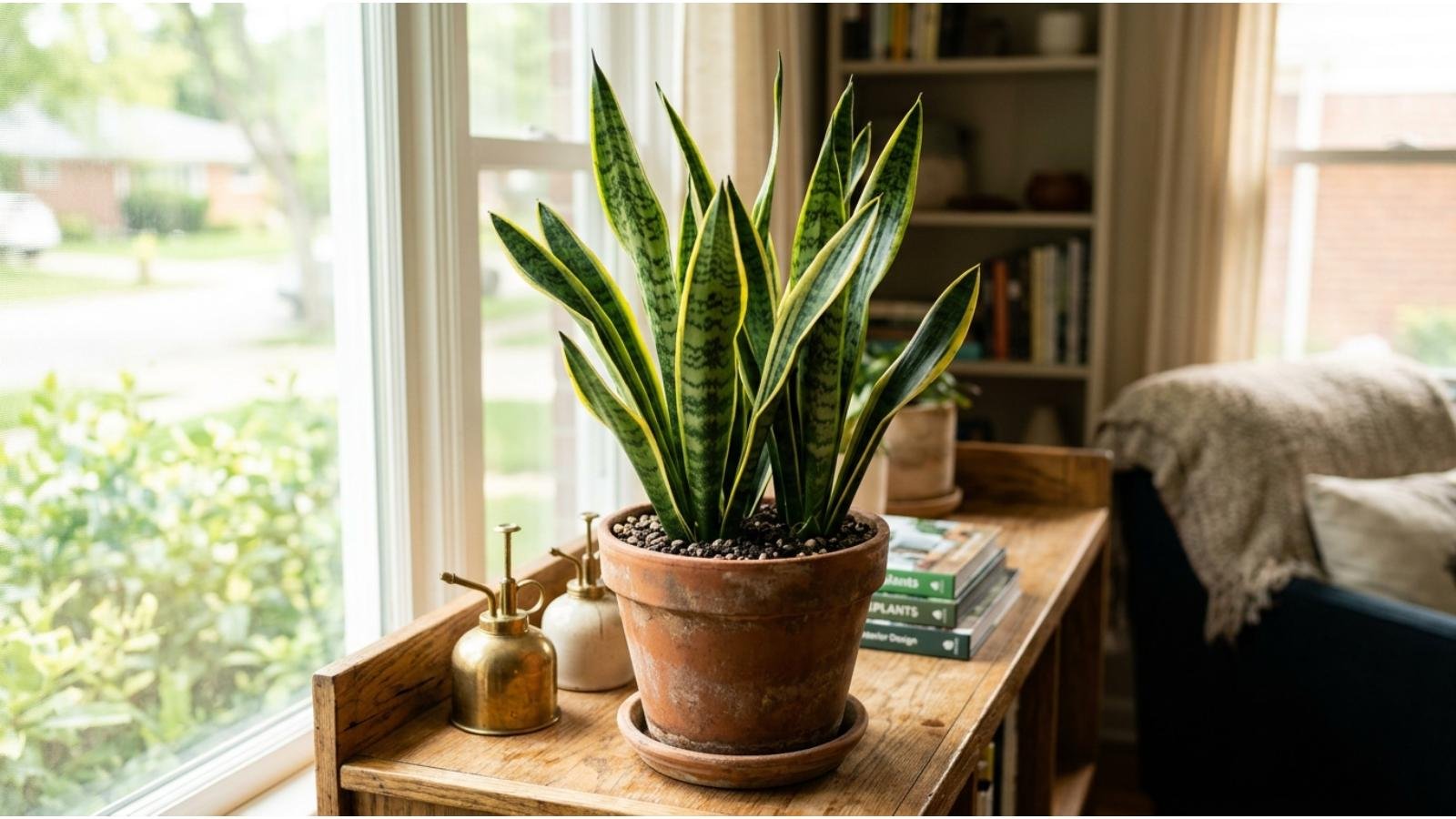
The snake plant is one of the most forgiving houseplants available to beginners.
Its thick leaves store water, allowing the plant to tolerate periods of dryness. It can also adapt to relatively low indoor light, although growth is generally better when it receives adequate indirect light.
Basic care
- Light: Low to bright indirect light.
- Water: Allow soil to dry substantially before watering again.
- Soil: Well-draining potting mix.
- Humidity: Average household humidity is usually sufficient.
- Temperature: Avoid cold drafts and freezing conditions.
Why beginners like it
You do not need to establish a complicated daily routine. Check the soil before watering rather than watering according to a rigid calendar.
Image Suggestion: Healthy snake plant in a bright room showing several mature leaf patterns.
ZZ Plant
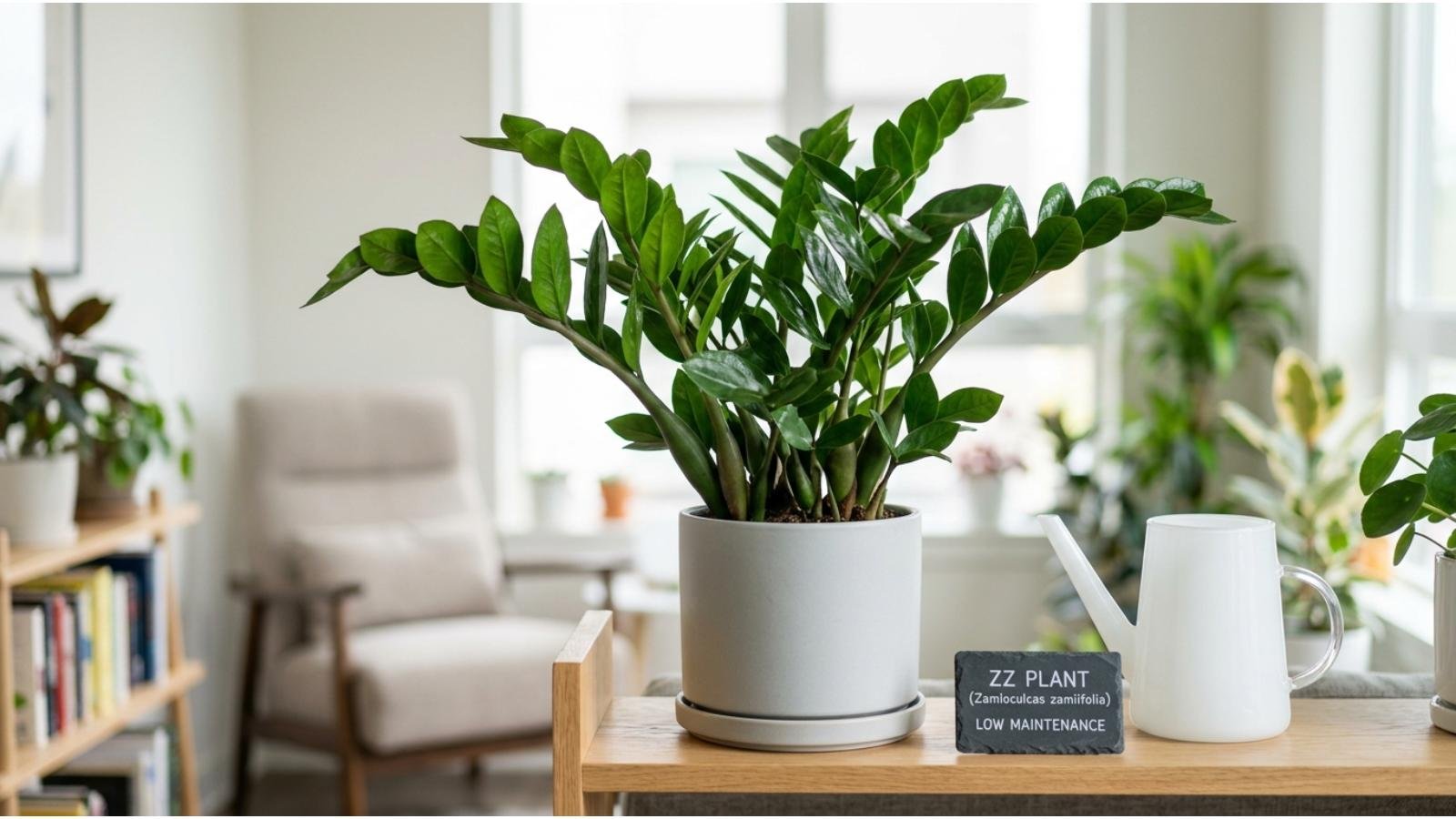
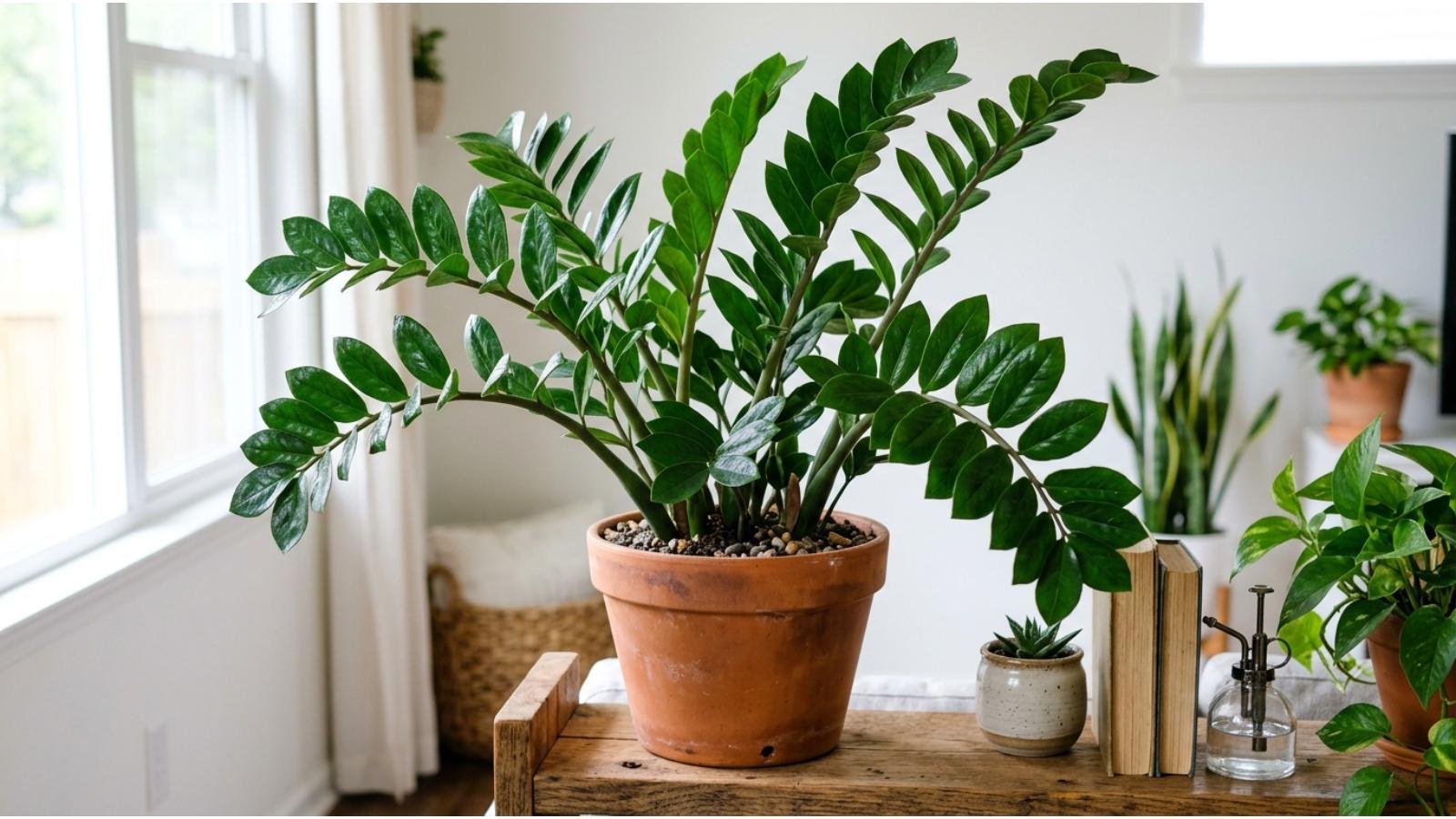
The ZZ plant is another excellent choice if you sometimes forget about your plants.
Its thick underground rhizomes store water, helping it survive dry periods. It is particularly useful for people who want greenery without having to monitor their plant constantly.
Care basics
Place it in low to bright indirect light and water only after the potting mix has dried sufficiently.
Avoid treating its drought tolerance as a reason to water excessively when you remember. A long dry period followed by too much water can still cause problems.
Pothos
Pothos is popular because it combines attractive trailing growth with relatively simple care.
It can tolerate lower light than many decorative houseplants, although brighter indirect light generally produces stronger growth and better leaf coloration.
Simple routine
- Check the soil before watering.
- Provide indirect light.
- Trim long vines if you want a fuller appearance.
- Give the roots a container with drainage.
- Rotate the pot occasionally for more even growth.
Pothos is especially useful for shelves, hanging baskets, and offices.
Image Suggestion: Pothos trailing from a shelf with healthy green foliage and long vines.
Spider Plant
Spider plants are forgiving and can be particularly rewarding for beginners because mature plants often produce small plantlets along their flowering stems.
They prefer bright indirect light but can adapt to moderate indoor conditions.
Water when the upper portion of the soil has dried, while avoiding constantly saturated soil.
Common issue
Brown leaf tips do not automatically mean the plant is dying. They can be associated with inconsistent watering, dry conditions, mineral buildup, or other environmental factors. Look at the overall plant rather than reacting to one damaged leaf.
Jade Plant
Jade plants are excellent for people who have a bright windowsill.
Their fleshy leaves store water, so they generally prefer drying between waterings rather than continuously moist soil.
Best conditions
- Bright light.
- Fast-draining soil.
- Container with drainage.
- Thorough watering followed by appropriate drying.
- Minimal unnecessary disturbance.
A jade plant can remain attractive for years when given enough light and not overwatered.
Aloe Vera
Aloe vera is one of the easiest choices for a sunny indoor location.
Its thick leaves are adapted to storing water, making it much more tolerant of dry soil than plants that have thin, delicate foliage.
Beginner-friendly care
Place aloe near a bright window, use a well-draining growing medium, and allow the soil to dry between waterings.
The most common mistake is treating aloe like a tropical foliage plant and watering it too frequently.
Image Suggestion: Aloe vera growing in a simple terracotta pot beside a sunny window.
Cast Iron Plant
If your home has limited natural light, the cast iron plant is worth considering.
It is known for tolerating lower-light indoor conditions and does not require constant attention.
Growth can be slower than with some fast-growing houseplants, but that can actually be an advantage for beginners because you are not constantly pruning or repotting it.
Heartleaf Philodendron
Heartleaf philodendron is another forgiving trailing plant.
Its heart-shaped leaves make it attractive for shelves, hanging containers, or plant stands. It generally performs well in bright indirect light but can tolerate lower-light conditions.
Water when the soil has dried appropriately rather than keeping the roots continuously wet.
Chinese Evergreen
Chinese evergreen varieties are often suitable for indoor environments where light is moderate or somewhat limited.
Their foliage provides plenty of visual interest without requiring the high-maintenance routine associated with some tropical plants.
The exact tolerance can vary by variety, particularly among plants with highly patterned or colorful foliage.
Rubber Plant
Rubber plants are a good choice if you want something that can eventually become a larger statement plant.
They prefer bright indirect light and consistent but not excessive moisture.
Allowing the soil to dry somewhat between waterings is generally preferable to keeping it constantly wet.
Helpful tip
Dust can accumulate on the large leaves. Gently cleaning the foliage occasionally improves its appearance and allows you to inspect the plant for pests or other problems.
Haworthia
Haworthia is a small succulent that works particularly well on desks, shelves, and windowsills.
Its compact size makes it easier to manage than large houseplants, and its water-storing leaves mean it does not need frequent watering.
The biggest concern is usually excessive moisture, particularly when the container lacks adequate drainage.
Ponytail Palm
Despite its common name, ponytail palm is not actually a true palm. It stores water in its swollen base and is well adapted to periods of dryness.
Give it plenty of light and avoid keeping its soil continuously wet.
It is particularly useful for people who prefer plants that can tolerate a somewhat dry indoor environment.
Peace Lily
Peace lily can be beginner-friendly, but it requires more attention to moisture than snake plants or ZZ plants.
One useful characteristic is that it can visibly droop when it needs water. After appropriate watering, a healthy plant may recover.
However, repeated severe wilting is not an ideal care strategy. Consistent observation is better than deliberately waiting for dramatic drooping.
Image Suggestion: Peace lily before and after proper watering, showing how foliage responds to moisture.
Dracaena
Dracaena varieties are frequently used in homes and offices because many tolerate typical indoor conditions.
They generally prefer bright indirect light but can handle lower light depending on the variety.
Avoid watering automatically on a fixed schedule. Indoor conditions change throughout the year, so check the growing medium first.
Kalanchoe
Kalanchoe is a succulent-like flowering plant that can be relatively easy to maintain when grown in a bright location.
It prefers good drainage and periods of drying between waterings.
If you want a low-maintenance flowering plant rather than a foliage-only plant, kalanchoe can be a practical option
Which Easy Plant Is Best for Your Home?
The easiest plant for you depends heavily on your environment.
If you frequently forget to water
Choose:
- Snake plant.
- ZZ plant.
- Aloe vera.
- Jade plant.
- Haworthia.
- Ponytail palm.
If your room has low light
Consider:
- Snake plant.
- ZZ plant.
- Cast iron plant.
- Pothos.
- Chinese evergreen.
Remember that “low light tolerant” does not mean “no light required.” A plant still needs enough usable light to remain healthy.
If you want a trailing plant
Try:
- Pothos.
- Heartleaf philodendron.
- Spider plant.
If you want a flowering plant
Consider:
- Kalanchoe.
- Peace lily.
If you have a sunny windowsill
Good candidates include:
How to Choose the Easiest Plant for Your Lifestyle
Instead of asking only which plant is easiest, ask which plant matches your home and habits.
Step 1: Check your light
Observe the location throughout the day.
A bright window, shaded room, and dark corner provide very different growing conditions.
Step 2: Consider your watering habits
If you regularly forget to water, choose a drought-tolerant plant.
If you naturally check plants frequently, you can consider plants that appreciate more consistent moisture.
Step 3: Look at your available space
A small Haworthia may work better on a desk than a large rubber plant.
For shelves, trailing pothos or philodendrons can make better use of vertical space.
Step 4: Choose a container with drainage
A drainage hole is one of the simplest ways to reduce the risk of water remaining around the roots.
A decorative container can still be used as an outer cover, while the plant remains in a suitable nursery pot inside.
Step 5: Start with one or two plants
Beginners often buy many plants at once and then struggle to understand which plant needs what.
Starting with a couple of forgiving varieties makes it easier to learn how your home affects plant care.
The Most Important Easy Plant Care Rule
Do not water your plant simply because a certain number of days has passed.
Indoor plants do not consume water at exactly the same rate every week.
Water requirements change because of:
- Light intensity.
- Temperature.
- Season.
- Pot size.
- Soil composition.
- Plant size.
- Humidity.
- Root development.
Instead, check the soil and the plant’s condition.
A plant receiving strong light in a warm room may use water much faster than the same species sitting in a cool, dim location.
Common Mistakes That Kill Easy Plants
Even low-maintenance plants can struggle when basic care goes wrong.
Overwatering
This is probably the most important beginner mistake.
Roots need access to oxygen as well as water. Constantly saturated soil can create conditions that damage roots.
Poor drainage
A pot without adequate drainage makes watering mistakes harder to recover from.
Choosing a plant for appearance alone
A plant that looks beautiful online may not be suitable for your particular room.
Always consider light before choosing the plant.
Moving plants constantly
Frequent relocation can make it difficult to determine what conditions are actually working.
Give a plant time to adjust unless there is a clear environmental problem.
Ignoring pests
Check the undersides of leaves and new growth occasionally. Early detection is much easier to manage than a heavily established infestation.
How Often Should Easy Houseplants Be Watered?
There is no universal watering schedule that works for every plant and every home.
As a general approach:
- Check the growing medium.
- Consider the plant’s species and water-storage ability.
- Assess the light and temperature.
- Water appropriately when the plant actually needs it.
- Allow excess water to drain.
- Empty standing water from outer containers or saucers when necessary.
Succulents such as aloe, jade, and haworthia generally tolerate longer dry periods than plants that prefer consistently moderate moisture.
Easy Plants vs Low-Light Plants
These terms are not interchangeable.
A plant can be easy to care for but still need bright light.
For example, aloe vera is relatively easy to maintain, but it generally performs much better with strong light. Conversely, a snake plant can tolerate lower indoor light and is also forgiving about watering.
This is why choosing according to your actual room is more useful than simply searching for the plant with the reputation of being “unkillable.”
A Simple Beginner Plant Care Routine
You do not need to spend hours caring for houseplants.
Once a week, take a few minutes to:
- Look at the leaves.
- Check the soil moisture.
- Inspect for insects.
- Remove dead leaves.
- Rotate plants if needed for even growth.
- Check that containers are draining properly.
- Look for sudden changes in color, firmness, or growth.
This quick inspection can catch problems before they become serious.
Indoor Plant Care: A Practical Troubleshooting Guide
| Problem | Possible Cause | What to Check |
|---|---|---|
| Yellow leaves | Overwatering, aging leaves, stress | Soil moisture and drainage |
| Drooping leaves | Underwatering or root problems | Soil and root condition |
| Brown tips | Dry conditions, mineral buildup, watering issues | Water quality and environment |
| Soft or mushy leaves | Excess moisture or damage | Soil drainage |
| Slow growth | Insufficient light or seasonal slowdown | Light exposure |
| Leggy growth | Insufficient light | Move toward suitable brighter light |
| Small insects | Pest infestation | Leaf undersides and new growth |
| Leaves falling | Environmental stress | Light, watering, temperature |
A single symptom rarely provides a complete diagnosis. Always consider the plant’s recent care and growing environment.
Are Easy Plants Good for Offices?
Yes, several low-maintenance plants can work well in offices.
Good candidates include:
- Snake plant.
- ZZ plant.
- Pothos.
- Cast iron plant.
- Dracaena.
However, an office with no meaningful natural light may not provide enough energy for long-term plant growth. Low-light tolerance should not be confused with the ability to live indefinitely in complete darkness.
Artificial grow lighting can be useful when natural light is inadequate.
Image Suggestion: Low-maintenance office plants arranged near a window with different light levels labeled.
What Is the Best Plant for a Complete Beginner?
If you want a single starting point, the snake plant is a strong beginner choice because it combines drought tolerance, adaptability to indoor light conditions, and relatively simple care.
But the “best” plant changes according to the environment.
For example:
- Dark-ish room: Snake plant or ZZ plant.
- Sunny windowsill: Aloe or jade.
- Hanging basket: Pothos.
- Small desk: Haworthia.
- Flowering option: Kalanchoe.
- Larger room: Rubber plant or dracaena.
The easiest plant is ultimately the one whose natural requirements match your space.
Frequently Asked Questions
What is the easiest plant to take care of?
Snake plant is one of the easiest houseplants for beginners. It tolerates relatively low light, prefers drying between waterings, and generally requires little maintenance.
What plant is hardest to kill?
Snake plants, ZZ plants, pothos, cast iron plants, and several other forgiving houseplants are often considered difficult to kill under ordinary indoor conditions. However, every plant has limits, especially regarding prolonged darkness, severe overwatering, and extreme temperatures.
What is the best plant for someone who forgets to water?
ZZ plants, snake plants, aloe vera, jade plants, haworthia, and ponytail palms are good candidates because they can store water and tolerate periods of dryness.
What is the easiest indoor plant for low light?
Snake plants and ZZ plants are among the more forgiving choices for lower-light indoor locations. They still need some usable light to remain healthy.
How often should I water an easy-care plant?
There is no fixed schedule. Check the soil and consider the plant species, light, temperature, pot size, and season before watering.
Can beginners grow plants successfully?
Absolutely. Starting with forgiving varieties, providing suitable light, using containers with drainage, and learning to avoid overwatering can make plant care considerably easier.
Are succulents the easiest plants?
Many succulents are low maintenance because they store water, but they are not automatically easy in every home. A succulent placed in a dark room and watered frequently can struggle quickly.
What is the easiest flowering houseplant?
Kalanchoe can be a relatively easy flowering choice when given bright light and well-draining soil. Peace lily is another popular option but generally needs more consistent moisture.
What is the easiest plant for an office?
Snake plant, ZZ plant, pothos, and some dracaena varieties can work well in offices, provided they receive enough usable light and are not overwatered.
Final Takeaway
The easiest plant to take care of is not necessarily the plant that requires the least attention on paper. It is the plant whose natural needs fit your home, your light conditions, and your watering habits.
For most beginners, snake plant, ZZ plant, pothos, spider plant, aloe vera, jade plant, and cast iron plant provide forgiving starting points. Focus less on following a rigid watering calendar and more on understanding what your plant is telling you.
Start with one suitable plant, give it the right light and drainage, and resist the temptation to overwater. Once you understand those basics, keeping houseplants healthy becomes much simpler.