Quick Answer
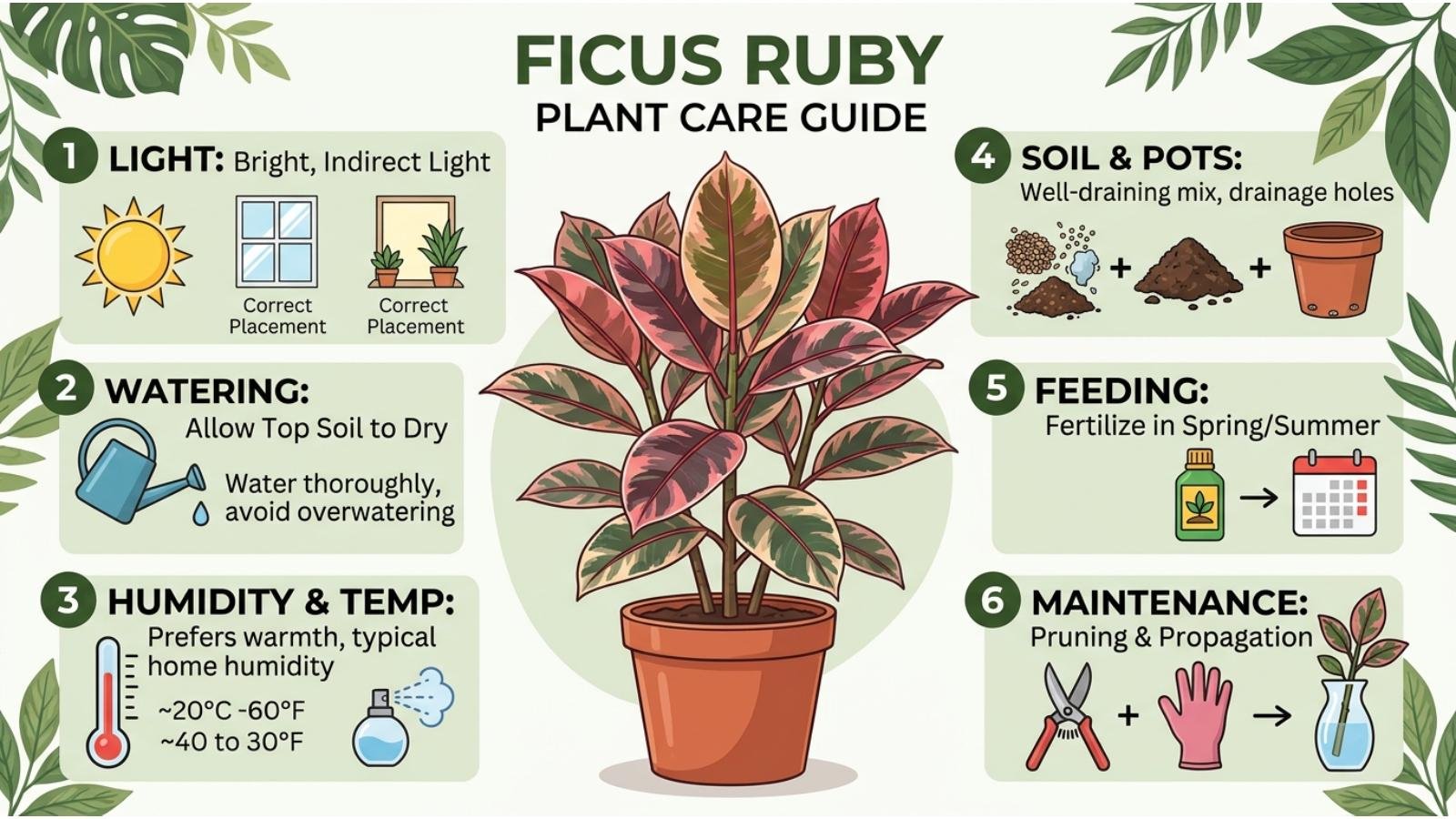
Ficus Ruby plant care is fairly simple when you provide bright indirect light, well-draining soil, careful watering, warmth, and consistent conditions.
Water when the top layer of soil becomes dry rather than following a strict schedule. Because Ficus Ruby has colorful variegated leaves, sufficient light is especially important for maintaining its pink, cream, and green foliage. Avoid overwatering, sudden temperature changes, and harsh direct sunlight.
Introduction
Ficus Ruby is a beautiful variegated rubber plant known for its large leaves decorated with shades of green, cream, pink, and red. Its colorful foliage makes it an attractive indoor statement plant, but maintaining that beautiful variegation requires the right balance of light and moisture.
One of the most common mistakes beginners make is watering Ficus Ruby too frequently. Large leaves can make the plant look thirsty, but constantly wet soil can damage the roots and eventually lead to yellow leaves, drooping, or leaf drop.
The good news is that Ficus Ruby does not require complicated care. Once you understand how to read its soil, leaves, and growing conditions, maintaining a healthy plant becomes much easier.
What Is a Ficus Ruby Plant?
Ficus Ruby is a variegated form of the rubber plant, scientifically known as Ficus elastica. It is valued primarily for its striking foliage rather than flowers.
Its leaves are thick, broad, and glossy, with variegation that can include:
- Dark green.
- Light green.
- Cream.
- Pink.
- Red or burgundy tones.
The exact color pattern can vary from one plant to another.
Because portions of the leaves contain less chlorophyll than completely green leaves, Ficus Ruby generally benefits from stronger light than many ordinary green houseplants.
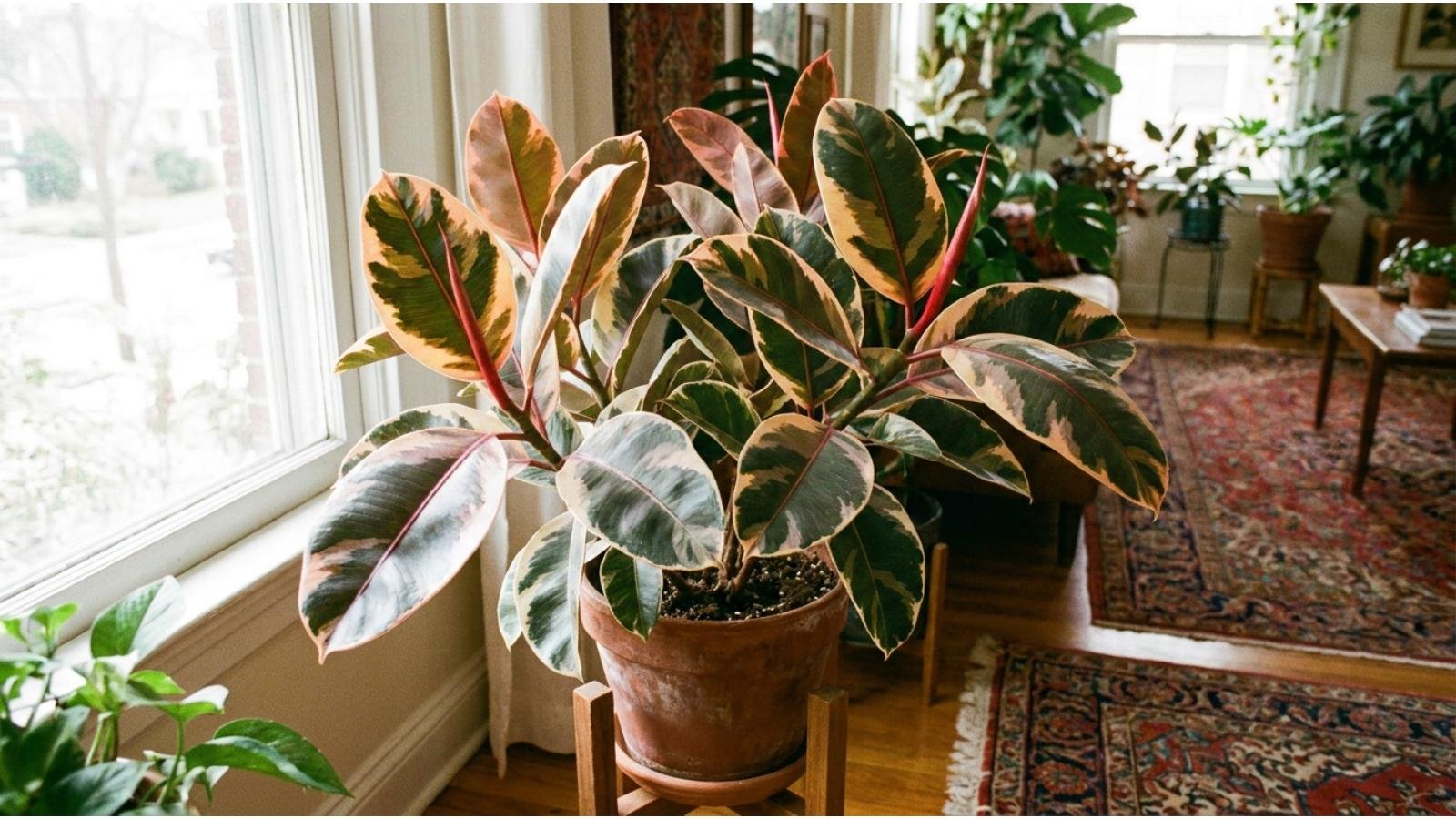
Ficus Ruby Light Requirements
Light is one of the most important factors in Ficus Ruby plant care.
Bright Indirect Light Is Ideal
Place your Ficus Ruby near a bright window where it receives plenty of natural light without being exposed to intense sunlight for long periods.
An east-facing window can provide gentle morning light, while a bright west- or south-facing window may work well when strong sunlight is filtered through a sheer curtain.
Good light helps the plant maintain:
- Stronger growth.
- Larger leaves.
- Better leaf color.
- More attractive variegation.
- Compact growth.
What Happens If Ficus Ruby Gets Too Little Light?
A plant kept in a dark location may begin to show several changes.
You may notice:
- Slow growth.
- Smaller new leaves.
- Longer spaces between leaves.
- Weak or stretched stems.
- Less colorful foliage.
- More green appearing in new growth.
If your Ficus Ruby is gradually becoming greener, check its light before assuming it needs more fertilizer.
Can Ficus Ruby Get Direct Sunlight?
It can tolerate some gentle direct sunlight, particularly mild morning sunlight, but sudden exposure to strong afternoon sun can scorch the foliage.
If you want to move the plant into a brighter location, do it gradually. A plant that has been growing in filtered indoor light may need time to adjust to stronger sunlight.

How to Water Ficus Ruby
Watering correctly is one of the biggest keys to keeping Ficus Ruby healthy.
Do not water simply because several days have passed.
Instead, check the soil.
When Should You Water?
Allow the upper layer of soil to dry before watering again.
A simple routine is:
- Push your finger into the soil.
- Check whether the upper portion feels dry.
- If it is dry, water thoroughly.
- Allow excess water to drain from the pot.
- Empty water sitting in the saucer.
- Wait until the soil partially dries again before watering.
The plant may need water more frequently during warm, bright growing conditions and less frequently during cool or darker periods.
Why Overwatering Causes Problems
Overwatering is not necessarily one large watering event. The bigger problem is soil that remains wet for too long.
When the roots sit in saturated soil repeatedly, they can become stressed or damaged.
Possible warning signs include:
- Yellowing leaves.
- Drooping despite wet soil.
- Leaf drop.
- Slow growth.
- Dark or unhealthy roots.
- A consistently soggy potting mix.
If the soil is already wet, do not automatically water because the leaves are drooping. Check the roots and growing conditions first.
Best Soil for Ficus Ruby
Ficus Ruby performs best in a loose, well-draining potting mix.
A practical homemade mixture can include:
- Quality indoor potting soil.
- Perlite.
- Fine bark or another material that improves aeration.
The exact recipe is less important than the final result.
Your soil should retain some moisture while allowing excess water to escape quickly.
How to Tell If the Soil Is Poorly Draining
Watch what happens after watering.
If water drains easily through the bottom and the soil gradually dries, the mix is probably functioning well.
If the soil stays heavy and wet for many days, investigate:
- Soil compaction.
- Lack of drainage holes.
- Excessively large pot.
- Poor-quality potting mix.
- Insufficient aeration.
Choosing the Right Pot
Always choose a container with drainage holes.
The pot should provide enough room for root development without being dramatically larger than the current root system.
An oversized container can hold a large amount of unused soil around the roots. That extra soil can remain wet for longer, increasing the risk of root problems.
When Should You Repot Ficus Ruby?
Repot when the plant becomes significantly root-bound or when the existing soil has broken down and no longer drains properly.
Signs may include:
- Roots growing through drainage holes.
- Roots tightly circling the root ball.
- Water passing through unusually quickly.
- Very slow growth despite good light.
- Soil becoming compacted.
Move the plant into a slightly larger pot rather than dramatically increasing the container size.
Temperature Requirements
Ficus Ruby prefers warm and relatively stable temperatures.
A comfortable indoor environment is generally suitable as long as the plant is protected from extreme temperature changes.
Keep it away from:
- Cold drafts.
- Air-conditioning vents.
- Heating vents.
- Frequently opened exterior doors.
- Very cold windows.
- Sudden temperature changes.
Temperature stress can cause leaf drop even when your watering routine has not changed.
Humidity for Ficus Ruby
Ficus Ruby appreciates moderate humidity but usually does not require extremely humid conditions.
If your indoor air is particularly dry, you can improve the environment by using:
- A humidifier.
- A plant grouping arrangement.
- A humidity tray.
- A location away from heating vents.
Do not rely entirely on frequent misting. Stable environmental conditions are generally more useful than repeatedly spraying the leaves.
Fertilizing Ficus Ruby
Ficus Ruby benefits from regular feeding while actively growing.
Use a balanced houseplant fertilizer according to its label instructions.
During the active growing season, feeding approximately once a month may be appropriate for many indoor plants, depending on the fertilizer concentration and growing conditions.
Avoid Overfertilizing
More fertilizer does not automatically produce better growth.
Excess fertilizer can cause salt buildup in the soil and may damage roots.
Signs of excessive fertilizer can include:
- Brown leaf edges.
- White crust around the soil.
- Declining growth.
- Root damage.
If you have recently repotted the plant into fresh nutrient-rich soil, you may not need to fertilize immediately.
How to Prune Ficus Ruby
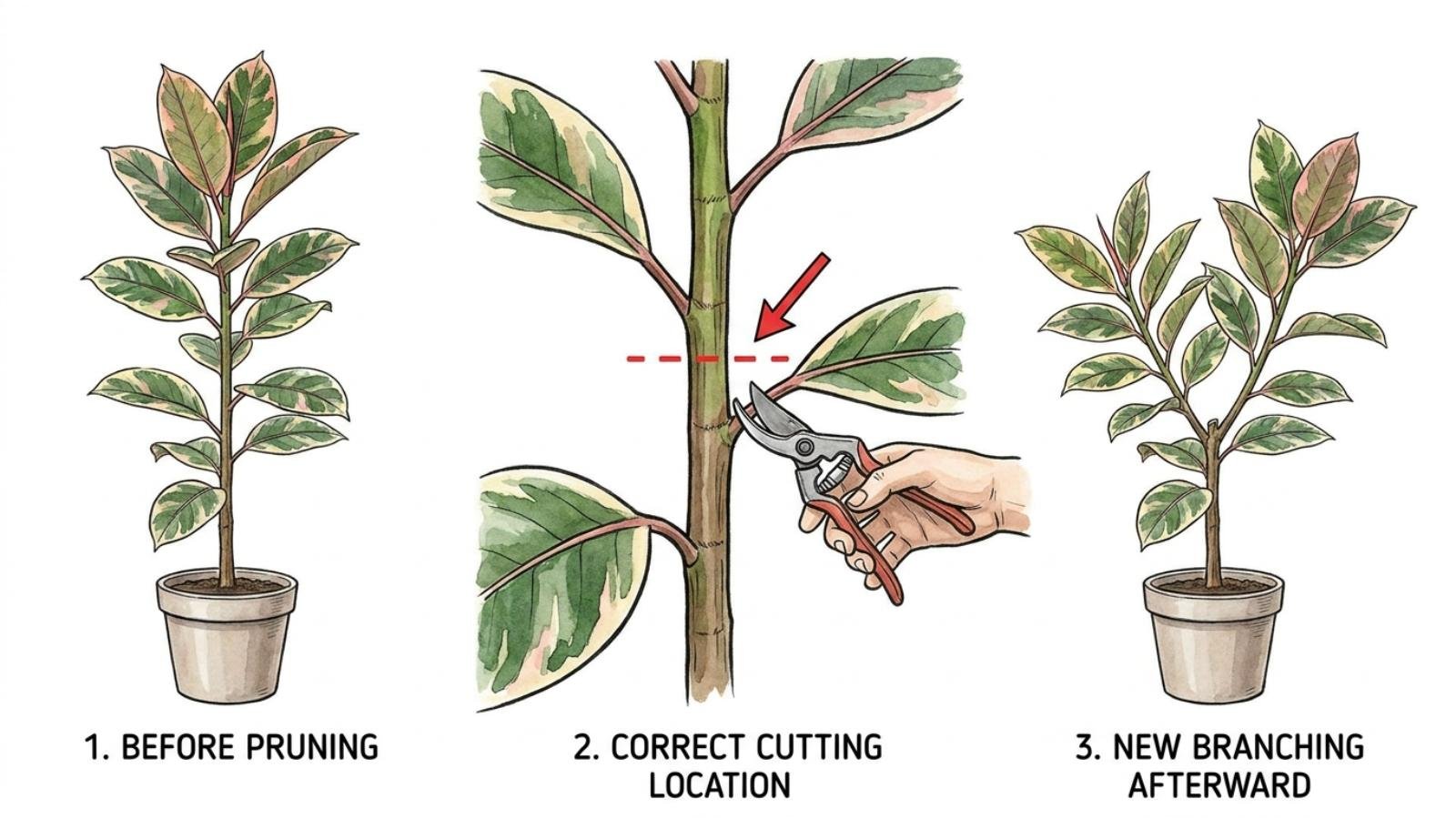
Pruning can help control height, remove damaged growth, and encourage branching.
Use clean, sharp pruning shears.
Simple Pruning Method
- Decide where you want to reduce the plant’s height.
- Locate a healthy node below the desired cutting point.
- Make a clean cut.
- Remove dead or severely damaged leaves.
- Place the plant in bright indirect light afterward.
- Give it time to produce new growth.
Pruning the main growing tip can encourage growth from lower points on the stem.
Important Pruning Tip
Ficus Ruby produces milky sap when cut. Wear gloves while pruning if your skin is sensitive, and wash your hands after handling the plant.
How to Make Ficus Ruby Bushier
A tall, single-stemmed Ficus Ruby can sometimes be encouraged to branch through strategic pruning.
However, pruning works best when the plant already receives adequate light.
If the plant is growing in a dark room, cutting it back may not solve the problem. The new growth may remain weak or widely spaced.
For bushier growth:
- Provide bright indirect light.
- Prune the growing tip when appropriate.
- Keep the plant healthy.
- Rotate the pot occasionally.
- Avoid excessive fertilizer.
- Give new growth time to develop.
How to Clean Ficus Ruby Leaves
Large Ficus Ruby leaves naturally collect dust.
Dust can make the plant look dull and can interfere with the appearance of its beautiful variegation.
Clean the leaves occasionally using a soft, damp cloth.
Gently support each leaf from underneath while wiping the upper surface.
Avoid aggressive rubbing because the leaves can become scratched or damaged.
You generally do not need special leaf-shine products.
Image Suggestion: Before-and-after image showing dusty Ficus Ruby foliage and clean glossy leaves.
Why Are Ficus Ruby Leaves Turning Green?
One of the most common concerns with variegated Ficus Ruby is reduced variegation.
Insufficient light can contribute to greener growth.
Because variegated portions contain less chlorophyll, the plant needs adequate light to maintain vigorous growth.
If new leaves are noticeably greener than older leaves:
- Evaluate the current light.
- Move the plant gradually toward brighter indirect light.
- Avoid immediately placing it under intense direct sunlight.
- Monitor new growth over time.
If an individual branch repeatedly produces mostly green growth, pruning that branch may help maintain a more balanced appearance.
Why Is My Ficus Ruby Losing Leaves?
Ficus Ruby can drop leaves when its environment changes significantly.
Possible causes include:
- Overwatering.
- Underwatering.
- Sudden relocation.
- Cold temperatures.
- Drafts.
- Poor lighting.
- Root problems.
- Pest infestations.
- Sudden changes in humidity.
Before changing several things at once, look at what changed recently.
For example, if your plant was healthy for months and suddenly began dropping leaves after being moved next to an air conditioner, the environmental change is an important clue.
Why Are Ficus Ruby Leaves Turning Brown?
Brown leaves can have several causes.
Too Much Sun
Strong direct sunlight can scorch the leaves, particularly the lighter variegated areas.
Underwatering
If the soil becomes extremely dry for too long, leaves may develop crispy brown edges.
Dry Air
Very dry conditions can contribute to brown edges, especially when combined with inconsistent watering.
Root Problems
Root damage can prevent the plant from absorbing water properly even when the soil appears wet.
Instead of treating brown leaves immediately, inspect the entire growing environment.
Why Is My Ficus Ruby Drooping?
Drooping leaves do not always mean the plant needs water.
First check the soil.
If the Soil Is Dry
The plant may need watering.
If the Soil Is Wet
Do not automatically add more water.
Wet soil combined with drooping leaves may indicate root stress or another environmental problem.
Also examine:
- Temperature.
- Recent location changes.
- Light levels.
- Root condition.
- Pest activity.
Ficus Ruby Pests
Ficus Ruby can occasionally experience common houseplant pests.
Watch for:
- Spider mites.
- Mealybugs.
- Scale insects.
- Thrips.
Inspect the plant regularly, particularly the undersides of leaves and areas where leaves meet stems.
Early Pest Warning Signs
Look for:
- Fine webbing.
- Sticky residue.
- Tiny insects.
- Cotton-like white clusters.
- Small bumps attached to stems.
- Speckled or damaged leaves.
Early detection is much easier to manage than a large infestation.
If you purchase a new plant, keeping it separate from other plants for an observation period can also help prevent pests from spreading throughout your collection.
Ficus Ruby Propagation
Ficus Ruby can be propagated using suitable stem cuttings or layering.
Stem Cutting Method
A basic propagation process involves:
- Choose a healthy stem.
- Make a clean cutting containing an appropriate node.
- Allow excess sap to stop flowing.
- Place the cutting into a suitable rooting medium.
- Keep it warm.
- Provide bright indirect light.
- Keep the medium lightly and consistently moist without making it soggy.
- Wait for roots and new growth to develop.
Propagation is more successful when the parent plant is healthy and actively growing.
Seasonal Ficus Ruby Care
Spring and Summer
During active growth:
- Provide bright indirect light.
- Check soil regularly.
- Water when the upper soil layer dries.
- Fertilize appropriately.
- Watch for pests.
- Prune if necessary.
Fall and Winter
As light levels and growth decrease:
- Check soil less frequently.
- Allow the soil to dry appropriately between waterings.
- Reduce fertilizer when growth slows.
- Keep the plant away from cold drafts.
- Provide as much bright filtered light as possible.
Do not continue a summer watering schedule automatically during winter.
A Simple Ficus Ruby Care Routine
Weekly
Check:
- Soil moisture.
- Leaf condition.
- New growth.
- Pests.
- Light exposure.
Monthly
Consider:
- Cleaning the leaves.
- Inspecting stems closely.
- Fertilizing during active growth.
- Rotating the plant for balanced growth.
Seasonally
Review:
- Watering frequency.
- Light levels.
- Temperature.
- Fertilizer needs.
- Pot and root condition.
This routine is more reliable than following a rigid watering calendar because indoor conditions change throughout the year.
Common Ficus Ruby Care Mistakes
Watering on a Fixed Schedule
Watering every certain number of days can easily lead to overwatering because soil does not dry at the same rate throughout the year.
Keeping It in a Dark Corner
Ficus Ruby needs good light to support strong growth and attractive variegation.
Suddenly Exposing It to Strong Sun
A plant adapted to indoor filtered light can suffer from leaf scorch if moved directly into intense sunlight.
Using an Oversized Pot
Too much soil around the roots can stay wet for too long.
Moving the Plant Frequently
Constant changes make it difficult for the plant to establish consistent growing conditions.
Fertilizing a Stressed Plant
Fertilizer cannot fix poor drainage, root damage, inadequate light, or temperature stress.
Always correct the underlying problem first.
Ficus Ruby Care Troubleshooting Table
| Problem | Possible Cause | What to Check |
|---|---|---|
| Yellow leaves | Excess moisture or stress | Soil moisture and drainage |
| Brown crispy edges | Dry soil, dry air, or excessive sunlight | Watering and light |
| Brown patches | Sun scorch or environmental stress | Direct sunlight and location |
| Leaf drop | Sudden environmental change or root stress | Temperature, watering, and location |
| Drooping leaves | Dry soil or root problems | Soil and roots |
| Slow growth | Low light or unsuitable conditions | Light, temperature, and feeding |
| Greener new leaves | Insufficient light | Move toward brighter indirect light |
| Sticky leaves | Possible pests | Inspect leaves and stems |
| Fine webbing | Possible spider mites | Check leaf undersides |
| White cotton-like material | Possible mealybugs | Inspect stems and leaf joints |
Remember that a single symptom can have multiple causes. Look at the complete growing environment before deciding on a treatment.
Ficus Ruby Care at a Glance
| Care Factor | Recommendation |
|---|---|
| Light | Bright indirect or filtered light |
| Watering | Water when the upper soil layer dries |
| Soil | Loose and well-draining |
| Pot | Container with drainage holes |
| Temperature | Warm and stable |
| Humidity | Moderate humidity is beneficial |
| Fertilizer | Feed during active growth as needed |
| Pruning | Use clean shears to control shape and encourage branching |
| Repotting | Repot when root-bound or soil quality declines |
| Propagation | Stem cuttings or layering |
| Leaf cleaning | Wipe gently with a damp soft cloth |
| Common pests | Spider mites, mealybugs, scale, and thrips |
Frequently Asked Questions
Is Ficus Ruby easy to care for?
Yes. Ficus Ruby is relatively easy to maintain when it receives bright indirect light, appropriate watering, good drainage, and stable temperatures.
How much light does Ficus Ruby need?
Bright indirect light is ideal. Gentle morning sunlight may be tolerated, but strong prolonged direct sunlight can scorch the leaves.
How often should I water Ficus Ruby?
There is no perfect fixed schedule. Check the soil and water when the upper layer has dried. Your plant may need water more frequently during warm, bright conditions.
Can Ficus Ruby grow in low light?
It may survive in lower light, but its growth can become slower and its colorful variegation may become less pronounced.
Why is my Ficus Ruby turning green?
Low light is one possible reason. Move the plant gradually toward a brighter location with indirect or filtered light.
Why is my Ficus Ruby losing leaves?
Check for overwatering, underwatering, temperature changes, drafts, relocation, insufficient light, root problems, and pests.
Should I mist my Ficus Ruby?
Misting is not essential. If your indoor air is very dry, a humidifier can provide more consistent humidity than occasional misting.
Can Ficus Ruby grow outside?
Yes, it can be grown outdoors in suitable warm conditions. However, acclimate it gradually and protect it from harsh direct sunlight, cold temperatures, and strong winds.
Does Ficus Ruby need fertilizer?
Ficus Ruby can benefit from fertilizer during active growth. Follow the instructions on your chosen fertilizer and avoid excessive feeding.
How can I make Ficus Ruby bushier?
Give it sufficient light and prune the growing tip when appropriate. Good light is particularly important for supporting new branches.
Can Ficus Ruby be propagated from a leaf?
A leaf alone is generally not enough to produce a complete new rubber plant. Stem cuttings containing suitable stem tissue and a node are more practical for propagation.
Is Ficus Ruby safe around pets?
Ficus plants contain sap that can be irritating and may cause problems if plant material is chewed or eaten. Keep the plant away from pets and children who may be tempted to chew the leaves.
Conclusion
Successful Ficus Ruby plant care is less about following a strict schedule and more about understanding what your plant is telling you.
Give it bright indirect light, well-draining soil, appropriate watering, warmth, and consistent conditions. Allow the soil to partially dry between waterings, avoid keeping the roots constantly wet, and provide stronger filtered light if the colorful variegation begins fading.
When problems appear, do not immediately reach for fertilizer or increase watering. Check the soil, roots, light, temperature, and leaves together. This simple habit can help you identify the real cause instead of treating only the visible symptom.
With consistent care and a suitable environment, Ficus Ruby can develop into a striking indoor plant with strong growth and beautifully variegated foliage.