Quick Answer
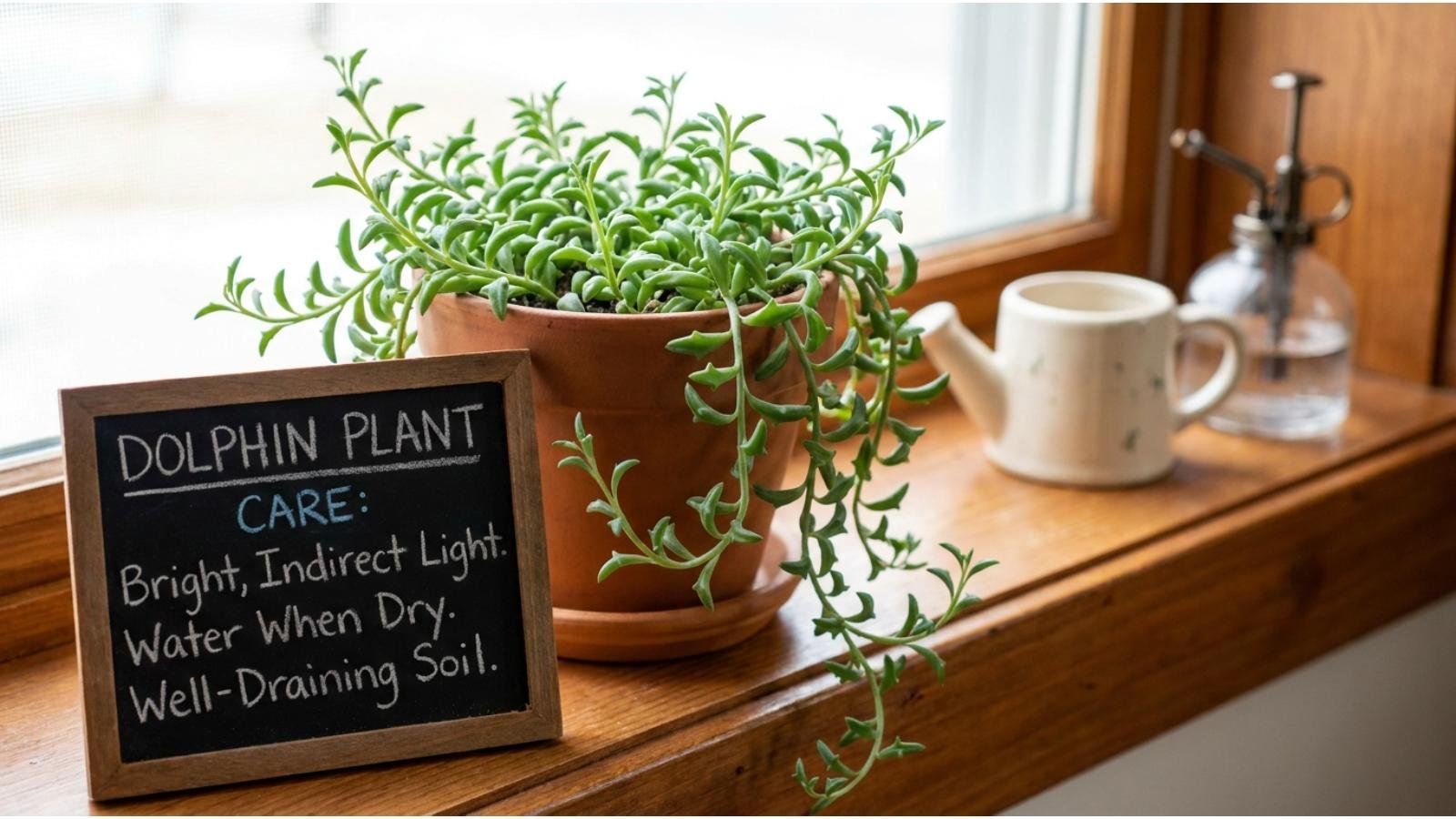
Dolphin plant, also called String of Dolphins, is a trailing succulent that grows best in bright light, well-draining soil, and a pot with drainage holes.
Allow the soil to dry completely before watering thoroughly. Avoid frequent watering, heavy soil, and low-light conditions. With proper light, careful watering, and occasional pruning, a Dolphin Plant can produce attractive trailing stems with distinctive dolphin-shaped leaves.
Introduction
Dolphin plant care is fairly simple once you understand that this unusual houseplant has succulent characteristics. Its fleshy leaves store water, which means it generally prefers drying out between waterings rather than sitting in consistently moist soil.
The plant is especially popular because its curved leaves resemble tiny dolphins swimming along the stems. When grown in a hanging basket or on an elevated shelf, the trailing stems can create an attractive cascading display.
The most common problems are usually caused by too much water, insufficient light, poor drainage, or sudden changes in growing conditions. Understanding these issues makes it much easier to keep your plant healthy.
What Is a Dolphin Plant?
Dolphin Plant is a popular trailing succulent commonly known as String of Dolphins. Its botanical name is often listed as Curio × peregrinus, although older plant references may use Senecio peregrinus.
The plant produces:
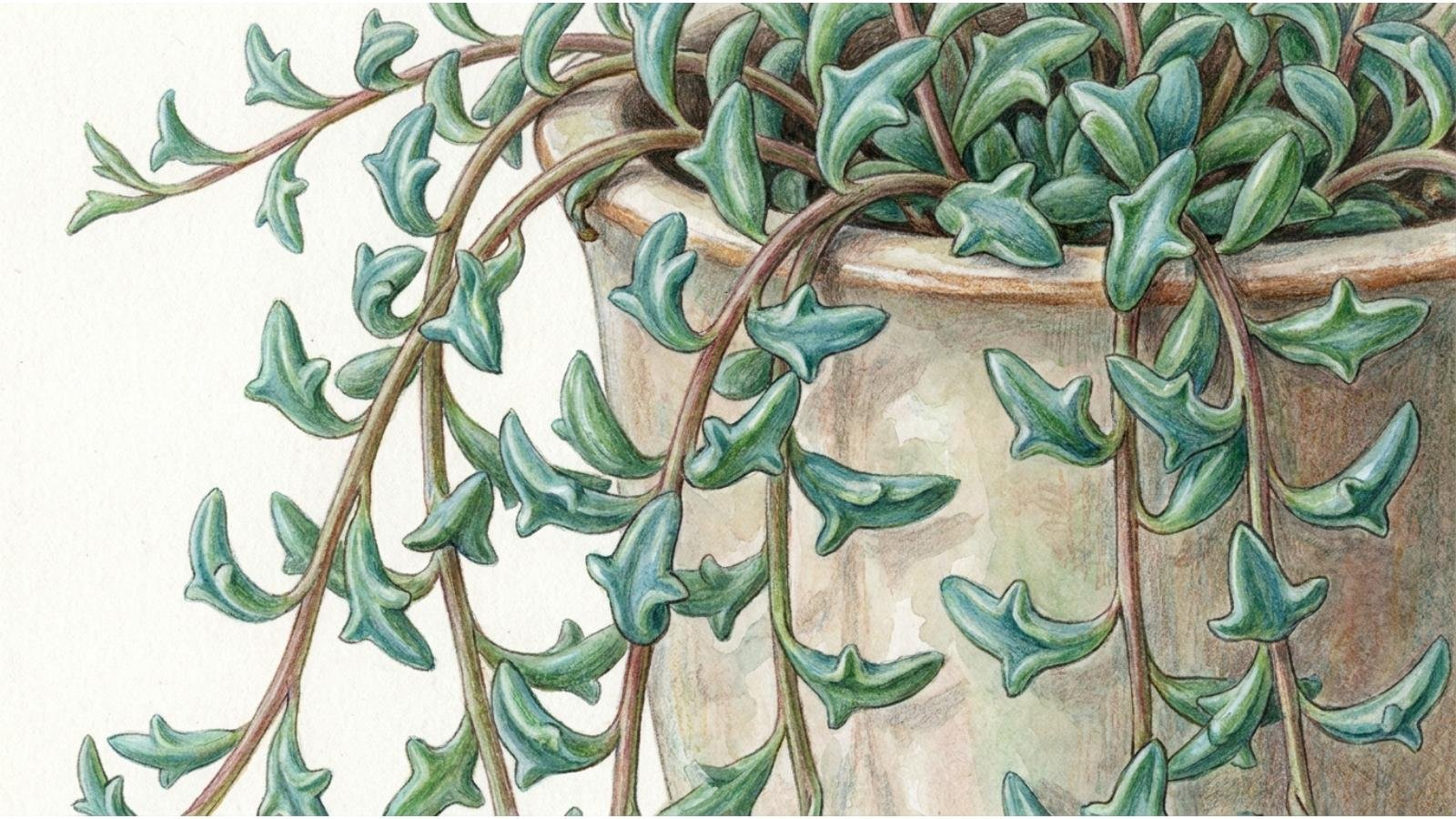
- Fleshy blue-green leaves.
- Long trailing stems.
- Curved leaves that resemble dolphins.
- Small growth points along the stems.
- A naturally cascading growth habit.
Because of its trailing form, it works particularly well in hanging baskets, shelves, plant stands, and bright indoor spaces.
Why Does It Look Like Dolphins?
The unusual leaves develop a curved shape with small side projections. From a distance, individual leaves can look remarkably similar to tiny dolphins jumping along the stem.
Not every leaf will have exactly the same shape. Light, maturity, growing conditions, and natural variation can influence the appearance of new foliage.
Dolphin Plant Care Requirements
| Care Requirement | Ideal Condition |
|---|---|
| Light | Bright light with some gentle direct sunlight |
| Water | Allow soil to dry completely between watering |
| Soil | Fast-draining succulent or cactus mix |
| Pot | Container with drainage holes |
| Humidity | Average household humidity |
| Temperature | Warm, stable indoor temperatures |
| Fertilizer | Light feeding during active growth |
| Pruning | Occasional trimming for shape and fullness |
| Propagation | Stem cuttings |
| Growth | Trailing |
The exact care routine depends on your home’s temperature, light, humidity, soil, and pot size. Instead of following a strict calendar, pay attention to the plant and its growing medium.
How Much Light Does a Dolphin Plant Need?
Bright light is one of the most important requirements for healthy Dolphin Plant growth.
Place the plant near a bright window where it receives plenty of natural light. It can tolerate some direct sunlight, especially when gradually introduced to stronger light.
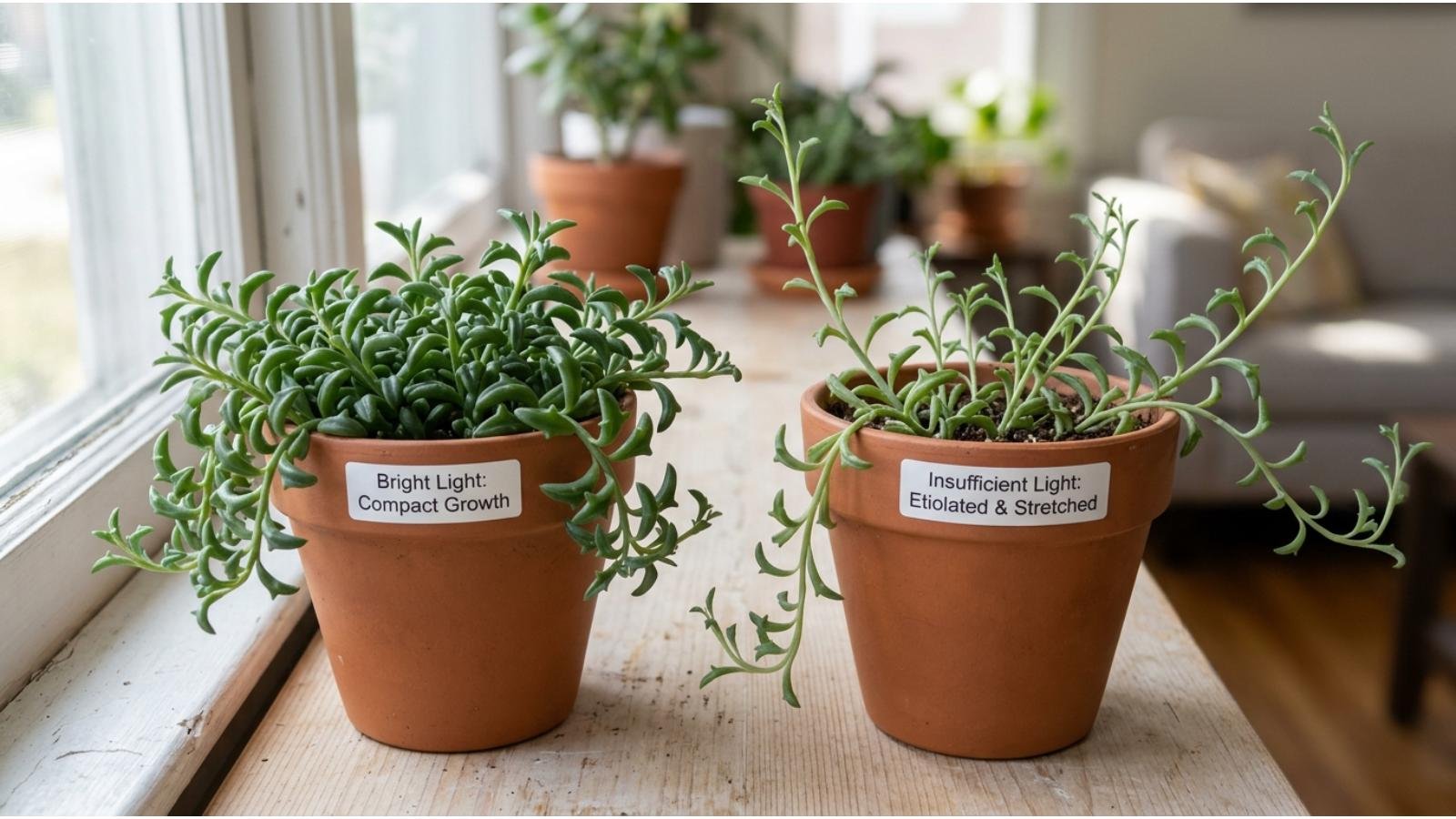
A plant that receives too little light may continue growing but become thin, stretched, and sparse.
Signs of Insufficient Light
Look for:
- Long gaps between leaves.
- Thin stems.
- Slow growth.
- Sparse foliage.
- Growth leaning toward the window.
- Less distinctive new leaves.
If you notice these signs, gradually move the plant to a brighter location.
Can Dolphin Plants Get Direct Sun?
Yes, but sudden exposure to strong sunlight can damage foliage.
If your plant has been growing in filtered indoor light, introduce direct sunlight gradually. Morning sunlight is generally easier for an indoor plant to adjust to than intense afternoon exposure.
Practical Tip: Rotate the pot occasionally so different sides of the plant receive similar light.
How to Water a Dolphin Plant
Watering is one of the most important parts of Dolphin Plant care.
Because this plant stores moisture in its fleshy leaves, it does not need frequent watering.
The best approach is to allow the soil to dry completely before watering again.
How to Water Properly
- Check the potting soil.
- Make sure it is completely dry.
- Water thoroughly.
- Allow excess water to escape through the drainage holes.
- Empty water collected in the saucer.
- Wait until the soil dries again before watering.
Avoid giving small amounts of water every few days. This can keep the root zone constantly damp and increase the risk of root problems.
How Often Should You Water?
There is no perfect weekly schedule.
Your plant may need water more frequently during warm, bright periods and less frequently during cool or low-light conditions.
Instead of asking, “Has it been seven days?” ask:
“Is the soil actually dry?”
That simple change can prevent many watering problems.
Signs of Underwatering
A severely thirsty Dolphin Plant may develop:
- Wrinkled leaves.
- Soft-looking or deflated foliage.
- Dry stems.
- Leaf drop.
- Slow growth.
If the soil is completely dry and the plant looks dehydrated, give it a thorough watering and allow the excess to drain.
Signs of Overwatering
Overwatering can cause:
- Yellowing leaves.
- Soft or mushy leaves.
- Mushy stems.
- Darkened stems.
- Persistent wet soil.
- Root rot.
- Sudden leaf loss.
A common beginner mistake is watering again because the plant looks unhealthy. If excessive moisture caused the problem, additional watering can make it worse.
Best Soil for Dolphin Plant
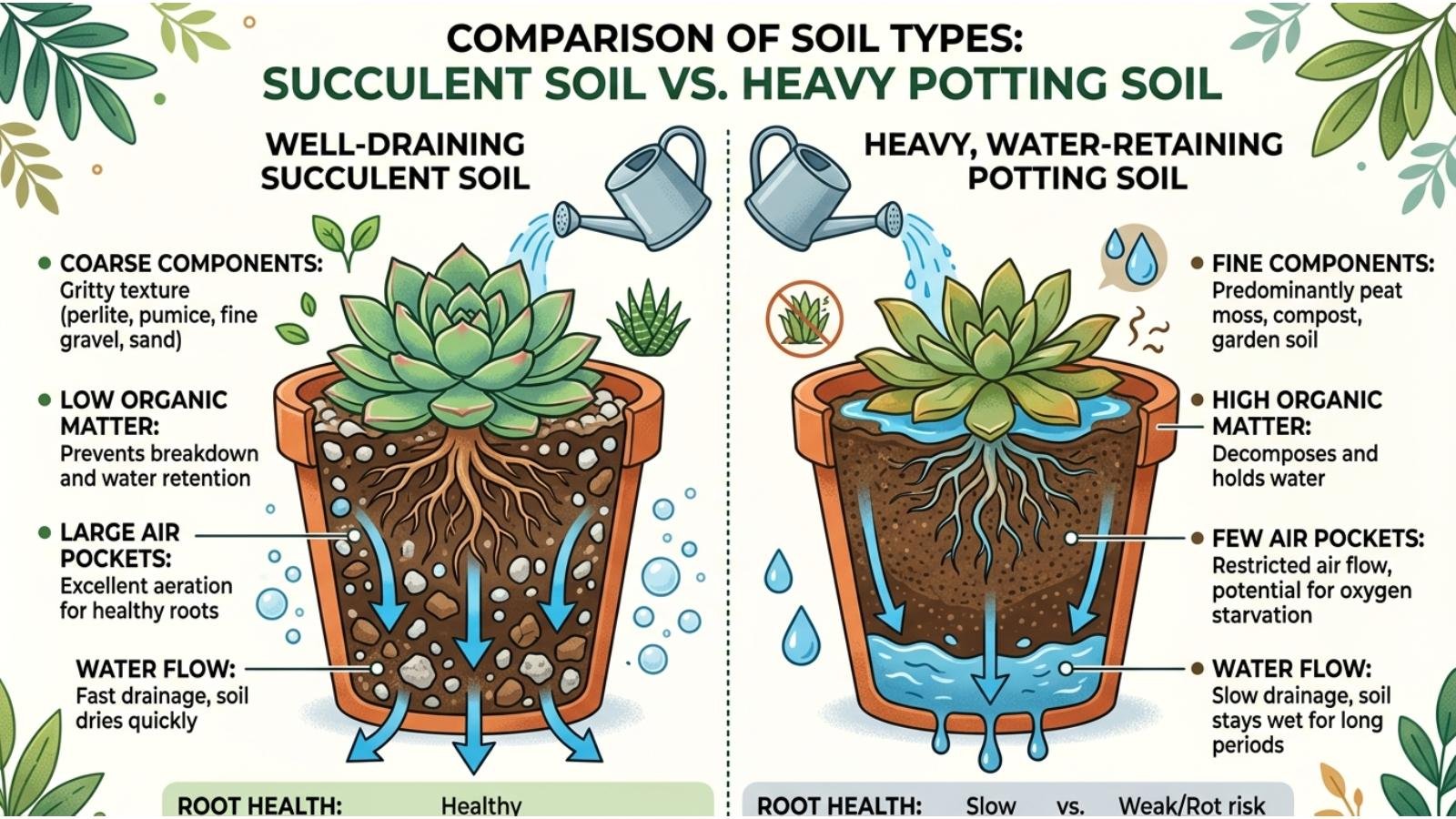
Dolphin Plant needs soil that drains quickly.
A quality cactus or succulent potting mix is usually a good starting point. Additional drainage material such as perlite or pumice can help improve airflow and drainage.
The soil should not remain saturated for long periods.
Why Fast Drainage Matters
The roots need both moisture and access to air. Soil that stays wet for too long can deprive roots of oxygen and encourage root deterioration.
Good soil should allow you to water thoroughly while still allowing the pot to dry within a reasonable period.
Choosing the Right Pot
Always use a container with drainage holes.
A beautiful decorative pot without drainage can make watering much more difficult because excess water has nowhere to escape.
Should You Use Terracotta?
Terracotta can be useful because its porous material allows moisture to escape more readily.
Plastic pots can also work well, provided the soil drains properly and you adjust watering accordingly.
Avoid Oversized Pots
A very large pot holds more soil, which means more moisture can remain around a relatively small root system.
Choose a container that is only moderately larger than the existing root system.
Temperature Requirements
Dolphin Plants prefer warm and stable conditions.
Protect them from:
- Frost.
- Freezing temperatures.
- Cold drafts.
- Sudden temperature changes.
- Very cold windows.
- Direct heat from heaters.
Normal indoor temperatures are generally suitable.
If the plant is outdoors during warm weather, bring it indoors before cold conditions arrive.
Does a Dolphin Plant Need High Humidity?
No.
Average household humidity is usually sufficient.
Unlike tropical plants that may benefit from consistently humid conditions, Dolphin Plant is a succulent and generally does not require frequent misting or a humidifier.
In humid environments, good airflow and careful watering become even more important.
How to Fertilize a Dolphin Plant
Dolphin Plants are not heavy feeders.
During active growth, you can use a diluted fertilizer designed for succulents.
Avoid excessive fertilization because more nutrients do not necessarily produce healthier growth.
Simple Fertilizing Routine
During active growth:
- Use a diluted fertilizer.
- Feed occasionally rather than excessively.
- Water appropriately.
- Stop or reduce feeding when growth slows.
Never use fertilizer to compensate for poor lighting, bad drainage, or incorrect watering.
How to Prune a Dolphin Plant
Pruning can help maintain a fuller and more attractive shape.
You can remove:
- Dead stems.
- Damaged growth.
- Extremely long stems.
- Bare sections.
- Unbalanced growth.
Use clean, sharp scissors or pruning shears.
Avoid removing too much healthy growth at once.
Healthy cuttings can also be used for propagation.
How to Propagate a Dolphin Plant
Stem cuttings are a practical way to propagate Dolphin Plants.
Step-by-Step Propagation
- Select a healthy stem.
- Cut a section containing several healthy leaves.
- Allow the cut end to dry briefly.
- Place the cutting into or on top of a fast-draining succulent mix.
- Keep the growing medium lightly managed rather than constantly wet.
- Place the cutting in bright light.
- Give it time to develop roots.
- Gradually establish a normal watering routine after rooting.
You can place several cuttings in one pot to create a fuller-looking plant.
Practical Tip: Avoid propagating from stems that are already soft, blackened, or rotting. Start with firm, healthy growth.
Why Is My Dolphin Plant Getting Leggy?
Leggy growth usually means the plant isn’t receiving enough light.
When light levels are low, the stems may stretch toward the nearest light source. This creates large gaps between leaves and makes the plant look thin.
How to Fix Leggy Growth
Move the plant gradually toward a brighter location.
Then:
- Improve light exposure.
- Trim excessively bare stems.
- Propagate healthy cuttings.
- Encourage new growth in the brighter location.
Simply pruning the plant without improving its light will usually not solve the problem.
Why Are My Dolphin Leaves Losing Their Shape?
Poor light can cause new foliage to become less compact or less distinctive.
However, natural variation is also possible. Not every leaf will look exactly like a miniature dolphin.
If several consecutive new leaves appear unusually flat or poorly formed, check the plant’s light exposure first.
Give it brighter conditions and observe the new growth rather than expecting older leaves to change dramatically.
Why Are My Dolphin Plant Stems Turning Mushy?
Mushy stems are a warning sign that should not be ignored.
Common causes include:
- Excessive watering.
- Poor drainage.
- Heavy soil.
- Low light combined with wet soil.
- Root or stem rot.
What to Do
Remove the plant from its container and inspect the roots and stems.
Remove rotten material with clean tools and keep only firm, healthy sections.
Healthy sections can often be propagated separately.
Repot healthy material into fresh, fast-draining soil and correct the watering routine.
Important: Do not continue watering a plant with visibly rotting stems in the hope that extra moisture will help it recover.
Why Is My Dolphin Plant Dropping Leaves?
Occasional leaf loss can be normal, especially as older foliage ages.
Sudden or widespread leaf drop, however, may indicate environmental stress.
Check:
- Soil moisture.
- Recent watering.
- Drainage.
- Light.
- Temperature.
- Root condition.
- Physical damage.
Dolphin Plant stems can also lose leaves when repeatedly touched or moved, so keep the plant in a stable location.
Common Dolphin Plant Care Mistakes
Watering Too Frequently
Succulent leaves store water, so frequent watering is unnecessary.
Better approach: Allow the soil to dry completely before watering thoroughly.
Using Heavy Soil
Dense soil can remain wet around the roots.
Better approach: Use a fast-draining succulent mix.
Keeping the Plant in Low Light
Low light can cause weak and stretched growth.
Better approach: Provide bright natural or supplemental light.
Using a Pot Without Drainage
Excess water becomes trapped.
Better approach: Always use a container with drainage holes.
Choosing an Oversized Container
Too much soil can stay wet for too long.
Better approach: Use an appropriately sized pot.
Moving the Plant Suddenly Into Strong Sun
A plant adapted to indoor light may develop sun damage after sudden exposure to intense sunlight.
Better approach: Acclimate it gradually.
Fertilizing Too Much
Excess fertilizer can stress the plant and damage roots.
Better approach: Feed lightly during active growth.
Seasonal Dolphin Plant Care
Spring
Spring often brings increased growth.
This is a good time to:
- Check the root system.
- Refresh soil if needed.
- Begin light fertilization.
- Increase watering only when the soil actually dries.
- Prune long stems.
- Propagate healthy cuttings.
Summer
Higher temperatures and brighter light can increase water use.
Check the soil more frequently, but don’t water automatically.
A plant in a bright, hot location may dry quickly, while one in an air-conditioned room may remain moist much longer.
Fall
As growth slows, gradually reduce watering.
Don’t continue a heavy summer watering routine when the plant’s growth has noticeably decreased.
Winter
Winter often means slower growth and lower water requirements.
Keep the plant away from cold drafts and avoid watering soil that remains wet for extended periods.
Can You Grow Dolphin Plants Outdoors?
Yes, provided the climate is warm enough.
Dolphin Plants are sensitive to frost and cold conditions, so outdoor plants may need to be brought inside when temperatures drop.
When moving an indoor plant outdoors, introduce it gradually to stronger sunlight.
A sheltered balcony, patio, or protected outdoor area can work well in suitable climates.
Where Should You Put a Dolphin Plant?
Good locations include:
- Bright windowsills.
- Hanging baskets.
- Bright shelves.
- Plant stands.
- Sunrooms.
- Bright home offices.
- Areas under suitable grow lights.
Because the stems can be delicate, avoid locations where people frequently brush against the plant.
A stable elevated position is particularly useful because it allows the stems to cascade naturally.
Dolphin Plant Care Routine for Beginners
You don’t need a complicated schedule.
Regularly Check the Plant
Look for:
- Healthy new growth.
- Stretching.
- Leaf loss.
- Mushy stems.
- Pests.
- Soil moisture.
Before Every Watering
Check the soil rather than relying on a calendar.
During Active Growth
Provide adequate light and occasional diluted fertilizer.
When Growth Becomes Too Long
Trim healthy stems and use suitable cuttings for propagation.
When Something Looks Wrong
Change one major factor at a time whenever possible. This makes it easier to determine what actually helped the plant.
Dolphin Plant Care Troubleshooting Chart
| Problem | Possible Cause | What to Check |
|---|---|---|
| Wrinkled leaves | Lack of water | Check whether soil is completely dry |
| Yellow leaves | Excess moisture or stress | Check soil and drainage |
| Mushy stems | Rot or excessive moisture | Inspect roots and stems |
| Long gaps between leaves | Low light | Move to brighter light |
| Leaf drop | Watering, light, temperature, or stress | Review recent conditions |
| Slow growth | Low light or unsuitable conditions | Check light and roots |
| Sunburned leaves | Sudden intense sunlight | Acclimate gradually |
| Constantly wet soil | Poor drainage or oversized pot | Check pot and soil |
Frequently Asked Questions
How often should I water a Dolphin Plant?
Water when the soil has dried completely. Then water thoroughly and allow excess water to drain. The exact interval depends on light, temperature, pot size, and soil.
Does a Dolphin Plant need direct sunlight?
It benefits from bright light and can tolerate some direct sunlight when properly acclimated. Avoid moving a low-light plant directly into intense sunlight.
Why is my Dolphin Plant turning flat?
Insufficient light can contribute to weaker or less distinctive new growth. Move the plant to a brighter location and observe new leaves.
Can Dolphin Plants grow indoors?
Yes. They are well suited to bright indoor spaces, especially hanging baskets and elevated shelves.
Why are my Dolphin Plant leaves wrinkled?
Wrinkled leaves can indicate dehydration, particularly when the soil is completely dry. Check the soil before watering.
Why are my Dolphin Plant leaves turning yellow?
Overwatering is one possible cause. Check the soil moisture, drainage, roots, and recent watering habits.
Can I propagate a Dolphin Plant?
Yes. Healthy stem cuttings can be used to produce new plants.
Does a Dolphin Plant need misting?
No. Misting is generally unnecessary. Good light, drainage, and appropriate watering are more important.
Is String of Dolphins a succulent?
Yes. It has fleshy, water-storing leaves and should generally be treated as a trailing succulent.
Why is my Dolphin Plant growing slowly?
Low light, cool conditions, poor roots, insufficient nutrition, or seasonal dormancy can all contribute to slower growth. Check the growing conditions before adding more fertilizer.
Can Dolphin Plants survive winter?
They can grow indoors through winter, but growth may slow. Protect them from freezing temperatures and reduce watering when the soil takes longer to dry.
How do I make my Dolphin Plant fuller?
Provide sufficient bright light, prune excessively long stems, and propagate healthy cuttings back into the same container. This can create a denser trailing appearance over time.
Final Thoughts
Successful dolphin plant care doesn’t require a complicated routine. The most important things are bright light, fast-draining soil, proper drainage, and careful watering.
The biggest mistake is treating this succulent like a thirsty tropical plant. Allow the soil to dry completely before watering, and always give excess water a way to escape.These simple observations will help you respond to the plant’s actual needs instead of following a rigid care schedule.
With consistent conditions and a little patience, a Dolphin Plant can develop long, healthy trailing stems and maintain the unusual foliage that makes it such a popular houseplant.