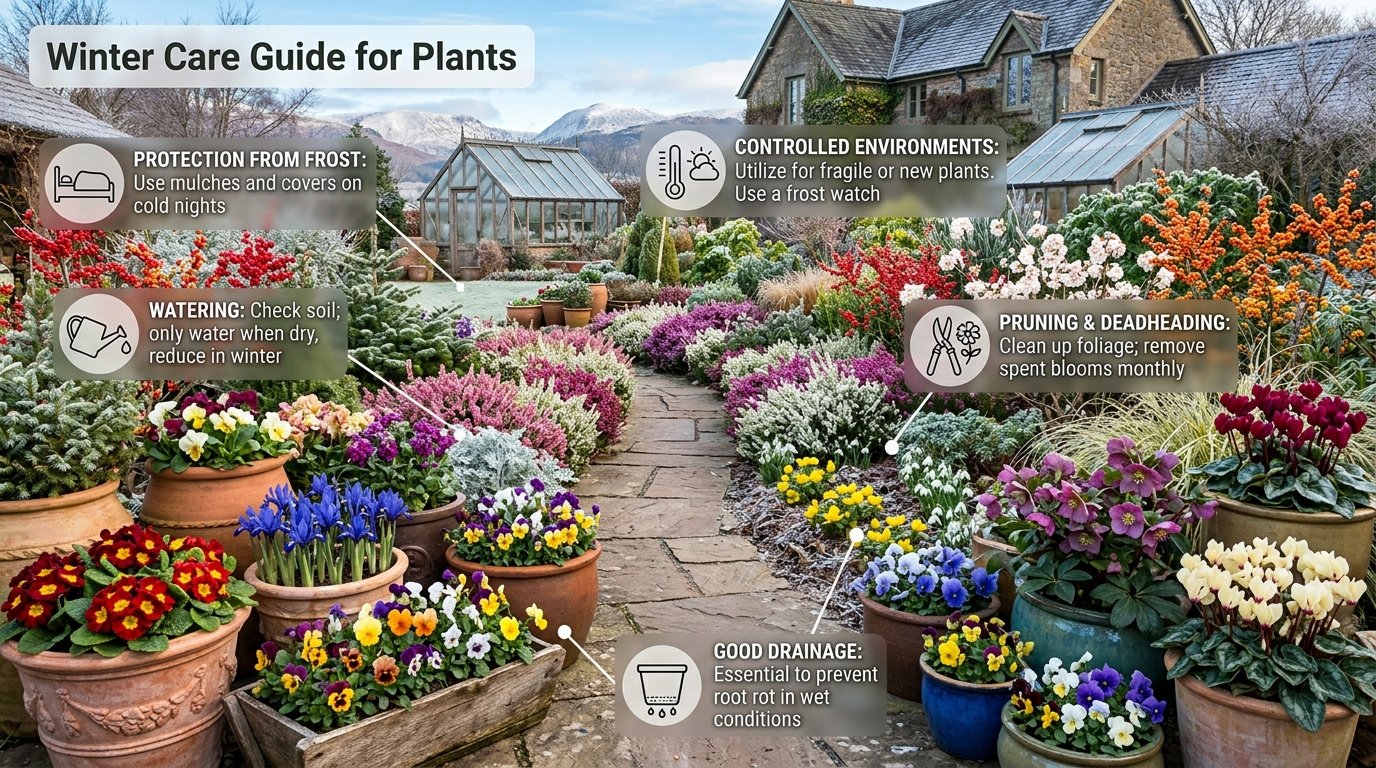
Quick Answer
Winter flowers plants are flowering plants that thrive in cool weather and can add color to gardens, balconies, patios, and containers during the colder months.
Popular choices include pansies, violas, snapdragons, calendula, sweet alyssum, cyclamen, primrose, dianthus, flowering kale, and hellebores. The best choice depends on your winter temperatures, sunlight, soil drainage, and whether you are growing plants outdoors or in containers.
Introduction
Winter does not have to mean a garden filled with bare stems and dull foliage. With the right winter flowers plants, you can maintain colorful blooms even when temperatures fall and many warm-season plants stop flowering.
The key is choosing plants that naturally tolerate cool conditions rather than trying to force summer flowers to survive unfavorable weather. Some winter flowering plants prefer mild temperatures, while others can withstand frost and short periods of freezing weather.
For beginners, the biggest mistake is assuming that every winter flower needs the same care. In reality, watering, sunlight, frost protection, soil drainage, and planting time can make a major difference. A plant that performs beautifully in a mild winter may struggle in a region with hard freezes.
This guide explains which winter flowers are worth growing, how to choose them, how to care for them, and how to keep your winter garden looking attractive for as long as possible.
What Are Winter Flowers Plants?
Winter flowers plants are flowering plants that can grow, flower, or remain productive during cool-season conditions. Some bloom primarily during winter, while others begin flowering in fall and continue through winter and early spring.
They are especially useful for:
- Garden beds.
- Window boxes.
- Balcony containers.
- Patio pots.
- Cottage gardens.
- Borders and pathways.
- Shaded garden areas.
- Cool-season vegetable and ornamental gardens.
Not every plant described as a “winter flower” is equally cold-hardy. Some tolerate light frost but suffer during prolonged freezing temperatures, while others can survive much colder conditions.
The important distinction is your local climate. Winter in a mild region may mean cool nights and sunny days, while winter in a colder region can involve snow, frozen soil, and repeated hard freezes.
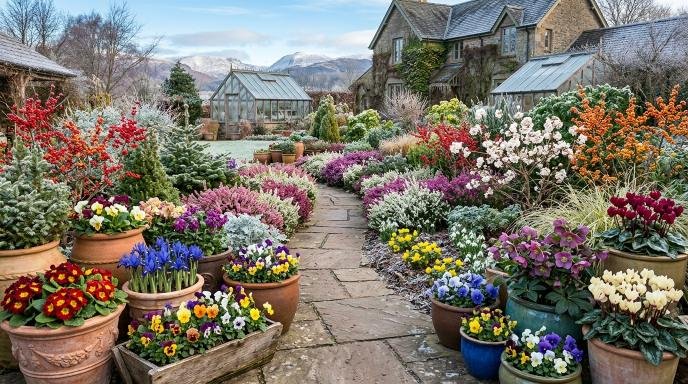
Best Winter Flowers Plants to Grow
There is no single best winter flower for every garden. The strongest choices are plants that match your temperature range, available sunlight, and growing conditions.
1. Pansies
Pansies are among the most popular winter flowering plants because they tolerate cool temperatures and produce cheerful flowers in numerous colors.
Their flowers may appear in purple, yellow, white, blue, orange, red, or combinations of several shades.
Why grow pansies:
- Excellent cool-weather performance.
- Suitable for containers.
- Available in many colors.
- Useful for borders and flower beds.
- Can tolerate light frost.
- Continue flowering during favorable cool weather.
Pansies generally perform best in a sunny or partly sunny location with well-draining soil.
A common mistake is planting them in heavy, constantly wet soil. Cool weather slows evaporation, so excessive moisture can remain around the roots and encourage root problems.
2. Violas
Violas are closely related to pansies but generally produce smaller flowers. Their compact growth makes them particularly useful for containers, borders, and areas where space is limited.
They are excellent for creating a dense carpet of winter color.
Violas usually appreciate:
- Bright light.
- Moist but well-drained soil.
- Regular removal of faded flowers.
- Protection from extreme heat.
Practical tip: If you want a natural-looking winter display, combine several viola colors rather than planting a single shade.
3. Snapdragons
Snapdragons are valuable winter flowers in regions with mild to moderate winters. Their tall flower spikes provide vertical interest that low-growing pansies and violas cannot provide.
They come in numerous colors and can work particularly well at the back of flower beds.
Snapdragons prefer plenty of sunlight and fertile, well-draining soil.
Because their flower stems can become tall, windy locations may require support.
4. Calendula
Calendula is a dependable cool-season flowering plant known for its bright yellow and orange blooms.
It is particularly useful for gardeners who want a cheerful color during cooler months.
Calendula generally prefers:
- Full sun.
- Well-drained soil.
- Moderate watering.
- Regular removal of spent flowers.
Avoid keeping the soil continuously saturated. Winter plants still need oxygen around their roots.
5. Sweet Alyssum
Sweet alyssum produces clusters of small flowers and is particularly useful as a border or filler plant.
Its low-growing habit allows it to soften the edges of containers and garden beds.
It can also be planted around taller winter flowers to create layers of height.
One useful design approach is to combine sweet alyssum with upright flowers such as snapdragons. The taller plants create vertical structure while alyssum fills the lower level.
6. Cyclamen
Cyclamen is one of the most attractive choices for cool-season containers and sheltered outdoor locations.
Its flowers rise above attractive foliage, creating a polished appearance even when the garden is otherwise quiet.
Cyclamen generally prefers cool conditions and indirect or filtered light rather than intense heat.
Overwatering is one of the easiest ways to damage cyclamen. Allow the growing medium to dry slightly between waterings rather than keeping it constantly wet.
Important: Cyclamen varieties differ considerably in their cold tolerance, so check the specific variety before exposing it to freezing conditions.
7. Primrose
Primrose is another classic cool-season flowering plant. Its bright flowers can provide an immediate burst of color in containers and beds.
Primroses usually appreciate cool temperatures, adequate moisture, and protection from harsh afternoon heat.
They can be particularly effective in partly shaded areas where some sun-loving winter flowers may struggle.
8. Dianthus
Dianthus includes many attractive flowering plants that can perform well during cool weather.
Depending on the species and local climate, dianthus may provide flowers through cool seasons and continue into spring.
They generally prefer:
- Good sunlight.
- Excellent drainage.
- Moderate watering.
- Air circulation around the foliage.
Dianthus is a good choice when you want a plant that provides both flowers and attractive foliage.
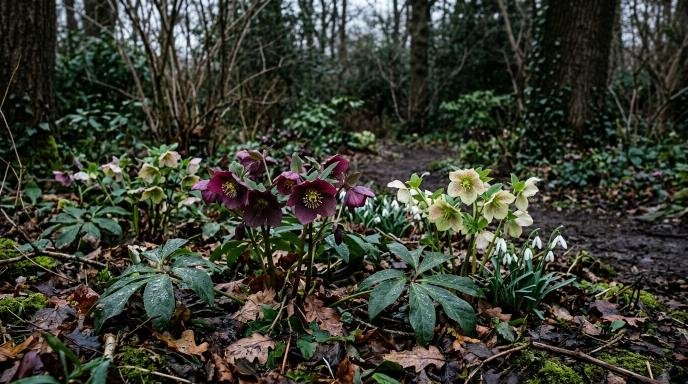
9. Hellebores
Hellebores are particularly valuable for gardeners in regions with cold winters because several types can flower during late winter and early spring.
They are often called winter roses because of their rose-like flowers, although they are not true roses.
Hellebores are especially useful for partially shaded gardens.
Once established, they can become long-lived additions to a garden rather than temporary seasonal color.
10. Flowering Kale and Flowering Cabbage
Flowering kale and flowering cabbage are grown primarily for their colorful foliage rather than traditional flowers.
Their leaves can develop shades of purple, pink, white, and green as temperatures cool.
They are excellent for:
- Winter containers.
- Front borders.
- Mixed seasonal displays.
- Decorative planters.
Their strong foliage can also provide visual interest after other seasonal flowers have finished blooming.
Best Winter Flowers Plants by Growing Condition
Choosing plants based on your garden’s conditions is often more successful than choosing them simply because they look attractive.
| Growing Condition | Good Choices |
|---|---|
| Full sun | Pansy, calendula, snapdragon, dianthus |
| Partial shade | Primrose, viola, hellebore |
| Containers | Pansy, viola, cyclamen, primrose |
| Low-growing borders | Viola, sweet alyssum, pansy |
| Vertical interest | Snapdragon, dianthus |
| Cold-tolerant gardens | Pansy, viola, hellebore, flowering kale |
| Mild winter areas | Calendula, snapdragon, cyclamen, sweet alyssum |
The exact performance will depend on the variety and your local winter temperatures.
How to Choose Winter Flowers for Your Climate
Climate should be the first consideration when selecting winter flowers plants.
Mild Winters
If winter temperatures remain relatively moderate, you have a wider selection.
You can grow plants such as:
- Pansies.
- Violas.
- Snapdragons.
- Calendula.
- Sweet alyssum.
- Cyclamen.
- Primrose.
- Dianthus.
The main challenge may actually be warm spells rather than freezing weather. A sudden period of warmth can cause cool-season plants to flower heavily and become stressed when temperatures rise again.
Cold Winters
In colder climates, prioritize plants known for stronger frost tolerance.
Pansies and violas can tolerate considerable cold, while hellebores and certain ornamental brassicas can provide additional winter interest.
However, hardiness varies by species and cultivar. A plant’s ability to tolerate a brief frost does not necessarily mean it can survive frozen soil for weeks.
Areas With Occasional Frost
If frost occurs only occasionally, focus on plants that can tolerate cool weather while keeping a simple frost-protection strategy available.
Lightweight frost cloth, sheltered positioning, and moving container plants to protected areas can prevent unnecessary damage during short cold snaps.
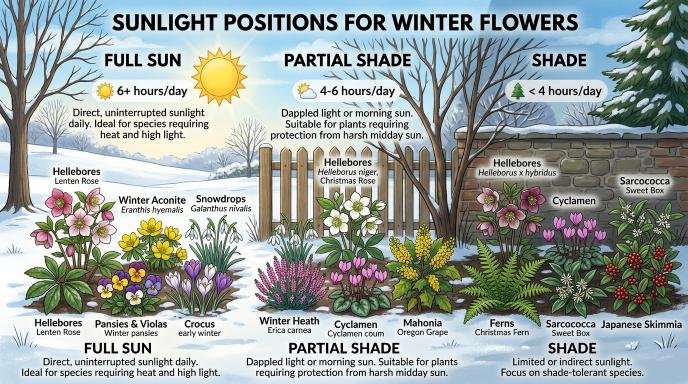
How Much Sun Do Winter Flowers Need?
Most flowering plants need sufficient light to produce strong growth and abundant blooms.
A sunny winter location can be particularly valuable because the sun is lower in the sky and daylight hours are shorter than during summer.
For many winter flowers:
- Full sun means roughly six or more hours of direct sunlight.
- Partial shade provides less direct sunlight, often with protection during the strongest part of the day.
- Deep shade can reduce flowering considerably.
If a winter flower produces lots of leaves but very few flowers, insufficient light may be one of the first things to investigate.
Watering Winter Flowers Correctly
Watering is one of the most misunderstood parts of winter flower care.
Cool weather usually reduces evaporation, meaning plants may need water less frequently than they did during warmer months.
Instead of following a rigid watering schedule, check the soil.
Water when the upper layer of soil has started to dry, while avoiding prolonged saturation.
Signs of Too Much Water
Watch for:
- Yellowing leaves.
- Soft or collapsing stems.
- Persistent wet soil.
- Root problems.
- Mold or fungal growth.
- Sudden decline despite frequent watering.
Signs of Too Little Water
Look for:
- Wilting.
- Dry, shrinking soil.
- Crispy leaf edges.
- Drooping flowers.
- Slow growth.
Expert tip: A container exposed to winter rain can require far less additional irrigation than a container protected under a roof. Always consider rainfall before watering.
The Best Soil for Winter Flowering Plants
Well-draining soil is particularly important during winter because low temperatures can slow evaporation.
A good growing medium should hold enough moisture for healthy roots while allowing excess water to drain away.
For containers, always use pots with drainage holes.
Avoid placing a container directly inside a decorative cachepot where excess water can accumulate around the roots.
For garden beds with poor drainage, improving the soil structure before planting is more effective than repeatedly trying to rescue plants after waterlogging occurs.
Fertilizing Winter Flowers
Winter flowering plants generally do not need aggressive fertilization.
If plants are actively growing and flowering, a balanced fertilizer may be useful depending on the plant and soil conditions.
However, excessive fertilizer can encourage soft, leafy growth rather than healthy flowering and can contribute to salt buildup in containers.
A better approach is to:
- Start with healthy soil or quality potting mix.
- Follow the fertilizer label for the specific plant.
- Avoid excessive feeding.
- Reduce or stop fertilizing when growth naturally slows.
- Resume feeding when active growth returns if appropriate.
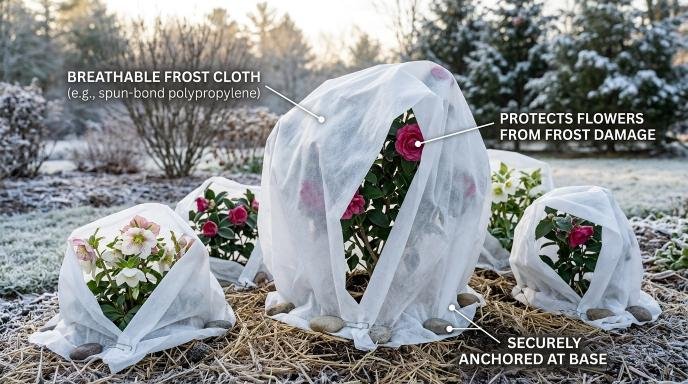
How to Protect Winter Flowers From Frost
Frost protection becomes important when temperatures are expected to fall below what a particular plant can tolerate.
For Garden Plants
You can:
- Cover vulnerable plants with frost cloth.
- Place a layer of mulch around roots.
- Move tender plants away from exposed locations.
- Avoid unnecessary pruning immediately before severe cold.
- Use sheltered areas near walls or structures.
Do not place heavy plastic directly against foliage during freezing weather. It can trap moisture and cause physical damage.
For Container Plants
Containers are more vulnerable because their roots are exposed to cold air on multiple sides.
During severe cold:
- Move containers to a sheltered location.
- Group pots together.
- Place them near a protected wall.
- Protect exposed containers from freezing winds.
- Use appropriate insulation around the container when necessary.
How to Keep Winter Flowers Blooming Longer
Long-lasting winter color is mostly about reducing stress.
Deadhead Regularly
Remove faded flowers when appropriate. This keeps the plant looking tidy and may encourage continued flowering in plants that respond well to deadheading.
Avoid Overwatering
Constantly wet roots can cause more problems than moderately dry soil.
Provide Adequate Light
Even cold-tolerant flowers need enough light to maintain vigorous growth.
Remove Damaged Growth
After frost or severe weather, wait until the extent of damage is clear before making major pruning decisions.
Avoid Crowding
Good air circulation reduces humidity around foliage and can help lower the risk of fungal problems.
Common Mistakes When Growing Winter Flowers
Planting Without Checking Cold Tolerance
A beautiful plant at a garden center is not automatically suitable for your winter.
Better approach: Check the plant’s temperature tolerance and compare it with your local winter conditions.
Watering on a Summer Schedule
Winter soil usually dries more slowly.
Better approach: Check soil moisture before watering.
Choosing Plants Only for Flower Color
Color matters, but sunlight, drainage, and temperature tolerance matter more.
A perfectly colored plant in the wrong location will often perform worse than a less flashy plant that matches the conditions.
Ignoring Drainage
Cold plus saturated soil is a difficult combination for roots.
Better approach: Use drainage holes in containers and improve poorly draining beds before planting.
Using Too Much Fertilizer
More fertilizer does not automatically mean more flowers.
Better approach: Feed according to plant needs and label directions.
Forgetting Container Roots
A plant growing in the ground has more thermal buffering than one growing in a small pot.
Container plants may need extra protection during severe cold.
Winter Flowers Plants for Containers
Containers are one of the easiest ways to create a winter display, especially when garden space is limited.
A simple container combination can include:
- One tall plant for height.
- One medium-sized flowering plant for the central layer.
- One trailing or spreading plant for the edge.
For example, a container could combine snapdragons, pansies, and sweet alyssum.
The result provides three different growth levels rather than a flat arrangement.
Design tip: Choose plants with similar light and watering requirements. A beautiful combination will become difficult to maintain if one plant needs dramatically different conditions from the others.
How to Create a Winter Flower Garden
A successful winter garden does not need dozens of different species.
Start with a simple structure.
Step 1: Observe the Site
Identify how many hours of direct sunlight the area receives.
Step 2: Check Drainage
After watering or rainfall, observe how quickly excess water disappears.
Step 3: Determine Your Winter Temperatures
Know whether your garden experiences mild cold, occasional frost, repeated freezing, or prolonged freezing conditions.
Step 4: Choose Compatible Plants
Select flowers that can tolerate the site’s light and temperature conditions.
Step 5: Prepare the Soil
Improve drainage and incorporate suitable organic matter when needed.
Step 6: Plant With Enough Space
Crowded plants compete for resources and may have poorer air circulation.
Step 7: Monitor Moisture
Check soil regularly rather than automatically watering on a fixed schedule.
Step 8: Protect During Extreme Weather
Use frost protection when temperatures are expected to exceed the plants’ tolerance.
Step 9: Remove Faded Flowers
Deadhead suitable plants to maintain a tidy appearance and encourage continued flowering.
Step 10: Prepare for Spring
As temperatures rise, reassess whether cool-season plants should remain or be replaced with warm-season flowers.
Winter Flowers vs Summer Flowers
Winter and summer flowers have different environmental preferences.
| Feature | Winter Flowers | Summer Flowers |
|---|---|---|
| Preferred conditions | Cool to mild | Warm to hot |
| Typical examples | Pansy, viola, calendula | Marigold, zinnia, petunia |
| Heat tolerance | Often limited | Usually higher |
| Frost tolerance | Often better | Usually poor |
| Water needs | Often moderate | Can be higher |
| Main challenge | Frost and excess moisture | Heat and rapid drying |
Understanding this difference helps prevent the common mistake of expecting one seasonal plant group to perform year-round.
Best Winter Flowers for Beginners
If you are growing winter flowers for the first time, start with plants that are relatively forgiving.
Good beginner options include:
- Pansies.
- Violas.
- Calendula.
- Sweet alyssum.
- Snapdragons.
- Flowering kale.
- Primrose.
Pansies and violas are particularly useful because they work well in both containers and garden beds and provide immediate visual impact.
Best Winter Flowers for Small Spaces
You do not need a large garden to enjoy winter flowers.
For balconies, windowsills, patios, and small courtyards, consider:
- Violas.
- Pansies.
- Cyclamen.
- Primrose.
- Sweet alyssum.
- Compact dianthus.
Vertical planters and railing containers can increase growing space without requiring additional ground area.
Image Suggestion: Small balcony decorated with winter flowers in colorful containers.
Winter Flowers for Shade
Deep shade limits the number of flowering plants that will bloom strongly, but partial shade still provides several options.
Hellebores and primroses can be useful choices, depending on the local climate and exact light conditions.
Remember that shade in winter can be very different from shade in summer. A location shaded by a deciduous tree may receive considerably more sunlight after the tree loses its leaves.
Winter Flower Garden Design Ideas
A winter garden looks more interesting when it combines different forms rather than relying on flowers alone.
Try combining:
- Tall snapdragons.
- Medium-height dianthus.
- Low-growing violas.
- Foliage plants such as flowering kale.
- Evergreen structural plants.
Use repeated colors throughout the garden to create visual consistency.
For example, purple and white flowers repeated across several containers can make a small garden feel much more intentional.
When Should You Plant Winter Flowers?
Planting time depends heavily on climate.
In many areas, cool-season flowers are planted during fall so they can establish roots before the coldest part of winter.
In mild climates, planting may continue through winter.
In colder regions, plants may need to be established before the ground freezes or grown in protected containers.
The best strategy is to plant according to your local seasonal temperatures rather than relying on one universal calendar date.
Can Winter Flowers Survive Snow and Frost?
Some winter flowers can tolerate frost and even short periods of freezing temperatures, but tolerance varies significantly between species and cultivars.
Snow can sometimes provide insulation around plants, while repeated freeze-thaw cycles can cause more serious stress.
If a plant is known to be frost-sensitive, protect it before severe weather rather than waiting until damage appears.
A damaged plant may recover, but prevention is usually easier than recovery.
How to Tell if a Winter Flower Is Dying
Not every damaged-looking winter plant is dead.
After frost, leaves may become limp, dark, or discolored while the roots and growing points remain alive.
Before removing a damaged plant:
- Check whether stems remain firm.
- Look for healthy growth near the base.
- Wait for temperatures to stabilize.
- Remove clearly dead tissue gradually.
- Monitor for new growth.
Patience is particularly important after frost damage.
A Simple Winter Flower Maintenance Routine
A weekly inspection can prevent many problems.
Check:
- Soil moisture.
- Drainage.
- Frost damage.
- Pests.
- Spent flowers.
- Yellowing leaves.
- Broken stems.
- Crowded growth.
- Container drainage holes.
This takes only a few minutes but can reveal problems before they become severe.
Frequently Asked Questions
What are the best winter flowers plants?
Pansies, violas, snapdragons, calendula, sweet alyssum, cyclamen, primrose, dianthus, hellebores, and flowering kale are among the most useful winter-season choices. The best option depends on your local temperatures, sunlight, and drainage.
Which winter flowers are easiest to grow?
Pansies and violas are excellent choices for beginners because they tolerate cool weather and grow successfully in containers and garden beds when provided with suitable light and well-draining soil.
Can winter flowers grow in pots?
Yes. Many winter flowers perform very well in containers. Pansies, violas, cyclamen, primrose, and sweet alyssum are especially suitable. Use containers with drainage holes and avoid leaving roots in standing water.
How often should I water winter flowers?
Watering frequency depends on temperature, rainfall, soil, and container size. Check the soil before watering and water when it has begun to dry rather than following a fixed summer watering schedule.
Do winter flowers need full sun?
Many winter flowering plants bloom best with several hours of sunlight, but some tolerate partial shade. Pansies, violas, calendula, and snapdragons generally appreciate good light, while plants such as hellebores can perform well in partial shade.
Should I fertilize winter flowers?
Active flowering plants may benefit from appropriate fertilization, but heavy feeding is usually unnecessary. Follow the requirements of the specific plant and avoid applying more fertilizer simply to encourage additional flowers.
How do I protect winter flowers from frost?
Use frost cloth for vulnerable plants, move container plants to sheltered locations, mulch around outdoor plants, and avoid exposing tender plants to severe freezing conditions. Protection requirements depend on the plant’s cold tolerance.
Can pansies survive winter?
Pansies are among the more cold-tolerant seasonal flowers and can survive substantial cold in appropriate climates. Their performance still depends on the cultivar, local temperatures, soil conditions, and duration of freezing weather.
What winter flowers grow well in shade?
Hellebores and primroses can be useful choices for partially shaded locations. However, flowering generally decreases as available light becomes very low.
When should winter flowers be replaced?
Cool-season flowers may naturally decline when temperatures become consistently warm. At that point, you can remove declining plants and transition the garden to warm-season flowers suited to the upcoming conditions.
Conclusion
The best winter flowers plants are not simply the ones with the brightest blooms. They are plants that match your winter temperatures, sunlight, soil drainage, and available growing space.
Pansies and violas are excellent starting points for beginners, while snapdragons provide height, calendula adds bright seasonal color, cyclamen works beautifully in sheltered containers, and hellebores can bring elegant flowers to cooler, partially shaded gardens.
The most important winter-care lesson is to avoid treating cool-season plants like summer plants. Check the soil before watering, provide adequate light, protect vulnerable plants during severe frost, and choose varieties suited to your climate.
With the right plant selection and a little seasonal maintenance, a winter garden can remain colorful, healthy, and visually interesting long after many summer flowers have disappeared.