Quick Answer
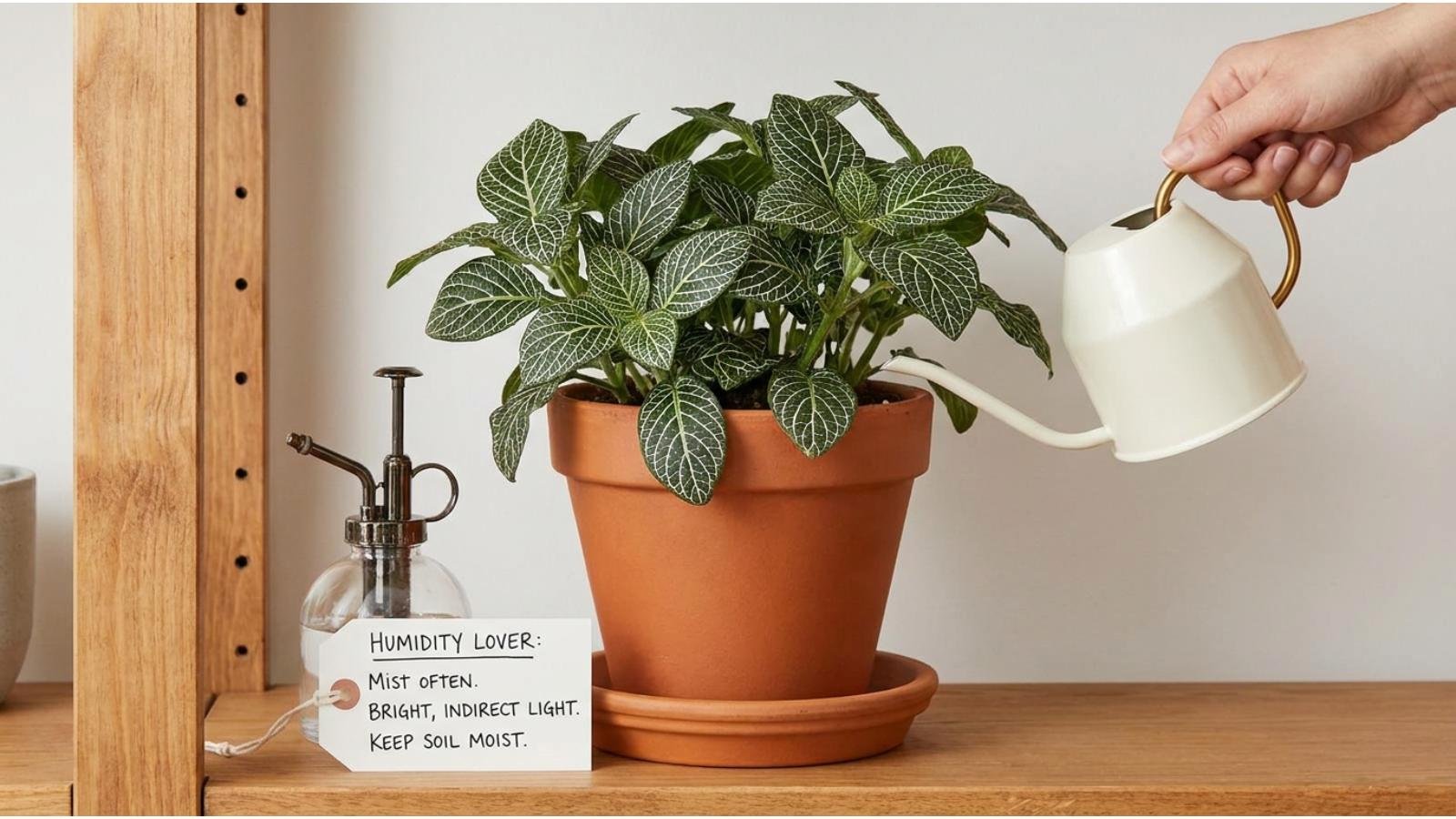
Nerve plant care is mainly about balancing bright indirect light, consistently moist but well-draining soil, warmth, and high humidity. Nerve plants, also called Fittonia or mosaic plants, naturally grow in humid tropical forests, so they struggle when exposed to harsh direct sun, dry air, or prolonged drought. Keep the soil lightly moist without making it waterlogged, maintain temperatures above about 60°F (15°C), and provide filtered light for healthy, colorful foliage.
Introduction
With its small leaves marked by striking white, pink, or red veins, the nerve plant is one of the most distinctive compact houseplants you can grow. Its botanical name is Fittonia albivenis, and it is commonly sold as nerve plant, mosaic plant, network plant, or silver nerve. It is naturally a low-growing, spreading plant from tropical South America, where warm temperatures, filtered light, and humid air are common.
The good news is that nerve plant care isn’t complicated once you understand what the plant is trying to tell you. The biggest challenge is consistency. Fittonia can wilt dramatically when it becomes too dry, yet constantly wet soil can encourage root problems. Finding the middle ground is the key to keeping it attractive.
Nerve Plant Care at a Glance
| Care Requirement | Best Conditions |
|---|---|
| Botanical name | Fittonia albivenis |
| Common names | Nerve plant, mosaic plant, network plant |
| Light | Bright, indirect or filtered light |
| Direct sun | Avoid harsh direct sunlight |
| Water | Keep soil lightly and consistently moist |
| Humidity | High humidity preferred |
| Temperature | Ideally above 60°F (15°C) |
| Soil | Moisture-retentive but well-draining |
| Growth habit | Low-growing and spreading |
| Feeding | Light, occasional fertilizing |
| Propagation | Stem cuttings or division |
| Best location | Humid bathroom, terrarium, or bright indoor area |
These conditions reflect guidance from the Royal Horticultural Society and university extension resources.
What Is a Nerve Plant?
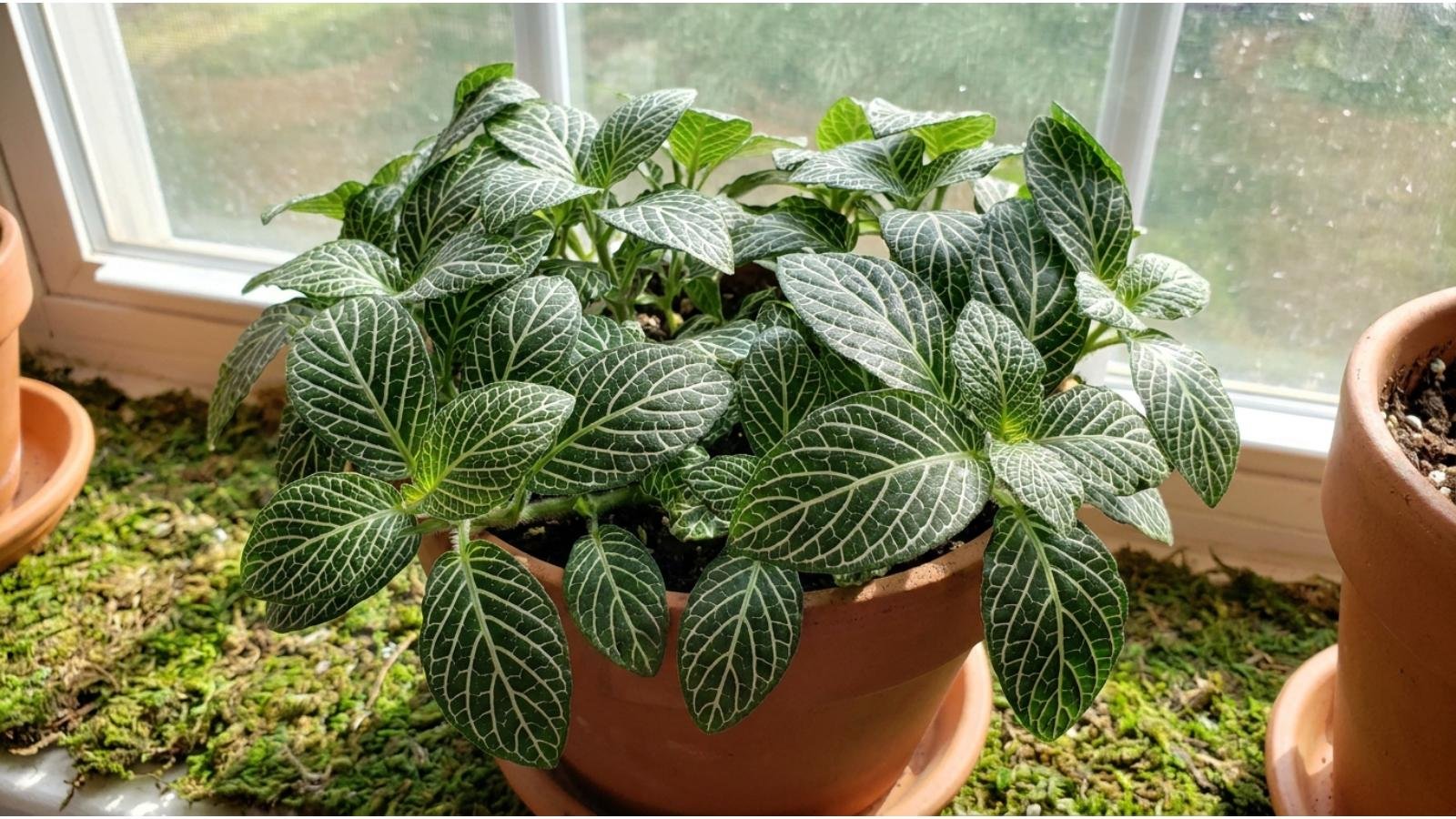
The nerve plant belongs to the genus Fittonia in the Acanthaceae family. It is an evergreen perennial with creeping stems and oval leaves decorated with contrasting veins.
Depending on the cultivar, the veins can be:
- White or silvery.
- Pink.
- Red.
- Lime or yellow-green.
Fittonia stays relatively small and spreads outward rather than growing tall. This makes it especially useful for small containers, terrariums, shelves, and indoor plant displays.
Why Are They Called Nerve Plants?
The colorful veins running through the leaves resemble a network of tiny nerves. This distinctive pattern is also why Fittonia is sometimes called a network plant or mosaic plant.
Image Suggestion: Close-up illustration labeling the veins, leaves, stems, and spreading growth habit of a Fittonia nerve plant.
How Much Light Does a Nerve Plant Need?
Nerve plants prefer bright, indirect light rather than intense direct sunlight.
An east-facing window can work particularly well, while a bright location near a north-facing window may also be suitable depending on the amount of available light. The important point is to protect the foliage from strong, hot direct sun.
Signs of Too Much Light
You may notice:
- Scorched or faded leaves.
- Brown patches.
- Crispy leaf edges.
- Overall leaf stress.
Signs of Too Little Light
Low light can contribute to:
- Yellowing foliage.
- Weak or stretched growth.
- Less vigorous spreading.
Practical Tip
Don’t assume that a dark corner is ideal simply because Fittonia dislikes direct sun. Indirect light does not mean no light. Place it somewhere bright but protected from intense rays.
How to Water a Nerve Plant
Watering is one of the most important parts of nerve plant care.
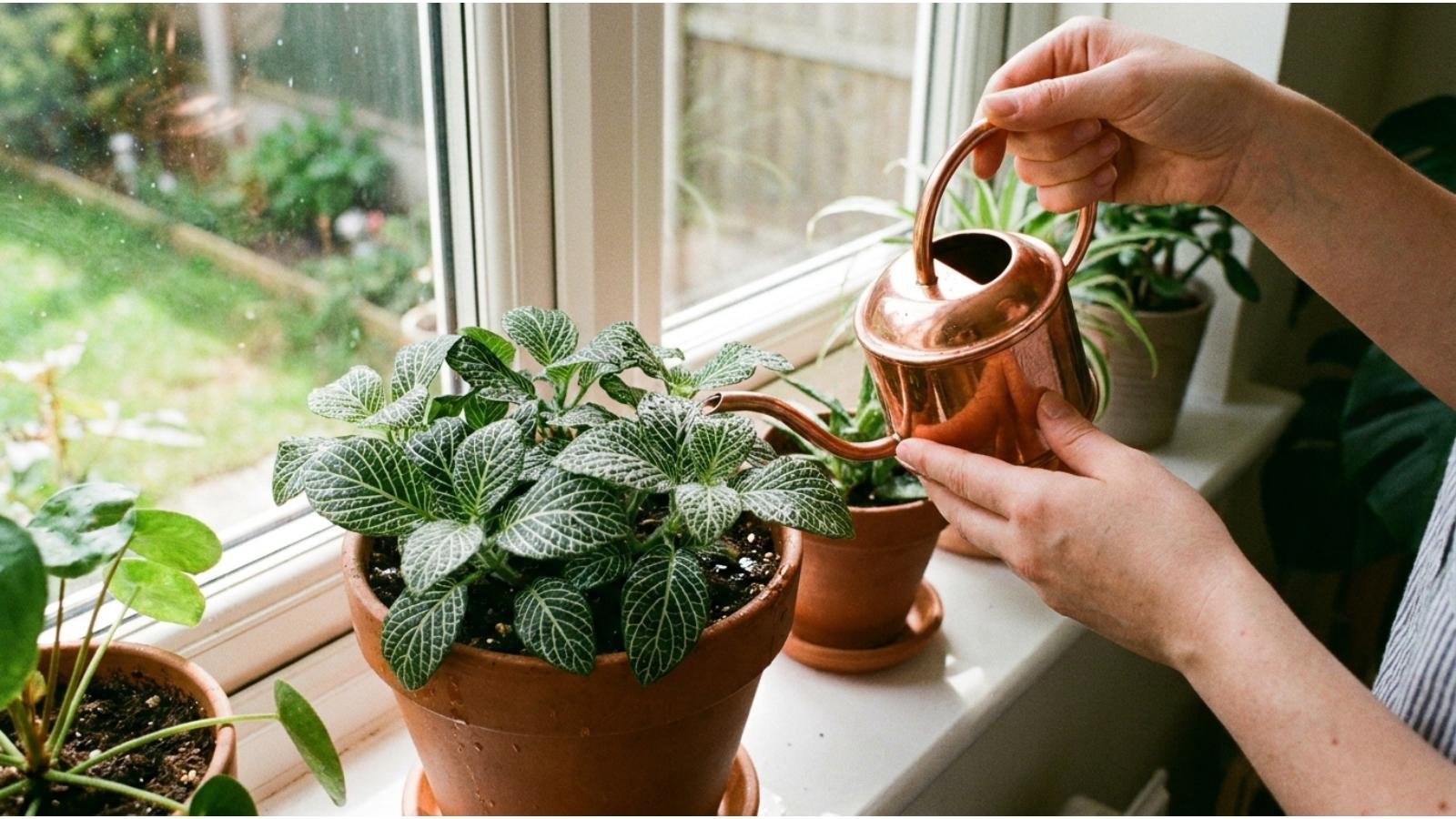
Fittonia prefers soil that remains moist but not waterlogged. The frequent watering to keep the compost moist, while also warning against conditions that keep the roots excessively wet.
A useful routine is:
- Check the soil regularly.
- Water when the surface is beginning to dry.
- Water thoroughly so the root zone is moistened.
- Allow excess water to drain away.
- Don’t leave the pot sitting in collected water.
What Happens If a Nerve Plant Gets Too Dry?
Fittonia has a dramatic response to drought: the leaves can droop severely.
This can make a healthy plant look almost dead within a short period. Fortunately, a wilted nerve plant will often recover after thorough watering if the roots and stems have not suffered prolonged damage.
This dramatic wilting is useful as an early warning, but you shouldn’t deliberately wait for severe wilting before watering.
What Happens If You Overwater It?
Constantly saturated soil can create the opposite problem.
Potential signs include:
- Yellowing leaves.
- Persistent limp growth.
- Poor root health.
- Rot-related decline.
The goal isn’t simply to give the plant more water. The goal is to maintain moisture while allowing excess water to escape.
Best Soil for Nerve Plants
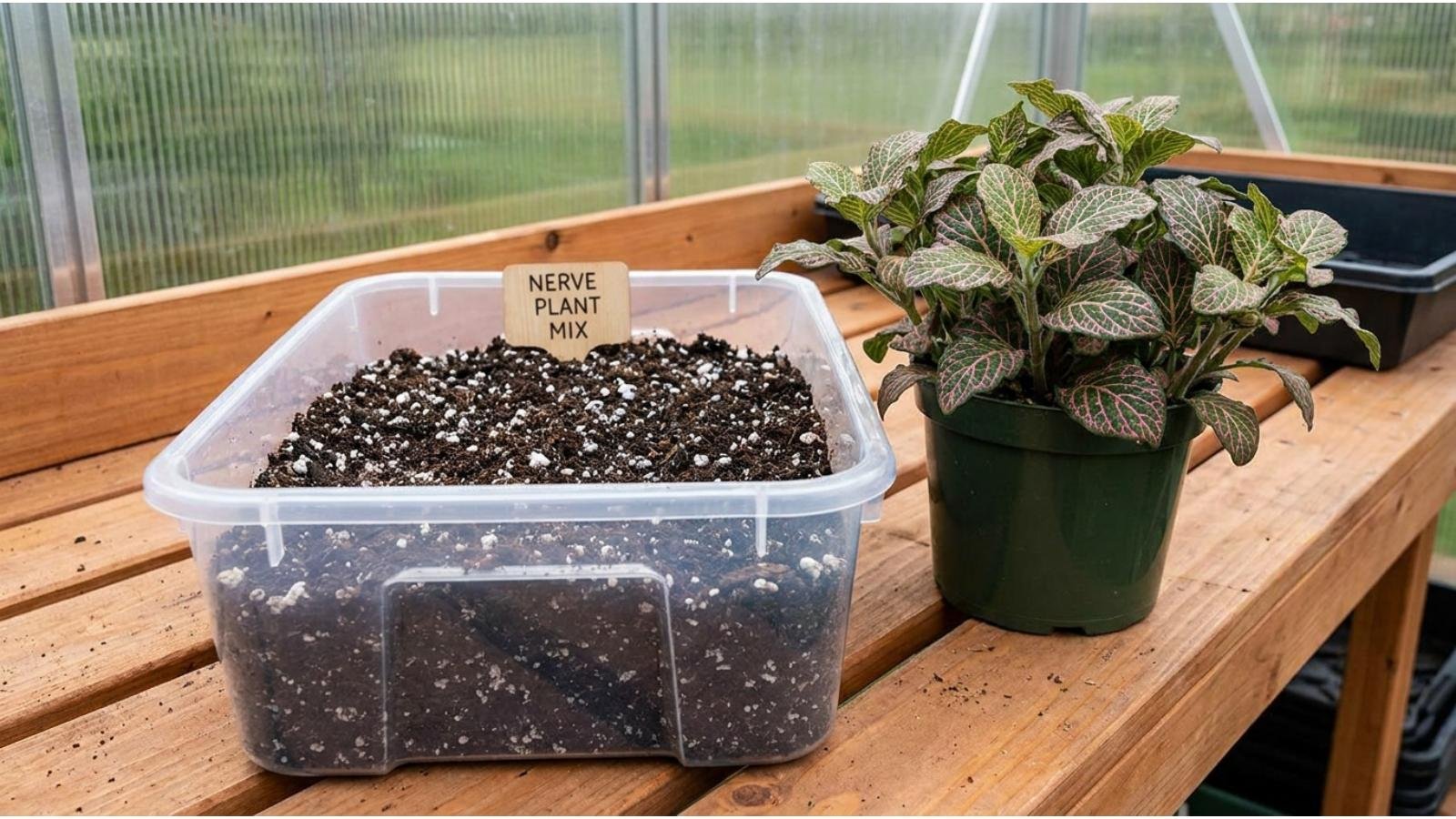
Choose a moisture-retentive but well-draining houseplant mix.
The moisture-retentive, peat-free houseplant compost and emphasizes avoiding waterlogged conditions.
A practical mix can contain:
- Quality indoor potting mix.
- Coir or another moisture-retaining component.
- Perlite or another material that improves drainage.
The exact recipe isn’t as important as the result: the soil should hold enough moisture for Fittonia without becoming a permanently soggy mass.
Why Drainage Matters
A common beginner mistake is to respond to Fittonia’s need for moisture by using extremely dense soil and watering constantly.
That’s backwards.
Moist soil and waterlogged soil are not the same thing.
Good drainage gives you more room for error and helps prevent roots from remaining saturated for too long.
How Much Humidity Does a Nerve Plant Need?
High humidity is one of the defining requirements of Fittonia care.
In nature, Fittonias grow in humid tropical environments. Indoors, they generally perform best when the surrounding air isn’t excessively dry.
Good Locations for High Humidity
Consider placing a nerve plant in:
- A bright bathroom.
- A humid kitchen.
- A terrarium.
- Near other humidity-loving plants.
- A room where indoor humidity is naturally moderate to high.
A pebble tray can also increase humidity immediately around the plant, although it shouldn’t replace good overall growing conditions.
Why Are the Leaves Turning Brown?
Dry air can cause browning, particularly around the leaf edges. Low humidity is one of the conditions associated with brown Fittonia foliage.
If the plant is sitting beside a radiator, heater, air vent, or other drying heat source, move it to a more stable location.
Image Suggestion: Comparison graphic showing healthy Fittonia foliage beside leaves with brown edges caused by dry conditions.
Best Temperature for Nerve Plants
Nerve plants prefer warm indoor conditions and should be protected from cold drafts.
The keeping Fittonia at 15°C (60°F) or higher, with growth generally strongest in warmer rooms above approximately 17°C (63°F).
Keep the plant away from:
- Cold windows during winter.
- Exterior doors with frequent drafts.
- Air-conditioning vents.
- Very cold rooms.
- Radiators and other drying heat sources.
Temperature stability matters because a warm, humid plant can react poorly when suddenly exposed to cold, dry air.
How to Fertilize a Nerve Plant
Fittonia isn’t considered a heavy feeder.
The occasional feeding with a half-strength general-purpose or houseplant fertilizer approximately every two to three months.
Avoid the temptation to fertilize every time you water.
Too much fertilizer can lead to unnecessary salt buildup and doesn’t compensate for poor lighting, incorrect watering, or inadequate humidity.
A Simple Feeding Strategy
During active growth:
- Use a diluted balanced houseplant fertilizer.
- Follow the product’s dilution instructions.
- Feed occasionally rather than excessively.
- Reduce feeding when growth slows.
Does a Nerve Plant Need Pruning?
Regular pruning isn’t essential, but occasional trimming can improve the plant’s appearance.
Remove:
- Dead leaves.
- Damaged foliage.
- Dead stems.
- Extremely weak growth.
Fittonia naturally has a spreading habit, so you can also pinch or trim overly long stems if you want a fuller-looking plant.
A Useful Tip for Leggy Growth
If the plant looks sparse rather than compact, first check its growing conditions.
Leggy growth isn’t necessarily a pruning problem. Insufficient light can contribute to weak growth, so correct the environment before aggressively cutting the plant back.
When and How to Repot a Nerve Plant
Nerve plants are relatively slow-growing and compact, so they don’t usually require frequent repotting.
When repotting becomes necessary:
- Choose a container only slightly larger than the current root ball.
- Use fresh, moisture-retentive but well-draining potting mix.
- Carefully remove the plant from its existing pot.
- Check the roots for obvious damage.
- Replant at approximately the same depth.
- Water appropriately and return it to a warm, humid location.
Why Not Use a Huge Pot?
A much larger pot can hold excess moisture around a relatively small root system. Since Fittonia likes moisture but dislikes waterlogged conditions, choosing an appropriately sized container makes moisture management easier.
How to Propagate a Nerve Plant
Nerve plants are relatively easy to propagate from stem cuttings.
Stem Cutting Method
- Choose a healthy stem.
- Take a cutting approximately 2 inches (5 cm) long.
- Make the cut just below a leaf pair.
- Remove lower leaves if necessary.
- Place the cutting into moist propagation medium.
- Keep it warm and humid.
- Maintain consistent moisture while roots develop.
The taking healthy stem-tip cuttings in spring or summer and keeping them in a humid environment until well rooted.
Propagation by Division
Larger Fittonia clumps can also be divided.
Separate the root ball carefully and make sure each new section has several healthy stems before replanting.
Image Suggestion: Step-by-step infographic showing where to cut a Fittonia stem and how to place the cutting into propagation soil.
Why Is My Nerve Plant Wilting?
A wilted Fittonia is often reacting to insufficient moisture.
Unlike some drought-tolerant houseplants, nerve plants don’t appreciate being allowed to dry completely.
Check:
- Is the soil dry?
- Has the plant been exposed to hot sunlight?
- Is it close to a heater?
- Is the air extremely dry?
- Does the pot drain properly?
If the soil is dry, water thoroughly and observe the plant over the next several hours.
The Fittonia can recover quickly after thorough watering when wilting is caused by lack of water.
Important Distinction
If the soil is already saturated and the plant is still wilting, don’t automatically add more water.
Persistent wilting despite wet soil points toward a different problem and may indicate unhealthy roots or another environmental issue.
Why Are My Nerve Plant Leaves Turning Yellow?
Yellow leaves can have several causes, so look at the whole growing environment rather than assuming one problem.
Possible Causes
Insufficient light:
The identifies lack of light as a possible cause of leaf yellowing.
Excessive moisture:
Soil that remains waterlogged can damage roots and contribute to unhealthy foliage.
Natural aging:
An occasional older leaf turning yellow isn’t necessarily a serious problem.
What to Do
Check the light first, then examine the soil moisture and drainage.
Avoid changing several things at once. If you move the plant, drastically change watering, repot it, and fertilize simultaneously, it becomes difficult to determine what actually helped.
Why Are Nerve Plant Leaves Turning Brown?
Brown foliage is commonly associated with dry conditions, excessive direct sun, or heat stress.
Check whether your Fittonia is:
- Beside a radiator.
- Near a hot window.
- Receiving harsh direct sunlight.
- Growing in very dry indoor air.
- Being allowed to dry out repeatedly.
Trim severely damaged leaves if needed, then correct the environmental cause.
Can You Grow a Nerve Plant in a Terrarium?
Yes. Fittonia is particularly well suited to terrariums.
Its naturally compact, slow-growing habit and preference for humid conditions make it a popular terrarium plant. The Fittonia for terrariums and bottle gardens.
However, high humidity doesn’t mean you should create permanently saturated soil.
In a sealed environment, moisture loss is slower, so watering needs can be considerably lower than for a plant growing in an ordinary open pot.
Image Suggestion: Small glass terrarium featuring Fittonia, moss, and other compatible humidity-loving plants.
Common Nerve Plant Care Mistakes
1. Putting It in Harsh Sun
Fittonia needs light, but strong direct sunlight can scorch its foliage.
2. Letting the Soil Completely Dry
Repeated drought can cause dramatic wilting.
3. Keeping the Soil Permanently Soggy
Moisture-loving doesn’t mean swamp-loving. Fittonia still requires well-drained conditions.
4. Keeping It Near a Heater
Radiators and similar heat sources can create hot, dry air that stresses the leaves.
5. Treating Humidity as Optional
Dry indoor air can contribute to brown foliage.
6. Using an Oversized Pot
A very large container can make moisture management unnecessarily difficult.
7. Fertilizing Too Frequently
More fertilizer isn’t a substitute for proper light, water, humidity, and temperature.
Nerve Plant Care Problems at a Glance
| Problem | Likely Cause | First Step |
|---|---|---|
| Severe wilting | Soil too dry | Check moisture and water thoroughly if dry |
| Yellow leaves | Low light or excessive moisture | Check light and soil drainage |
| Brown edges | Low humidity or drying conditions | Increase humidity and remove heat stress |
| Scorched leaves | Direct sunlight | Move to filtered light |
| Leggy growth | Insufficient light | Move to brighter indirect light |
| Persistent wet soil | Poor drainage or overwatering | Improve drainage and watering routine |
| Mealybugs or mites | Pest infestation | Inspect foliage and isolate affected plant |
| Grey mold | Excessive moisture/poor conditions | Remove affected material and improve airflow |
Fittonia can be affected by sap-sucking pests such as mealybugs and red spider mites, while grey mold can also occur.
How to Make a Nerve Plant Fuller
If your Fittonia has long, sparse stems, focus on light and growing conditions before pruning heavily.
You can:
- Move it to brighter indirect light.
- Pinch excessively long stems.
- Remove damaged foliage.
- Propagate healthy cuttings.
- Replant rooted cuttings around the original plant for a fuller container.
Because Fittonia naturally spreads outward, several rooted cuttings can eventually create a much denser display.
Best Place to Put a Nerve Plant
The ideal location combines several requirements rather than optimizing just one.
A strong indoor position would be:
Bright filtered light + warm temperature + high humidity + stable moisture + no harsh drafts.
A bright bathroom can be excellent if it receives enough indirect light. A terrarium can be even easier from a humidity perspective, while an ordinary room can work if humidity and watering are managed carefully.
Nerve Plant Care Through the Seasons
Spring
This is a good period for active growth and propagation. Monitor moisture as the plant begins growing more vigorously.
Summer
Watch carefully for drying soil, intense sunlight, and excessive heat. Bright indirect light and consistent moisture are especially important.
Fall
Growth may slow as environmental conditions change. Avoid automatically maintaining a heavy summer feeding schedule.
Winter
Keep the plant away from cold drafts and drying heaters. Watering may need adjustment because indoor evaporation and plant growth can change.
The Fittonia warm and protected from cold drafts throughout cultivation.
Are Nerve Plants Difficult to Grow?
Nerve plants are moderately easy when their environmental preferences are respected.
They aren’t difficult because they require complicated techniques. They’re challenging because they respond quickly when moisture, humidity, temperature, or light moves outside their preferred range.
That dramatic wilting can actually help beginners learn to monitor their plants more closely.
Once you provide:
- Bright indirect light.
- Moist but well-drained soil.
- High humidity.
- Warm temperatures.
- Protection from direct sun and drafts.
Fittonia can become a rewarding and attractive houseplant.
Frequently Asked Questions
How often should I water a nerve plant?
There is no reliable fixed schedule because watering frequency depends on temperature, humidity, pot size, soil, and light. Check the soil regularly and water when it is beginning to dry rather than following a calendar.
Does Fittonia need direct sunlight?
No. Nerve plants generally perform best in bright, indirect or filtered light. Harsh direct sunlight can scorch their leaves.
Why does my nerve plant keep wilting?
The most common immediate reason is insufficient moisture. Check the soil first. If it is dry, water thoroughly. If the soil is already wet, investigate drainage, root health, temperature, and other environmental factors.
Can nerve plants grow in low light?
They tolerate less intense light than many sun-loving houseplants, but they still need adequate light for healthy growth. Very low light can contribute to yellowing and weak growth.
Do nerve plants like humidity?
Yes. High humidity is one of their key growing requirements, and Fittonia is particularly well suited to humid bathrooms and terrariums.
Can I grow Fittonia in a bathroom?
Yes, provided the bathroom receives sufficient indirect light. The combination of warmth and humidity can create an excellent environment for Fittonia.
Is Fittonia safe to grow in a terrarium?
Yes. Its compact size, spreading habit, and preference for humid conditions make it a strong terrarium candidate.
How do I make my nerve plant bushier?
Provide sufficient indirect light and pinch excessively long stems. You can also root healthy cuttings and plant them back into the container to create a denser display.
Can a wilted nerve plant recover?
Often, yes. Fittonia can recover remarkably well from temporary underwatering when it is watered thoroughly before prolonged dehydration causes serious damage.
How do I propagate Fittonia?
Stem-tip cuttings are a straightforward method. Take healthy approximately 2-inch cuttings, place them in moist propagation medium, and maintain warm, humid conditions while roots develop.
Final Thoughts on Nerve Plant Care
Successful nerve plant care comes down to recreating a small part of Fittonia’s natural environment: filtered light, warmth, humid air, and consistently available moisture without waterlogged soil.
The most useful habit is to watch the plant and its growing medium rather than follow a rigid watering calendar. Dramatic wilting, brown edges, yellow leaves, and scorched foliage are clues that something in the environment needs attention.
Give your Fittonia the right balance of moisture, humidity, light, and temperature, and its colorful veined foliage can remain one of the most eye-catching features in a small indoor plant collection.
Related internal-link opportunities: Fittonia propagation, terrarium plant care, indoor plant watering guide, houseplant humidity guide, and indoor plant troubleshooting.