Quick Answer
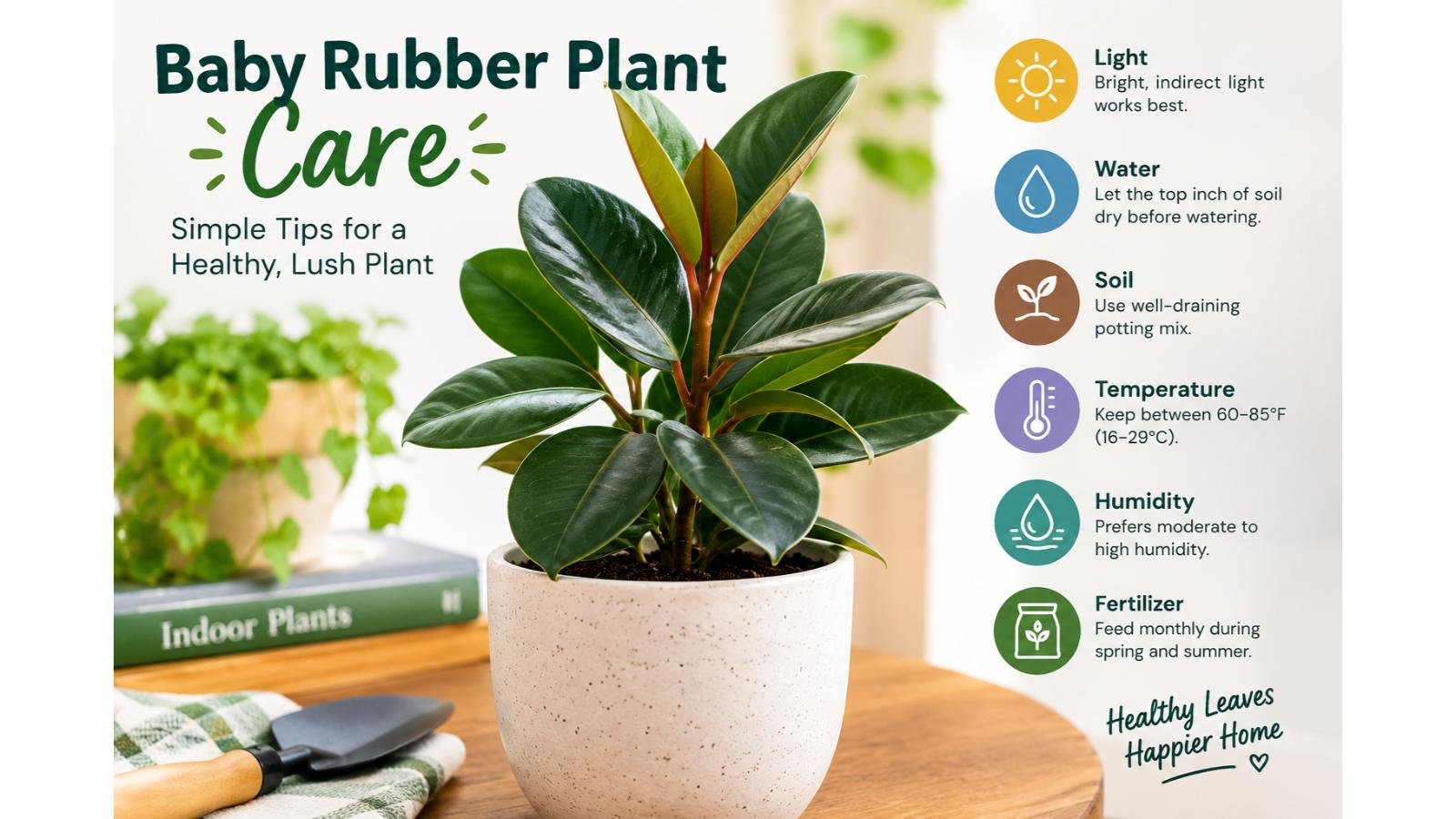
Baby rubber plant care is mainly about providing bright, indirect light, well-draining soil, moderate watering, and warm temperatures. The baby rubber plant, Peperomia obtusifolia, has thick, moisture-storing leaves, so it is more tolerant of occasional dryness than constantly wet soil. Allow the upper part of the potting mix to dry before watering again, use a container with drainage, and protect the plant from harsh direct sun and cold drafts.
Introduction
The baby rubber plant is one of those houseplants that can look almost effortless to grow—but its thick, glossy leaves can make it easy for beginners to misunderstand its watering needs.
Also known as Peperomia obtusifolia, the baby rubber plant is a compact evergreen perennial with fleshy, leathery leaves and an upright-to-spreading growth habit. Despite its common name, it is not a true rubber tree. It belongs to the pepper family, Piperaceae.
The biggest mistake with baby rubber plant care is usually not underwatering. It is keeping the roots wet for too long. Because the leaves can store moisture, the plant generally handles short dry periods better than persistently soggy soil.
With the right balance of light, watering, drainage, temperature, and feeding, this plant can remain compact and attractive for years.
Baby Rubber Plant Care at a Glance
| Care requirement | Best practice |
|---|---|
| Botanical name | Peperomia obtusifolia |
| Light | Bright, indirect or filtered light |
| Watering | Allow the upper soil to partially dry first |
| Soil | Loose, well-draining houseplant mix |
| Humidity | Average household humidity is usually adequate |
| Temperature | Around 65–86°F (18–30°C) is suitable |
| Pot | Container with drainage holes |
| Fertilizer | Balanced, diluted fertilizer during active growth |
| Growth habit | Compact, bushy or spreading |
| Repotting | Only when roots become crowded |
| Main problem | Overwatering and poor drainage |
| Propagation | Stem cuttings are an easy option |
What Is a Baby Rubber Plant?
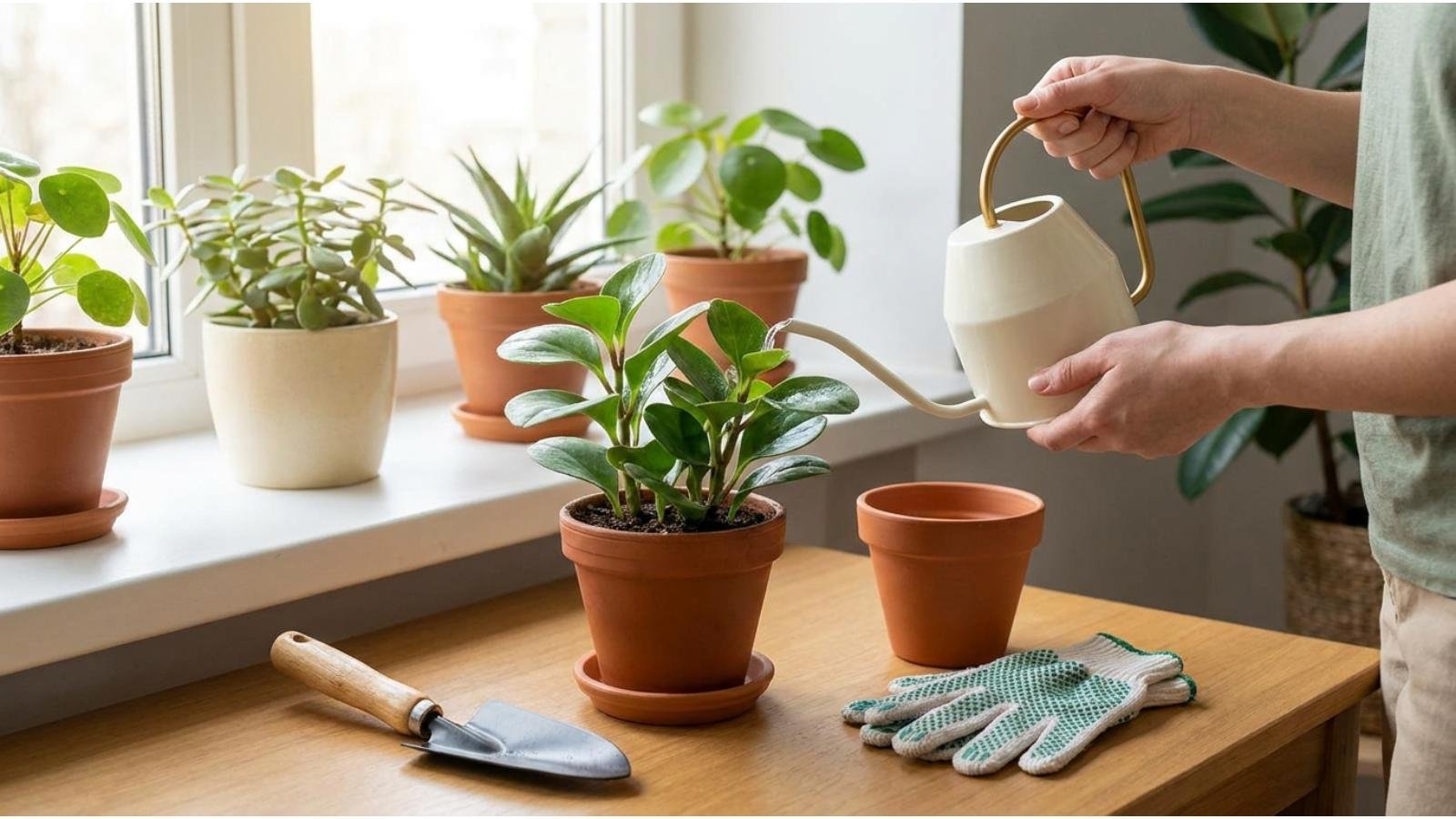
The baby rubber plant is Peperomia obtusifolia, a tropical-to-subtropical houseplant grown primarily for its thick, attractive foliage.
Its leaves are broadly oval, leathery, and somewhat succulent. Mature plants can produce narrow spikes of tiny greenish-white flowers, although the foliage is generally the main attraction.
The plant’s thick leaves are important to understand because they influence how you should water it.
Instead of treating it like a thirsty tropical plant that needs constantly moist soil, think of it as a plant with some built-in moisture storage. That does not mean it should be treated exactly like a cactus, but it does mean excessive watering can be more dangerous than allowing the soil to dry somewhat between waterings.
How Much Light Does a Baby Rubber Plant Need?
Baby rubber plants perform best in bright, indirect or filtered light.
An east-facing or west-facing window can work particularly well. Near a bright south-facing window, place the plant far enough back to avoid intense direct summer sunlight.
Signs the lighting is working
Healthy light conditions usually produce:
- Compact growth.
- Firm, attractive leaves.
- Strong new growth.
- Good coloration in variegated varieties.
- Less stretching between leaves.
What happens with too little light?
A baby rubber plant kept in deep shade may become weak or stretched as it searches for more light.
If your plant is growing slowly but otherwise looks healthy, do not immediately compensate with extra fertilizer. First check whether it is receiving enough usable light.
Can baby rubber plants tolerate direct sunlight?
They can tolerate some gentler direct light, but strong afternoon sun can scorch the foliage.
A common mistake is moving a plant from a dim room directly into intense sunlight. If you need to increase light, make the change gradually.
How Often Should You Water a Baby Rubber Plant?
There is no reliable calendar-based watering schedule because indoor conditions vary considerably.
Instead, check the soil.
Allow the upper portion of the potting mix to dry partially before watering again. The compost rather than watering according to a fixed routine and warns that excessive moisture can cause root rot.
A practical watering method
- Insert your finger into the upper part of the soil.
- Check whether it has begun to dry.
- If the soil is still noticeably wet, wait.
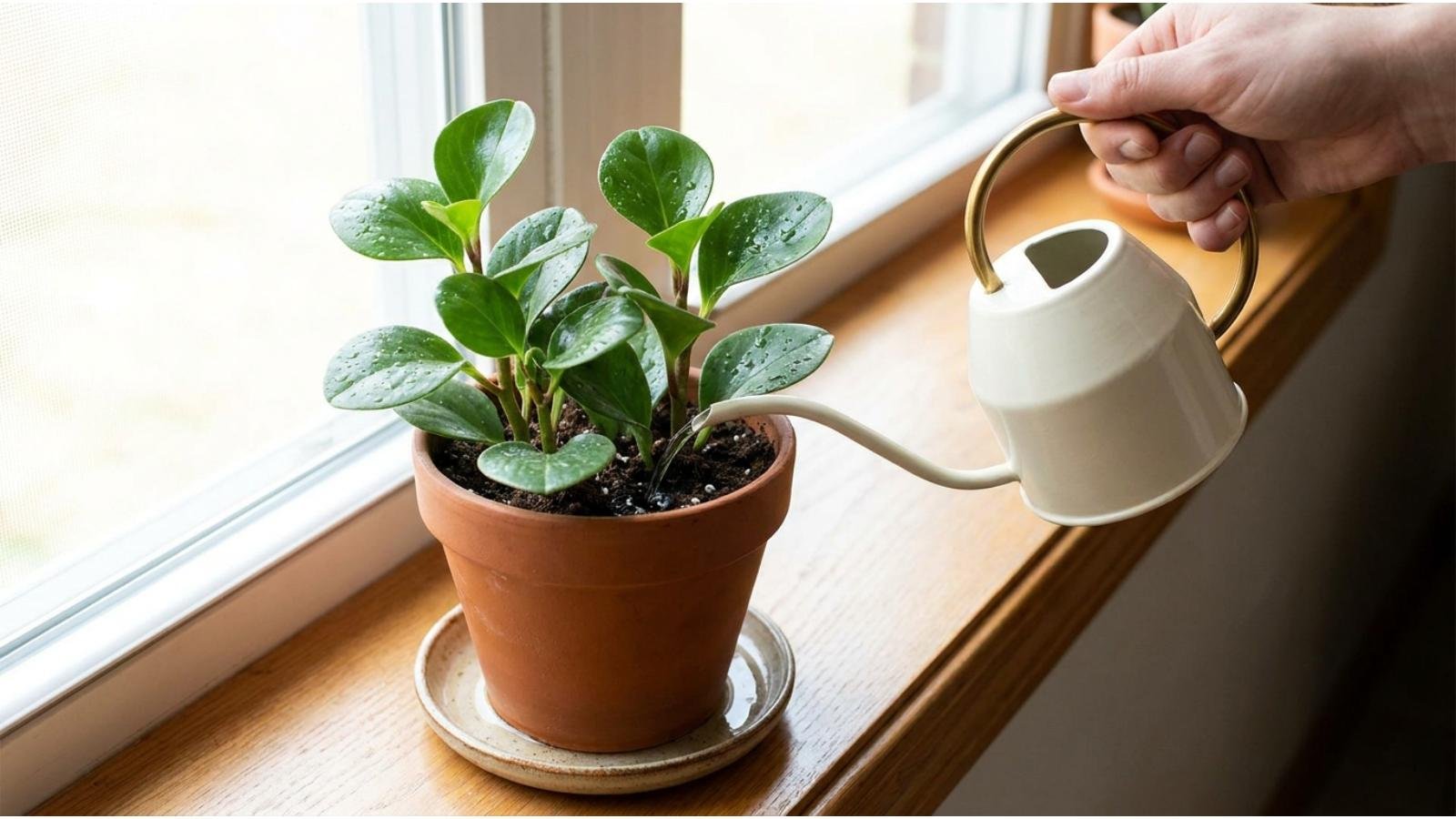
- When the upper layer has dried sufficiently, water thoroughly.
- Allow excess water to drain from the bottom.
- Empty any standing water from the saucer.
The exact interval may be different in summer and winter.
A warm room with bright light can dry the pot much faster than a cool room with low winter light. Missouri Botanical Garden also notes that watering requirements change according to the plant, environment, soil type, temperature, and season.
Should you mist a baby rubber plant?
Misting is not essential for successful baby rubber plant care.
Peperomias can appreciate humidity, but they are adaptable to normal household conditions.
If your home is very dry, increasing ambient humidity can help, but improving watering and drainage should come before creating a complicated humidity routine.
The Best Soil for Baby Rubber Plants
The ideal soil should hold enough moisture to support the plant while allowing excess water to escape quickly.
A loose, well-draining houseplant mix is a good starting point. Adding perlite can improve drainage and aeration.
A simple potting mix
You can use:
- Quality houseplant potting mix.
- Perlite for additional aeration.
- A small amount of suitable organic material if needed.
The exact recipe is less important than the final result: the soil should not remain waterlogged after watering.
Choosing the Right Pot
A drainage hole is more important than an attractive decorative container.
Choose a pot only slightly larger than the root ball when repotting. A container that is dramatically oversized can hold excess moisture around the roots for longer. choosing a pot only a few centimeters larger than the root ball because oversized containers can keep compost wet and increase the risk of root problems.
Terracotta vs. plastic
Both can work.
A terracotta pot tends to lose moisture through its porous sides, while plastic retains moisture longer. This means the same plant may need different watering intervals depending on its container.
That is one reason watering schedules copied from another grower often fail.
Temperature and Humidity
Baby rubber plants prefer warm conditions and should be protected from cold drafts.Approximately 65–86°F (18–30°C) as a suitable range for peperomias and recommends keeping them above about 50°F (10°C).
- Against a cold window during winter.
- Directly beside an air conditioner.
- Directly beside a heater or radiator.
- In a location exposed to sudden temperature changes.
Normal household humidity is generally acceptable, although higher humidity can be beneficial for many peperomias.
How to Fertilize a Baby Rubber Plant
Baby rubber plants do not need heavy feeding.
During active growth, a diluted balanced houseplant fertilizer can support healthy foliage and new growth.
Do not assume that more fertilizer means faster or healthier growth.
Overfertilizing can create salt buildup in the growing medium and may damage roots.
A sensible approach is:
- Fertilize during active growth.
- Use a diluted product.
- Avoid heavy feeding when growth slows in winter.
- Water appropriately rather than fertilizing a severely stressed plant.
Repotting Baby Rubber Plants
Baby rubber plants are relatively slow growing and usually do not need frequent repotting.
Many peperomias can remain in their original containers for two or three years, or until the roots become densely packed or emerge through drainage holes. Spring is generally a good time to repot.
Repot when you notice:
- Roots filling the container.
- Roots emerging from drainage holes.
- Soil drying unusually quickly.
- Growth becoming restricted despite good light and care.
- The existing potting mix breaking down.
Do not repot simply because the calendar says it is time.
How to Prune a Baby Rubber Plant
Routine heavy pruning is unnecessary.
Remove:
- Dead leaves.
- Damaged foliage.
- Diseased-looking material.
- Weak or excessively stretched stems.
If stems become long and sparse, selective pruning can encourage a fuller appearance.
Use clean pruning scissors to reduce the chance of transferring pathogens between plants.
How to Propagate Baby Rubber Plants
Stem cuttings are a practical way to propagate baby rubber plants.
Stem cutting method
- Select a healthy stem with several leaves.
- Make a clean cut using sanitized scissors.
- Remove unnecessary lower leaves.
- Place the cutting in water or a suitable free-draining propagation medium.
- Keep it warm and in bright, indirect light.
- Once roots have developed sufficiently, transfer the cutting to an appropriate potting mix.
The softwood cuttings as one of the propagation methods for peperomias and notes that cuttings can be rooted either in gritty, free-draining compost or in water before potting.
Baby Rubber Plant Care in Winter
Winter changes the plant’s needs.
Lower light and cooler temperatures generally mean slower growth, so the plant usually uses water more slowly. Continuing a summer watering routine during winter is one of the easiest ways to create overly wet soil.
During winter:
- Move the plant to a bright location.
- Reduce watering frequency as the soil dries more slowly.
- Keep it away from cold drafts.
- Protect it from very cold windows.
- Avoid unnecessary repotting.
- Reduce or pause fertilizer if growth has slowed significantly.
The indoor plants generally require less water during winter when temperatures and light levels are lower.
Common Baby Rubber Plant Problems
Yellow Leaves
Yellow leaves can be associated with excessive moisture, especially when the soil remains wet for prolonged periods.
Check:
- How often you water.
- Whether the pot has drainage holes.
- Whether the soil stays wet for several days.
- Whether the container is too large.
Do not automatically respond to yellow leaves by adding fertilizer.
Brown Leaf Tips
Brown tips can have several causes, including environmental stress and water quality.
First examine the whole growing environment rather than assuming one symptom has only one cause.
Soft or Mushy Leaves
Soft leaves combined with consistently wet soil are a warning sign.
Check the roots and growing medium. Persistent overwatering can lead to root rot, which can eventually cause the plant to collapse.
Dropping Leaves
Leaf drop can result from several types of stress.
Look at:
- Recent watering changes.
- Cold exposure.
- Light levels.
- Root condition.
- Sudden environmental changes.
A plant that has recently been moved from one environment to another may also need time to adjust.
Leggy Growth
Leggy stems generally indicate that the plant is not receiving enough usable light.
Move it gradually toward brighter indirect light rather than immediately exposing it to intense direct sunlight.
Pests
Baby rubber plants are generally relatively trouble-free, but sap-sucking pests such as mealybugs can occur.
Inspect:
- Leaf undersides.
- Stem joints.
- New growth.
- Areas where leaves meet stems.
Early detection makes pest management much easier.
The Most Common Baby Rubber Plant Care Mistakes
Watering on a Fixed Schedule
“Water every Sunday” sounds simple but ignores changes in temperature, light, soil, and pot size.
Check the soil instead.
Using a Pot Without Drainage
A decorative container without drainage can trap excess water around the roots.
If you love a decorative pot, use it as a cachepot and keep the plant in a nursery pot with drainage.
Giving Too Much Sun
Bright light is beneficial, but intense direct summer sunlight can scorch leaves.
Repotting Too Frequently
Peperomias are relatively slow growing. Repotting unnecessarily can disturb the roots without solving the actual problem.
Fertilizing a Stressed Plant
Fertilizer is not a universal treatment for yellow leaves, weak growth, or poor appearance. Diagnose the growing conditions first.
A Simple Weekly Baby Rubber Plant Care Routine
You do not need a complicated plant-care schedule.
Once a week, inspect the plant rather than automatically watering it.
Check the leaves
Look for:
- Yellowing.
- Brown spots.
- Pests.
- Wilting.
- New growth.
Check the soil
Feel the upper portion of the growing medium.
If it is still wet, wait.
Check the light
Make sure nearby furniture, curtains, or seasonal changes have not significantly reduced the plant’s light.
Check the pot
Make sure drainage holes are not blocked and that water is not sitting in the saucer.
This five-minute inspection is often more useful than following a rigid watering calendar.
Baby Rubber Plant Care by Season
| Season | Main focus |
|---|---|
| Spring | Increase monitoring as growth resumes; consider repotting if root-bound |
| Summer | Provide bright filtered light and monitor soil moisture more frequently |
| Fall | Watch for slower drying as temperatures and light decrease |
| Winter | Reduce watering and protect from cold drafts |
The most important seasonal adjustment is watering. The plant may dry quickly during warm, bright periods and much more slowly during cool, darker periods.
Baby Rubber Plant vs. Rubber Tree
Despite the similar common names, these plants are different.
| Feature | Baby Rubber Plant | Rubber Tree |
|---|---|---|
| Botanical name | Peperomia obtusifolia | Ficus elastica |
| Family | Piperaceae | Moraceae |
| Typical size indoors | Compact | Can become substantially larger |
| Main attraction | Thick, glossy foliage | Large glossy leaves |
| Water needs | Moderate and careful | Generally higher than baby rubber plant |
| Common use | Compact houseplant | Larger indoor specimen |
This distinction matters when searching for baby rubber plant care because advice written for Ficus elastica should not automatically be applied to Peperomia obtusifolia.
Frequently Asked Questions
Is a baby rubber plant easy to care for?
Yes. Baby rubber plants are generally adaptable and relatively low maintenance when grown in suitable light and well-draining soil. Their main vulnerability is overwatering and prolonged wet soil.
How much sunlight does a baby rubber plant need?
Bright, indirect or filtered light is ideal. Avoid exposing it to strong summer afternoon sunlight for extended periods because the leaves can scorch.
How often should I water Peperomia obtusifolia?
Water when the upper portion of the potting mix has partially dried rather than following a fixed weekly schedule. Reduce watering when growth slows in winter. (RHS)
Why are my baby rubber plant leaves turning yellow?
Overwatering is one of the first things to investigate. Check whether the soil stays wet for prolonged periods and whether the container drains freely.
Can baby rubber plants grow in low light?
They can tolerate less-than-ideal conditions, but very low light can produce weak, stretched growth. A bright location with filtered or indirect light is preferable. (RHS)
Do baby rubber plants like humidity?
They can appreciate humid conditions, but many peperomias adapt well to ordinary household humidity. Improving drainage and watering practices is more important than creating extremely high humidity.
Should I mist my baby rubber plant?
Misting is not required. If indoor air is particularly dry, improving ambient humidity may help, but avoid allowing the foliage and soil to remain constantly wet.
Can I propagate a baby rubber plant from a leaf?
Some peperomias can be propagated through leaf cuttings, while stem cuttings are a straightforward option for many growers.The leaf and softwood/stem cutting methods among peperomia propagation techniques.
Why is my baby rubber plant dropping leaves?
Check for overwatering, cold drafts, sudden environmental changes, inadequate light, or root problems. Look at the growing conditions rather than treating leaf drop as a single-condition symptom.
Does a baby rubber plant need fertilizer?
Fertilizer can support active growth, but baby rubber plants do not need heavy feeding. A diluted balanced fertilizer during the growing season is generally sufficient.
Final Takeaways for Healthy Baby Rubber Plant Care
Successful baby rubber plant care is less about constant attention and more about getting the fundamentals right.
Give Peperomia obtusifolia bright filtered light, a loose and well-draining potting mix, and a container with drainage. Let the soil partially dry before watering again, and adjust watering according to seasonal conditions rather than following a rigid calendar.
Most importantly, pay attention to what the plant is telling you. Yellow leaves, soft foliage, slow drying soil, and stretched growth are clues that something in the environment needs adjusting.
Once you understand that this plant stores some moisture in its fleshy leaves, its care becomes much easier: bright but gentle light, careful watering, good drainage, warmth, and occasional feeding are the foundation of a healthy baby rubber plant.