Quick Answer
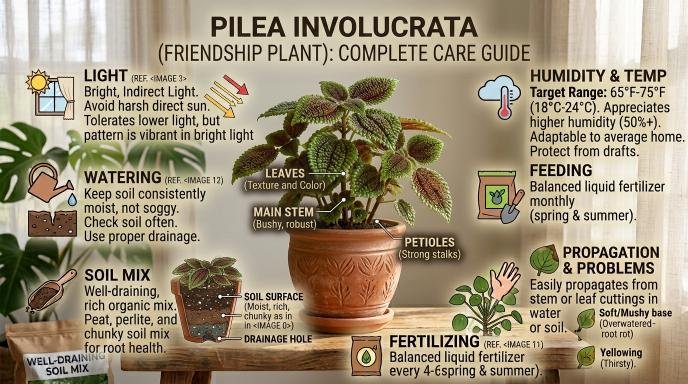
Pilea involucrata care is easiest when the plant receives bright, indirect light, evenly moist but well-draining soil, moderate humidity, and warm temperatures.
Water when the upper layer of soil begins to dry rather than following a strict schedule. Avoid harsh direct sunlight and soggy soil, as both can cause leaf damage. Regular pinching also helps maintain its compact, bushy shape.
Introduction
Pilea involucrata, commonly called the friendship plant, is a small tropical foliage plant valued for its textured, quilted leaves and compact growth. Its attractive appearance makes it especially popular for indoor growing, but its tropical nature means it needs conditions that are somewhat different from those tolerated by drought-resistant houseplants.
Good Pilea involucrata care is mostly about balance. The plant likes moisture, but not constantly saturated soil. It needs bright light, but intense direct sun can scorch its leaves. It appreciates humidity, but poor airflow combined with excessive moisture can create problems.
The good news is that once you understand these preferences, Pilea involucrata is relatively straightforward to maintain. The key is learning to read the plant and its soil rather than relying on a rigid watering calendar.
Understanding Pilea Involucrata
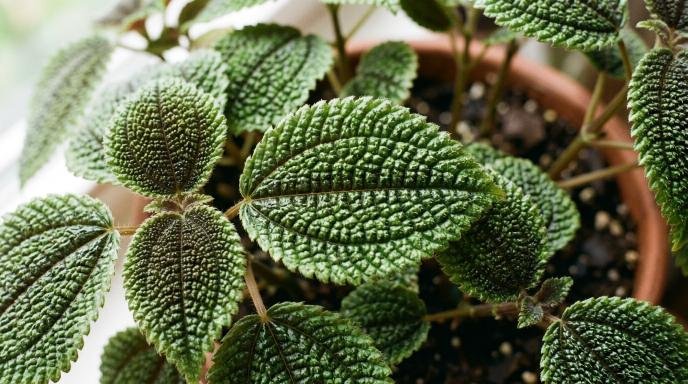
Pilea involucrata is a tropical perennial grown primarily for its distinctive foliage. Its leaves are typically oval, heavily textured, and often show attractive combinations of green, bronze, and reddish-purple tones.
The plant naturally develops a spreading, somewhat trailing habit. This makes it useful for:
- Shelves and plant stands.
- Small containers.
- Terrariums with suitable ventilation.
- Humid rooms.
- Grouped indoor plant displays.
- Hanging containers where its stems can spill over the edge.
Its relatively small size also makes it a good choice when you want an interesting foliage plant without taking up much space.
Light Requirements
The ideal light for Pilea involucrata is bright, indirect light.
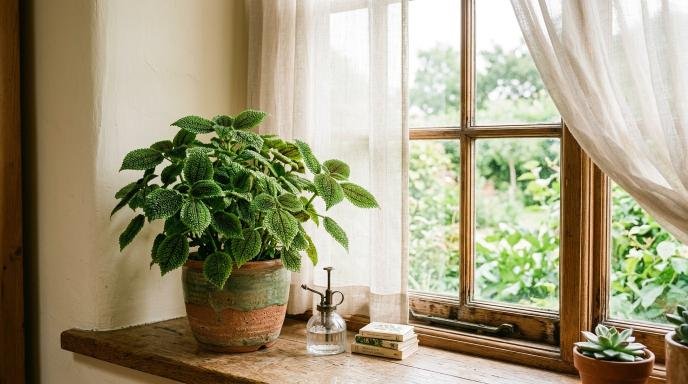
A location near a bright window filtered by a sheer curtain can work well. The goal is to provide enough light for healthy, compact growth without exposing the foliage to strong midday sunlight.
What happens with too little light?
Insufficient light can cause:
- Leggy stems.
- Larger gaps between leaves.
- Slower growth.
- Less attractive coloration.
- A generally weak-looking plant.
If your plant is becoming stretched and sparse, light is one of the first conditions worth checking.
What happens with too much direct sun?
Strong direct sunlight can cause:
- Bleached patches.
- Brown or crispy leaf edges.
- Faded foliage.
- Scorched leaves.
An important practical point is that bright does not mean direct. A room can be very bright while the plant itself remains protected from intense rays.
How Often Should You Water Pilea Involucrata?
Water Pilea involucrata when the top portion of the potting mix has started to dry, rather than watering according to a fixed number of days.
The exact interval varies because indoor conditions change with:
- Temperature.
- Humidity.
- Pot size.
- Soil composition.
- Light intensity.
- Season.
- Root development.
When watering, thoroughly moisten the soil until excess water drains from the bottom of the container. Empty standing water from a saucer rather than allowing the pot to sit in it.
Why overwatering causes problems
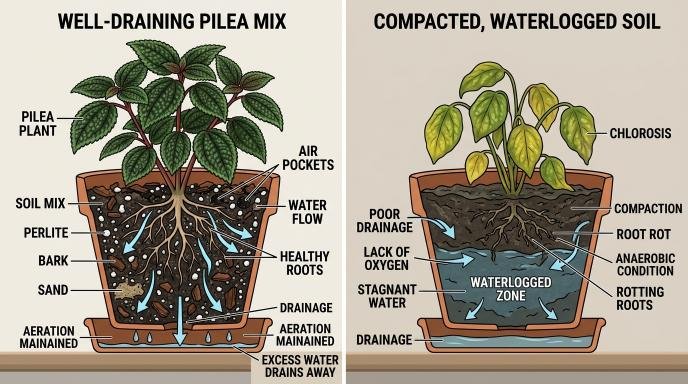
Pilea involucrata needs moisture, but its roots also need access to oxygen. Constantly waterlogged soil reduces air spaces around the roots and can eventually contribute to root problems.
A common beginner mistake is interpreting drooping leaves as an automatic signal to add more water. Drooping can have several causes, including both insufficient moisture and excessive moisture.
Better approach: Check the soil before watering.
Signs your plant may need water
Look for:
- Noticeably dry upper soil.
- Slightly softer or less vigorous foliage.
- A pot that feels considerably lighter than after watering.
Signs you may be watering too frequently
Watch for:
- Persistently wet soil.
- Yellowing leaves.
- Mushy or deteriorating stems.
- An unpleasant smell from the potting mix.
- Repeated leaf drop despite wet soil.
Best Soil for Pilea Involucrata
Pilea involucrata performs best in a loose, moisture-retentive but well-draining potting mix.
You want soil that can hold enough moisture for the plant while allowing excess water and air to move through the root zone.
A practical mix can contain:
- Quality indoor potting mix.
- Perlite or another material that improves drainage.
- A small amount of fine organic material that helps retain moisture.
Avoid using heavy garden soil alone in an indoor container. It can compact and retain excessive moisture around the roots.
Why drainage matters
Drainage is not simply about making water leave the pot quickly. Good drainage creates a healthier balance between moisture and air around the roots.
This is particularly important for Pilea involucrata because keeping the soil constantly wet in an attempt to maintain humidity can do more harm than good.
Choosing the Right Pot
Use a container with drainage holes.
A decorative pot without drainage can be used as an outer cover, but the plant should ideally remain in a nursery-style container that allows excess water to escape.
Do not automatically move the plant into a much larger pot after buying it. Excess soil surrounding a small root system can remain wet for a long time, increasing the risk of overwatering.
Repot when the plant has genuinely outgrown its current container or the soil has deteriorated.
Humidity and Temperature
Because Pilea involucrata originates from a tropical environment, it generally appreciates moderate to high humidity.
Average indoor humidity can sometimes be sufficient, but the plant may grow more attractively when the surrounding air is comfortably humid.
Ways to improve humidity
You can improve local humidity by:
- Grouping compatible plants together.
- Using a humidifier.
- Keeping the plant away from extremely dry air.
- Avoiding locations directly beside heating vents.
Be cautious with constantly misting the foliage as your only humidity strategy. Increasing surrounding humidity is generally more consistent than repeatedly wetting the leaves.
Temperature
Keep Pilea involucrata in a warm indoor environment and protect it from:
- Cold drafts.
- Sudden temperature changes.
- Air-conditioning vents.
- Very cold windows during winter.
Stable conditions are generally better than frequent environmental fluctuations.
Fertilizing Pilea Involucrata
During active growth, Pilea involucrata can benefit from a balanced, diluted houseplant fertilizer.
Fertilizing too aggressively is unnecessary. Excess fertilizer can accumulate in the soil and potentially damage roots.
A sensible approach is:
- Water appropriately.
- Use fertilizer at a reduced strength according to the product directions.
- Apply during periods of active growth.
- Reduce or stop feeding when growth slows significantly.
If the plant is stressed, recently repotted, or suffering from root problems, correcting those issues should take priority over adding fertilizer.
Pruning and Pinching for Bushier Growth
Pilea involucrata can become leggy if stems grow without being trimmed.
Regularly pinching the growing tips encourages branching and helps create a fuller appearance.
Use clean scissors or pruning shears to:
- Remove weak or damaged growth.
- Trim excessively long stems.
- Shape the plant.
- Encourage branching.
Don’t throw away every healthy cutting. Pilea involucrata can often be propagated from suitable stem cuttings, allowing you to create additional plants.
Expert tip: Light pruning performed regularly is usually easier on the plant than allowing it to become extremely overgrown and then removing a large amount of foliage at once.
How to Propagate Pilea Involucrata
Stem cuttings are a practical way to propagate Pilea involucrata.
Step-by-step propagation
- Select a healthy stem with several leaves.
- Make a clean cut below an appropriate node.
- Remove unnecessary lower leaves.
- Place the cutting in a suitable propagation medium or water.
- Keep it warm with bright, indirect light.
- Maintain appropriate moisture without creating stagnant, soggy conditions.
- Once roots are established, transfer the young plant into an appropriate potting mix.
Young cuttings can be more sensitive to drying than established plants, so check them regularly while they are developing roots.
Repotting Pilea Involucrata
Pilea involucrata does not need frequent repotting simply because time has passed.
Consider repotting when:
- Roots are becoming crowded.
- Water runs through unusually quickly because the root system has filled the container.
- Growth has slowed despite otherwise suitable conditions.
- The potting mix has broken down significantly.
- The plant repeatedly dries out much faster than expected.
Choose a pot only modestly larger than the current one.
After repotting, avoid immediately compensating with excessive watering or fertilizer. Give the plant time to adjust to its new root environment.
Common Pilea Involucrata Problems
Yellow Leaves
Yellow leaves can result from several conditions, but excessive moisture is an important possibility.
Check:
- How wet the soil remains between waterings.
- Whether the pot has drainage holes.
- Whether the container is too large.
- Whether roots show signs of deterioration.
An occasional older yellow leaf is different from widespread yellowing throughout the plant.
Brown or Crispy Leaf Edges
Brown edges may indicate:
- Excessive direct sunlight.
- Dry air.
- Inconsistent watering.
- Severe underwatering.
- Environmental stress.
Check the plant’s location and soil before assuming humidity is the only problem.
Curling Leaves
Curling can occur when the plant is experiencing environmental stress.
Possible causes include:
- Dry soil.
- Excessive heat.
- Direct sunlight.
- Very dry air.
- Root problems.
Look at several conditions together rather than treating the symptom with more water immediately.
Drooping
Drooping is one of the easiest symptoms to misinterpret.
If the soil is dry, insufficient water may be responsible. If the soil is already saturated, adding more water could make the underlying problem worse.
Best diagnostic habit: Feel the soil first, then inspect the roots and environmental conditions if the problem persists.
Leggy Growth
Leggy growth usually suggests the plant is not receiving enough usable light.
Move it gradually toward a brighter location with indirect light. Avoid suddenly placing a low-light plant into strong direct sunlight.
Pilea Involucrata Care Mistakes to Avoid
Some of the most common problems come from trying to give the plant “more” care.
Avoid these mistakes:
- Watering on a fixed schedule without checking the soil.
- Keeping the roots constantly wet.
- Placing the plant in harsh direct sunlight.
- Using a container without drainage.
- Fertilizing a stressed plant heavily.
- Ignoring cold drafts.
- Allowing stems to become extremely leggy before pruning.
- Repotting into a container that is far too large.
- Assuming every drooping plant needs immediate watering.
The goal is not maximum watering, maximum fertilizer, or maximum humidity. Consistent, balanced conditions are more useful.
Seasonal Pilea Involucrata Care
Spring and Summer
Growth is often more active during warmer, brighter periods.
Pay attention to:
- Increased water use.
- New growth.
- Regular but moderate fertilization.
- Pruning and propagation opportunities.
Do not automatically increase watering simply because it is summer. Check the soil because indoor environments vary considerably.
Fall and Winter
Growth may slow when light levels decrease.
During this period:
- Check the soil more carefully before watering.
- Reduce fertilizer if growth slows.
- Keep the plant away from cold drafts.
- Watch for dry indoor air caused by heating.
A watering schedule that worked during summer may be excessive during winter.
Pilea Involucrata Care at a Glance
| Care Factor | Best Practice |
|---|---|
| Light | Bright, indirect light |
| Water | Water when the upper soil begins to dry |
| Soil | Moisture-retentive but well-draining |
| Pot | Container with drainage holes |
| Humidity | Moderate to high humidity is beneficial |
| Temperature | Warm, stable indoor conditions |
| Fertilizer | Diluted balanced fertilizer during active growth |
| Pruning | Pinch or trim to encourage branching |
| Propagation | Stem cuttings |
| Repotting | Only when the plant becomes root-bound or soil deteriorates |
Frequently Asked Questions
Is Pilea involucrata easy to care for?
Yes. Pilea involucrata is manageable for beginners when its basic requirements are met. The biggest challenges are usually maintaining appropriate soil moisture and providing enough indirect light.
Does Pilea involucrata need direct sunlight?
No. Bright indirect light is generally preferable. Strong direct sunlight, especially through a hot window, can scorch the foliage.
How often should I water Pilea involucrata?
There is no universal schedule. Check the soil and water when the upper portion has started to dry. Indoor temperature, humidity, pot size, and light all influence how quickly the soil dries.
Why are my Pilea involucrata leaves turning yellow?
Overwatering is a common possibility, but yellowing can have multiple causes. Check soil moisture, drainage, root health, light, and the age of the affected leaves before changing your care routine.
Can Pilea involucrata grow in low light?
It may survive in lower light, but growth is generally more attractive and compact when the plant receives bright indirect light. Insufficient light can lead to stretched stems and weaker growth.
Does Pilea involucrata like humidity?
Yes. As a tropical plant, it generally appreciates humid conditions. However, improving overall room humidity is usually more useful than constantly misting the foliage.
Can I propagate Pilea involucrata from cuttings?
Yes. Healthy stem cuttings can be used for propagation. Warm conditions, indirect light, and appropriate moisture help young cuttings establish roots.
Why is my Pilea involucrata becoming leggy?
Insufficient light is a common reason. Pruning can encourage branching, but improving the plant’s light conditions is important if you want the new growth to remain compact.
Final Takeaways
Successful Pilea involucrata care comes down to understanding the plant’s balance between moisture, light, warmth, and airflow. Give it bright indirect light, use a well-draining soil mix, water according to soil conditions rather than a calendar, and maintain a reasonably humid environment.
Most problems become easier to solve when you diagnose the underlying condition instead of treating the visible symptom. A yellow leaf does not automatically mean “needs fertilizer,” and a drooping plant does not automatically mean “needs water.”
With consistent conditions, occasional pruning, and careful watering, Pilea involucrata can remain a compact, attractive foliage plant and provide plenty of healthy growth for propagation.