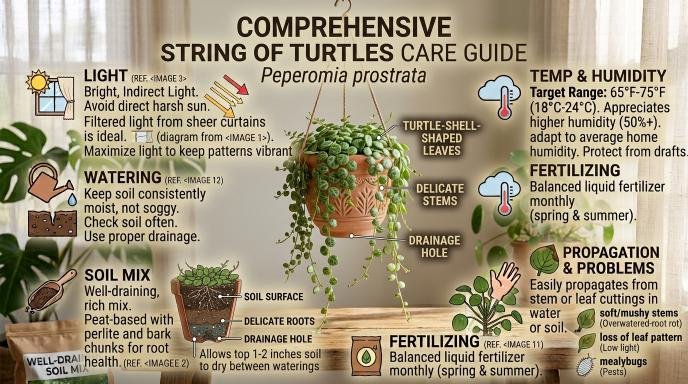
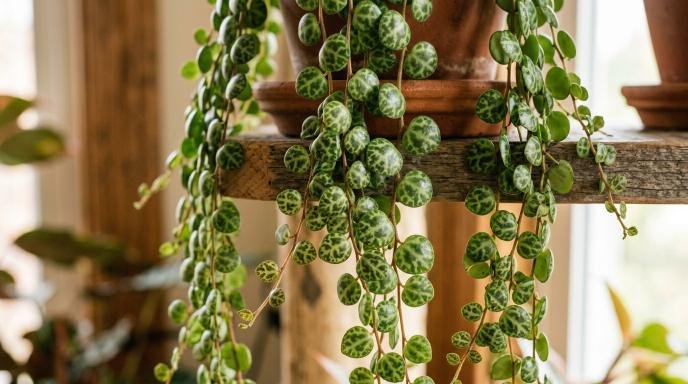
The string of turtles plant (Peperomia prostrata) is a compact trailing houseplant known for its small, round leaves marked with patterns that resemble turtle shells. Its unusual appearance makes it especially popular in hanging baskets, shelves, and small indoor plant displays.
Despite its delicate appearance, string of turtles plant care is relatively manageable once you understand its biggest needs: light and moisture balance. Many problems happen because owners treat it like a thirsty tropical plant. In reality, its leaves and stems can hold some moisture, so constantly wet soil can cause more harm than occasional dryness.
The goal is not to keep the soil permanently moist. Instead, provide enough water for healthy growth while allowing excess moisture to drain away.
Quick Answer
String of Turtles plant care is mainly about providing bright, indirect light, well-draining soil, moderate watering, warm temperatures, and good airflow.
Let the soil dry partially between waterings because this succulent-like plant is vulnerable to root rot. Avoid constantly wet soil, harsh direct afternoon sun, and oversized pots. With the right balance of light and careful watering, Peperomia prostrata can produce dense, trailing growth with attractive turtle-shaped leaves.
String of Turtles Plant Care at a Glance
| Care Requirement | Best Practice |
|---|---|
| Botanical name | Peperomia prostrata |
| Light | Bright, indirect light |
| Water | Water when the upper soil has dried |
| Soil | Loose, fast-draining potting mix |
| Humidity | Average indoor humidity is usually adequate |
| Temperature | Warm, stable indoor temperatures |
| Fertilizer | Light feeding during active growth |
| Pot | Small pot with drainage holes |
| Growth habit | Trailing |
| Propagation | Stem cuttings |
| Common problem | Root rot from excess moisture |
Understanding the String of Turtles Plant
String of turtles belongs to the Peperomia group and naturally develops trailing stems covered with small, succulent-like leaves.
The leaves are its most recognizable feature. Their rounded shape and dark veining create the appearance of tiny turtle shells, giving the plant its common name.
Unlike some fast-growing trailing plants, string of turtles generally grows at a more controlled pace. This is not necessarily a sign that something is wrong.
Why growth can seem slow
Growth depends heavily on:
- Available light.
- Temperature.
- Watering consistency.
- Root health.
- Pot size.
- Growing season.
- Nutrient availability.
A plant receiving enough light and healthy roots may still grow more slowly than pothos or other vigorous houseplants. Avoid trying to force growth by watering more frequently.
How Much Light Does String of Turtles Need?
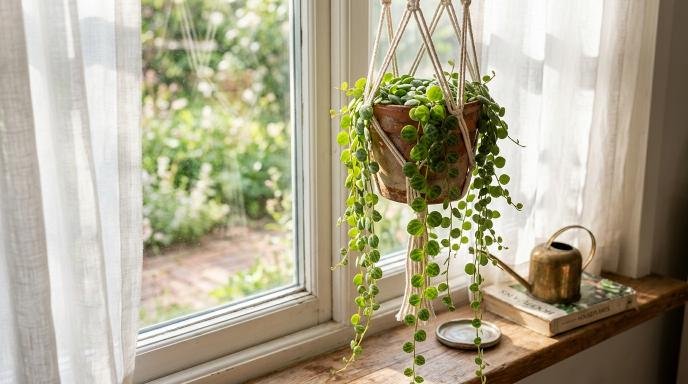
The best light for string of turtles is bright, indirect light.
A location near a bright window can work very well, especially when the plant receives plenty of filtered daylight without being exposed to intense afternoon sun for long periods.
Too little light
When light is insufficient, you may notice:
- Longer gaps between leaves.
- Thin or stretched stems.
- Slower growth.
- Smaller new leaves.
- Less compact trailing growth.
This stretching is commonly called etiolation. The plant is effectively reaching for more light.
Too much direct sun
Strong direct sunlight, particularly through hot glass, can scorch the leaves. Damaged leaves may develop pale, brown, or bleached areas.
A practical lighting test
Instead of relying only on a fixed number of hours, observe the plant.
If new growth is compact and leaves maintain strong coloration and patterning, the location is probably working well.
If stems become unusually long with large gaps between leaves, move the plant gradually toward brighter filtered light.
Expert tip: Rotate the pot every week or two if growth is noticeably leaning toward the window. This encourages more even growth.
How to Water String of Turtles
Watering is one of the most important parts of string of turtles plant care.
The safest approach is to check the soil rather than following a rigid calendar.
When the upper portion of the potting mix has dried, water thoroughly enough to moisten the root zone. Allow excess water to drain completely before returning the pot to its decorative container or saucer.
Why overwatering is dangerous
String of turtles stores some moisture in its leaves and stems. If the soil remains wet for extended periods, roots can lose access to sufficient oxygen.
This can contribute to:
- Root rot.
- Yellowing leaves.
- Soft stems.
- Leaf drop.
- Unpleasant-smelling soil.
- Sudden plant decline.
What about underwatering?
A severely dry plant may develop:
- Wrinkled leaves.
- Drooping stems.
- Dry or crispy foliage.
- Slow growth.
The important distinction is that a thirsty plant can often recover after appropriate watering, while advanced root rot may require removing damaged roots and propagating healthy portions.
The best watering routine
- Check the soil with your finger.
- If it is still noticeably wet, wait.
- If the upper layer has dried and the plant needs water, water thoroughly.
- Let excess water drain.
- Empty standing water from the saucer.
Beginner mistake: Giving small amounts of water every few days. This can create a cycle where the surface appears dry while the deeper soil remains wet.
Choosing the Right Soil
String of turtles performs best in a light, porous, well-draining growing medium.
The purpose of a good mix is not simply to drain water quickly. It should also retain enough moisture to support the roots without staying saturated.
A practical homemade mix can include:
- Quality indoor potting mix.
- Perlite or pumice.
- A small amount of orchid bark or another chunky material.
The exact ratio does not need to be perfect. The finished mix should feel loose rather than dense and muddy.
Why soil structure matters
Dense soil can remain wet around the roots for too long. A more open structure improves drainage and air movement around the root zone.
If your plant repeatedly develops soggy soil despite careful watering, changing the growing medium may be more effective than simply watering less.
Choosing the Right Pot
A string of turtles does not need a huge container.
Choose a pot that is only moderately larger than the existing root system and, most importantly, has drainage holes.
Oversized pots create a larger volume of soil that can remain wet for a long time.
Signs the pot may be too large
- Soil stays wet for many days.
- The plant grows slowly despite good light.
- Lower leaves become yellow or soft.
- Roots appear unhealthy during repotting.
Hanging baskets and shallow pots
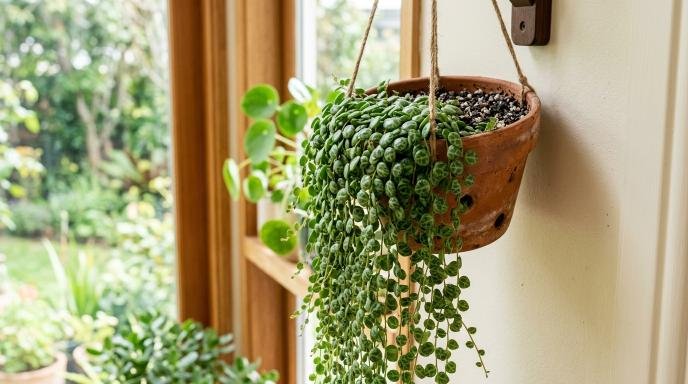
Because the plant naturally trails, a hanging container can display its stems beautifully. A shallow pot can also work if it provides adequate drainage and enough room for the roots.
Temperature and Humidity
String of turtles generally prefers warm, stable indoor conditions.
Avoid placing it directly beside:
- Cold drafts.
- Heating vents.
- Air-conditioning outlets.
- Frequently opened exterior doors.
- Extremely hot windows.
Sudden environmental changes can stress the plant even when average room temperatures seem suitable.
Does string of turtles need high humidity?
Not necessarily.
Normal household humidity can be sufficient when watering, temperature, and airflow are appropriate. Increasing humidity can help in particularly dry environments, but it should not be used as a substitute for proper watering and drainage.
Poor airflow combined with excessive moisture can create a less favorable environment.
Fertilizing String of Turtles
String of turtles generally does not require heavy feeding.
During active growth, use a balanced houseplant fertilizer at a diluted strength according to the product’s instructions.
Avoid assuming that more fertilizer means faster or healthier growth.
Excess fertilizer can contribute to salt buildup and root stress.
A practical approach
- Feed only when the plant is actively growing.
- Use a diluted fertilizer.
- Avoid repeatedly fertilizing dry soil.
- Reduce or stop feeding when growth naturally slows.
If the plant is already stressed, severely overwatered, or suffering from root problems, fix the underlying issue before adding fertilizer.
Repotting String of Turtles
String of turtles usually does not need frequent repotting.
Repot when there is a genuine reason, such as:
- Roots becoming severely crowded.
- Soil breaking down and draining poorly.
- The plant repeatedly staying wet.
- Roots growing through drainage holes.
- The existing container becoming unstable.
When repotting, move only one pot size up rather than placing the plant into a dramatically larger container.
Repotting mistake to avoid
Do not automatically repot a healthy plant every year simply because a calendar says it is time.
If the roots are healthy and the soil still performs well, leaving the plant undisturbed can be better than unnecessary root disturbance.
How to Propagate String of Turtles
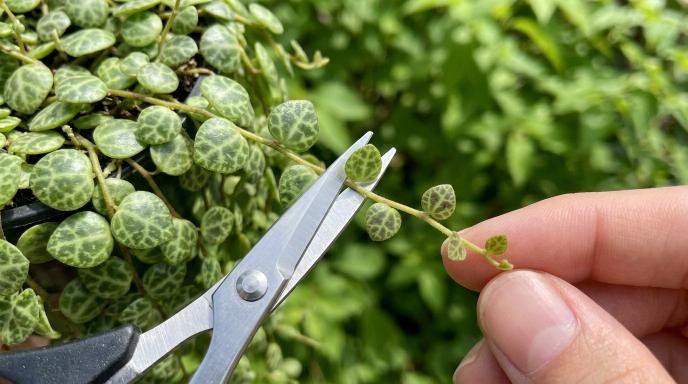
Stem cuttings are a practical way to propagate string of turtles.
Propagation steps
- Select a healthy stem.
- Take a cutting containing several healthy leaves or nodes.
- Remove any damaged lower foliage.
- Place the appropriate portion of the cutting against or into a suitable moist growing medium.
- Keep the medium lightly moist rather than saturated.
- Provide bright, indirect light.
- Maintain warm conditions while roots develop.
- Once established, continue normal care.
The key is to avoid keeping the propagation medium constantly soaked.
Propagation tip
Taking several healthy cuttings rather than relying on one can increase your chances of producing a fuller new plant.
How to Make String of Turtles Fuller
A string of turtles plant can become sparse if stems are stretched or if the container contains only a small number of rooted growth points.
To encourage a fuller appearance:
- Provide adequate bright, indirect light.
- Avoid excessive fertilizer.
- Keep stems healthy.
- Propagate healthy cuttings.
- Root additional cuttings in the same container when appropriate.
- Trim excessively long or damaged stems carefully.
Light is especially important. Pruning alone will not solve a leggy plant if inadequate light is causing the stretching.
Common String of Turtles Problems
Leaves Turning Yellow
Yellow leaves can have several causes, but excess moisture is one of the first things to investigate.
Check:
- How frequently you water.
- Whether the soil is still wet.
- Whether the pot has drainage holes.
- Whether the container is much too large.
- Whether roots show signs of decay.
Do not automatically respond to yellow leaves by adding fertilizer.
Leaves Falling Off
Leaf drop may result from:
- Overwatering.
- Underwatering.
- Sudden temperature changes.
- Poor light.
- Root problems.
- Physical damage to delicate stems.
Look at the overall plant rather than one fallen leaf. Occasional old-leaf loss is different from widespread leaf drop accompanied by soft stems or wet soil.
Leaves Are Wrinkled
Wrinkled leaves often indicate that the plant is short on available moisture.
Check the soil first.
If the soil is completely dry, provide a thorough watering and then return to a more consistent watering routine.
However, wrinkled leaves can also occur when roots are damaged. A plant with severely rotted roots may appear thirsty even though its soil is wet because damaged roots cannot function properly.
Stems Are Long and Bare
Long spaces between leaves usually suggest insufficient light.
Move the plant gradually to a brighter location with filtered light.
Avoid immediately placing a low-light plant into intense direct sunlight, as sudden exposure can damage foliage.
Soft or Mushy Stems
Soft stems are a serious warning sign, particularly when the soil is consistently wet.
Inspect the roots if root rot is suspected. Remove severely damaged portions and consider propagating healthy sections before the problem spreads.
Leaves Have Brown Spots
Brown areas may result from several factors, including:
- Excessive direct sunlight.
- Physical damage.
- Water stress.
- Environmental stress.
- Root problems.
Look for a pattern. Damage concentrated on the window-facing side can point toward excessive sunlight, while widespread decline with wet soil suggests a different problem.
String of Turtles Care by Season
Spring
As growth becomes more active:
- Gradually increase watering as needed.
- Begin light fertilization if the plant is actively growing.
- Check whether roots have outgrown the container.
- Increase light exposure carefully.
Summer
Monitor moisture more frequently because warm conditions can increase water loss.
However, do not assume hot weather automatically means daily watering. Always check the growing medium.
Fall
Growth may slow as daylight decreases.
Reduce watering frequency according to actual soil moisture rather than continuing a summer schedule automatically.
Winter
Indoor heating can create dry air, while reduced light can slow growth.
The most important winter adjustment is often watering less frequently, especially when the plant receives less light and the soil dries more slowly.
Common Mistakes to Avoid
Watering on a Fixed Schedule
A calendar cannot account for changes in temperature, light, pot size, soil, and humidity.
Check the soil instead.
Using a Pot Without Drainage
This makes moisture management much more difficult and increases the risk of prolonged wet conditions.
Giving Too Much Direct Sun
Bright light is beneficial, but intense sunlight through hot glass can damage foliage.
Using Heavy Soil
Dense soil can hold excess water around the roots.
Overfertilizing
More nutrients do not automatically produce healthier growth.
Repotting Too Often
Unnecessary repotting can disturb healthy roots and create new watering problems.
Ignoring Early Root Problems
Soft stems, persistent wet soil, yellowing leaves, and sudden decline deserve attention before the entire plant deteriorates.
How to Build the Ideal Indoor Setup
For a simple, reliable setup, place your string of turtles in a bright room near a window with filtered light, use a small container with drainage holes, and grow it in a porous potting mix.
Then establish a habit of checking the soil before watering.
This simple routine is often more useful than trying to follow an exact watering schedule.
A useful weekly check
Once a week, inspect:
- Soil moisture.
- Leaf firmness.
- New growth.
- Stem condition.
- Signs of pests.
- Position relative to the light source.
You may not need to water every week, but a quick inspection helps catch problems early.
String of Turtles vs. String of Hearts
These plants are both popular trailing houseplants, but their care and appearance differ.
| Feature | String of Turtles | String of Hearts |
|---|---|---|
| Leaf shape | Rounded, turtle-like | Heart-shaped |
| Growth | Generally compact and slower | Often more vigorous trailing growth |
| Water needs | Moderate and carefully controlled | Allow drying between watering |
| Light | Bright, indirect light | Bright light with some tolerance for more sun |
| Main risk | Overwatering | Overwatering |
| Best display | Shelves and hanging containers | Hanging baskets and trailing displays |
The most important lesson is not to assume every “string” plant should be cared for identically. Their leaves, growth habits, and environmental responses differ.
Expert Tips for Better Growth
Give light priority.
A plant receiving appropriate light is easier to manage than one struggling in a dark corner.
Use the pot size as a moisture-management tool.
A smaller, appropriately sized container generally dries more predictably than an oversized pot.
Inspect the roots when symptoms do not make sense.
If a plant looks thirsty while sitting in wet soil, the problem may be damaged roots rather than a lack of water.
Don’t chase fast growth.
String of turtles is naturally more restrained than some trailing houseplants. Healthy, compact growth is more important than rapid growth.
Propagate before the plant becomes severely damaged.
If a section remains healthy while the base is declining, healthy stem cuttings can provide a useful backup.
Frequently Asked Questions
Is string of turtles easy to care for?
Yes. String of turtles can be relatively easy to maintain when grown in bright, indirect light and well-draining soil. The main challenge is avoiding excessive watering.
How often should I water string of turtles?
There is no universal schedule. Water when the upper portion of the growing medium has dried sufficiently, then allow excess water to drain completely.
Does string of turtles need direct sunlight?
It benefits from bright light but can be damaged by intense direct sunlight, particularly during hot afternoon conditions. Filtered or indirect light is usually safer indoors.
Why is my string of turtles losing leaves?
Leaf loss can result from overwatering, underwatering, poor light, temperature stress, physical damage, or root problems. Check the soil and roots before changing the entire care routine.
Why is my string of turtles growing slowly?
Slow growth can be normal. Insufficient light, cool temperatures, poor root health, and limited nutrients during active growth can also contribute.
Can string of turtles grow indoors?
Yes. It is well suited to indoor growing when it receives adequate light and is planted in a well-draining medium.
Should I mist string of turtles?
Misting is generally unnecessary for basic care. Correct watering, drainage, light, and airflow are more important than routinely misting the leaves.
Can I grow string of turtles in a hanging basket?
Yes. Its trailing stems make it particularly attractive in hanging containers, provided the pot has good drainage and the growing medium does not remain saturated.
How do I make string of turtles grow faster?
Provide better light if it is currently too dim, maintain healthy roots, avoid overwatering, and provide modest fertilizer during active growth. Do not force growth with excessive watering or fertilizer.
Is string of turtles a succulent?
It has succulent-like leaves and water-storage characteristics, but it is a Peperomia, not a true cactus or typical succulent such as an Echeveria. Its care should therefore be based on its actual growth characteristics rather than treating it exactly like a desert succulent.
Final Takeaways
Successful string of turtles plant care comes down to balance rather than complicated routines. Give it bright, indirect light, porous soil, a properly sized pot with drainage, and careful watering based on soil moisture.
If you remember only three things, remember these: don’t keep the roots constantly wet, don’t place the plant in harsh sunlight, and don’t panic over naturally slow growth. With those fundamentals in place, Peperomia prostrata can develop attractive, healthy trailing stems and remain a distinctive indoor plant for years.