Quick Answer
Kalanchoe plant care is simple when you provide bright filtered light, fast-draining soil, moderate watering, and good airflow. Let the soil dry somewhat between waterings instead of keeping it constantly wet. Feed actively growing plants lightly, remove spent flowers, and protect kalanchoe from cold temperatures. With the right light and a controlled period of shorter daylight, kalanchoe can rebloom and remain attractive for years.
Introduction
Kalanchoe plant care is easier than it may first appear because this popular flowering succulent stores water in its thick leaves. The biggest challenge is usually not getting enough water but knowing when to stop watering. A kalanchoe sitting in constantly wet soil can develop root problems, while a plant placed in a dark corner may become stretched and produce fewer flowers.
The most reliable approach is to treat kalanchoe like a succulent rather than a thirsty tropical houseplant. Give it plenty of bright light, use a container with drainage, water thoroughly when the soil has dried somewhat, and avoid letting the roots sit in water. These simple habits create the foundation for healthy foliage, strong stems, and repeat flowering.
Understanding Kalanchoe
Kalanchoe is a large genus in the Crassulaceae family, but the plant most commonly sold as a colorful flowering houseplant is Kalanchoe blossfeldiana, often called flaming Katy. It is a compact succulent with fleshy leaves and clusters of flowers in colors such as red, pink, orange, yellow, and white. The RHS describes Kalanchoe blossfeldiana as a bushy evergreen succulent that can reach roughly 40 centimeters in height.
The thick leaves are more than a decorative feature. They allow the plant to store moisture, which explains why kalanchoe generally handles short dry periods better than prolonged wet soil.
This also explains one of the most common beginner mistakes. A gardener sees slightly dry soil and immediately adds more water, even though the plant may still have plenty of moisture stored in its leaves.
Image Suggestion: A labeled botanical illustration showing kalanchoe leaves, stems, roots, flowers, and drainage holes.
Kalanchoe Light Requirements
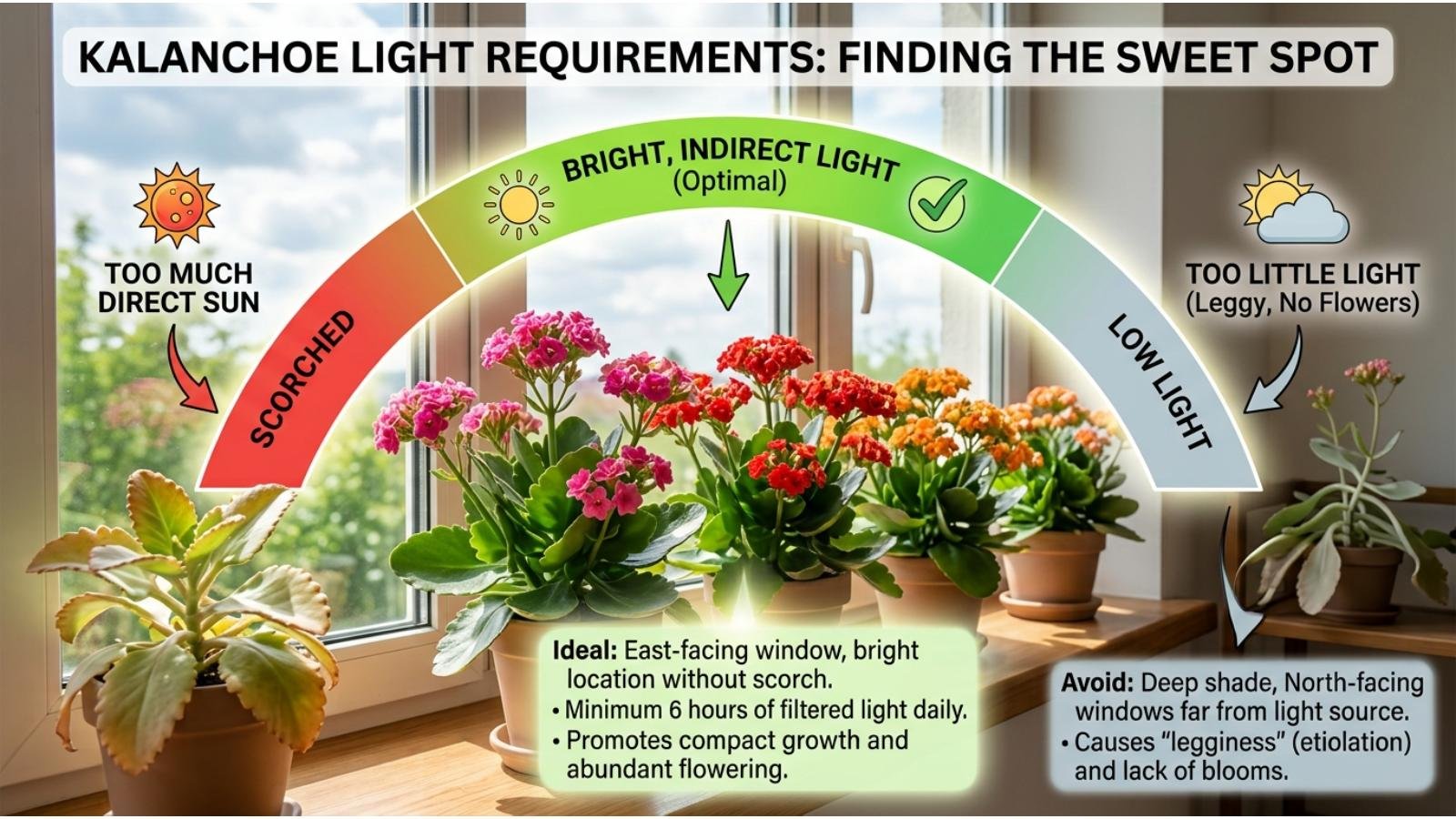
Bright light is one of the most important parts of successful kalanchoe plant care.
Place your kalanchoe near a bright window where it receives plenty of indirect or filtered light. An east or west-facing window can work well, while a bright south-facing location may also be suitable if intense direct sunlight is moderated.
Insufficient light often produces a recognizable pattern. The stems become longer, the spaces between leaves increase, and the plant begins to look thin rather than compact.
Flowering also depends heavily on light. A plant that receives good light generally has a better chance of maintaining strong growth and producing attractive flowers.
However, more sunlight is not automatically better. A kalanchoe that has been growing indoors can be damaged if it is suddenly placed in intense outdoor sun. Gradually acclimate it instead of moving it directly from a dim room to harsh midday sunlight.
Practical tip.
If your kalanchoe is becoming tall and leaning toward the window, first evaluate its light before reaching for fertilizer. Stretching is often a light problem rather than a nutrient problem.
How To Water Kalanchoe
Watering is where many kalanchoe problems begin.
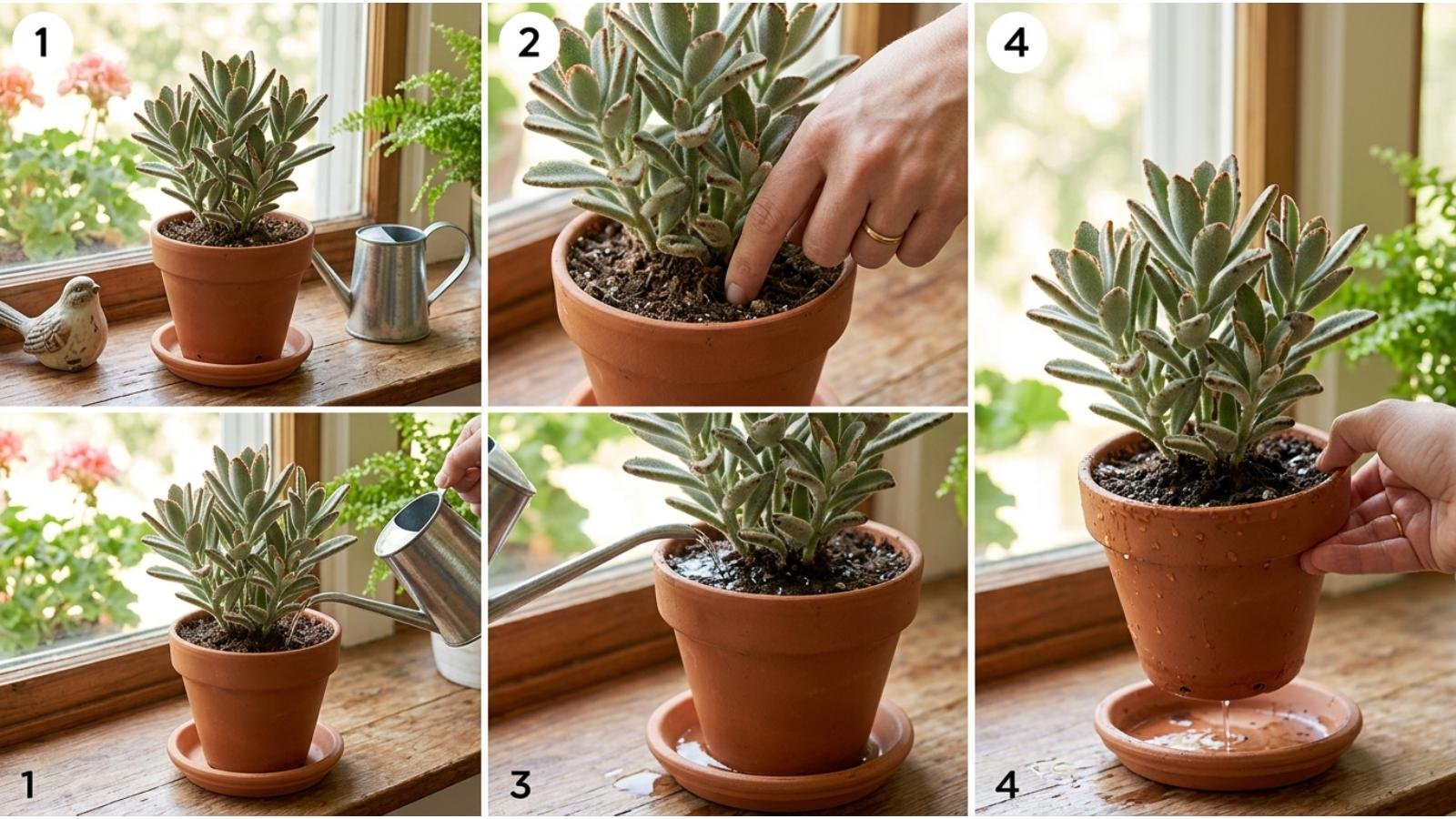
Kalanchoe stores water in its leaves, so it does not need frequent small drinks. Instead, water thoroughly and then allow the growing medium to dry somewhat before watering again.
A useful routine is to check the soil with your finger several inches below the surface. If the upper layer feels dry and the pot feels noticeably lighter, it is usually time to check whether the plant needs another thorough watering.
When watering, soak the soil until excess water flows from the drainage holes. Then empty any water collected in a saucer or decorative outer pot.
Do not follow a rigid calendar such as watering every Sunday. Indoor conditions change with temperature, sunlight, pot size, soil composition, and season.
A kalanchoe in bright light during active growth may use water faster than one sitting in a cool, dim room.
Clemson Extension specifically warns that kalanchoe can be damaged by overwatering and recommends allowing the soil to dry somewhat between waterings.
Signs Of Underwatering
A thirsty kalanchoe may show soft or slightly wrinkled leaves, especially when the soil has been dry for an extended period.
If the plant is severely dehydrated, leaves may become thinner and begin dropping.
The solution is not to keep adding small amounts of water every day. Give the dry root ball a proper drink and then return to a dry-down-and-water cycle.
Signs Of Overwatering
Overwatering can produce yellowing leaves, soft stems, mushy foliage, unpleasant-smelling soil, and eventual root damage.
One important distinction is that yellow leaves do not automatically mean the plant needs more water.
If the soil is already wet, adding more water can make the problem worse.
Image Suggestion: Side-by-side comparison of a healthy kalanchoe, underwatered kalanchoe, and overwatered kalanchoe.
Choosing The Right Soil
Kalanchoe needs a growing medium that drains efficiently and allows air to reach the roots.
A standard heavy garden soil is usually a poor choice for an indoor container because it can hold too much moisture around the roots.
Instead, use a well-draining succulent or cactus-style potting mix. You can improve drainage further by incorporating a suitable mineral component such as perlite or coarse grit.
The goal is not simply to make the soil dry as quickly as possible. The roots still need access to moisture and nutrients. The ideal mix balances moisture retention with rapid drainage and good aeration.
The RHS recommends a well-drained growing medium and notes that Kalanchoe blossfeldiana can be grown in loam or sand-based conditions.
Choosing The Best Pot
The container matters almost as much as the soil.
Always choose a pot with a drainage hole. Decorative containers without drainage can trap excess water around the roots even when your watering technique is otherwise good.
Avoid moving a small kalanchoe into an enormous container. A much larger volume of wet soil can remain moist for a long time after watering.
When repotting, choose a container only modestly larger than the existing root system.
Terracotta can also be useful because its porous walls can allow moisture to escape more readily than some glazed or plastic containers.
Practical tip.
If your kalanchoe repeatedly suffers from wet soil despite careful watering, inspect the pot before changing your entire care routine.
Temperature And Humidity
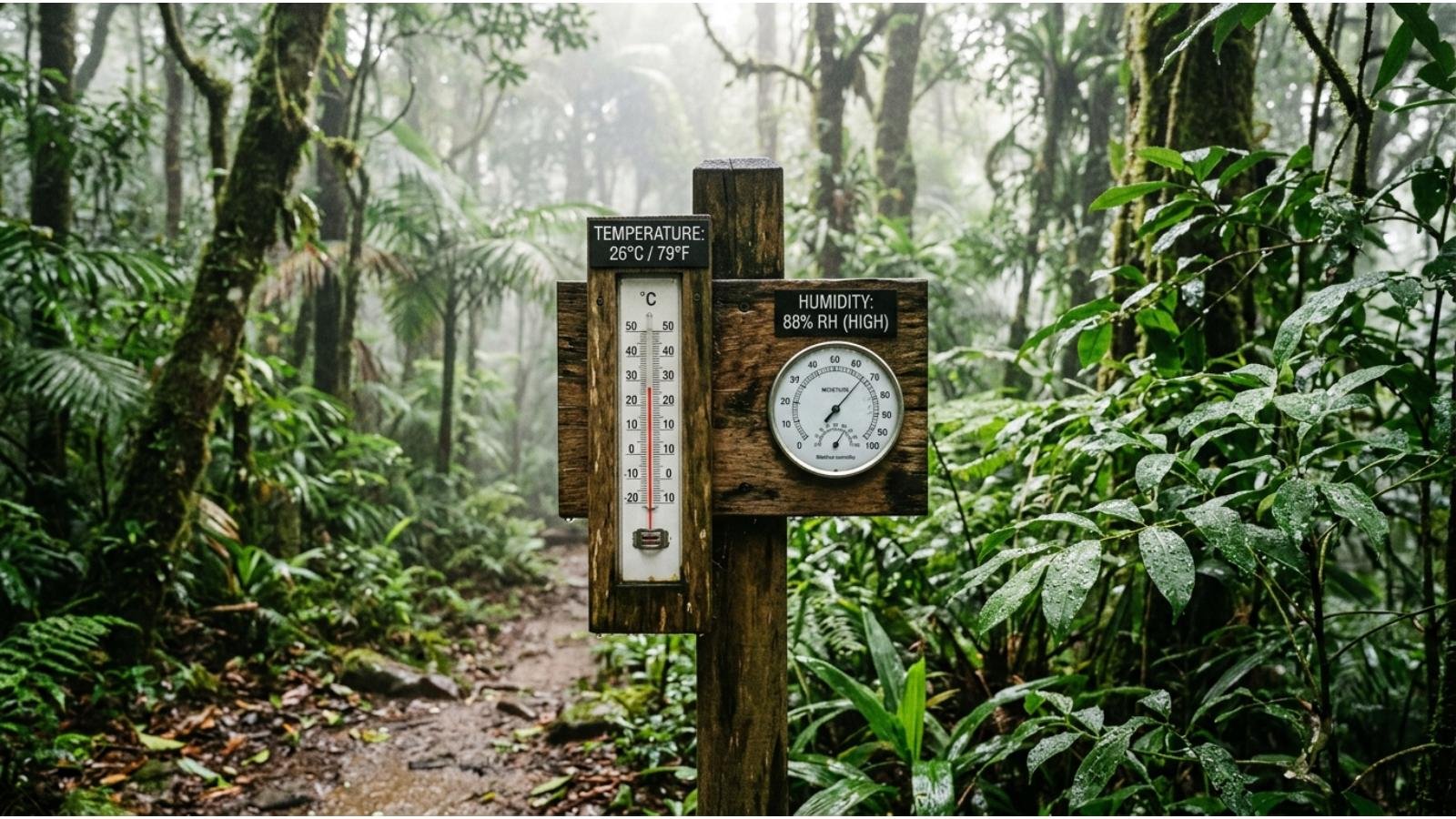
Kalanchoe generally prefers warm indoor conditions without extreme temperature swings.
Keep it away from cold drafts, freezing temperatures, and locations directly beside heating vents.
Clemson Extension gives ideal temperature ranges of approximately 50 to 70°F during the day and 45 to 65°F at night for kalanchoe, while also noting that cooler nighttime conditions can help prolong flower life.
Normal household humidity is usually sufficient. You generally do not need to create a highly humid environment for a kalanchoe.
In fact, good airflow and careful watering are often more useful than constantly increasing humidity.
How To Fertilize Kalanchoe
Kalanchoe does not require heavy feeding.
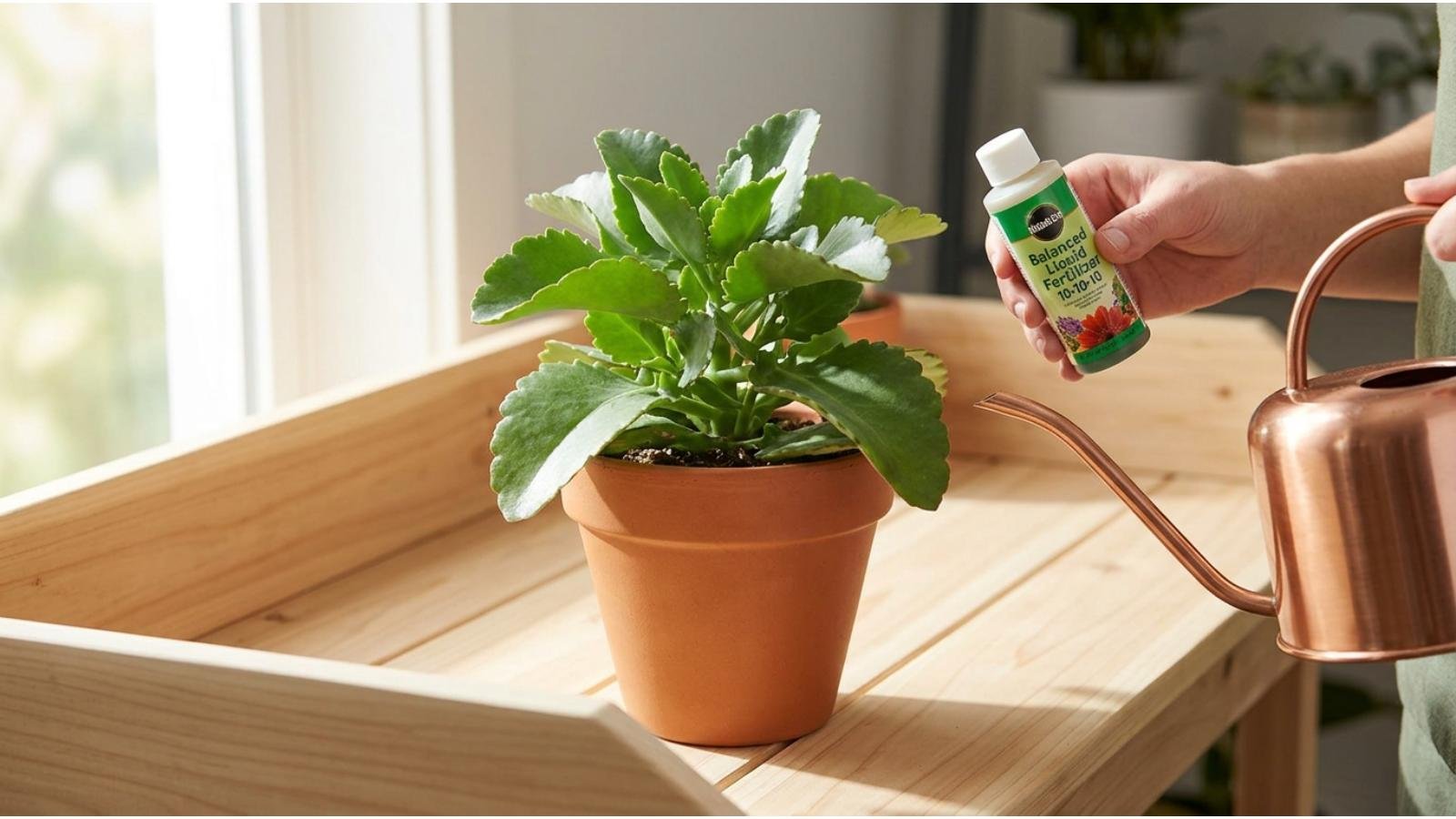
During active growth, use a balanced houseplant fertilizer according to the product label. Avoid applying stronger concentrations simply because you want faster growth or more flowers.
Too much fertilizer can contribute to salt buildup and may damage roots.
Clemson Extension recommends fertilizing actively growing kalanchoe with houseplant fertilizer about once a month.
A practical approach is to reduce or stop regular feeding when the plant is not actively growing.
The plant’s condition should also guide your decisions. A weak plant with damaged roots should not be pushed with fertilizer before its basic growing conditions are corrected.
Pruning And Deadheading Kalanchoe
Removing spent flowers keeps the plant looking tidy and can redirect energy toward continued growth.
Once a flower cluster has finished blooming, cut the spent flower stalk back using clean, sharp scissors or pruners.
You can also remove damaged, yellow, or dead leaves as needed.
If your kalanchoe has become leggy, selective pruning can help encourage a more compact appearance.
Do not remove large amounts of healthy foliage unnecessarily. Leaves are important for photosynthesis and energy storage.
Pruning is especially useful after flowering because it gives you an opportunity to reshape the plant before its next period of active growth.
How To Get Kalanchoe To Rebloom
Getting kalanchoe to flower again is one of the most useful advanced care techniques.
After flowering, continue providing appropriate light, water, and nutrition while the plant produces healthy new growth.
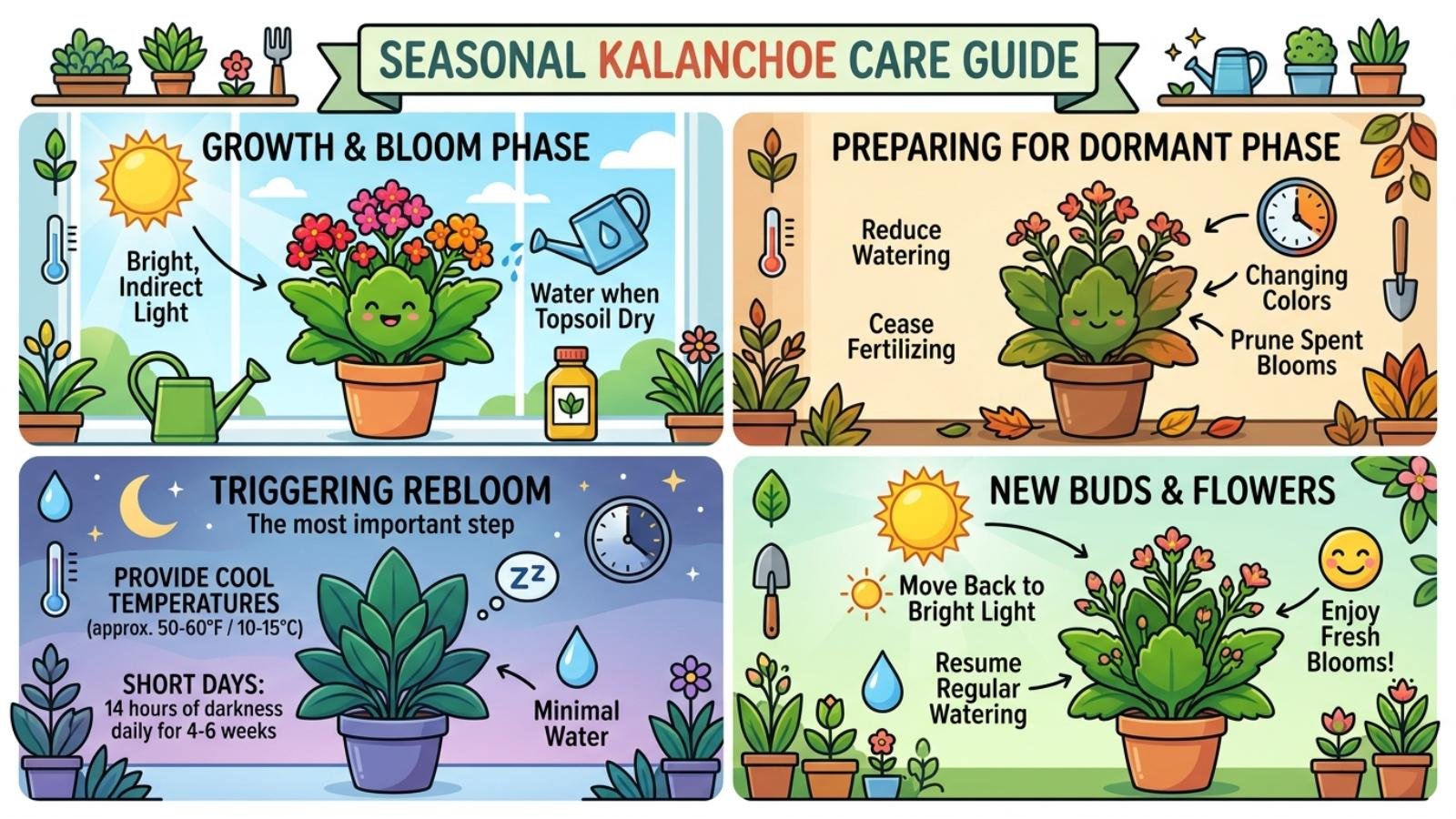
The flowering cycle of Kalanchoe blossfeldiana is influenced by day length. To encourage flowering, growers commonly provide a period of long, uninterrupted nights before the desired bloom period.
In practical terms, the plant needs consistent darkness during its flower-induction period. Artificial light from lamps or bright rooms during the night can interfere with the process.
Clemson Extension notes that kalanchoes can be grown to rebloom with proper care and recommends maintaining healthy growth after flowering before preparing the plant for another flowering cycle.
This is one reason commercial kalanchoes can appear perfectly timed in stores. Flowering is not simply a matter of giving the plant more fertilizer.
Image Suggestion: A simple month-by-month kalanchoe reblooming diagram showing active growth, pruning, dark-period treatment, bud development, and flowering.
How To Propagate Kalanchoe
Kalanchoe can be propagated from suitable plant material, depending on the species and cultivar.
For many common flowering kalanchoes, stem or leaf cuttings can be used.
Allow a suitable cutting to dry and form a callus before placing it into a well-draining propagation medium. This reduces the risk associated with keeping a fresh succulent cutting constantly wet.
Keep the propagation medium lightly managed rather than saturated.
Once roots develop and new growth begins, the young plant can gradually be moved into a normal succulent growing routine.
Propagation is most successful when the parent plant is healthy and actively growing.
Image Suggestion: Step-by-step illustration showing a kalanchoe cutting, callusing stage, rooting stage, and young plant.
Common Kalanchoe Problems
Most kalanchoe problems are connected to a small number of environmental issues.
Yellow Leaves
Yellow leaves can result from excessive moisture, poor drainage, aging foliage, or other growing stresses.
Start by checking the soil rather than automatically increasing watering.
If the soil stays wet for a long time, inspect the drainage hole and growing medium.
Soft Or Mushy Stems
Soft stems are a warning sign that the plant may be staying too wet.
Remove the plant from its container if root damage is suspected and inspect the roots. Healthy roots should not be mushy or badly decomposed.
Correct the drainage problem before returning the plant to a normal watering routine.
Wrinkled Leaves
Wrinkled leaves can indicate that the plant has used much of its stored moisture.
Check the soil before watering. If the growing medium is genuinely dry, water thoroughly and allow excess water to drain away.
If the soil is already wet, investigate root health rather than watering again.
Leggy Growth
Leggy growth usually means the plant is not receiving enough usable light.
Move it gradually toward a brighter location and rotate the pot periodically so growth remains more balanced.
Pruning can improve the appearance, but stronger light addresses the underlying problem.
Kalanchoe Not Flowering
If a previously flowering kalanchoe produces foliage but no flowers, consider light exposure, plant maturity, nutrition, pruning history, and the nighttime light environment.
A plant exposed to bright artificial light after sunset may not receive the uninterrupted dark period needed for flower induction.
Brown Or Scorched Leaves
Brown patches can occur after excessive direct sunlight, especially when a plant has not been acclimated.
Move it to bright filtered light and avoid abrupt changes in exposure.
Kalanchoe Pests
Kalanchoe can encounter common houseplant pests, including mealybugs.
Inspect leaf joints, stems, and areas underneath leaves regularly.
Early detection makes pest management much easier. A plant that is checked occasionally is far easier to manage than one discovered after a large infestation has developed.
The RHS lists mealybugs among pests that can affect Kalanchoe blossfeldiana.
When you notice pests, isolate the affected plant from nearby houseplants and choose a control method appropriate for the pest and the product label.
Seasonal Kalanchoe Care
Kalanchoe care should change slightly throughout the year.
Spring
Spring is often a good time for active growth, pruning, repotting when necessary, and beginning regular feeding.
Increase watering only in response to increased plant activity and drying conditions.
Summer
Bright light and warm temperatures can increase water use.
If the plant is moved outdoors, acclimate it gradually to outdoor light. Avoid immediately placing an indoor-grown kalanchoe into intense afternoon sun.
The RHS recommends sheltered conditions and bright filtered light for indoor cultivation.
Fall
Fall is a useful time to evaluate the plant’s shape and prepare for future flowering.
If you are trying to encourage reblooming, consistent dark periods become especially important.
Winter
Indoor winter conditions can be tricky because shorter days and lower indoor light can slow growth.
Reduce watering when the plant is using water more slowly.
Keep it away from cold drafts and freezing conditions.
The simplest winter mistake is continuing a summer watering schedule when the plant is receiving much less light.
Kalanchoe Care Mistakes To Avoid
Several mistakes appear repeatedly in beginner kalanchoe care.
- Watering on a fixed calendar instead of checking soil moisture.
- Using a container without a drainage hole.
- Keeping the soil constantly wet.
- Placing the plant in a dark room and expecting abundant flowers.
- Moving an indoor kalanchoe directly into intense outdoor sunlight.
- Using an oversized pot.
- Fertilizing heavily to compensate for poor lighting.
- Ignoring soft stems or persistently wet soil.
- Leaving spent flower clusters attached indefinitely.
- Exposing the plant to cold drafts or freezing temperatures.
The most important lesson is simple. Do not try to fix a light, drainage, or temperature problem with more water or fertilizer.
A Simple Kalanchoe Care Routine
For beginners, a straightforward routine works better than constantly adjusting the plant.
Check the soil periodically.
Water thoroughly when the growing medium has dried appropriately.
Confirm that excess water can escape through the drainage hole.
Keep the plant in bright filtered light.
Rotate the container occasionally for more even growth.
Remove spent flowers and damaged foliage.
Feed lightly during active growth.
Inspect leaves and stems for pests.
Adjust watering according to season, light, temperature, and soil drying speed.
This routine is more reliable than following a strict watering calendar because indoor growing conditions are not identical from one home to another.
Is Kalanchoe Safe Around Pets
Kalanchoe should be kept away from dogs and cats.
The ASPCA lists Kalanchoe species as toxic to dogs and cats and identifies bufadienolides as the toxic principle. Reported clinical signs include vomiting, diarrhea, and, in rare cases, abnormal heart rhythm.
If you have pets that chew plants, place kalanchoe somewhere inaccessible.
If you suspect a pet has eaten part of the plant, contact a veterinarian or an appropriate animal poison-control service promptly rather than waiting for symptoms to develop.
Frequently Asked Questions About Kalanchoe Plant Care
How Often Should You Water A Kalanchoe
Water when the growing medium has dried somewhat rather than following a fixed weekly schedule. Water thoroughly and allow excess moisture to drain completely. Frequency depends on light, temperature, pot size, soil, and season.
Does Kalanchoe Need Direct Sunlight
Kalanchoe needs bright light, but intense direct sunlight can scorch foliage if the plant is not acclimated. Bright filtered light is a dependable indoor option.
Why Are My Kalanchoe Leaves Turning Yellow
Yellow leaves can be caused by excessive moisture, poor drainage, aging leaves, or environmental stress. Check the soil and drainage before adding more water.
Can Kalanchoe Grow Indoors
Yes. Kalanchoe blossfeldiana is commonly grown as an indoor flowering succulent. A bright window, well-draining soil, and controlled watering provide a strong starting point.
Why Is My Kalanchoe Not Blooming
Insufficient light and unsuitable day-length conditions are common reasons. The plant may also need proper post-flowering care and a controlled period of uninterrupted darkness to encourage another flowering cycle.
Should I Cut Off Dead Kalanchoe Flowers
Yes. Removing spent flower clusters improves appearance and can help redirect the plant’s resources toward new growth.
Can I Put Kalanchoe Outside
Kalanchoe can be moved outdoors during suitable warm weather, but indoor-grown plants should be acclimated gradually. Protect them from extreme sun, cold, and frost.
What Is The Best Soil For Kalanchoe
Use a loose, well-draining succulent or cactus potting mix. The container must also have effective drainage.
Does Kalanchoe Like Humidity
Kalanchoe generally does not require unusually high humidity. Good drainage, appropriate watering, and airflow are more important.
How Long Can A Kalanchoe Live
With appropriate care, a kalanchoe can be maintained for multiple growing seasons rather than treated as a temporary flowering plant. Pruning, good light, proper watering, and reblooming care can help maintain the plant over time.
Conclusion
Successful kalanchoe plant care comes down to controlling moisture while providing enough light. Treat the plant as a succulent, not as a tropical houseplant that needs frequent watering. Use fast-draining soil, choose a pot with drainage, water thoroughly only after the soil has dried appropriately, and provide bright filtered light.
For the best long-term results, pay attention to what the plant is telling you. Soft stems and persistently wet soil point toward excess moisture, while stretched growth often indicates insufficient light. Once those basic conditions are right, pruning, feeding, pest monitoring, and reblooming become much easier.
The goal is not to give your kalanchoe constant attention. It is to create the right environment and then let the plant’s natural growth habits work in your favor.