Esperanza is a rewarding choice for gardeners who want a flowering shrub that can bring bright color and pollinator activity to a sunny landscape. Its yellow trumpet-shaped flowers are especially attractive, but the plant needs the right combination of sunlight, drainage, watering, and pruning to maintain vigorous growth and abundant flowering.
The good news is that you usually do not need a complicated care routine to keep esperanza healthy. The biggest mistakes are generally related to insufficient sunlight, constantly wet soil, and pruning at the wrong time. Once you understand how Tecoma stans responds to its growing conditions, caring for it becomes much more straightforward.
Quick Answer
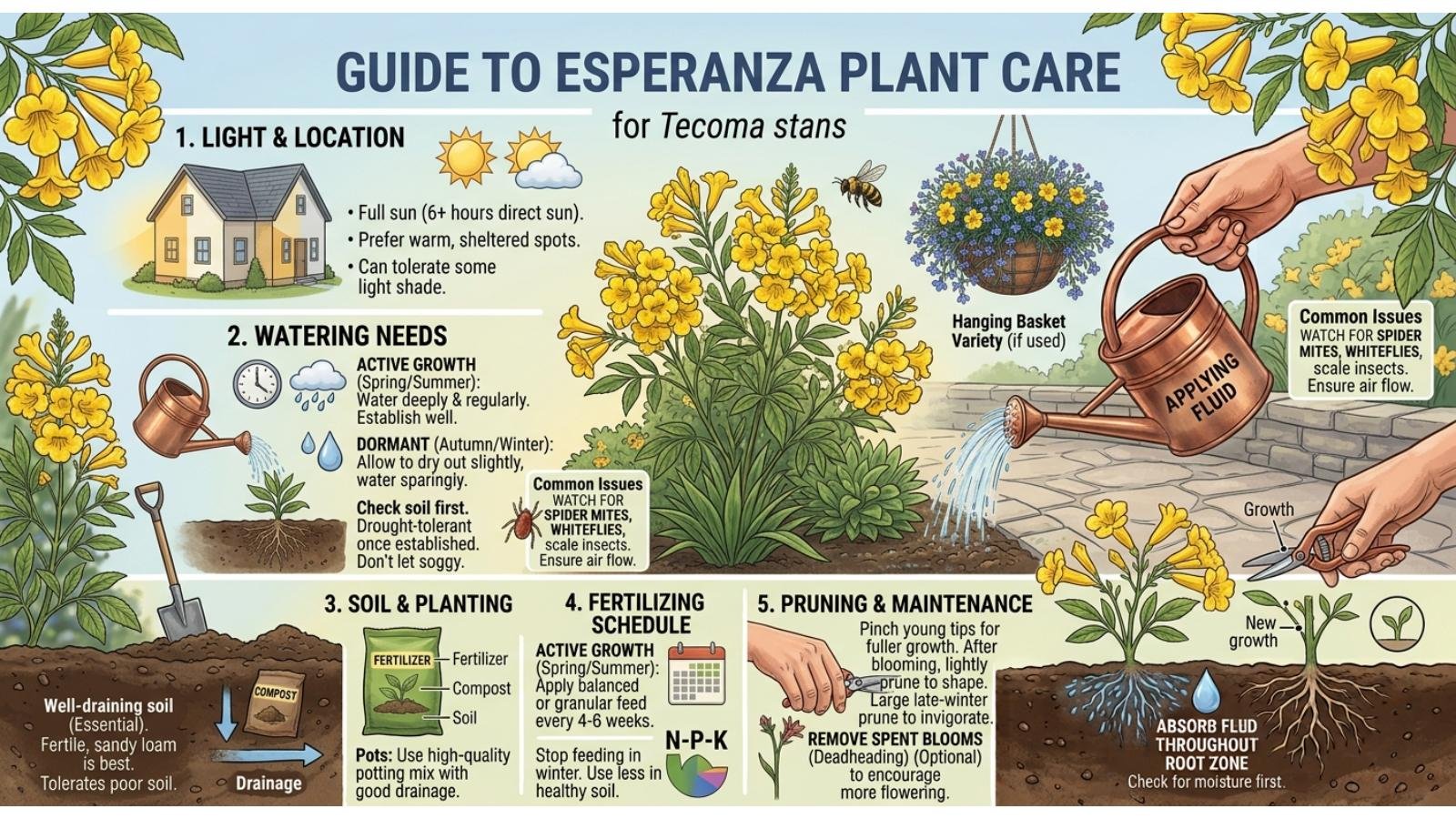
Esperanza plant care is easiest when you provide plenty of sunlight, well-draining soil, moderate watering, and regular pruning. Esperanza, commonly known as yellow bells or yellow elder, is Tecoma stans, a warm-climate flowering shrub that produces bright yellow trumpet-shaped blooms. It performs best in full sun and well-drained soil and becomes relatively drought tolerant once established.
What Is An Esperanza Plant
Esperanza is the common name commonly used for Tecoma stans, a flowering shrub in the Bignoniaceae family. It is also called yellow bells, yellow elder, trumpetbush, and yellow trumpetflower.
It is native to tropical and subtropical regions of the Americas and is valued for its clusters of bright yellow, trumpet-shaped flowers. Depending on climate and growing conditions, it can develop into a substantial shrub or small tree.
In warm climates, esperanza can be grown directly in the landscape. In colder areas, container growing can make it easier to protect the plant from freezing temperatures.
Image Suggestion: A labeled botanical illustration showing esperanza leaves, yellow trumpet flowers, stems, and seed pods.
Esperanza Plant Light Requirements
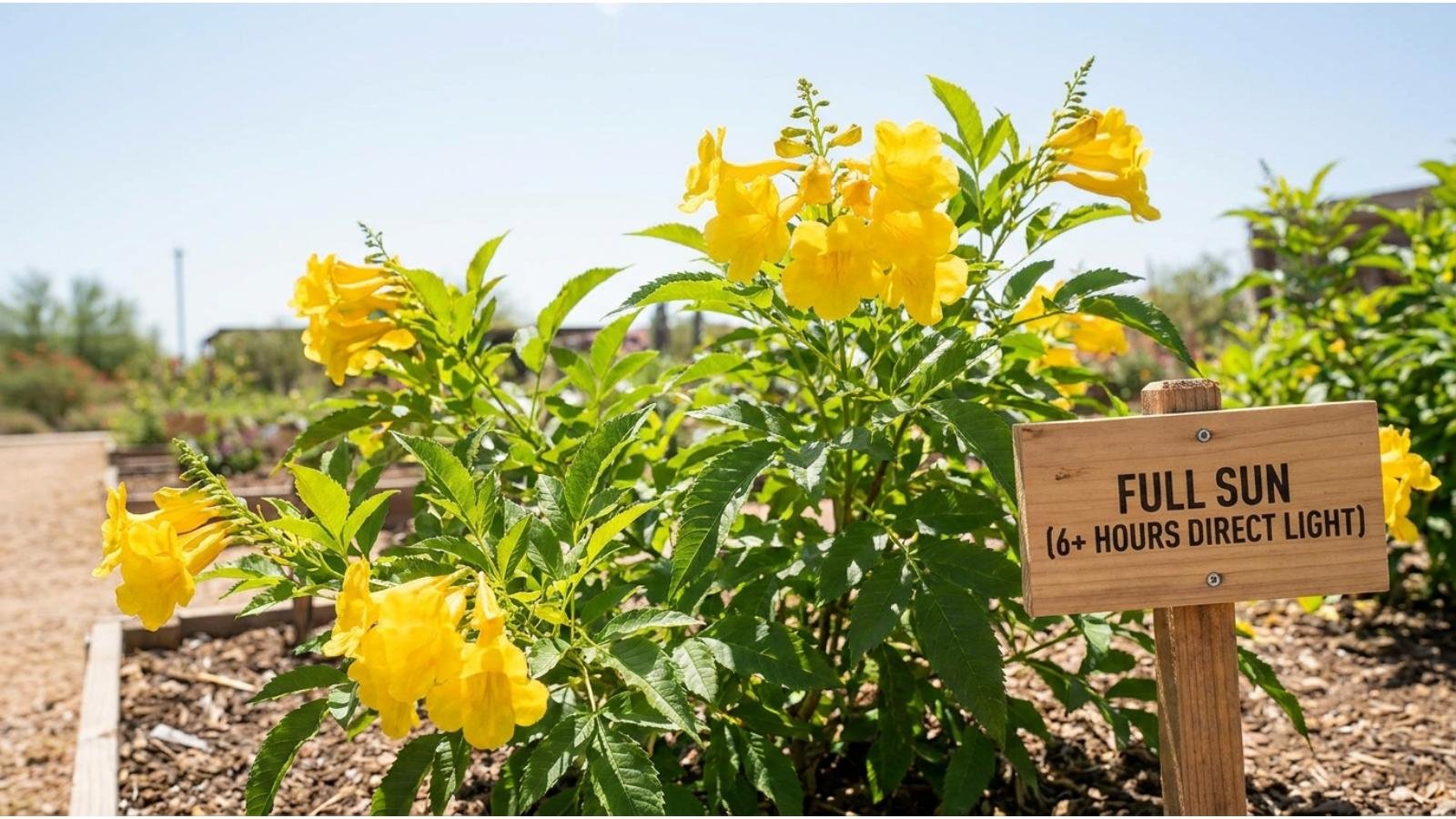
Full sun is the best choice for esperanza.
Aim for approximately 6 or more hours of direct sunlight per day when possible. Extension guidance lists full sun as the preferred exposure, while the RHS also recommends a sunny position.
Good locations include:
- A south-facing garden bed.
- A sunny patio.
- A bright position beside a warm wall.
- An open landscape area without heavy shade from trees.
- A large container receiving several hours of direct sunlight.
Too little light can result in weaker growth and fewer flowers. This is particularly important if your main reason for growing esperanza is its yellow blooms.
A useful practical rule is simple: if your esperanza receives strong morning or afternoon sun but spends most of the day in deep shade, consider moving it to a brighter location.
Best Soil For Esperanza
Esperanza is adaptable to different soil types, including sandy, loamy, and clay soils, provided drainage is good.
The most important characteristic is not creating a perfect soil recipe. It is preventing the roots from remaining saturated for long periods.
For garden planting, improve heavy soil with organic matter and make sure excess water can drain away. In containers, choose a quality potting mix and use a pot with drainage holes.
Esperanza can tolerate acidic, neutral, and alkaline soil conditions according to extension information, so gardeners generally do not need to obsess over achieving one exact pH.
Image Suggestion: Comparison diagram showing well-drained soil around healthy esperanza roots versus waterlogged soil.
How To Water Esperanza
Watering should change with the plant’s age, weather, soil, and growing location.
Newly planted esperanza needs more consistent watering while its root system becomes established. Once established, the plant has good drought tolerance and can handle considerably drier conditions.
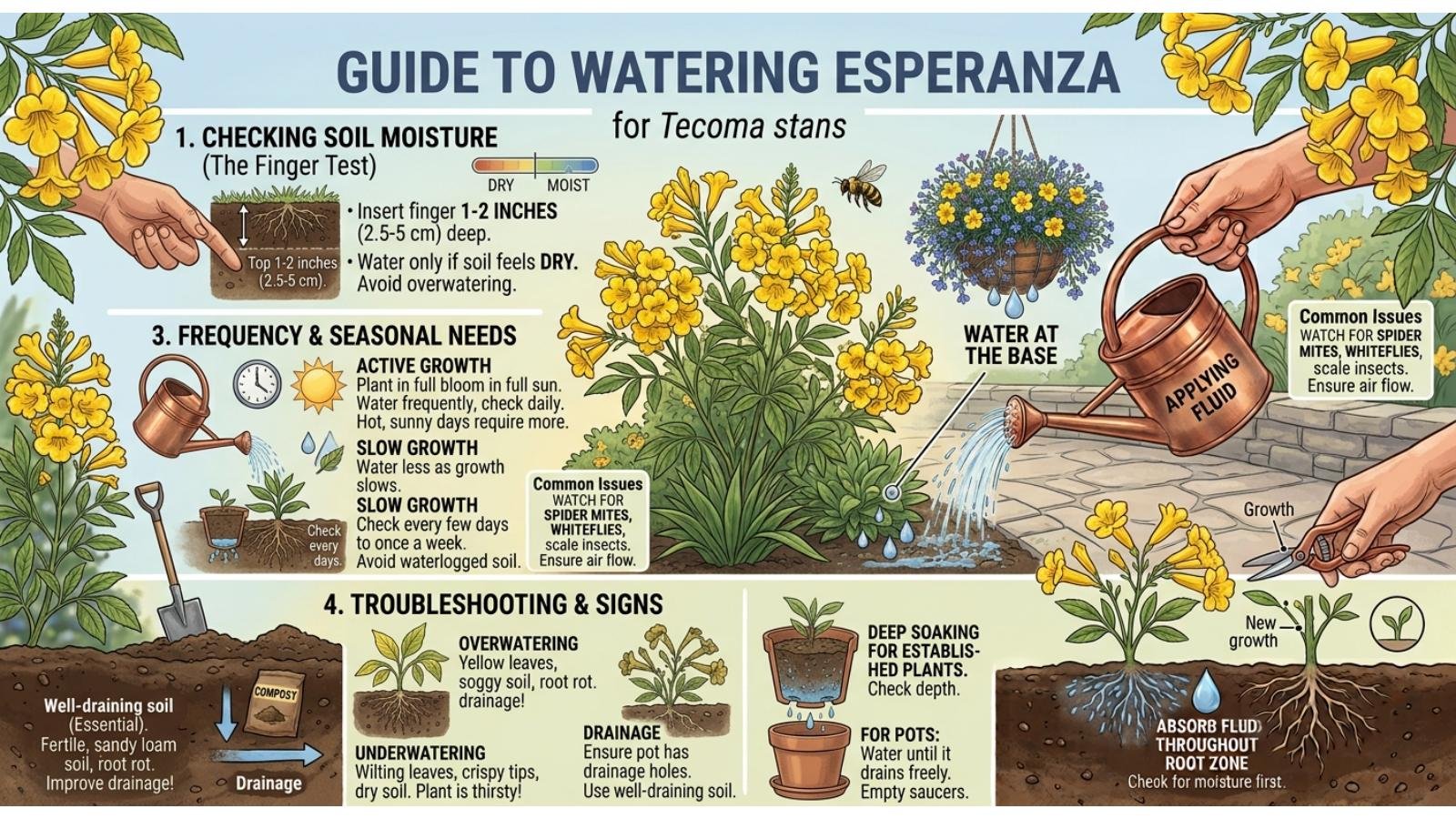
Instead of automatically watering every day, check the soil.
A practical approach is:
- Water deeply when the soil has begun to dry.
- Allow excess water to drain away.
- Increase watering during prolonged hot and dry weather.
- Reduce watering during cool periods.
- Pay closer attention to container plants because pots dry faster.
- Avoid keeping the root zone constantly saturated.
The RHS recommends deep, thorough watering rather than frequent shallow watering and advises checking soil moisture before watering.
One of the most common beginner mistakes is assuming that a wilted-looking plant always needs more water. Root problems caused by poor drainage can produce symptoms that resemble drought stress. Checking the soil around the roots is more reliable than watering automatically.
How To Fertilize Esperanza
Esperanza generally benefits from adequate nutrition during active growth, particularly when grown in containers or nutrient-poor soil.
Rather than repeatedly adding fertilizer whenever growth slows, first check the fundamentals:
- Is the plant receiving enough sunlight.
- Does the container drain properly.
- Is the soil staying excessively wet.
- Has the plant been recently pruned.
- Is the plant actively growing.
If those conditions are appropriate, a balanced flowering-plant fertilizer can be used according to the product label during the active growing season.
Avoid applying fertilizer to extremely dry soil. General RHS container guidance recommends feeding during active growth and avoiding fertilizer application to dry compost because concentrated fertilizer can damage roots.
Pruning Esperanza For Better Growth
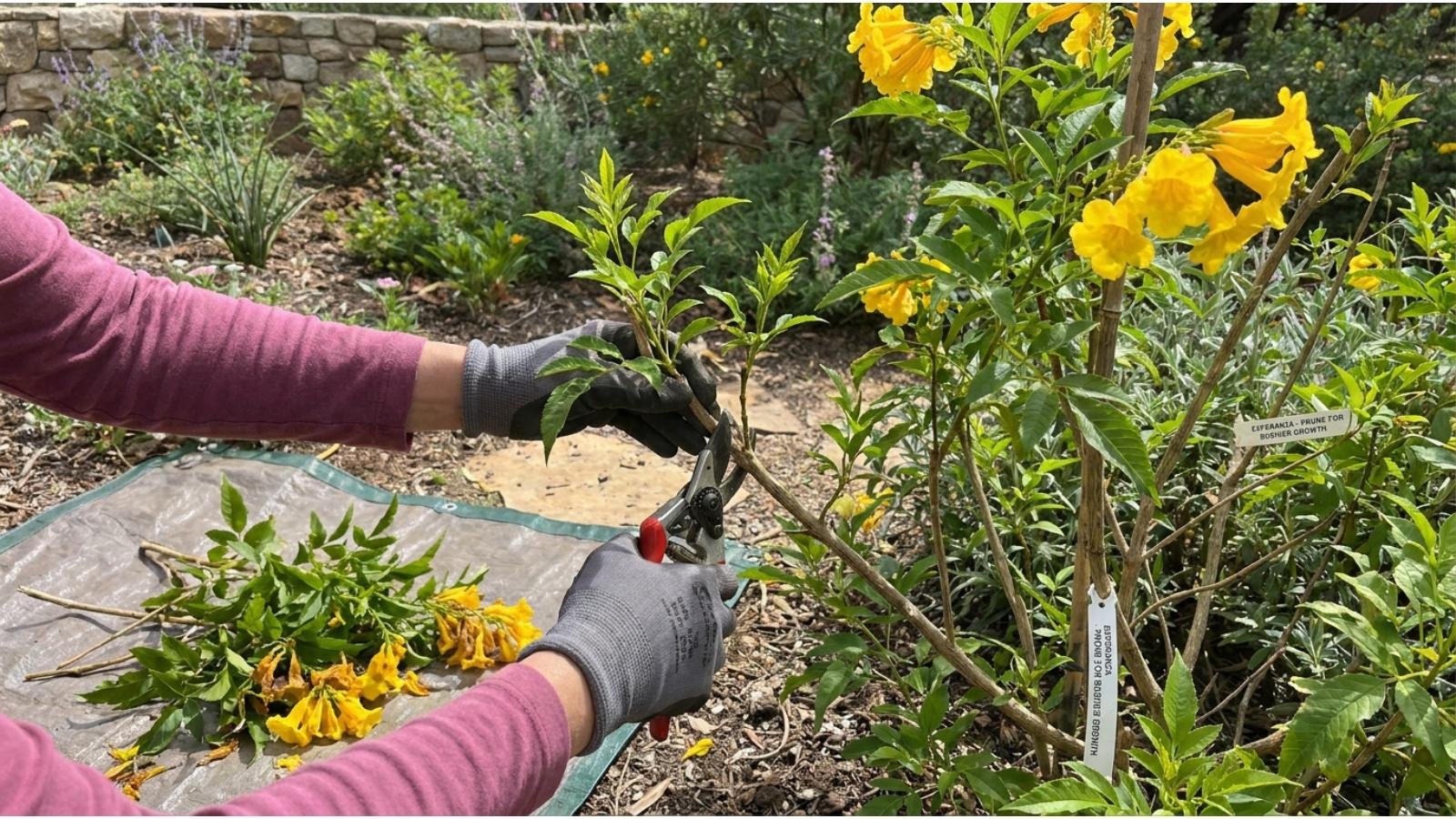
Pruning is one of the most useful parts of esperanza plant care because the plant can develop vigorous, somewhat loose growth.
Extension guidance recommends pruning after flowering to control size and shape, while the RHS lists spring pruning for Tecoma stans. The exact timing can therefore depend on your climate and the flowering cycle of your plant.
When pruning:
- Remove dead or damaged branches first.
- Thin congested growth when necessary.
- Shorten overly long branches to maintain the desired shape.
- Use clean, sharp pruning tools.
- Avoid removing large amounts of healthy growth unnecessarily.
- Time major pruning around the plant’s flowering and growth cycle.
If your goal is maximum flowering, avoid treating the shrub like a formal hedge and constantly shearing every new shoot. Strategic pruning generally gives you better control while preserving flowering wood.
Image Suggestion: Before-and-after diagram showing an overgrown esperanza and a properly pruned plant.
Esperanza In Containers
Esperanza can be grown in containers, especially where winter temperatures make outdoor landscape planting difficult.
Choose a container that has:
- Several drainage holes.
- Enough volume for the root system.
- Stable construction so the plant does not easily tip over.
- A quality, well-draining potting medium.
Container-grown plants usually need more frequent monitoring than established plants in the ground because their limited soil volume can dry rapidly during hot weather.
Do not place a container inside a decorative pot where water accumulates around the root ball. Empty standing water after irrigation so the roots have access to air.
The RHS emphasizes that container drainage is essential because prolonged saturation can deprive roots of oxygen and contribute to root problems.
Esperanza Winter Care
Esperanza is fundamentally a warm-climate plant. The RHS classifies Tecoma stans as tender under UK conditions, recommending outdoor cultivation only in very mild, frost-free areas and container growing elsewhere so plants can be protected during winter.
If you live in a region with freezing winters, consider growing esperanza in a container so you can move it to a protected location.
During a cooler dormant period:
- Reduce watering.
- Avoid keeping the soil constantly wet.
- Protect the plant from freezing temperatures.
- Limit fertilizer when growth has slowed significantly.
- Provide as much available light as practical.
The exact winter strategy depends heavily on your climate. A plant grown outdoors in a warm subtropical region has very different requirements from one being overwintered in a cold climate.
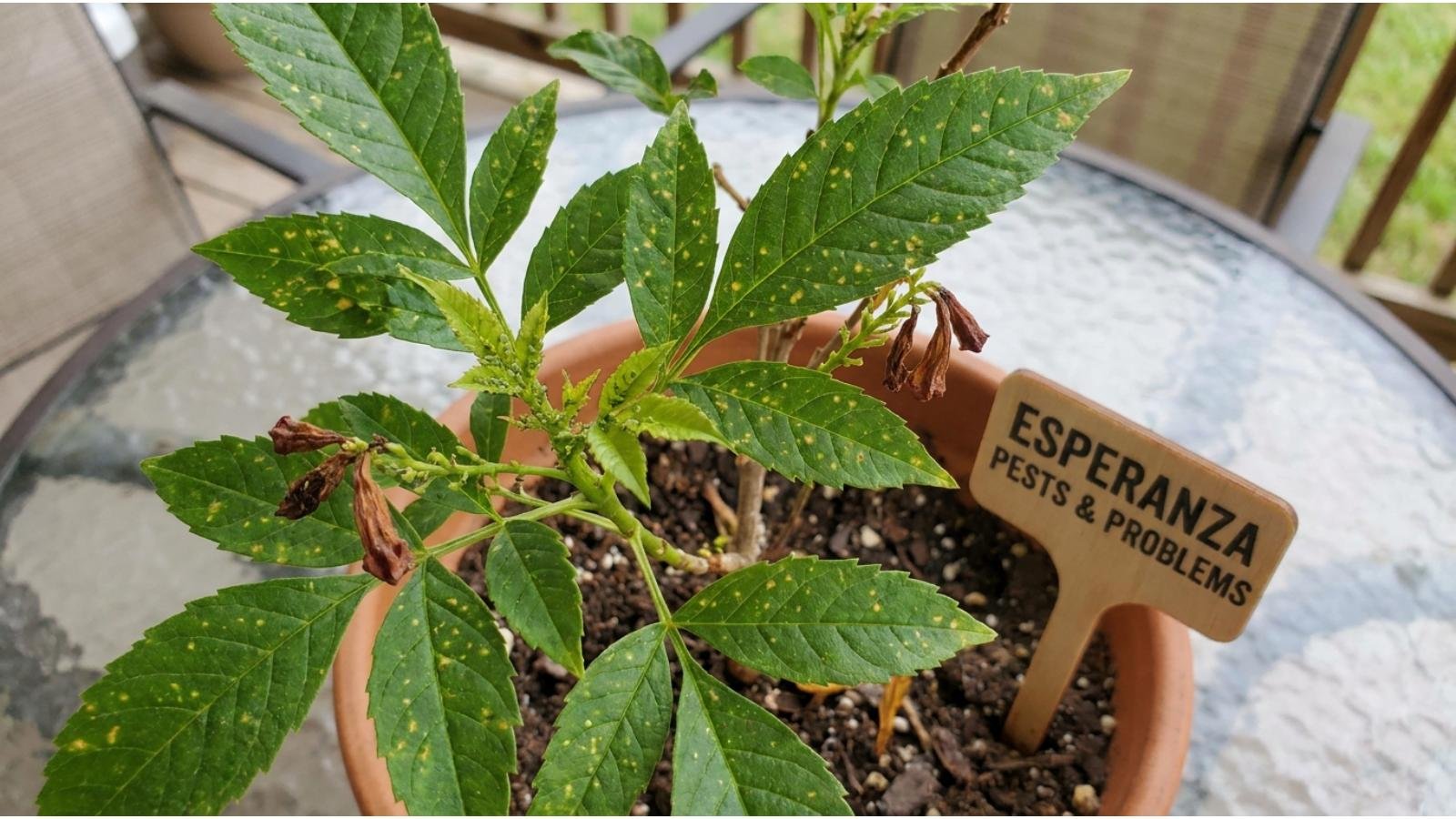
Esperanza Plant Pests And Problems
Esperanza is generally considered relatively easy to grow, but problems can still occur.
The RHS lists red spider mite and whitefly as potential pests, particularly under protected growing conditions.
Yellow Leaves
Yellow leaves can have several causes, including excessive moisture, poor drainage, nutrient problems, aging foliage, or environmental stress.
Do not immediately assume fertilizer deficiency. Check the soil first.
If the soil remains wet for long periods, improving drainage may be more important than feeding the plant.
Few Or No Flowers
Lack of flowers is often associated with growing conditions rather than a simple fertilizer deficiency.
Check:
- Sunlight.
- Pruning timing.
- Watering.
- Overall plant health.
- Container size.
- Nutrient availability.
Because esperanza flowers best in full sun, moving a heavily shaded plant to a brighter position can make a noticeable difference.
Drooping Leaves
Drooping can indicate water stress, but it does not automatically mean the plant needs immediate watering.
Check the soil several inches below the surface. If it is already wet, adding more water could make the problem worse.
Leggy Growth
Long, weak stems often indicate inadequate light or insufficient pruning. Moving the plant into stronger light and pruning strategically can encourage a more compact appearance.
How To Encourage More Esperanza Flowers
If flowering is your priority, concentrate on the conditions that directly influence plant growth.
Give the plant:
- Plenty of direct sunlight.
- Well-drained soil.
- Appropriate moisture.
- Adequate nutrition during active growth.
- Periodic pruning to control excessive growth.
- Enough space for mature development.
Deadheading spent flowers can also help prolong the flowering display according to North Carolina Extension.
The important point is not to chase flowers with excessive fertilizer. A healthy root system and strong light provide the foundation for good flowering.
Esperanza And Pollinators
Esperanza is more than an ornamental shrub.
Its yellow trumpet-shaped flowers provide nectar for bees, hummingbirds, and other pollinators. North Carolina Extension also identifies Tecoma stans as a larval host plant for the plebeian sphinx.
This makes it particularly useful in a pollinator-friendly garden.
If supporting pollinators is part of your gardening goal, consider placing esperanza alongside other flowering plants that provide nectar across different seasons. This creates a more continuous food supply rather than relying on a single flowering species.
Image Suggestion: Esperanza covered in yellow flowers with a hummingbird and bees visiting the blooms.
Common Esperanza Care Mistakes
Several mistakes repeatedly cause problems with flowering shrubs.
Overwatering
Esperanza can tolerate drought once established, so constantly wet soil is unnecessary. Good drainage is more important than keeping the soil permanently moist.
Growing In Deep Shade
Esperanza is a sun-loving plant. A shaded location can limit flowering and produce weaker growth.
Ignoring Drainage
Even drought-tolerant plants can suffer when their roots remain submerged in poorly draining soil.
Overfertilizing
More fertilizer does not automatically mean more flowers. Excessive feeding can encourage unwanted vegetative growth and create other problems.
Pruning Without A Plan
Constant trimming can interfere with the plant’s natural flowering cycle. Prune for health, shape, size, and flowering performance rather than simply cutting every long branch.
Esperanza Care By Season
| Season | Main Care Focus |
|---|---|
| Spring | Resume active watering, assess new growth, prune as appropriate, and begin feeding if needed. |
| Summer | Provide strong sunlight, monitor soil moisture, and water deeply during prolonged dry periods. |
| Fall | Reduce watering as growth slows and remove damaged or unwanted growth. |
| Winter | Protect from freezing conditions and reduce watering during dormancy or slow growth. |
Climate matters more than the calendar. In warm regions, esperanza may continue growing for much of the year, while colder climates can force it into dormancy or require indoor protection.
How To Grow Esperanza From Cuttings
Esperanza can be propagated from semi-hardwood cuttings, and the RHS recommends taking such cuttings in summer.
A practical propagation process is:
- Select a healthy, non-flowering shoot.
- Take a clean cutting with several nodes.
- Remove lower foliage.
- Place the cutting into a suitable propagation medium.
- Keep the medium appropriately moist but not waterlogged.
- Provide bright, indirect light while roots develop.
- Gradually acclimate the rooted cutting to stronger growing conditions.
Propagation success depends on temperature, humidity, cutting condition, and technique, so not every cutting will root.
Frequently Asked Questions About Esperanza Plant Care
How Much Sun Does Esperanza Need
Esperanza grows best in full sun, with approximately six or more hours of direct sunlight being a useful target.
How Often Should I Water Esperanza
Water when the soil begins to dry rather than following a rigid calendar. Newly planted and container-grown plants generally require closer monitoring, while established plants can tolerate dry conditions.
Can Esperanza Grow In Pots
Yes. Esperanza can be grown in containers, particularly in climates where plants need protection from cold weather. Use a container with good drainage and monitor moisture carefully.
Why Is My Esperanza Not Flowering
Insufficient sunlight is one of the first conditions to check. Also consider pruning timing, watering, nutrition, and overall plant health.
Does Esperanza Need Full Sun
Yes. Full sun is the preferred growing condition and supports strong flowering.
Is Esperanza Drought Tolerant
Established Tecoma stans has good drought tolerance. However, newly planted specimens still need appropriate watering while their roots become established.
Should I Deadhead Esperanza
Deadheading spent flowers can help prolong the flowering display and keep the plant looking tidy.
When Should Esperanza Be Pruned
Pruning timing depends on climate and flowering behavior. Extension guidance recommends pruning after flowering, while the RHS recommends spring pruning, so use the plant’s local growth cycle as your guide.
Is Esperanza Good For Pollinators
Yes. Its flowers provide nectar for bees, hummingbirds, and other pollinators.
Conclusion
Successful esperanza plant care comes down to a few : give Tecoma stans plenty of sunlight, use well-drained soil, water according to actual soil moisture, and prune thoughtfully to control size and encourage healthy flowering.
The most useful mindset is to avoid treating esperanza like a plant that needs constant attention. Once established in a suitable sunny location, it can tolerate dry conditions and remain relatively low maintenance.
If your plant is struggling, start with the basics before adding more fertilizer or treatments. Check the light, inspect the soil moisture, examine drainage, and look closely at new growth. Those simple observations often reveal the real problem much faster than changing several care routines at once.