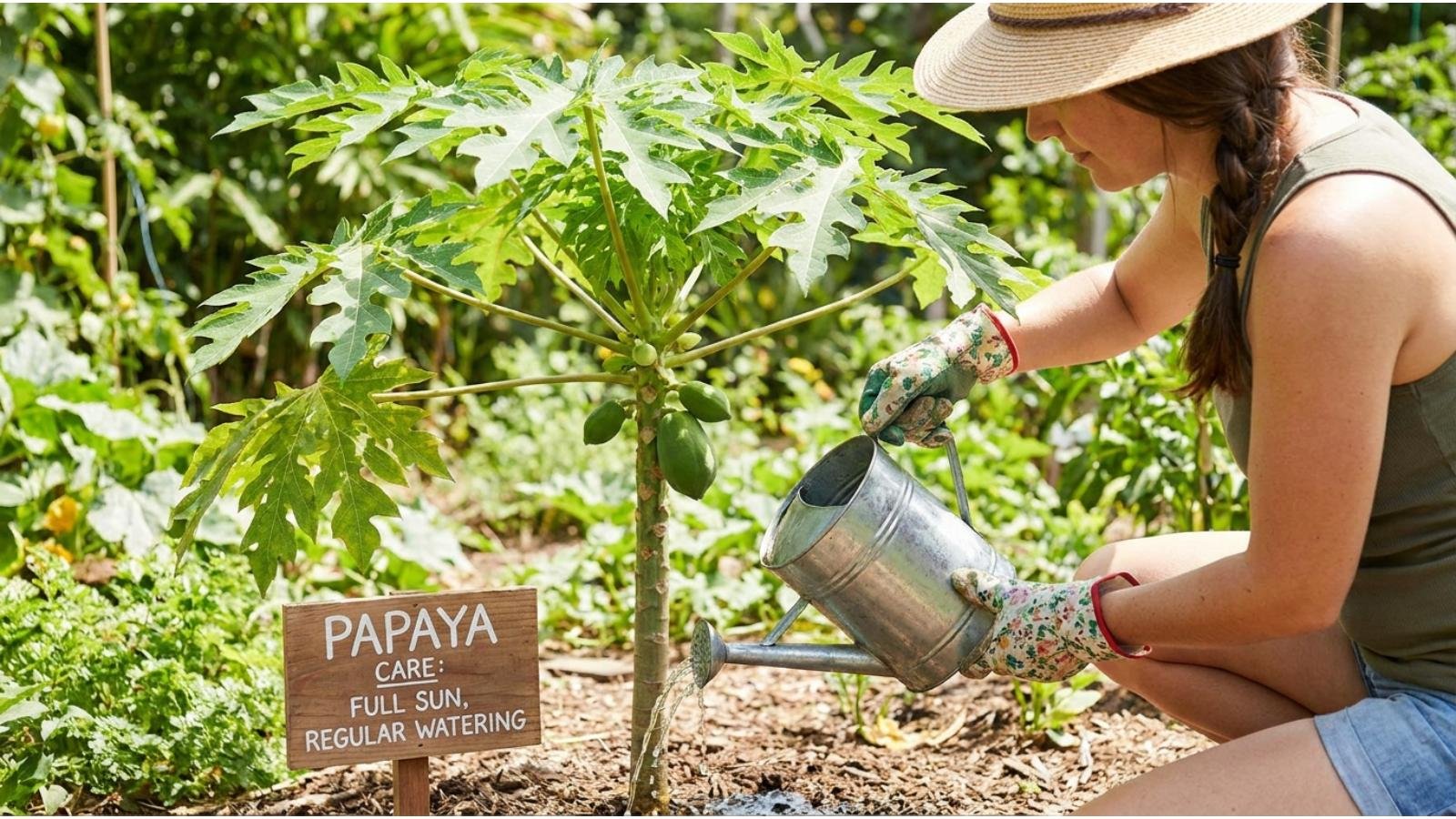
Papaya, scientifically known as Carica papaya, is one of the faster-growing tropical fruit plants you can grow at home. It can reward good care relatively quickly, but its rapid growth can also make problems appear quickly. Poor drainage, irregular watering, cold temperatures, excessive wind, nutrient deficiencies, and pests can all reduce growth or fruit production.
The good news is that papaya care becomes much easier when you focus on a few fundamentals rather than treating it like an ordinary backyard tree. Papayas are actually giant herbaceous plants, and their shallow root systems make drainage and careful watering particularly important.
Quick Answer
Papaya plant care is mainly about providing full sun, warm temperatures, excellent drainage, consistent moisture, regular feeding, and protection from strong wind and cold. Papayas grow quickly but are sensitive to waterlogged soil and frost. Keep the root zone evenly moist without leaving the plant standing in water, fertilize regularly with a suitable complete fertilizer, monitor leaves and fruit for pests or disease, and harvest fruit as it begins to develop yellow color.
Understanding Papaya Growth
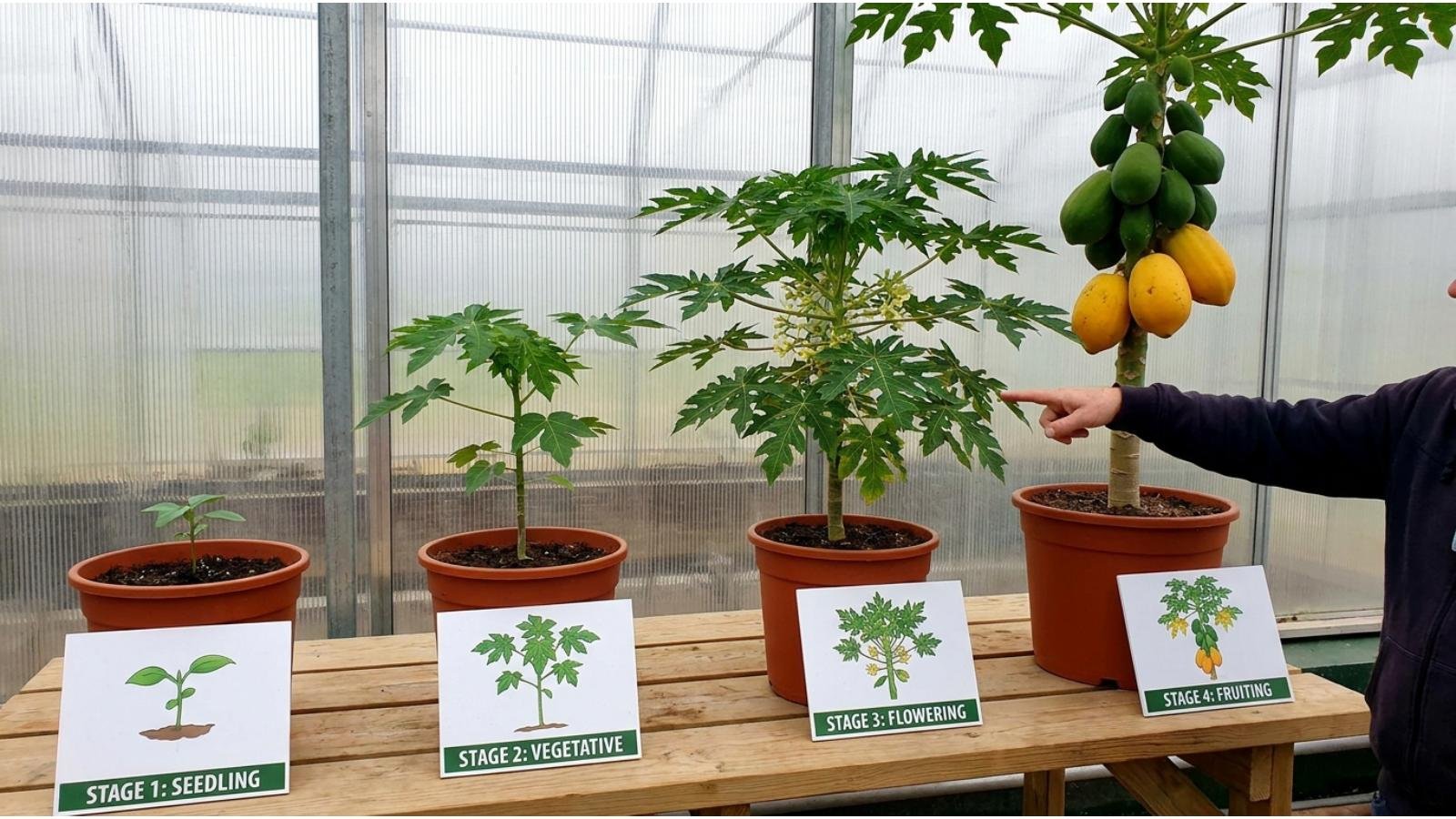
Papayas naturally develop a tall, generally single trunk topped with large, deeply lobed leaves. They can become surprisingly tall, with mature plants commonly reaching around 10 to 15 feet and sometimes considerably more under favorable conditions.
One important detail for beginners is that papayas can have male, female, or bisexual flowers. Some modern cultivars are commonly bisexual, but plants grown from seed can produce different flower types. This means a single seed-grown plant may not always produce fruit successfully, depending on its sex and cultivar.
Papayas are also relatively short-lived compared with many traditional fruit trees. In favorable landscapes, they may remain productive for several years, but their susceptibility to cold, wind, diseases, and root problems makes site selection especially important.
How Much Sun Does a Papaya Plant Need
Papayas perform best in full sun. Aim for at least six hours of direct sunlight, with more sun generally supporting vigorous growth and fruit production.
A sunny location matters because papaya is a fast-growing, fruit-producing plant with relatively high energy demands. A shaded plant may survive, but weak light can result in slower growth and poorer fruiting.
Choose a location that:
- Receives strong direct sunlight.
- Is protected from persistent strong winds.
- Does not collect standing water.
- Has enough vertical and horizontal space for mature growth.
- Is away from structures that create excessive shade.
Practical tip: If a papaya receives morning sun but becomes heavily shaded for most of the afternoon, moving it to a brighter location can make a noticeable difference in vigor.
Image Suggestion: Healthy papaya growing in full sun compared with a shaded, weakly growing plant.

Choosing the Right Soil for Papaya
Good drainage is arguably one of the most important parts of successful papaya plant care.
Papayas can tolerate several soil types, but they perform best when excess water can drain away quickly. Their shallow roots are vulnerable to prolonged wet conditions, and root rot can become a serious problem in poorly drained locations.
A useful soil setup should provide:
- Good drainage.
- Reasonable moisture retention.
- Adequate organic matter.
- Sufficient nutrients.
- No prolonged standing water.
If your garden soil remains wet after rain, consider planting on a raised mound or raised bed. This is often more effective than simply adding more organic material to a poorly drained planting hole.
Avoid placing a papaya directly into a low area where rainwater naturally collects.
Papaya Soil pH
Papayas can tolerate a range of soil conditions, including somewhat acidic and slightly alkaline soils. Drainage and overall soil health are generally more important than trying to achieve one exact pH value.
If your plant repeatedly develops nutrient-related symptoms despite appropriate fertilization, a soil test can help identify whether pH or nutrient availability is contributing to the problem.
How to Water a Papaya Plant
Papayas need regular moisture, but regular watering does not mean constantly wet soil.
The goal is consistent moisture around the roots while allowing excess water to drain away. Drought stress can cause papayas to drop leaves, flowers, and young fruit, while excessive moisture can contribute to root problems.
Your watering frequency should depend on:
- Temperature.
- Rainfall.
- Soil type.
- Plant size.
- Container versus ground growing.
- Drainage.
- Wind exposure.
Plants growing in very fast-draining sandy soil may need watering more frequently than plants growing in moisture-retentive loam. UF/IFAS notes that sandy or rocky soils may require watering every day or every other day during hot, dry conditions, while moisture-retentive soils may need longer intervals.
Instead of following a rigid calendar, check the soil and observe the plant.
Signs Your Papaya Needs More Water
Possible signs include:
- Wilting leaves.
- Drooping foliage.
- Premature leaf drop.
- Flower drop.
- Young fruit dropping.
- Slow growth during hot weather.
Signs of Excessive Water
Watch for:
- Constantly saturated soil.
- Poor growth despite adequate nutrition.
- Yellowing or declining foliage.
- Root problems.
- Sudden plant collapse in severe cases.
The biggest watering mistake is reacting to every wilted leaf by adding more water. First check the soil and drainage. Heat stress and root damage can produce similar symptoms.
Fertilizing Papaya Plants
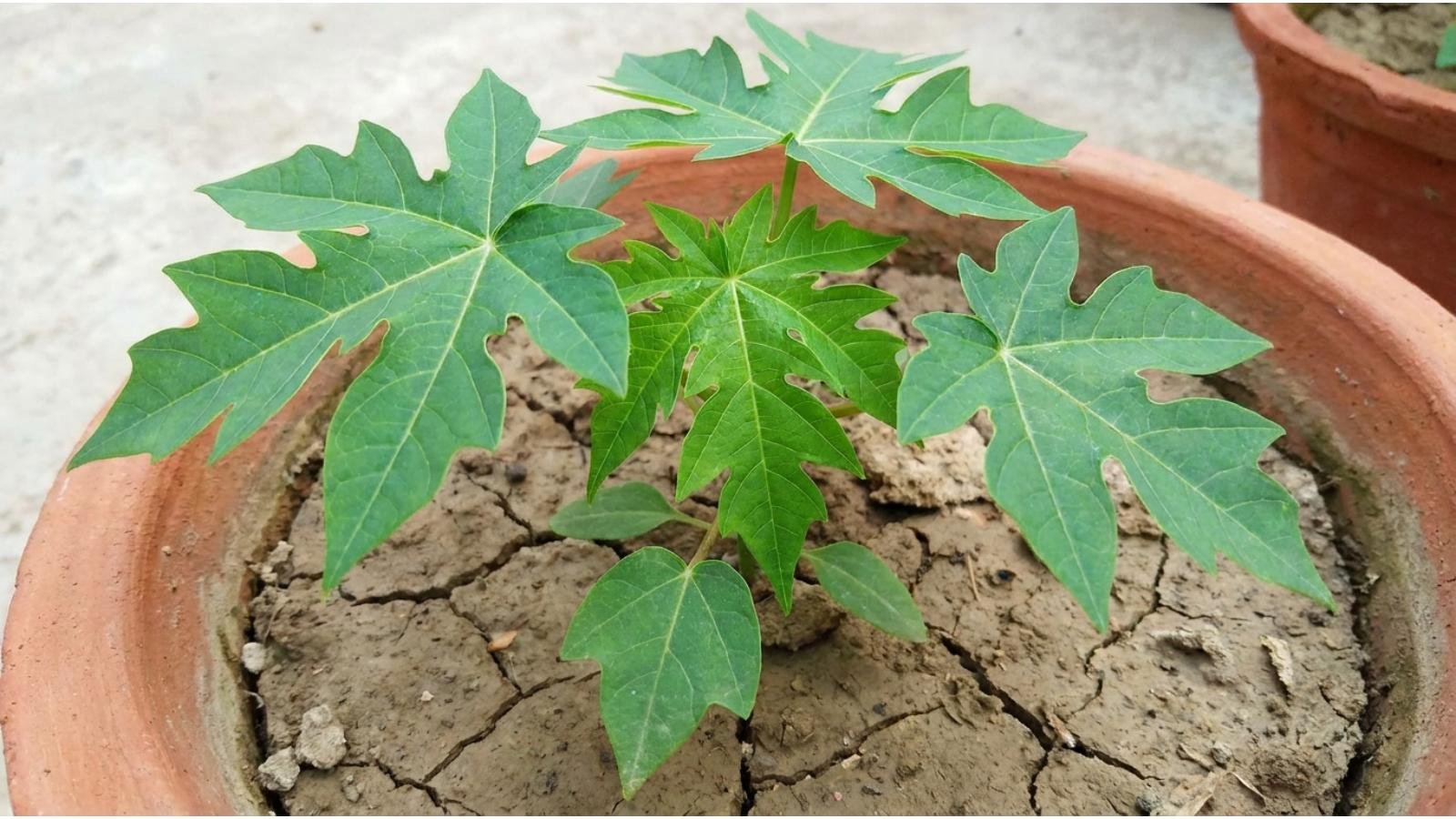
Papayas are relatively heavy feeders because they grow rapidly and produce substantial foliage and fruit.
Rather than applying a large amount of fertilizer occasionally, many extension recommendations favor smaller, regular applications during active growth. UF/IFAS specifically recommends frequent applications of relatively small amounts for continuous growth and fruit production.
A complete fertilizer containing nitrogen, phosphorus, potassium, and appropriate micronutrients can be useful. The exact product and application rate should follow local recommendations and the fertilizer label because soil fertility, climate, plant age, and growing conditions differ.
Young plants generally need lighter applications than established plants. UF/IFAS provides age-based recommendations that increase as plants mature.
Avoid Overfertilizing
More fertilizer does not automatically mean more papayas.
Excessive nitrogen can encourage lush vegetative growth at the expense of balanced fruit production, and excessive fertilizer salts can damage roots. Hawaii’s agricultural guidance also warns that excessive nitrogen can promote excessive vegetative growth and that fertilizer buildup can become problematic when irrigation or rainfall is insufficient.
A better approach is to feed consistently and observe growth rather than trying to force rapid growth with heavy fertilizer applications.
Papaya Temperature Requirements
Papaya is a warm-weather plant and is highly sensitive to cold.
UF/IFAS reports that ideal conditions are roughly 70°F to 90°F (21°C to 32°C). Root growth slows as soil temperatures fall, and freezing temperatures can severely damage or kill plants. Temperatures below about 59°F (15°C) can also interfere with flowering and fruit development.
This makes papaya much easier to grow in tropical and subtropical climates.
In cooler regions, container growing can provide an advantage because a plant can potentially be moved to a protected warm location during cold weather.
Image Suggestion: Papaya plant protected from cold weather in a container.
Protecting Papaya From Wind
Wind is an underrated papaya problem.
Papayas have tall, relatively slender trunks and large leaves. As fruit develops, the plant can become increasingly vulnerable to strong winds and toppling.
Choose a protected site rather than an exposed location where the plant receives continuous strong winds.
A suitable windbreak can reduce stress, but avoid creating excessive shade or restricting airflow around the plant.
Papaya Plant Spacing
Give papayas sufficient room for their leaves and root system.
UF/IFAS lists spacing of approximately 36 to 60 inches for papaya as a landscape plant, while cultivation guides may recommend wider spacing depending on production goals and climate.
For home gardeners, the key is to avoid crowding plants so tightly that:
- Air circulation becomes poor.
- Leaves remain wet for extended periods.
- Disease monitoring becomes difficult.
- Plants compete excessively for light.
- Harvesting becomes difficult.
Spacing should therefore be adjusted according to cultivar, climate, available space, and whether the goal is ornamental growth or fruit production.
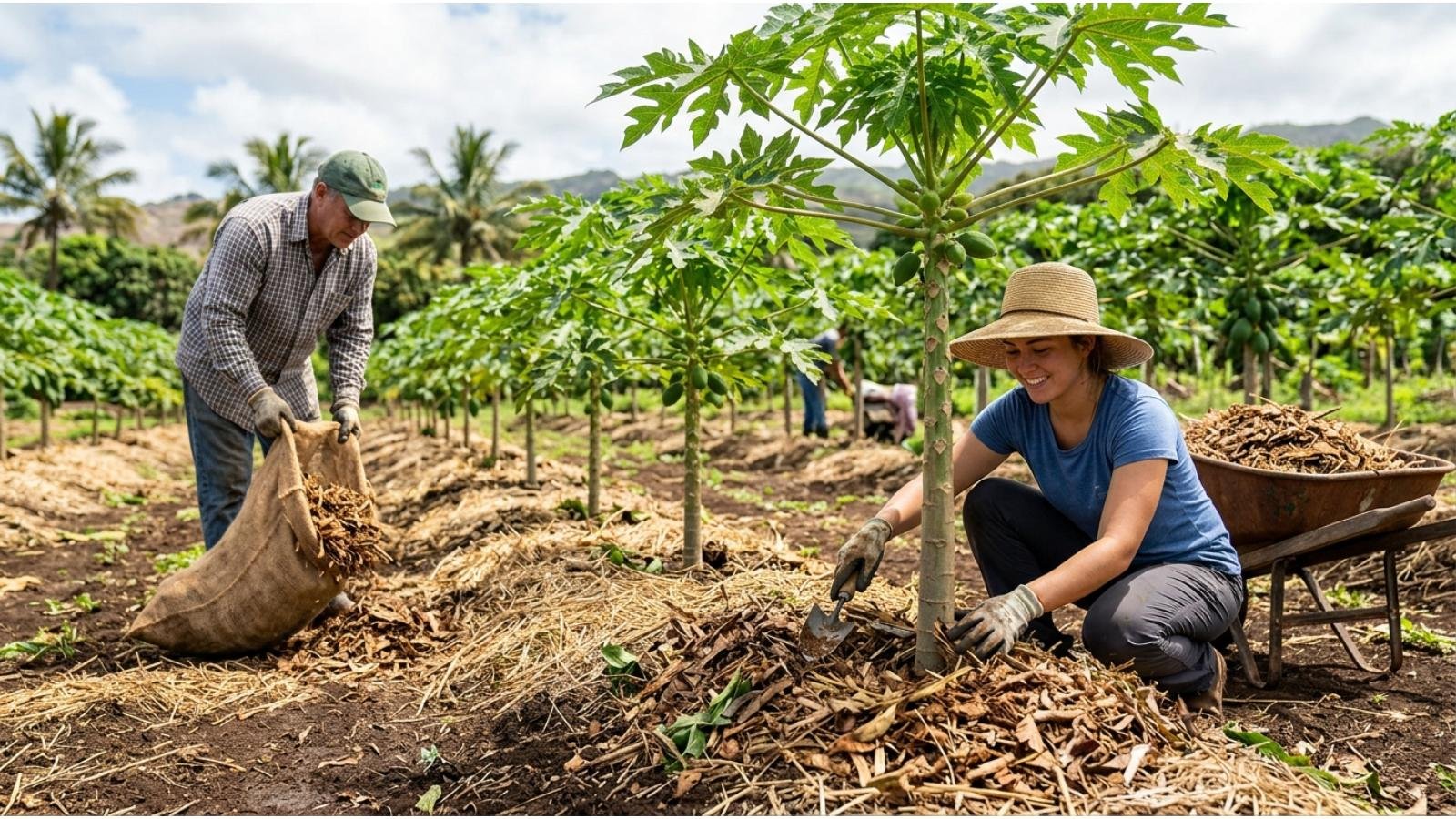
Mulching Papaya Plants
Mulch can be very useful around papayas.
A layer of organic mulch helps conserve soil moisture, suppress weeds, and improve the soil environment near the surface. UF/IFAS recommends a 2- to 6-inch layer of suitable mulch while keeping the mulch approximately 8 to 12 inches away from the trunk.
Do not pile mulch directly against the trunk.
That simple mistake can keep the trunk area excessively damp and create an environment that encourages problems.
Growing Papaya From Seeds
Growing papaya from seed can be inexpensive and rewarding, but there is one major consideration.
Seed-grown plants may produce male, female, or bisexual plants. Consequently, planting only one seedling can create uncertainty about future fruit production.
If you want predictable fruit production, purchasing a healthy plant of a suitable cultivar can be simpler.
If you are growing from seed:
- Start with fresh, viable seed.
- Use a clean, well-draining growing medium.
- Provide warmth and strong light.
- Avoid keeping the seedling constantly wet.
- Transplant carefully because papayas dislike root disturbance.
- Give seedlings plenty of sunlight as they establish.
For home gardeners, growing several seedlings can increase the chance of obtaining a plant combination capable of reliable pollination, although cultivar characteristics should also be considered.
How to Encourage Papaya Fruit Production
Good fruit production starts long before flowers appear.
Focus on:
- Full sunlight.
- Warm temperatures.
- Consistent moisture.
- Good drainage.
- Regular nutrition.
- Adequate pollination.
- Wind protection.
- Pest and disease monitoring.
Papayas can begin producing relatively quickly under favorable conditions. Some extension information reports fruiting within roughly the first year, while specific timing varies with cultivar, climate, starting plant size, and growing conditions.
If a healthy-looking plant grows lots of leaves but produces little fruit, consider light, temperature, flower type, pollination, excessive nitrogen, and overall plant stress rather than immediately adding more fertilizer.
How to Tell Male, Female, and Bisexual Papaya Flowers Apart
Papaya flower type can help explain unexpected fruiting problems.
Male flowers generally occur in branched clusters, while female flowers are typically larger and occur singly or in clusters near leaf axils. Bisexual flowers contain both functional male and female structures and can allow a single plant to produce fruit, depending on cultivar and conditions.
This is particularly important when growing papaya from seed.
If your plant is healthy but never develops fruit, inspect the flowers before changing your entire care routine.
Image Suggestion: Close-up comparison of male, female, and bisexual papaya flowers with simple labels.
Common Papaya Plant Problems
Yellow Leaves
Yellowing leaves can have several causes, so color alone is not enough for diagnosis.
Check:
- Soil moisture.
- Drainage.
- Recent fertilizer applications.
- Root health.
- Pest activity.
- Leaf age.
- Environmental stress.
Older leaves naturally decline, so one or two yellow leaves do not necessarily indicate a serious problem.
Brown Leaf Edges
Brown or scorched leaf margins can be associated with environmental stress, including salinity. Texas A&M notes that saline soil and irrigation water can cause tip burn and marginal necrosis in papayas.
If browning repeatedly appears along leaf margins, consider water quality and soil conditions rather than assuming the plant simply needs more fertilizer.
Leaves Dropping
Papayas can drop leaves during drought stress, and water problems can also affect flowers and young fruit.
Check the root zone before watering again.
A dry plant needs water, but a plant sitting in saturated soil needs better drainage rather than more irrigation.
Fruit Falling Off
Young fruit drop can result from environmental stress, inadequate water, temperature problems, pollination issues, or other plant stresses.
Start by examining the basics:
- Is the plant receiving enough sunlight.
- Is the soil draining properly.
- Has the plant experienced drought.
- Are temperatures suitable.
- Are flowers being successfully pollinated.
- Are pests or diseases present.
Papaya Pests
Papayas can experience several pest problems, including whiteflies, mites, webworms, fruit flies, and other pests depending on location. UF/IFAS recommends regularly inspecting the undersides of leaves and monitoring developing fruit.
Regular inspection is much easier than trying to rescue a heavily infested plant.
Look underneath leaves for:
- Tiny insects.
- Webbing.
- Sticky residue.
- Discoloration.
- Distorted new growth.
- Sooty mold.
Developing fruit may also need protection from fruit flies in areas where they are a significant problem. UF/IFAS recommends bagging young fruit as one management approach.
Papaya Diseases
Disease prevention begins with growing conditions.
Avoid:
- Waterlogged soil.
- Poor airflow.
- Excessive plant crowding.
- Repeatedly wet foliage where avoidable.
- Planting in contaminated or unsuitable locations.
Papaya ringspot virus is one particularly serious disease. Symptoms can include leaf distortion, mottling, stunting, and characteristic markings on fruit. Extension guidance notes that there is currently no curative treatment for infected plants, making prevention and removal of infected plants important.
Root rots are another major concern because papaya roots are poorly suited to prolonged wet conditions. In severe cases, relocating to a better-drained site is more useful than attempting to compensate with additional fertilizer or watering adjustments.
Image Suggestion: Healthy papaya leaf beside a leaf showing suspected viral symptoms, with symptoms clearly labeled.
Papaya Plant Care by Season
Spring
Spring is an excellent time to establish papayas in climates where cold weather has passed.
Focus on:
- Increasing sunlight exposure.
- Checking drainage.
- Beginning regular feeding.
- Monitoring new growth.
- Protecting young plants from unusual cold.
Summer
Summer is often the strongest growth period.
Pay particular attention to:
- Soil moisture.
- Heat stress.
- Fertilizer requirements.
- Wind.
- Pest activity.
- Fruit development.
Hot, dry conditions can increase water requirements, particularly in sandy soils.
Fall
As temperatures decline, adjust watering and feeding according to plant growth and local weather.
Avoid continuing a heavy fertilizer routine simply because the plant was growing rapidly during summer.
Winter
Cold protection becomes the priority in marginal climates.
Papayas are not frost tolerant, and freezing temperatures can cause severe damage. Container-grown plants have an advantage because they can potentially be moved into a protected warm location.
How to Harvest Papaya
Papaya fruit can be harvested at different stages depending on how you plan to use it.
For ripe fresh eating, allow the fruit to develop significant yellow or yellow-orange coloration. UF/IFAS recommends harvesting when the fruit begins changing from green toward yellow and allowing it to finish ripening if needed.
For the best eating quality, fruit can be allowed to ripen further on the plant when conditions and pest pressure permit.
After harvesting, handle ripe papayas carefully because their soft flesh bruises easily.
Common Papaya Care Mistakes
Overwatering
More water is not better when drainage is poor. Consistent moisture is useful, but roots still require access to oxygen.
Planting in a Low Spot
A low, wet location can create chronic root problems. Choose a naturally elevated location or use a raised mound where drainage is an issue.
Using Too Much Fertilizer
Heavy feeding can cause excessive vegetative growth and nutrient or salt problems. Follow the fertilizer label and use a consistent, measured approach.
Ignoring Wind
A tall papaya exposed to strong winds can suffer physical damage or topple, especially once fruit loads increase.
Assuming Every Papaya Will Fruit Alone
Seed-grown papayas can have different flower types. Flower structure and cultivar characteristics matter.
Ignoring the Undersides of Leaves
Many pests hide beneath leaves. Regularly turning leaves over during inspection can reveal problems before they become severe.
Papaya Plant Care Checklist
| Care factor | What papaya needs | What to avoid |
|---|---|---|
| Light | Full sun, ideally at least 6 hours | Deep shade |
| Soil | Well-drained soil | Waterlogged soil |
| Water | Consistent moisture | Severe drought or standing water |
| Fertilizer | Regular, measured feeding | Excessive applications |
| Temperature | Warm conditions | Frost and prolonged cold |
| Wind | Protected location | Constant strong winds |
| Mulch | Organic mulch around the root zone | Mulch touching the trunk |
| Pests | Regular inspection | Ignoring damaged leaves |
| Disease | Good drainage and monitoring | Allowing infected plants to remain unmanaged |
| Fruit production | Sun, nutrition, water and pollination | Excessive stress |
Frequently Asked Questions
How much sunlight does a papaya plant need?
Papayas perform best in full sun. At least six hours of direct sunlight is a useful target for strong growth and fruit production.
How often should I water a papaya plant?
There is no universal watering schedule because soil and climate differ. Water when the plant needs moisture, but allow excess water to drain away. Sandy soils in hot, dry conditions may require much more frequent irrigation than moisture-retentive soils.
Why is my papaya plant not producing fruit?
Possible causes include insufficient sunlight, unsuitable temperatures, plant sex or flower type, poor pollination, water stress, nutrient imbalance, or disease. Inspect the flowers and growing conditions before changing the fertilizer routine.
Can papaya grow in pots?
Yes. Container growing can be particularly useful in cooler climates because the plant can potentially be moved to a protected location during cold weather. Choose a container with excellent drainage and enough room for the root system.
Can papaya survive winter?
Papaya is highly sensitive to frost and freezing temperatures. In cold climates, plants may require protection or may need to be treated as seasonal plants.
Why are my papaya leaves turning yellow?
Yellow leaves can result from natural aging, watering problems, root stress, nutrient issues, pests, or disease. Check soil moisture and drainage first before applying additional fertilizer.
How long does a papaya plant take to produce fruit?
Papayas can produce fruit relatively quickly under favorable conditions, sometimes within the first year. Exact timing varies considerably with cultivar, climate, plant size, and growing conditions.
Do I need two papaya plants to get fruit?
Not always. Papaya plants can be male, female, or bisexual, and many cultivated types include bisexual plants capable of fruit production on their own. Seed-grown plants can be less predictable.
What is the best fertilizer for papaya?
A complete fertilizer appropriate for tropical fruit plants can work well when applied according to the label and local recommendations. Papayas generally benefit from regular feeding rather than occasional excessive applications.
Should I prune a papaya plant?
Papayas naturally grow with a central trunk rather than a conventional branching structure. Pruning should not be treated like pruning a typical fruit tree. Focus first on removing clearly dead or damaged material when necessary and maintaining a safe, manageable plant.
Final Thoughts
Successful papaya plant care comes down to getting the growing environment right before trying to solve individual problems. Give the plant plenty of sunlight, warm conditions, excellent drainage, consistent moisture, regular but measured nutrition, and protection from strong wind and cold.
The most useful habit is regular observation. Check the soil before watering, inspect the undersides of leaves, watch new growth, examine flowers when fruiting is poor, and investigate changes before automatically adding fertilizer or water. These simple practices make it much easier to catch problems early.
For gardeners in warm climates, papaya can be one of the most rewarding fruit plants to grow because it combines rapid growth with the possibility of relatively early harvests. With the right location and disciplined watering, feeding, and monitoring routine, even beginners can build a healthy papaya plant from the ground up.