Hibiscus plants are loved for their large, colorful flowers, but getting reliable blooms requires more than simply placing the plant in a sunny spot. The biggest problems usually come from inconsistent watering, insufficient light, poor drainage, temperature stress, or feeding at the wrong time. Good hibiscus plant care is really about keeping the growing conditions stable enough for the plant to produce strong new growth and flower buds.
The first thing to understand is that hibiscus is a broad group rather than one identical plant. Tropical hibiscus such as Hibiscus rosa-sinensis behaves differently from hardy hibiscus and other species. Tropical hibiscus is particularly sensitive to cold, while many hardy types can tolerate much lower temperatures.
Quick Answer
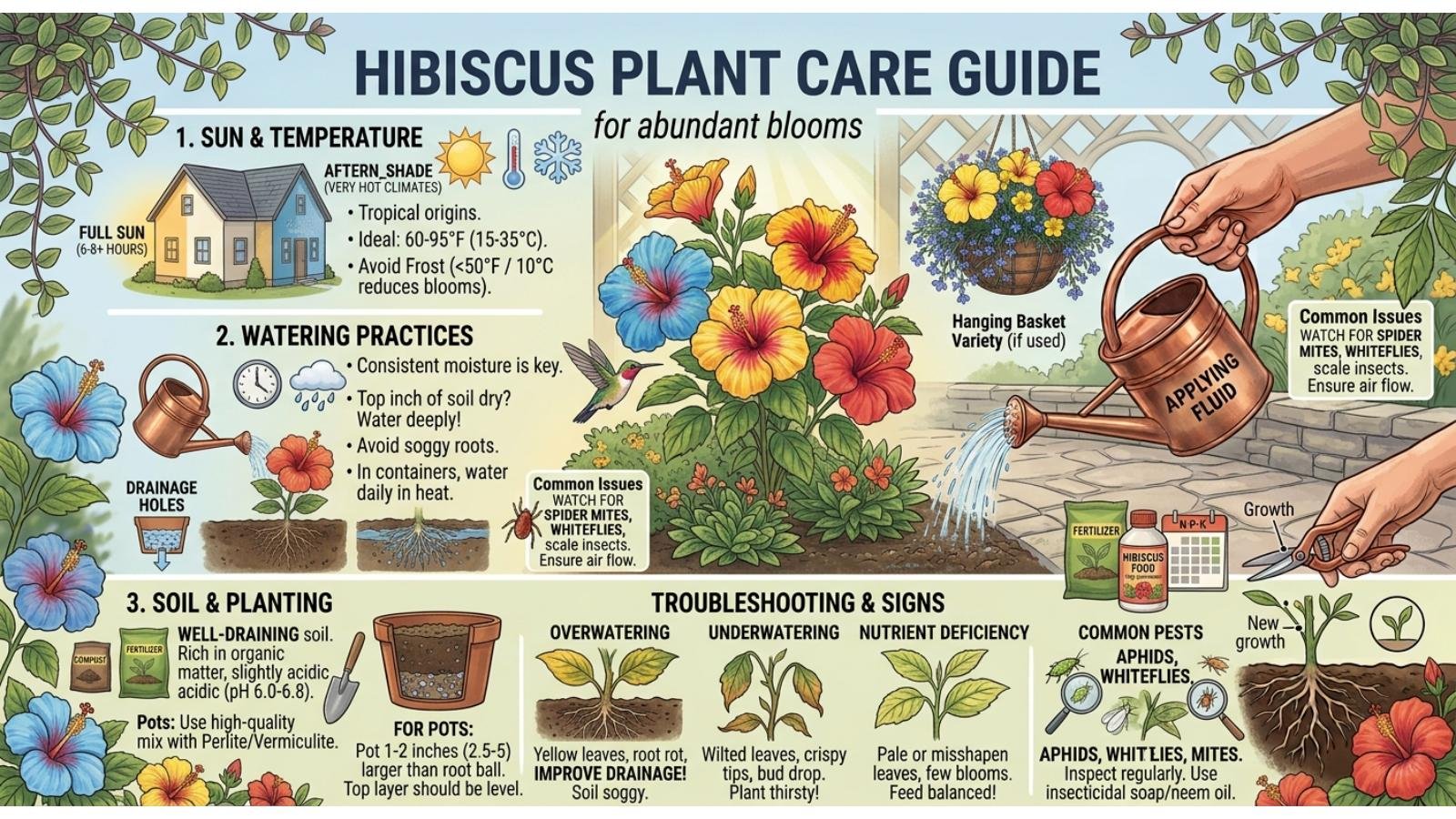
Hibiscus plant care starts with plenty of light, well-draining soil, consistent moisture, warmth, and regular feeding during active growth. Tropical hibiscus, especially Hibiscus rosa-sinensis, prefers bright light, warm temperatures, humidity, and protection from cold. Water when the soil begins to dry rather than keeping it constantly soggy. Prune to encourage branching, inspect regularly for pests, and adjust watering and feeding as growth slows in cooler conditions.
Understanding Your Hibiscus
Before changing your care routine, identify which hibiscus you have.
Tropical hibiscus is commonly grown as a container plant or outdoor ornamental in warm climates. It has glossy foliage and produces large flowers in many colors. Its flowers can be short-lived, sometimes lasting only a day or two, but a healthy plant can produce blooms repeatedly.
Hardy hibiscus, including species such as Hibiscus moscheutos, is better suited to outdoor garden conditions and can tolerate considerably colder conditions than tropical hibiscus. Its care should therefore be based on the species rather than a generic hibiscus schedule.
If your plant came from a garden center without a clear label, check the plant tag or cultivar name before deciding how aggressively to protect it from winter.
Image Suggestion: Create a comparison graphic showing tropical hibiscus and hardy hibiscus side by side, with differences in foliage, flowers, growth habit, and cold tolerance.
How Much Light Does Hibiscus Need
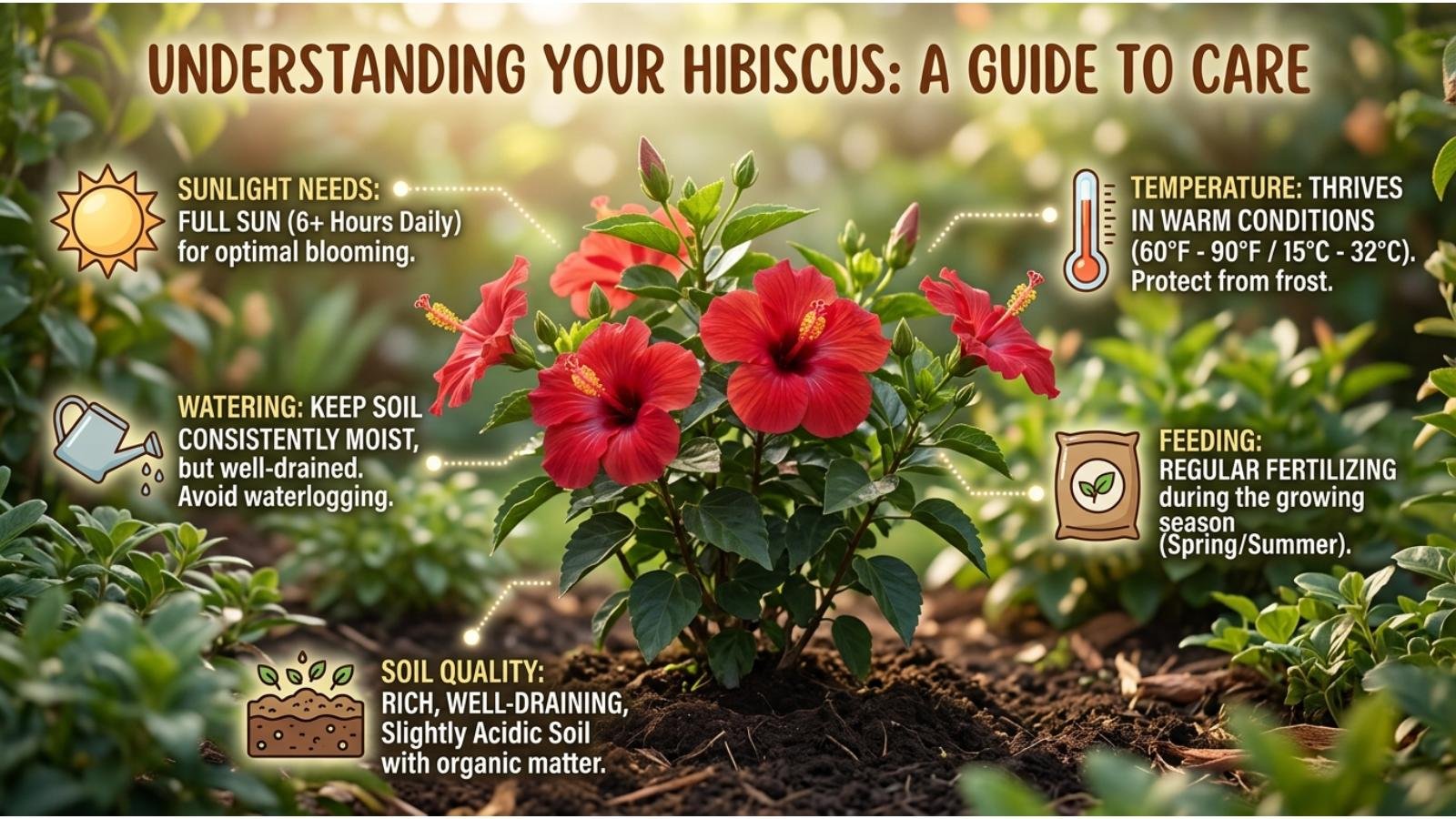
Light is one of the most important factors controlling flowering.
Outdoor hibiscus generally performs best in a sunny position. Tropical hibiscus can also grow strongly in bright conditions, although very intense environments may require protection from harsh exposure depending on the local climate and the plant’s acclimation. RHS guidance recommends bright filtered light for tropical hibiscus grown indoors and full sun for many outdoor hibiscus cultivars.
A common mistake is moving a hibiscus into a dim room and expecting the same flowering performance it had outdoors. The plant may remain alive but produce fewer flowers and weaker growth.
Watch the plant rather than relying only on a fixed number of hours.
Signs that light may be insufficient include:
- Long, weak stems.
- Sparse foliage.
- Slow new growth.
- Fewer flower buds.
- Buds developing but failing to open normally.
When moving a hibiscus from lower light to strong sunlight, acclimate it gradually. A sudden environmental change can stress leaves even when the final location is appropriate.
How to Water Hibiscus Correctly
Hibiscus generally likes consistent moisture during active growth, but that does not mean its roots should sit in permanently saturated soil.
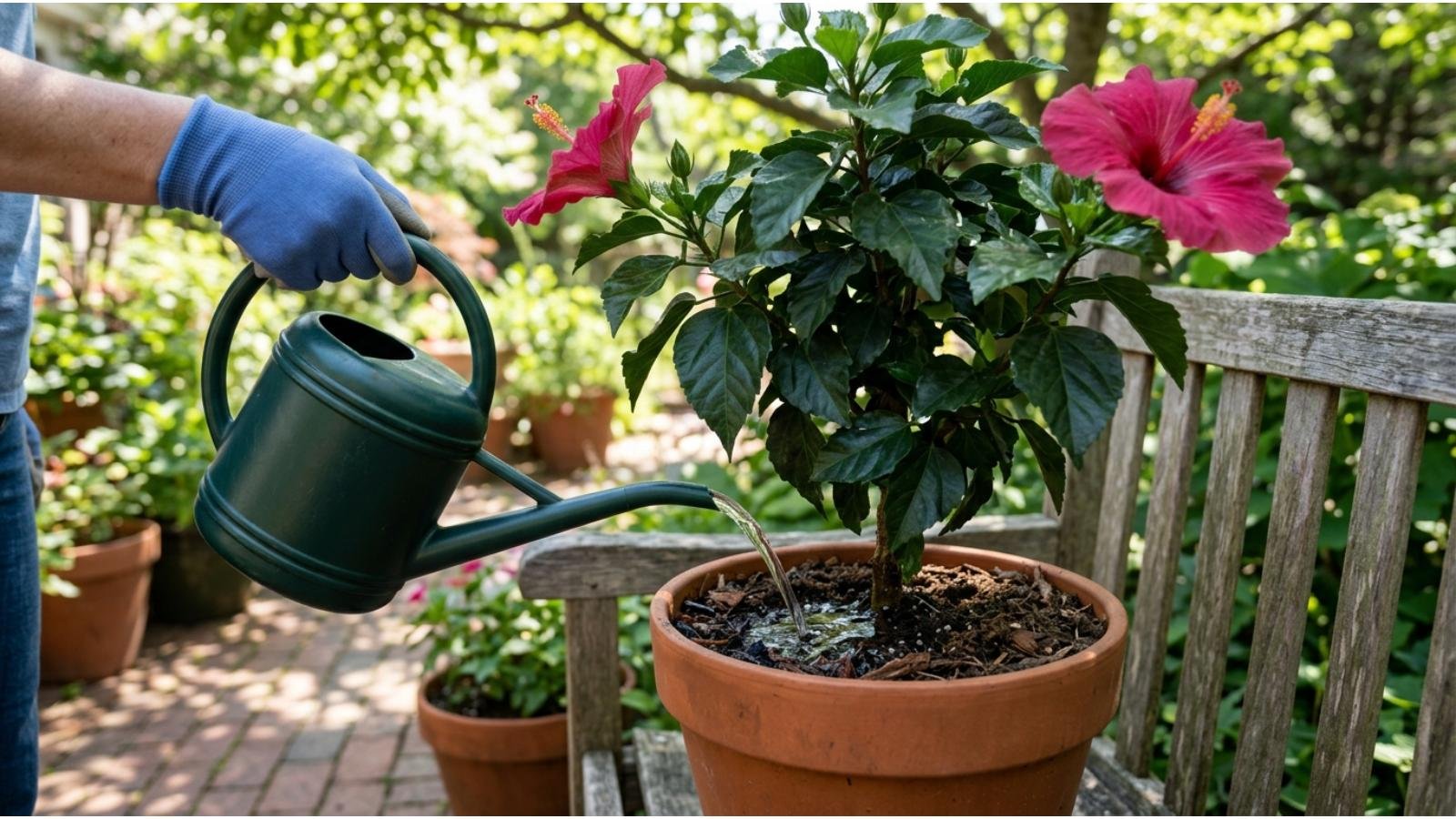
The practical approach is to check the growing medium before watering. If the upper layer has begun to dry and the container feels noticeably lighter, water thoroughly until excess water drains from the bottom.
Avoid small, frequent splashes that only wet the surface. Deep watering encourages the entire root zone to receive moisture.
At the same time, do not allow a container to remain in standing water. Poor drainage reduces the amount of oxygen available around the roots and can create conditions associated with root problems.
Water requirements change with the environment. A plant growing outdoors in hot weather may use water much faster than the same plant kept indoors during a cool period.
A useful routine is:
- Check the soil regularly.
- Water thoroughly when needed.
- Allow excess water to drain.
- Empty standing water from saucers.
- Check more frequently during hot, bright weather.
- Reduce watering as growth slows in cooler conditions.
RHS recommends increasing watering as light and temperatures rise, then reducing watering when growth slows.
Best Soil for Hibiscus
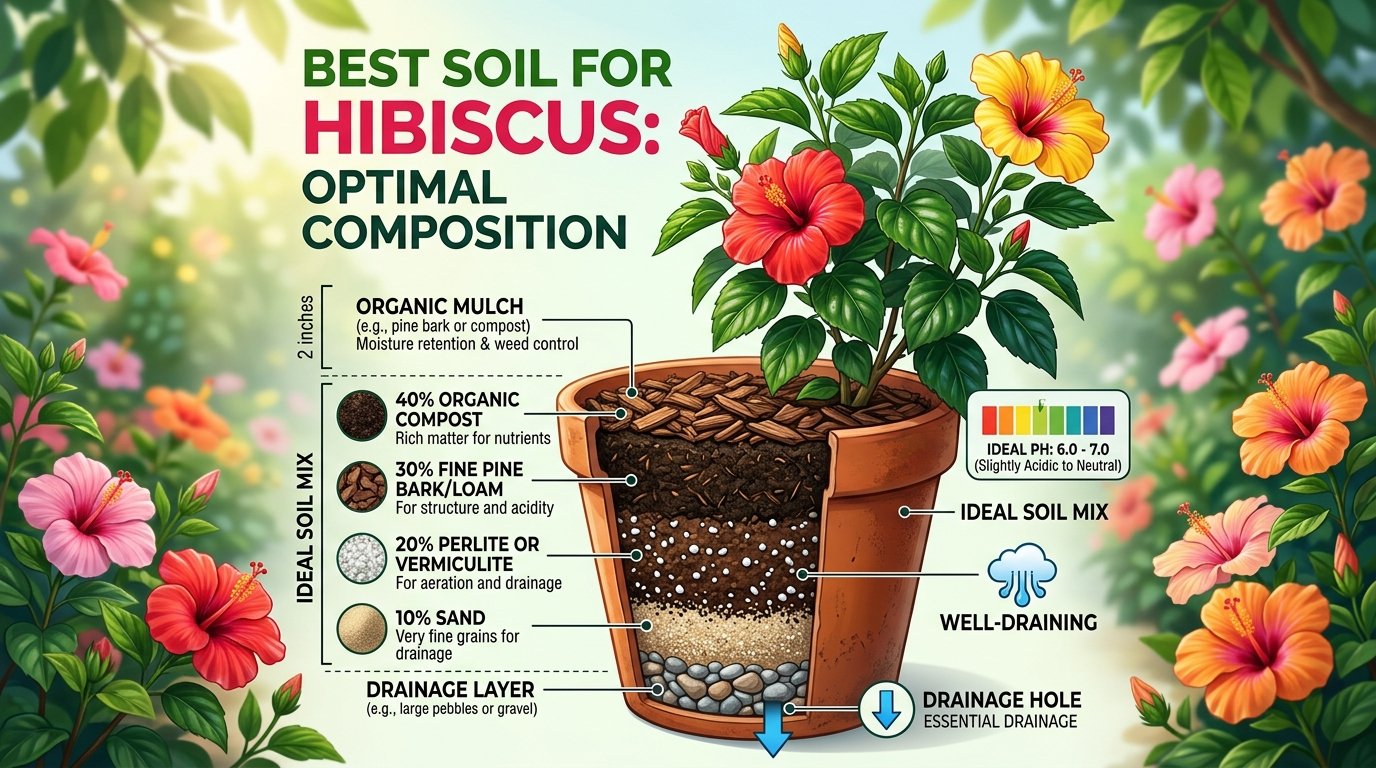
Hibiscus needs a growing medium that retains enough moisture while allowing excess water to escape.
For container-grown tropical hibiscus, use a quality potting mix that drains efficiently. Avoid heavy garden soil in containers because it can compact and restrict drainage.
A suitable mix should provide:
- Good drainage.
- Reasonable moisture retention.
- Air around the roots.
- Stable structure.
- Adequate organic matter.
The pot itself matters too. A container without effective drainage holes can undermine an otherwise excellent soil mix.
If water sits on the surface for a long time or the soil remains wet for unusually long periods, investigate drainage before simply changing your watering schedule.
When and How to Fertilize Hibiscus
Hibiscus uses nutrients to support vigorous foliage, new shoots, and flowering, particularly during active growth.
Instead of assuming that more fertilizer means more flowers, follow the instructions for the fertilizer you choose and adjust feeding to the plant’s growth cycle.
During active growth, regular feeding can support healthy development. RHS recommends beginning weekly feeding with a balanced liquid houseplant fertilizer after repotting and allowing several weeks for the plant to settle first.
Avoid continuing a heavy feeding routine when the plant has entered a slower growth period.
Overfertilizing can create problems rather than solve them. If a plant already has stressed roots, simply adding more fertilizer is rarely the correct response.
A better sequence is to evaluate:
- Light.
- Root health.
- Soil drainage.
- Watering consistency.
- Temperature.
- Existing nutrient symptoms.
Only then should fertilizer be used as a corrective tool.
How to Prune Hibiscus for Better Growth
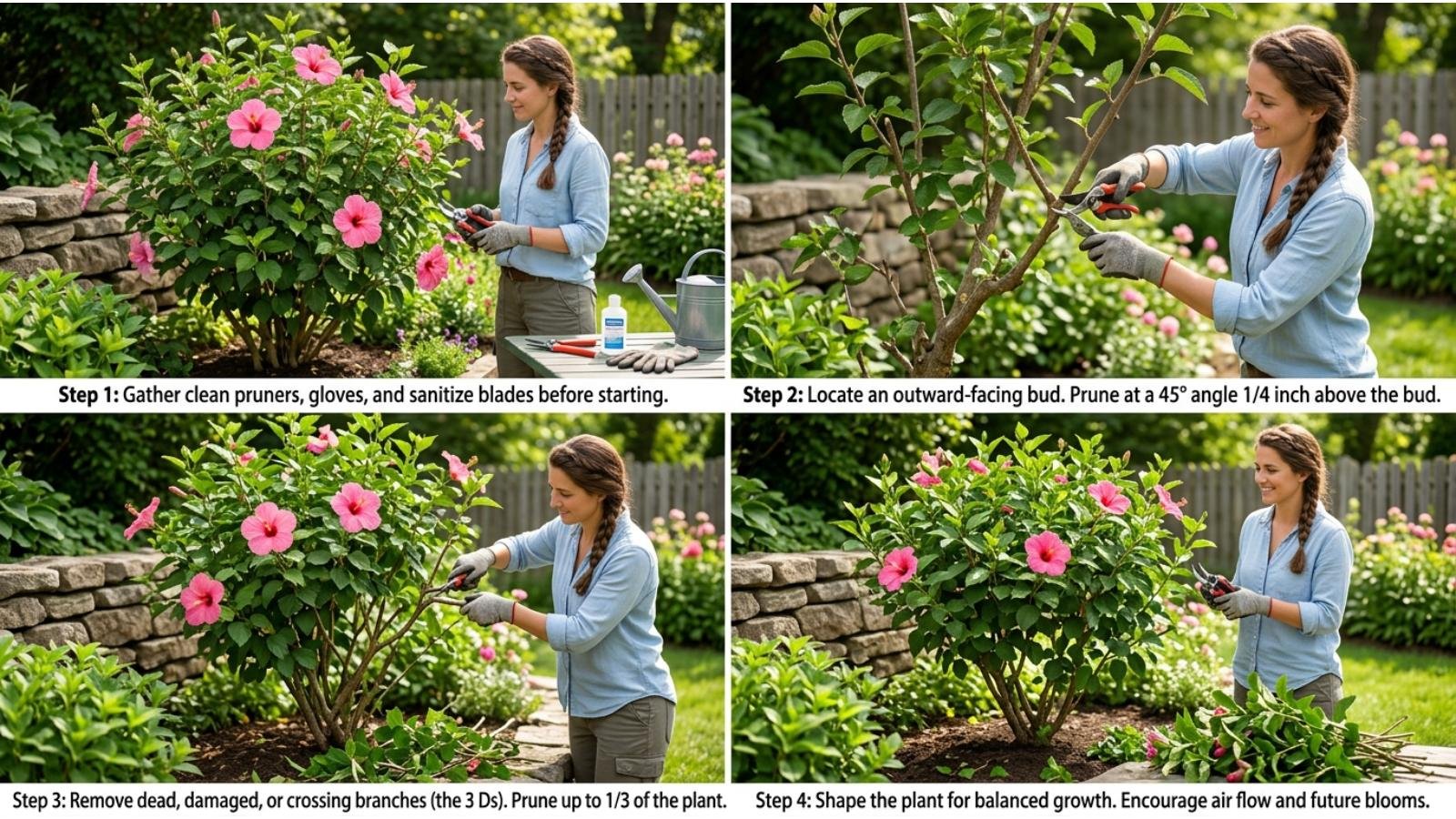
Pruning can help maintain a manageable shape and encourage branching.
Tropical hibiscus can be pruned to keep it compact and bushy. RHS recommends shortening previous-season growth and removing weak or overcrowded shoots. Young plants can also benefit from tip pruning to encourage bushier growth.
Do not remove large amounts of healthy growth simply because the plant looks untidy. First decide what you want to achieve.
Pruning may be used to:
- Encourage branching.
- Control size.
- Remove damaged growth.
- Improve airflow.
- Shape the plant.
- Rejuvenate an overgrown specimen.
Use clean, sharp pruning tools and make deliberate cuts rather than repeatedly trimming random branch tips.
For hardy hibiscus, pruning requirements can be different, so identify the species before applying a tropical-hibiscus pruning schedule.
Image Suggestion: Add a labeled diagram showing where to make a pruning cut above a healthy node on a hibiscus branch.
How to Encourage More Hibiscus Flowers
When a hibiscus refuses to bloom, many gardeners immediately reach for fertilizer. Light should usually be investigated first.
Flower production depends heavily on adequate light and healthy active growth. A plant sitting in a dim location may produce attractive leaves while flowering poorly.
To encourage blooms:
- Give the plant appropriate bright light.
- Keep watering consistent.
- Avoid prolonged root saturation.
- Feed appropriately during active growth.
- Prune strategically.
- Protect tropical varieties from cold stress.
- Monitor pests before they become severe.
Do not panic if an individual flower disappears quickly. Tropical hibiscus flowers can naturally be short-lived even when the plant is perfectly healthy.
The better measure of success is repeated production of healthy buds and new flowers over time.
Hibiscus Humidity and Temperature Requirements
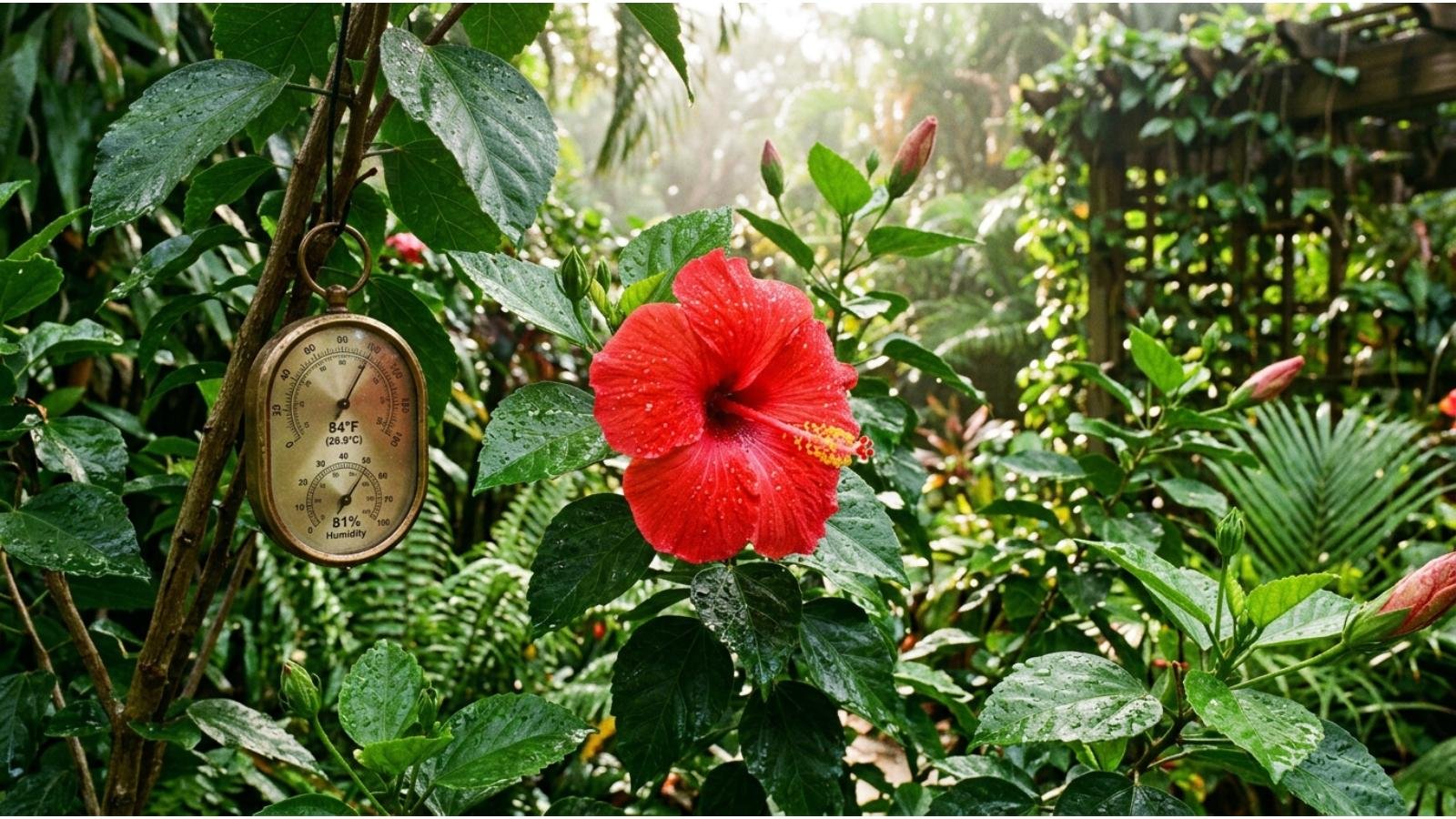
Tropical hibiscus prefers warm, humid conditions with good ventilation.
This combination matters because simply increasing humidity without airflow can create an unnecessarily stagnant environment. RHS specifically recommends bright, humid conditions with good ventilation for tropical hibiscus.
Temperature is especially important.
Tropical hibiscus is not a frost-tolerant plant. RHS lists a minimum temperature around 7–10°C for tropical growing conditions and advises bringing outdoor plants indoors before temperatures fall below about 12°C.
If your plant spends summer outdoors, do not wait until a sudden cold night damages it. Watch the forecast and move container-grown tropical hibiscus into protection ahead of cold weather.
Avoid placing indoor plants directly beside:
- Heating vents.
- Radiators.
- Cold drafts.
- Frequently opened exterior doors.
- Very cold windows during winter.
Repotting Hibiscus
Repotting is useful when the plant has outgrown its container or the growing medium has deteriorated.
A larger pot is not automatically better. Moving a small root system into a very large container can leave a large volume of soil wet for too long.
Choose a container that provides enough room for continued growth without creating an unnecessarily oversized wet root zone.
Repotting is also a good opportunity to inspect the roots and replace compacted or poorly draining growing medium.
RHS recommends repotting tropical hibiscus around late winter or early spring as growth is preparing to increase.
After repotting, avoid immediately compensating with excessive fertilizer or water. Give the plant time to settle while maintaining appropriate moisture and light.
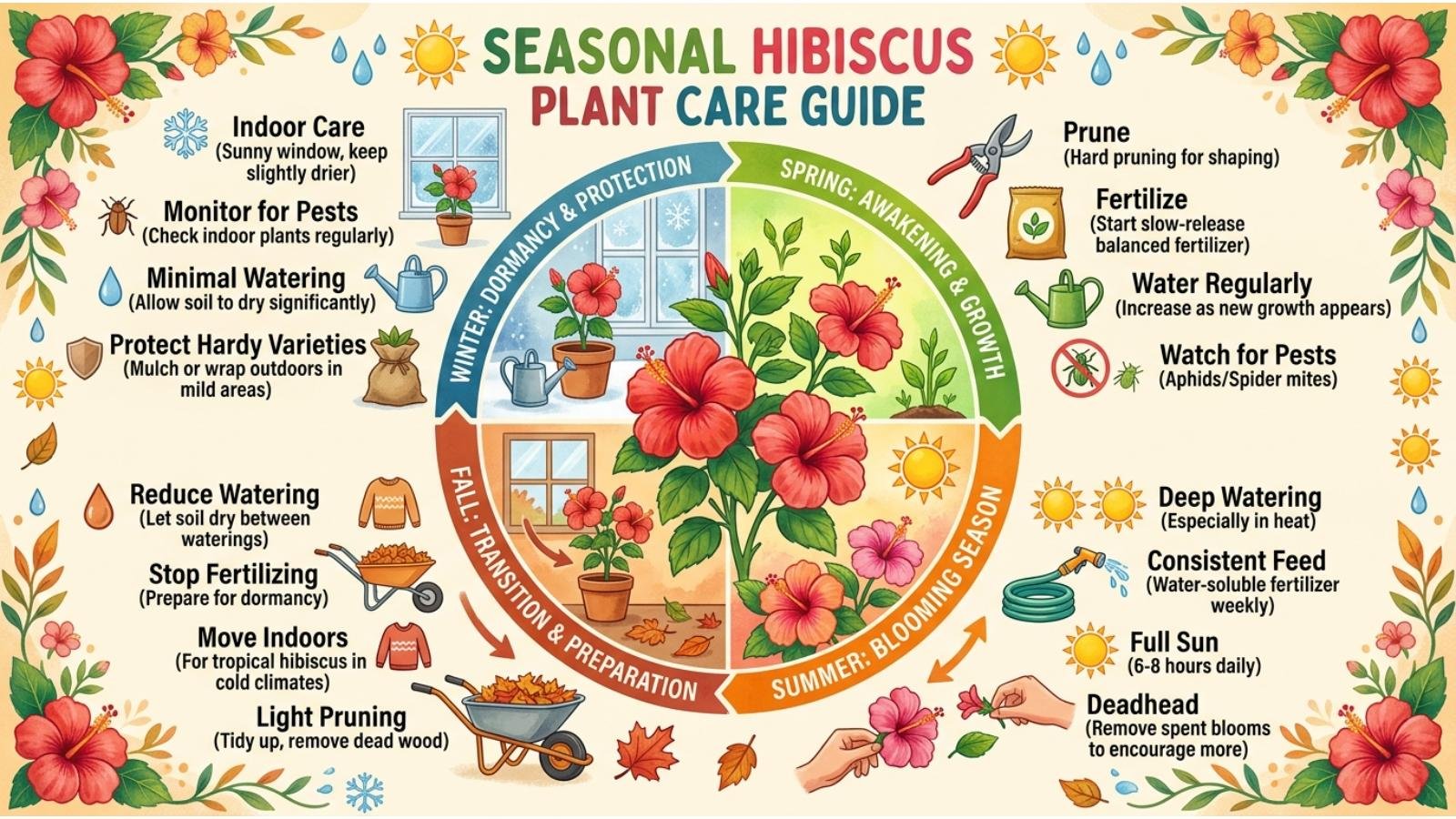
Seasonal Hibiscus Plant Care
Hibiscus care should change with the plant’s growth rate.
Spring
Spring is an excellent time to evaluate the plant after winter.
Increase watering gradually as growth and light levels increase. Resume appropriate feeding when active growth begins, and consider pruning or repotting when suitable for your variety.
Summer
Summer is often the strongest growth period for tropical hibiscus.
Monitor soil moisture frequently, particularly for container plants exposed to heat and sun. Continue feeding according to the plant’s growth and fertilizer directions.
Hot weather can dramatically increase water use, so a watering routine that worked in spring may become inadequate.
Fall
Begin preparing tropical hibiscus for cooler weather before temperatures drop sharply.
Inspect the plant carefully for insects before moving it indoors. Reducing sudden environmental changes can make the transition easier.
Winter
Winter is where many tropical hibiscus problems begin.
Lower light and cooler temperatures slow growth, so the plant generally needs less water and fertilizer. RHS recommends reducing watering as growth slows and stopping feeding during the cooler resting period.
Missouri Botanical Garden similarly recommends reducing watering and fertilizing for overwintering Chinese hibiscus, with different strategies depending on the available indoor growing conditions.
Why Are Hibiscus Leaves Turning Yellow
Yellow leaves do not automatically mean the plant needs fertilizer.
Several different problems can produce yellowing.
Overwatering
Constantly wet soil can stress the roots and eventually lead to declining foliage.
Check the soil and drainage before adding more water.
Low Light
Indoor hibiscus may lose leaves when light levels fall significantly, especially during winter. RHS notes that low winter light can cause yellow leaves and flower buds to drop.
Temperature Stress
A tropical hibiscus exposed to cold conditions may respond with leaf drop or reduced growth.
Natural Aging
An occasional older leaf turning yellow is not necessarily a serious problem. Look at the overall pattern rather than diagnosing the plant from one leaf.
Image Suggestion: Add a troubleshooting infographic showing yellow leaves caused by low light, excess moisture, temperature stress, and normal aging.
Why Is My Hibiscus Dropping Buds
Bud drop can be frustrating because the plant appears healthy until the flowers fail to open.
Environmental changes are a common factor to investigate.
Consider recent changes in:
- Light.
- Temperature.
- Watering.
- Location.
- Humidity.
- Pest pressure.
- Root condition.
Avoid repeatedly moving the plant from one location to another. Hibiscus generally performs better when its environment remains reasonably stable.
Also inspect unopened buds closely. If you find insects, sticky residue, distorted growth, or damaged tissue, pest activity may be contributing to the problem.
Common Hibiscus Pests
Hibiscus can attract several common pests, particularly when grown indoors or under protected conditions.
RHS lists aphids, red spider mites, and whitefly among pests affecting tropical hibiscus, while other hibiscus profiles also identify scale insects and mealybugs.
Inspect the plant regularly, especially:
- New shoots.
- Leaf undersides.
- Flower buds.
- Stem joints.
- Areas with sticky residue.
Early detection makes pest management much easier.
For light infestations, physically removing pests or washing foliage with an appropriate stream of water can be useful. Missouri Botanical Garden also recommends washing insects from hibiscus and identifies insecticidal soap as an option for common infestations.
Always follow the label when using any garden treatment.
Hibiscus Care Mistakes to Avoid
Some of the most common mistakes are surprisingly simple.
Watering on a Fixed Calendar
Plants do not use the same amount of water every week. Weather, light, temperature, pot size, and growth rate all affect moisture needs.
Check the plant and growing medium instead.
Keeping the Soil Permanently Wet
Consistent moisture does not mean waterlogged soil.
Good drainage is essential.
Giving Too Little Light
A hibiscus can survive in inadequate light while flowering poorly.
If blooms are the goal, evaluate light before assuming fertilizer is missing.
Fertilizing a Stressed Plant
More fertilizer is not a universal cure for yellow leaves or weak growth.
Correct environmental problems first.
Ignoring Temperature
Tropical hibiscus can be damaged by cold. Move container plants before dangerous temperatures arrive rather than waiting for visible damage.
Treating Every Hibiscus the Same
Species and cultivars vary considerably.
A tropical hibiscus should not automatically receive the same winter treatment as a hardy outdoor hibiscus.
A Simple Hibiscus Care Routine
For beginners, a simple observation-based routine works better than memorizing a rigid schedule.
Check your hibiscus regularly and ask five questions.
- Is the plant receiving enough appropriate light.
- Is the soil appropriately moist rather than saturated.
- Is new growth healthy.
- Are there signs of insects or disease.
- Is the temperature appropriate for the hibiscus type.
If those five areas are under control, many common hibiscus problems become much easier to prevent.
Hibiscus Care Troubleshooting Guide
| Problem | Likely causes | What to check |
|---|---|---|
| Yellow leaves | Excess moisture, low light, cold, natural aging | Soil moisture, light, temperature |
| Bud drop | Stress, environmental changes, pests | Recent changes and flower buds |
| Few flowers | Insufficient light, poor growth, incorrect feeding | Light and overall plant health |
| Wilting | Underwatering, root problems, heat stress | Soil and roots |
| Sticky leaves | Aphids, whitefly, scale or other pests | Leaf undersides and stems |
| Leggy growth | Insufficient light or limited branching | Light exposure and pruning |
| Leaf drop | Cold, low light, watering problems | Temperature and winter conditions |
| Weak new growth | Poor light, nutrient issues, root stress | Light, roots, feeding |
Can Hibiscus Grow Indoors
Yes, tropical hibiscus can be grown indoors when its basic environmental needs are met.
The biggest challenge is usually providing enough light while maintaining suitable warmth and humidity.
A bright indoor location can work, but plants may struggle when placed far from windows or in rooms with low natural light. RHS describes tropical hibiscus as a moderately difficult houseplant and recommends bright conditions, humidity, ventilation, and appropriate warmth.
Indoor plants should also be inspected for pests because protected environments can allow small infestations to spread unnoticed.
Can Hibiscus Grow in Pots
Yes. Tropical hibiscus is particularly well suited to container growing because containers make it easier to control soil quality and move the plant when temperatures change.
Container hibiscus needs closer monitoring than an established garden plant because pots can dry quickly during hot weather.
Choose a container with drainage holes and avoid dramatically oversized pots.
If the plant becomes root-bound, growth slows, watering becomes difficult to manage, or the pot dries unusually quickly, inspect the root system and consider repotting.
How to Propagate Hibiscus
Tropical hibiscus can be propagated from cuttings.
RHS recommends softwood or semi-ripe cuttings, with warm conditions and high humidity helping encourage rooting.
A basic propagation process is:
- Select healthy, non-flowering new growth.
- Take an appropriate cutting with clean tools.
- Remove unnecessary lower foliage.
- Place the cutting into a suitable propagation medium.
- Maintain warmth and humidity.
- Keep the medium appropriately moist.
- Wait for roots to develop before transplanting.
Propagation success depends on the hibiscus type, cutting condition, temperature, moisture, and technique.
Frequently Asked Questions About Hibiscus Plant Care
How often should I water a hibiscus
Water when the growing medium begins to dry rather than following a rigid calendar. During hot, bright periods, hibiscus may need water considerably more frequently than during cooler, slower-growing periods.
Does hibiscus need full sun
Many outdoor hibiscus perform well in full sun, while tropical hibiscus grown indoors generally needs very bright light. The ideal exposure also depends on the variety and growing environment.
Why is my hibiscus not flowering
Insufficient light is one of the first things to investigate. Also check watering consistency, temperature, nutrition, pruning, and pest problems.
Should I cut off dead hibiscus flowers
Removing spent flowers can improve appearance and keep the plant tidy. More importantly, maintain healthy new growth and avoid unnecessary heavy pruning at the wrong time.
Can hibiscus survive winter
It depends on the type. Tropical hibiscus needs protection from cold and frost, while hardy hibiscus can tolerate much colder outdoor conditions.
Should hibiscus soil stay wet
No. Hibiscus appreciates consistent moisture during active growth but also needs good drainage. Permanently saturated soil can create root problems.
How do I make my hibiscus bushier
Strategic pruning and tip pinching can encourage branching. RHS specifically recommends trimming young plant tips to encourage a bushier habit.
Why are my hibiscus leaves falling off
Leaf drop can result from cold, low winter light, watering problems, environmental changes, or other stress. Tropical hibiscus can naturally lose leaves when winter conditions reduce growth.
Is hibiscus good for beginners
It can be, but tropical hibiscus is less forgiving than some low-maintenance houseplants. Beginners will have the most success by focusing on light, drainage, consistent moisture, warmth, and regular pest inspections.
Conclusion
Successful hibiscus plant care is less about following a rigid watering or fertilizing schedule and more about learning how your plant responds to its environment. Give it appropriate light, provide well-drained soil, maintain consistent moisture without waterlogging the roots, feed during active growth, prune thoughtfully, and protect tropical varieties from cold.
Most importantly, diagnose problems before treating them. Yellow leaves do not automatically mean fertilizer is needed, and dropped buds do not automatically mean the plant needs more water. Look at light, moisture, temperature, roots, and pests together. That observation-based approach will help you build a healthier hibiscus and enjoy more vigorous growth and dependable flowering.