Quick Answer
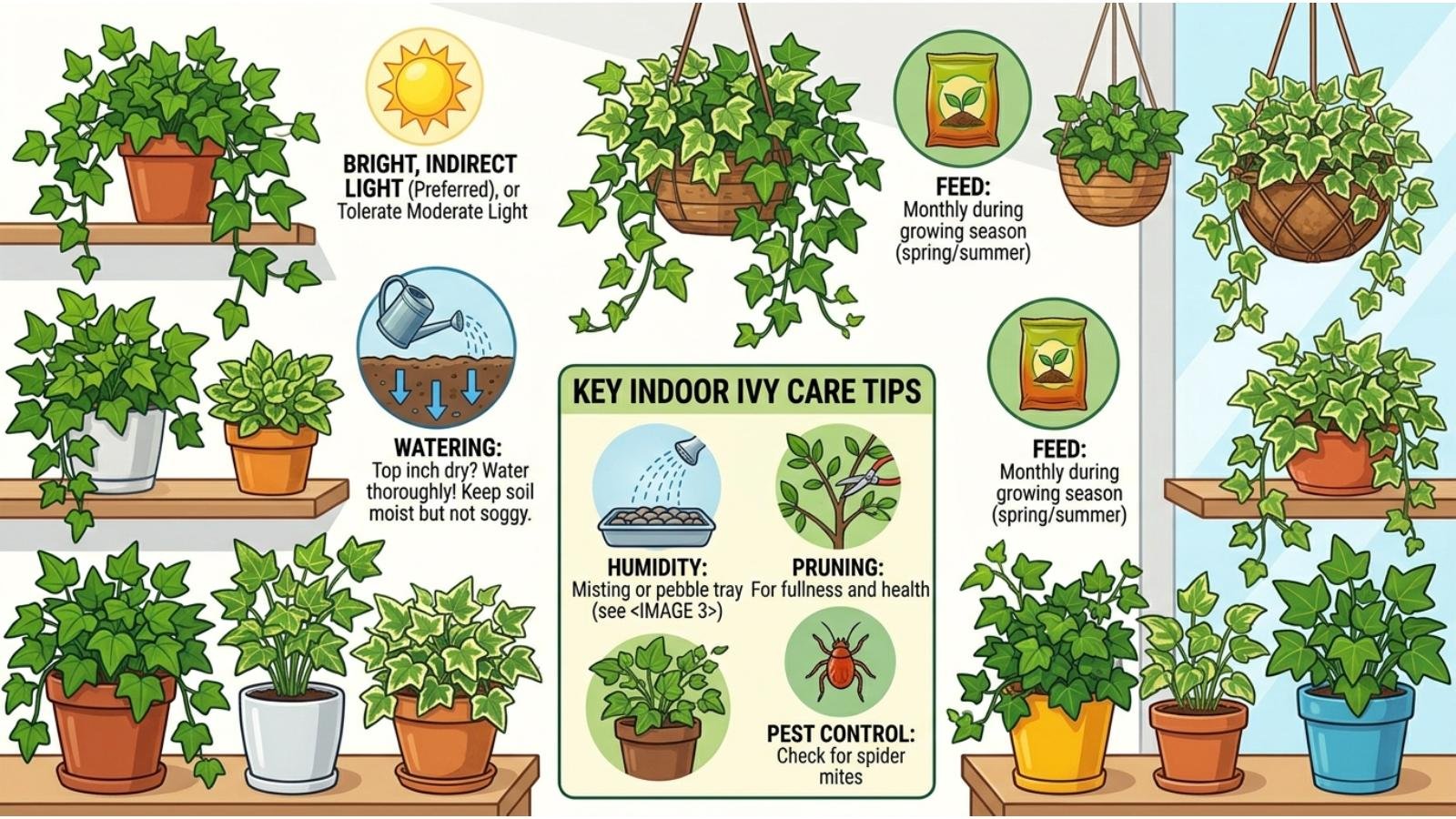
For successful ivy plant care indoor, grow ivy in bright, indirect light, although it can tolerate lower light. Water when the top few centimeters of potting mix become dry, then let excess water drain completely. Use a well-draining pot and avoid constantly wet soil. Keep the plant away from harsh direct sunlight, prune regularly to maintain bushiness, and provide good air circulation. English ivy (Hedera helix) can develop spider mites in warm, dry rooms, so monitor the leaves closely.
Introduction
Ivy is one of those houseplants that can look effortless when it is healthy: long trailing stems, dense foliage, and attractive leaves spilling from a hanging basket or shelf. But indoor ivy can become surprisingly difficult when light, watering, humidity, or pruning is slightly off.
The good news is that ivy plant care indoor does not require a complicated routine. The key is understanding what the plant is telling you. Yellow leaves, bare stems, crispy edges, slow growth, and disappearing variegation usually point toward a specific environmental problem rather than a need for more fertilizer.
This guide focuses on practical care for indoor ivy, especially common Hedera types such as English ivy, including how to choose its location, water correctly, prune it, propagate it, and diagnose common problems.
What Kind of Ivy Grows Indoors?
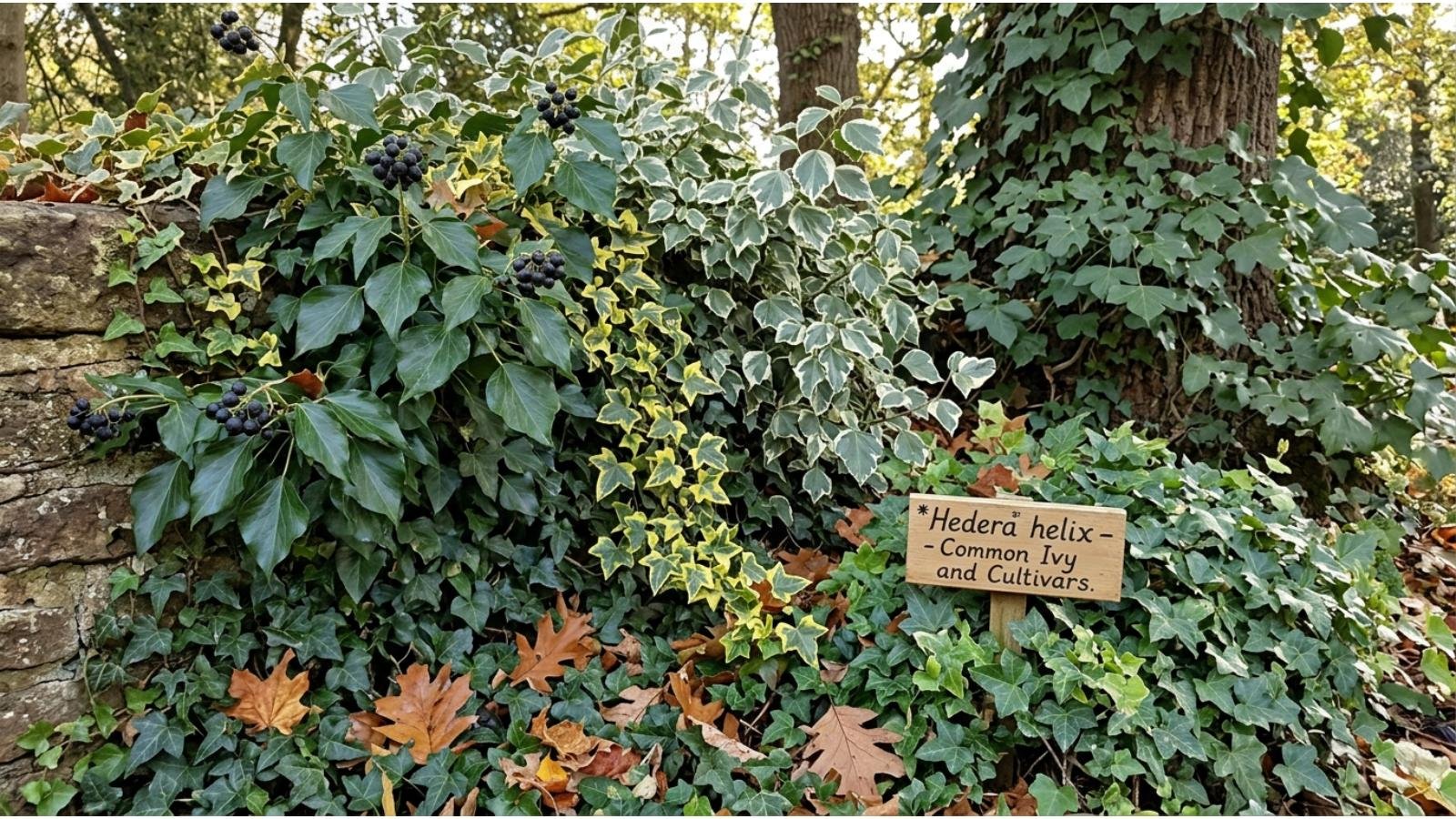
The name ivy covers several Hedera species and cultivars. English ivy, Hedera helix, is among the most familiar indoor types.
Ivy is naturally a climbing or trailing plant. Indoors, that growth habit gives you several options:
- Let the stems cascade from a hanging basket.
- Train the vines around a hoop or support.
- Allow the plant to trail from a high shelf.
- Prune it into a fuller, more compact shape.
There are also numerous cultivars with different leaf shapes and variegation. Green-leaved varieties generally tolerate lower light better, while variegated ivy needs brighter conditions to maintain strong coloration.
Important: Ivy is not the same plant as pothos, despite the common name “devil’s ivy” sometimes being used for pothos. Pothos (Epipremnum aureum) and true ivy (Hedera) have different care requirements and appearances.
The Best Light for Indoor Ivy
Light is one of the most important factors in keeping indoor ivy attractive.
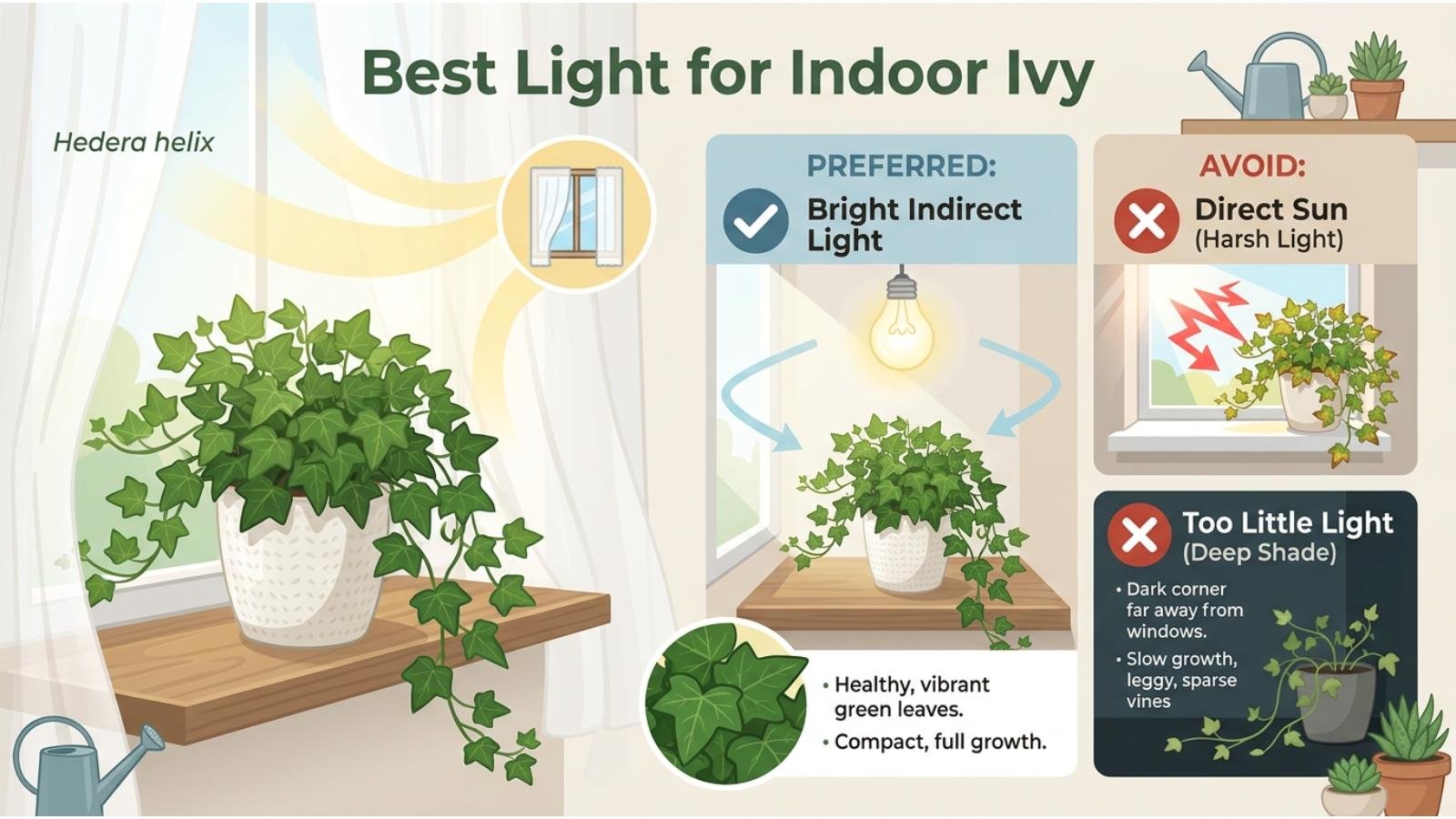
Ivy can tolerate relatively low light, but bright indirect light is usually a better target for vigorous, compact growth. The indirect or low light and suggests east-, west-, or north-facing windows as suitable positions. In a south-facing room, protect ivy from strong direct sunlight through glass because the leaves can scorch.
How to judge the location
A good indoor position should provide:
- Plenty of natural ambient light.
- No intense afternoon sun directly hitting the foliage.
- Some distance from hot windows during very sunny periods.
- Enough light to prevent long, weak growth.
What happens when ivy gets too little light?
Low light may cause:
- Longer gaps between leaves.
- Thin or weak stems.
- Slower growth.
- Loss of strong variegation.
- Leaves becoming predominantly green on variegated cultivars.
If a variegated ivy starts producing noticeably greener foliage, move it gradually toward a brighter location. Insufficient light can reduce variegation, although an individual shoot can also genetically revert to green.
Image Suggestion: Bright indirect light setup for indoor ivy showing an ideal window position versus harsh direct sunlight.
How Often Should You Water Indoor Ivy?
There is no reliable calendar schedule such as “water every seven days.” Indoor ivy’s water requirement changes with temperature, light, pot size, soil, and season.
A better approach is to check the potting mix before watering.
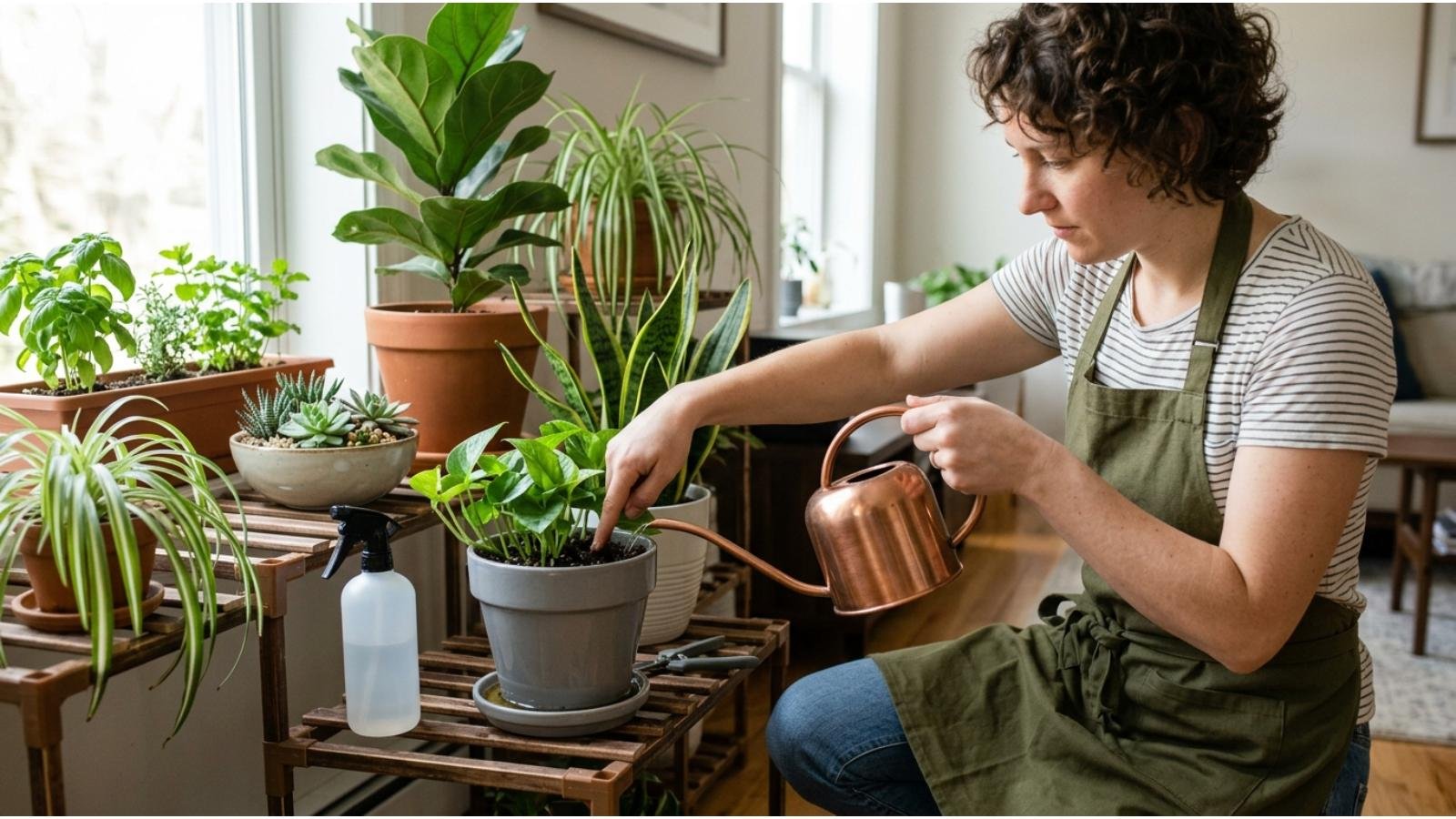
Allow the top few centimeters of compost to dry before watering, while avoiding letting the entire root ball become completely dry. After watering, allow excess water to drain away rather than leaving the pot sitting in water. Persistent waterlogging increases the risk of root problems.
A practical watering routine
- Check the surface and upper layer of the potting mix.
- If it still feels noticeably moist, wait.
- When the upper layer has dried, water thoroughly.
- Let excess water drain through the pot.
- Empty any water collected in the saucer or decorative outer pot.
The most common mistake is not simply “watering too much” but watering again before the previous moisture has had time to decline.
Signs of watering problems
| Symptom | Possible cause | What to do |
|---|---|---|
| Yellowing leaves and consistently wet soil | Overwatering | Let the mix dry more between waterings and check drainage |
| Crispy leaves and very dry soil | Underwatering or excessive dryness | Rehydrate the root ball thoroughly |
| Soft, declining growth | Excess moisture/root stress | Inspect roots and improve drainage |
| Rapid drying | Small pot, warm room, bright light, or dry air | Check moisture more frequently |
Expert tip: Never use the calendar alone to decide when ivy needs water. Check the plant and its soil first.
Does Indoor Ivy Need High Humidity?
Ivy does not need a tropical greenhouse environment to survive indoors, but warm, dry conditions can make pest problems more likely.
However, humidity should not become an excuse for keeping the foliage constantly wet.
For a healthier indoor environment:
- Keep ivy away from excessively hot, dry air.
- Provide reasonable air circulation.
- Monitor leaves regularly.
- Avoid creating persistently wet foliage.
- If your room is very dry, consider increasing ambient humidity.
Image Suggestion: Close-up comparison of healthy ivy leaves and spider-mite damage.
The Best Soil and Pot for Ivy
Indoor ivy needs a potting mix that holds enough moisture for the roots without remaining saturated.
A quality, well-draining houseplant mix is a practical choice. The container should also have drainage holes.
This combination matters because good drainage is more important than simply choosing a large pot.
An oversized container can hold a large volume of wet soil around a relatively small root system, increasing the time required for the mix to dry.
When should you repot ivy?
Consider repotting when:
- Roots are filling the container.
- Water runs through unusually quickly because the root ball is densely packed.
- Growth has slowed despite suitable light and care.
- The plant repeatedly dries out much faster than expected.
- The pot has become unstable because the vines have become large.
Move into only a modestly larger container rather than dramatically increasing pot size.
How to Fertilize Indoor Ivy
Ivy generally does not need constant feeding.
During active growth, a balanced houseplant fertilizer used according to its product instructions can support continued development. Avoid the temptation to compensate for poor light or root problems with extra fertilizer.
If the plant is struggling because its roots are staying wet, adding fertilizer will not fix the underlying problem.
Better order of operations: light → watering → roots and soil → pests → fertilizer.
Pruning Ivy for Fuller Growth
One of the easiest ways to make indoor ivy look better is regular pruning.
Without pruning, ivy can produce long trailing stems with large spaces between leaves. That may be attractive if you specifically want a cascading plant, but it can make a small pot look sparse.
How to prune ivy
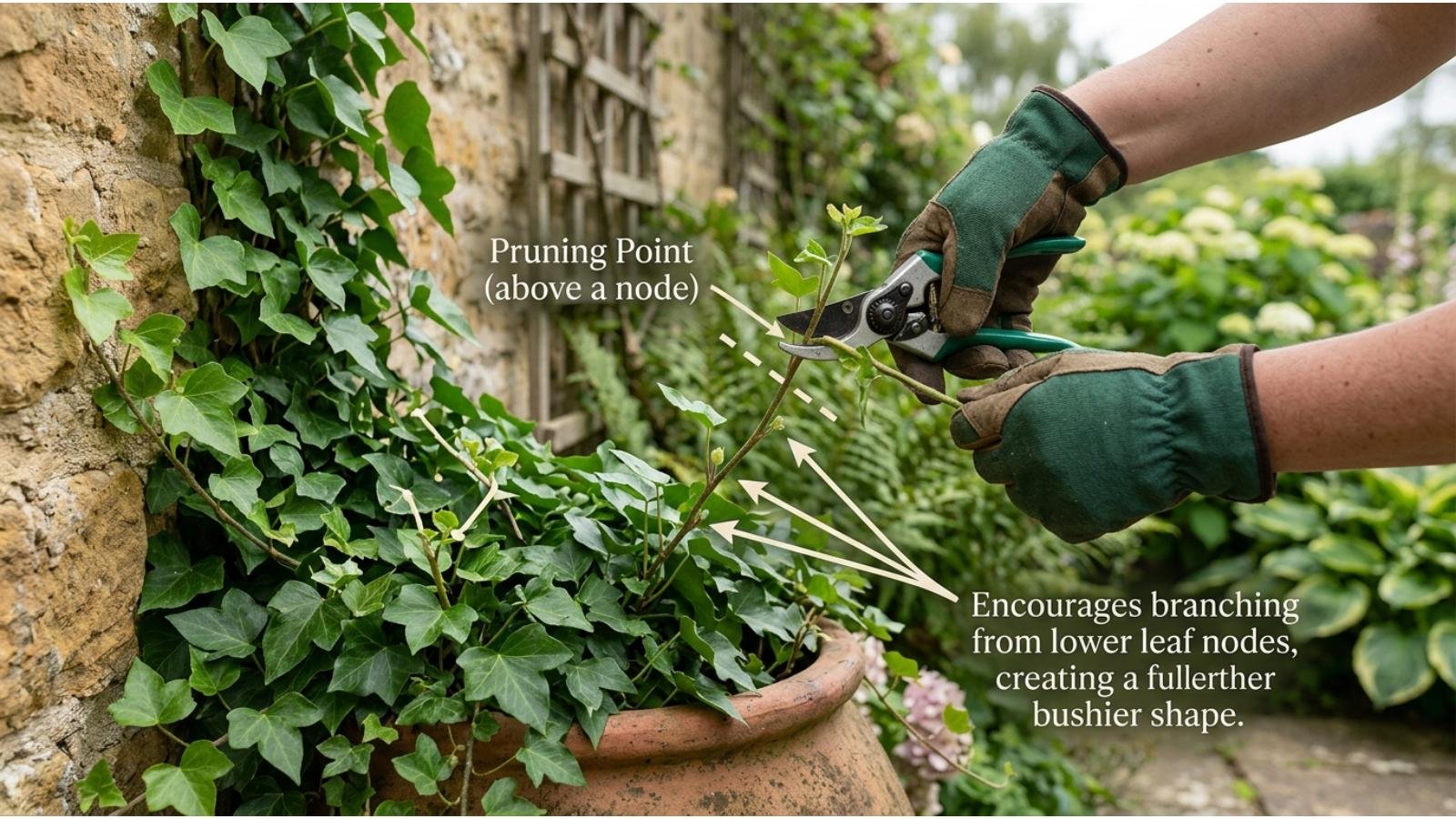
Use clean, sharp scissors or pruning snips.
- Remove excessively long or bare stems.
- Cut just above a healthy leaf node.
- Remove damaged foliage.
- Trim several stems rather than cutting everything back at once.
- Rotate the plant regularly so growth remains balanced.
Pruning encourages you to manage the plant’s shape rather than allowing a few vigorous stems to dominate.
How to Make Indoor Ivy Bushier
If your ivy is long and thin, pruning alone may not solve the problem.
First check the light.
Low light can encourage weaker, more stretched growth. Once the plant has an appropriate light level, trim long stems to encourage a more compact appearance.
You can also use healthy cuttings to create additional plants and eventually place several rooted plants together in one container for a fuller display.
How to Propagate Ivy From Cuttings
Ivy is commonly propagated from stem cuttings.
A simple approach is:
- Select a healthy stem.
- Cut a section containing several leaves or nodes.
- Remove lower leaves if needed.
- Place the cutting into an appropriate propagation medium.
- Keep the medium evenly moist but not waterlogged.
- Provide bright, indirect light.
- Once roots and new growth develop, gradually establish the cutting as a normal houseplant.
Image Suggestion: Step-by-step ivy propagation diagram showing cutting, node placement, rooting, and transplanting.
Common Indoor Ivy Problems and Solutions
Ivy Leaves Turning Yellow
Yellow leaves can have several causes, but consistently wet soil is an important one to investigate.
Check:
- How frequently you are watering.
- Whether the pot has drainage holes.
- Whether water remains in the saucer.
- How long the soil stays wet.
Do not automatically respond to yellow leaves by adding more fertilizer.
Ivy Leaves Turning Brown and Crispy
Crispy brown foliage can occur when the plant becomes excessively dry or is exposed to stressful conditions.
Check the soil before watering and inspect the plant’s location. A very hot, sunny window can also create problems for foliage that is not adapted to intense direct light.
Ivy Losing Its Variegation
If a variegated ivy becomes increasingly green, insufficient light may be responsible. Move it to a brighter position with indirect light.
If one individual stem produces only green leaves, however, it may have reverted.
Ivy Losing Leaves
Sudden leaf drop deserves investigation rather than an automatic watering response.
Check for:
- Recent changes in location.
- Excessive dryness.
- Waterlogged soil.
- Temperature stress.
- Pest activity.
- Poor light.
Look at the roots and soil as well as the foliage. The visible symptom may appear on the leaves while the underlying problem is occurring below the surface.
Spider Mites on Ivy
Spider mites are especially worth watching when indoor conditions are warm and dry.
Look closely for:
- Fine webbing.
- Tiny pale speckles.
- Dull-looking leaves.
- Increasing leaf discoloration.
Isolate an affected plant from other houseplants and address the environmental conditions while treating the infestation appropriately.
Aphids
Aphids can occur on soft new growth. Regularly inspect young stems and leaves, particularly when new growth is developing rapidly.
Why Are My Ivy Leaves Getting Spots?
Leaf spots may be associated with fungal or bacterial problems.
Avoid keeping the foliage unnecessarily wet and remove badly affected material when appropriate.
Good air movement and sensible watering are more useful than repeatedly treating symptoms without identifying the underlying conditions.
Indoor Ivy Care Through the Seasons
Spring
Spring is a good time to:
- Check whether the plant needs repotting.
- Begin or increase feeding during active growth.
- Prune leggy stems.
- Propagate healthy cuttings.
- Watch for new pest activity.
Summer
Higher temperatures can increase water use.
Check the soil more frequently rather than automatically increasing watering on a fixed schedule. Protect ivy from intense direct sunlight through hot windows.
Fall
As growth slows, adjust watering according to actual soil moisture rather than continuing a summer schedule.
Winter
Indoor heating can create warm, dry air. At the same time, reduced light may slow growth and reduce water consumption.
This is a particularly important season for avoiding the combination of low light + frequent watering.
Can You Grow Ivy in a Low-Light Room?
Yes, ivy is relatively tolerant of low light, and the specifically describes it as a houseplant that can cope with low-light conditions.
But “tolerates low light” does not mean “grows equally well in darkness.”
If the plant receives very little usable light, expect slower growth and potentially less attractive foliage. Variegated cultivars may be especially affected because insufficient light can reduce their contrasting patterns.
If natural light is inadequate, supplemental plant lighting can be considered. The appropriate light intensity depends on the plant and lighting system.
Should Indoor Ivy Be Misted?
Misting is sometimes used to increase moisture around houseplants, but it should not replace good environmental management.
For ivy, the bigger priorities are:
- Appropriate light.
- Proper watering.
- Good drainage.
- Reasonable humidity.
- Air circulation.
- Pest monitoring.
If your home is warm and dry, improving the surrounding humidity may be useful, particularly because dry conditions can encourage spider mites. (RHS)
Is Ivy Safe Around Cats and Dogs?
This is an important consideration for pet owners.
Keep indoor ivy where pets cannot chew the leaves. If a pet is suspected of ingesting ivy, contact a veterinarian or an appropriate animal poison-control service promptly.
Common Indoor Ivy Care Mistakes
Watering on a Fixed Schedule
Watering every Sunday sounds convenient, but plants do not consume water at exactly the same rate every week.
Better approach: Check the soil first.
Keeping the Soil Constantly Wet
Ivy may tolerate some neglect, but consistently waterlogged conditions are a poor match for its roots.
Putting Ivy in Harsh Sun
A bright room is not necessarily the same thing as direct afternoon sunlight through glass. Strong direct sunlight can scorch indoor ivy foliage.
Ignoring the Underside of Leaves
Pests can be easy to miss if you only inspect the top surface.
When watering or pruning, turn over several leaves and check the stems.
Pruning Without Fixing Poor Light
Repeatedly cutting leggy growth will not correct the environmental cause. If weak growth keeps returning, reassess the light.
A Simple Weekly Ivy Care Checklist
You do not need to spend a lot of time caring for indoor ivy.
Once a week, quickly check:
- Soil: Is the upper layer dry enough to need water?
- Leaves: Any yellowing, spots, pests, or webbing?
- Light: Is the plant still receiving suitable indirect light?
- Growth: Are stems becoming excessively long or sparse?
- Pot: Is drainage working properly?
- Shape: Does the plant need light pruning?
This short inspection can prevent small problems from becoming major ones.
Frequently Asked Questions
How often should I water ivy indoors?
Water when the top few centimeters of the potting mix have dried rather than following a fixed schedule. Water thoroughly and allow excess water to drain away.
Does indoor ivy need direct sunlight?
No. Ivy generally performs well in low or indirect light. Avoid strong direct sunlight through glass because it can scorch leaves.
Why is my indoor ivy turning green?
Variegated ivy can lose its strong coloration when it does not receive enough light. Move it to a brighter indirect-light location. A single entirely green shoot may instead be a genetic reversion.
Why is my ivy getting brown leaves?
Check for excessive dryness, harsh direct sunlight, or stressful growing conditions. Also inspect the roots and soil if watering has been inconsistent.
How do I make indoor ivy grow fuller?
Provide suitable light and prune long stems just above healthy nodes. Consistent pruning encourages a more compact appearance.
Can ivy grow in a bathroom?
It can work if the bathroom receives enough natural light and has suitable temperatures and airflow. Humidity alone cannot compensate for inadequate light.
Can indoor ivy survive low light?
Yes. Ivy is relatively tolerant of low-light conditions, although growth may be slower and variegated foliage can lose some of its contrast.
Is English ivy poisonous to cats?
Yes. The ASPCA lists Hedera helix as toxic to cats, with ingestion potentially causing vomiting, abdominal pain, excessive salivation, and diarrhea.
Final Takeaway
Successful ivy plant care indoor is mostly about maintaining the right balance rather than giving the plant constant attention. Give ivy bright indirect light, let the upper soil layer dry before watering, use a container with good drainage, prune long growth, and inspect the foliage regularly for pests.
The most useful habit is simple: look at the plant and its soil before changing your routine. If growth becomes sparse, check light. If soil stays wet, check drainage and watering. If leaves become speckled, inspect for pests. This problem-first approach is much more reliable than following a rigid watering or fertilizing calendar.