Quick Answer
Indoor palm plant care mainly involves bright indirect light, well-draining soil, careful watering, moderate humidity, and a stable temperature. Water when the upper portion of the soil has dried rather than following a fixed schedule. Keep palms away from harsh direct sun, cold drafts, and heating or cooling vents. Regularly check leaves and soil for pests, mineral buildup, and signs of overwatering so problems can be corrected early.
Introduction
Successful indoor palm plant care is less about following a rigid watering calendar and more about understanding what your particular palm is experiencing. Light levels, pot size, soil drainage, humidity, temperature, and even the quality of your water can affect its appearance.
Indoor palms can make a room feel greener and more inviting, but their tropical appearance sometimes makes them seem easier to grow than they really are. A palm may look healthy when you bring it home and then develop brown tips, yellow leaves, drooping fronds, or spider mites after a few weeks indoors.
The good news is that most common indoor palms become much easier to manage once you understand a few basic signals. This guide explains how to water, feed, prune, repot, and troubleshoot indoor palms while avoiding the mistakes that commonly cause decline.
What Makes Indoor Palms Different From Other Houseplants?
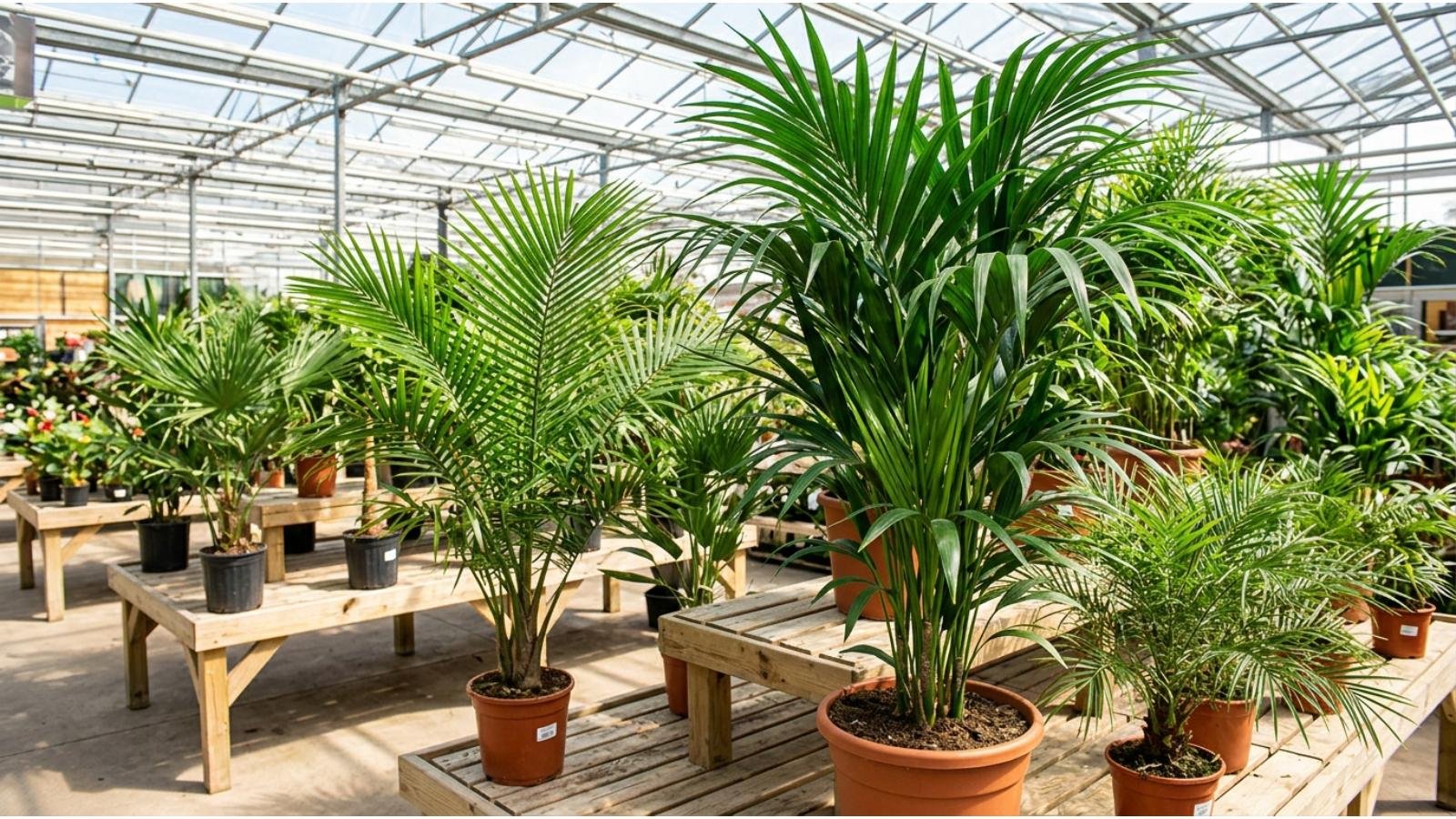
The term indoor palm covers several different species with different tolerances and growing habits. Common choices include:
- Areca palm.
- Parlor palm.
- Lady palm.
- Kentia palm.
- Bamboo palm.
- Majesty palm.
Although their needs vary, many palms naturally grow in warm environments with filtered light, consistent moisture, and relatively high humidity.
That does not mean they should sit in constantly wet soil. One of the most common mistakes is assuming that a tropical plant needs frequent watering. Roots still need oxygen, and poorly drained soil can remain saturated long enough to cause root problems.
Practical insight: When a palm struggles indoors, look at the growing conditions rather than immediately assuming the plant needs more fertilizer or water.
How Much Light Does an Indoor Palm Need?
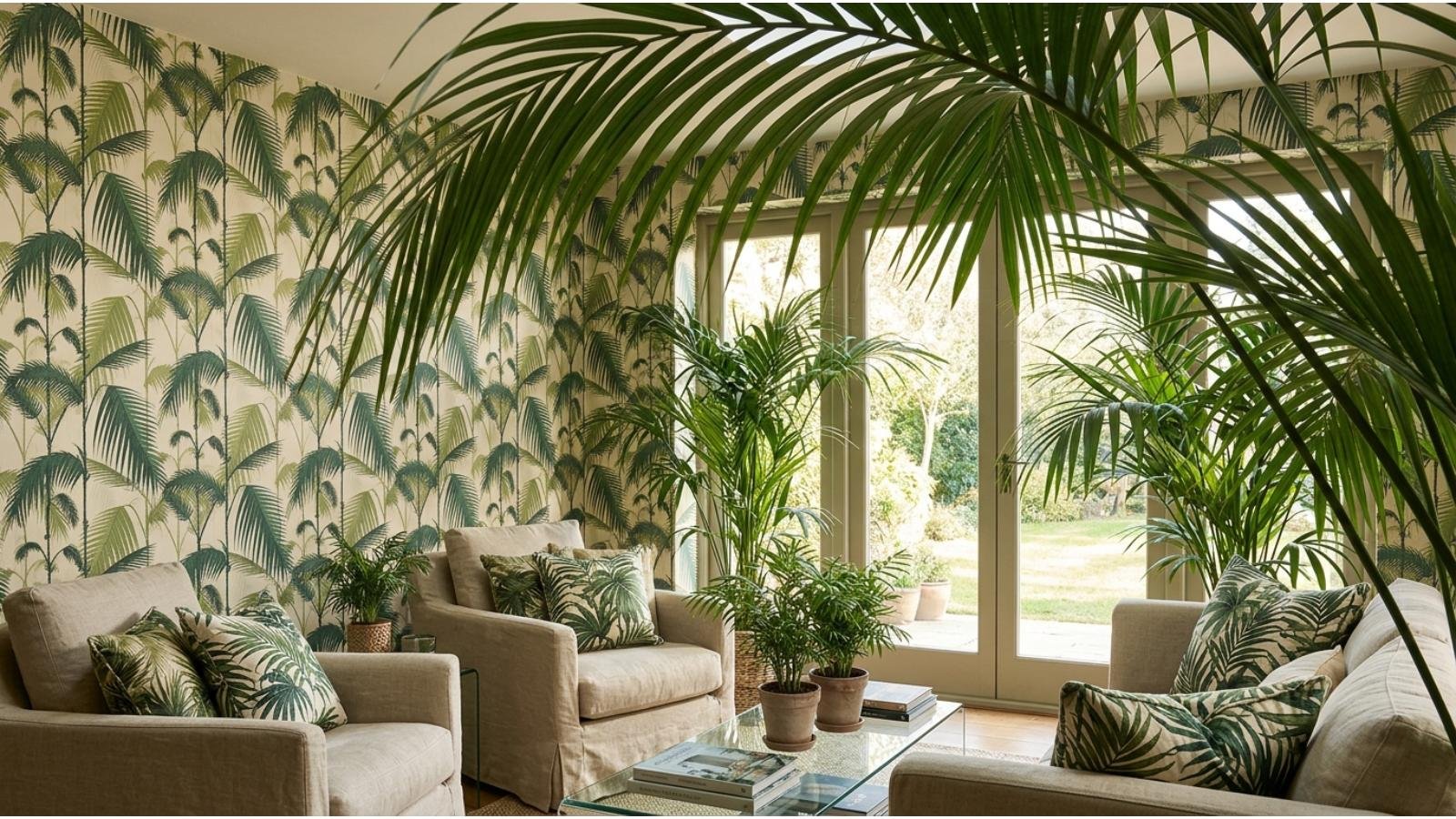
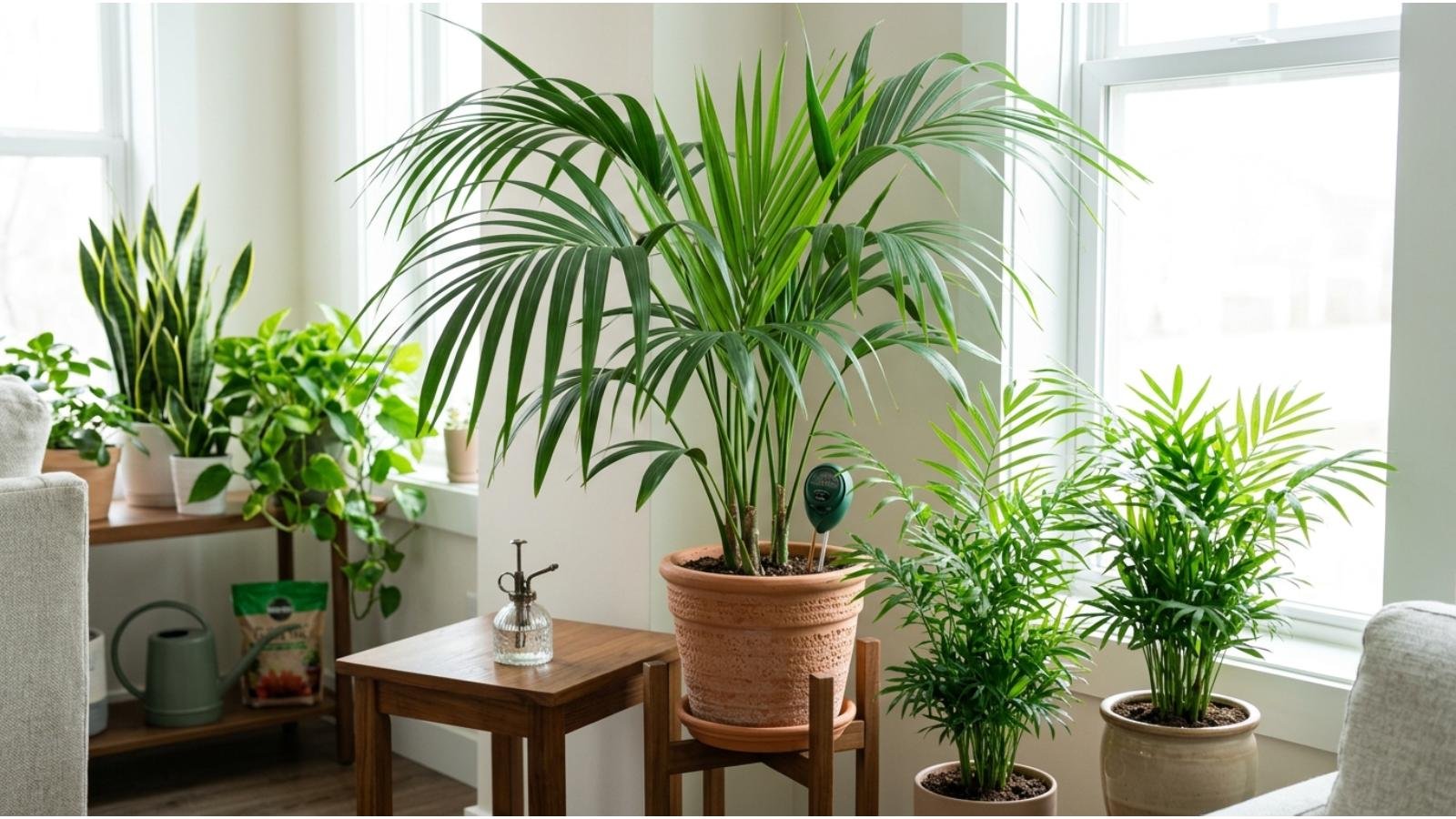
Most indoor palms perform best in bright, indirect light.
A position near an east-facing window can work particularly well because it provides gentle morning sunlight. Palms can also grow near brighter south- or west-facing windows when filtered by a sheer curtain or positioned far enough from intense afternoon sun.
Low light can cause slower growth and thinner, less vigorous foliage. On the other hand, sudden exposure to strong direct sunlight can scorch leaves, particularly when the palm has previously been grown in filtered indoor conditions.
Signs your palm needs more light
Watch for:
- Very slow new growth.
- Long, weak-looking stems.
- Pale or less vigorous foliage.
- Fronds leaning strongly toward a window.
Signs the light may be too intense
Look for:
- Bleached patches.
- Crispy brown areas on exposed leaves.
- Sudden leaf scorching after moving the plant.
Tip: If you move a palm from a dim room to a much brighter location, increase light gradually rather than making a dramatic change overnight.
Image Suggestion: Indoor palm positioned correctly near a bright window with filtered sunlight.
How Often Should You Water an Indoor Palm?
There is no reliable watering schedule that works for every indoor palm.
Instead, check the soil before watering.
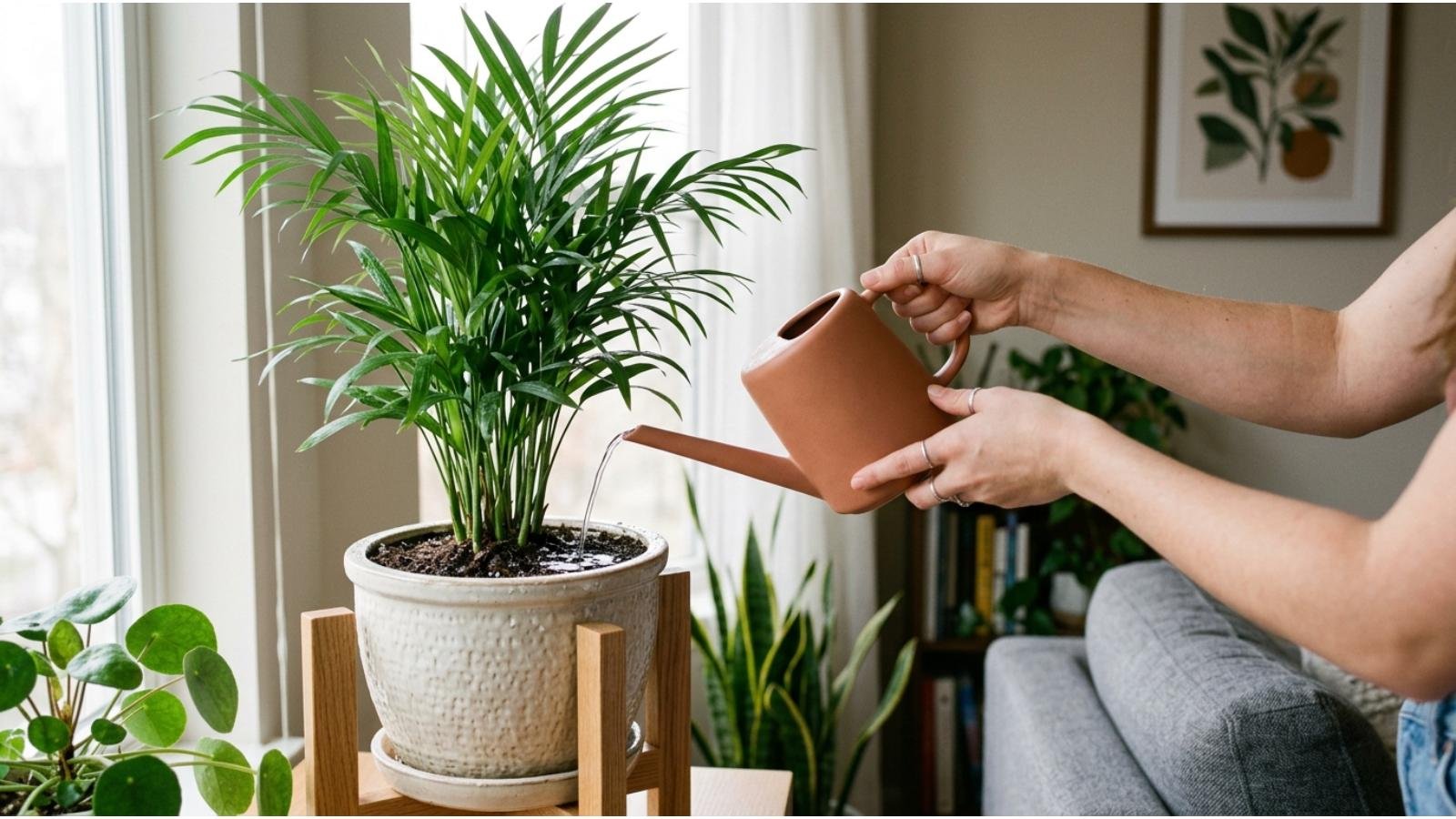
Insert your finger several centimeters into the soil or use another reliable method to assess moisture. If the upper layer has dried but deeper soil remains somewhat moist, the plant may not need water yet. If the soil has become substantially dry and the palm is otherwise healthy, water thoroughly.
When watering:
- Slowly apply water across the soil surface.
- Continue until excess water drains from the bottom.
- Empty water collected in the saucer or outer container.
- Allow the soil to reach an appropriate level of dryness before watering again.
The goal is consistent moisture without prolonged saturation.
Why overwatering causes problems
Waterlogged soil reduces the air available around roots. Persistent saturation can contribute to root deterioration, which may eventually produce yellowing, wilting, unpleasant-smelling soil, or declining growth.
Interestingly, an overwatered palm can sometimes look thirsty because damaged roots cannot function normally.
Why underwatering also matters
If a palm repeatedly becomes extremely dry, leaves may curl, brown, or develop crispy edges. Severe and repeated drought stress can also cause premature frond loss.
Best rule: Water according to soil moisture and environmental conditions, not according to the calendar.
Best Soil for Indoor Palm Plants
Indoor palms need a growing medium that retains some moisture while allowing excess water and air to move through the root zone.
A quality indoor potting mix can work well when paired with a container that has drainage holes.
A suitable mix generally benefits from:
- Organic material for moisture retention.
- Components that improve drainage.
- Enough structure to prevent the soil from collapsing into a dense, airless mass.
Avoid placing a palm in a decorative container with no drainage unless it contains a properly draining inner pot.
Important: Adding a layer of rocks or gravel to the bottom of a poorly draining pot does not turn it into a properly drained container. The drainage hole itself is what allows excess water to escape.
Choosing the Right Pot for an Indoor Palm
A larger pot is not automatically better.
If you move a small palm into a dramatically oversized container, the additional soil can retain moisture for longer after watering. This increases the risk of persistently wet conditions.
Choose a container that:
- Has drainage holes.
- Provides adequate room for the root system.
- Is only moderately larger when repotting.
- Is stable enough to support the plant’s height.
For tall palms, stability is especially important because a top-heavy plant can become unstable in a lightweight pot.
Practical observation: If the container stays wet for many days after watering, the problem may be the pot size, soil structure, drainage, or environmental conditions rather than a lack of watering.
Humidity and Indoor Palm Care
Many palms appreciate moderate to higher humidity, particularly in dry indoor environments.
Low humidity can contribute to:
- Brown leaf tips.
- Crispy leaf margins.
- Increased stress during hot or dry periods.
- Greater susceptibility to some common houseplant pests.
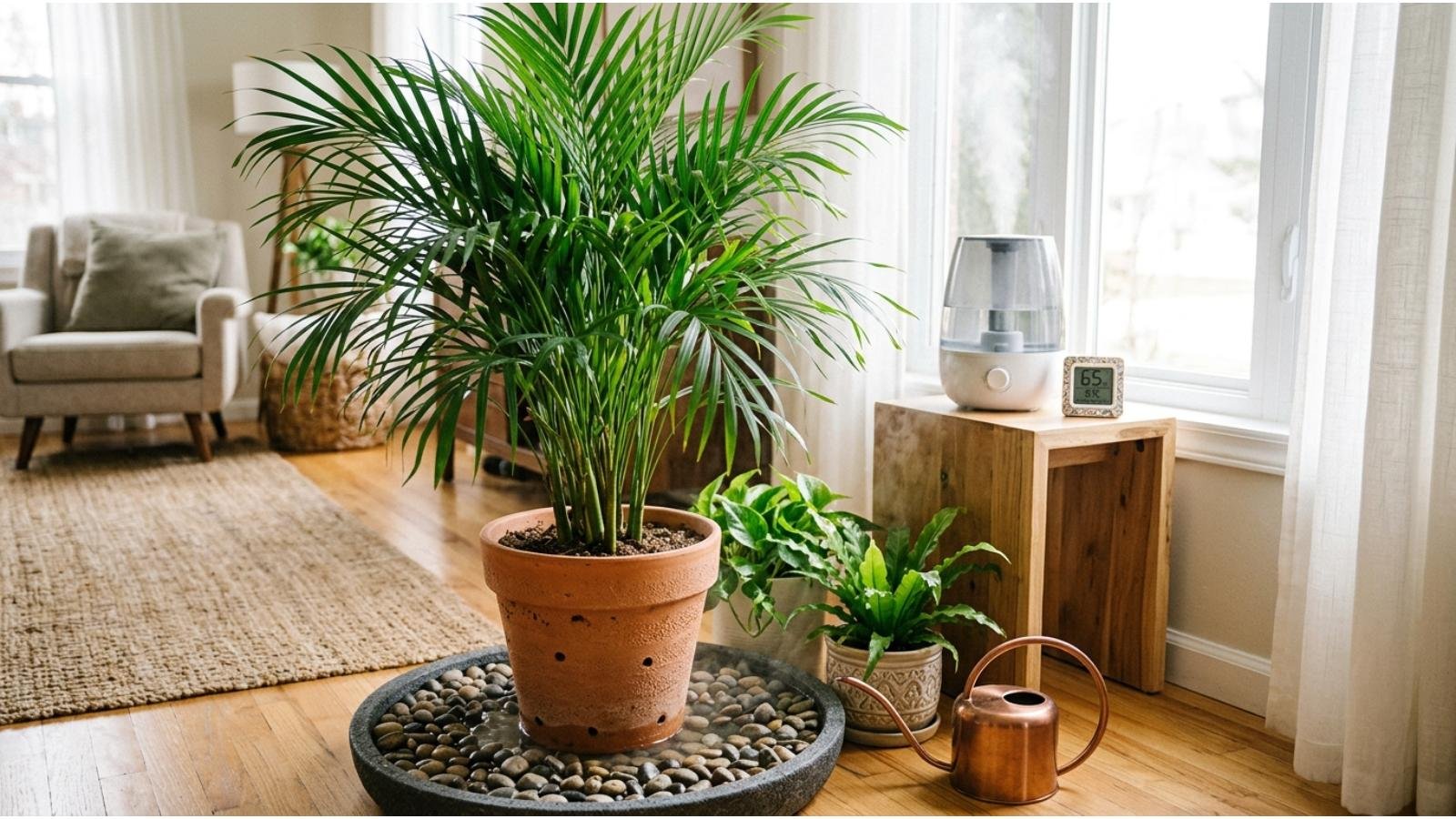
A humidifier is usually more dependable than occasional misting when you need to raise room humidity.
However, humidity should not be considered a substitute for proper watering. A palm sitting in waterlogged soil does not need more moisture simply because the leaves have brown tips.
Improve humidity naturally
You can:
- Group compatible houseplants together.
- Use a humidifier.
- Keep the palm away from very dry heat sources.
- Monitor the room rather than guessing based on the season.
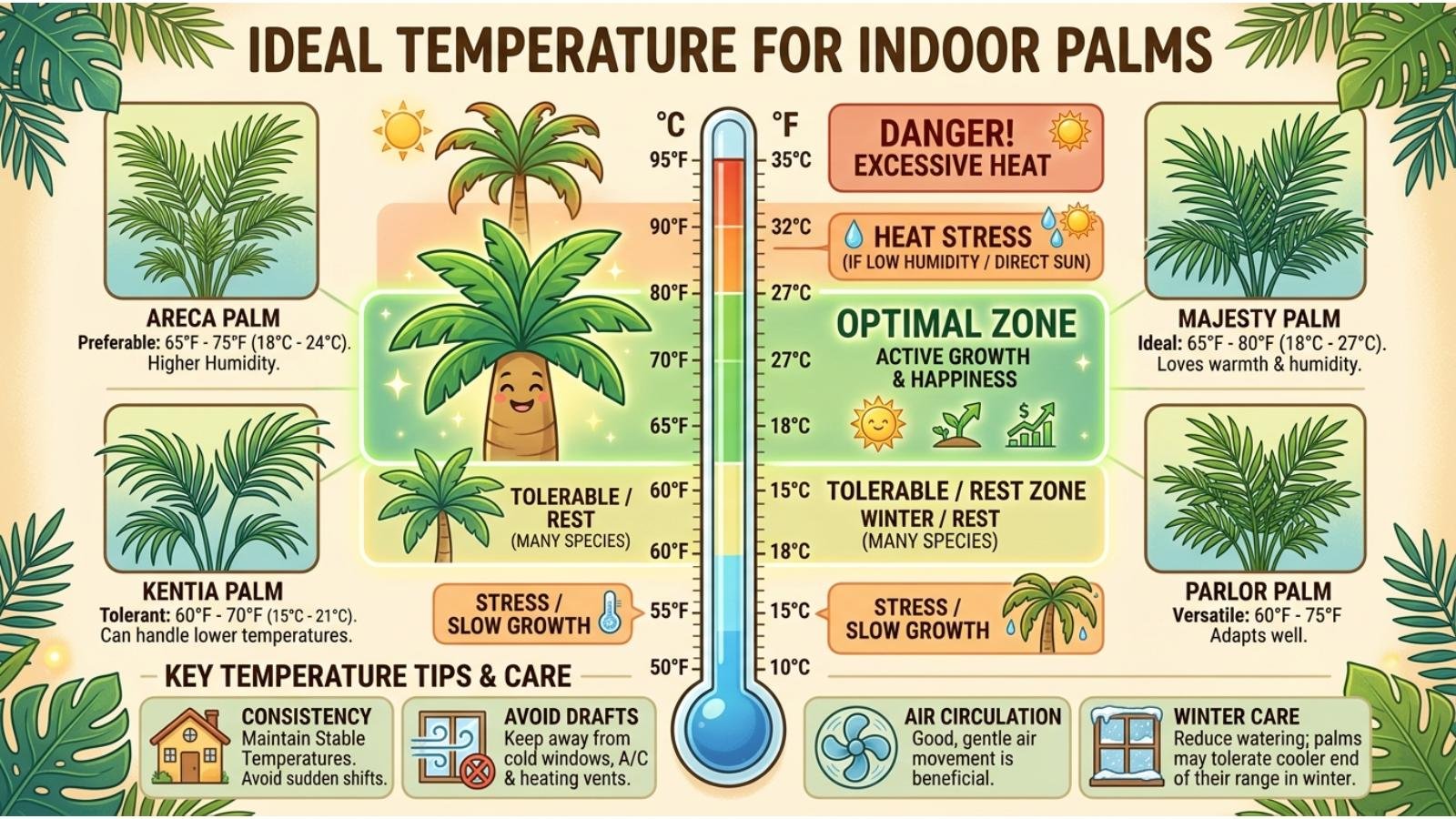
Ideal Temperature for Indoor Palms
Most commonly grown indoor palms prefer normal household temperatures and dislike sudden environmental changes.
Protect them from:
- Cold drafts.
- Very cold windows during winter.
- Direct airflow from air conditioners.
- Strong heat from radiators or heaters.
- Rapid temperature fluctuations.
A palm positioned directly beside a heating or cooling vent may receive adequate light but still develop stressed foliage.
Better approach: Choose a stable location with good indirect light and minimal exposure to artificial airflow.
Should You Fertilize an Indoor Palm?
Palms generally benefit from nutrients during active growth, but fertilizer should supplement good growing conditions rather than compensate for poor light, watering problems, or damaged roots.
Use a fertilizer appropriate for palms or general houseplants and follow the product’s dilution and frequency instructions.
Avoid applying excessive fertilizer. More fertilizer does not automatically produce healthier foliage and can contribute to salt accumulation in the growing medium.
When to reduce or stop feeding
Fertilizer needs usually decrease when growth slows substantially, such as during darker or cooler periods.
If a palm is already stressed from root problems, severe drought, or another environmental issue, correct the underlying problem before pushing new growth with heavy feeding.
How to Prune Indoor Palm Leaves
Palm pruning is mainly about removing dead or badly damaged foliage rather than constantly reshaping the plant.
Use clean, sharp tools when removing:
- Completely brown fronds.
- Severely damaged leaves.
- Dead material at the base when appropriate.
Avoid removing healthy green leaves simply because they have a few brown tips. Green tissue is still contributing to the plant.
What about brown leaf tips?
You can trim unattractive brown edges for appearance, but trimming does not correct the cause.
Brown tips may be associated with several factors, including:
- Dry soil.
- Low humidity.
- Salt accumulation.
- Excess fertilizer.
- Root stress.
- Environmental fluctuations.
Treat the underlying issue rather than repeatedly cutting the symptoms.
Image Suggestion: Close-up diagram showing where to trim a damaged indoor palm frond without cutting healthy tissue.
Why Are My Indoor Palm Leaves Turning Brown?
Brown leaves are one of the most common indoor palm problems, but the color alone does not identify the cause.
Brown tips
Possible causes include:
- Dry conditions.
- Inconsistent watering.
- Low humidity.
- Fertilizer or mineral buildup.
- Root stress.
Brown patches
Consider:
- Excessive direct sunlight.
- Physical damage.
- Environmental stress.
- Pest activity.
Entire fronds turning brown
Older fronds naturally decline as plants grow. But widespread or rapid browning can indicate a more serious environmental or root problem.
Troubleshooting approach: Look at the pattern. Are only the oldest leaves affected, or is new growth also declining? Is the soil dry, constantly wet, or normal? Has the plant recently moved? These clues are often more useful than the leaf color alone.
Why Are My Indoor Palm Leaves Turning Yellow?
Yellow leaves can result from several different conditions.
Common possibilities include:
- Excessively wet soil.
- Root stress.
- Aging foliage.
- Insufficient light.
- Nutritional problems.
- Sudden environmental changes.
Do not automatically fertilize a yellowing palm.
First inspect the soil and roots, review the plant’s light exposure, and determine whether the yellow leaf is an older frond naturally reaching the end of its life.
If several leaves begin yellowing at the same time and the soil remains wet for extended periods, investigate drainage and root health before adding anything else.
Indoor Palm Plant Pests to Watch For
Indoor palms can attract common houseplant pests, particularly when plants are stressed.
Keep an eye out for:
- Spider mites.
- Scale insects.
- Mealybugs.
- Thrips.
Inspect both the upper and lower surfaces of leaves, especially around leaf joints and newer growth.
Early detection is much easier to manage than a widespread infestation.
A simple inspection routine
Whenever you water your palm, spend a few seconds checking:
- The newest leaves.
- Leaf undersides.
- Stems and leaf joints.
- Soil surface.
- Overall plant vigor.
This small habit can reveal problems before they become severe.
How to Repot an Indoor Palm
Repotting should be based on the plant’s needs rather than a fixed annual schedule.
Consider repotting when:
- Roots are densely filling the container.
- Water passes through unusually quickly because the root mass has become very dense.
- The plant is clearly outgrowing its container.
- The existing potting mix has deteriorated significantly.
- Drainage has become difficult to manage.
Repotting steps
- Select a container only modestly larger than the existing one.
- Make sure it has drainage holes.
- Prepare fresh, well-draining potting mix.
- Gently remove the palm from its existing container.
- Inspect the root system for obvious damage.
- Place the plant at approximately the same depth.
- Fill around the root ball with fresh mix.
- Water appropriately and return it to suitable conditions.
Avoid aggressively disturbing healthy roots unnecessarily.
Image Suggestion: Step-by-step infographic showing an indoor palm being removed, inspected, and repotted.
Indoor Palm Care Through the Seasons
Spring
As light levels increase, many palms begin producing stronger growth. Gradually adjust watering and resume or increase feeding according to the plant’s growth and fertilizer instructions.
Summer
Bright light, warmer temperatures, and active growth can increase water use. Check soil moisture more frequently, but do not water automatically every few days.
Fall
As daylight decreases, growth may slow. Allow your watering routine to adapt instead of maintaining a summer schedule.
Winter
Indoor heating can create dry air while reduced light slows plant growth. Keep palms away from cold drafts and heating vents and be especially careful about overwatering.
Key principle: Your palm’s watering needs change with light, temperature, humidity, pot size, and growth rate.
Common Indoor Palm Care Mistakes
Watering on a fixed schedule
A calendar cannot account for changing light, temperature, humidity, and soil moisture.
Keeping the soil constantly wet
Tropical origin does not mean palm roots should remain saturated.
Putting the plant in a dark corner
A palm may tolerate lower light for a while without actually thriving there.
Fertilizing a stressed plant heavily
Fertilizer cannot repair damaged roots or compensate for inadequate light.
Ignoring brown tips
Brown tips are symptoms, not a diagnosis. Look for the underlying environmental cause.
Using an oversized pot
Too much wet soil around a relatively small root system can make moisture management more difficult.
Moving the palm repeatedly
Frequent changes in light and temperature can add unnecessary stress.
A Simple Indoor Palm Care Routine
For beginners, this routine keeps care practical without turning it into a complicated schedule.
Weekly: Check the soil moisture, inspect leaves for pests, and look at new growth.
Every few weeks: Rotate the plant if it is leaning toward the light and inspect the pot and drainage area.
During active growth: Monitor whether the plant needs appropriate fertilization according to the product label.
Seasonally: Reassess light, watering frequency, humidity, and temperature rather than continuing the same routine year-round.
This approach is more reliable than treating every indoor palm as if it has identical needs.
Quick Troubleshooting Guide
| Problem | Possible causes | What to check first |
|---|---|---|
| Brown leaf tips | Dryness, low humidity, salts, root stress | Soil moisture and room conditions |
| Yellow leaves | Wet soil, aging foliage, low light, root problems | Soil and drainage |
| Drooping leaves | Dry roots, root damage, temperature stress | Soil moisture and roots |
| Slow growth | Low light, seasonal slowdown, nutrition | Light and growth conditions |
| Brown patches | Sun scorch, pests, damage | Light exposure and leaves |
| Fine webbing | Possible spider mites | Leaf undersides and stems |
| White cottony insects | Mealybugs | Leaf joints and stems |
| Constantly wet soil | Poor drainage, oversized pot, low evaporation | Pot and soil structure |
Frequently Asked Questions
How often should I water an indoor palm?
Water when the soil has dried to an appropriate level for the species and environment. Avoid following a rigid weekly schedule.
Do indoor palms need direct sunlight?
Most common indoor palms prefer bright, indirect light. Some can tolerate gentle direct morning sun, but intense afternoon sunlight can scorch foliage.
Why does my indoor palm have brown tips?
Brown tips can result from inconsistent watering, dry air, mineral or fertilizer buildup, root stress, and other environmental factors. Check the growing conditions before assuming there is one specific cause.
Can an indoor palm recover from yellow leaves?
It depends on the cause. If yellowing results from an environmental problem that is corrected early, the plant can often produce healthier new growth. A yellow leaf that is naturally aging will not turn green again.
Should I cut off completely brown palm leaves?
Completely dead fronds can generally be removed with clean tools. Avoid removing healthy green foliage unnecessarily.
How much humidity does an indoor palm need?
Many indoor palms appreciate moderate humidity, particularly in dry homes. A humidifier can provide more consistent humidity than occasional misting.
Why are spider mites common on indoor palms?
Dry, stressful indoor conditions can favor spider mite problems. Regularly inspecting leaf undersides and maintaining suitable growing conditions can help you catch infestations early.
Can I keep an indoor palm in a bathroom?
A bright bathroom can be a good environment for some palms because humidity may be higher. However, adequate natural or supplemental light and proper drainage are still essential.
How do I make my indoor palm grow faster?
Provide suitable light, consistent moisture, appropriate nutrition, adequate humidity, and stable temperatures. Trying to accelerate growth with excessive water or fertilizer can cause more harm than good.
Related Topics for Internal Linking
If this article is part of a larger plant-care website, useful internal links could include:
- Snake Plant Care for readers comparing easy-care indoor plants.
- Spider Plant Care for another popular beginner houseplant.
- Pothos Plant Care for low-maintenance indoor greenery.
- Prayer Plant Care for readers interested in humidity-loving foliage.
- Office Plant Care for readers choosing plants for workplaces.
- How to Care for Snake Plant as another beginner-focused care guide.
These links should be added only where the surrounding paragraph naturally introduces the related topic.
Conclusion
Successful indoor palm plant care comes down to observing the plant rather than following a rigid schedule. Give your palm suitable indirect light, use well-draining soil and a pot with drainage, water according to soil moisture, maintain reasonable humidity, and protect it from harsh drafts and sudden environmental changes.
Most problems become easier to solve when you diagnose the conditions first. Before watering a struggling palm, check the soil. Before fertilizing yellow leaves, inspect the roots and light. Before cutting brown foliage, determine why it turned brown. That habit of observation is what turns basic palm maintenance into reliable long-term care.