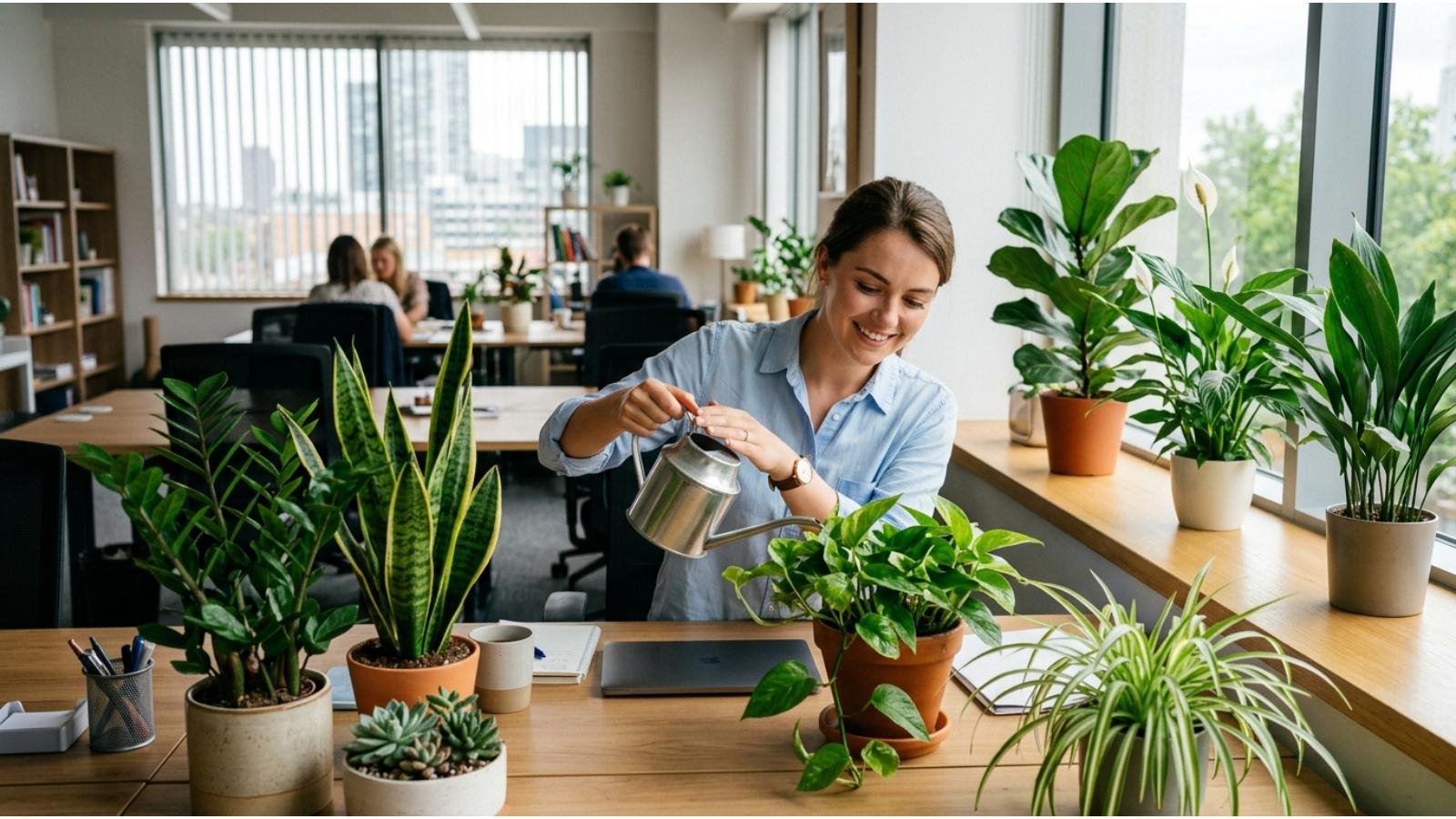
Office plants can make a workspace feel more comfortable and inviting, but keeping them healthy can be surprisingly challenging.Good office plant care starts with understanding the environment rather than simply watering plants whenever they look slightly tired Indoor offices often have low natural light, dry air, air-conditioning, heating, temperature fluctuations, and irregular watering routines.
A plant that thrives beside a bright home window may struggle on an office desk several feet away from a window.
. Light determines how quickly a plant uses water, while the pot, soil, temperature, and humidity all influence how long moisture remains available to the roots.
The good news is that you do not need to become a professional gardener to maintain healthy office plants. Once you understand a few basic signals, you can build a simple routine that works even during busy workweeks, vacations, and changing seasons.
Quick Answer
Office plant care is mainly about matching a plant to the conditions of its workspace and then keeping watering, light, temperature, humidity, and cleaning consistent. Most office plants perform best with suitable indirect light, well-draining soil, moderate watering, and protection from heating and cooling vents. The key is to check the plant and soil rather than following a rigid watering schedule.
What Makes Office Plant Care Different?
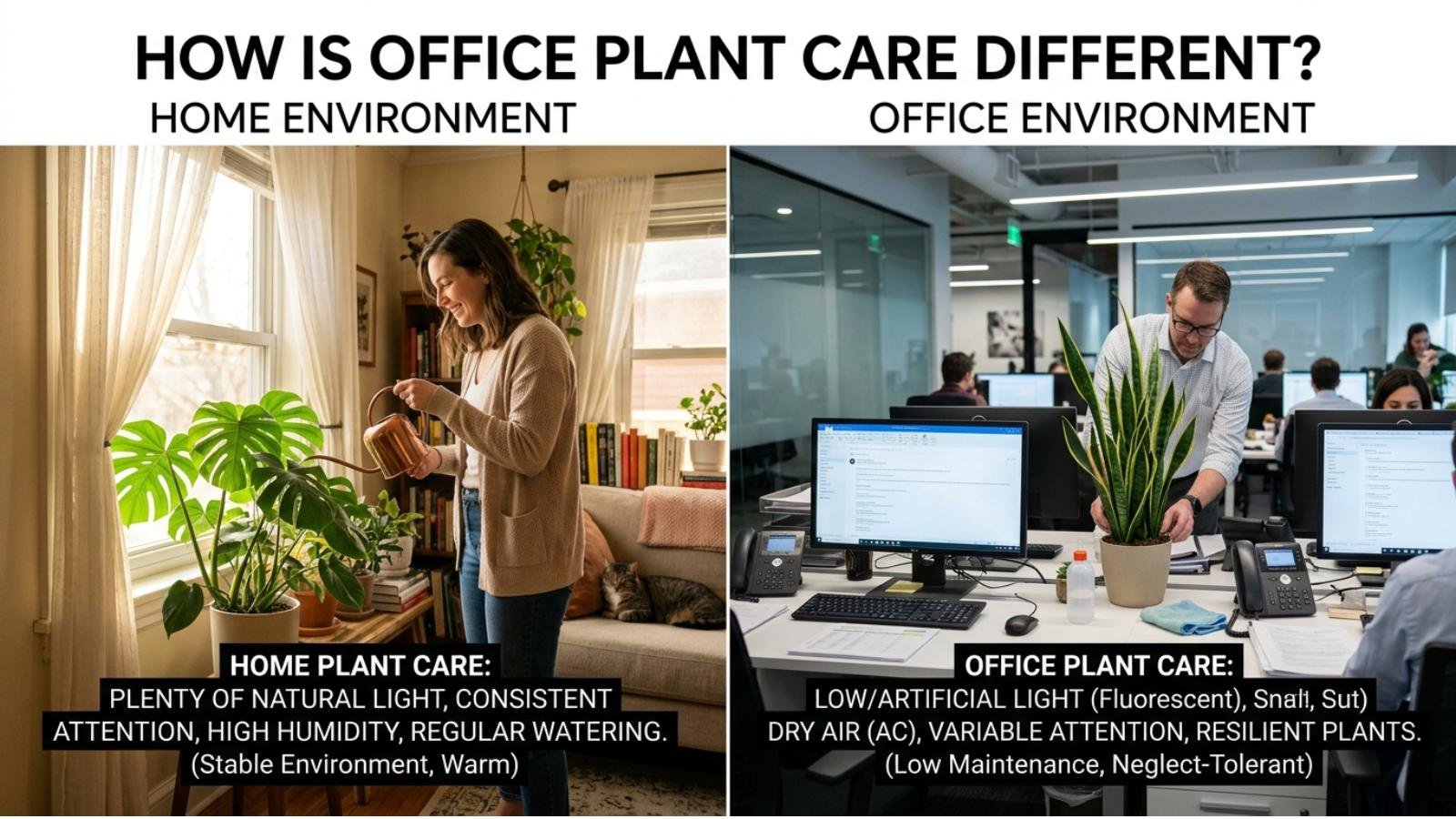
Plants in offices experience conditions that are different from many residential environments.
A typical workspace may have:
- Limited or filtered natural light.
- Air-conditioning or heating running for long periods.
- Dry indoor air.
- Sudden temperature changes.
- Little airflow around individual plants.
- Watering performed by different people.
- Plants placed in decorative containers without proper drainage.
- Long periods when nobody checks the plants during weekends or holidays.
These factors matter because plants respond to their environment, not to the label on the pot.
For example, watering a plant every Monday may sound convenient, but it can create problems if the soil is still wet from the previous week. Conversely, a plant positioned beside a bright window may dry out much faster than the same species kept in a dim conference room.
The practical rule is simple: use a routine for checking plants, not an automatic routine for watering them.
How to Choose the Right Office Plant
The easiest way to improve office plant care is to choose a plant that naturally tolerates your workspace.
Before buying a plant, evaluate its intended location.
Check the Available Light
Look at the area during daylight hours and determine whether it receives:
- Bright direct sunlight.
- Bright indirect light.
- Moderate indirect light.
- Low light.
Do not assume that a room is bright simply because you can comfortably read there. Human eyes are remarkably good at adjusting to low light, while plants depend on measurable light levels for photosynthesis.
A desk several feet away from a window can receive dramatically less usable light than the area immediately beside the window.
Consider Temperature and Airflow
Avoid placing plants directly beside:
- Air-conditioning vents.
- Heating vents.
- Frequently opened exterior doors.
- Strong fans.
- Radiators.
- Very cold windows during winter.
Constant blasts of hot or cold air can stress foliage and cause soil to dry unevenly.
Think About Maintenance
A plant requiring frequent watering may not be the best choice for a busy office.
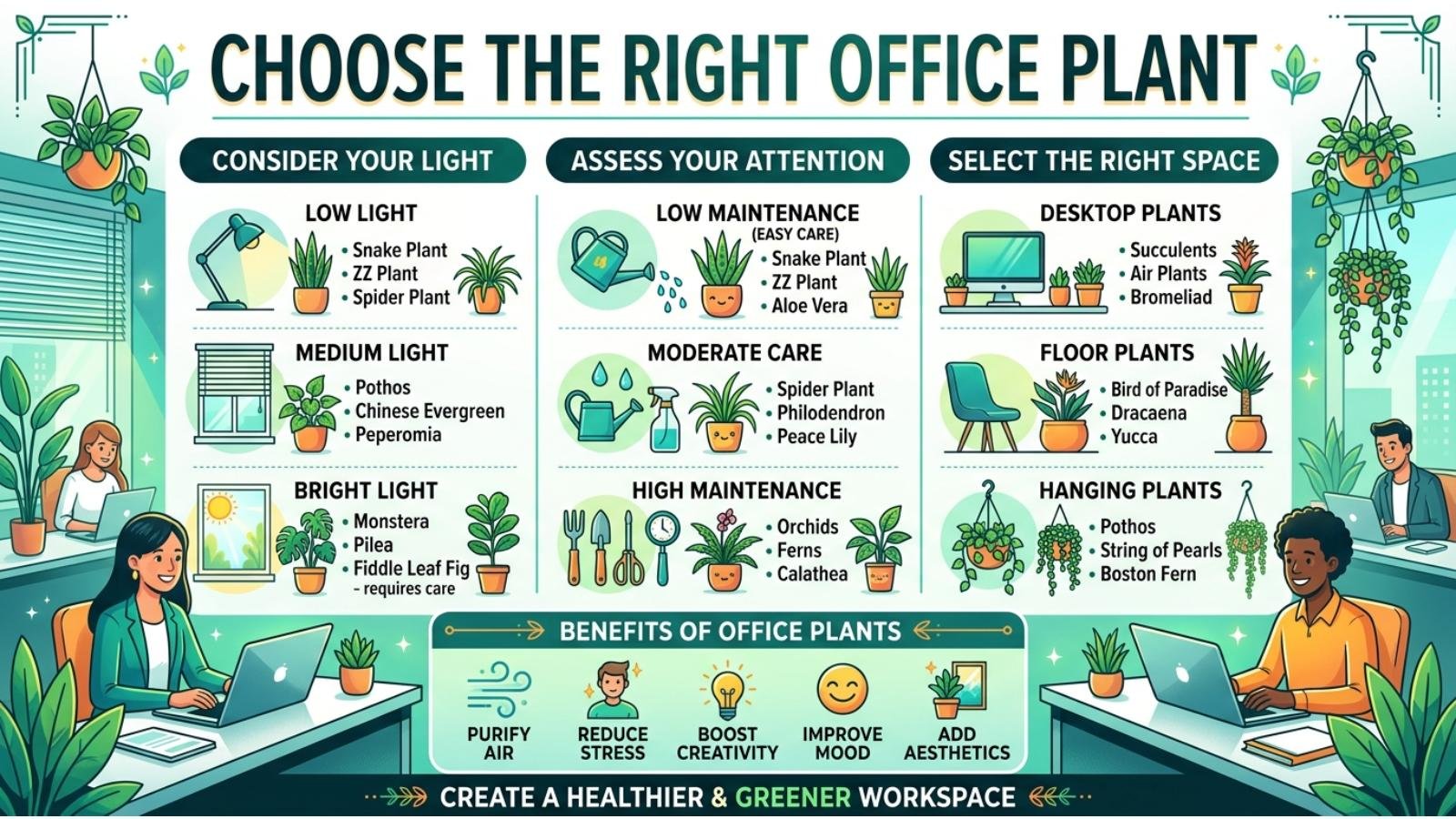
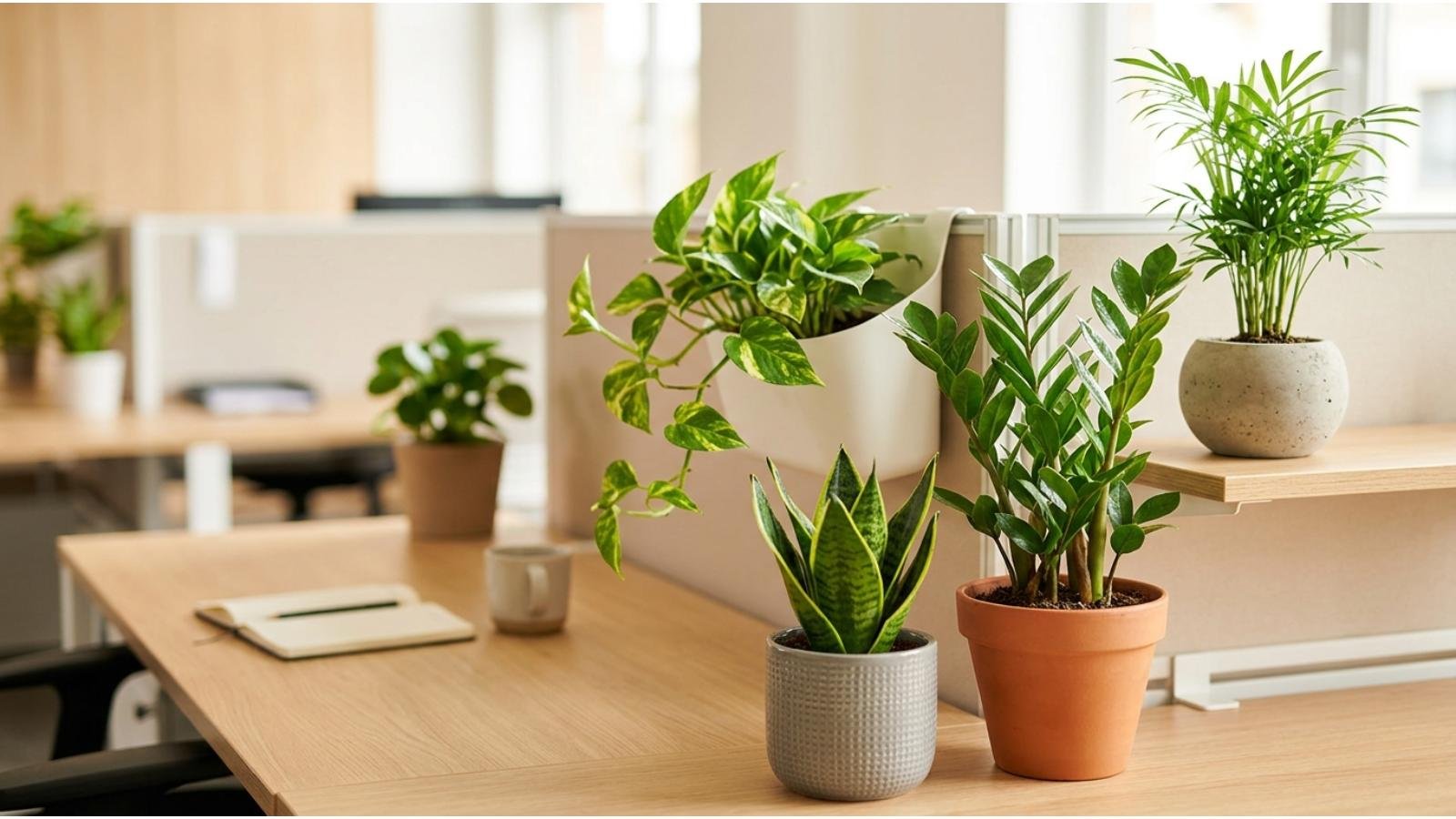
For low-maintenance workspaces, plants such as snake plants, ZZ plants, pothos, and some varieties of dracaena are often easier to manage than plants with demanding humidity or watering requirements.
However, “low maintenance” does not mean “indestructible.” Even drought-tolerant plants can suffer when kept in darkness or repeatedly overwatered.
Best Office Plants for Different Conditions
| Office condition | Plants worth considering | Main consideration |
|---|---|---|
| Low-light area | Snake plant, ZZ plant, pothos | Growth may be slower |
| Bright indirect light | Pothos, philodendron, spider plant | Avoid harsh afternoon sun |
| Desk near a window | Spider plant, peperomia, dracaena | Monitor leaf scorch |
| Busy office | Snake plant, ZZ plant, cast iron plant | Still check soil regularly |
| Humid workspace | Ferns, prayer plants | May require more consistent moisture |
| Dry air | Snake plant, ZZ plant, some dracaena | Keep away from vents |
| Small desk | Peperomia, compact pothos, small snake plant varieties | Avoid overcrowding |
Plant selection should always be based on the actual conditions rather than popularity alone.
Image Suggestion: Office plant placement guide showing low-light desks, bright windows, and areas near HVAC vents.
How Much Light Do Office Plants Need?
Light is one of the most overlooked parts of indoor plant care.
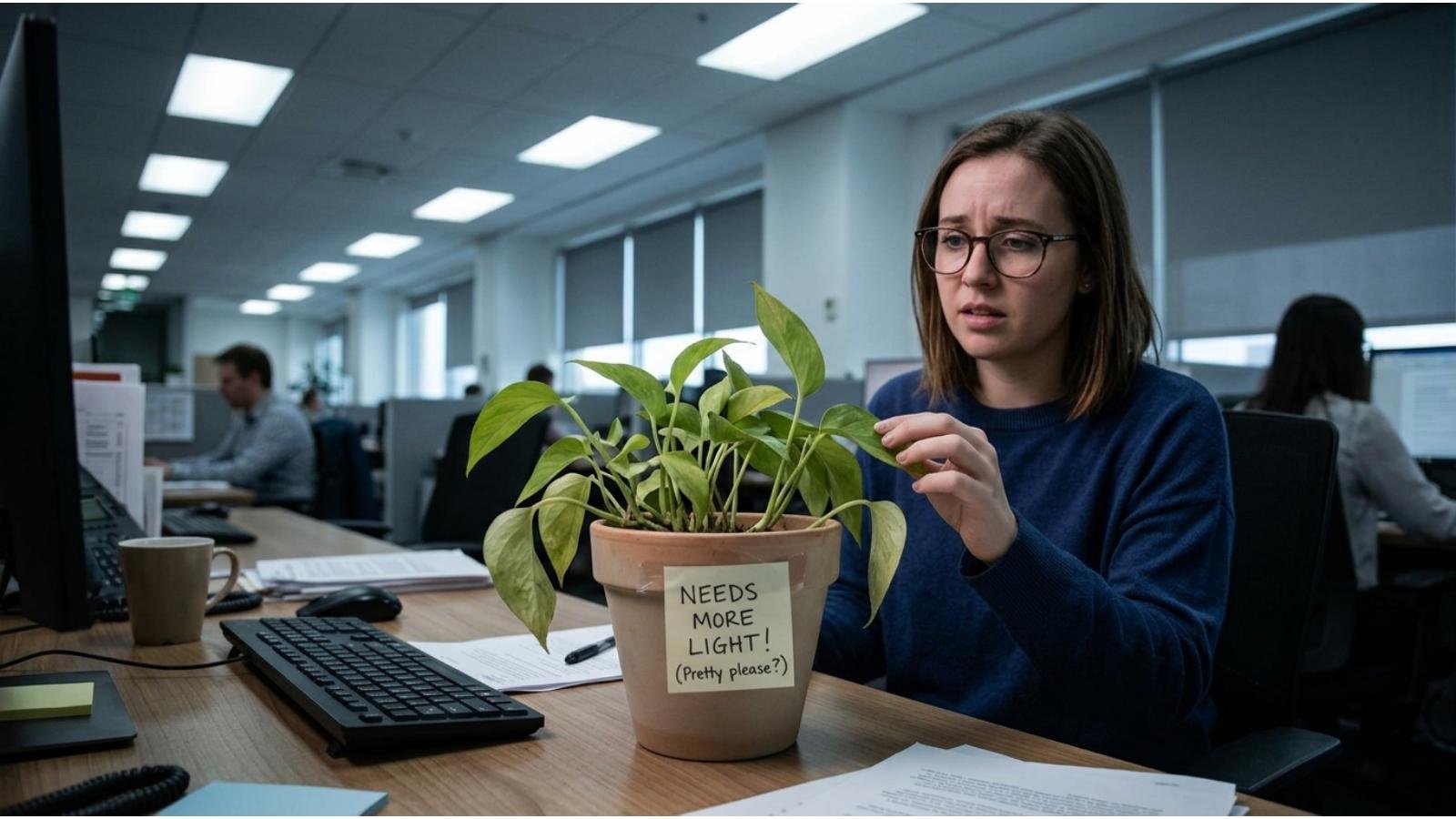
Plants use light to produce energy. When light is insufficient, many plants respond by producing slower growth, smaller leaves, longer spaces between leaves, or pale foliage.
Low-light tolerance also has limits.
A snake plant may survive in a relatively dim office, but survival and vigorous growth are not the same thing. A plant that appears healthy for several months may gradually decline if its light level is consistently inadequate.
Signs Your Office Plant Needs More Light
Watch for:
- Slow or stopped growth.
- New leaves that are unusually small.
- Long, stretched stems.
- Leaves leaning strongly toward a window.
- Loss of normal leaf coloration.
- Persistent wet soil because the plant is using water slowly.
If possible, move the plant closer to a suitable window while avoiding sudden exposure to intense direct sunlight.
What About Artificial Office Lighting?
Standard office ceiling lights may help plants somewhat, but they are not always sufficient for long-term healthy growth.
If natural light is extremely limited, a suitable LED grow light can provide additional usable light. A timer can also make supplemental lighting more consistent.
The important point is that adding water does not compensate for inadequate light. A plant cannot make healthy growth simply because its soil stays wet.
Watering Office Plants Correctly
Overwatering is one of the most common mistakes in indoor plant care.
Overwatering does not necessarily mean giving a plant a large amount of water once. More often, it means watering too frequently and allowing the root zone to remain wet for too long.
Roots need access to oxygen as well as water. Constantly saturated soil can reduce oxygen around the roots and create conditions that contribute to root problems.
A Better Watering Method
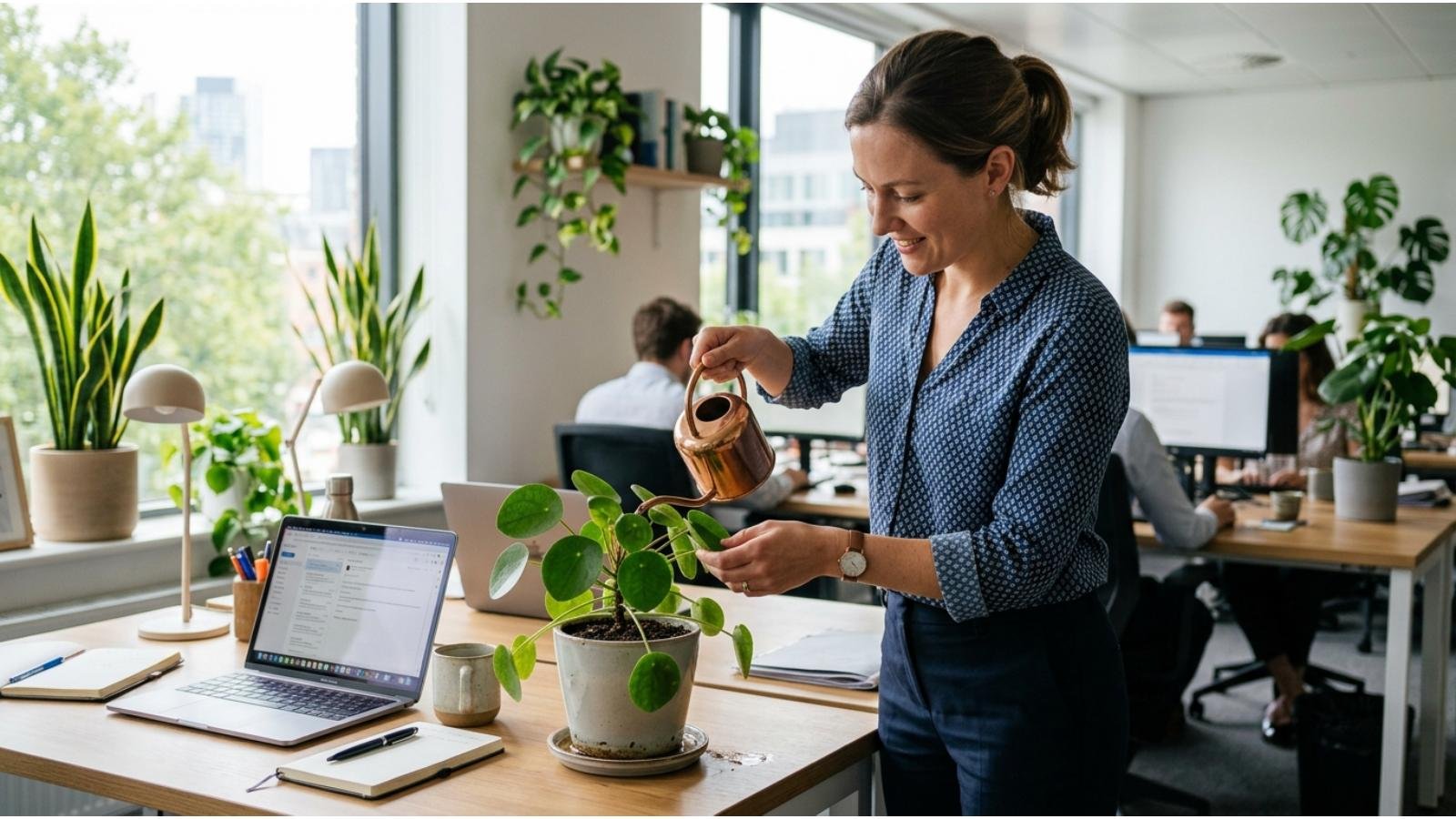
Instead of choosing a fixed day, follow these steps:
- Check the soil before watering.
- Feel the upper portion of the soil with your finger or use another suitable method to assess moisture.
- Consider the plant’s species and current light level.
- Water when the plant’s normal moisture requirements indicate that it is ready.
- Water thoroughly enough to moisten the root ball.
- Allow excess water to drain away.
- Empty standing water from decorative containers or saucers when appropriate.
Different plants dry at different speeds, so there is no universal office plant watering schedule.
Why Office Plants Are Often Overwatered
A common office mistake is seeing slightly drooping leaves and immediately adding water.
Drooping can result from underwatering, but it can also occur because of root damage, temperature stress, inadequate light, or other environmental problems.
Check the soil and the overall condition of the plant before reaching for the watering can.
Drainage Is More Important Than Many People Realize
A beautiful decorative pot does not automatically make a good plant container.
A container with no drainage opening can allow excess water to collect around the roots. This becomes particularly risky in low-light offices where soil may dry slowly.
Ideally, the growing container should allow excess water to escape.
If a decorative cachepot is used, keep the plant in an appropriate nursery container inside it and make sure collected water is not left around the roots.
Image Suggestion: Cross-section diagram showing a healthy office plant in a draining pot versus a plant sitting in stagnant water.
Understanding Office Humidity
Indoor office air can become quite dry, particularly when heating or air-conditioning operates for long periods.
Some plants tolerate ordinary indoor humidity well, while humidity-sensitive plants can develop crispy leaf edges or brown patches when conditions are consistently dry.
Should You Mist Office Plants?
Misting is often presented as a universal solution for dry air, but brief increases in surface moisture do not necessarily create a sustained improvement in room humidity.
For humidity-sensitive plants, more effective approaches can include:
- Grouping compatible plants together.
- Using a humidifier when appropriate.
- Keeping plants away from direct HVAC airflow.
- Maintaining consistent environmental conditions.
Avoid turning the area around a plant into a constantly wet environment, particularly when airflow is poor.
Keep Office Plants Away From HVAC Vents
Air-conditioning and heating systems can create localized environmental stress.
A plant may look perfectly healthy on one side of the office but develop dry edges when positioned directly beneath a vent.
Move plants away from strong airflow whenever possible.
If a plant repeatedly develops brown leaf tips despite reasonable watering, inspect its location before assuming that fertilizer or another treatment is needed.
How to Clean Office Plant Leaves
Dust can accumulate on leaves, especially in offices where ventilation systems and everyday activity circulate particles.
Cleaning leaves can improve their appearance and allows you to inspect the foliage more easily for pests and other problems.
For plants with broad, sturdy leaves:
- Use a clean, soft, damp cloth.
- Support the leaf while gently wiping its surface.
- Avoid aggressive rubbing.
- Remove dead or heavily damaged foliage with clean tools when appropriate.
Plants with delicate, fuzzy, or highly textured leaves may require a gentler approach. Do not use household cleaning products or leaf-shine products unless they are specifically appropriate for plants.
Image Suggestion: Before-and-after illustration of dusty and cleaned office plant leaves.
Fertilizing Office Plants
Office plants generally need less fertilizer than many beginners expect.
Plants growing in lower light often grow more slowly and therefore may not require frequent feeding. Applying fertilizer repeatedly when growth is limited can contribute to excessive salts in the growing medium and may damage roots.
A sensible approach is to:
- Follow the fertilizer’s label directions.
- Consider the plant’s species.
- Adjust feeding according to active growth.
- Avoid increasing fertilizer simply because a plant looks weak.
- Address light, watering, roots, and pests before assuming nutrients are the problem.
If a plant is declining, fertilizer is rarely the first thing to reach for.
Repotting Office Plants
Repotting is useful when a plant has genuinely outgrown its container or the growing medium has deteriorated.
Common signs that repotting may be appropriate include:
- Roots emerging from drainage holes.
- Water passing through the pot unusually quickly.
- A severely root-bound root system.
- Soil that has broken down or become difficult to manage.
- A plant repeatedly drying out much faster than expected.
Do not automatically move every office plant into a much larger pot.
An oversized container holds more soil, which can remain wet for longer after watering. This can increase the risk of root problems, especially in low-light conditions.
Choose a container that provides appropriate room for the root system rather than dramatically increasing pot size.
A Simple Weekly Office Plant Care Routine
You can manage many office plants with a short inspection once or twice a week.
Step 1: Look at the Leaves
Check for:
- Yellowing.
- Brown edges.
- Spots.
- Wilting.
- Curling.
- Pest activity.
- New growth.
Changes in appearance are clues, not automatic diagnoses.
Step 2: Check the Soil
Determine whether the soil is appropriately dry or moist for that particular plant.
Do not water simply because it is your scheduled plant-care day.
Step 3: Inspect the Location
Ask whether anything has changed.
Perhaps a blind was closed for several weeks, a desk was moved, or an air-conditioning vent began blowing directly onto the plant.
Step 4: Check for Pests
Inspect leaf undersides, stems, and areas around new growth.
Early detection is much easier to manage than a widespread infestation.
Step 5: Remove Problems Promptly
Remove dead leaves, clean obvious dust, and address environmental problems before they become chronic.
This routine takes only a few minutes but can prevent small problems from becoming major ones.
Office Plant Care During Weekends and Vacations
Plants do not stop needing appropriate conditions simply because the office is empty.
Before a long weekend or vacation:
- Check soil moisture.
- Move plants away from extreme HVAC exposure.
- Ensure they receive suitable light.
- Remove standing water.
- Avoid “extra watering” simply because nobody will be there.
- Group plants only when their environmental requirements are compatible.
A common mistake is heavily watering every plant immediately before leaving. This can be more harmful than helpful for plants that prefer to dry between waterings.
For longer absences, watering solutions should be selected according to the specific plant rather than applied universally.
Seasonal Office Plant Care
Plant needs can change throughout the year.
Spring and Summer
Increasing daylight may encourage stronger growth and faster water use. Plants near windows may also receive significantly more intense sunlight.
Monitor soil more frequently rather than automatically increasing watering.
Fall
Day length begins to decrease in many regions. Plants may use water more slowly as growth changes.
This is a good time to reassess plant locations and watering habits.
Winter
Heating can dry indoor air, while reduced daylight can slow growth.
Avoid compensating for lower light by watering more often. In many cases, the opposite adjustment is necessary because the soil takes longer to dry.
Image Suggestion: Four-panel seasonal office plant care calendar showing changes in light, watering, and humidity.
Common Office Plant Care Mistakes
Watering Every Plant on the Same Schedule
Different plants and different locations have different drying rates.
Better approach: Check each plant individually.
Keeping Plants in Decorative Pots Without Drainage
Water can accumulate around roots without being obvious from the outside.
Better approach: Use an appropriate draining container and monitor excess water.
Assuming Low Light Means No Light
Low-light plants still need light.
Better approach: Choose genuinely tolerant plants or provide supplemental lighting when necessary.
Placing Plants Beside Air Vents
Constant hot or cold airflow can stress foliage and dry the growing medium unevenly.
Better approach: Choose a more stable location.
Adding Fertilizer to a Struggling Plant
A weak plant does not automatically need more nutrients.
Better approach: Diagnose the environmental problem first.
Moving a Plant Suddenly Into Strong Sunlight
A plant accustomed to indoor low light may react badly to sudden intense exposure.
Better approach: Increase light gradually when practical.
Ignoring Early Pest Signs
A few pests can become a much larger problem when unnoticed.
Better approach: Inspect leaves regularly.
How to Troubleshoot an Unhealthy Office Plant
| Symptom | Possible causes | What to check first |
|---|---|---|
| Yellow leaves | Overwatering, aging foliage, stress | Soil moisture and drainage |
| Brown crispy edges | Dry conditions, salt buildup, airflow | Humidity, watering, HVAC location |
| Drooping leaves | Underwatering, root problems, heat or cold stress | Soil and roots |
| Slow growth | Low light, seasonal growth, root limitations | Light level |
| Pale leaves | Insufficient light or nutrient issues | Light and recent growth |
| Soft or mushy roots | Excess moisture and root damage | Drainage and soil |
| Sticky leaves | Possible pest activity | Stems and leaf undersides |
| Leaf spots | Several possible causes | Moisture, airflow, pests, and affected tissue |
The table is a starting point, not a diagnosis. Symptoms often overlap, so examine the entire growing environment before treating the plant.
How to Tell If You Are Overwatering
Look for a combination of clues rather than one symptom.
Potential warning signs include:
- Soil remaining wet for an unusually long time.
- Yellowing leaves.
- Soft or declining foliage.
- Persistent unpleasant soil odor.
- Wilting despite wet soil.
- Root discoloration or decay when roots are inspected.
One of the most revealing clues is wilting while the soil is still wet. Beginners often interpret this as a need for more water, but damaged roots may be unable to function properly.
How to Tell If Your Office Plant Is Underwatered
Underwatering can produce:
- Dry, shrinking soil.
- Crispy leaf edges.
- Wilting.
- Leaves curling inward.
- A pot that feels unusually light.
- Rapid improvement after appropriate watering in some plants.
However, repeated severe wilting is a sign that the plant’s current routine or location needs attention.
The goal is not to rescue the plant after every severe wilt. Good office plant care keeps moisture reasonably consistent with the species’ needs.
Office Plant Pests to Watch For
Indoor plants can still attract pests.
Common problems include:
- Fungus gnats.
- Spider mites.
- Mealybugs.
- Scale insects.
- Aphids.
- Thrips.
Inspect new growth and the undersides of leaves because pests can be difficult to notice from across a room.
If a plant appears infested, isolate it from other plants when practical. Early identification and appropriate treatment are generally easier than trying to control a large infestation that has spread across an office collection.
Creating a Low-Maintenance Office Plant System
If an office has many plants, individual care can become inconsistent.
A simple plant-care system can help.
Keep a Plant Inventory
Record:
- Plant name.
- Location.
- Approximate light level.
- Watering preferences.
- Last inspection.
- Any ongoing problems.
Group Plants by Similar Needs
Do not group plants solely because they look attractive together.
Instead, consider grouping plants with similar light and moisture requirements.
Assign Responsibility
If multiple employees care for the plants, establish one clear system. Conflicting watering routines can quickly lead to overwatering.
Use Labels
Small labels can prevent confusion, particularly when an office contains several similar plants.
A simple system is often more effective than a complicated schedule that nobody follows.
Advanced Tip: Measure the Environment Instead of Guessing
Experienced plant owners can improve consistency by measuring conditions.
Useful tools may include:
- A light meter.
- A thermometer.
- A humidity meter.
- Moisture assessment tools.
These tools are not mandatory, but they can be useful when a plant repeatedly fails despite apparently good care.
For example, a workspace may feel bright to people while providing inadequate light for a plant. Measuring the environment can turn a vague problem into something easier to investigate.
Office Plant Care Checklist
Use this quick checklist during routine inspections:
- Is the plant receiving suitable light?
- Is the soil ready for watering?
- Does the pot drain properly?
- Is water sitting in the outer container?
- Are leaves showing new damage?
- Are there signs of pests?
- Is the plant directly beside an HVAC vent?
- Has the plant been moved recently?
- Does the container still suit the root system?
- Is fertilizer actually necessary?
- Will the office be empty for several days?
This checklist helps shift plant care from guesswork to observation.
Frequently Asked Questions
How often should office plants be watered?
There is no single schedule that works for every office plant. Check the soil and consider the plant species, pot size, light level, temperature, and season. A plant in bright light may dry faster than the same species in a dim office.
What is the best office plant for beginners?
Snake plants, ZZ plants, pothos, and several dracaena varieties are commonly suitable for beginners because they can tolerate ordinary indoor conditions. Even these plants still need appropriate light, drainage, and watering.
Can office plants survive without sunlight?
Plants cannot live indefinitely without usable light. Some species tolerate low-light conditions better than others, but extremely dark locations may require supplemental grow lighting.
Why are my office plant leaves turning yellow?
Yellow leaves can have several causes, including excessive moisture, poor drainage, aging leaves, environmental stress, and other problems. Check the soil and growing conditions before changing the watering routine.
Should I water office plants on a fixed day?
A fixed inspection day can be useful, but a fixed watering day is less reliable. Check the plant first because soil can remain wet for different lengths of time.
Why does my office plant have brown leaf tips?
Brown tips may be associated with dry conditions, inconsistent watering, salt accumulation, low humidity, or environmental stress. Check several factors instead of assuming humidity is the only cause.
Are coffee grounds good for office plants?
Adding coffee grounds directly to potting soil is not a reliable general fertilizer strategy. Office plants are better served by an appropriate growing medium and a balanced fertilizer used according to the plant’s needs and product directions.
Should office plants be near a window?
Many plants benefit from suitable natural light, but the ideal distance depends on the species and window exposure. Very intense direct sunlight can scorch foliage, while excessive distance can result in inadequate light.
How do I keep office plants alive during a long vacation?
Check each plant’s moisture needs before leaving, maintain suitable light and temperature, and avoid flooding plants with water as a precaution. For longer absences, arrange appropriate care or use a suitable watering system based on individual plant requirements.
Can air-conditioning hurt office plants?
Yes. Plants positioned directly in strong air-conditioning airflow may experience drying, temperature stress, or uneven moisture loss. Moving them away from direct vents can help create a more stable environment.
Conclusion
Successful office plant care is less about following a perfect calendar and more about learning to read the plant and its environment. Start with the right plant for the available light, use containers with proper drainage, check soil before watering, and keep plants away from harsh HVAC airflow.
Most recurring problems become easier to solve when you investigate the environment first. If a plant is declining, do not automatically add more water or fertilizer. Look at light, moisture, drainage, temperature, pests, and recent changes in its location.
A few minutes of observation each week can make office plant maintenance dramatically easier—and can keep your workspace greener without turning plant care into another full-time job.
Suggested secondary keywords: office plant care tips, how to care for office plants, indoor office plant care, low light office plants, office plant watering, best office plants, office plant maintenance, office plants for beginners, office plant problems, office plant watering schedule, plants for desk, low maintenance office plants.