Quick Answer
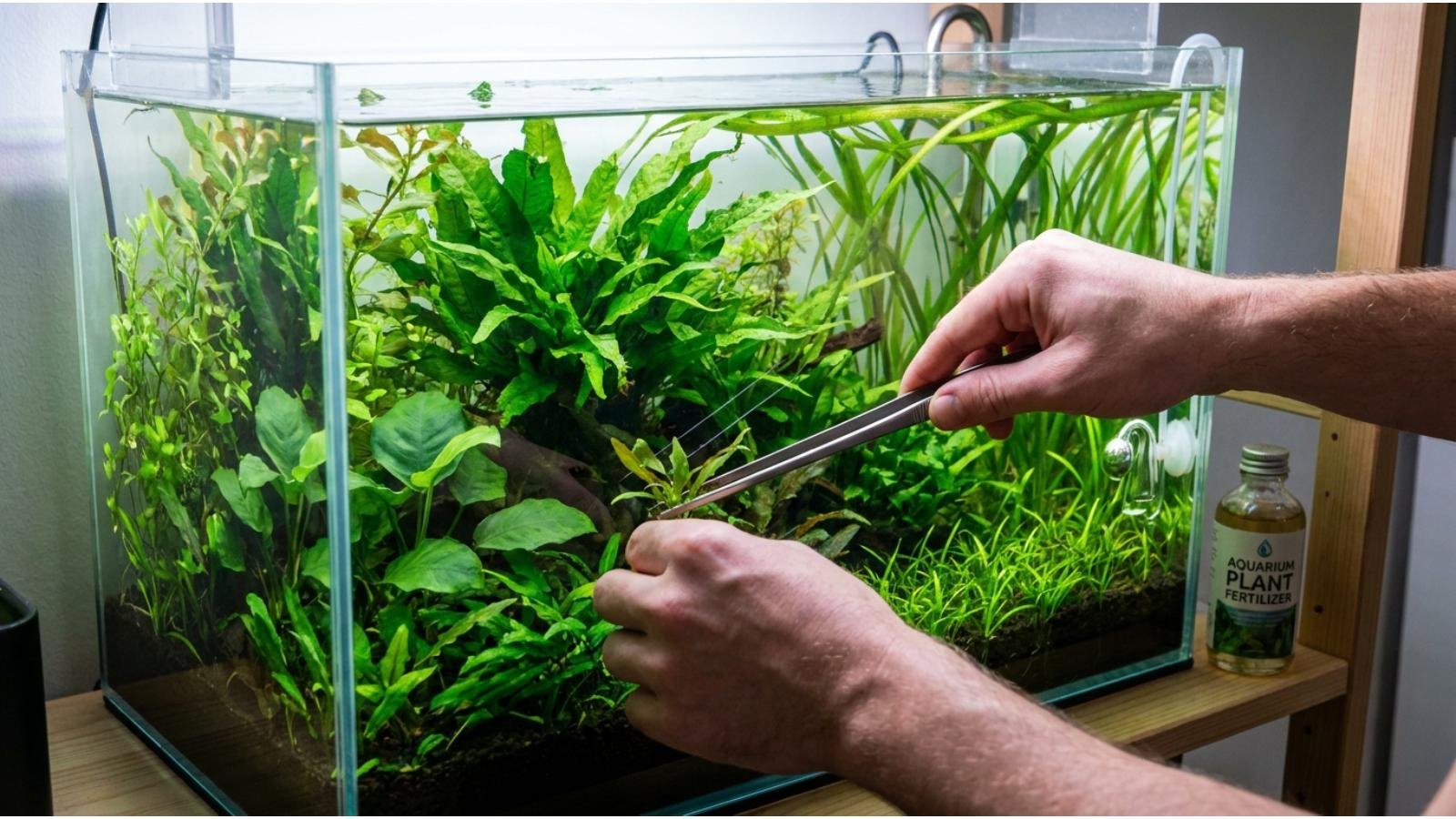
Aquarium plant care means providing the right balance of light, carbon dioxide, nutrients, substrate, water circulation, and maintenance for aquatic plants. Beginners should start with undemanding plants, moderate lighting, consistent water changes, and controlled fertilization. Not every aquarium needs injected CO₂, but plants generally grow faster and more vigorously when carbon, light, and nutrients are properly balanced.
Introduction
A planted aquarium can look effortless when it is healthy: leaves are upright, new growth appears regularly, and algae stays under control. Getting that balance, however, is where many beginners struggle.
The biggest mistake in aquarium plant care is treating every problem as a fertilizer problem. Yellow leaves may be caused by nutrient deficiencies, but poor light, inadequate carbon, damaged roots, unsuitable planting, weak circulation, or simply a plant that does not match the aquarium can produce similar symptoms.
Successful planted tanks are less about adding more of everything and more about creating a stable relationship between light, carbon, nutrients, plants, microorganisms, filtration, and livestock. This guide explains how those pieces work together so you can diagnose problems instead of guessing.
What Do Aquarium Plants Need to Grow?
Aquatic plants require several basic resources:
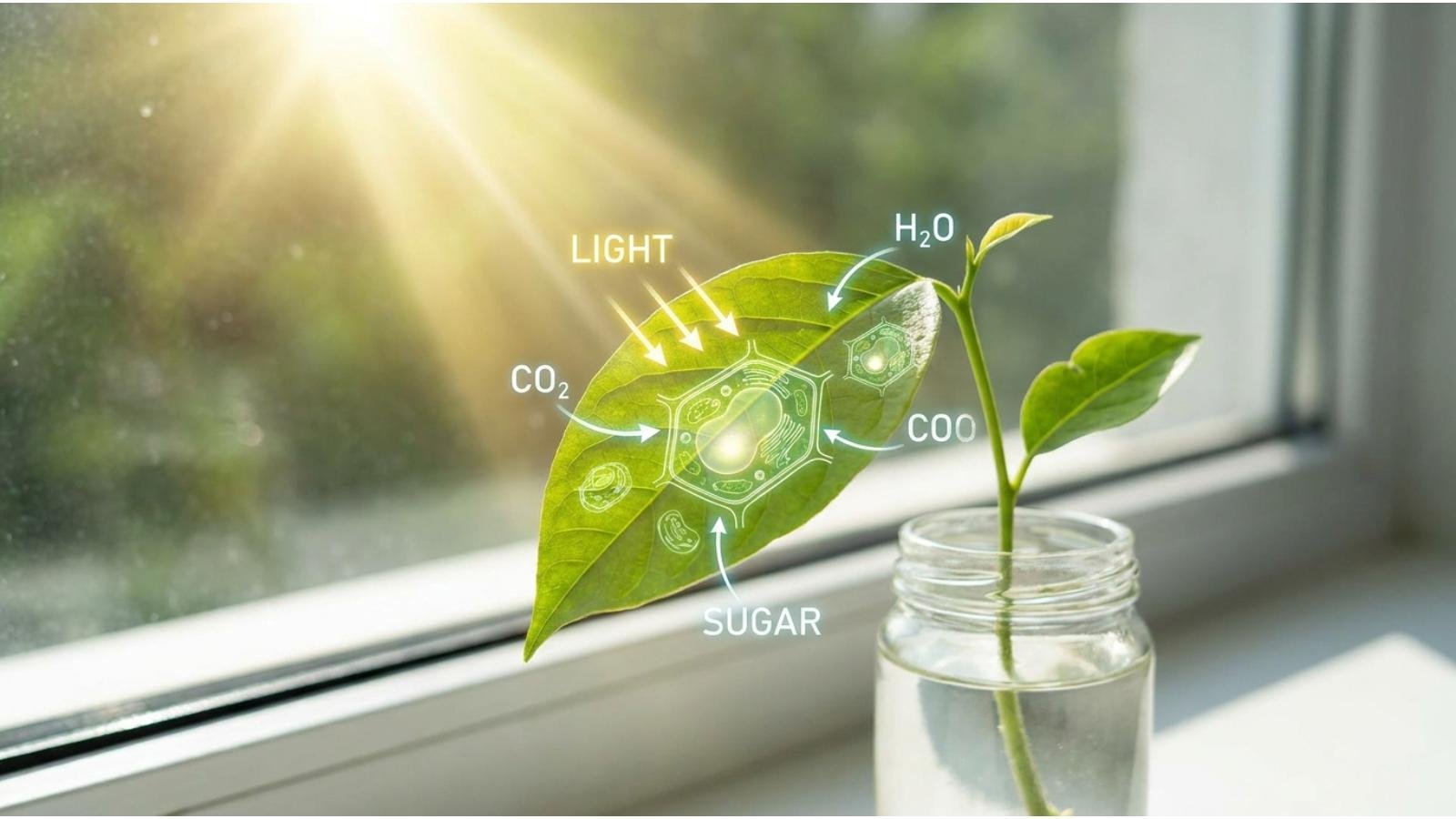
- Light for photosynthesis.
- Carbon dioxide or another usable carbon source.
- Macronutrients such as nitrogen and phosphorus.
- Micronutrients including iron and other trace elements.
- Water movement that distributes nutrients and carbon.
- Appropriate substrate and root conditions for plants that feed heavily through their roots.
- Stable aquarium conditions.
- Regular pruning and removal of unhealthy plant material.
The important point is that these resources work as a system. Increasing one dramatically while another remains inadequate can create problems rather than faster growth.
For example, adding powerful lighting to a tank with insufficient carbon can increase the demand placed on the plants without solving the underlying limitation. Excessive light can also make algae problems more difficult to control.
Image Suggestion: Create a labeled infographic showing the relationship between light, CO₂, nutrients, roots, leaves, and water circulation.
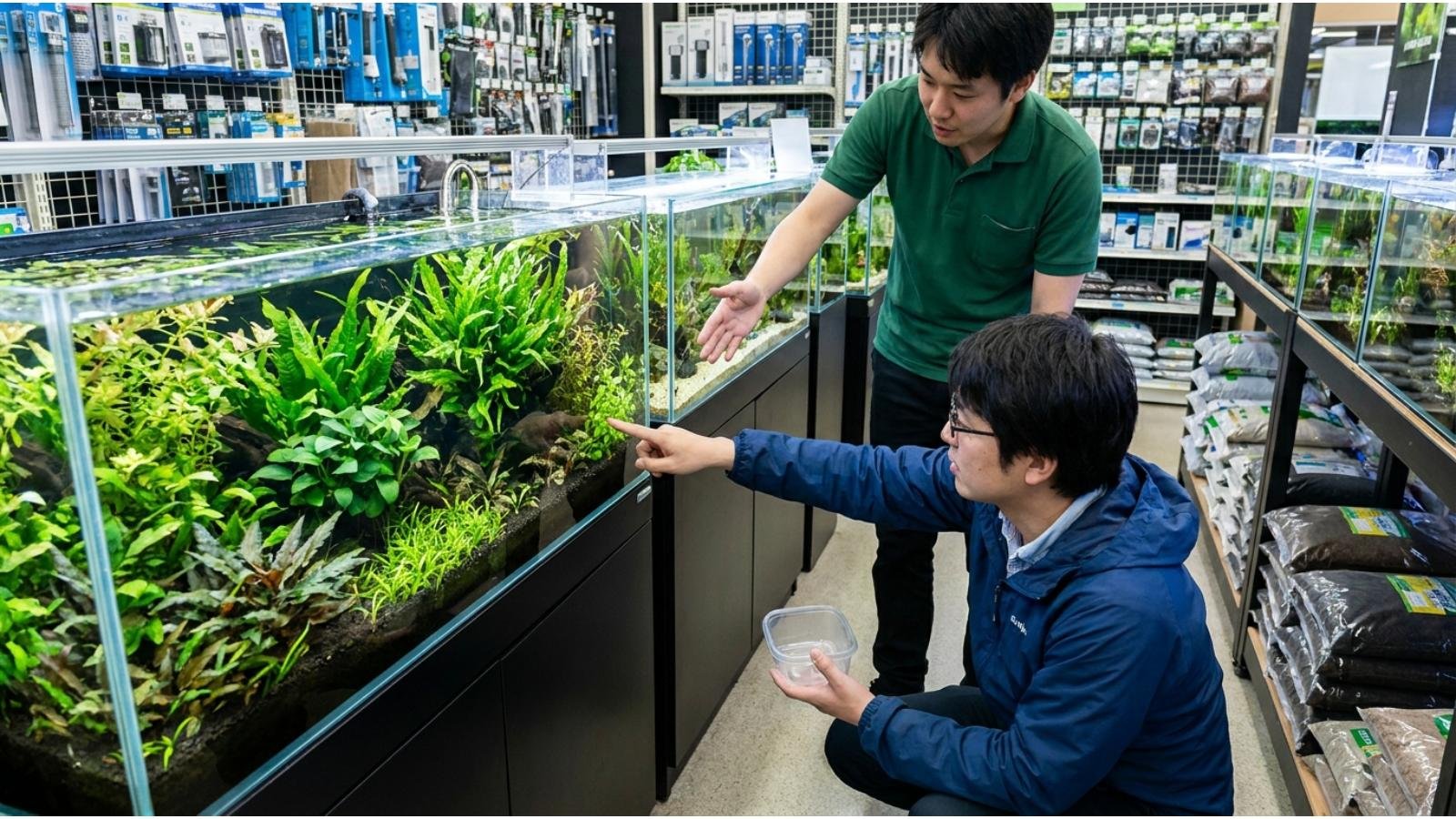
Choosing Aquarium Plants That Match Your Tank
One of the smartest aquarium plant care decisions happens before you even put a plant into the aquarium.
Do not choose plants simply because they look attractive in photographs. First consider:
- How much light your aquarium provides.
- Whether you plan to inject CO₂.
- Your substrate.
- Water temperature and chemistry.
- Available space.
- How frequently you want to prune.
- Whether the plant should grow attached to hardscape or rooted in substrate.
Good Beginner Aquarium Plants
For a lower-maintenance aquarium, consider plants such as:
| Plant | Typical Position | Beginner Suitability |
|---|---|---|
| Anubias | Attached to rock or wood | Excellent |
| Java fern | Attached to hardscape | Excellent |
| Java moss | Rock, wood, or substrate | Excellent |
| Cryptocoryne | Foreground/midground | Very good |
| Vallisneria | Background | Very good |
| Bucephalandra | Rock or wood | Very good |
| Anacharis/Egeria | Background | Good |
| Limnophila | Background | Good |
Low-tech planted aquariums can work very well when the plant selection matches the available light and carbon supply.
A Common Beginner Mistake
A frequent mistake is buying a demanding carpet or colorful stem plant for a basic aquarium and then trying to force it to grow by adding more light.
A better strategy is to build the plant selection around your equipment, rather than buying equipment to compensate for plants that are unsuitable for your setup.
Aquarium Lighting: How Much Light Do Plants Need?
Light powers photosynthesis, making it one of the most important parts of planted aquarium care.
However, more light does not automatically mean healthier plants.
Your aquarium lighting influences:
- Photosynthetic activity.
- Growth speed.
- Plant shape and density.
- Coloration in some species.
- CO₂ demand.
- Algae pressure.
A beginner-friendly approach is to start conservatively and observe the plants.
For newly established aquariums, approximately 6 hours of light per day during the first two to three weeks, followed by a gradual increase toward roughly 8–10 hours in its startup guidance. Its general setup guidance also recommends gradually increasing lighting rather than immediately using long photoperiods.
Why Excessive Lighting Causes Problems
Imagine a tank with:
- Strong lighting.
- Little available CO₂.
- Few plants.
- Heavy fertilizer dosing.
The light encourages photosynthesis, but the plants may not be able to use all the available resources efficiently. Algae can take advantage of the imbalance.
Instead of immediately increasing the light when plants look weak, check the entire system.
Practical Lighting Routine
For a new aquarium:
- Start with a moderate photoperiod.
- Use a timer for consistency.
- Observe new plant growth.
- Watch for increasing algae.
- Increase lighting gradually only when the aquarium is responding well.
Consistency is more useful than constantly changing the schedule.
Does Aquarium Plant Care Require CO₂?
No. Not every planted aquarium needs injected CO₂.
Many easy aquarium plants can grow without a dedicated CO₂ system, particularly when the aquarium has appropriate lighting and realistic expectations for growth.
However, CO₂ can significantly improve growth in many planted setups. Plants classified as more demanding generally benefit much more from additional carbon availability. Plants can be maintained without added CO₂, while medium and advanced plants generally require additional CO₂ for strong growth.
Low-Tech vs High-Tech Aquariums
| Feature | Low-Tech Aquarium | High-Tech Aquarium |
|---|---|---|
| Lighting | Low to moderate | Moderate to high |
| Added CO₂ | Usually unnecessary | Commonly used |
| Growth | Slower | Faster |
| Maintenance | Lower | Higher |
| Plant choices | More limited | Much broader |
| Algae risk | Can be manageable | Requires closer balancing |
| Trimming | Less frequent | More frequent |
The important lesson is that CO₂ should not be treated as a magic algae cure.
If your tank is unstable, adding CO₂ without adjusting other variables can make the system harder to manage.
Aquarium Substrate and Plant Roots
Substrate is more than decoration.
Some aquarium plants obtain significant nutrition through their roots, while others can absorb nutrients directly from the water through their leaves.
This creates two broad planting strategies:
Root-Feeding Plants
Plants such as many Cryptocoryne and sword-type plants can benefit from nutrient-rich substrate or root tabs.
Water-Column Feeders
Plants such as mosses and many epiphytes can obtain nutrients from the water because they are not planted deeply into the substrate.
Important Anubias and Java Fern Warning
Do not bury the thick horizontal rhizome of plants such as Anubias and Java fern beneath the substrate.
Instead:
- Attach them to rocks.
- Attach them to driftwood.
- Keep the rhizome exposed.
The roots can grip the hardscape while the rhizome remains above the substrate.
Image Suggestion: Close-up diagram showing correct and incorrect planting depth for Anubias and Java fern.
Aquarium Plant Fertilizer: When and How to Use It
Aquarium plants require nutrients, but fertilizer should be used according to the needs of the aquarium rather than simply following the idea that “more fertilizer means more growth.”
Important nutrients include:
- Nitrogen.
- Phosphorus.
- Potassium.
- Iron.
- Manganese.
- Other micronutrients.
Plants can obtain nutrients through their roots and leaves, so different fertilizer methods suit different plants.
Liquid Fertilizer
Liquid fertilizer distributes nutrients through the water column.
It is particularly useful for:
- Mosses.
- Floating plants.
- Epiphytes.
- Plants that absorb substantial nutrients through their leaves.
Root Tabs
Root tabs place nutrients near the roots.
They can be useful for:
- Cryptocoryne.
- Sword plants.
- Other heavy root feeders.
Avoid Overfertilizing
One of the most common mistakes is adding fertilizer whenever plants look unhealthy without identifying the cause.
Plant problems can also result from:
- Inadequate light.
- CO₂ limitations.
- Poor circulation.
- Root damage.
- Transplant shock.
- Unsuitable plant selection.
- Nutrient deficiencies.
- Excessive algae competition.
Water Changes and Aquarium Plant Maintenance
Water changes are an important part of maintaining a stable planted aquarium.
They help remove accumulated dissolved substances and allow you to reset some water conditions.
For a mature aquarium, many aquarists use a regular weekly maintenance routine. During the early establishment period, more frequent water changes may be appropriate.
For new aquariums, Tropica recommends changing roughly 25–50% of the water several times per week during the first three to four weeks, followed by approximately 25% weekly once the aquarium is established. (Tropica)
Your exact schedule should still reflect:
- Aquarium size.
- Stocking level.
- Substrate type.
- Fertilization.
- Plant density.
- Water chemistry.
- Aquarium age.
Consistency matters more than blindly following a single percentage.
How to Plant Aquarium Plants Correctly
Correct planting prevents many problems before they begin.
Step 1: Inspect the Plant
Remove damaged leaves and check the roots for obvious damage.
Step 2: Remove the Growing Material
If the plant comes in a pot with rock wool or another growing medium, carefully remove as much of it as practical.
Step 3: Divide Large Plants
Some plants can be separated into smaller portions before planting.
Step 4: Trim Excessively Long Roots
Do not remove healthy roots unnecessarily, but shortening excessively long roots can make planting easier.
Step 5: Plant at the Correct Depth
Push rooted plants into the substrate deeply enough to hold them securely without burying sensitive crowns or rhizomes.
Step 6: Secure Epiphytes
Attach Anubias, Java fern, and similar plants to rocks or wood rather than burying their rhizomes.
Step 7: Allow Space for Growth
Do not pack every plant tightly together.
Good spacing allows:
- Light to reach leaves.
- Water to circulate.
- New growth to expand.
- Dead leaves to be removed easily.
Aquarium Plant Pruning and Trimming
Pruning is not just about making an aquarium look tidy.
Regular trimming can:
- Encourage compact growth.
- Prevent fast-growing stems from shading smaller plants.
- Remove damaged leaves.
- Maintain the intended aquascape.
- Improve access to equipment and hardscape.
Stem Plants
Cut healthy stems above a suitable node and replant healthy cuttings when appropriate.
Rhizome Plants
Remove damaged or excessively old leaves near the base without cutting the rhizome unnecessarily.
Floating Plants
Thin them regularly if they begin covering too much of the surface.
Dead Leaves
Remove decaying leaves rather than allowing them to accumulate.
Water Circulation Matters More Than Beginners Expect
A planted aquarium can have excellent lighting and fertilizer yet still develop unhealthy areas if water movement is poor.
Good circulation helps distribute:
- CO₂.
- Oxygen.
- Dissolved nutrients.
- Heat.
- Waste products.
Poor circulation can create stagnant areas where plants do not receive resources efficiently.
Look for Gentle, Even Movement
You do not necessarily want a powerful current blasting every plant.
Instead, aim for circulation that moves water throughout the aquarium without constantly uprooting delicate plants.
A simple practical test is to watch how leaves move.
If one corner of the aquarium remains completely still while another receives strong flow, the circulation may need adjustment.
Aquarium Plant Care During the First 90 Days
The first few weeks are often the most frustrating period for beginners.
Plants are adapting, beneficial microorganisms are establishing, and algae may appear before the aquarium reaches a stable balance.
Weeks 1–3
Focus on:
- Moderate lighting.
- Establishing plants.
- Consistent water changes.
- Stable filtration.
- Avoiding unnecessary fertilizer excess.
- Monitoring algae.
Weeks 4–8
Look for:
- New leaves.
- Root development.
- Faster adaptation.
- Increasing plant density.
- Changes in algae growth.
Adjust only when you have evidence that something needs changing.
Weeks 9–12
By this point, you should have a better understanding of:
- Which plants thrive.
- Which plants struggle.
- How quickly your plants consume nutrients.
- How much trimming is required.
- Whether your lighting is appropriate.
A stable aquarium is easier to maintain because you are managing an established system rather than constantly correcting new problems.
How to Control Algae Without Harming Aquarium Plants
Algae is one of the most common complaints in planted aquariums.
The temptation is to search for a single solution, but algae is often a symptom of an imbalance.
Possible contributing factors include:
- Excessive lighting.
- Inconsistent lighting.
- Poor plant growth.
- Nutrient accumulation.
- Insufficient plant mass.
- Inadequate CO₂ availability.
- Poor circulation.
- Excess organic waste.
- An immature aquarium.
A Better Algae Strategy
Instead of immediately adding an algae treatment:
- Check the lighting duration.
- Inspect plant health.
- Check water movement.
- Review fertilizer dosing.
- Remove dead leaves.
- Clean excessive algae manually.
- Perform appropriate water changes.
- Increase healthy plant growth.
- Make one change at a time.
This approach makes it easier to identify what actually fixed the problem.
Fast-growing plants can also help absorb excess nutrients during aquarium establishment.
Image Suggestion: Before-and-after infographic showing an algae-covered planted aquarium and the same aquarium after correcting light, maintenance, and plant growth conditions.
Common Aquarium Plant Problems and What They Mean
Yellow Leaves
Yellowing can have several causes.
Check:
- Nutrient availability.
- Lighting.
- Root condition.
- Plant age.
- Recent transplantation.
Do not automatically assume the aquarium needs more fertilizer.
Transparent or Melting Leaves
Some plants can lose old leaves after being introduced to a new aquarium, especially when adapting from a different growing environment.
Remove badly decaying material while waiting for new submerged growth.
Brown Leaves
Brown or deteriorating leaves can indicate stress, old growth, nutrient problems, poor conditions, or algae growth.
Look at the entire plant rather than diagnosing from leaf color alone.
Plants Growing Tall and Thin
This can indicate insufficient light intensity for the plant’s needs, although species-specific growth habits also matter.
Algae Covering Leaves
Check the balance between:
- Light.
- CO₂.
- Nutrients.
- Plant growth.
- Maintenance.
Algae on leaves can prevent healthy photosynthesis, so heavily affected leaves may need cleaning or removal.
Why Are My Aquarium Plants Dying?
If several plants decline simultaneously, look for a shared environmental cause before blaming each plant individually.
Work through this checklist:
Light: Is the photoperiod excessive or insufficient?
CO₂: Is the aquarium trying to support demanding plants without enough available carbon?
Nutrients: Are nutrients consistently available without excessive dosing?
Roots: Are root-feeding plants properly planted?
Circulation: Does water reach all areas of the aquarium?
Temperature and chemistry: Are conditions suitable for the specific species?
Plant selection: Are the plants appropriate for the aquarium’s equipment?
Maintenance: Are dead leaves and excessive algae being removed?
Low-Tech Aquarium Plant Care
A low-tech aquarium can be one of the best choices for beginners.
The basic philosophy is simple:
Use modest lighting and choose plants that do not require injected CO₂.
Suitable plants can include:
- Anubias.
- Java fern.
- Java moss.
- Cryptocoryne.
- Some Vallisneria.
- Bucephalandra.
- Other species specifically identified as easy or low-light plants.
The main advantage is slower growth and lower maintenance.
The trade-off is that you may not achieve the rapid carpeting, intense coloration, or demanding plant selection possible in a high-tech CO₂-injected aquarium.
High-Tech Aquarium Plant Care
High-tech aquariums generally combine:
- Stronger lighting.
- Pressurized CO₂.
- More active fertilization.
- Faster-growing plants.
- More frequent pruning.
- Closer monitoring.
This setup can produce spectacular growth, but it gives you less room for inconsistency.
A high-tech aquarium is not simply a low-tech aquarium with brighter lights. Once plant growth accelerates, nutrient consumption, CO₂ management, trimming, and algae control become more important.
For example, advanced planted layouts commonly combine strong lighting, nutrient-rich substrates, injected CO₂, and regular fertilization.
A Simple Weekly Aquarium Plant Care Routine
A practical weekly routine might look like this:
Before Maintenance
Observe the aquarium for a few minutes.
Look for:
- New growth.
- Algae.
- Wilting leaves.
- Floating debris.
- Blocked equipment.
- Plants that have become uprooted.
During Maintenance
- Perform the appropriate water change.
- Remove dead leaves.
- Trim overgrown stems.
- Clean algae when necessary.
- Check filter flow.
- Inspect CO₂ equipment if applicable.
- Reposition loose plants.
- Dose fertilizer according to your established routine.
After Maintenance
Check that:
- Plants remain firmly planted.
- Filter flow is normal.
- Equipment is operating.
- Lighting timer is correct.
- Fish and invertebrates are behaving normally.
A consistent routine is easier to maintain than occasional major interventions.
Aquarium Plant Care Mistakes Beginners Should Avoid
1. Using Too Much Light
Longer or stronger lighting does not automatically solve poor plant growth.
2. Adding Fertilizer Without Diagnosing the Problem
A weak plant does not necessarily need more fertilizer.
3. Choosing Plants Without Considering CO₂
Demanding plants may struggle in systems designed for easy, low-tech species.
4. Burying Rhizomes
Anubias and Java fern should not have their rhizomes buried.
5. Ignoring Water Flow
Dead spots can prevent resources from reaching plants.
6. Changing Several Variables at Once
If you simultaneously increase light, fertilizer, CO₂, and water changes, you may not know which change helped.
7. Overcrowding the Aquarium
Plants need room to grow and receive water movement.
8. Expecting Instant Growth
New plants need time to adapt. The first weeks are often about establishment rather than spectacular growth.
9. Neglecting Fast-Growing Plants
Fast growers can quickly shade neighboring plants and require regular trimming.
10. Treating Every Algae Problem With Chemicals
First investigate the underlying conditions.
Aquarium Plant Care Checklist
Use this quick checklist when your planted aquarium starts looking unhealthy:
| Check | Question |
|---|---|
| Lighting | Is the photoperiod appropriate? |
| Plant choice | Does the species match your setup? |
| CO₂ | Does the aquarium provide enough available carbon for its plants? |
| Fertilizer | Are nutrients being supplied appropriately? |
| Substrate | Do root feeders have suitable nutrition? |
| Water flow | Does water circulate throughout the tank? |
| Pruning | Are dead and overgrown leaves being removed? |
| Algae | Is algae increasing rapidly? |
| Water changes | Are they being performed consistently? |
| Stability | Have you recently changed too many variables? |
When Should You Add More Fertilizer?
Add more fertilizer when your plant growth and aquarium conditions indicate that nutrients are becoming limiting—not simply because a plant looks unhealthy.
A better diagnostic sequence is:
Check light → check CO₂ → check plant selection → check roots/substrate → check nutrients → check maintenance.
This prevents the common cycle of adding fertilizer, seeing more algae, adding an algae treatment, and still not solving the original problem.
Can Aquarium Plants Live Without CO₂?
Yes.
Many easy aquarium plants can grow without injected CO₂. Growth may simply be slower, and the selection of suitable plants may be smaller.
If you want a low-maintenance planted tank, start with easy plants rather than trying to recreate a high-tech aquascape without the equipment that supports it
How Long Should Aquarium Lights Be On?
For a newly established aquarium, starting around 6 hours daily and increasing gradually can be a practical approach. Tropica recommends approximately six hours during the first two to three weeks of its startup method, followed by a gradual increase.
The ideal duration ultimately depends on:
- Light intensity.
- Plant species.
- CO₂ availability.
- Plant density.
- Aquarium maturity.
- Algae response.
How Often Should I Fertilize Aquarium Plants?
There is no universal dosing schedule that works for every planted aquarium.
Fertilization depends on:
- Plant mass.
- Growth rate.
- Water changes.
- Fish stocking.
- Substrate.
- CO₂.
- Lighting.
- Fertilizer concentration.
Follow the instructions for the specific fertilizer and adjust based on measured conditions and plant response rather than assuming more is better.
Why Do Aquarium Plants Melt After Planting?
Some aquatic plants can lose existing leaves while adapting to submerged conditions or a new environment.
Instead of immediately removing the entire plant, inspect the crown and growing points.
If the plant remains firmly rooted and begins producing healthy new growth, the melting leaves can be removed as they deteriorate.
Should Aquarium Plants Be Planted Before Adding Water?
Generally, yes.
Planting while the aquarium is empty or partially filled often gives you much better control over planting depth and positioning.
What Is the Best Substrate for Aquarium Plants?
There is no single best substrate for every planted aquarium.
Your choice should depend on the plants you want to grow and how the aquarium will be maintained.
Options include:
- Nutrient-rich aquasoil.
- Inert gravel.
- Sand.
- Gravel combined with a nutrient layer.
- Inert substrate supplemented with root tabs.
Root-feeding plants may benefit from a nutrient-rich root zone, while epiphytic plants such as Anubias can be grown successfully attached to hardscape without being rooted into nutrient-rich soil.
How to Make Aquarium Plants Grow Faster
If plants are growing slowly, do not immediately increase everything.
Instead:
- Identify the plants’ requirements.
- Confirm that lighting is adequate.
- Check CO₂ availability.
- Ensure nutrients are not limiting.
- Improve circulation if necessary.
- Keep water conditions stable.
- Remove damaged leaves.
- Give the plants time to establish.
Growth is the result of balance rather than a single product.
Final Aquarium Plant Care Routine
For most planted aquariums, successful care can be reduced to a few principles:
Choose plants that match your equipment.
Keep lighting consistent rather than excessive.
Provide appropriate carbon availability.
Supply nutrients according to actual plant demand.
Give root feeders appropriate substrate support.
Maintain good circulation.
Prune regularly.
Remove dying plant material.
Perform consistent water changes.
Make changes gradually and observe the results.
The most useful mindset is to stop thinking of aquarium plants as decorations and start treating the aquarium as a small ecosystem. When light, carbon, nutrients, circulation, plants, microorganisms, and livestock remain reasonably balanced, plant care becomes much more predictable.
A beautiful planted aquarium does not necessarily require expensive equipment. A carefully planned low-tech setup with appropriate plants can be remarkably successful, while an advanced CO₂ system can produce faster and more demanding growth when the aquarist is prepared for the additional maintenance.
The goal is not to give plants everything possible. The goal is to give them what they need, consistently.
Image Opportunities
- Aquarium plant anatomy diagram: Show roots, rhizome, stem, leaves, and correct planting depth.
- Low-tech vs high-tech aquarium: Compare lighting, CO₂, growth rate, and maintenance.
- Aquarium lighting infographic: Explain how photoperiod affects plants and algae.
- Correct planting guide: Show rooted plants versus Anubias/Java fern attached to hardscape.
- Algae troubleshooting chart: Connect common algae symptoms with lighting, CO₂, circulation, and maintenance checks.
- Weekly maintenance infographic: Visualize a simple planted aquarium care routine.