Quick Answer
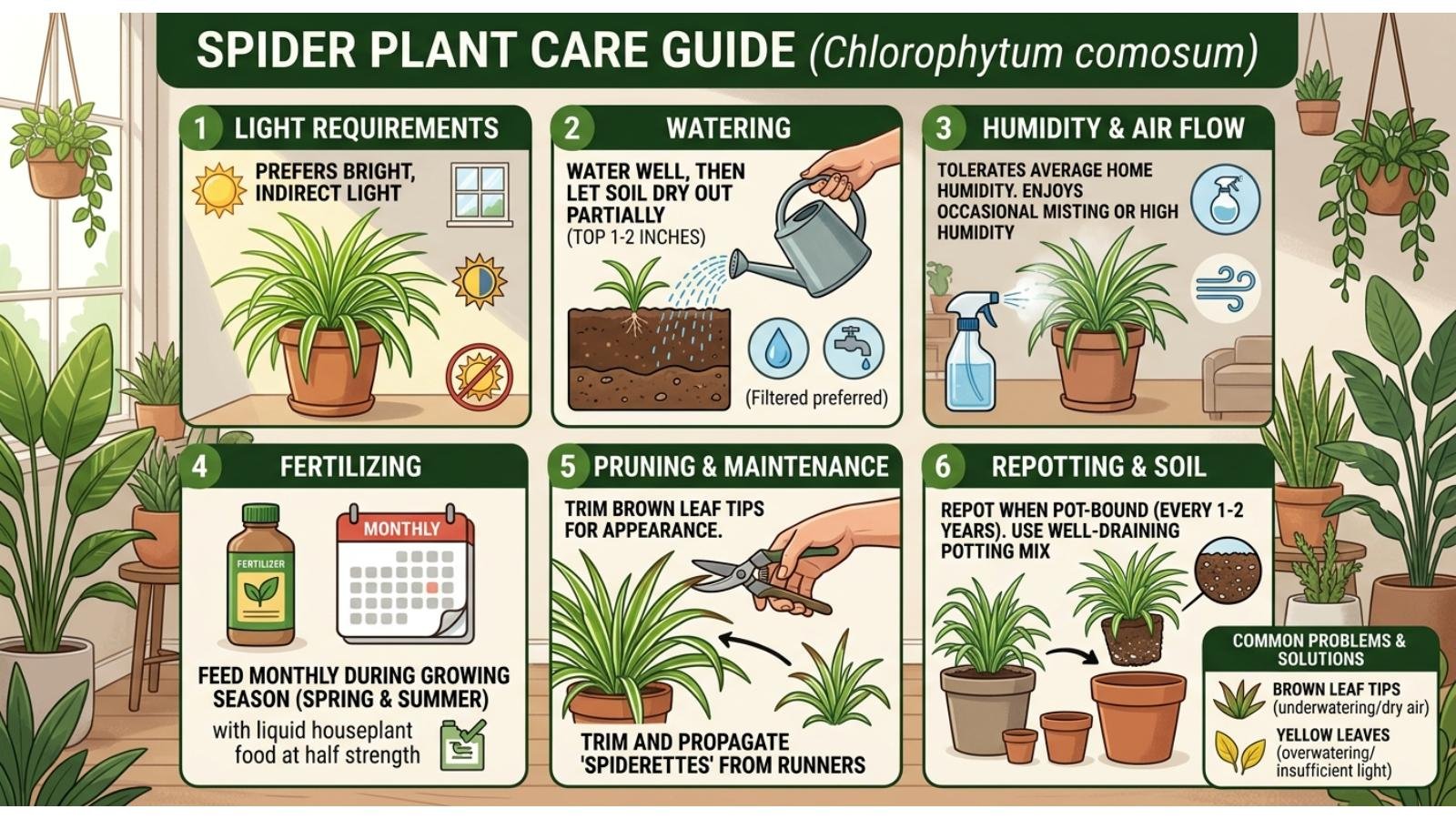
To take care of a spider plant, place it in bright, indirect light and use a well-draining potting mix. Water when the top 1–2 inches of soil feels dry, but avoid keeping the roots constantly wet.
Keep temperatures comfortable, provide moderate humidity, fertilize lightly during active growth, and repot when the roots become crowded. Brown leaf tips are often caused by inconsistent watering, dry air, salt buildup, or water quality rather than a serious disease.
Introduction
Learning how to take care of spider plant is relatively simple because spider plants are adaptable and forgiving. However, “easy-care” does not mean they can thrive under any conditions.
The most common problems are surprisingly basic: too much direct sun, constantly wet soil, long periods without water, poor drainage, or fertilizer and mineral buildup. A spider plant can survive these mistakes for a while, but its leaves may become brown, pale, curled, or weak.
The goal is not to create a complicated watering schedule. Instead, learn to read the plant and its soil. Once you understand how light, moisture, temperature, humidity, and root health work together, spider plant care becomes much easier.
Spider Plant Care at a Glance
| Care Requirement | Best Practice |
|---|---|
| Light | Bright, indirect light |
| Water | Water when the top 1–2 inches of soil dries |
| Soil | Loose, well-draining potting mix |
| Pot | Container with drainage holes |
| Temperature | Comfortable indoor temperatures |
| Humidity | Moderate humidity is generally suitable |
| Fertilizer | Light feeding during active growth |
| Repotting | When roots become crowded or drainage declines |
| Pruning | Remove brown, damaged, or dead foliage |
| Propagation | Plantlets can be rooted from mature plants |
Choosing the Right Light for a Spider Plant
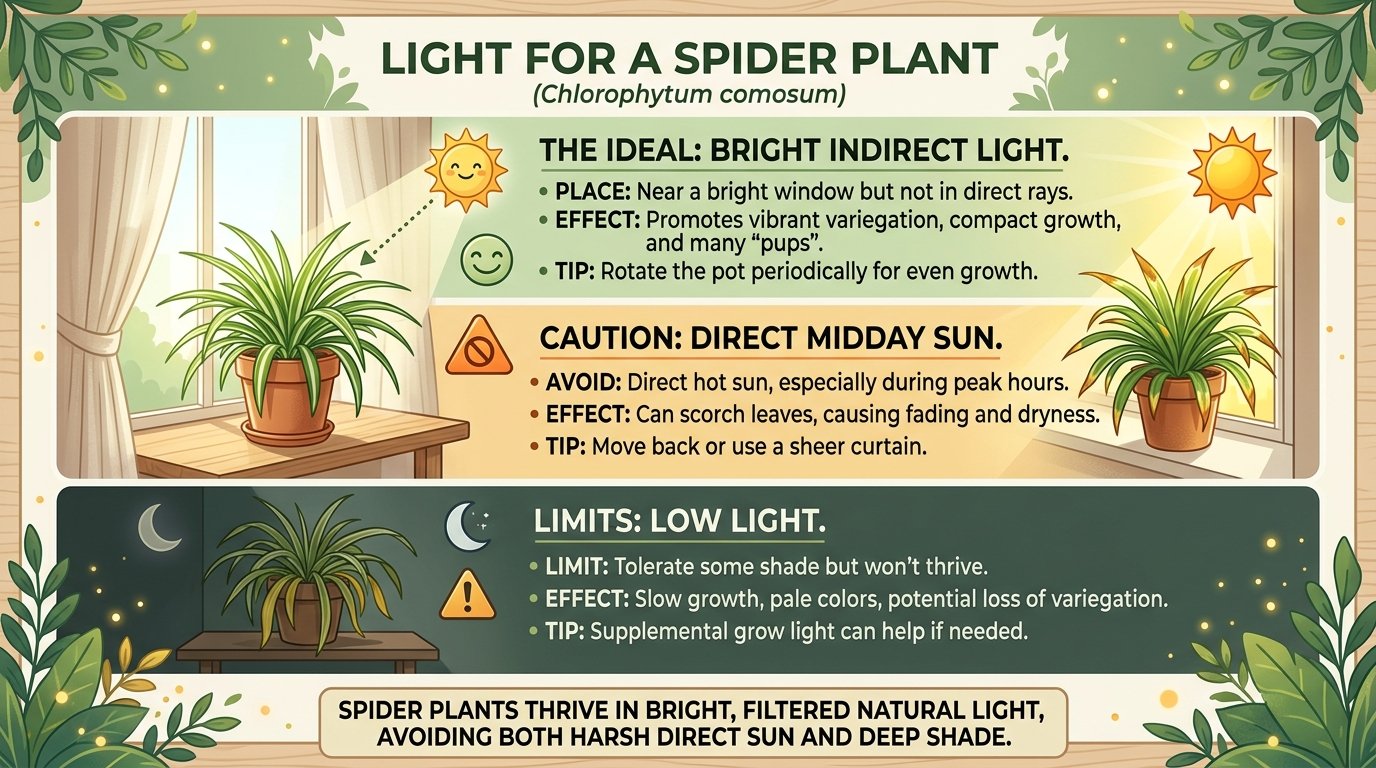
Spider plants generally perform best in bright, indirect light.
Place the plant near a bright window where it receives plenty of natural light without sitting in intense afternoon sunlight for hours.
Why light matters
Light provides the energy a spider plant needs to produce healthy foliage and new growth. Insufficient light can result in slower growth and fewer plantlets, while harsh direct sunlight can scorch the leaves.
A useful rule is:
- Bright room with filtered light: excellent.
- A few feet away from a bright window: often suitable.
- Very dark corner: usually too little light.
- Strong afternoon sun directly through glass: may cause leaf scorching.
Variegated spider plants can be particularly useful for bright indoor spaces because their striped foliage adds visual interest, but their light requirements still need to be respected.
How Often Should You Water a Spider Plant?
Do not water a spider plant simply because a certain number of days have passed.
Instead, check the soil.
Insert your finger about 1–2 inches into the potting mix. If that upper layer feels dry, it is generally time to water. If the soil still feels noticeably moist, wait and check again later.
When watering:
- Water thoroughly until excess water drains from the bottom.
- Allow the excess water to escape completely.
- Empty standing water from a saucer or decorative container.
- Wait until the appropriate portion of soil dries before watering again.
Why overwatering causes problems
A common beginner mistake is assuming that drooping or brown leaves always mean the plant needs more water.
That is not necessarily true.
Roots need both moisture and oxygen. Permanently saturated soil reduces the air available around the roots and can eventually contribute to root problems.
On the other hand, allowing the plant to become severely dry for long periods can also cause stress and crispy foliage.
The best approach is balanced moisture rather than constantly wet soil.
What Type of Water Is Best for Spider Plants?
Spider plants can sometimes develop brown leaf tips even when their watering routine appears reasonable.
One possible reason is the mineral content of the water.
Tap water can contain dissolved minerals, and repeated watering may contribute to mineral accumulation in the potting mix. Fertilizer salts can add to the problem.
If your plant repeatedly develops brown tips despite appropriate light and watering, consider whether water quality or accumulated salts could be contributing.
Practical approach
You can occasionally flush the potting mix by slowly running plenty of water through the soil and allowing it to drain completely.
If your local water is particularly mineral-rich, you may also experiment with a lower-mineral water source and observe whether the new growth improves.
Use a Well-Draining Potting Mix
Spider plants do not need heavy, water-retaining soil.
A suitable indoor potting mix should hold enough moisture for the roots while allowing excess water to drain away.
A basic mix can include:
- Quality indoor potting mix.
- A drainage-improving material such as perlite.
- Organic material that helps maintain a loose structure.
The exact recipe is less important than the result.
The finished mix should not remain soggy for long periods after watering.
Why drainage matters
A container can have drainage holes and still have poorly draining soil.
If the mix becomes compacted and stays wet for an extended period, the roots may struggle even though water technically escapes from the pot.
Choose a Pot With Drainage Holes
A decorative container may look attractive, but drainage should come first.
Always make sure the actual growing container allows excess water to escape.
Avoid placing a spider plant permanently in a sealed pot where water collects around the roots.
When should you use a larger pot?
Do not automatically move a spider plant into a much larger container.
An oversized pot contains more soil than the roots currently need, which can cause the mix to remain wet for longer.
Choose a pot only slightly larger than the existing root system when repotting.
Ideal Temperature for Spider Plants
Spider plants generally prefer normal, comfortable indoor temperatures.
Protect them from:
- Extremely cold drafts.
- Sudden temperature changes.
- Direct blasts from heating equipment.
- Strong air-conditioning drafts.
- Very cold windows during winter.
Stable conditions are usually more helpful than constantly moving the plant around.
If the plant is growing well in one location, there is often no reason to keep changing its position.
Humidity and Spider Plant Care
Spider plants can tolerate average household humidity, but very dry air can contribute to crispy leaf tips.
If your home becomes particularly dry, especially during periods of heating or air conditioning, monitor the foliage.
Instead of relying on frequent misting alone, consider improving overall humidity by:
- Grouping compatible plants together.
- Using a humidifier when necessary.
- Keeping the plant away from direct hot or cold air.
- Maintaining a consistent watering routine.
A plant with brown tips does not automatically need more humidity, so check the soil, light, and water quality before changing several things at once.
How to Fertilize a Spider Plant
Spider plants generally do not require heavy feeding.
During active growth, use a balanced houseplant fertilizer according to the product’s recommended dilution and frequency.
Avoid the temptation to fertilize more often simply because the plant is growing slowly.
Why too much fertilizer can be harmful
Excess fertilizer can lead to salt accumulation in the soil and may contribute to damaged leaf tips or stressed roots.
If you have recently repotted the plant into fresh, nutrient-containing potting mix, you may not need to fertilize immediately.
Light and consistent feeding is usually safer than aggressive fertilization.
How to Prune a Spider Plant
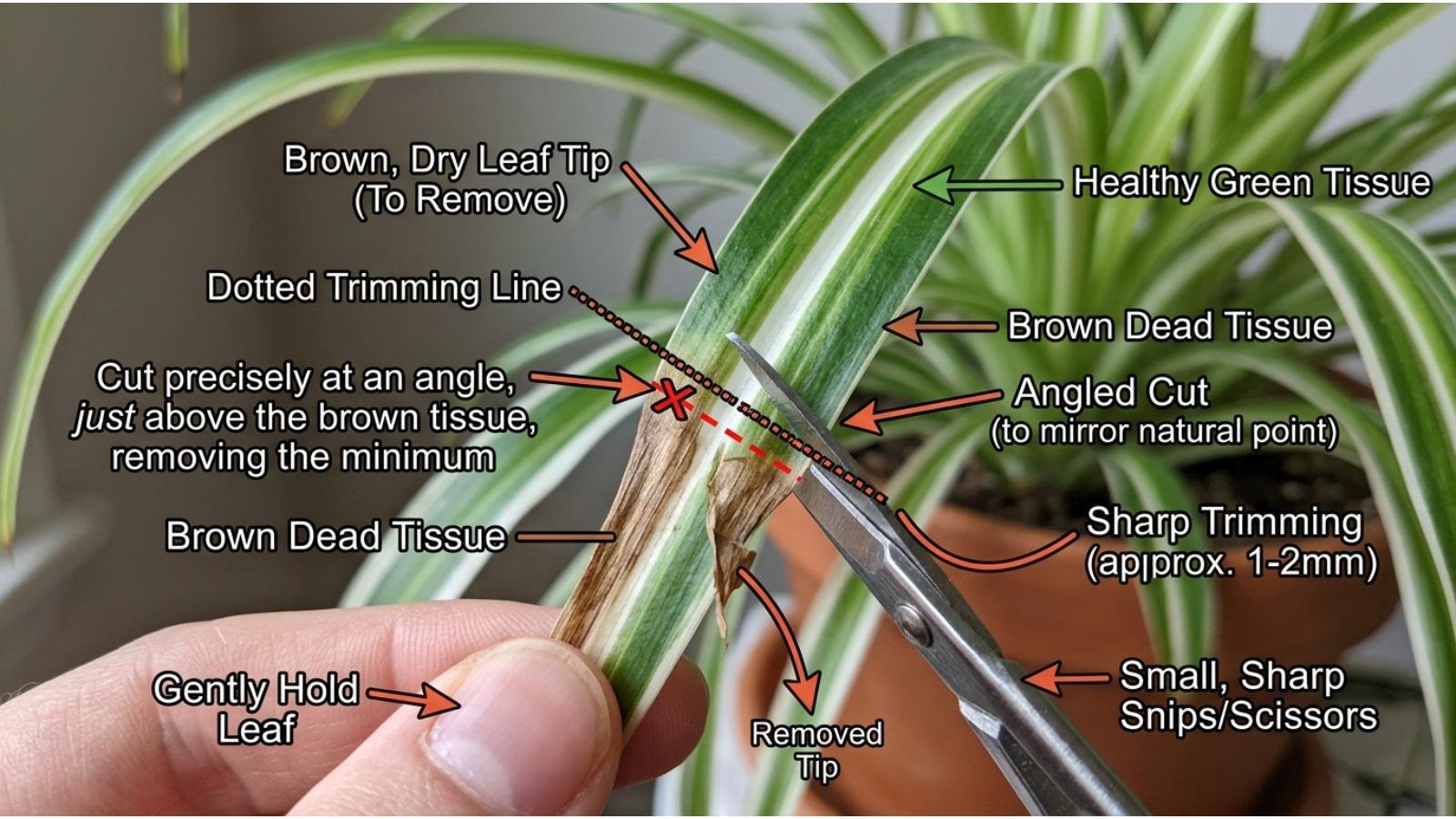
Pruning is mainly about maintaining appearance and removing damaged foliage.
Use clean, sharp scissors to remove:
- Completely brown leaves.
- Severely damaged sections.
- Dead foliage.
- Unattractive leaf tips if desired.
When only the tip is brown, you can trim the damaged portion while following the natural shape of the leaf.
Do not remove large amounts of healthy green foliage unnecessarily. Green leaves are still producing energy for the plant.
What to Do With Spider Plant Babies
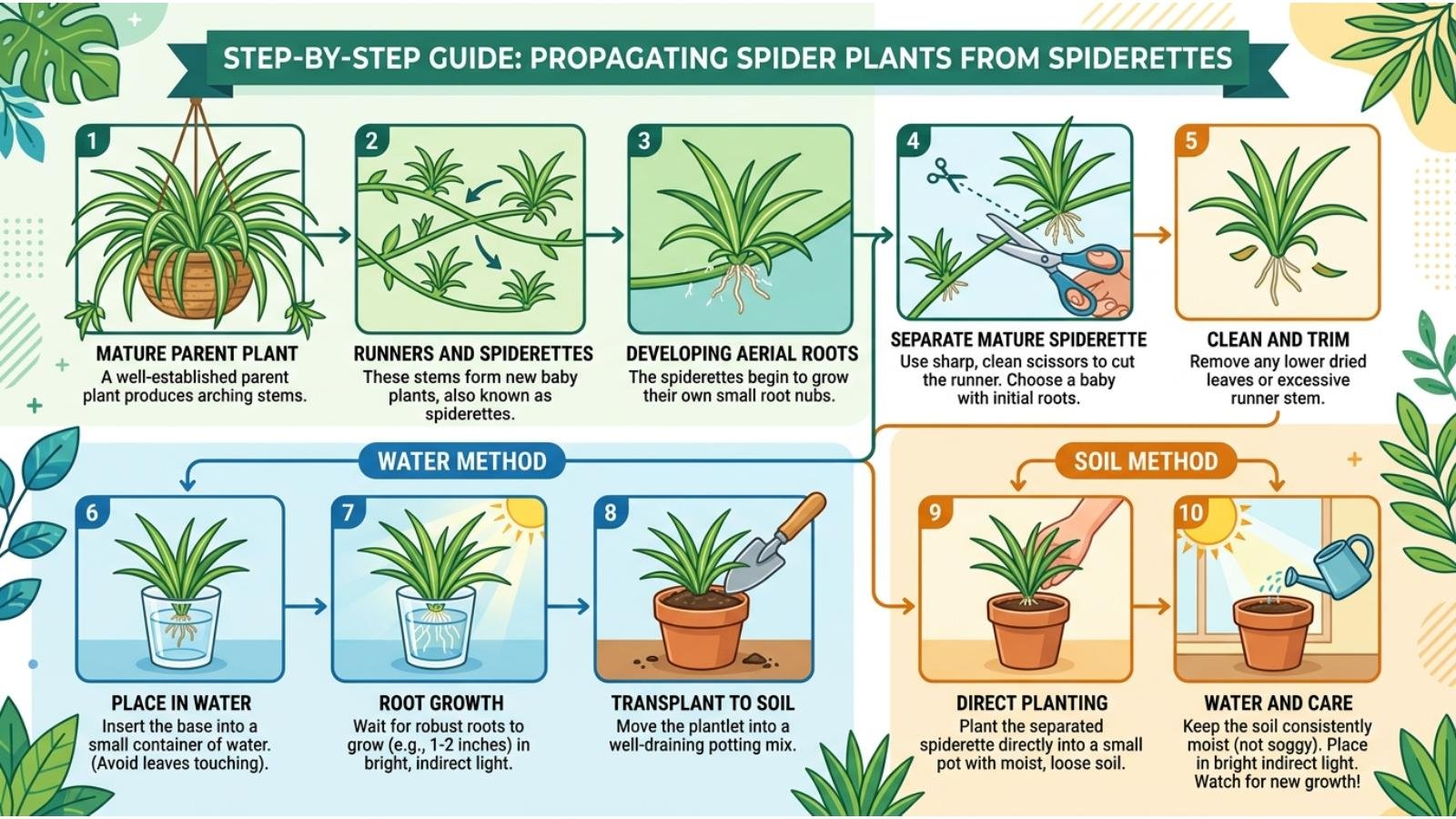
One of the most enjoyable features of spider plants is their ability to produce small plantlets, often called spiderettes.
These baby plants develop on long stems extending from the mature plant.
When a plant is healthy and mature, you may see several plantlets forming at once.
Should you remove the babies?
You do not have to.
Leaving them attached can create a fuller, cascading appearance. If you want additional plants, the plantlets can be propagated once they have developed enough structure to establish roots.
This makes spider plants particularly convenient for gardeners who enjoy propagation.
How to Propagate Spider Plant Babies
Propagation is usually straightforward.
Method 1: Rooting in water
- Select a healthy plantlet.
- Place its developing root area in water.
- Keep the foliage above the water.
- Position it in bright, indirect light.
- Change the water regularly.
- Once a healthy root system develops, transfer it into potting mix.
Method 2: Rooting directly in soil
You can also place the plantlet directly into moist potting mix.
Keep the developing roots in contact with the soil and provide bright, indirect light.
One advantage of soil propagation is that the plant becomes established directly in its long-term growing medium.
When Should You Repot a Spider Plant?
Spider plants can tolerate being somewhat root-bound, but eventually the container may become too crowded.
Signs that repotting may be useful include:
- Roots emerging from drainage holes.
- Water running through the pot unusually quickly.
- The soil drying extremely fast.
- A dense mass of roots filling most of the container.
- The plant becoming unstable in its current pot.
- Growth slowing despite otherwise suitable conditions.
Choose a container only modestly larger than the existing one.
After repotting, water appropriately and give the plant time to adjust.
Why Are My Spider Plant Leaves Turning Brown?
Brown tips are among the most common spider plant complaints.
Several factors can cause them.
Inconsistent watering
Repeatedly allowing the plant to become extremely dry can stress the foliage.
Low humidity
Very dry indoor air may contribute to crispy leaf edges.
Mineral buildup
Water containing significant dissolved minerals can contribute to tip burn over time.
Fertilizer buildup
Excess fertilizer salts can accumulate in the soil.
Root problems
If the roots are unhealthy because of prolonged saturation, foliage can deteriorate even when the soil appears wet.
Too much direct sunlight
Strong sunlight can scorch leaves, especially when the plant has not been acclimated to brighter conditions.
The key is not to treat every brown tip with the same solution. Look at the whole growing environment before making changes.
Why Is My Spider Plant Turning Yellow?
Yellow leaves can have several causes.
The first thing to investigate is watering.
If the soil stays wet for a long time and multiple leaves are turning yellow, the plant may be experiencing moisture-related root stress.
Other possibilities include:
- Insufficient light.
- Natural aging of older leaves.
- Poor drainage.
- Environmental stress.
- Nutritional problems.
Check the soil moisture, drainage, light level, and root condition before adding fertilizer.
Why Is My Spider Plant Drooping?
Drooping does not always mean the plant needs water.
Check the soil first.
If the soil is very dry
The plant may be experiencing dehydration.
Water thoroughly and allow excess water to drain.
If the soil is wet
Do not automatically add more water.
Persistent moisture can indicate that the plant is receiving too much water, the container is too large, or the potting mix is draining poorly.
If the roots are damaged
The plant may struggle to take up water even when the soil contains plenty of moisture.
This is why checking the soil before watering is more reliable than following a fixed calendar.
Why Is My Spider Plant Not Producing Babies?
A mature spider plant may produce plantlets under favorable conditions, but production can vary.
If yours is not producing babies, examine:
- Light.
- Overall plant health.
- Feeding practices.
- Pot size.
- Seasonal growth.
- Environmental stability.
Insufficient light can reduce vigorous growth, while excessive fertilizer is not a reliable way to force more plantlets.
Focus on creating healthy growing conditions rather than trying to trigger babies through heavy feeding.
Spider Plant Care During Different Seasons
Spring
Spring often brings increased growth.
Check whether the plant needs:
- Fresh potting mix.
- Repotting.
- Light pruning.
- Regular feeding.
- A brighter location.
Summer
Monitor moisture more frequently because warmer conditions can increase water loss.
However, do not water automatically every day. Check the soil.
Fall
Growth may begin slowing as light levels change.
Reduce feeding if the plant is no longer actively growing.
Winter
Indoor heating can create dry air, while colder windows can expose plants to temperature stress.
Keep the plant away from cold drafts and heating vents, and be careful not to overwater when growth has slowed.
Common Spider Plant Care Mistakes
Watering on a fixed schedule
A calendar cannot account for differences in temperature, light, pot size, soil, and humidity.
Better approach: Check the soil.
Keeping the soil constantly wet
More water does not automatically mean faster growth.
Better approach: Let the appropriate upper layer of soil dry before watering again.
Putting the plant in harsh direct sunlight
Spider plants enjoy bright conditions, but intense direct sunlight can damage foliage.
Better approach: Provide bright filtered or indirect light.
Using a pot without drainage
Decorative containers can trap water.
Better approach: Use a container with drainage holes.
Fertilizing too heavily
Extra fertilizer does not compensate for poor light or poor watering.
Better approach: Feed lightly during active growth.
Cutting all brown leaves immediately
Removing too much healthy foliage reduces the plant’s ability to photosynthesize.
Better approach: Remove dead leaves and trim damaged portions selectively.
A Simple Spider Plant Care Routine
You do not need to spend hours caring for a spider plant.
Weekly check
Look at:
- Soil moisture.
- Leaf condition.
- New growth.
- Signs of pests.
- Overall plant position.
Every few weeks
Check whether:
- The plant is receiving suitable light.
- Leaves are accumulating dust.
- Roots are becoming crowded.
- The pot is draining properly.
During active growth
Consider appropriate light fertilization according to the fertilizer instructions.
Every few months
Inspect the entire plant rather than focusing only on the leaves.
This simple routine helps you identify problems before they become severe.
Spider Plant Care Troubleshooting Table
| Problem | Possible Cause | What to Check |
|---|---|---|
| Brown leaf tips | Dry soil, dry air, minerals, fertilizer buildup | Soil, humidity, water quality |
| Yellow leaves | Excess moisture, low light, aging foliage | Roots, drainage, light |
| Drooping leaves | Too dry or root stress | Soil moisture |
| Slow growth | Low light or environmental stress | Light and growing conditions |
| Few babies | Plant maturity or growing conditions | Light and overall health |
| Soft or declining roots | Prolonged wet soil | Drainage and root condition |
| Scorched leaves | Excessive direct sunlight | Window exposure |
| Crispy foliage | Dry conditions or inconsistent watering | Soil and humidity |
How to Keep a Spider Plant Healthy Long-Term
The best spider plant care strategy is consistency.
Give it suitable light, water according to soil moisture, use a draining potting mix, avoid excessive fertilizer, and pay attention to changes in the leaves.
Do not try to correct every problem by changing multiple conditions at once.
For example, if the tips become brown, do not immediately move the plant, repot it, increase humidity, fertilize it, and water it more heavily. That makes it difficult to determine what actually helped.
Instead, inspect the plant systematically.
Check the soil → check the roots if necessary → evaluate light → consider humidity and water quality → make one practical adjustment at a time.
This approach is much more useful than following a rigid care schedule.
Frequently Asked Questions
How often should I water a spider plant?
Water when the top 1–2 inches of soil feels dry. The exact interval varies depending on light, temperature, pot size, soil, and humidity.
Do spider plants need direct sunlight?
They generally perform well in bright, indirect light. Strong direct sunlight, particularly through hot glass, can scorch the leaves.
Why are the tips of my spider plant turning brown?
Brown tips can result from inconsistent watering, dry conditions, mineral accumulation, fertilizer buildup, or other environmental stress. Check the entire growing environment before choosing a solution.
Can spider plants grow in low light?
They can tolerate lower-light conditions, but growth may slow and variegated foliage may become less attractive. Brighter indirect light is generally preferable.
Should I cut brown tips off my spider plant?
Yes, you can trim brown portions for appearance. Follow the natural shape of the leaf and avoid removing healthy green tissue unnecessarily.
Can I keep a spider plant in a bathroom?
A bright bathroom can work well if it receives sufficient indirect light. A dark bathroom may not provide enough light for healthy long-term growth.
How do I make my spider plant grow faster?
Focus on adequate indirect light, appropriate watering, healthy roots, good drainage, and suitable nutrition. Avoid excessive fertilizer or watering in an attempt to accelerate growth.
Do spider plants like to be root-bound?
They can tolerate some root crowding, but severely congested roots can eventually interfere with watering and growth. Repot when the root system has clearly outgrown the container.
Can I propagate spider plant babies?
Yes. Mature spider plantlets can be rooted in water or planted directly into a suitable potting mix once they are developed enough to establish themselves.
How do I know if my spider plant is overwatered?
Persistently wet soil, yellowing foliage, declining growth, and unhealthy roots can indicate excessive moisture. Check the soil and roots rather than relying on leaf color alone.
Final Thoughts
Knowing how to take care of spider plant comes down to understanding its growing conditions rather than following a rigid schedule.
Give it bright indirect light, well-draining soil, a container with drainage, and water based on actual soil moisture. Keep fertilizer moderate, protect the plant from harsh conditions, and investigate brown or yellow leaves instead of automatically adding more water.
The most important habit is simple: check the plant before you care for it. The soil, leaves, roots, and growing environment will usually tell you what needs attention. Once you learn to read those signals, spider plant care becomes straightforward and much more reliable.