Quick Answer
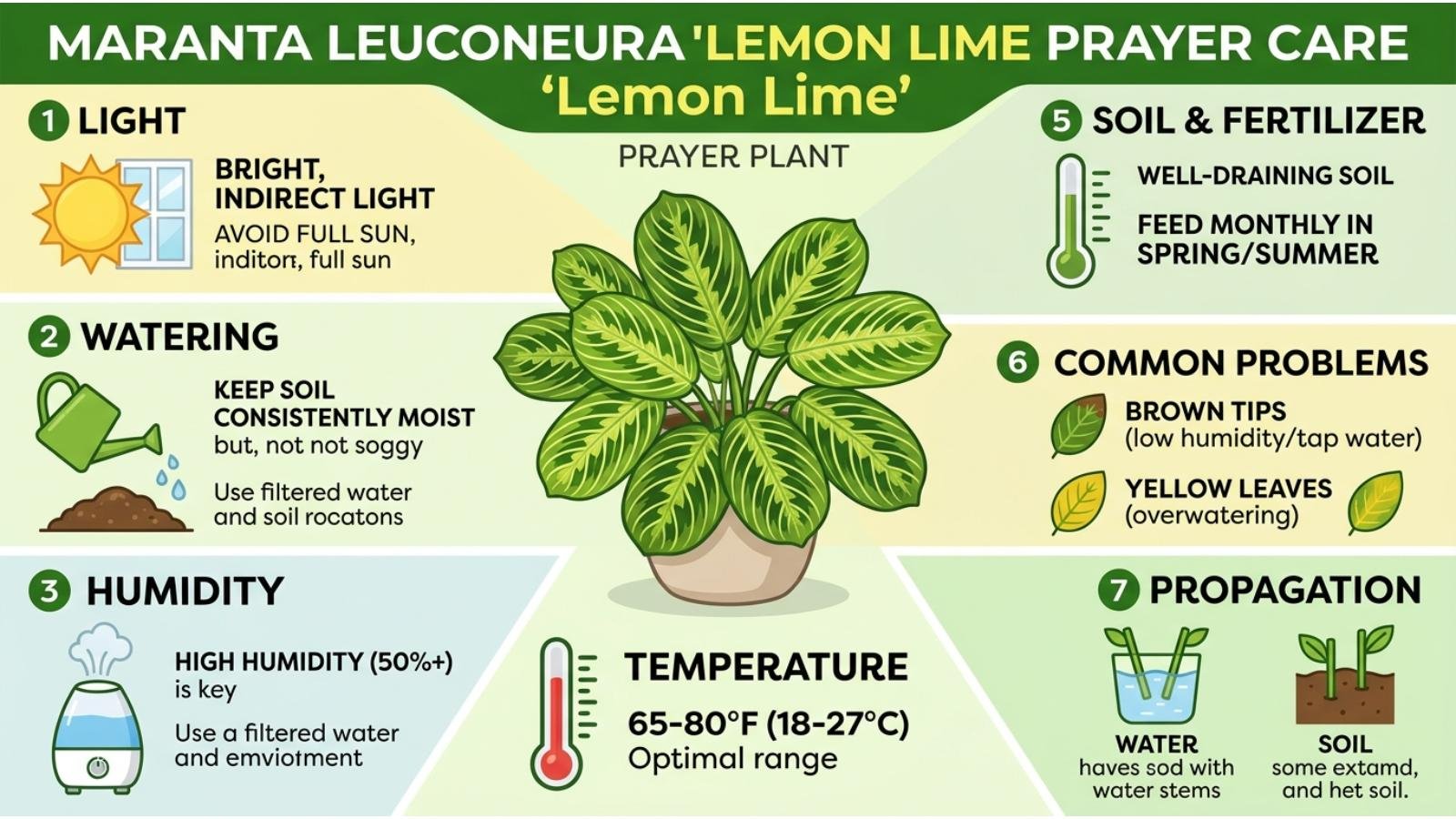
Lemon lime prayer plant care is mainly about bright indirect light, consistently lightly moist soil, warm temperatures, moderate-to-high humidity, and good drainage.
Water when the top inch of soil begins to dry, avoid harsh direct sunlight, and protect the plant from cold drafts. Regularly removing damaged leaves and checking for pests will help keep the foliage colorful, full, and healthy.
Introduction
The Lemon Lime Prayer Plant is prized for its vibrant green leaves, contrasting veins, and naturally spreading growth habit. It is a cultivar of Maranta leuconeura and gets its common name from the way its leaves can fold upward in the evening and relax again during the day.
Although it is often described as an easy houseplant, it can be surprisingly sensitive to inconsistent watering, dry indoor air, intense sunlight, and poor-quality water. The key is not to keep the soil constantly soaked. Instead, aim for a stable environment that resembles the warm, humid conditions these tropical plants prefer.
Lemon Lime Prayer Plant Care Requirements
| Care Need | Best Condition |
|---|---|
| Light | Bright, indirect light |
| Water | When the top inch begins drying |
| Soil | Moisture-retentive but well-draining |
| Humidity | Around 50–70% or higher |
| Temperature | 65–80°F |
| Fertilizer | Balanced fertilizer during active growth |
| Pot | Container with drainage holes |
| Growth | Low, spreading habit |
| Difficulty | Moderate |
The most important factor is consistency. A plant that receives appropriate conditions one week and severe dryness or excessive water the next may develop leaf problems even though each individual care decision seems reasonable.
How Much Light Does a Lemon Lime Prayer Plant Need?
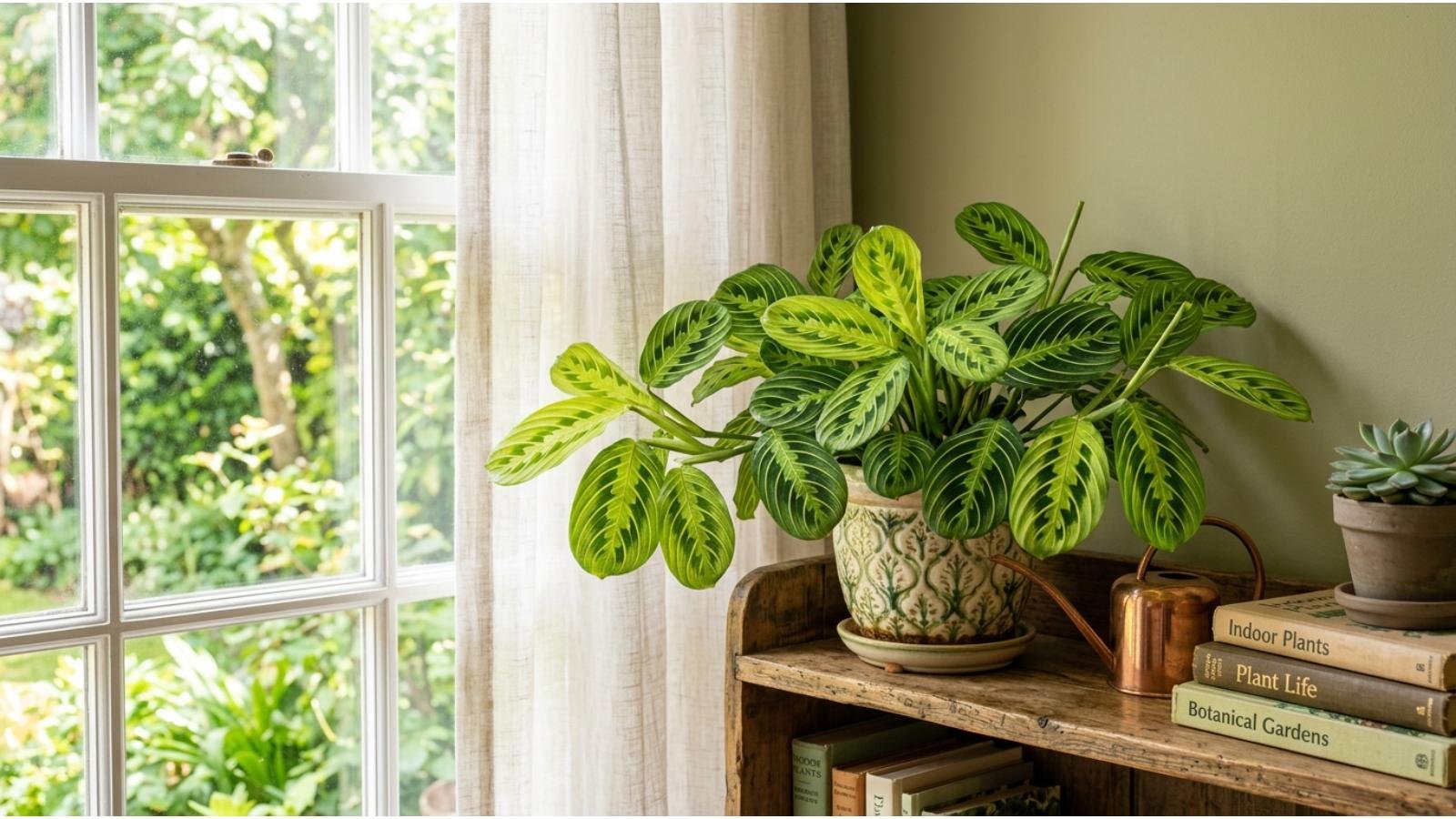
Give your Lemon Lime Prayer Plant bright, indirect light.
An east-facing window is often a good choice because it can provide gentle morning light. Near a bright south- or west-facing window, place the plant farther away or use a sheer curtain to reduce intense sunlight.
Signs of too much light
- Faded or washed-out leaf color.
- Brown or crispy patches.
- Scorched-looking areas.
- Leaves curling or becoming unusually stressed.
Signs of insufficient light
- Slow growth.
- Smaller new leaves.
- Longer spaces between leaves.
- Less vibrant foliage.
Practical tip: If you can comfortably read near the plant during the daytime without direct sun falling strongly on its leaves, the location may provide a useful starting point.
How Often Should You Water a Lemon Lime Prayer Plant?
There is no reliable watering schedule that works for every home. Instead, check the soil.
Water when the top inch of soil feels slightly dry, then water thoroughly until excess moisture drains from the bottom of the pot.
Avoid both extremes:
- Bone-dry soil: can cause curling, drooping, and crispy leaf edges.
- Constantly wet soil: reduces air around the roots and can contribute to root problems.
Prayer plants generally prefer evenly moist soil, but moist does not mean waterlogged.
A simple watering routine
- Check the top inch of soil with your finger.
- If it still feels noticeably moist, wait.
- If the surface has started drying, water thoroughly.
- Allow excess water to drain completely.
- Empty standing water from the saucer.
Frequently overlooked tip: Do not water simply because it is the same day every week. Indoor temperature, humidity, pot size, soil composition, and seasonal growth can all change how quickly the plant uses water.
What Water Is Best for a Lemon Lime Prayer Plant?
Prayer plants can sometimes be sensitive to mineral buildup, particularly when the household water is hard.
If you repeatedly notice brown leaf tips despite otherwise good care, consider whether your water quality could be contributing.
Possible options include:
- Filtered water.
- Rainwater where safely collected and appropriate.
- Low-mineral water.
Avoid making water quality the first diagnosis for every brown leaf. Dry air, inconsistent watering, fertilizer buildup, root problems, and excessive sunlight can produce similar symptoms.
Best Soil for Lemon Lime Prayer Plants
The ideal soil should hold enough moisture for the plant while allowing excess water and air to move through the root zone.
A useful homemade mix can contain:
- Quality indoor potting mix.
- Perlite for additional drainage.
- Fine bark or another material that improves structure.
The goal is a light, airy, moisture-retentive mixture, rather than heavy garden soil.
Why soil structure matters
If the soil stays saturated for a long time, roots may struggle because the spaces between soil particles remain filled with water instead of air.
On the other hand, extremely fast-draining soil can dry before the plant has enough opportunity to absorb moisture.
Choosing the Right Pot
Always choose a container with drainage holes.
The pot does not need to be dramatically larger than the root ball. An oversized container can hold excess moisture for longer, increasing the risk of watering problems.
When repotting, move up only modestly in pot size.
A good potting setup
Plant → well-draining soil → drainage holes → saucer
The decorative outer pot should not allow the plant to sit in accumulated water.
Humidity for Lemon Lime Prayer Plants
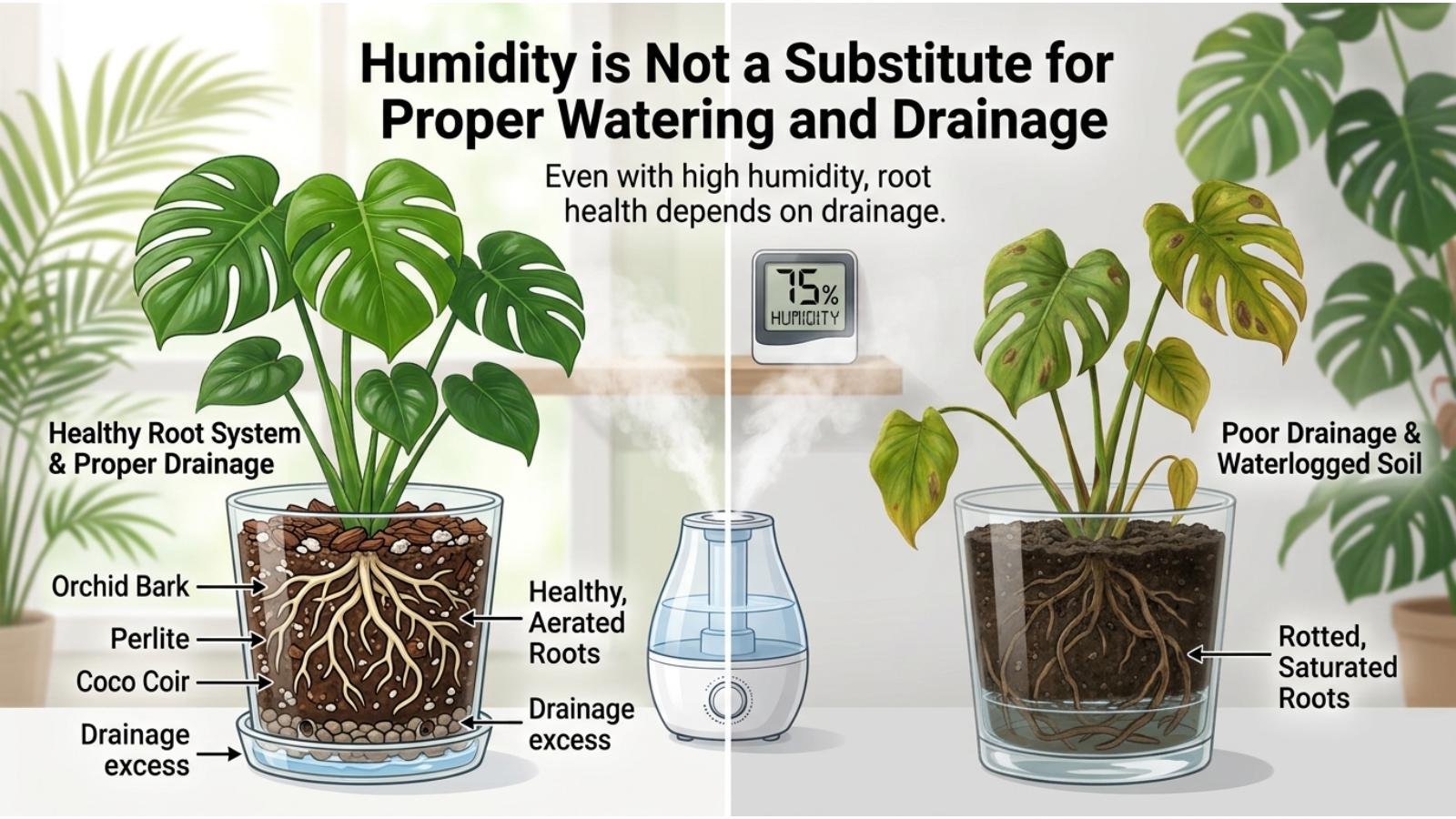
Higher humidity can help Lemon Lime Prayer Plants maintain attractive foliage, especially in dry indoor environments.
Aiming for approximately 50–70% humidity can be helpful, although the plant may tolerate lower levels if other conditions are stable.
Ways to increase humidity
- Use a humidifier.
- Group several plants together.
- Keep the plant away from heating vents and strong air-conditioning drafts.
- Monitor humidity with a small digital hygrometer.
A humidifier is generally more predictable than repeatedly misting the leaves.
Best Temperature for Lemon Lime Prayer Plants
Keep the plant in a warm, stable location.
A practical indoor range is approximately 65–80°F (18–27°C).
Protect it from:
- Cold drafts.
- Air-conditioning vents.
- Very cold windows during winter.
- Sudden temperature changes.
- Direct heat from radiators or heaters.
If the plant suddenly develops curling or leaf damage after being moved, consider whether the new location has a significantly different temperature, humidity, or light level.
Fertilizing Lemon Lime Prayer Plants
During active growth, feed the plant with a balanced, diluted houseplant fertilizer according to the product’s directions.
Avoid applying concentrated fertilizer to dry soil because it can increase the risk of root stress.
A simple approach is:
- Water appropriately.
- Use diluted fertilizer as directed.
- Reduce or pause feeding when growth naturally slows.
- Periodically flush the soil with plain water if fertilizer salts appear to be accumulating.
More fertilizer does not mean more growth. Excess fertilizer can damage roots and contribute to brown leaf edges.
How to Prune a Lemon Lime Prayer Plant
Pruning is usually simple.
Remove:
- Completely dead leaves.
- Severely damaged foliage.
- Yellowing leaves that are clearly declining.
- Weak or unwanted growth.
Use clean, sharp scissors and cut damaged foliage near its base without unnecessarily removing healthy stems.
Pruning can improve the plant’s appearance, but it cannot fix an underlying problem such as poor light, inconsistent watering, or root damage.
How to Make a Lemon Lime Prayer Plant Fuller
A healthy plant can naturally produce a fuller appearance when it receives adequate light and suitable growing conditions.
For a fuller plant:
- Provide bright indirect light.
- Rotate the pot periodically for more even growth.
- Avoid allowing the plant to become severely dehydrated.
- Prune damaged growth.
- Feed appropriately during active growth.
- Give it enough space to spread.
Prayer plants have a naturally low, spreading habit, so they do not need to be forced into an upright shape.
Common Lemon Lime Prayer Plant Problems
Brown Leaf Tips
Brown tips can have several causes, including:
- Low humidity.
- Inconsistent watering.
- Hard or mineral-rich water.
- Excess fertilizer.
- Root stress.
Look at the overall growing conditions rather than assuming there is one universal cause.
Yellow Leaves
An occasional older yellow leaf can be normal, but widespread yellowing may indicate:
- Excess moisture.
- Poor drainage.
- Root problems.
- Stress from environmental changes.
Check the soil before watering again.
Curling Leaves
Curling can occur when the plant is:
- Too dry.
- Exposed to excessive light.
- Experiencing low humidity.
- Exposed to temperature stress.
If the leaves curl suddenly, inspect the soil and location first.
Drooping Leaves
Drooping does not automatically mean the plant needs water.
Check the soil.
If it is dry, watering may solve the problem. If the soil is already wet, adding more water can make the situation worse.
Why Are the Leaves of My Lemon Lime Prayer Plant Turning Brown?
Start with the pattern and location of the browning.
Crispy edges often point toward moisture or humidity stress, while damage concentrated on leaves exposed to strong sunlight can suggest light stress.
Also inspect:
- Watering consistency.
- Soil drainage.
- Fertilizer use.
- Water quality.
- Humidity.
- Temperature.
- Presence of pests.
Avoid treating the symptom before identifying the environmental cause.
Lemon Lime Prayer Plant Pests
Common houseplant pests can occasionally affect prayer plants, including:
- Spider mites.
- Mealybugs.
- Aphids.
- Scale insects.
Inspect both the upper and lower surfaces of leaves, especially around new growth and leaf joints.
Early detection makes pest management considerably easier.
How to Repot a Lemon Lime Prayer Plant
Repot when the plant has substantially filled its current container, the soil structure has deteriorated, or roots are becoming crowded.
Repotting steps
- Choose a container only slightly larger than the current one.
- Make sure it has drainage holes.
- Prepare fresh, airy potting mix.
- Gently remove the plant.
- Inspect the roots for obvious damage.
- Place the plant at approximately the same depth.
- Fill around the root ball with fresh soil.
- Water appropriately and allow excess water to drain.
Do not repeatedly repot a healthy plant simply because you want it to grow faster.
Can You Propagate a Lemon Lime Prayer Plant?
Yes. Prayer plants are commonly propagated using stem cuttings with appropriate nodes.
The important part is selecting a healthy section of stem and ensuring the cutting has a suitable node from which new roots can develop.
Propagation works best when the cutting receives:
- Warm temperatures.
- Bright indirect light.
- Consistent moisture.
- High enough humidity to reduce excessive drying.
Avoid placing newly propagated cuttings in harsh direct sunlight.
Seasonal Lemon Lime Prayer Plant Care
Spring and Summer
Growth is generally more active, so monitor soil moisture more frequently.
This is also the period when appropriate fertilization and repotting may be most useful.
Fall and Winter
Growth may slow because of reduced light and cooler conditions.
Adjust watering based on actual soil moisture rather than continuing a summer watering routine automatically.
Keep the plant away from cold drafts and dry heating sources.
Lemon Lime Prayer Plant Care Mistakes to Avoid
Overwatering on a fixed schedule: Check the soil instead.
Keeping it in direct afternoon sunlight: Strong sunlight can damage delicate foliage.
Using a pot without drainage: Excess water needs a way to escape.
Ignoring humidity: Very dry indoor air can contribute to crispy foliage.
Fertilizing too heavily: Strong fertilizer can damage roots.
Moving the plant frequently: Constant environmental changes can create unnecessary stress.
Treating every brown leaf the same way: Brown tips, spots, and patches can have different causes.
Quick Troubleshooting Guide
| Problem | Possible Causes | What to Check |
|---|---|---|
| Brown tips | Dry air, inconsistent moisture, minerals | Humidity, watering, water quality |
| Yellow leaves | Excess moisture, root stress | Soil and drainage |
| Curling leaves | Dryness, light or temperature stress | Soil and location |
| Faded leaves | Excessive light | Window exposure |
| Slow growth | Low light, cool conditions, nutrition | Light and temperature |
| Wilting | Dry soil or root problems | Soil moisture and roots |
| Leaf spots | Environmental or pest issues | Leaves, humidity, pests |
The key is to diagnose the growing environment, not just the visible symptom.
Frequently Asked Questions
Is Lemon Lime Prayer Plant easy to care for?
It can be grown successfully indoors, but it is less forgiving of prolonged dryness, very dry air, poor drainage, and harsh sunlight than some tougher houseplants.
How much sunlight does a Lemon Lime Prayer Plant need?
It prefers bright, indirect light. Protect the foliage from prolonged intense direct sunlight, particularly during the strongest part of the day.
Should I mist my Lemon Lime Prayer Plant?
Misting may temporarily increase moisture around the leaves, but it is not a dependable way to maintain overall household humidity. A humidifier provides more consistent humidity.
How often should I water my Lemon Lime Prayer Plant?
Water when the top inch of soil begins to dry rather than following a rigid weekly schedule.
Why is my Lemon Lime Prayer Plant curling?
Check for dry soil, low humidity, excessive light, temperature changes, and other environmental stressors.
Can Lemon Lime Prayer Plants grow in low light?
They may survive in lower light, but growth and foliage quality are generally better in bright indirect light.
Do Lemon Lime Prayer Plants like humidity?
Yes. They generally appreciate moderate-to-high humidity, particularly when indoor air is very dry.
Is Lemon Lime Prayer Plant toxic to pets?
Prayer plants are generally regarded as non-toxic to cats and dogs, but pets should not routinely chew houseplants.
Should I cut off brown leaves?
If a leaf is badly damaged, removing it can improve the plant’s appearance. However, pruning will not solve the underlying problem causing new leaves to turn brown.
When should I repot my Lemon Lime Prayer Plant?
Repot when the plant has become significantly root-bound or the existing soil has deteriorated, rather than repotting solely according to a calendar.
Conclusion
Successful Lemon Lime Prayer Plant care comes down to maintaining balance. Give it bright indirect light, evenly moist but well-draining soil, warm temperatures, and adequate humidity. Most problems become easier to solve when you check the soil, roots, light exposure, and surrounding environment before changing several things at once.
If the leaves begin curling, browning, or yellowing, treat those changes as clues rather than simply adding more water or fertilizer. Consistent conditions and careful observation are usually more valuable than a complicated care routine.