Quick Answer
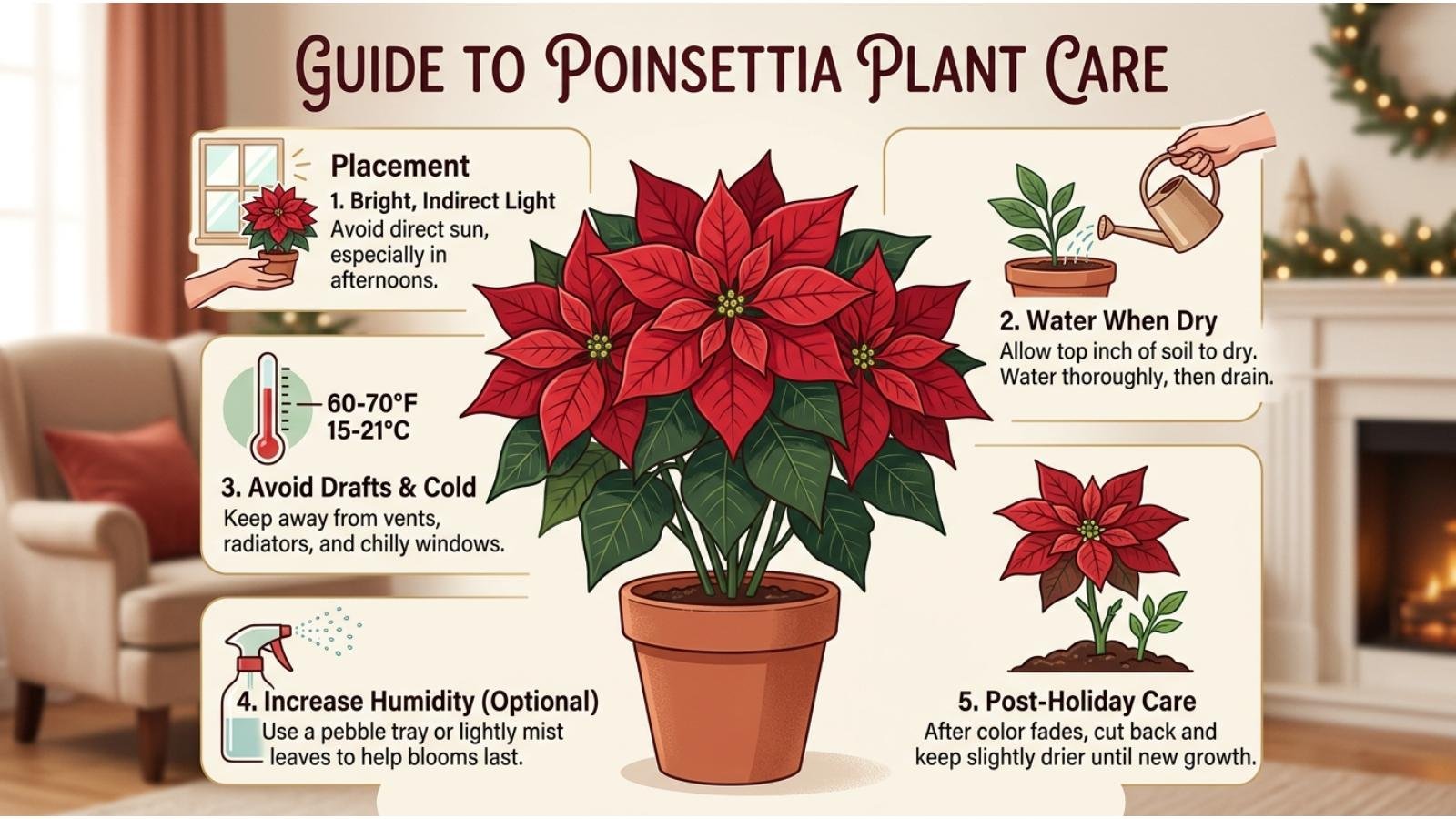
Poinsettia plant care involves providing bright, indirect light, moderate watering, well-draining soil, and comfortable indoor temperatures. Keep your poinsettia away from cold drafts, hot air vents, and waterlogged soil.
Water when the surface of the potting mix begins to dry, and allow excess water to drain completely. With proper seasonal care, a poinsettia can remain healthy long after the holiday season and can even develop colorful bracts again with the right light and darkness schedule.
Introduction


The poinsettia is one of the most recognizable holiday plants, admired for its vibrant red, white, pink, or cream-colored bracts. Although many people treat it as a temporary Christmas decoration, a poinsettia is actually a perennial shrub that can continue growing for years when its needs are understood.
However, keeping one healthy can be challenging. Leaves may turn yellow, drop unexpectedly, or develop brown edges. Sometimes a plant that looks beautiful when purchased begins declining within a few weeks.
The good news is that most poinsettia problems are related to watering, temperature, light, or sudden environmental changes. Understanding these factors makes caring for this plant much easier.
This guide explains how to grow a healthy poinsettia indoors, maintain its colorful appearance, troubleshoot common problems, and encourage it to produce colorful bracts again for the next holiday season.
Understanding the Poinsettia Plant


The poinsettia, scientifically known as Euphorbia pulcherrima, is a tropical plant native to Mexico and Central America. In warm climates, it can grow into a large shrub, but it is commonly grown in containers as a seasonal indoor plant.
One important detail is that the colorful parts are not actually flowers.
- Bracts: The red, pink, white, or cream-colored structures are modified leaves called bracts.
- True flowers: The small yellowish structures clustered in the center are the actual flowers, known as cyathia.
- Green leaves: These provide the plant with energy through photosynthesis and are essential for healthy growth.
Understanding this difference helps explain why a poinsettia can have healthy green foliage without displaying its familiar holiday colors. The plant needs the right seasonal conditions to develop colorful bracts.
Ideal Growing Conditions for Poinsettias
Poinsettias are sensitive to sudden environmental changes. A plant moved from a warm greenhouse into a cold car, placed beside a drafty window, or positioned near a heating vent may begin dropping leaves.
The following conditions help maintain healthy growth.
| Growing factor | Recommended conditions |
|---|---|
| Light | Bright, indirect light; some gentle morning sunlight is usually beneficial |
| Indoor temperature | Approximately 65–75°F (18–24°C) during the day |
| Night temperature | Generally around 60–65°F (16–18°C) |
| Soil | Well-draining potting mix |
| Watering | Water when the surface of the mix begins to dry |
| Humidity | Average indoor humidity is often adequate; avoid extremely dry conditions |
| Drainage | A pot with drainage holes is essential |
These are practical starting points rather than rigid rules. The plant’s condition, pot size, room temperature, and seasonal growth all affect its needs.
Choosing the Right Location
Place your poinsettia near a bright window where it receives plenty of natural light without intense, prolonged midday sun.
A suitable location might be:
- Near an east-facing window with gentle morning sunlight.
- Near a bright south- or west-facing window, slightly away from harsh direct sunlight.
- In a bright room where the plant is protected from cold drafts and heating vents.
Avoid placing the plant directly beside frequently opened exterior doors during cold weather.
Practical tip: If the leaves begin leaning toward the window, rotate the pot a quarter turn every week or two. This encourages more balanced growth.
Image suggestion: A diagram showing suitable and unsuitable indoor locations for a poinsettia, including a bright window, cold doorway, and heating vent.
How to Water a Poinsettia Correctly
Watering is one of the most important parts of poinsettia plant care. Both excessively dry soil and constantly wet soil can cause problems.
Overwatering is particularly troublesome because roots need oxygen as well as moisture. When the potting mix remains saturated, roots can become damaged and may develop rot.
Step-by-Step Watering Instructions
- Check the soil. Touch the surface of the potting mix. If it feels dry, check slightly below the surface as well.
- Lift the pot if possible. A noticeably lighter pot often indicates that the mix has dried considerably.
- Water thoroughly. Slowly pour room-temperature water over the soil until excess water begins flowing through the drainage holes.
- Allow it to drain. Empty the saucer or decorative outer container so the roots do not sit in standing water.
- Check again before watering. Do not automatically water every day. Wait until the soil begins drying again.
The exact watering interval depends on the plant’s environment. A poinsettia in a warm, bright room may need water more frequently than one in a cooler room with less light.
Should You Water a Poinsettia From the Top or Bottom?
Both methods can work.
Top watering is straightforward and allows you to flush excess salts through the potting mix. Bottom watering can help a dry root ball absorb moisture, but the plant should not be left sitting in water indefinitely.
Whichever method you choose, make sure the entire root ball receives adequate moisture and that excess water can drain away.
Common Watering Mistakes
| Mistake | Why it causes problems | What to do instead |
|---|---|---|
| Watering on a rigid daily schedule | Soil may remain wet for too long | Check the soil before watering |
| Leaving water in decorative foil | Roots may become waterlogged | Remove standing water after watering |
| Giving tiny amounts of water repeatedly | Parts of the root ball may remain dry | Water thoroughly, then allow drainage |
| Letting the root ball become extremely dry | Leaves may wilt and fall | Check moisture regularly |
| Using a pot without drainage | Excess water cannot escape easily | Use a container with drainage holes |
Image suggestion: A step-by-step illustration showing a poinsettia being watered, excess water draining through the pot, and a saucer being emptied.
Choosing Soil and the Right Pot
Poinsettias need a potting mix that holds enough moisture for the roots without remaining saturated.
A good-quality, well-draining indoor potting mix is generally suitable. A mix containing materials such as perlite can improve aeration when the existing soil is too dense.
What Type of Pot Is Best?
Choose a container with drainage holes.
Plastic pots retain moisture longer, while unglazed terracotta pots generally dry more quickly. Neither is automatically better; the right choice depends on your watering habits and growing environment.
Avoid placing a small root ball in an excessively large container. A pot that is much larger than the root system can hold excess moisture for longer, increasing the risk of root problems.
When Should You Repot?
You usually do not need to repot a newly purchased poinsettia immediately if it is growing well and the pot drains properly.
Consider repotting when:
- Roots are emerging from the drainage holes.
- The root ball dries unusually quickly because it has become crowded.
- The potting mix has deteriorated or no longer drains effectively.
- You are moving the plant into a larger container for continued growth.
For an established plant, spring is generally a practical time to repot as active growth resumes.
Temperature and Humidity Requirements
Poinsettias prefer comfortable indoor temperatures and dislike sudden cold exposure.
Keep them away from:
- Cold, drafty windows during winter.
- Exterior doors that open frequently.
- Air-conditioning outlets that blow directly onto the foliage.
- Radiators, fireplaces, and hot-air heating vents.
Cold exposure can cause leaves to drop, while excessive heat and dry air may increase water loss and stress the plant.
Does a Poinsettia Need High Humidity?
Poinsettias can usually adapt to average household humidity. However, very dry indoor air, especially when combined with warm temperatures, may contribute to leaf drying.
If your home is particularly dry, consider using a room humidifier. Avoid keeping the soil constantly wet in an attempt to compensate for low humidity.
Practical tip: If a poinsettia suddenly drops leaves after being brought home, consider whether it experienced cold temperatures or a sharp change in its growing environment before assuming that watering is the problem.
Fertilizing Poinsettias for Healthy Growth
Fertilizer supports new foliage and continued growth, but applying too much can damage roots or encourage weak growth.
A newly purchased poinsettia that is already displaying colorful bracts generally does not need immediate heavy fertilization.
Once the plant has finished its colorful display and begins producing new green growth, you can use a balanced, water-soluble houseplant fertilizer according to its label.
Fertilizing Guidelines
- Begin regular feeding when active growth resumes.
- Use the dilution recommended on the fertilizer label.
- Avoid fertilizing a severely wilted or stressed plant until its condition improves.
- Reduce or stop routine feeding during periods of slow winter growth.
- Avoid applying concentrated fertilizer to dry soil.
Remember that fertilizer cannot correct poor lighting, damaged roots, or improper watering. Fix the growing conditions first.
Pruning and Maintaining a Bushy Poinsettia


Poinsettias can become tall and leggy when they receive insufficient light or are allowed to grow without pruning.
Pruning encourages branching and helps maintain a more compact shape.
When to Prune
After the colorful bracts fade and the plant begins transitioning into active growth, you can prune it to encourage fresh shoots.
A practical approach is to:
- Use clean, sharp pruning shears.
- Shorten excessively long stems, leaving several healthy nodes on each stem.
- Remove dead, damaged, or weak growth.
- Place the plant in a bright location and continue appropriate watering.
- Pinch back new shoots during the growing season if you want a fuller shape.
Avoid pruning too late in the season if you want the plant to develop colorful bracts for the holidays. Late pruning can interfere with the timing of its new growth and flowering cycle.
A Note About Poinsettia Sap
Poinsettias produce a milky sap that can irritate sensitive skin. Wear gloves if you are pruning a plant and avoid touching your eyes after handling it.
The sap may also cause irritation if chewed or swallowed. Keep pruned material away from children and pets.
How to Make a Poinsettia Turn Red Again


One of the most frequently asked questions about poinsettia plant care is how to make the plant develop colorful bracts again.
Poinsettias are short-day plants, meaning that long, uninterrupted nights help trigger the development of their colorful bracts.
The plant needs suitable light conditions during the day and sufficiently long, uninterrupted darkness at night for several weeks.
Step-by-Step Color-Change Schedule
If you want colorful bracts for the holiday season, begin preparing the plant in early autumn.
1. Maintain healthy growth during spring and summer.
Give the plant bright light, appropriate watering, and regular feeding while it is actively growing.
2. Begin the darkness schedule in late September or early October.
The exact start date depends on your climate and the date by which you want the bracts to develop.
3. Provide approximately 14 hours of uninterrupted darkness each night.
A common approach is to provide 14 hours of complete darkness and around 10 hours of bright daytime light.
4. Continue this schedule for approximately 8–10 weeks.
Consistency is important. Interruptions from artificial lighting during the dark period can interfere with the process.
5. Maintain suitable temperatures and watering.
Continue caring for the plant normally while avoiding cold drafts, waterlogged soil, and excessive heat.
As the process progresses, the bracts should begin developing their seasonal coloration.
Why Isn’t My Poinsettia Turning Red?
Several factors may interfere with bract development:
- Streetlights or indoor lights interrupt the dark period.
- The plant receives insufficient bright light during the day.
- The darkness schedule begins too late.
- The plant is stressed by poor watering or unsuitable temperatures.
- The plant has not been given enough time to develop its coloration.
Practical tip: A spare room or a properly ventilated dark enclosure can help provide consistent darkness. Do not place the plant in a hot, sealed space or somewhere that prevents adequate daytime light.
Image suggestion: A seasonal calendar illustrating summer growth, autumn darkness treatment, and winter bract coloration.
Seasonal Poinsettia Care Calendar
Poinsettia care changes throughout the year. Understanding its seasonal growth cycle helps you avoid pruning, feeding, or changing its environment at the wrong time.
| Season | What to do |
|---|---|
| Winter | Keep the plant in bright light, protect it from cold drafts, and water when the soil begins drying. |
| Early spring | As the colorful bracts fade, reduce unnecessary watering and prepare for new growth. |
| Late spring | Repot if necessary, prune the stems, and begin feeding as active growth resumes. |
| Summer | Maintain bright light, water appropriately, and pinch new growth to encourage branching. |
| Early autumn | Maintain healthy foliage and begin providing long, uninterrupted nights to encourage colorful bracts. |
| Late autumn | Continue the darkness schedule and monitor the developing bracts. |
| Holiday season | Maintain stable growing conditions and protect the plant from cold exposure and excessive watering. |
The calendar is a general guide. Your local climate, indoor temperatures, and the plant’s growth rate may require adjustments.
Common Poinsettia Problems and How to Fix Them


Poinsettias often show visible symptoms when their growing conditions are unsuitable. The important thing is to identify the underlying cause rather than treating every problem as a watering issue.
Yellow Leaves
Possible causes:
- Overwatering and poorly drained soil.
- Insufficient light.
- Sudden environmental changes.
- Natural aging of older leaves.
How to fix it: Check the soil moisture, inspect drainage, and assess the amount of light the plant receives. If the soil stays wet for an extended period, allow it to dry appropriately and investigate possible root damage.
Leaf Drop
Possible causes:
- Cold drafts or sudden temperature changes.
- Overwatering or prolonged drought.
- Insufficient light.
- Stress following transport or relocation.
How to fix it: Move the plant to a stable, bright location and review its watering routine. If leaf drop began shortly after purchase, environmental shock may be contributing.
Wilting Leaves
Wilting does not always mean that a plant needs water.
Possible causes:
- Dry soil and an under-watered root ball.
- Damaged roots caused by waterlogged soil.
- Excessive heat and rapid moisture loss.
How to fix it: Check the soil before watering. If it is dry, water thoroughly and allow excess water to drain. If it is wet, do not add more water; inspect the drainage and consider whether root damage may be present.
Brown or Crispy Leaf Edges
Possible causes:
- Very dry soil.
- Excessive heat.
- Low humidity combined with other stress factors.
- Fertilizer salt accumulation.
How to fix it: Check soil moisture, move the plant away from heating vents, and avoid excessive fertilizer. If salt accumulation is suspected and the pot drains properly, flushing the potting mix with water may help.
Poinsettia Losing Its Color
Possible causes:
- The natural end of the seasonal display.
- Insufficient uninterrupted darkness during the color-induction period.
- Inadequate daytime light.
- General plant stress.
How to fix it: If the colorful bracts have faded naturally, continue caring for the plant and follow an appropriate seasonal darkness schedule when the next cycle begins.
Root Rot
Root rot is a serious problem associated with prolonged excessive moisture and inadequate drainage.
Warning signs may include:
- Soil that remains wet for unusually long periods.
- Yellowing and wilting despite moist soil.
- Dark, soft, or unpleasant-smelling roots.
How to fix it: Remove the plant from the pot if root rot is suspected. Inspect the roots, trim clearly rotten material with clean tools, and repot into fresh, well-draining mix if enough healthy roots remain.
A severely damaged root system may not recover, so prevention through proper drainage and watering is especially important.
How to Propagate a Poinsettia


Poinsettias can be propagated from stem cuttings, allowing you to grow additional plants from a healthy parent.
Propagation is generally most practical during the active growing season when the plant is producing fresh shoots.
Basic Propagation Method
- Select a healthy, non-flowering shoot.
- Using clean pruning shears, take a cutting several inches long with multiple nodes.
- Handle the cut stem carefully because it releases milky sap.
- Place the cutting in a suitable, lightly moist propagation medium.
- Keep it in a warm location with bright, indirect light.
- Maintain moderate moisture without allowing the medium to become waterlogged.
- Once roots and new growth are established, gradually acclimate the young plant to normal growing conditions.
Rooting success depends on the condition of the cutting, temperature, humidity, and propagation technique. Not every cutting will develop roots.
Safety note: Wear gloves when taking cuttings and keep the sap away from your eyes and mouth.
Indoor vs. Outdoor Poinsettia Care
Poinsettias can grow outdoors in suitable warm climates, but they are not frost-tolerant plants.
| Factor | Indoor growing | Outdoor growing |
|---|---|---|
| Temperature | Maintain comfortable, stable indoor conditions | Protect from cold weather and frost |
| Light | Bright window light or suitable bright indoor placement | Bright light with protection from harsh conditions |
| Watering | Check container moisture regularly | Account for rainfall, heat, wind, and drainage |
| Weather protection | Avoid drafts and heating vents | Protect from strong winds, heavy rain, and cold exposure |
| Seasonal color | Provide a suitable darkness schedule | Natural day length may help trigger bract development |
In warm, frost-free climates, poinsettias can be grown as landscape shrubs. In colder regions, container growing makes it easier to protect them when temperatures fall.
If moving an indoor plant outdoors, acclimate it gradually rather than immediately exposing it to intense sunlight or strong winds.
Is the Poinsettia Toxic to Pets and Children?
Poinsettias are commonly described as highly poisonous, but this reputation overstates the usual risk.
Their milky sap can irritate the skin and mouth. Chewing the leaves or stems may cause irritation and gastrointestinal discomfort, including drooling, nausea, or vomiting.
However, poinsettias are generally considered to have relatively low toxicity compared with many genuinely dangerous household plants.
For sensible precautions:
- Keep the plant out of reach of children and pets.
- Prevent chewing or ingestion of leaves and stems.
- Wear gloves when pruning if you have sensitive skin.
- Wash your hands after handling cut stems.
- Seek advice from a veterinarian or poison-control professional if a pet or child eats part of the plant and develops symptoms.
Do not assume that every exposure will cause serious poisoning, but do take ingestion and irritation seriously.
Practical Tips for Keeping Poinsettias Healthy Longer
Small adjustments can make a meaningful difference to the health and appearance of your plant.
1. Remove decorative wrapping when it interferes with drainage.
Decorative foil can trap water around the bottom of the pot. Make sure excess water can escape freely.
2. Check the plant before purchasing it.
Look for firm stems, healthy foliage, and small central flowers that are not excessively deteriorated. Avoid plants with widespread yellowing, extensive leaf loss, or visibly waterlogged soil.
3. Protect the plant during transport.
Cold exposure can damage poinsettias. During cold weather, ask for protective wrapping and minimize the time the plant spends outdoors.
4. Avoid unnecessary relocation.
A stable location with suitable light and temperature reduces environmental stress.
5. Inspect the foliage regularly.
Check the undersides of leaves and the growing tips for pests such as whiteflies, aphids, or spider mites.
6. Avoid overcorrecting problems.
If leaves turn yellow, adding fertilizer or water immediately may make the situation worse. Check the soil, drainage, lighting, and temperature first.
7. Be patient after the holiday season.
A poinsettia may lose some colorful bracts as its seasonal display ends. This does not automatically mean the plant is dying.
Related Plant Care Topics
If you enjoy growing poinsettias, these related plant-care subjects can help you develop a more complete understanding of indoor gardening.
- Christmas cactus care: Learn about flowering houseplants with different watering and seasonal blooming requirements.
- Peace lily care: Understand how to manage moisture, light, and common indoor foliage problems.
- Snake plant care: Explore a drought-tolerant houseplant with different watering needs.
- Monstera plant care: Learn about supporting vigorous foliage growth and providing suitable indoor light.
- Kalanchoe plant care: Discover how light, watering, and seasonal conditions affect a flowering succulent.
Suggested internal links: Add links to your corresponding plant-care guides where these subjects are discussed naturally.
Frequently Asked Questions About Poinsettia Plant Care
How often should I water a poinsettia?
Water when the surface of the potting mix begins to dry. Water thoroughly, then allow excess water to drain. The frequency depends on temperature, light, pot size, and the type of potting mix.
Do poinsettias need direct sunlight?
Poinsettias generally grow well in bright, indirect light. Gentle morning sunlight can be beneficial, but protect indoor plants from intense sunlight that may scorch their leaves.
Why is my poinsettia dropping leaves?
Leaf drop can result from overwatering, underwatering, cold drafts, insufficient light, or sudden environmental changes. Check the soil moisture and review the plant’s recent growing conditions to identify the likely cause.
Can I keep a poinsettia alive all year?
Yes. Poinsettias are perennial shrubs that can survive for years with appropriate care. They may lose their colorful bracts after the holiday season but can continue producing healthy green foliage.
How do I make my poinsettia turn red again?
Provide bright daytime light and approximately 14 hours of uninterrupted darkness each night for around 8–10 weeks during autumn. Maintain suitable temperatures and consistent watering throughout the process.
Should I remove the red leaves from my poinsettia?
You do not need to remove healthy colorful bracts. Remove dead or damaged leaves when necessary, and prune the stems after the seasonal display has faded if you want to encourage fresh, bushier growth.
Are poinsettias indoor or outdoor plants?
They can be grown both indoors and outdoors in suitable climates. In colder regions, indoor or protected container growing is generally more practical because poinsettias are sensitive to frost.
Do poinsettias need fertilizer?
They benefit from fertilizer during active growth. Use a balanced, water-soluble fertilizer according to its label, beginning when new growth resumes after the seasonal display.
When should I prune my poinsettia?
Spring is generally a suitable time to prune after the colorful bracts fade and the plant begins active growth. Pruning encourages branching and helps maintain a compact shape.
Can poinsettias grow in low light?
They may tolerate lower light for a limited time, but prolonged insufficient light can lead to weak growth and leaf loss. Provide bright, indirect light for healthier foliage and better overall growth.
Are poinsettias poisonous to cats and dogs?
Poinsettias have relatively low toxicity, but their sap can irritate the mouth and skin. Eating the plant may cause gastrointestinal discomfort. Keep it away from pets and contact a veterinarian if ingestion causes concerning symptoms.
Why is my poinsettia green instead of red?
The colorful bracts develop in response to seasonal conditions, particularly long, uninterrupted nights. A plant that receives artificial light during the night may not develop its expected coloration.
Conclusion
Successful poinsettia plant care comes down to maintaining suitable light, watering carefully, providing well-draining soil, and protecting the plant from sudden temperature changes.
Remember these essential practices:
- Give your poinsettia bright, indirect light.
- Check the soil before watering and never leave the roots sitting in standing water.
- Maintain comfortable temperatures and protect the plant from cold drafts.
- Prune after the seasonal display fades to encourage healthy new growth.
- Provide long, uninterrupted nights in autumn if you want colorful bracts again.
The most important lesson is to respond to your poinsettia’s actual growing conditions rather than following a rigid watering or feeding schedule. With consistent care and attention to its seasonal needs, your poinsettia can remain a healthy, attractive plant well beyond the holiday season.