Quick Answer
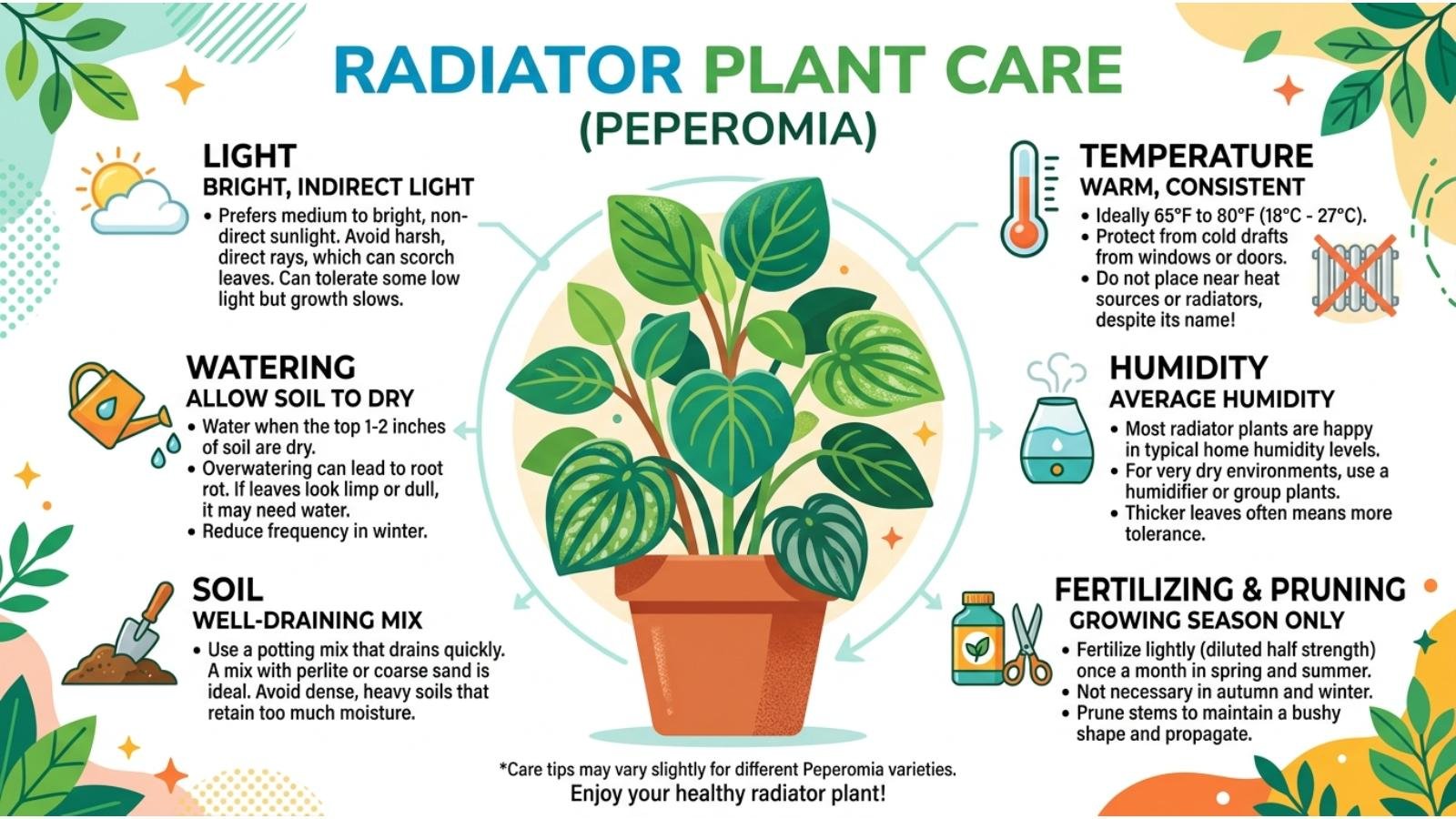
Radiator plant care is simple when you provide bright, indirect light, well-draining soil, moderate watering, and warm, stable temperatures.
Radiator plants, commonly called Peperomia, have thick leaves that hold moisture, so they usually prefer drying slightly between waterings rather than constantly wet soil. Keep the plant away from direct heat, cold drafts, and harsh sunlight, and use a pot with drainage holes to reduce the risk of root problems.
Introduction
Radiator plants are popular indoor plants because they offer attractive foliage without requiring complicated care. Their compact size makes them suitable for desks, shelves, bedrooms, offices, and bright windowsills.
The biggest mistake with radiator plant care is often watering too frequently. Because Peperomia plants have relatively thick, fleshy leaves, they can store moisture and do not need constantly wet soil. When the roots remain wet for too long, the plant can develop yellow leaves, leaf drop, and root problems.
Despite the name, a radiator plant should not be placed directly beside a hot radiator. It appreciates warmth but can suffer when exposed to continuous dry heat.
What Is a Radiator Plant?
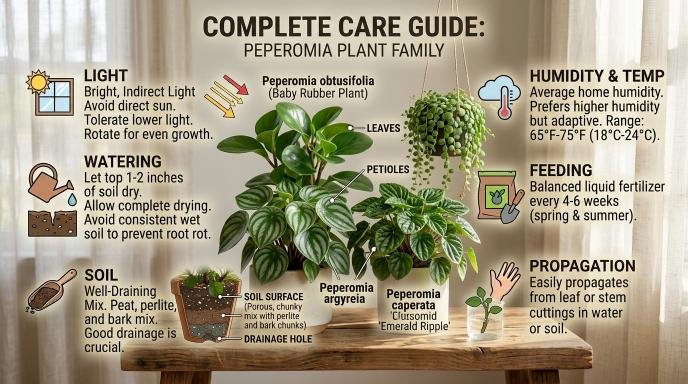
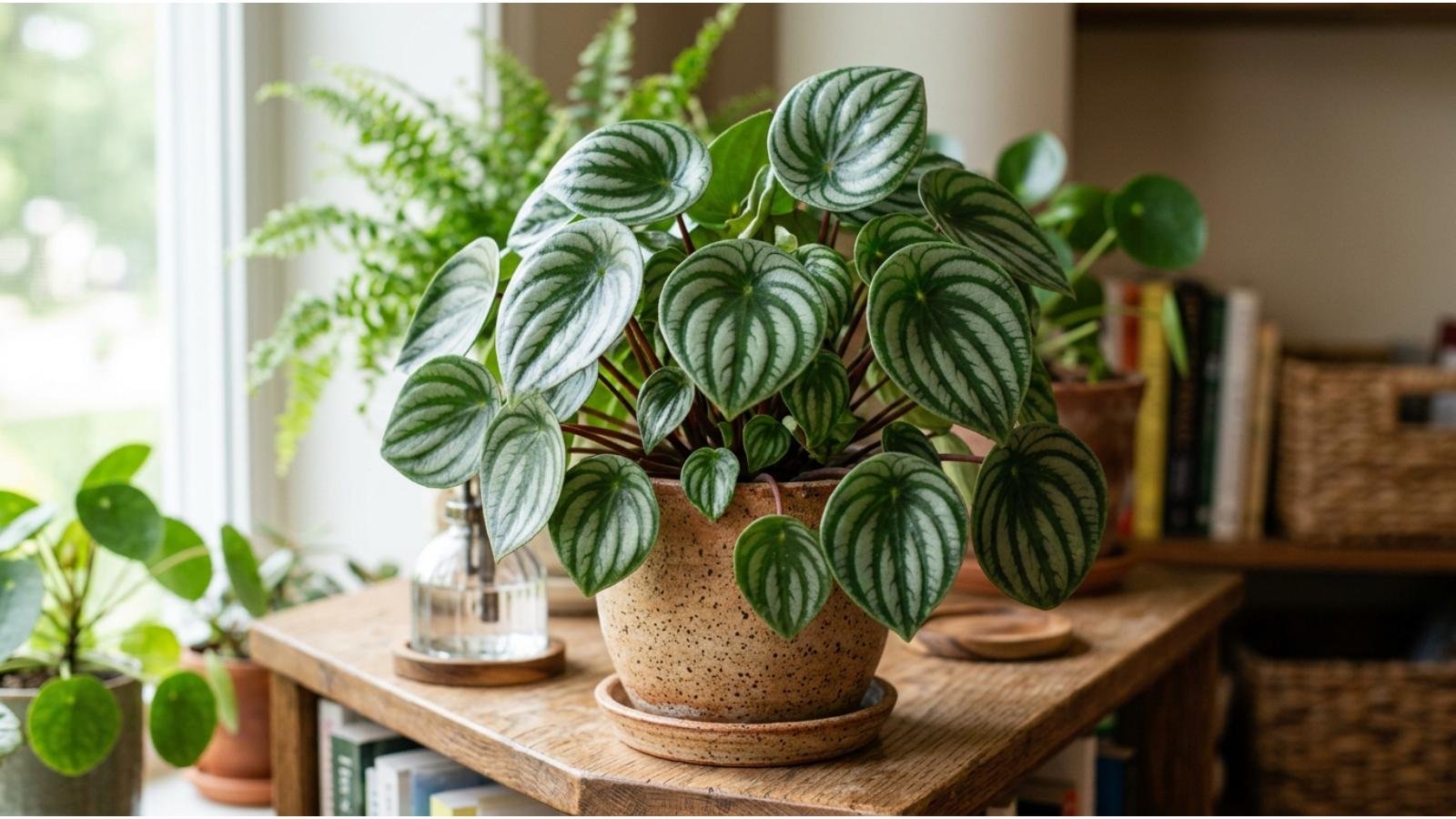
Radiator plant is a common name associated with plants in the Peperomia genus. Peperomia includes many different varieties with upright, compact, trailing, textured, striped, spotted, and colorful foliage.
Popular types include:
- Baby rubber plant.
- Watermelon Peperomia.
- Ripple Peperomia.
- Red-edge Peperomia.
- String of turtles.
- Cupid Peperomia.
- Hope Peperomia.
Although different varieties have slightly different preferences, most can be grown successfully indoors when their basic needs are met.
Their thick leaves are one reason these plants can tolerate occasional drying better than plants with thin, delicate foliage.
Image Suggestion: A labeled image showing several popular radiator plant varieties side by side.
How Much Light Does a Radiator Plant Need?
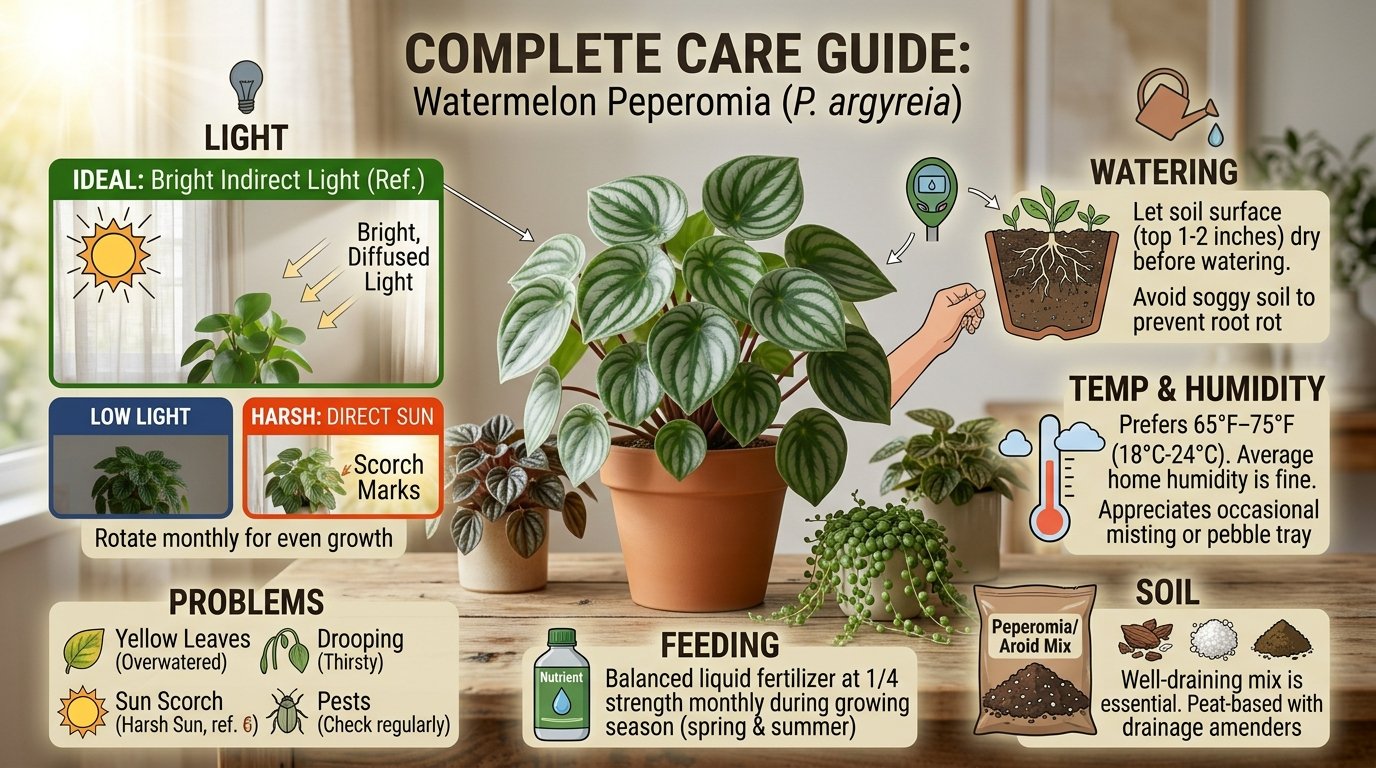
Radiator plants generally grow best in bright, indirect light.
Place your plant near a bright window where it receives plenty of natural light without being exposed to intense sunlight for long periods.
An east-facing window can be particularly useful because it often provides gentle morning light. A bright west- or south-facing location can also work when the plant is protected from strong direct afternoon sunlight.
Signs of insufficient light
Your plant may show:
- Slow growth.
- Long, stretched stems.
- Large spaces between leaves.
- Reduced leaf coloration.
- Weak or thin new growth.
Signs of excessive light
Too much intense sunlight can cause:
- Bleached leaves.
- Brown patches.
- Scorched foliage.
- Faded colors.
- Crispy leaf edges.
A good practical approach is to provide the brightest indirect location available while protecting the leaves from harsh direct sun.
Image Suggestion: Show the difference between a radiator plant receiving ideal indirect light and one receiving excessive direct sunlight.
How Often Should You Water a Radiator Plant?
There is no single watering schedule that works for every radiator plant.
Instead of watering every few days, check the soil first.
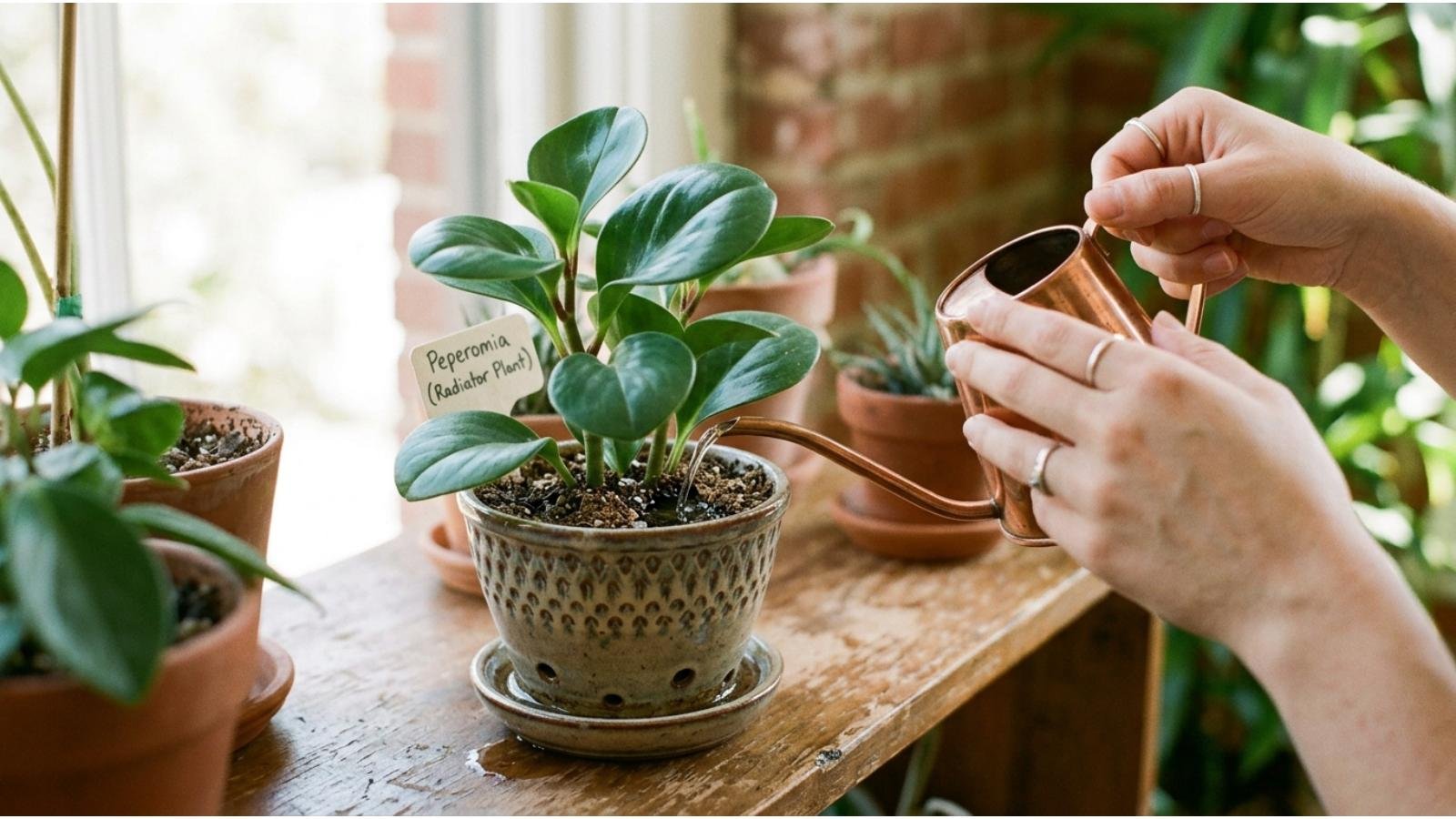
Radiator plants generally prefer the soil to become partially dry before they are watered again. Their fleshy leaves allow them to hold some moisture, making constant watering unnecessary.
How to water correctly
- Check the soil with your finger.
- If the upper portion is still noticeably damp, wait.
- When the soil has dried sufficiently, water thoroughly.
- Allow excess water to drain through the bottom of the pot.
- Empty any water collected in the saucer.
The important thing is to avoid two extremes: keeping the soil permanently wet or allowing the plant to remain severely dry for extended periods.
Why overwatering is a common problem
Beginners sometimes assume that drooping or yellow leaves always mean the plant needs more water. With Peperomia, that assumption can make the problem worse.
If the soil is already wet, adding more water can deprive roots of the air they need.
Expert Tip: Check the soil before reaching for the watering can.
What Soil Is Best for Radiator Plants?
Radiator plants need a loose, well-draining potting mixture.
A basic mixture can include:
- Quality indoor potting soil.
- Perlite.
- A small amount of coarse organic material.
The purpose is to create a growing medium that holds enough moisture for the roots while allowing excess water to drain away.
Avoid heavy soil that becomes compacted and stays wet for long periods.
Why drainage matters
Healthy roots need access to both moisture and air. When soil remains saturated, the root environment becomes unfavorable and root deterioration can occur.
A drainage hole is therefore extremely important.
A decorative container without drainage can be used as an outer cover, but the plant itself should ideally remain in a container that allows excess water to escape.
What Temperature Does a Radiator Plant Need?
Radiator plants prefer warm indoor conditions and generally dislike sudden temperature changes.
Keep them away from:
- Cold drafts.
- Frequently opened exterior doors.
- Very cold windows.
- Air-conditioning vents.
- Direct heat from radiators.
- Hot heating vents.
The ideal environment is warm and relatively stable.
Why should you keep it away from a radiator?
The name can be misleading.
A radiator plant does not need to sit next to a radiator. Continuous heat can make the surrounding air extremely dry and may cause the soil and foliage to lose moisture more quickly.
A warm room is beneficial. Direct exposure to intense heating is not.
Does a Radiator Plant Need High Humidity?
Most radiator plants can adapt to normal indoor humidity.
However, extremely dry indoor air can sometimes contribute to brown leaf edges or general stress.
If your home becomes particularly dry, especially during winter heating, consider improving humidity by using a humidifier or grouping compatible plants together.
You do not need to create a tropical environment for a healthy Peperomia.
Before focusing heavily on humidity, make sure the more important factors are correct:
- Light.
- Watering.
- Soil drainage.
- Temperature.
- Pot size.
These usually have a greater effect on overall plant health.
How to Fertilize a Radiator Plant
Radiator plants generally do not require heavy feeding.
During active growth, you can use a balanced liquid houseplant fertilizer at a reduced strength according to the product instructions.
Fertilizing too frequently can create an unnecessary buildup of salts in the soil.
A practical feeding strategy
Feed more consistently during active growth when the plant is producing new leaves.
Reduce or stop routine fertilizing when growth naturally slows during darker or cooler periods.
If your plant is growing poorly, do not automatically assume fertilizer is the solution. Poor light, damaged roots, overwatering, and unsuitable soil can all produce slow growth.
Expert Tip: Fix environmental problems before increasing fertilizer.
When Should You Repot a Radiator Plant?
Radiator plants are relatively compact and usually do not need frequent repotting.
Consider repotting when:
- Roots are filling the container.
- Roots are emerging from drainage holes.
- The soil has broken down significantly.
- Water drains unusually quickly.
- The plant has become unstable.
- The existing container is clearly restricting healthy growth.
Choose a pot only slightly larger than the current root system.
Why is a huge pot a problem?
A large pot contains more soil than the plant can use. That extra soil may remain wet for a long time after watering.
For a plant that is sensitive to excessive moisture, this can create unnecessary problems.
Better approach: Increase the pot size gradually rather than moving a small plant into a very large container.
How to Prune a Radiator Plant
Pruning helps maintain an attractive shape and removes unhealthy growth.
You can remove:
- Dead leaves.
- Yellowing or badly damaged leaves.
- Weak stems.
- Overly long stems.
- Unattractive or crowded growth.
For a fuller plant, prune stems just above a healthy leaf node. New growth can develop from nodes below the cut.
Always use clean, sharp pruning tools to reduce unnecessary damage.
Avoid removing large amounts of healthy foliage at once unless there is a specific reason to do so.
Image Suggestion: A step-by-step illustration showing where to cut a Peperomia stem for fuller growth.
How to Propagate a Radiator Plant
Many Peperomia varieties can be propagated using stem cuttings, leaf cuttings, or division, depending on the particular variety.
Stem cutting propagation
- Select a healthy stem.
- Take a clean cutting containing healthy leaves.
- Remove lower leaves if necessary.
- Place the cutting into a suitable propagation medium.
- Keep the medium lightly moist.
- Provide bright, indirect light.
- Wait for roots and new growth to develop.
Avoid keeping the propagation medium soaking wet.
The goal is to provide enough moisture for root development without creating an oxygen-poor environment.
Image Suggestion: Create a seven-step Peperomia propagation infographic from cutting to rooted plant.
Why Are My Radiator Plant Leaves Turning Yellow?
Yellow leaves can have several causes, but excess moisture should be one of the first things you investigate.
Check:
- Is the soil staying wet for a long time?
- Does the pot have drainage holes?
- Are you watering too frequently?
- Is the plant receiving enough light?
- Is water collecting underneath the pot?
- Are the roots healthy?
Older leaves can naturally yellow and eventually fall, so one yellow leaf does not necessarily indicate a serious problem.
However, several yellow leaves appearing together, especially when the soil stays wet, deserve closer attention.
Why Is My Radiator Plant Dropping Leaves?
Leaf drop can happen because of environmental stress or root problems.
Possible causes include:
- Overwatering.
- Poor drainage.
- Sudden temperature changes.
- Cold drafts.
- Insufficient light.
- Root damage.
- Major changes in growing conditions.
Do not immediately respond to leaf drop by watering more.
First examine the soil and the plant’s environment.
If the soil is already wet, additional water is unlikely to solve the problem.
Why Are Radiator Plant Leaves Turning Brown?
Brown leaf tips or edges can result from several conditions.
Potential causes include:
- Very dry air.
- Excessive direct sunlight.
- Irregular watering.
- Root problems.
- Accumulation of minerals in the growing medium.
- Sudden environmental changes.
If only a few older leaves have small brown areas, the problem may be minor.
If brown areas are spreading quickly, examine the plant’s light, watering, drainage, and surrounding temperature.
Why Are My Radiator Plant Leaves Curling?
Curling leaves can indicate stress rather than one specific problem.
Check for:
- Dry soil.
- Excessive sunlight.
- Very dry air.
- Temperature stress.
- Root problems.
- Recent relocation.
- Pest activity.
Look at several symptoms together.
For example, curling leaves combined with extremely dry soil suggests a different problem from curling leaves combined with constantly wet soil.
Common Radiator Plant Care Mistakes
Watering Too Frequently
The soil does not need to stay wet all the time.
Better approach: Allow the growing medium to partially dry before watering.
Following a Fixed Watering Schedule
A plant does not know what day of the week it is.
Light, temperature, season, humidity, and pot size all affect how quickly soil dries.
Better approach: Check soil moisture before watering.
Placing the Plant Directly Beside a Heater
Warmth is useful, but direct heating can create excessive dryness and temperature stress.
Better approach: Keep the plant in a warm location away from direct heat.
Using Heavy Soil
Dense soil can hold too much water.
Better approach: Use a loose, well-draining growing medium.
Choosing an Oversized Pot
Too much soil around a small root system can remain wet for too long.
Better approach: Choose a pot that is only moderately larger than the root system.
Giving Too Much Fertilizer
More fertilizer does not automatically mean faster growth.
Better approach: Feed moderately during active growth and correct environmental problems first.
Ignoring Light
A plant may survive in a dark corner but still fail to produce strong, attractive growth.
Better approach: Give it bright, indirect light whenever possible.
Radiator Plant Care by Season
Spring
As daylight increases, your plant may begin producing more new growth.
Check the soil more frequently because increased light can increase water use.
Spring can also be a suitable time for repotting if the plant genuinely needs a larger container.
Summer
Protect the foliage from intense direct sunlight.
Plants near bright windows may dry faster during hot weather, so monitor soil moisture rather than automatically increasing watering.
Fall
Growth may begin slowing as daylight decreases.
Do not continue a heavy summer watering routine if the soil is taking longer to dry.
Winter
Winter presents a particularly tricky combination: lower natural light and dry indoor heating.
The air may be dry while the soil remains wet for a long time.
Keep the plant away from heaters, provide sufficient indirect light, and check soil moisture carefully before watering.
A Simple Radiator Plant Care Routine
If you want a straightforward maintenance routine, use this approach.
Weekly
- Check the soil.
- Inspect leaves for pests.
- Look for yellowing or unusual spots.
- Rotate the pot if growth is becoming uneven.
- Check that the drainage area is not blocked.
Monthly
- Clean dusty leaves gently.
- Inspect stems and leaf undersides.
- Check whether roots are becoming crowded.
- Examine the plant’s position and light levels.
During Active Growth
- Monitor new growth.
- Fertilize appropriately when needed.
- Prune damaged or unwanted stems.
- Propagate healthy cuttings if desired.
This routine is more reliable than watering or fertilizing automatically according to a fixed calendar.
Radiator Plant Care Troubleshooting Chart
| Problem | Possible Cause | What to Check |
|---|---|---|
| Yellow leaves | Excess moisture | Soil and drainage |
| Brown leaf edges | Dry air or environmental stress | Humidity and watering |
| Leaf drop | Overwatering or temperature stress | Soil and location |
| Stretched growth | Insufficient light | Window placement |
| Scorched leaves | Too much direct sun | Move away from harsh sunlight |
| Slow growth | Poor light or unsuitable conditions | Light, roots, soil |
| Soft stems | Excess moisture or root problems | Soil and roots |
| Curling leaves | Water, light, or temperature stress | Entire growing environment |
| Weak new growth | Poor light or nutrition | Light and feeding |
| Persistent wet soil | Poor drainage | Pot and growing medium |
Frequently Asked Questions
Is a radiator plant easy to care for?
Yes. Peperomia is generally a manageable indoor plant when given appropriate light, drainage, and watering. Its ability to tolerate some drying makes it suitable for many beginners.
How often should I water a radiator plant?
Water when the soil has partially dried rather than following a fixed schedule. The exact frequency depends on light, temperature, pot size, soil, and season.
Can a radiator plant survive low light?
It can tolerate lower-light conditions for some time, but bright indirect light usually produces stronger and more attractive growth.
Can I put a radiator plant next to a radiator?
It is better to avoid direct contact with or close exposure to a hot radiator. Keep the plant warm but away from continuous direct heat.
Does a radiator plant need misting?
Not necessarily. Normal indoor humidity is often sufficient. If the environment is extremely dry, increasing overall room humidity can be more useful than frequent misting.
Why is my radiator plant losing leaves?
Check for overwatering, poor drainage, cold drafts, sudden temperature changes, insufficient light, and root problems. Avoid assuming that leaf loss automatically means the plant needs more water.
Why are my radiator plant leaves yellow?
Overwatering is one common cause. Check whether the soil remains wet for extended periods and whether the container drains properly.
Can radiator plants grow in direct sunlight?
They can tolerate some gentle sunlight, but prolonged intense direct sunlight can scorch or fade the leaves. Bright filtered or indirect light is generally safer.
How do I make my radiator plant bushier?
Prune long stems just above healthy leaf nodes and provide adequate indirect light. Good light is important for maintaining compact growth.
Do radiator plants need fertilizer?
They can benefit from moderate feeding during active growth, but excessive fertilizer is unnecessary and can create additional problems.
Do radiator plants like small pots?
They generally prefer not to sit in excessively large containers. A reasonably sized pot with good drainage helps the soil dry appropriately between waterings.
When should I repot my radiator plant?
Repot when the plant becomes root-bound, the soil has significantly deteriorated, or the current container is clearly restricting healthy growth.
Can I propagate a radiator plant from a leaf?
Some Peperomia varieties can be propagated from leaf cuttings, while stem cuttings or division may work better for other varieties.
Conclusion
Successful radiator plant care is less about constant attention and more about providing the right conditions consistently.
Give your Peperomia bright indirect light, a loose and well-draining growing medium, appropriate watering, and stable indoor temperatures. Most importantly, avoid keeping the soil constantly wet and do not mistake the name “radiator plant” as a recommendation to place the plant directly beside a heater.
When problems appear, look at the entire growing environment rather than reacting to a single symptom. Yellow leaves, brown edges, leaf drop, and slow growth can have multiple causes.
The simplest rule to remember is this: give your radiator plant good light, let excess water escape, allow the soil to partially dry, and keep the plant away from temperature extremes. With those basics in place, Peperomia can remain an attractive and relatively low-maintenance houseplant for years.