Quick Answer
Burgundy rubber plant care mainly involves bright indirect light, well-draining soil, careful watering, warm temperatures, and moderate humidity. Let the top portion of the soil dry before watering again, and avoid keeping the roots constantly wet. Burgundy rubber plants tolerate some lower light, but brighter indirect light helps maintain healthy growth and rich burgundy foliage. Good drainage and avoiding overwatering are especially important for preventing root problems.
Introduction
Burgundy rubber plant care is relatively simple once you understand how this striking houseplant responds to light and moisture. Its deep burgundy, almost black-green leaves make it a popular choice for adding dramatic color to indoor spaces.
The plant is commonly grown as a houseplant and can become a substantial indoor specimen when given suitable conditions. However, problems such as yellowing leaves, leaf drop, brown edges, slow growth, and root rot usually occur when watering, lighting, or drainage is inconsistent.
The key is not to treat a rubber plant like a tropical plant that needs constantly wet soil. It appreciates moisture, but its roots also need access to air. A simple routine of bright filtered light, thorough watering followed by partial drying, and excellent drainage can keep a Burgundy rubber plant healthy for years.
What Is a Burgundy Rubber Plant?
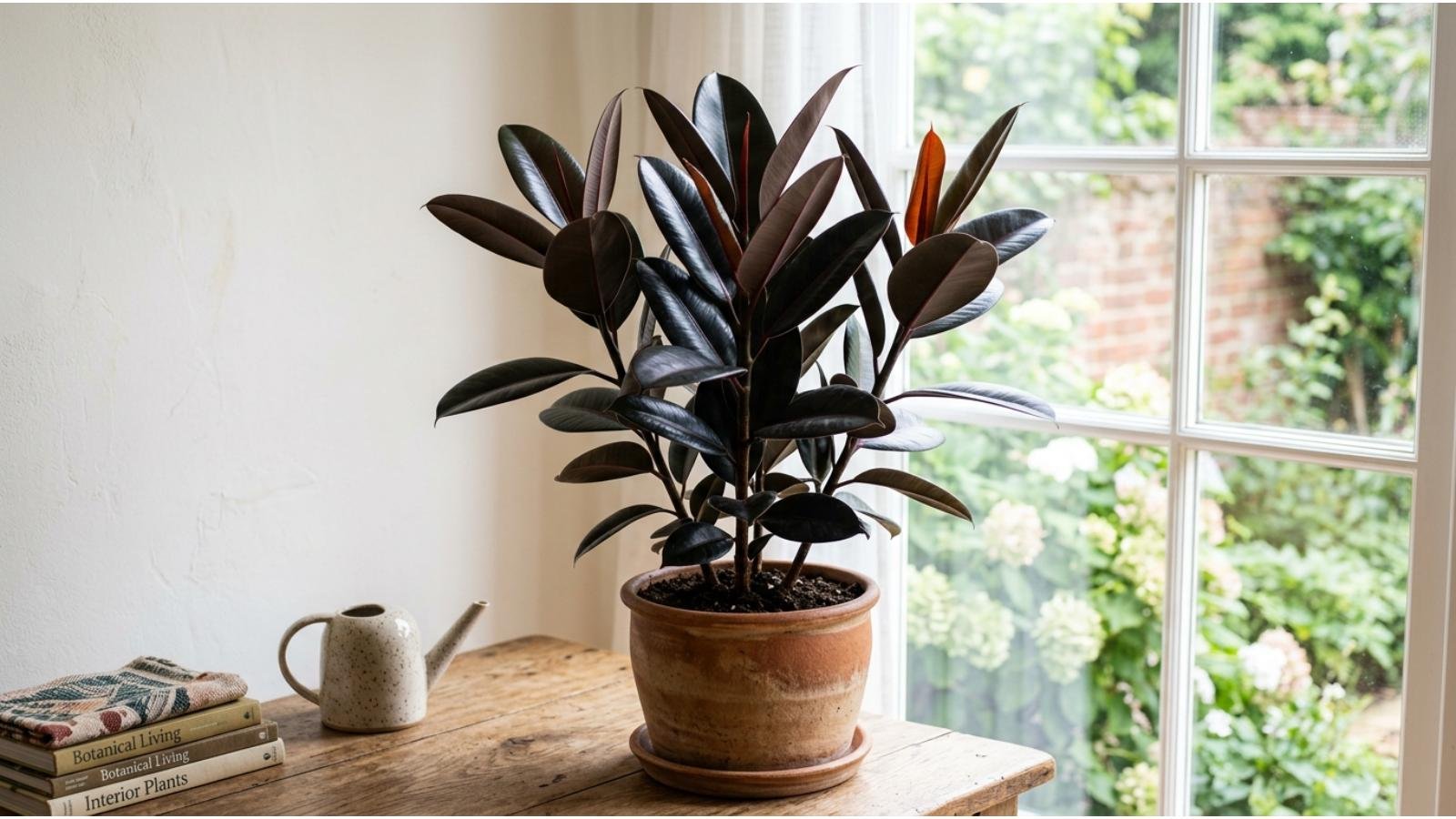
The Burgundy rubber plant is a dark-leaved cultivar of the rubber tree, commonly associated with Ficus elastica. Its large, leathery leaves can develop deep green, burgundy, or nearly black tones depending on the plant and growing conditions.
Young foliage may appear lighter before becoming darker as it matures.
Its dramatic foliage is one reason it works particularly well as a statement houseplant. Unlike many small indoor plants, a healthy rubber plant can eventually develop into a tall, tree-like specimen.
Why the Burgundy Color Matters
Light has an important influence on the appearance of the foliage.
In insufficient light, growth may become slower and the plant may produce less vibrant foliage. Extremely intense direct sunlight through glass can also scorch leaves.
The goal is a bright location with filtered or indirect light.
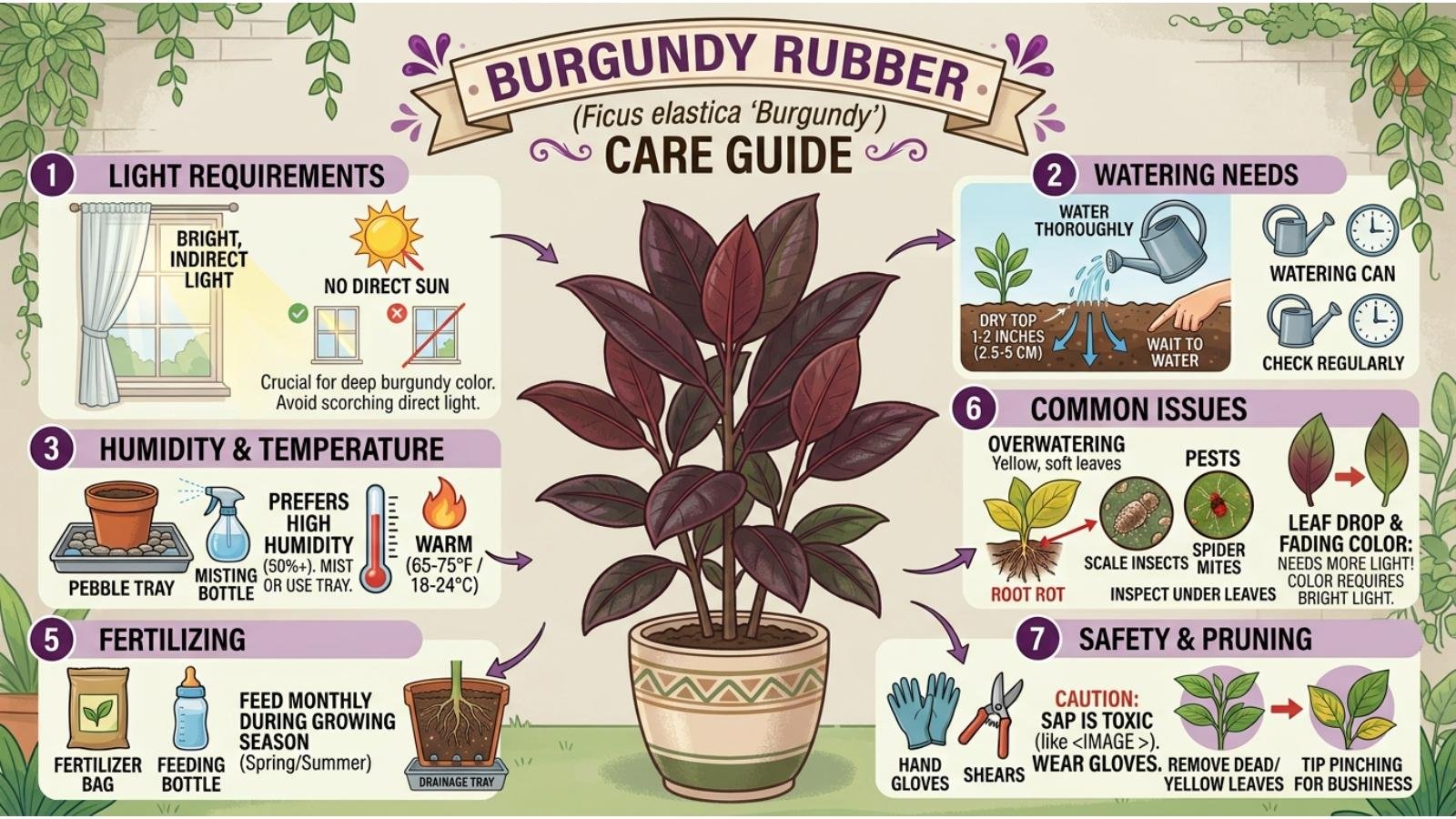
Burgundy Rubber Plant Care Requirements at a Glance
| Care Factor | What Your Plant Needs |
|---|---|
| Light | Bright indirect light |
| Water | Water thoroughly after the upper soil layer dries |
| Soil | Loose, fertile, well-draining potting mix |
| Pot | Container with drainage holes |
| Humidity | Average indoor humidity is usually adequate |
| Temperature | Warm, stable indoor conditions |
| Fertilizer | Moderate feeding during active growth |
| Pruning | Remove damaged growth and shape as needed |
| Repotting | When roots become crowded or drainage declines |
| Main risk | Overwatering and poor drainage |
How Much Light Does a Burgundy Rubber Plant Need?
Bright indirect light is usually the best choice.
Place the plant near a bright window where it receives plenty of natural light without being exposed to harsh, prolonged midday sun through the glass.
A few hours of gentle direct morning sunlight may be tolerated, but suddenly moving a plant from a dim room into intense direct sun can cause leaf scorch.
Signs of insufficient light
Watch for:
- Very slow new growth.
- Long gaps between leaves.
- Smaller new leaves.
- Duller-looking foliage.
- The plant leaning toward a window.
If these symptoms appear, move the plant gradually toward a brighter location.
Signs of excessive sunlight
Too much intense sunlight can cause:
- Pale or bleached patches.
- Brown scorched areas.
- Dry-looking leaf surfaces.
- Crispy edges.
Practical tip: Instead of judging light only by how bright a room feels to your eyes, observe how your plant is actually growing. A plant that repeatedly stretches toward the window is giving you useful information.
Image Suggestion: Burgundy rubber plant positioned beside a bright window with filtered sunlight.
How Often Should You Water a Burgundy Rubber Plant?
There is no reliable calendar schedule that works for every Burgundy rubber plant.
Watering frequency changes with:
- Light exposure.
- Temperature.
- Pot size.
- Soil composition.
- Season.
- Plant size.
- Humidity.
A better method is to check the soil before watering.
Insert your finger into the upper layer of soil. If the surface has dried and the soil below is beginning to dry, it may be time to water.
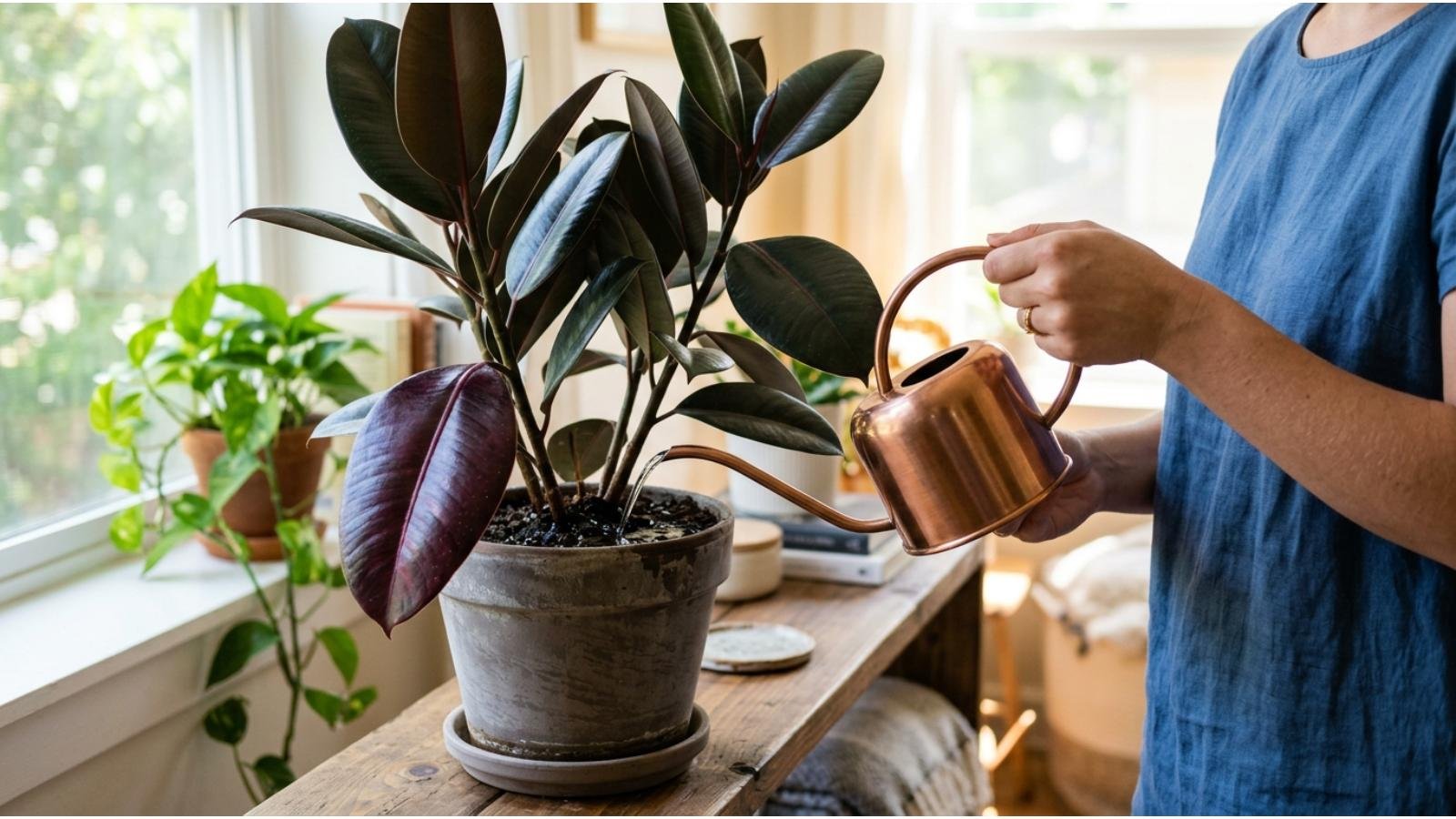
When watering, soak the soil thoroughly until excess water drains from the bottom of the pot. Then empty any water collected in the saucer.
Why overwatering causes problems
Beginners sometimes assume that drooping leaves always mean a plant needs more water. That can be misleading.
A plant suffering from overly wet soil can also develop drooping or unhealthy-looking foliage because damaged roots cannot function properly.
Constantly saturated soil reduces the air available around the roots and can contribute to root deterioration.
A better watering routine
- Check the soil.
- Confirm that it has partially dried.
- Water thoroughly.
- Allow excess water to drain.
- Return the plant to its normal location.
Do not water simply because it has been seven days. Check the plant first.
Best Soil for Burgundy Rubber Plants
Burgundy rubber plants perform best in a well-draining, moisture-retentive but airy potting mix.
A suitable mix can contain:
- Quality indoor potting soil.
- Perlite or another drainage-improving material.
- Organic material such as fine bark or another suitable amendment.
The exact recipe is less important than the result: the soil should hold enough moisture for the roots while allowing excess water to escape.
What poor soil looks like
A problematic mix may:
- Remain wet for many days.
- Become compacted.
- Drain extremely slowly.
- Smell unpleasant.
- Make the pot unusually heavy for a long time after watering.
If water sits around the roots for extended periods, changing the soil and improving drainage may be more useful than simply reducing the amount of water.
Choosing the Right Pot
A Burgundy rubber plant should be grown in a container with at least one functional drainage hole.
The decorative appearance of a pot is less important than drainage.
When choosing a new container, avoid moving a small plant into an extremely large pot. Excess soil surrounding a small root system can remain wet for longer than necessary.
A slightly larger pot is generally more manageable.
When to repot
Consider repotting when:
- Roots are emerging from drainage holes.
- The plant dries out unusually quickly.
- Growth has slowed despite suitable conditions.
- The root system has filled much of the container.
- The existing soil has become compacted or poorly draining.
Image Suggestion: Burgundy rubber plant being removed from a pot, showing a healthy root system and drainage holes.
Temperature and Humidity
Burgundy rubber plants generally prefer warm, stable indoor conditions.
Protect them from:
- Cold drafts.
- Sudden temperature changes.
- Air-conditioning vents.
- Heating vents.
- Extremely cold windows during winter.
Average household humidity is often sufficient, so increasing humidity is not always necessary.
If your indoor air is very dry, particularly during prolonged heating or cooling, you may notice brown leaf edges or increased stress.
Instead of misting repeatedly, focus first on consistent watering, appropriate light, and avoiding extreme environmental changes.
Fertilizing Burgundy Rubber Plants
A Burgundy rubber plant can benefit from regular feeding during periods of active growth.
Use a balanced houseplant fertilizer according to its label directions rather than assuming that more fertilizer will produce faster growth.
Signs you may be overfertilizing
Excess fertilizer can contribute to:
- Brown leaf margins.
- Salt accumulation in soil.
- Damaged roots.
- Unhealthy growth.
Fertilization should support good growing conditions, not compensate for inadequate light or poor watering.
Expert tip: If a plant is struggling because of root damage or poor light, adding more fertilizer usually does not solve the underlying problem.
How to Clean Burgundy Rubber Plant Leaves
Large rubber plant leaves naturally collect dust.
Cleaning them occasionally can improve their appearance and allows you to inspect the foliage more closely.
Use a soft, damp cloth and gently wipe the leaf surface.
Avoid aggressive rubbing, abrasive cleaners, or products designed to make leaves unnaturally glossy.
While cleaning, inspect the undersides of leaves for:
- Webbing.
- Small insects.
- Sticky residue.
- Discoloration.
- Unusual spots.
This simple inspection can help you notice pest problems before they become severe.
Pruning Burgundy Rubber Plants
Pruning is useful when you want to:
- Control height.
- Encourage branching.
- Remove damaged foliage.
- Improve the plant’s shape.
- Manage overcrowded growth.
Use clean, sharp pruning tools.
If you want a fuller appearance, pruning the growing tip can encourage branching below the cut.
Keep in mind that rubber plants can produce a milky sap when cut. Avoid contact with eyes and wash your hands after handling the plant.
Don’t over-prune
Removing too much foliage at once can place unnecessary stress on the plant.
A better approach is to make deliberate cuts and allow the plant time to respond.
How to Make a Burgundy Rubber Plant Grow Faster
Fast growth depends on several conditions working together.
Focus on these fundamentals:
- Provide bright indirect light.
- Use a well-draining potting mix.
- Water according to soil dryness rather than a fixed schedule.
- Maintain warm, stable conditions.
- Fertilize appropriately during active growth.
- Repot when the root system genuinely needs more space.
- Rotate the plant occasionally for more even growth.
The overlooked factor: light
Many slow-growing houseplants are not actually suffering from a fertilizer deficiency.
They may simply not be receiving enough usable light.
Before increasing fertilizer, evaluate the plant’s location.
Why Are Burgundy Rubber Plant Leaves Turning Yellow?
Yellow leaves can have several causes, so the surrounding symptoms matter.
Possible causes include:
Overwatering: Soil remains wet for too long and roots become stressed.
Insufficient light: Low light can reduce growth and contribute to unhealthy foliage.
Natural aging: An older leaf occasionally turning yellow before dropping can be normal.
Poor drainage: Even a reasonable watering routine can cause problems if water cannot escape the container.
If several leaves are yellowing at the same time and the soil stays wet for an unusually long period, investigate the roots and drainage rather than simply adding more water.
Why Are Burgundy Rubber Plant Leaves Turning Brown?
Brown areas may result from several different stresses.
Common possibilities include:
- Excessive direct sunlight.
- Dry conditions.
- Inconsistent watering.
- Root problems.
- Physical damage.
- Salt buildup in soil.
Look at the pattern of the damage.
Crispy patches on the side facing intense sunlight suggest a different problem than uniformly brown edges combined with extremely dry soil.
Diagnosis should consider the whole plant rather than one symptom in isolation.
Why Is My Burgundy Rubber Plant Dropping Leaves?
Leaf drop can occur when the plant experiences environmental stress.
Potential triggers include:
- Sudden changes in location.
- Major changes in light.
- Overwatering.
- Poor drainage.
- Cold temperatures.
- Severe underwatering.
- Root problems.
If leaf drop begins shortly after moving the plant, give it stable conditions and monitor it rather than constantly relocating it.
Repeatedly changing its environment can create additional stress.
Common Burgundy Rubber Plant Care Mistakes
1. Watering on a Fixed Schedule
Watering every Sunday regardless of soil condition can lead to problems.
Better approach: Check the soil first.
2. Keeping the Plant in a Dark Corner
Rubber plants may survive in lower light, but survival is different from vigorous growth.
Better approach: Give the plant a bright, indirect location.
3. Using a Pot Without Drainage
Water has nowhere to escape.
Better approach: Always use a container with drainage.
4. Fertilizing a Stressed Plant
Fertilizer cannot repair damaged roots or inadequate light.
Better approach: Correct the environmental problem first.
5. Moving the Plant Constantly
Plants need time to adapt.
Better approach: Choose a suitable location and maintain reasonably stable conditions.
Burgundy Rubber Plant Care Through the Seasons
Spring
As growth increases, monitor soil moisture more frequently and consider restarting regular fertilization if the plant is actively growing.
Summer
Higher temperatures and brighter light can increase water use. Check the soil more often, but don’t assume every hot day requires watering.
Fall
Growth may slow as light levels decline. Adjust watering frequency accordingly.
Winter
Indoor plants often use less water in cooler, darker conditions.
The most common mistake is continuing a summer watering routine when the plant’s water consumption has decreased.
Image Suggestion: Seasonal Burgundy rubber plant care calendar showing changing watering and light needs.
How to Repot a Burgundy Rubber Plant
When repotting is necessary:
- Choose a container only moderately larger than the current one.
- Make sure it has drainage holes.
- Prepare fresh, well-draining potting mix.
- Remove the plant carefully.
- Inspect the roots.
- Remove obviously damaged or decaying roots with clean tools.
- Position the plant at approximately the same depth.
- Fill around the roots with fresh soil.
- Water appropriately and allow excess water to drain.
Avoid repeatedly disturbing the root system simply because the plant has not grown quickly.
Can Burgundy Rubber Plants Grow Indoors?
Yes. Burgundy rubber plants are well suited to indoor growing when they receive sufficient light and appropriate watering.
They can work particularly well as:
- Living-room statement plants.
- Office plants near bright windows.
- Bedroom plants with suitable natural light.
- Large floor plants.
- Decorative foliage plants.
Their eventual size should be considered before placing one in a small room.
Burgundy Rubber Plant Care for Beginners
If you’re new to rubber plant care, don’t try to optimize every detail at once.
Start with four priorities:
Bright light + good drainage + careful watering + stable temperatures.
Once those are working, pay attention to fertilizer, pruning, humidity, and shaping.
A plant that receives excellent light but sits in constantly wet soil will still struggle. Likewise, perfect soil will not compensate for an extremely dark location.
The best results come from balancing the major factors.
Frequently Asked Questions
How often should I water a Burgundy rubber plant?
Water when the upper portion of the soil has dried rather than following a fixed weekly schedule. Water thoroughly and allow excess water to drain completely.
Does a Burgundy rubber plant need direct sunlight?
It generally performs well in bright indirect light. Some gentle direct sunlight may be tolerated, but intense prolonged sunlight can scorch foliage.
Why is my Burgundy rubber plant losing leaves?
Leaf drop can result from overwatering, underwatering, poor drainage, cold temperatures, sudden environmental changes, or insufficient light. Consider recent changes and inspect the soil before deciding what action to take.
Can Burgundy rubber plants grow in low light?
They can tolerate lower light than some houseplants, but growth may become slower and foliage may be less vigorous. A brighter indirect-light location is generally preferable.
Should I mist my Burgundy rubber plant?
Regular misting is not usually necessary for basic care. Consistent watering, suitable light, and stable indoor conditions are more important.
How do I make my Burgundy rubber plant bushier?
Pruning the growing tip can encourage branching below the cut. Give the plant adequate light and allow time for new growth to develop.
Why are the leaves curling?
Curling can be associated with watering problems, environmental stress, excessive heat, low humidity, or root issues. Check the soil moisture and location before changing several care factors simultaneously.
Can I propagate a Burgundy rubber plant?
Yes. Rubber plants can be propagated using suitable stem or other propagation methods. Successful propagation requires healthy plant material and appropriate moisture and warmth.
Is a Burgundy rubber plant easy to care for?
Yes, it is generally manageable for beginners when its basic requirements are met. The most important habits are avoiding chronically wet soil, providing adequate light, and keeping the plant in a stable environment.
Conclusion
Successful Burgundy rubber plant care comes down to understanding what the plant actually needs rather than following a rigid watering calendar.
Give it bright indirect light, a well-draining pot, appropriately timed watering, warm stable conditions, and moderate feeding during active growth. Most problems become easier to diagnose when you look at the combination of symptoms, soil moisture, light, and recent environmental changes.
The biggest mistake is usually doing too much. A Burgundy rubber plant does not need constant attention; it needs consistent conditions and thoughtful observation.