Quick Answer
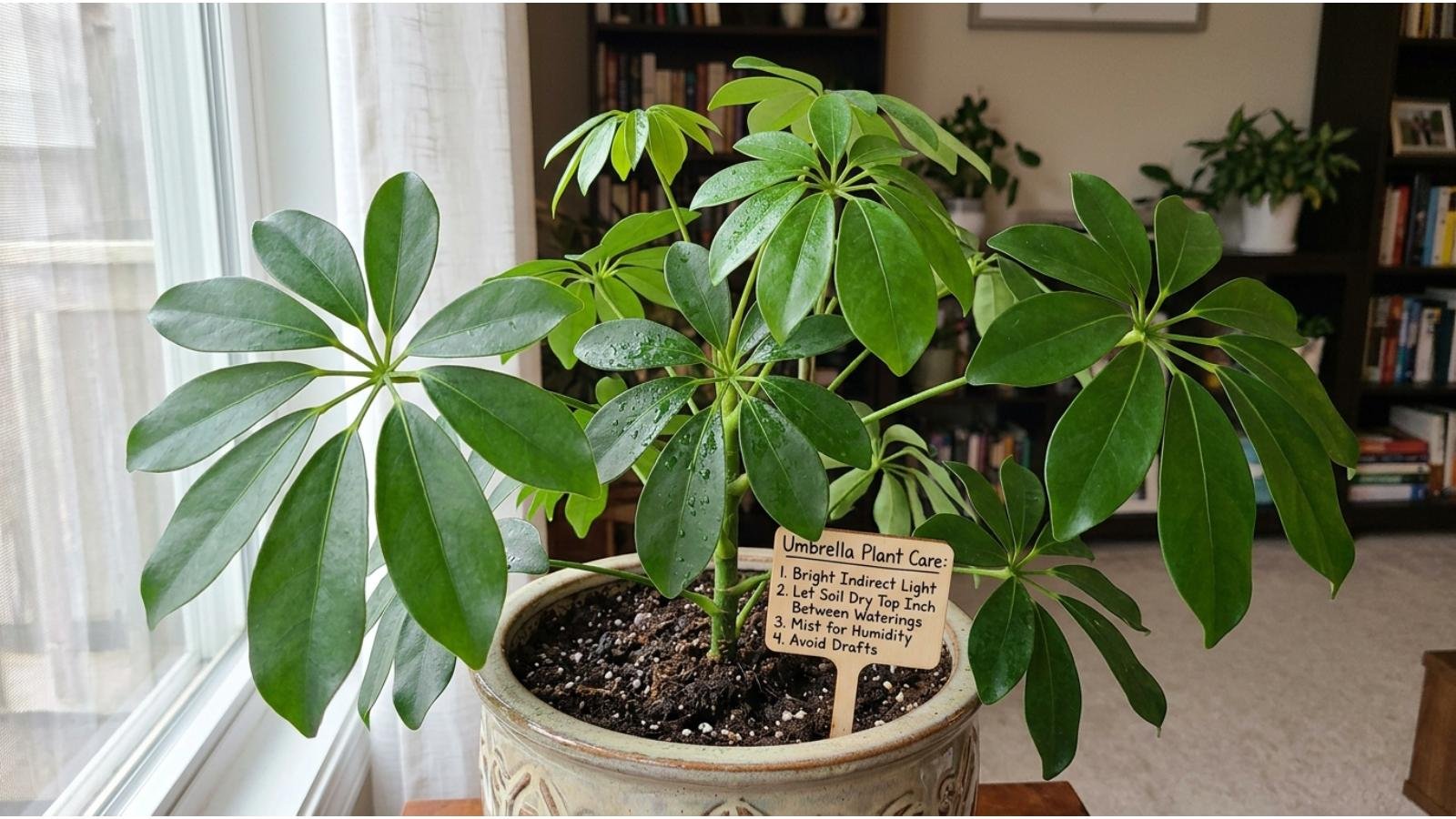
Umbrella plant care is mainly about providing bright, indirect light, well-draining soil, careful watering, moderate humidity, and warm temperatures. Let the upper layer of soil dry before watering again, and avoid leaving the roots in standing water. Schefflera plants also benefit from regular pruning, occasional fertilizing during active growth, and protection from cold drafts. Yellow leaves, leaf drop, and weak growth are usually signs that light, watering, temperature, or root conditions need adjustment.
Introduction
Umbrella plant care is relatively straightforward once you understand how Schefflera responds to light and moisture. These attractive tropical plants are popular as indoor foliage plants because their glossy, finger-like leaflets create a full, tree-like appearance without requiring constant attention.
The biggest mistake beginners make is treating an umbrella plant like a thirsty tropical plant that needs frequent watering. In reality, consistently wet soil can create more problems than occasional dryness. The goal is to keep the plant growing steadily without keeping its roots saturated.
With the right combination of light, watering, soil, temperature, pruning, and feeding, an umbrella plant can remain attractive for years and can be trained into either a bushier houseplant or a taller, tree-like specimen.
Understanding the Umbrella Plant
The name umbrella plant commonly refers to Schefflera species, particularly plants grown as indoor foliage plants. Depending on the variety, the plant may develop multiple stems or a more upright central trunk.
Its distinctive leaves are divided into several leaflets that spread outward from a central point, giving them an umbrella-like appearance.
Two forms commonly encountered in cultivation include:
- Schefflera arboricola, often called dwarf umbrella tree.
- Schefflera actinophylla, a larger species that can become tree-like under suitable conditions.
For indoor growing, dwarf varieties are generally easier to manage because they stay more compact.
Important: Care can vary somewhat between species and cultivars, so always consider the plant’s actual size, growth habit, and growing environment.
How Much Light Does an Umbrella Plant Need?
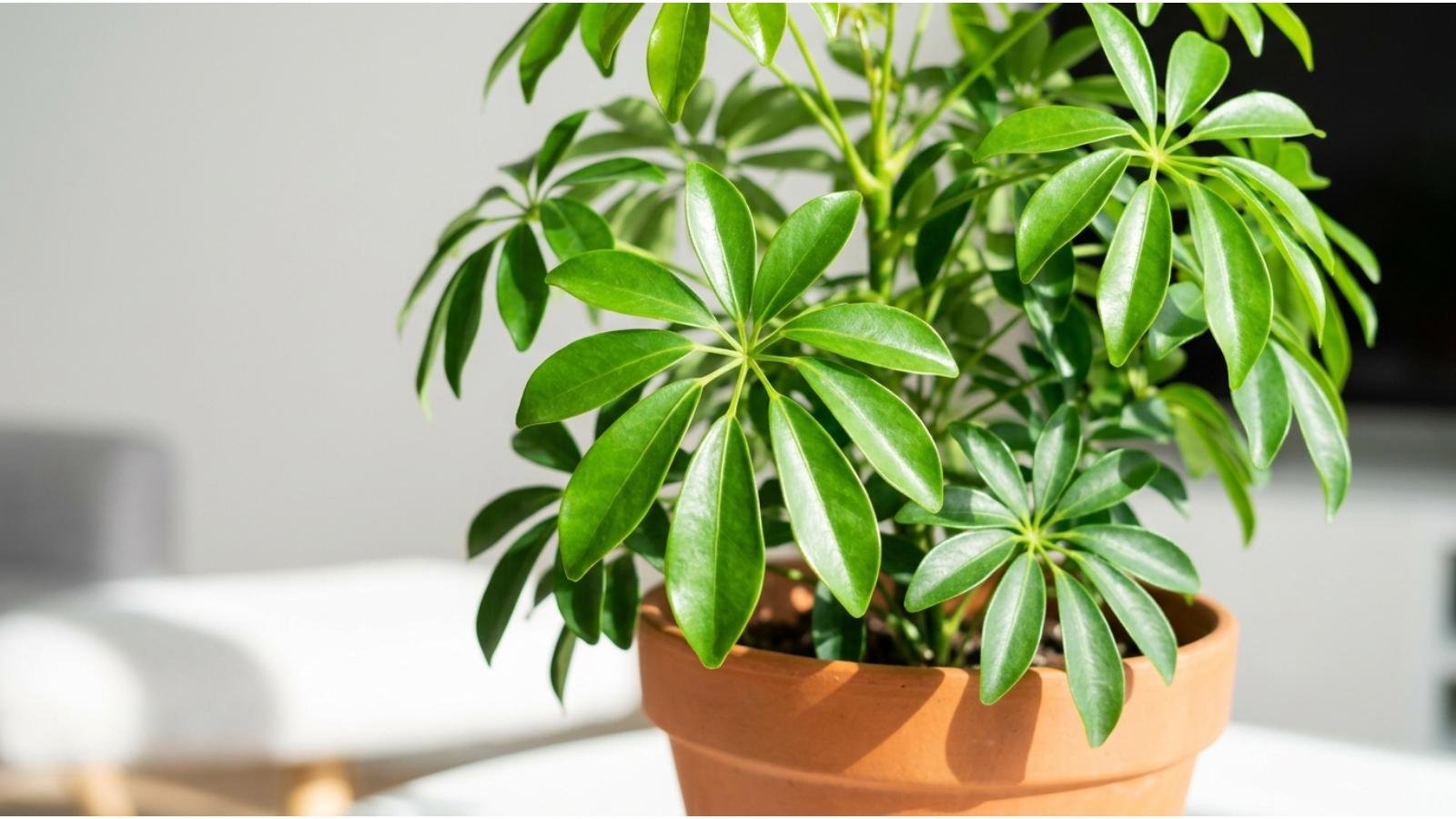
Umbrella plants grow best in bright, indirect light.
A position close to a bright window can work well, provided intense direct sunlight does not scorch the foliage.
Good indoor locations include:
- Near an east-facing window.
- A few feet from a bright south- or west-facing window.
- A bright room with filtered sunlight.
- Under a suitable grow light when natural light is limited.
A plant receiving too little light may become:
- Leggy.
- Sparse.
- Slow-growing.
- Inclined toward the window.
- Smaller-leaved.
On the other hand, harsh direct afternoon sunlight through glass can cause pale, bleached, or scorched patches.
A useful practical test
If new growth is long and widely spaced between leaves, the plant may need more light. If foliage develops brown or bleached areas on the window-facing side after strong sun exposure, reduce the intensity.
Image Suggestion: Show an umbrella plant in bright indirect light compared with a stretched plant growing in a dim corner.
Watering Umbrella Plants Correctly
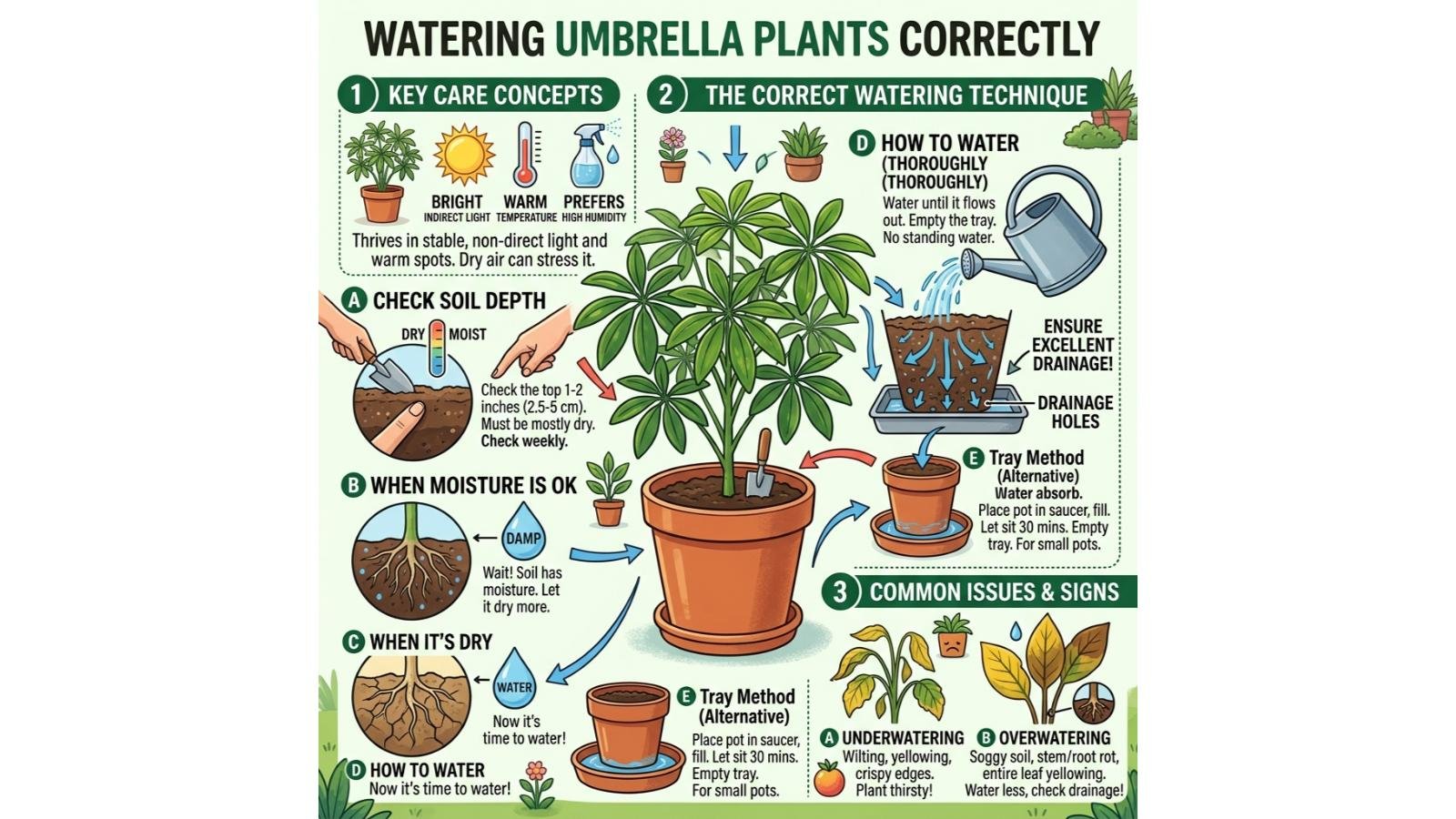
Watering is one of the most important parts of umbrella plant care.
Rather than watering according to a fixed calendar, check the soil.
Insert your finger into the upper portion of the potting mix. If the surface has dried and the upper layer feels noticeably dry, it is generally time to water.
When watering:
- Water thoroughly until excess moisture drains from the bottom.
- Allow the pot to drain completely.
- Empty water collected in the saucer or outer container.
- Wait until the soil has partially dried before watering again.
Why overwatering causes trouble
Roots need access to oxygen as well as water. Permanently saturated soil reduces air spaces around the roots and can create conditions associated with root deterioration.
Common signs of excessive moisture include:
- Yellowing leaves.
- Sudden leaf drop.
- Soft or deteriorating roots.
- Persistently wet soil.
- Unpleasant soil odor.
- Poor new growth.
A common beginner mistake is adding small amounts of water every day. This can keep the root zone continuously damp without providing the healthy wet-dry cycle the plant needs.
What Soil Is Best for an Umbrella Plant?
Umbrella plants need a potting mix that holds some moisture while draining efficiently.
A suitable indoor mix can contain:
- Quality indoor potting mix.
- Perlite or another aerating amendment.
- Organic material that improves structure.
The exact recipe does not need to be complicated. The important characteristic is that water should move through the root zone instead of forming a permanently soggy mass.
Signs the soil may be unsuitable
Consider changing the mix if:
- Water remains on the surface for a long time.
- The soil stays wet for many days.
- The mix has become heavily compacted.
- Roots are repeatedly suffering from excessive moisture.
Image Suggestion: Cross-section illustration showing a well-draining umbrella plant potting mix versus compacted, waterlogged soil.
Choosing the Right Pot
The container should have drainage holes.
A decorative pot without drainage can trap excess water around the roots, even when the plant appears to be watered carefully.
When repotting, avoid dramatically increasing the container size. An excessively large pot holds more unused soil, which can remain wet for longer after watering.
A good approach is to move the plant into a slightly larger container when its existing root system has substantially filled the pot.
Temperature and Humidity Requirements
Umbrella plants prefer warm indoor conditions and generally do not appreciate sudden exposure to cold.
Keep them away from:
- Cold drafts.
- Frequently opened exterior doors during cold weather.
- Very cold windows.
- Strong heating vents.
- Air-conditioning outlets blowing directly onto foliage.
Normal household humidity can often be sufficient, especially when watering and lighting are appropriate.
If indoor air becomes exceptionally dry, you may notice:
- Crispy leaf edges.
- Increased leaf stress.
- Slower growth.
Instead of relying only on misting, focus first on proper watering, adequate light, and a stable environment.
Fertilizing Umbrella Plants
Umbrella plants benefit from regular feeding during periods of active growth.
Use a balanced houseplant fertilizer according to its label instructions rather than assuming more fertilizer means faster growth.
Overfertilization can cause salt accumulation in the potting mix and may damage roots.
Practical feeding approach
During active growth:
- Feed periodically according to the fertilizer’s recommended dilution and frequency.
- Water appropriately rather than fertilizing severely dry soil.
- Reduce or stop routine feeding when growth naturally slows.
If the plant is growing slowly because of inadequate light, adding more fertilizer will not solve the underlying problem.
Expert Tip: Fix environmental problems before increasing fertilizer. A plant cannot compensate for poor light with extra nutrients.
Pruning Umbrella Plants for Fuller Growth
Pruning is useful when an umbrella plant becomes tall, sparse, or uneven.
Cutting back overly long stems can encourage a more compact appearance, although the exact response depends on the plant’s condition and growing environment.
To encourage bushier growth:
- Identify excessively long or bare stems.
- Use clean, sharp pruning tools.
- Make cuts just above a suitable leaf node.
- Remove damaged or unhealthy growth.
- Give the plant adequate light after pruning.
Avoid removing a large percentage of healthy foliage at once unless there is a specific reason to do so.
Regular light pruning is often easier on the plant than allowing it to become severely overgrown and then cutting it back dramatically.
Image Suggestion: Before-and-after diagram showing where to prune a leggy umbrella plant to encourage branching.
How to Repot an Umbrella Plant
Repotting becomes useful when the plant has substantially outgrown its container or the potting mix has deteriorated.
Possible signs include:
- Roots emerging from drainage holes.
- The plant drying out unusually quickly.
- A severely compacted potting mix.
- Roots tightly circling the root ball.
- Noticeably reduced growth despite suitable conditions.
Repotting steps
- Choose a container with drainage holes.
- Select a pot only moderately larger than the existing one.
- Prepare fresh, well-draining potting mix.
- Carefully remove the plant from its container.
- Inspect the roots.
- Remove clearly damaged or deteriorated roots when appropriate.
- Position the plant at approximately the same depth.
- Fill around the root ball with fresh mix.
- Water thoroughly and allow excess water to drain.
Do not bury the stem deeper than it was previously planted.
Why Is My Umbrella Plant Losing Leaves?
Leaf drop can have several causes, so avoid assuming that every falling leaf means the plant needs more water.
Common causes include:
| Problem | Possible clues | What to check |
|---|---|---|
| Too much water | Yellow leaves, wet soil | Drainage and watering frequency |
| Too little water | Dry soil, drooping foliage | Soil moisture |
| Low light | Leggy growth, sparse foliage | Window position |
| Temperature stress | Sudden leaf drop | Drafts and temperature changes |
| Root problems | Persistent decline | Root condition and soil |
| Environmental change | Drop after moving | Recent relocation |
A recently purchased plant may also react to a major change in light, temperature, humidity, or watering routine.
The key is to look for patterns
One yellow leaf does not necessarily indicate a serious problem. Repeated yellowing combined with wet soil, however, provides a much stronger clue that watering or root conditions need attention.
Why Are Umbrella Plant Leaves Turning Yellow?
Yellow leaves can result from several different problems.
If the soil stays wet
Excess moisture should be investigated first. Check drainage and whether the container is sitting in collected water.
If the soil is extremely dry
Underwatering can also cause foliage stress and discoloration.
If the plant is growing in very low light
Insufficient light can contribute to weak growth and poor overall plant condition.
If older leaves occasionally yellow
A small amount of natural aging can occur as plants replace older foliage.
Practical Tip: Never diagnose a yellow leaf from color alone. Check the soil moisture, light, temperature, drainage, and recent changes to the plant’s environment.
Why Is My Umbrella Plant Drooping?
Drooping can happen when the plant is significantly thirsty, but it can also occur when the root system is stressed by excessive moisture.
Check the soil before watering.
Dry soil plus drooping
If the soil is very dry, provide a thorough watering and allow excess water to drain.
Wet soil plus drooping
Do not automatically add more water. Inspect drainage and allow the root zone to receive air.
This distinction is important because watering an already waterlogged plant can make the underlying problem worse.
Brown Leaves and Brown Leaf Tips
Brown foliage can develop because of environmental stress, inconsistent moisture, dry indoor conditions, or excessive fertilizer salts.
Check:
- Soil moisture.
- Fertilizer frequency.
- Airflow.
- Humidity.
- Light intensity.
- Root condition.
Do not immediately cut away every brown section. First identify the cause, otherwise new damage may continue appearing.
Once the environmental issue is corrected, damaged tissue will not turn green again, but healthy new growth should provide a better indication of recovery.
Pests That Can Affect Umbrella Plants
Umbrella plants can occasionally experience common indoor plant pests.
Watch for:
- Spider mites.
- Scale insects.
- Mealybugs.
- Aphids.
Inspect the undersides of leaves and the areas where leaves join stems.
Early detection makes pest management considerably easier.
If you notice sticky residue, tiny moving insects, cotton-like clusters, webbing, or unusual leaf stippling, examine the plant closely rather than waiting for the problem to spread.
Image Suggestion: Close-up identification guide showing common umbrella plant pests and where to inspect for them.
Umbrella Plant Care Through the Seasons
Spring
Increasing light and longer days can trigger new growth. Gradually resume active feeding if appropriate for your plant.
Summer
Monitor soil moisture more frequently because warmer conditions and stronger light can increase water use. Protect foliage from excessively intense direct sun.
Fall
As light levels decrease, the plant may use water more slowly. Adjust watering rather than maintaining a summer schedule automatically.
Winter
Growth often slows indoors. Reduce routine fertilizing and be especially careful about overwatering. Protect the plant from cold drafts and very cold surfaces.
Key principle: Your watering schedule should respond to the plant’s environment, not simply the calendar.
How to Make an Umbrella Plant Grow Faster
There is no single shortcut that reliably produces fast growth.
Instead, optimize the conditions that support healthy growth:
- Provide sufficient bright, indirect light.
- Use a well-draining growing medium.
- Water when the soil has appropriately dried.
- Keep temperatures stable and warm.
- Feed during active growth when appropriate.
- Repot when the root system genuinely needs more space.
- Prune strategically to control shape.
If growth is slow, start with light. Many indoor plants receive far less usable light than their owners realize.
Adding fertilizer to a plant sitting in a dark corner usually does not address the primary limitation.
How to Make an Umbrella Plant Bushier
A fuller plant usually requires a combination of adequate light and strategic pruning.
If stems become long and widely spaced, move the plant to a brighter location with suitable indirect light. Then prune selected stems to encourage a more compact shape.
Rotate the container periodically if growth is strongly directed toward one side of the light source.
This helps create a more balanced appearance over time.
Can You Grow an Umbrella Plant Outdoors?
Some Schefflera types can be grown outdoors in suitable warm climates, but outdoor suitability depends heavily on the species and local conditions.
Outdoor plants may receive considerably more light than indoor specimens, so a plant moved outside should be acclimated gradually rather than immediately exposed to intense sun.
Consider:
- Temperature.
- Frost risk.
- Sun intensity.
- Wind exposure.
- Drainage.
- Local climate.
A plant that thrives in a protected indoor environment may experience leaf scorch or environmental shock if suddenly placed outdoors in strong sunlight.
Umbrella Plant Propagation
Umbrella plants can be propagated from stem cuttings under suitable conditions.
A basic approach is:
- Select a healthy stem.
- Make a clean cutting using a sterile tool.
- Remove unnecessary lower foliage.
- Place the cutting into an appropriate propagation medium.
- Maintain suitable warmth and moisture.
- Provide bright, indirect light.
- Wait for root development before treating the new plant as an established specimen.
Propagation success varies with cutting quality, environmental conditions, plant health, and technique.
Image Suggestion: Step-by-step umbrella plant propagation diagram from stem cutting to rooted plant.
Common Umbrella Plant Care Mistakes
Watering on a fixed schedule
Plants do not use identical amounts of water every week. Seasonal changes and indoor conditions affect moisture loss.
Using a pot without drainage
This makes controlling root-zone moisture much harder.
Keeping the plant in a dark corner
Umbrella plants tolerate a range of indoor conditions, but tolerance does not mean optimal growth.
Fertilizing a stressed plant
Nutrients cannot replace proper light, drainage, and watering.
Repotting too aggressively
Moving a small root system into a very large pot can leave excess soil wet for too long.
Ignoring recent environmental changes
Moving a plant from a bright nursery environment into a dim room can produce stress even when the watering routine remains unchanged.
A Simple Umbrella Plant Care Routine
For beginners, this routine keeps care practical:
Weekly check
- Inspect leaves for pests.
- Check soil moisture.
- Look for new growth.
- Rotate the plant if needed.
When watering is needed
- Water thoroughly.
- Allow complete drainage.
- Never leave the pot sitting in water.
Monthly observation
- Check whether growth is becoming leggy.
- Inspect for pests.
- Look for salt buildup or deteriorating soil.
- Evaluate whether the plant is receiving enough light.
During active growth
- Feed according to the fertilizer label.
- Prune lightly when necessary.
- Monitor new growth for signs of stress.
Umbrella Plant Care at a Glance
| Care factor | Recommended approach |
|---|---|
| Light | Bright, mostly indirect light |
| Water | Water after the soil has partially dried |
| Soil | Well-draining indoor potting mix |
| Pot | Container with drainage holes |
| Temperature | Warm, stable indoor conditions |
| Humidity | Moderate household humidity is generally suitable |
| Fertilizer | Balanced houseplant fertilizer during active growth |
| Pruning | Remove leggy, damaged, or unwanted growth |
| Repotting | When roots or soil conditions indicate the need |
| Pests | Inspect regularly for common houseplant pests |
Frequently Asked Questions
How often should I water an umbrella plant?
There is no universal weekly schedule. Check the soil first and water thoroughly when the upper portion has dried sufficiently. Environmental conditions such as light, temperature, pot size, and season affect how quickly the plant uses water.
Does an umbrella plant need direct sunlight?
It can tolerate some direct light depending on the variety and acclimation, but bright indirect light is generally a safer indoor starting point. Strong direct sunlight through glass can scorch foliage.
Why are the leaves on my umbrella plant falling off?
Leaf drop can result from overwatering, underwatering, insufficient light, temperature changes, root problems, or sudden environmental changes. Check the soil and recent changes before deciding how to respond.
Can an umbrella plant recover from overwatering?
It may recover if the problem is identified early and the root environment is corrected. Improve drainage, stop unnecessary watering, and inspect the roots if the plant continues declining.
Should I mist my umbrella plant?
Misting is not a substitute for proper humidity management or correct watering. Focus first on light, soil moisture, drainage, and stable environmental conditions.
How do I make my umbrella plant bushier?
Provide adequate light and prune selected long stems to encourage a more compact form. Regular rotation can also help prevent strongly one-sided growth.
Is an umbrella plant good for beginners?
Yes, it can be a manageable houseplant when grown in suitable light and watered according to soil conditions. The main challenge for beginners is often avoiding consistently wet soil.
When should I repot my umbrella plant?
Repot when the plant has substantially outgrown its container, roots are becoming crowded, or the existing growing medium has deteriorated. Avoid automatically repotting every year.
Can umbrella plants grow in low light?
They may survive in lower light, but growth is typically weaker and more sparse. A brighter location with indirect light generally supports better growth.
Why is my umbrella plant getting leggy?
Low light is a common reason. Move the plant gradually toward a brighter location with suitable indirect light and prune overly long stems to improve its shape.
Conclusion
Successful umbrella plant care comes down to maintaining the right balance rather than following a rigid watering calendar. Give Schefflera bright indirect light, a well-draining root environment, thorough but appropriately timed watering, warm conditions, and occasional feeding during active growth.
When problems appear, inspect the whole growing environment instead of treating symptoms individually. Yellow leaves, drooping, brown tips, and leaf drop can have multiple causes, so checking soil moisture, light, drainage, roots, temperature, and recent environmental changes will usually lead you closer to the real solution.
The most useful habit is simple: check the plant and its soil before reaching for the watering can.