Quick Answer
Firecracker plant (Russelia equisetiformis) grows best in warm conditions, bright sunlight, and well-draining soil. Water it regularly while it establishes, then allow the soil to dry slightly between waterings. Prune overgrown stems to maintain its shape, fertilize lightly during active growth, and protect it from freezing temperatures. With proper care, this attractive cascading plant can produce masses of tubular flowers and attract hummingbirds and butterflies.
Introduction
Firecracker plant care is fairly simple when you understand its basic growing requirements. This unusual flowering plant is loved for its long, slender stems and clusters of bright tubular flowers that create a fountain-like appearance.
Firecracker plants are especially attractive when grown along garden borders, in large containers, hanging baskets, or where their stems can cascade over a wall. Their flowers can also make the garden more inviting to hummingbirds and butterflies.
The biggest mistakes usually involve too much water, insufficient sunlight, poor drainage, and inadequate protection from cold. Getting these few factors right can make a dramatic difference in flowering and overall plant health.
What Is a Firecracker Plant?
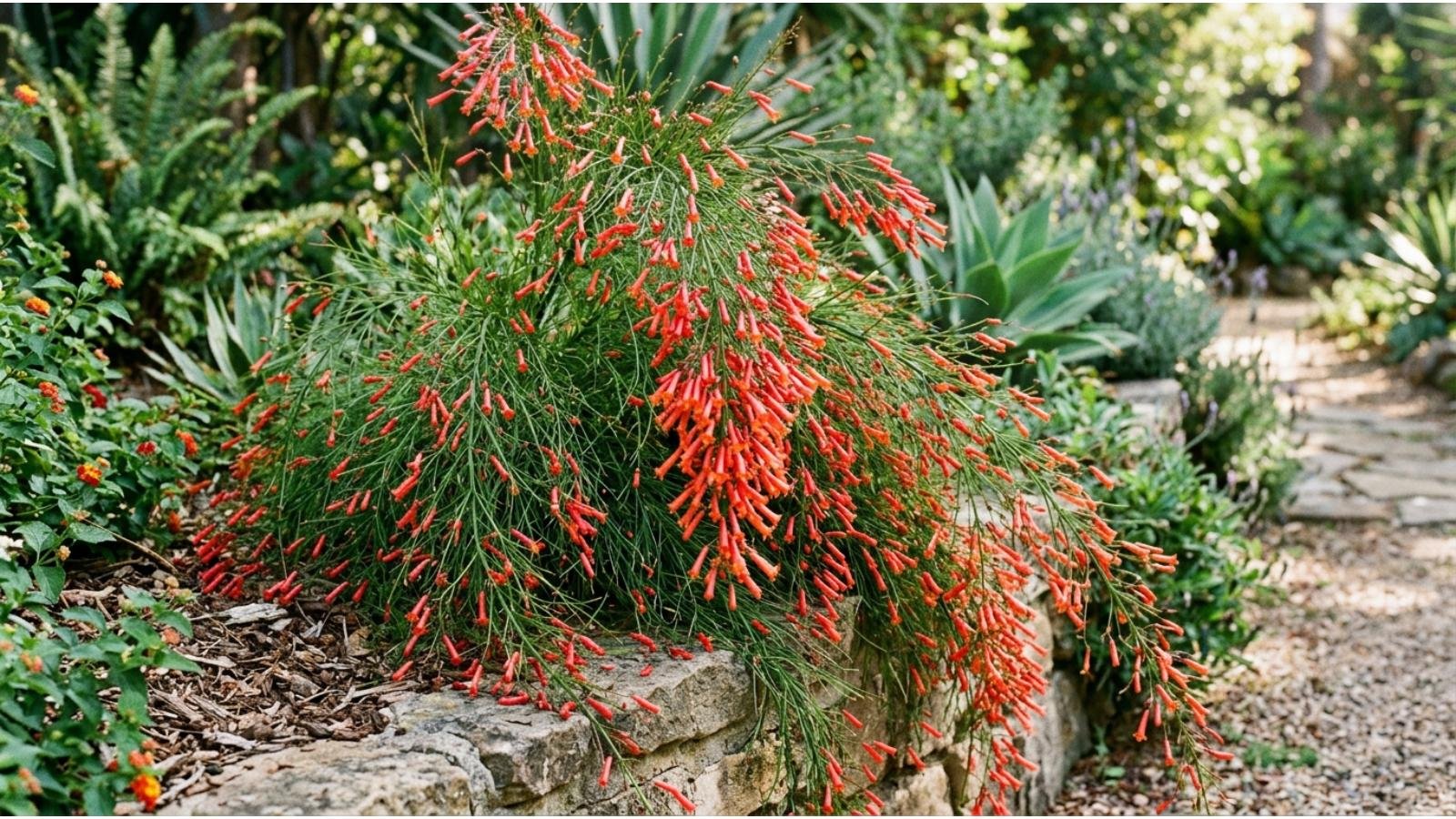
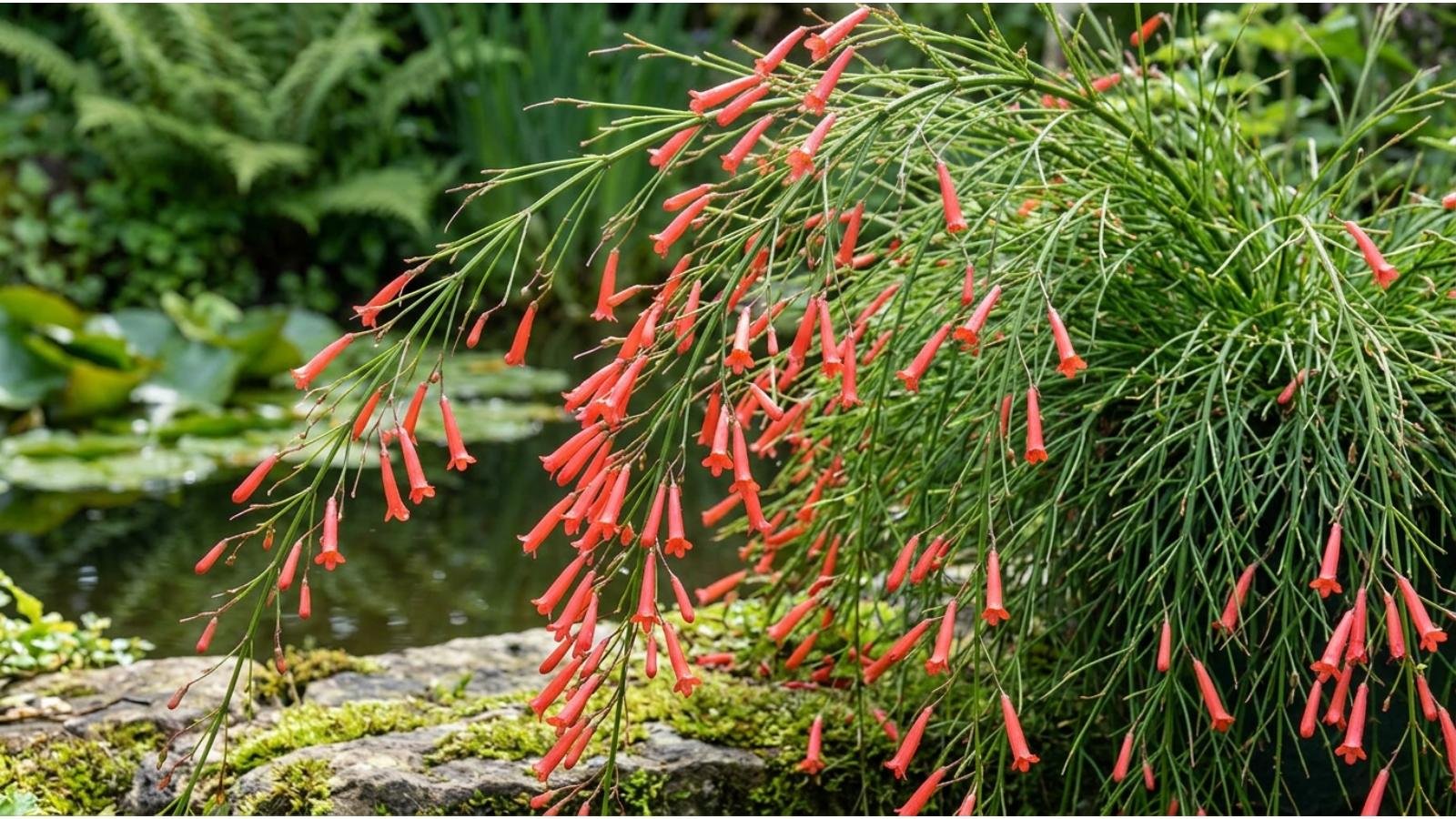
Firecracker plant is the common name for Russelia equisetiformis. It is a warm-climate ornamental plant known for its narrow, arching stems and colorful tubular flowers.
The plant develops a fountain-like growth habit. Instead of forming a compact upright shrub, its stems gradually bend outward and downward, making it particularly useful for containers and raised planting areas.
Firecracker Plant Characteristics
| Feature | Details |
|---|---|
| Botanical name | Russelia equisetiformis |
| Common name | Firecracker plant |
| Growth habit | Arching and cascading |
| Flower shape | Tubular |
| Common flower color | Red |
| Light requirement | Full sun to partial shade |
| Soil | Well-draining |
| Water requirement | Moderate |
| Drought tolerance | Good once established |
| Container growing | Suitable |
| Pollinator attraction | Hummingbirds and butterflies |
| Cold tolerance | Limited |
Image Suggestion: Show a mature firecracker plant with its cascading stems and tubular flowers clearly visible.
How Much Sun Does Firecracker Plant Need?
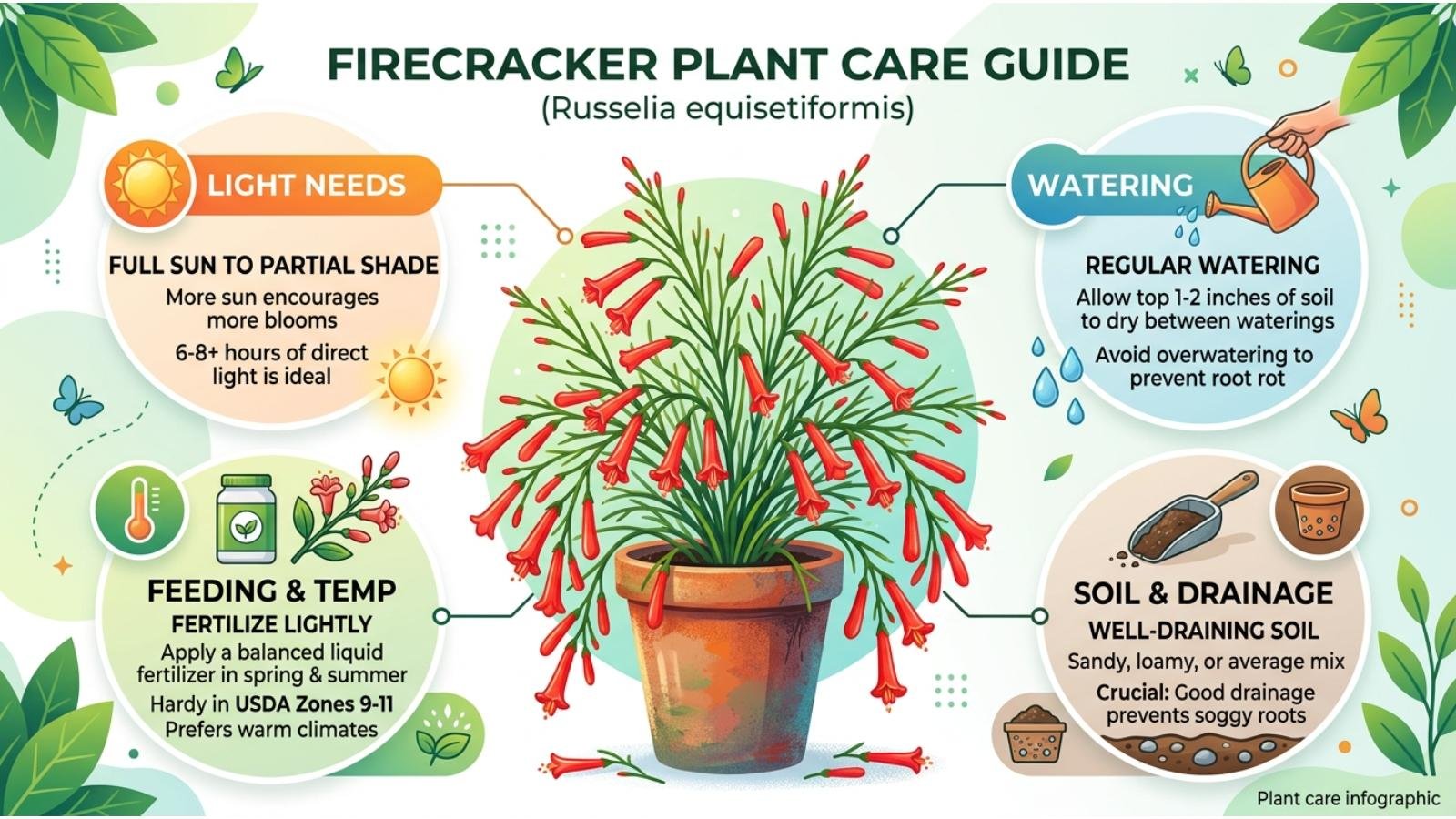
Firecracker plant performs best in full sun. Aim for around six or more hours of direct sunlight when possible.
Plenty of sunlight helps the plant maintain strong growth and encourages better flowering. A plant growing in heavy shade may remain alive but become less vigorous and produce fewer flowers.
Signs Your Firecracker Plant Needs More Light
- Few or no flowers.
- Weak or stretched stems.
- Sparse growth.
- Reduced overall vigor.
- An unusually open appearance.
If your plant is growing leaves and stems but producing very few flowers, check the amount of sunlight before adding extra fertilizer.
A location with strong morning and afternoon sunlight is usually a good choice.
How to Water Firecracker Plant
Watering requirements change as the plant matures.
A newly planted firecracker plant needs consistent moisture while its roots become established. Once established, it becomes considerably more tolerant of dry conditions.
The goal is to provide enough water without leaving the roots sitting in saturated soil.
A Simple Watering Routine
- Check the soil before watering.
- Water thoroughly when the upper soil begins to dry.
- Allow excess water to drain away.
- Water more frequently during prolonged hot, dry weather.
- Reduce watering when rainfall is frequent or temperatures become cooler.
- Avoid maintaining constantly soggy soil.
Avoid Overwatering
One of the most common mistakes is watering on a fixed schedule without checking the soil.
If the soil stays wet for long periods, roots may become stressed and the plant can begin declining.
Practical tip: Don’t automatically water because several days have passed. Feel the soil first and consider recent rainfall and temperature.
Best Soil for Firecracker Plant
Firecracker plant is not extremely demanding about soil type, but excellent drainage is essential.
A good growing medium should allow water to move through the root zone rather than remaining trapped around the roots.
For Garden Beds
If your soil is heavy or compacted:
- Improve its structure with organic matter.
- Avoid low areas where water collects.
- Create raised planting areas if drainage is consistently poor.
- Avoid compacting the soil around the roots.
For Containers
Use a quality potting mix that drains freely.
The container must have drainage holes. Decorative containers without proper drainage can cause water to accumulate around the roots.
Temperature Requirements
Firecracker plant prefers warm weather and can struggle when exposed to freezing temperatures.
It is best suited to warm climates where winter temperatures remain relatively mild.
Cold weather may cause:
- Browning stems.
- Leaf loss.
- Reduced flowering.
- Dieback.
- Severe damage after freezing conditions.
Winter Care
If you live in a colder climate, growing the plant in a container can make winter protection easier.
Before freezing weather arrives:
- Move container plants to a protected location.
- Keep them somewhere warm and bright.
- Reduce watering if growth slows.
- Avoid keeping the soil constantly wet.
- Return the plant outdoors gradually once temperatures become suitable.
If a mature outdoor plant experiences minor cold damage, wait until the weather improves before deciding how much damaged growth needs to be removed.
How to Fertilize Firecracker Plant
Firecracker plant generally does not require excessive fertilizer.
A balanced fertilizer applied during active growth can help support healthy development, especially when the plant is grown in a container.
However, more fertilizer does not necessarily mean more flowers.
If flowering is poor, first investigate:
- Sunlight.
- Watering.
- Drainage.
- Temperature.
- Pruning.
- Plant maturity.
Excessive fertilizer can encourage vigorous vegetative growth without solving the actual reason for poor flowering.
How to Prune Firecracker Plant
Pruning helps control size, remove damaged growth, and maintain the appearance you want.
Firecracker plant naturally produces long, arching stems. This cascading shape is one of its most attractive characteristics, so you don’t need to force it into a compact shape.
When to Prune
Prune when:
- Stems become too long.
- The plant becomes untidy.
- Growth becomes damaged.
- You need to control its size.
- You want to encourage fresh growth.
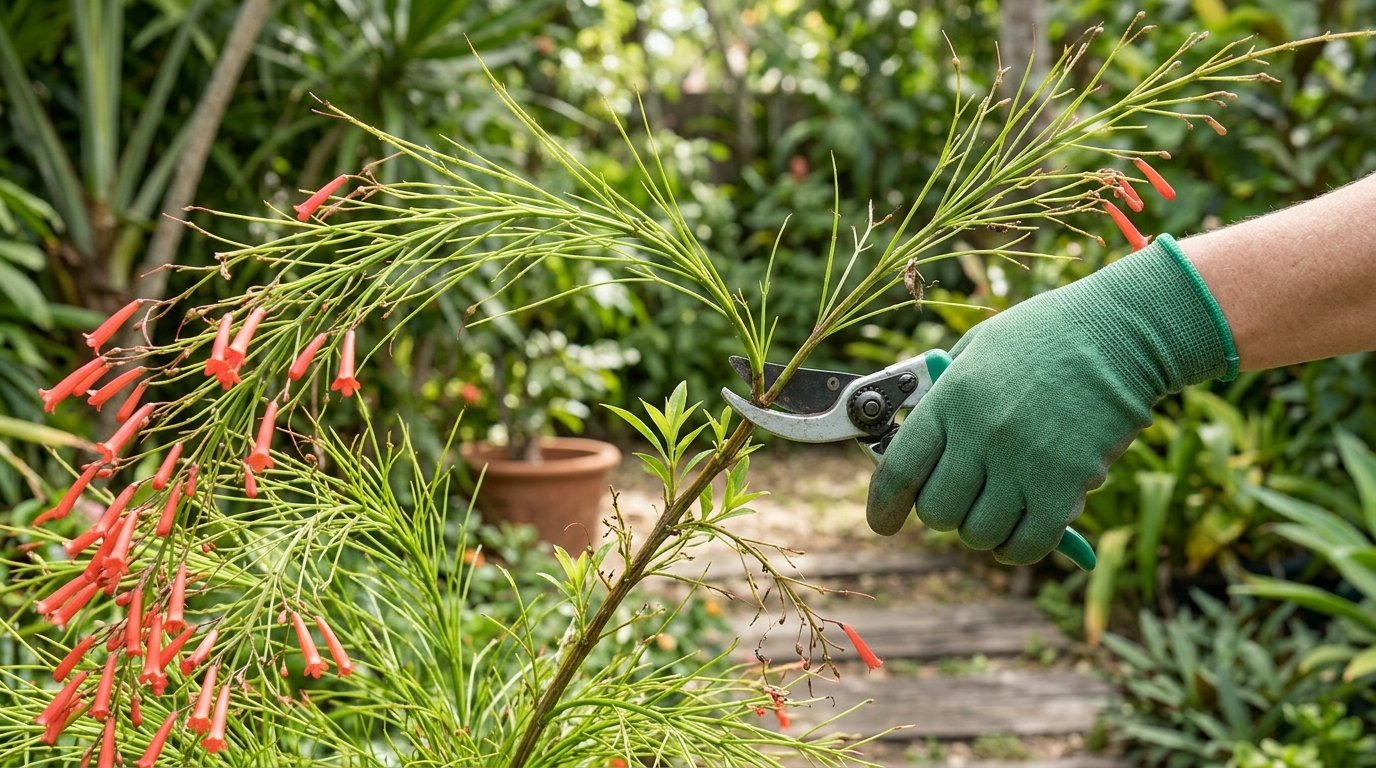
Pruning Steps
- Remove dead or damaged stems.
- Cut back excessively long growth.
- Remove weak or badly positioned stems.
- Make clean cuts with sharp pruning tools.
- Avoid removing large amounts of healthy growth unnecessarily.
Image Suggestion: Create a step-by-step pruning diagram showing which stems to remove and which healthy cascading stems to keep.
How to Encourage More Flowers
If your firecracker plant is not flowering well, don’t immediately assume it needs fertilizer.
Work through the following checklist.
Give It More Sun
Insufficient sunlight is one of the first things to investigate.
Check Your Watering
Both severe drought and constantly wet soil can reduce plant performance.
Protect It From Cold
Cold temperatures can interrupt growth and flowering.
Avoid Excessive Pruning
Heavy pruning at the wrong time can remove developing flowering growth.
Don’t Overfeed
Excessive fertilizer can encourage foliage and stem growth instead of producing the flowering display you want.
Growing Firecracker Plant in Containers
Firecracker plant is an excellent candidate for large containers because its long stems can spill over the edges.
Choose a container that has:
- Good drainage holes.
- Enough space for root development.
- A stable base.
- Quality, well-draining potting soil.
Container plants may dry out faster than plants growing in garden soil, especially during hot weather.
Check the soil regularly instead of relying on a strict watering calendar.
Don’t Use an Oversized Container
A common beginner mistake is placing a small plant into a very large pot.
A huge volume of soil can remain wet for a long time after watering. Choose a container appropriate for the current root system and increase the size gradually when necessary.
Firecracker Plant in Hanging Baskets
The cascading growth habit makes firecracker plant particularly attractive in hanging baskets.
As the stems extend over the edge, they create a fountain-like display of flowers.
For the best effect:
- Use a sturdy hanging basket.
- Provide plenty of sunlight.
- Keep drainage excellent.
- Monitor moisture during hot weather.
- Trim only when the stems become excessively long.
Image Suggestion: Show a mature firecracker plant overflowing from a hanging basket with flowers hanging below the container.
How to Propagate Firecracker Plant
Firecracker plant can be propagated from stem cuttings.
Stem Cutting Method
- Choose a healthy stem.
- Make a clean cutting using sanitized pruning shears.
- Remove unnecessary lower growth.
- Place the cutting into a suitable propagation medium.
- Keep the medium lightly moist.
- Provide warmth and bright indirect light.
- Wait for roots to develop.
- Gradually introduce the young plant to stronger sunlight.
Avoid keeping propagation material soaked. Excess moisture can encourage rot before roots have properly developed.
Common Firecracker Plant Care Mistakes
1. Overwatering
Keeping the soil constantly wet can cause root problems.
Better approach: Water according to soil moisture, weather, and plant needs.
2. Too Much Shade
The plant may survive in low light but produce disappointing flowering.
Better approach: Give it a brighter location whenever possible.
3. Poor Drainage
Even good watering practices cannot compensate for soil that stays saturated.
Better approach: Improve drainage before increasing irrigation.
4. Ignoring Winter Temperatures
Warm-climate plants can suffer significant damage from freezing weather.
Better approach: Protect or move container plants before severe cold arrives.
5. Excessive Fertilizing
Adding fertilizer repeatedly does not guarantee more flowers.
Better approach: Correct light, watering, and drainage problems first.
6. Over-Pruning
Removing too much healthy growth can reduce the plant’s natural cascading beauty.
Better approach: Prune selectively and preserve healthy stems.
Why Is My Firecracker Plant Not Blooming?
Several factors can cause poor flowering.
| Possible Problem | What to Check |
|---|---|
| Not enough sunlight | Move to a brighter location |
| Excessive shade | Increase direct sunlight |
| Incorrect watering | Check soil moisture before watering |
| Poor drainage | Make sure water can escape |
| Cold temperatures | Protect from cold |
| Excess fertilizer | Reduce unnecessary feeding |
| Heavy pruning | Allow new growth to develop |
| Young plant | Give it time to establish |
Start with sunlight and watering because these are often easier to correct than more complicated problems.
Why Is My Firecracker Plant Turning Brown?
Brown stems or foliage can have several causes.
Too Little Water
During extreme heat or prolonged dry weather, insufficient moisture can cause stress.
Too Much Water
Constantly wet soil can damage the root system and eventually cause declining growth.
Cold Damage
A sudden cold event can cause browning and dieback.
Poor Growing Conditions
Inadequate sunlight, compacted soil, or poor drainage can also contribute to declining health.
Look at when the browning started and what happened beforehand. Damage following a freeze points toward a different issue than gradual decline in constantly wet soil.
Can Firecracker Plant Grow in Shade?
Firecracker plant can tolerate some partial shade, but more sunlight generally produces better flowering.
If you are primarily growing the plant for its flowers, select the brightest suitable location.
Heavy shade can result in fewer flowers and less vigorous growth.
Is Firecracker Plant Drought Tolerant?
Yes. Established firecracker plants can tolerate periods of drought.
However, drought tolerance does not mean the plant should never receive water.
New plants need more consistent moisture while establishing their roots. Mature plants can handle dry periods better, particularly when planted in suitable, well-draining soil.
The best approach is to encourage a healthy root system through deep, appropriate watering rather than constant shallow irrigation.
Does Firecracker Plant Attract Hummingbirds?
Yes. The tubular flowers can attract hummingbirds and butterflies.
This makes firecracker plant a useful addition to gardens designed to support pollinators.
For a more wildlife-friendly garden, combine it with other flowering plants that provide nectar throughout different parts of the growing season.
Seasonal Firecracker Plant Care
Spring
Spring is a good time to:
- Remove winter-damaged growth.
- Begin regular watering as growth increases.
- Start feeding if necessary.
- Check for new growth.
- Move protected container plants outdoors gradually.
Summer
During summer:
- Provide plenty of sunlight.
- Monitor soil moisture.
- Water more frequently during extreme heat.
- Watch for pests.
- Allow natural cascading growth to develop.
Fall
As temperatures begin to decline:
- Reduce unnecessary watering.
- Inspect the plant for damage.
- Remove unhealthy growth.
- Prepare container plants for colder conditions.
Winter
In warm climates, the plant may continue growing.
In colder areas, protect it from freezing temperatures or move container-grown plants to a protected location.
Best Location for Firecracker Plant
The ideal location combines:
Sunlight + warmth + good drainage + enough space.
Firecracker plant looks especially attractive when planted where its stems can naturally cascade.
Good locations include:
- Raised beds.
- Retaining walls.
- Large containers.
- Hanging baskets.
- Sunny borders.
- Garden edges.
Give the plant enough room to spread rather than forcing its long stems between crowded plants.
Image Suggestion: Show firecracker plant cascading over a sunny garden wall with surrounding companion plants.
Firecracker Plant Care at a Glance
| Care Factor | Recommendation |
|---|---|
| Sunlight | Full sun is ideal |
| Soil | Well-draining |
| Water | Moderate during establishment |
| Mature watering | Allow some drying between waterings |
| Fertilizer | Light to moderate during active growth |
| Pruning | Remove damaged and unwanted growth |
| Temperature | Warm conditions preferred |
| Cold protection | Important in freezing climates |
| Containers | Very suitable |
| Propagation | Stem cuttings |
| Pollinator value | Attracts hummingbirds and butterflies |
Frequently Asked Questions
How often should I water a firecracker plant?
Water when the soil begins to dry rather than following a rigid schedule. Newly planted specimens need more frequent watering, while established plants can tolerate considerably drier conditions.
Does firecracker plant need full sun?
Full sun is ideal for strong growth and abundant flowering. Some partial shade can be tolerated, but heavy shade may reduce flowering.
Can firecracker plant survive winter?
It can survive winters in warm climates, but freezing temperatures can cause serious damage. Container-grown plants are easier to protect in colder regions.
Should I prune firecracker plant?
Yes, selective pruning can control size, remove damaged stems, and encourage fresh growth. Avoid removing healthy stems unnecessarily.
Can firecracker plant grow in a pot?
Yes. Its naturally cascading growth makes it especially attractive in large containers and hanging baskets.
Why does my firecracker plant have lots of leaves but no flowers?
Check sunlight first. Insufficient light is a common reason for poor flowering. Also examine watering, temperature, pruning, and fertilizer use.
Is firecracker plant drought tolerant?
Established plants are drought tolerant, but newly planted specimens require consistent moisture until their root systems become established.
How do I make my firecracker plant bushier?
Provide sufficient sunlight and prune selectively to encourage new branching. Avoid excessive pruning because the plant’s naturally arching stems are part of its appeal.
Can I grow firecracker plant indoors?
It can be kept indoors temporarily, particularly when protection from cold is necessary. Provide the brightest available location, good drainage, and careful watering.
How fast does firecracker plant grow?
Growth rate depends on warmth, sunlight, water, soil, and overall growing conditions. Plants in warm, sunny conditions generally establish and spread more actively than plants kept in cool or shaded locations.
Conclusion
Successful firecracker plant care is based on a few simple principles: provide plenty of sunlight, use well-draining soil, water according to actual soil moisture, fertilize moderately, and protect the plant from freezing temperatures.
Don’t mistake its naturally long, cascading stems for poor growth. That fountain-like habit is one of its most attractive features. Give the plant enough space to spread, prune selectively, and avoid keeping its roots constantly wet.
With the right combination of sun, warmth, drainage, and sensible watering, firecracker plant can become a striking flowering feature in containers, hanging baskets, raised beds, and sunny landscapes while providing valuable nectar for hummingbirds and butterflies.