Quick Answer
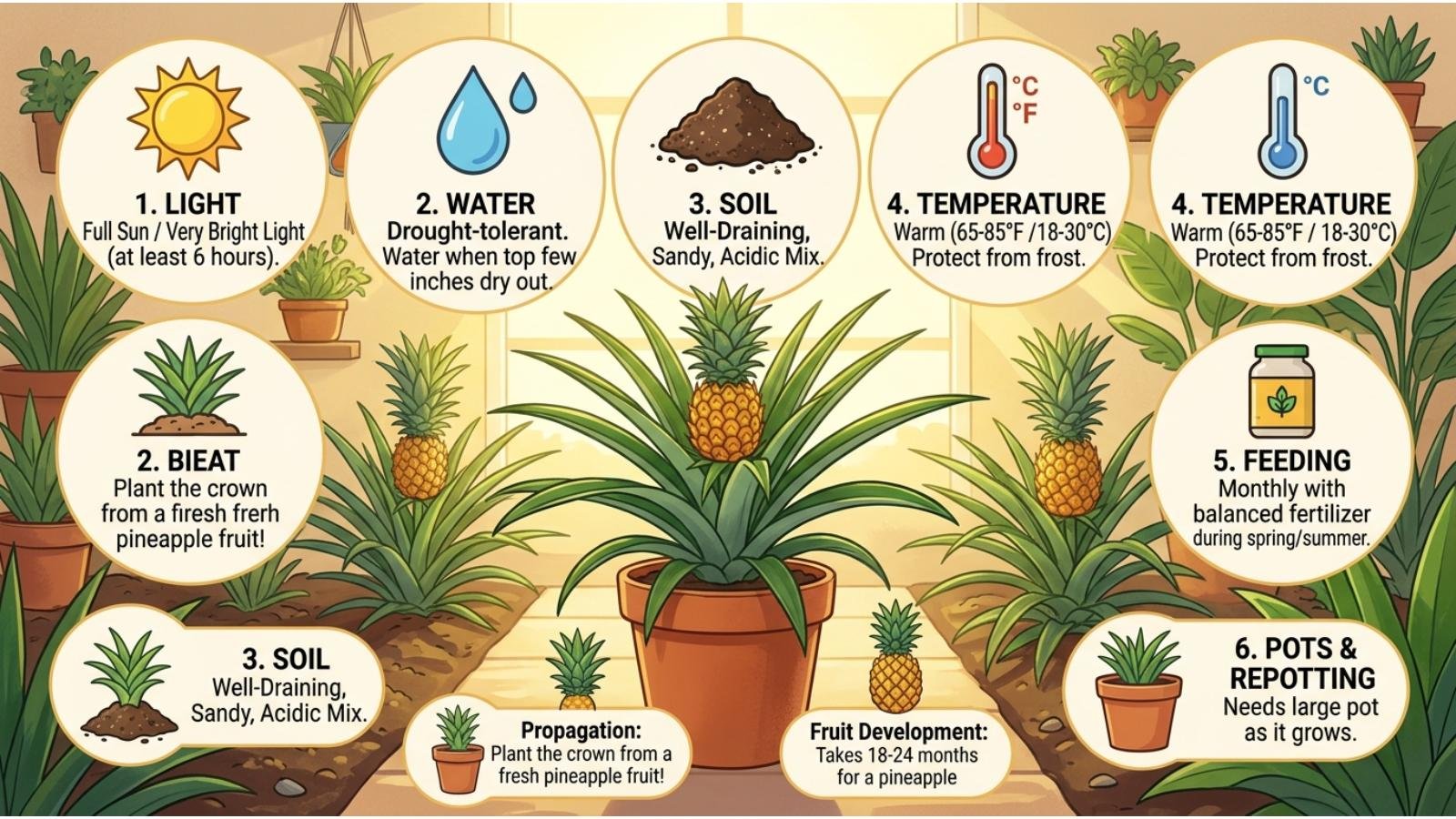
Pineapple plant care mainly requires bright light, warm temperatures, well-draining soil, careful watering, and regular but moderate feeding. Pineapple plants prefer consistent warmth and dislike cold, waterlogged soil. Give them several hours of strong light, water when the growing medium begins to dry, and use a container with drainage holes. With proper care and patience, a healthy pineapple plant can eventually flower and produce fruit, although fruiting may take a long time when grown from a crown.
Introduction
Growing a pineapple at home is surprisingly rewarding. The plant looks attractive even before it produces fruit, and watching a small leafy crown develop into a mature pineapple plant makes the process especially satisfying.
However, successful pineapple plant care is not simply about watering the plant regularly. Pineapples are tropical plants that need warmth and plenty of light, but their roots can suffer when they remain in wet soil. Many beginners also expect a pineapple grown from a grocery-store crown to produce fruit within a few months, when in reality it can take much longer.
The key is to understand what the plant actually needs at each stage of growth. Once you get light, temperature, watering, drainage, and nutrition right, pineapple care becomes much easier.
Pineapple Plant Care Requirements
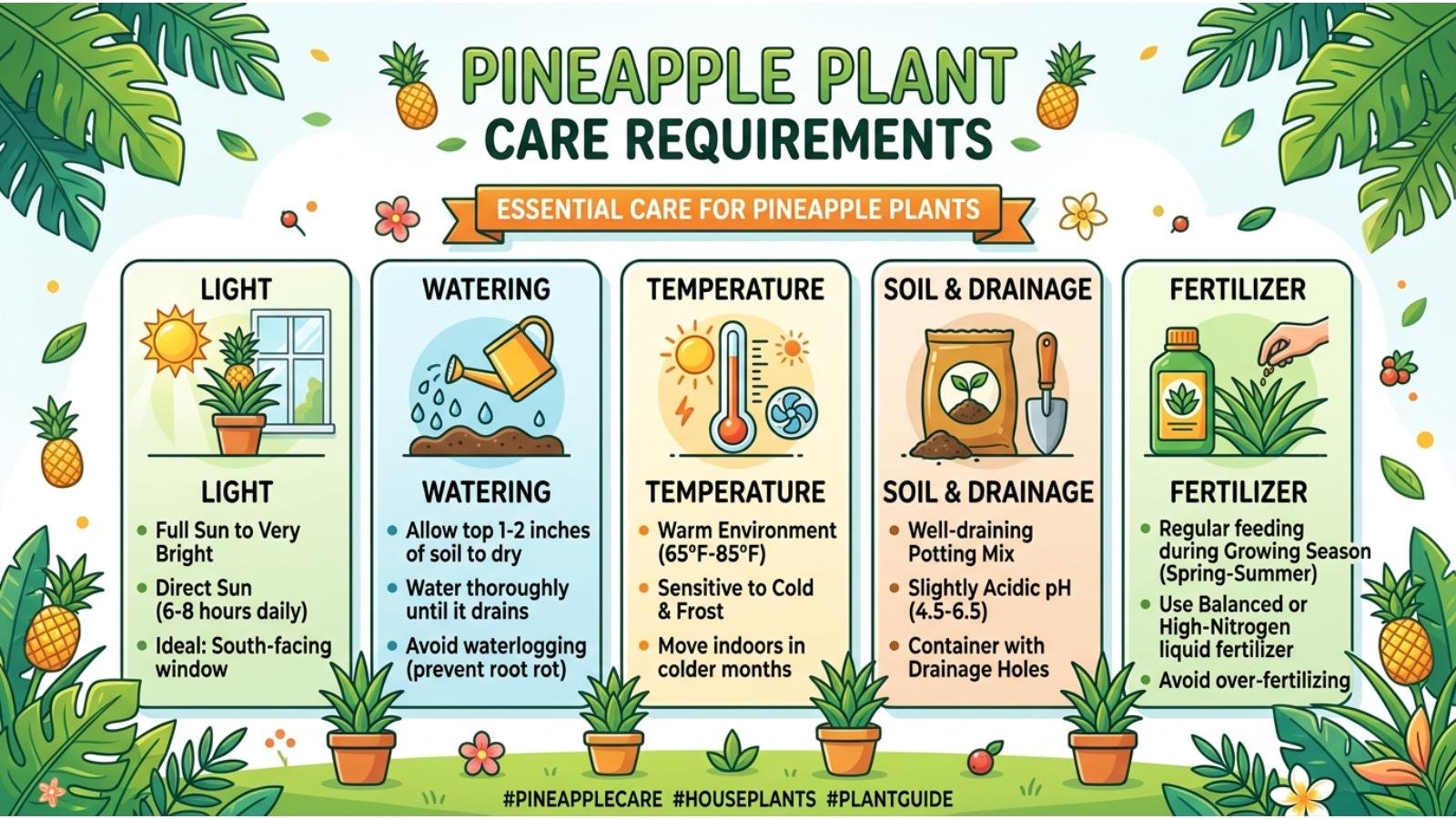
| Care Requirement | Ideal Approach |
|---|---|
| Light | Bright light with several hours of strong sunlight |
| Temperature | Warm conditions around 68–86°F (20–30°C) |
| Soil | Loose, fertile, fast-draining soil |
| Water | Moderate watering without keeping soil soggy |
| Humidity | Moderate to high humidity is helpful |
| Fertilizer | Light, consistent feeding during active growth |
| Container | Pot with excellent drainage |
| Soil pH | Slightly acidic conditions are suitable |
| Cold Protection | Protect from frost and freezing temperatures |
| Patience | Essential for crown-grown plants |
How Much Light Does a Pineapple Plant Need?
Light is one of the most important parts of pineapple plant care.
Pineapples naturally grow in warm environments with plenty of sunlight. A plant receiving inadequate light may develop slowly, produce weaker growth, and have difficulty reaching the maturity required for flowering.
Growing Pineapple Indoors
Place an indoor pineapple plant near the brightest window available.
A sunny:
- South-facing window.
- West-facing window.
- Bright sunroom.
- Well-lit greenhouse.
can provide suitable conditions.
If the plant receives only weak indoor light, supplemental grow lighting can help maintain stronger growth.
Signs your pineapple needs more light
Watch for:
- Slow growth.
- Long, weak-looking leaves.
- Pale foliage.
- A plant leaning strongly toward a window.
- Poor overall development.
Practical tip: Rotate the container occasionally so different sides receive more even light.
Growing Pineapple Outdoors
In warm climates, pineapple plants can handle strong sunlight.
However, if you move a pineapple from an indoor environment directly into intense outdoor sun, its leaves may scorch.
Instead, increase sunlight gradually over several days.
Image Suggestion: Healthy pineapple plant growing in bright sunlight compared with a weak, stretched plant growing in insufficient light.
What Temperature Is Best for Pineapple Plants?
Pineapples are warm-weather plants.
For active growth, temperatures around 68–86°F (20–30°C) are suitable.
Growth slows considerably when temperatures become too cold, and frost or freezing temperatures can severely damage the plant.
Cold Weather Care
If you grow pineapple in a container, you have an advantage because the plant can be moved.
Before cold weather arrives:
- Check nighttime temperatures.
- Move container plants into a warm protected location when necessary.
- Keep the plant near a bright window indoors.
- Reduce watering if growth slows significantly.
- Avoid placing the plant directly beside a cold window or draft.
A warm afternoon does not necessarily mean the plant is safe outdoors overnight.
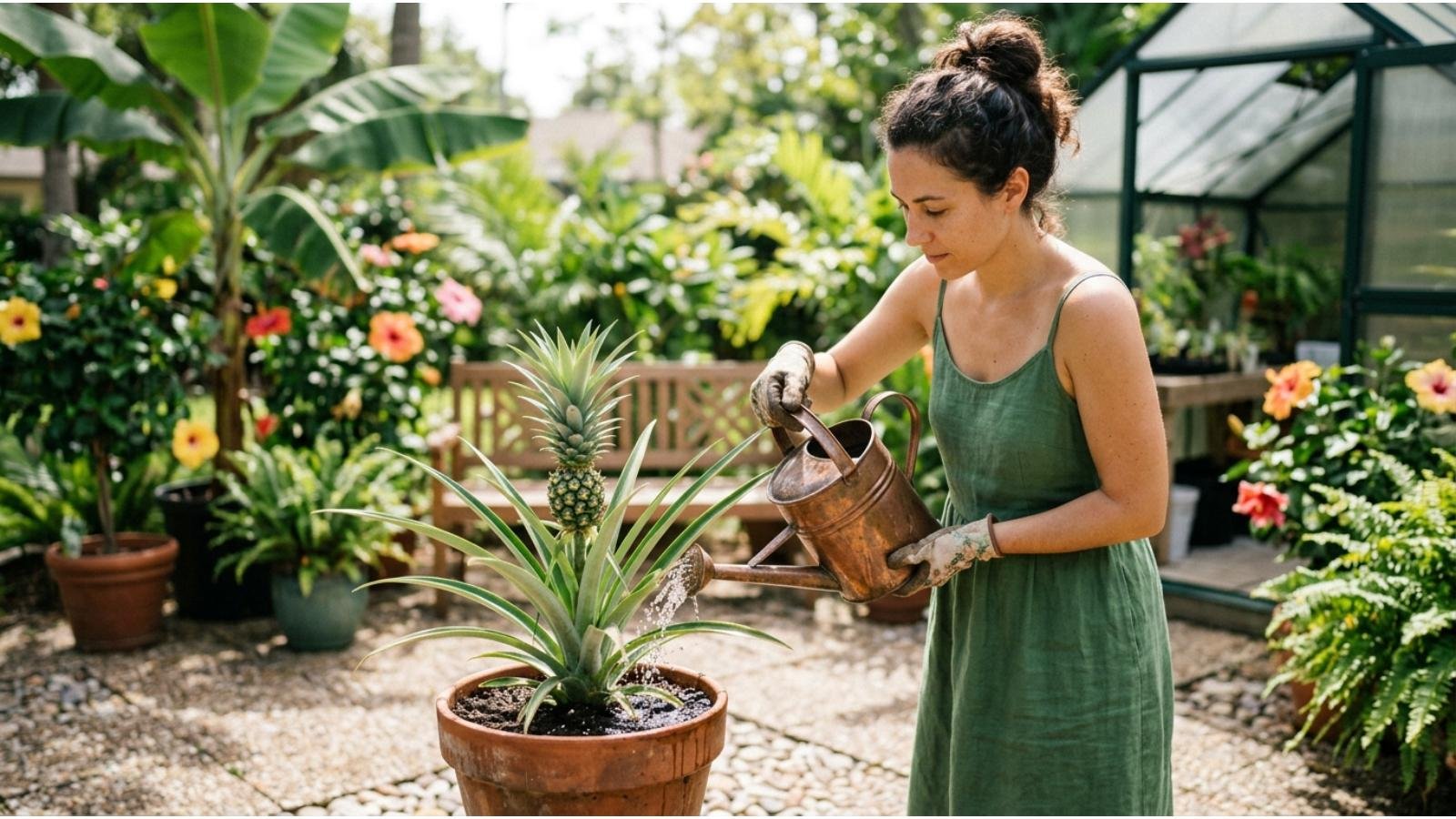
How to Water a Pineapple Plant
Watering is one of the easiest places to make a mistake.
Pineapples need moisture, but they do not need constantly saturated soil.
The goal is to provide enough water for healthy growth while allowing excess moisture to drain away.
The Best Watering Method
Before watering, check the growing medium.
If the upper portion has started drying:
- Water the plant thoroughly.
- Allow excess water to drain through the holes.
- Empty water collected underneath the pot.
- Wait until the soil begins drying again before watering.
Don’t water according to a fixed schedule such as every two or three days.
Temperature, sunlight, humidity, pot size, and soil type all affect how quickly the plant dries.
Signs of Overwatering
An overwatered pineapple may show:
- Soft leaves.
- Yellowing foliage.
- A soft plant base.
- Constantly wet soil.
- Slow growth.
- Root or crown rot.
Signs of Underwatering
A severely dry pineapple may develop:
- Dry leaf tips.
- Curling or stressed leaves.
- Slow growth.
- Very dry soil.
- Declining older leaves.
Expert insight: If the soil remains wet for a long time, don’t automatically water less while keeping the same heavy soil. Improving drainage may be the real solution.
What Soil Is Best for Pineapple Plants?
Good drainage is more important than having extremely rich soil.
Pineapple roots don’t perform well when trapped in dense, constantly wet soil.
A good container mixture should be:
- Loose.
- Well-draining.
- Light enough for air circulation around roots.
- Capable of retaining some moisture without becoming soggy.
- Rich enough to support active growth.
A quality potting mix combined with materials that improve drainage can work well.
Why Drainage Matters
Imagine watering two pineapple plants.
The first is growing in loose, fast-draining soil.
The second is growing in heavy compacted soil.
Both receive the same amount of water, but the second plant may remain wet for much longer.
That’s why watering frequency cannot be separated from soil quality.
Choosing the Right Container
Pineapple plants have relatively shallow root systems, so an extremely deep pot isn’t always necessary.
Choose a container that:
- Has drainage holes.
- Is stable enough to support the plant.
- Provides enough room for root development.
- Does not hold excessive unused soil around a small root system.
As the plant becomes larger, a container in the 3- to 7-gallon range can be suitable for many mature container-grown plants.
When Should You Repot?
Consider repotting when:
- Roots are becoming crowded.
- The plant is unstable.
- The container dries unusually quickly.
- Growth is being restricted.
- The current pot no longer provides adequate support.
Don’t automatically move a small pineapple into a huge container.
An oversized pot can retain a large amount of moisture around a relatively small root system.
How to Fertilize a Pineapple Plant
Pineapples need nutrients for healthy leaf and root development.
However, excessive fertilizer is not a shortcut to faster fruit production.
During active growth, use a balanced fertilizer according to the product instructions.
A practical feeding approach is:
- Apply fertilizer moderately.
- Feed more consistently during active growth.
- Avoid excessive applications.
- Reduce feeding when growth slows during colder periods.
- Water appropriately to prevent fertilizer buildup.
Signs of Excessive Fertilizer
Too much fertilizer may result in:
- Brown leaf tips.
- Leaf damage.
- Salt buildup on the soil surface.
- Root stress.
- Unhealthy-looking foliage.
Common mistake: Increasing fertilizer because the pineapple isn’t producing fruit.
If the plant is still immature, additional fertilizer won’t magically make it fruit.
How to Grow a Pineapple From the Top
Growing pineapple from a crown is one of the easiest ways for home gardeners to start a plant.
The process requires patience, particularly during rooting.
Step 1: Choose a Healthy Pineapple
Select a pineapple with a fresh-looking crown.
Avoid crowns with:
- Extensive rot.
- Severe leaf damage.
- A soft or deteriorating center.
- Heavy insect damage.
Step 2: Remove the Crown
Cut the leafy crown from the fruit.
Leave a small amount of fruit tissue attached initially, then carefully remove excess fruit around the stem.
Too much fruit tissue left around the base can encourage rot.
Step 3: Remove the Lower Leaves
Gently remove several lower leaves to expose part of the stem.
Be careful not to damage the central growing point.
Step 4: Allow the Base to Dry
Leave the crown in a dry, shaded location for several days.
The cut surface should have time to dry before planting.
Step 5: Plant the Crown
Place the exposed stem into a well-draining growing medium.
Don’t bury the entire leafy crown.
The base should make contact with the growing medium while the leaves remain above it.
Step 6: Provide Warmth
Place the new crown somewhere warm with bright but protected light.
Step 7: Water Carefully
Keep the growing medium lightly moist but never saturated.
Too much moisture during rooting is a common reason crowns fail.
Step 8: Wait for Root Development
Root development takes time.
Once new growth begins and the plant becomes established, gradually increase its exposure to stronger light.
Image Suggestion: Step-by-step infographic showing pineapple crown preparation, drying, planting, rooting, and new growth.
Can You Grow Pineapple From the Fruit You Buy?
Yes.
The leafy crown of a healthy pineapple can be rooted and grown into a new plant.
But there is an important difference between starting a pineapple plant and getting a pineapple fruit.
Rooting the crown can happen relatively quickly compared with the entire fruiting process.
Producing a mature fruit is much slower.
This distinction prevents one of the most common beginner disappointments: assuming that a rooted crown will soon produce another pineapple.
How Long Does a Pineapple Plant Take to Produce Fruit?
Pineapple plants are slow compared with many common garden crops.
A crown-grown pineapple may take several years to reach fruiting maturity under ordinary home-growing conditions.
The exact timeline depends on:
- Propagation method.
- Plant size.
- Variety.
- Temperature.
- Light.
- Nutrition.
- Water management.
- Growing environment.
Plants started from suckers or slips can sometimes reach fruiting maturity sooner than plants started from crowns.
Why Does Fruiting Take So Long?
The plant needs to build enough leaves and energy reserves before it can successfully produce a large fruit.
Think of the leaves as the plant’s solar panels.
If the plant spends years developing a strong leaf rosette, that growth isn’t wasted. It is helping the plant build the resources needed for flowering and fruit development.
How to Encourage Flowering
A pineapple generally needs to reach sufficient maturity before flowering.
Environmental conditions also influence flowering.
If your pineapple hasn’t flowered, first check the basics:
- Is the plant receiving enough light?
- Is it growing in a warm environment?
- Is it healthy?
- Is it large enough?
- Is the root system healthy?
- Is it receiving appropriate nutrition?
Don’t try aggressive flowering techniques on a small or unhealthy plant.
A Mature Plant Is the Starting Point
The biggest mistake is trying to force a young pineapple to flower.
Instead, concentrate on building a healthy mature plant.
Good pineapple plant care comes before flowering.
Pineapple Plant Care During Fruit Development
Once the plant begins producing a flower and fruit, consistent care becomes particularly important.
Avoid suddenly changing its environment.
During fruit development:
- Maintain strong light.
- Keep watering consistent.
- Avoid waterlogged soil.
- Continue appropriate nutrition.
- Protect the plant from cold.
- Prevent severe drought.
- Support the fruiting stalk if necessary.
The developing fruit can become surprisingly heavy, especially on a container plant.
Image Suggestion: Mature pineapple plant with a developing fruit in the center of the leaf rosette.
When Should You Harvest a Pineapple?
Harvest timing depends on the variety and growing conditions.
A pineapple approaching maturity typically develops:
- Fuller fruit shape.
- Changes in external color.
- Stronger pineapple fragrance.
- More developed individual fruit sections.
Don’t rely on color alone.
The overall appearance and aroma provide better clues when considered together.
Once harvested, pineapple does not continue to ripen in the same way as fruits that become substantially sweeter after picking.
What Happens After a Pineapple Produces Fruit?
The main pineapple plant eventually declines after flowering and fruit production.
But the plant doesn’t necessarily mean the end of your pineapple collection.
Pineapples can produce pups, slips, or suckers around the base or fruiting area.
These young plants can eventually be separated and grown independently.
This means one successful plant can provide the beginning of a continuing pineapple-growing cycle.
Mother plant → fruit → pups → new plants → future fruit
Pineapple Plant Care for Indoor Growing
Growing pineapple indoors is possible when the plant receives enough light and warmth.
The biggest indoor challenge is usually insufficient light.
Indoor Care Checklist
Place the plant:
- Near the brightest available window.
- Away from cold drafts.
- In a warm room.
- In a container with drainage.
- In well-draining soil.
Monitor the soil more carefully than you would outdoors because indoor conditions can cause moisture to evaporate more slowly.
Indoor Humidity
Pineapples appreciate moderate humidity.
However, increasing humidity cannot compensate for poor drainage or inadequate light.
If your indoor pineapple has weak growth, check light first rather than assuming humidity is the main problem.
Outdoor Pineapple Plant Care
Outdoor growing is excellent in warm climates.
Choose a location with:
- Strong sunlight.
- Good drainage.
- Warm temperatures.
- Protection from freezing conditions.
- Enough room for the plant to spread.
Hot Weather
During very hot weather, container-grown plants may dry much faster.
Check soil moisture rather than automatically increasing watering on a schedule.
Heavy Rain
Heavy rainfall can be more problematic than a short dry period if the soil drains poorly.
After prolonged rain, inspect the base of the plant and growing medium.
If water remains around the roots for extended periods, improve drainage.
Seasonal Pineapple Plant Care
Spring
As temperatures rise:
- Increase watering gradually.
- Resume regular feeding.
- Increase light exposure.
- Inspect the plant for pests.
- Repot if necessary.
Summer
Summer is often a strong growth period.
Focus on:
- Bright light.
- Adequate moisture.
- Good drainage.
- Consistent nutrition.
- Protection from extreme environmental stress.
Fall
As temperatures decline:
- Monitor nighttime temperatures.
- Reduce watering if growth slows.
- Prepare container plants for indoor protection.
- Check for pests before moving plants indoors.
Winter
Keep pineapple plants warm and bright.
During slower growth:
- Avoid excessive watering.
- Reduce routine fertilizer applications.
- Protect the plant from cold drafts.
- Provide as much light as practical.
Common Pineapple Plant Problems
Brown Leaf Tips
Brown tips can have multiple causes.
Possible reasons include:
- Dry conditions.
- Excessive fertilizer.
- Sudden environmental changes.
- Intense sunlight after insufficient light exposure.
- Cold stress.
Look at the entire growing environment before deciding on a treatment.
Yellow Leaves
Yellow leaves can be caused by:
- Excessive moisture.
- Poor drainage.
- Nutrient problems.
- Stress.
- Natural aging of older leaves.
If the soil is constantly wet, fix the root environment before adding fertilizer.
Soft Plant Base
A soft base is a warning sign.
Check immediately for:
- Waterlogged soil.
- Poor drainage.
- Excessive watering.
- Prolonged rainfall.
- Rot around the crown or roots.
A healthy pineapple should have a firm central structure.
Leaves Becoming Pale
Pale foliage may indicate inadequate light or nutritional problems.
Start by checking light exposure.
If the plant is in a dark indoor corner, moving it to a brighter location may make a larger difference than immediately adding fertilizer.
Pineapple Plant Growing Slowly
Some slow growth is completely normal.
But if growth has almost stopped, investigate:
- Light.
- Temperature.
- Watering.
- Drainage.
- Nutrition.
- Root health.
Correct the environmental problem before increasing fertilizer.
Common Pests on Pineapple Plants
Pineapple plants can encounter pests such as:
- Mealybugs.
- Scale insects.
- Aphids.
- Mites.
- Thrips.
Inspect the plant regularly, especially:
- Between leaves.
- Around the leaf bases.
- Near the center of the rosette.
- Around new growth.
Early detection makes pest management much easier.
Image Suggestion: Close-up illustration identifying common pineapple pests around leaf bases and new growth.
Pineapple Plant Care Mistakes to Avoid
1. Watering on a Fixed Schedule
A calendar cannot account for changes in temperature, sunlight, humidity, and soil.
Check the plant instead.
2. Keeping the Soil Permanently Wet
Pineapples need moisture but also excellent drainage.
3. Using a Container Without Drainage Holes
Excess water has nowhere to escape.
4. Giving Too Much Fertilizer
More fertilizer isn’t a substitute for adequate light, warmth, or time.
5. Expecting Fruit Too Quickly
A crown-grown pineapple may require years before producing fruit.
6. Moving the Plant Into Strong Sun Suddenly
Gradual acclimation reduces the risk of leaf scorch.
7. Ignoring Cold Temperatures
Pineapples are tropical plants and are highly vulnerable to freezing conditions.
8. Cutting Healthy Leaves
Don’t remove healthy foliage simply to make the plant look smaller.
Those leaves help the plant capture energy for growth and eventual fruit production.
A Simple Weekly Pineapple Care Routine
You don’t need to spend hours caring for a pineapple.
A simple routine works well.
Check the Soil
Determine whether the growing medium is beginning to dry.
Inspect the Leaves
Look for:
- Browning.
- Yellowing.
- Spots.
- Pests.
- Unusual softening.
Check the Center
The central growing point is especially important.
Make sure it remains healthy and isn’t showing signs of rot.
Evaluate Light
Make sure nearby furniture, curtains, or seasonal changes haven’t significantly reduced sunlight.
Look at the Temperature
If the plant is outdoors, check whether nighttime temperatures are becoming too cold.
Advanced Tips for Better Pineapple Growth
Keep the Root Zone Aerated
Good drainage isn’t only about preventing excess water.
Healthy roots also need access to air.
Avoid compacted growing media that becomes dense after repeated watering.
Don’t Chase Fast Growth
Fast growth isn’t always healthy growth.
A pineapple with strong, sturdy foliage and a healthy root system is more valuable than a plant that has been pushed aggressively with fertilizer.
Observe Before You Treat
When a leaf changes color, don’t immediately apply fertilizer or increase water.
First ask:
What changed?
This observation-first approach prevents many unnecessary treatments.
Pineapple Plant Care Checklist
Use this quick checklist to evaluate your plant:
- Bright light.
- Warm temperatures.
- Well-draining soil.
- Container with drainage holes.
- Moderate watering.
- No standing water.
- Appropriate fertilizer.
- Regular pest inspection.
- Cold protection.
- Patience while the plant matures.
If most of these boxes are checked, your pineapple has a strong foundation for healthy growth.
Frequently Asked Questions
How often should I water a pineapple plant?
Water when the growing medium has started to dry rather than keeping it constantly wet. Water thoroughly and allow excess water to drain completely. Hot, bright conditions may require more frequent watering than cool indoor conditions.
Can pineapple plants grow indoors?
Yes. Pineapple plants can grow indoors if they receive plenty of bright light, warm temperatures, appropriate watering, and suitable drainage.
Does a pineapple plant need direct sunlight?
Pineapples appreciate strong light and can grow in full sun outdoors when properly acclimated. Plants moved from low indoor light should be introduced to intense sunlight gradually.
Why is my pineapple plant not producing fruit?
The plant may simply be too young. Crown-grown pineapple plants can take several years to reach fruiting maturity. Insufficient light, cold temperatures, poor nutrition, or general plant stress can also affect development.
Can I grow a pineapple from a pineapple crown?
Yes. A healthy crown can be rooted in a suitable growing medium and developed into a new pineapple plant.
How long does a pineapple take to grow from a crown?
The rooting stage can take several weeks, but producing fruit is a much longer process. Under home conditions, crown-grown plants can require several years before producing fruit.
Why are my pineapple leaves turning brown?
Brown leaves can result from underwatering, excessive fertilizer, cold stress, sudden changes in sunlight, or other environmental problems. Examine the growing conditions before choosing a treatment.
Why are my pineapple leaves turning yellow?
Yellow leaves may indicate excessive moisture, poor drainage, nutrient problems, stress, or natural aging. Constantly wet soil should be investigated first.
Can pineapple plants survive winter?
Pineapple plants do not tolerate freezing temperatures. In cold regions, container-grown plants should be moved into a warm protected location before freezing conditions occur.
Does a pineapple plant die after producing fruit?
The original fruiting plant gradually declines after producing its fruit, but it can produce pups or suckers that can be grown into new pineapple plants.
Can I grow pineapple in a pot?
Yes. Pineapples are well suited to container growing as long as the pot provides sufficient space, stability, and drainage.
Do pineapple plants need fertilizer?
Yes. Regular moderate nutrition during active growth can support healthy development. Avoid excessive fertilizer because overfeeding can damage the plant.
Final Takeaway
Successful pineapple plant care isn’t complicated once you understand the plant’s priorities.
Give your pineapple strong light, warmth, well-draining soil, moderate water, appropriate nutrition, and plenty of time. The most important mistake to avoid is keeping the roots constantly wet. The second is expecting a newly rooted crown to produce fruit quickly.
Treat the plant as a long-term growing project rather than a quick harvest crop. Build a healthy leaf rosette first, protect it from cold and excessive moisture, and pay attention to changes in its environment. With consistent care and patience, a pineapple crown can develop into an attractive mature plant and eventually reward you with home-grown fruit.