Quick Answer
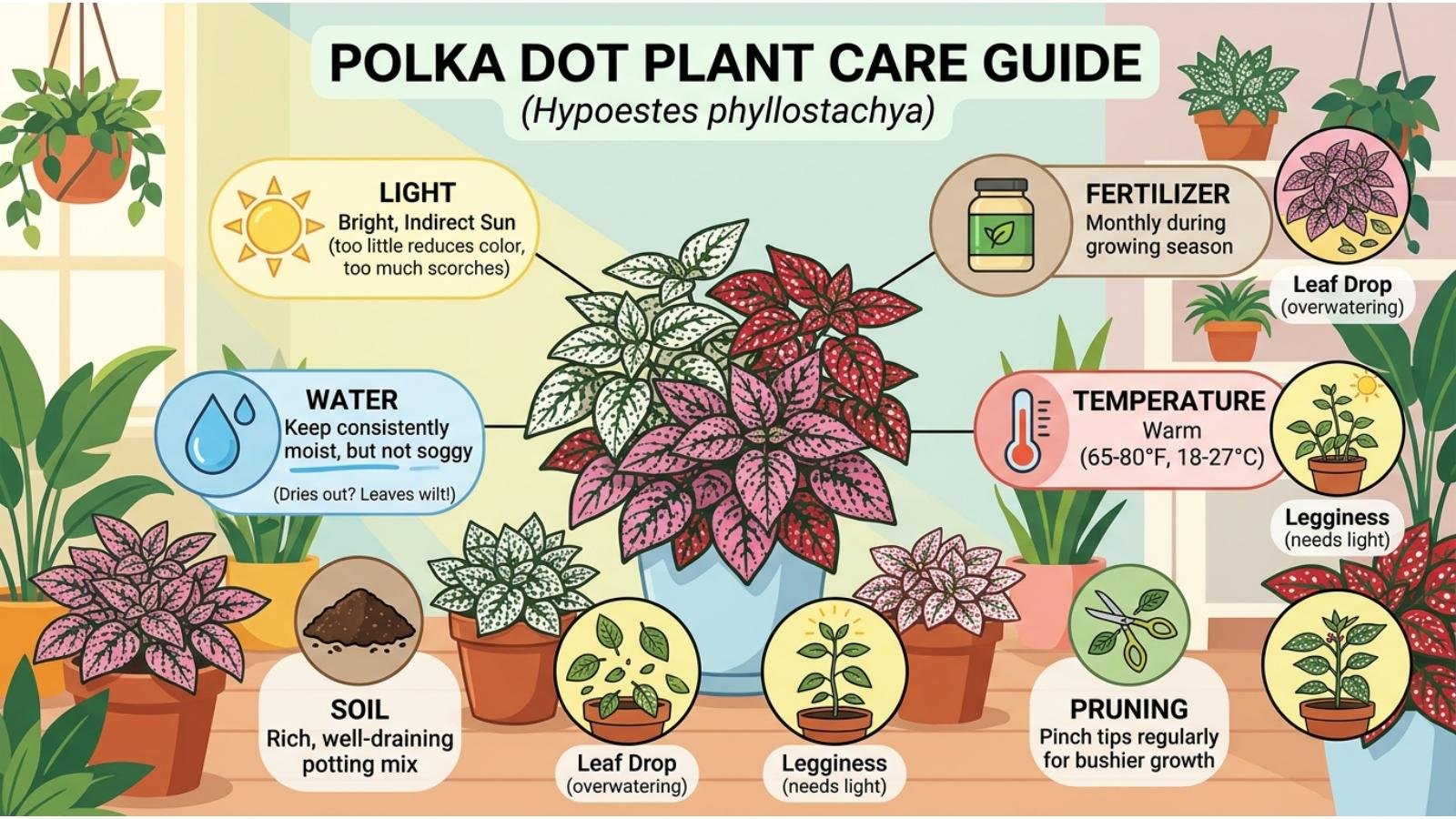
Polka dot plant care is easiest when the plant receives bright, indirect light, consistently moist but well-draining soil, moderate humidity, and warm temperatures. Water when the soil surface begins to dry rather than following a rigid schedule. Pinch growing tips regularly to keep the plant bushy, and remove faded leaves or flowers. If colors fade, growth becomes leggy, or leaves wilt, adjust light, watering, temperature, or humidity before adding fertilizer.
Introduction
Polka dot plants are popular houseplants because their spotted foliage adds instant color without requiring a large amount of space. Their leaves can display shades of pink, red, white, or purple depending on the cultivar, making them especially attractive on desks, shelves, windowsills, and indoor plant displays.
The challenge is that polka dot plants can be surprisingly expressive when their growing conditions are not right. A plant may suddenly become leggy, lose its vibrant color, develop brown leaf edges, or wilt dramatically. Fortunately, most problems can be traced to a few manageable factors: light, moisture, temperature, humidity, and pruning.
Good polka dot plant care is therefore less about following a strict watering calendar and more about learning what the plant is telling you.
Understanding the Polka Dot Plant
The polka dot plant is commonly grown as a foliage houseplant and is known for its colorful, spotted leaves. Its compact growth makes it useful for indoor containers, mixed plant displays, and shaded outdoor spaces in warm climates.
Unlike plants that tolerate long periods of neglect, polka dot plants generally perform best when their environment remains relatively stable.
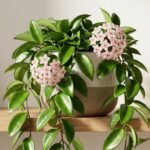
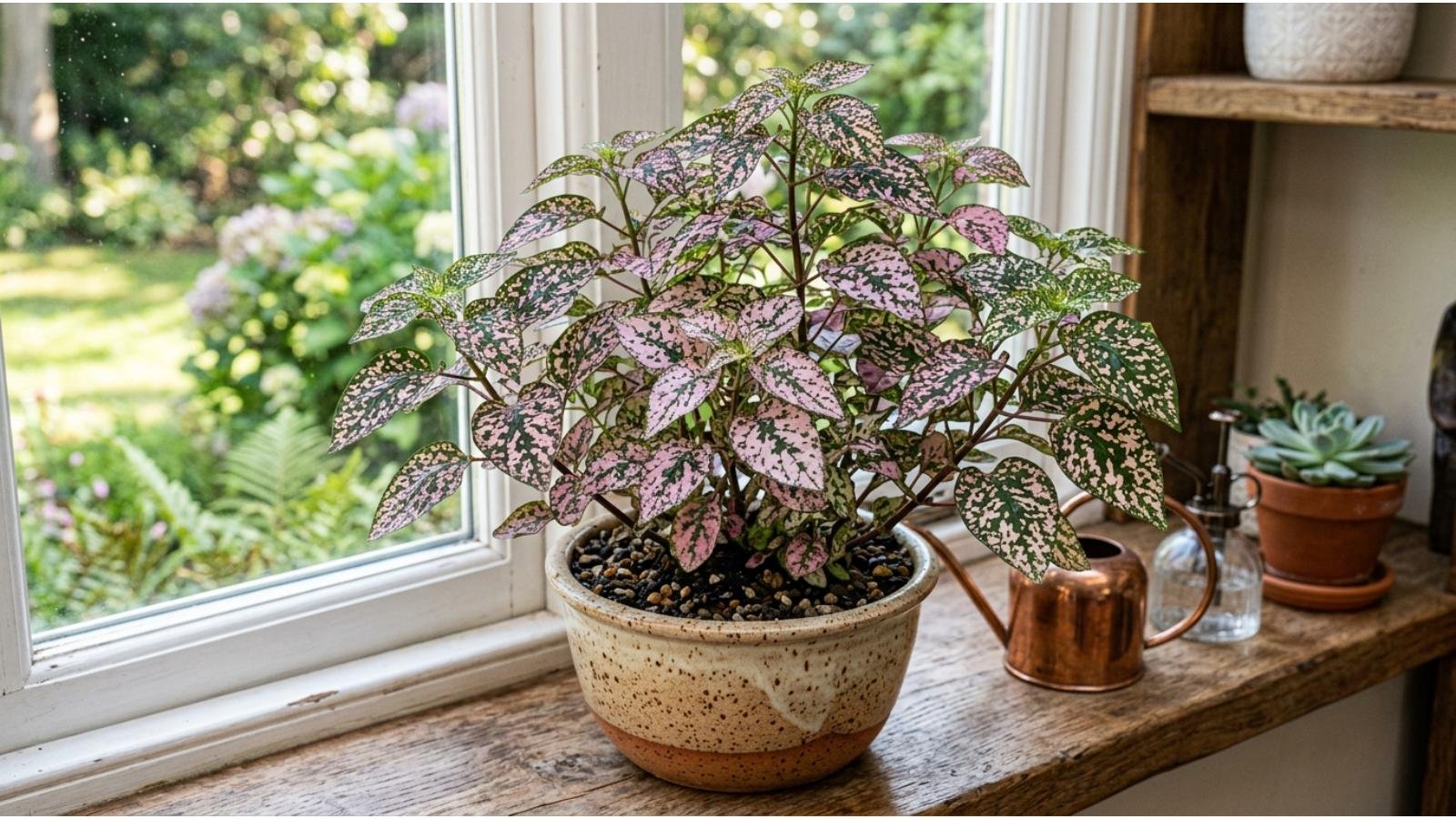
pink polka dot plant
The pink polka dot plant (Hypoestes phyllostachya) is a colorful houseplant known for its green leaves covered with bright pink spots. Its compact size and attractive foliage make it a popular choice for desks, shelves, windowsills, and indoor plant collections.
What makes polka dot plants different?
Their colorful leaves are one of their main attractions, but the same foliage can reveal problems quickly.
For example:
- Long spaces between leaves often indicate insufficient light.
- Faded foliage can occur when light conditions are unsuitable.
- Crispy brown edges may indicate dry conditions or inconsistent moisture.
- Yellowing leaves can be associated with excessive moisture or poor drainage.
- Sudden wilting does not always mean the plant needs more water.
This responsiveness is useful because it gives you clues before a small care problem becomes a major one.
Polka Dot Plant Light Requirements
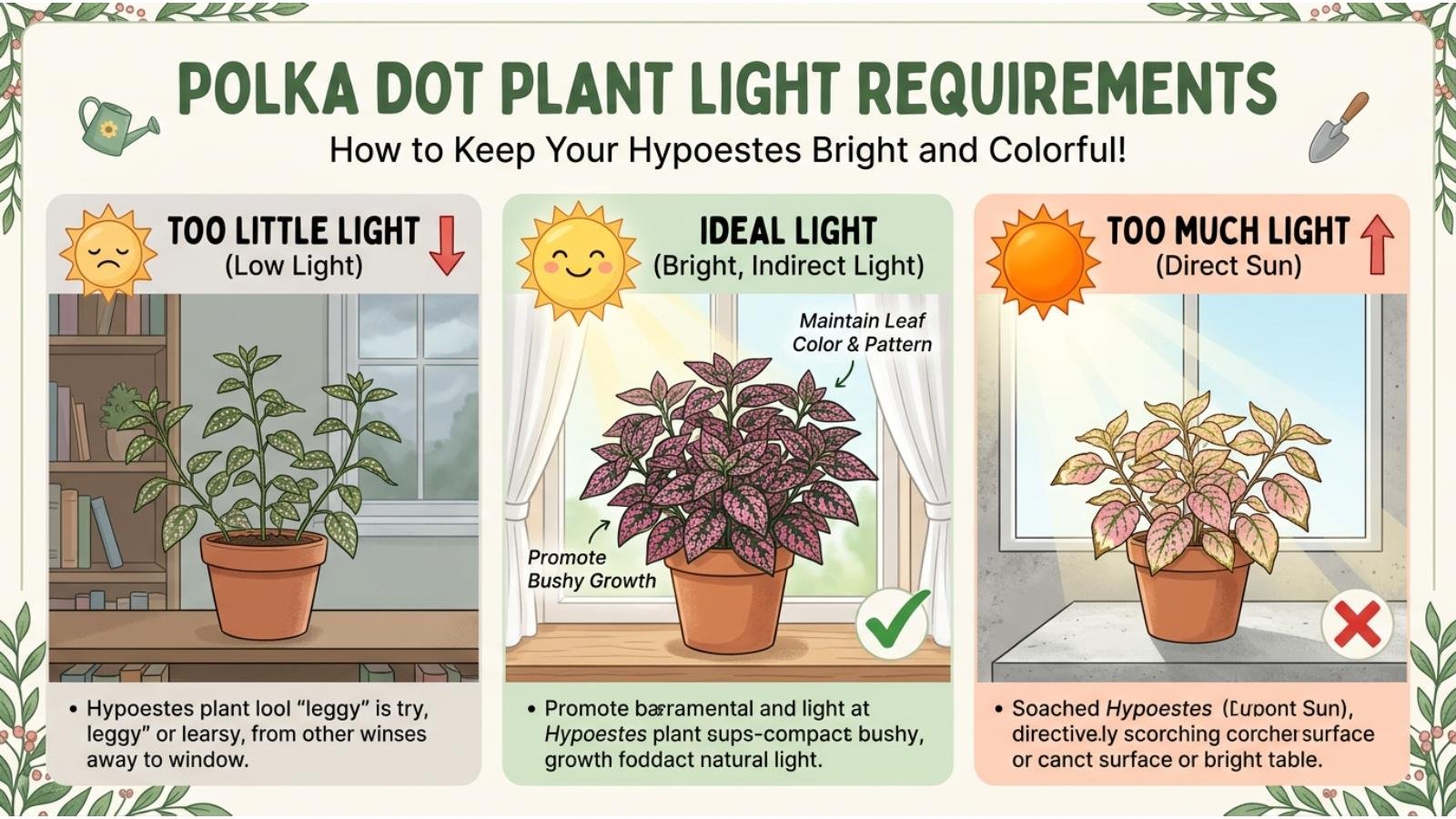
Bright, indirect light is generally the best starting point for polka dot plants.
A location near a bright window with filtered light can encourage compact growth and attractive foliage. Direct, intense sunlight, particularly through hot glass, can scorch leaves.
At the same time, placing the plant in a very dark corner can produce weak, stretched growth and less impressive foliage.
How to find the right light
Look at the plant rather than relying only on the clock or a fixed distance from a window.
A good location should provide:
- Plenty of ambient brightness.
- Protection from harsh midday sunlight.
- Enough light to prevent noticeably stretched stems.
- Consistent conditions throughout the day.
If the plant is becoming tall and sparse while the leaves remain relatively small, move it gradually toward a brighter location with filtered light.
Image Suggestion: Polka dot plant placed near a bright window showing ideal indirect light.
How Often Should You Water a Polka Dot Plant?
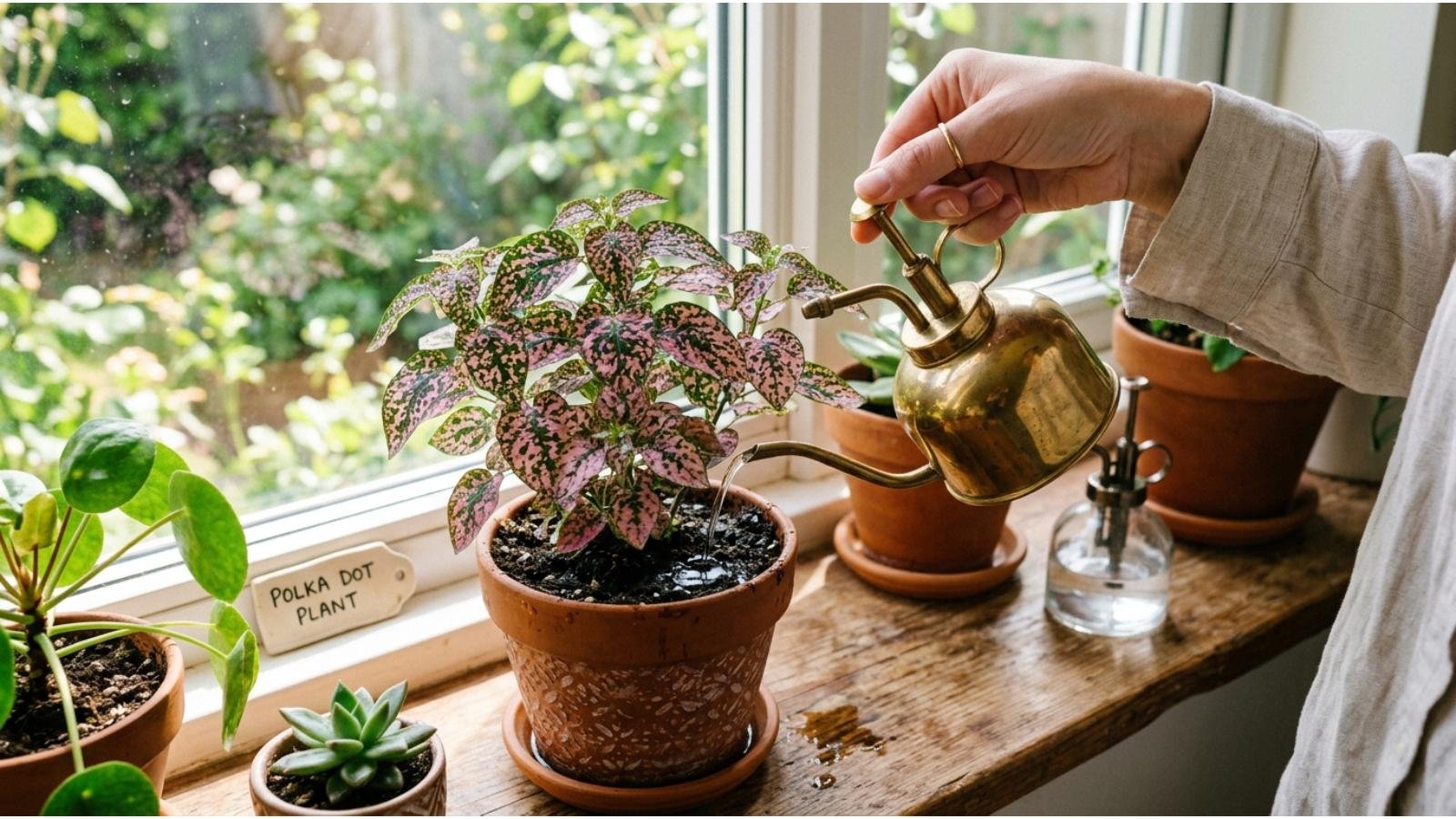
Water when the upper portion of the soil has started to dry, rather than watering automatically on a specific weekday.
Polka dot plants appreciate consistent moisture, but constantly saturated soil can deprive roots of oxygen and encourage root problems.
A simple routine is:
- Check the soil with your finger.
- If the surface has begun to dry, check slightly deeper.
- Water thoroughly when the plant needs it.
- Allow excess water to drain from the container.
- Empty standing water from a saucer or decorative pot.
The exact interval depends on temperature, light, pot size, soil composition, and humidity. A plant in a warm, bright room may need water considerably more often than one growing in cooler, lower-light conditions.
A common watering mistake
One of the easiest mistakes is reacting to wilting by immediately adding more water.
A thirsty polka dot plant can wilt, but a plant suffering from damaged roots can also wilt because those roots are no longer functioning properly.
Before watering a wilted plant, check the soil.
Choosing Soil and a Pot
Polka dot plants benefit from a loose, well-draining growing medium that retains some moisture without remaining waterlogged.
A quality indoor potting mix can work well when combined with materials that improve drainage and aeration.
The container is equally important.
Look for drainage holes
A decorative container without drainage can create a hidden problem. Water may collect around the roots even when the soil surface appears reasonable.
Choose a pot with drainage holes and avoid moving the plant into a dramatically oversized container simply because it has grown slightly.
A pot that is much larger than the root system can hold excess moisture for longer, increasing the risk of watering problems.
Image Suggestion: Cross-section diagram showing a polka dot plant, well-draining soil, drainage holes, and excess water leaving the pot.
Temperature and Humidity
Polka dot plants prefer warm indoor conditions and generally dislike cold drafts or sudden temperature changes.
Keep the plant away from:
- Cold drafts.
- Frequently opened exterior doors during cold weather.
- Strong heating vents.
- Air-conditioning outlets blowing directly onto the foliage.
- Extremely hot windows where leaves can overheat.
Moderate to higher humidity can also support attractive foliage, particularly in dry indoor environments.
However, increasing humidity does not compensate for poor watering or inadequate light.
If your room is dry, practical options include using a humidifier or grouping compatible plants together. Avoid keeping the leaves constantly wet or creating stagnant, poorly ventilated conditions.
Fertilizing Polka Dot Plants
During active growth, a balanced, diluted houseplant fertilizer can support continued development.
Fertilizer should supplement good growing conditions rather than compensate for them.
Before fertilizing, make sure the plant has:
- Adequate light.
- Appropriate moisture.
- Healthy roots.
- Suitable temperature.
- Well-draining soil.
Overfertilizing can cause more problems than it solves. Follow the fertilizer manufacturer’s dilution and frequency instructions rather than assuming that more fertilizer means faster growth.
How to Keep a Polka Dot Plant Bushy
Polka dot plants can become leggy as they grow, especially when light is insufficient.
Regular pinching is one of the most useful maintenance techniques.
How to prune a leggy polka dot plant
- Identify a long stem that has become sparse.
- Find a healthy leaf node lower on the stem.
- Pinch or cut just above the node using clean scissors.
- Repeat on other overly long stems.
- Continue monitoring new growth.
Pruning encourages the plant to produce branching growth rather than putting all its energy into a few long stems.
Do not remove large amounts of healthy foliage at once unless there is a specific reason to do so. Gradual pruning is usually easier on a small houseplant.
Should You Let a Polka Dot Plant Flower?
Polka dot plants can produce small flowers, but flowering may change the plant’s appearance and growth pattern.
If your primary goal is attractive, bushy foliage, you may choose to remove flower spikes as they appear. This can also help maintain the plant’s compact ornamental appearance.
If you enjoy seeing the plant’s natural growth cycle, you can allow flowering to occur.
The choice depends on whether you are growing it primarily for its foliage or simply enjoying the plant as it develops.
Why Is My Polka Dot Plant Turning Leggy?
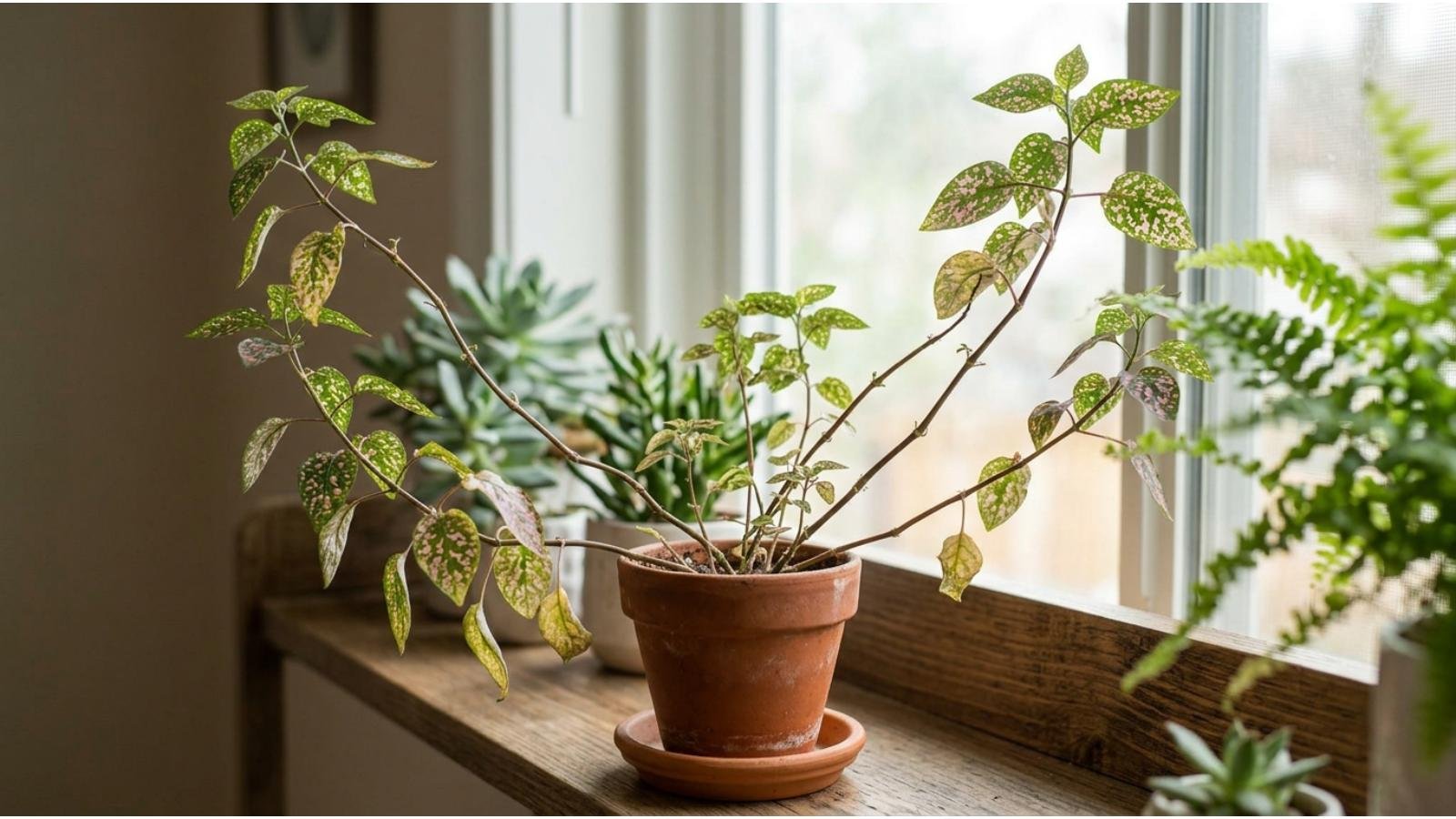
Leggy growth is one of the most common problems with polka dot plants.
The first thing to investigate is light.
When a plant does not receive enough usable light, it may stretch toward the nearest bright source. This produces longer stems with greater spaces between leaves.
How to fix leggy growth
Move the plant to a brighter location with suitable filtered or indirect light, then prune excessively stretched stems.
Avoid making the change extremely abrupt if the plant has been growing in low light for a long time. A gradual adjustment can reduce the risk of leaf stress.
Pruning alone may make the plant look better temporarily, but if poor lighting remains unchanged, new growth may become leggy again.
Why Are the Leaves Losing Their Color?
If a colorful polka dot plant begins looking unusually green or dull, review its growing conditions.
Light has an important role in maintaining attractive foliage, but genetics and cultivar also influence coloration.
Check:
- Whether the plant is receiving enough bright, indirect light.
- Whether growth has become unusually stretched.
- Whether the plant has recently been moved.
- Whether new leaves look different from mature foliage.
- Whether the plant is under significant environmental stress.
Do not automatically assume that faded color means the plant needs more fertilizer. Correcting light and overall growing conditions should come first.
Why Are Polka Dot Plant Leaves Turning Brown?
Brown leaf edges or spots can result from several conditions, including inconsistent moisture, dry air, excessive sunlight, or other environmental stress.
Start by examining the pattern.
Brown and crispy edges
This can be associated with dry soil or dry environmental conditions.
Brown patches after strong sunlight
Leaf tissue exposed to excessive direct sun can become damaged.
Brown areas combined with persistently wet soil
This warrants closer inspection of the roots and drainage because chronic excess moisture can create serious root problems.
Instead of treating every brown leaf with the same solution, look at the plant’s environment as a whole.
Why Is My Polka Dot Plant Turning Yellow?
Yellow leaves can have several causes, so the surrounding symptoms matter.
If the soil stays wet for long periods and several lower leaves become yellow, excessive moisture should be investigated.
Check whether:
- The pot has drainage holes.
- Water is collecting in the saucer.
- The soil remains wet for unusually long periods.
- The container is much larger than necessary.
- The plant is receiving adequate light.
Remove badly damaged leaves with clean scissors, but more importantly, correct the underlying growing conditions.
Why Is My Polka Dot Plant Wilting?
Wilting is a symptom, not a diagnosis.
A plant can wilt because it is thirsty, but it can also wilt because its roots are stressed.
Check the soil first
If the soil is dry: Water thoroughly and allow excess water to drain.
If the soil is wet: Do not automatically add more water. Inspect drainage and consider whether the plant has remained excessively wet.
If the soil is appropriately moist: Examine temperature, light, root health, and recent environmental changes.
This simple check prevents one of the most common houseplant mistakes: treating every wilted plant as though it is thirsty.
Polka Dot Plant Care Through the Seasons
Spring
Increasing daylight can trigger stronger growth. Begin monitoring moisture more frequently as the plant becomes more active.
This is also a useful period for pruning and repotting when necessary.
Summer
Higher temperatures and brighter conditions can increase water use.
Protect the plant from harsh direct sunlight and check soil moisture more frequently.
Fall
As daylight decreases, growth may slow. Avoid continuing a heavy watering or fertilizing routine simply because it worked during summer.
Winter
Lower light and cooler conditions can reduce water consumption considerably.
Keep the plant away from cold drafts and avoid leaving the root ball constantly wet.
Repotting a Polka Dot Plant
Repotting is not automatically necessary every year.
Consider repotting when:
- Roots are becoming crowded.
- Water runs through the container unusually quickly because the root system has filled it.
- The existing soil has deteriorated.
- The plant has clearly outgrown its container.
- Drainage has become difficult to manage.
Choose a container only modestly larger than the existing root system.
After repotting, avoid immediately compensating with excessive fertilizer or watering. Give the plant time to settle into its new environment.
Propagating Polka Dot Plants From Cuttings
Polka dot plants can be propagated from stem cuttings.
A simple approach is:
- Select a healthy stem.
- Take a cutting with several leaves and a suitable node.
- Remove leaves from the lower portion.
- Place the cutting in an appropriate propagation medium.
- Keep the medium appropriately moist.
- Provide bright, indirect light.
- Wait for roots and new growth to develop.
Once a cutting has established a healthy root system, it can be transferred to a suitable container.
Propagation is particularly useful when an older plant has become unattractively leggy. Instead of discarding every long stem, healthy cuttings can provide new plants.
Common Polka Dot Plant Care Mistakes
Watering on a fixed schedule
Plants do not use water at exactly the same rate every week.
Better approach: Check the soil and environmental conditions before watering.
Keeping the plant in deep shade
Low light may contribute to weak, stretched growth.
Better approach: Provide bright, indirect light.
Giving intense direct sunlight
More light is not automatically better.
Better approach: Aim for bright filtered conditions and monitor the foliage.
Using a pot without drainage
Excess water has nowhere to escape.
Better approach: Use a container with drainage holes.
Fertilizing a stressed plant
Fertilizer cannot fix root damage, poor lighting, or incorrect watering.
Better approach: Correct environmental problems first.
Ignoring leggy growth
Long, sparse stems can become increasingly unattractive.
Better approach: Improve light and prune strategically.
A Simple Polka Dot Plant Care Routine
For beginners, a simple routine is often more useful than a complicated schedule.
Weekly check
Inspect:
- Soil moisture.
- Leaf color.
- New growth.
- Stem shape.
- Signs of pests.
- Overall plant posture.
Monthly maintenance
Depending on growth:
- Remove damaged leaves.
- Pinch excessively long stems.
- Rotate the container if growth is leaning toward the light.
- Check drainage.
- Look beneath leaves for pests.
The goal is not to interfere with the plant constantly. It is to notice changes early.
Polka Dot Plant Care Checklist
| Care Factor | What to Aim For | Warning Sign |
|---|---|---|
| Light | Bright, indirect light | Leggy growth or leaf damage |
| Water | Consistently moist but not saturated soil | Persistent dryness or soggy soil |
| Soil | Moisture-retentive but well-draining | Water remains stagnant |
| Temperature | Warm, stable conditions | Cold or hot stress |
| Humidity | Moderate to higher humidity | Crispy foliage in very dry air |
| Pruning | Regular light pinching | Long, sparse stems |
| Fertilizer | Diluted feeding during active growth | Excessive feeding or salt buildup |
| Pot | Good drainage and appropriate size | Constantly wet soil |
Frequently Asked Questions
Is a polka dot plant easy to care for?
Yes, provided its basic needs are met. It generally performs best with bright indirect light, appropriate moisture, warm temperatures, and regular pruning.
How much sunlight does a polka dot plant need?
Bright, indirect light is generally suitable. Protect the foliage from intense direct sunlight that can scorch the leaves.
How often should I water a polka dot plant?
Water when the soil has started to dry rather than relying on a fixed calendar. Environmental conditions determine how quickly the soil dries.
Can polka dot plants grow indoors?
Yes. They are commonly grown indoors where they receive suitable light, warmth, moisture, and humidity.
Why is my polka dot plant so leggy?
Insufficient light is a common cause. Improve the lighting conditions and prune stretched stems to encourage a fuller appearance.
Should I mist my polka dot plant?
Misting is not the only way to increase humidity and may not provide lasting humidity improvement. A humidifier or suitable plant grouping can be more practical in consistently dry rooms.
Why is my polka dot plant losing leaves?
Leaf loss can follow watering problems, sudden environmental changes, poor light, temperature stress, or other growing issues. Examine the entire environment rather than assuming one cause.
Can I grow a polka dot plant from a cutting?
Yes. Healthy stem cuttings containing suitable nodes can be propagated under appropriate warm, moist conditions.
Does a polka dot plant need fertilizer?
Fertilizer can support active growth, but it is not a substitute for suitable light, moisture, soil, and temperature. Follow the fertilizer product’s recommended dilution.
How do I make my polka dot plant bushier?
Provide adequate light and pinch or prune long growing tips. Regular light pruning encourages a more compact appearance.
Related Topics for Internal Linking
Natural internal links that could support this article include:
- Indoor plant care basics.
- How to water houseplants correctly.
- Best soil for indoor plants.
- Houseplant propagation guide.
- How to fix leggy houseplants.
- Indoor plant humidity guide.
- Common houseplant pests and treatments.
- Coleus plant care.
- Nerve plant care.
- Prayer plant care.
Conclusion
Successful polka dot plant care comes down to maintaining a good balance rather than following a rigid schedule. Give the plant bright indirect light, keep its soil appropriately moist without allowing it to remain saturated, provide warm conditions, and prune long stems to maintain a compact shape.
Most problems become easier to solve when you diagnose the symptom instead of immediately treating it. A wilted plant may need water, but it may also have stressed roots. Brown leaves may indicate dryness, intense light, or another environmental issue.
Pay attention to the plant’s leaves, soil, and growth pattern. With consistent conditions and timely pruning, a polka dot plant can remain colorful, compact, and attractive for much longer.