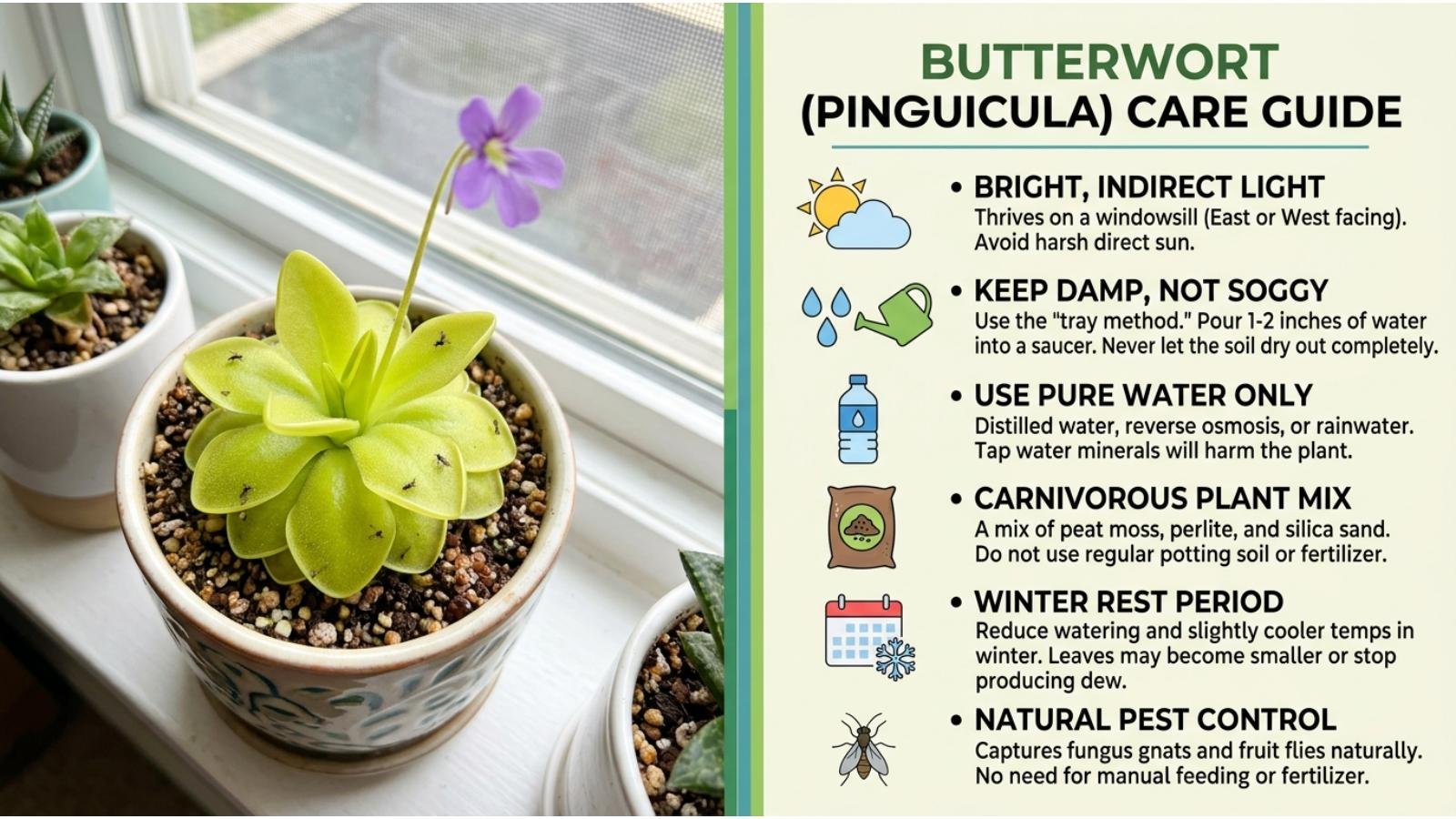
Butterwort plant care becomes much easier once you understand that Pinguicula are not ordinary houseplants. These fascinating carnivorous plants have sticky leaves that trap small insects while their shallow roots mainly anchor them rather than supplying all of their nutritional needs. The biggest beginner mistakes are usually poor water quality, unsuitable potting mix, excessive heat, and treating every butterwort species exactly the same.
The good news is that many butterworts, especially Mexican varieties, can be excellent windowsill plants. With the right combination of light, water, soil, temperature, and seasonal watering, a small Pinguicula can produce attractive rosettes and delicate flowers while requiring surprisingly little space.
Quick Answer
Butterwort plant care depends heavily on the type of Pinguicula you grow. Most Mexican butterworts prefer bright light, mineral-free water, an airy low-nutrient soil mix, and slightly drier conditions during their winter succulent phase. Temperate species generally need wetter conditions and may require winter dormancy. Avoid ordinary tap water, fertilizer-rich potting soil, and harsh afternoon sun.
What Is a Butterwort Plant
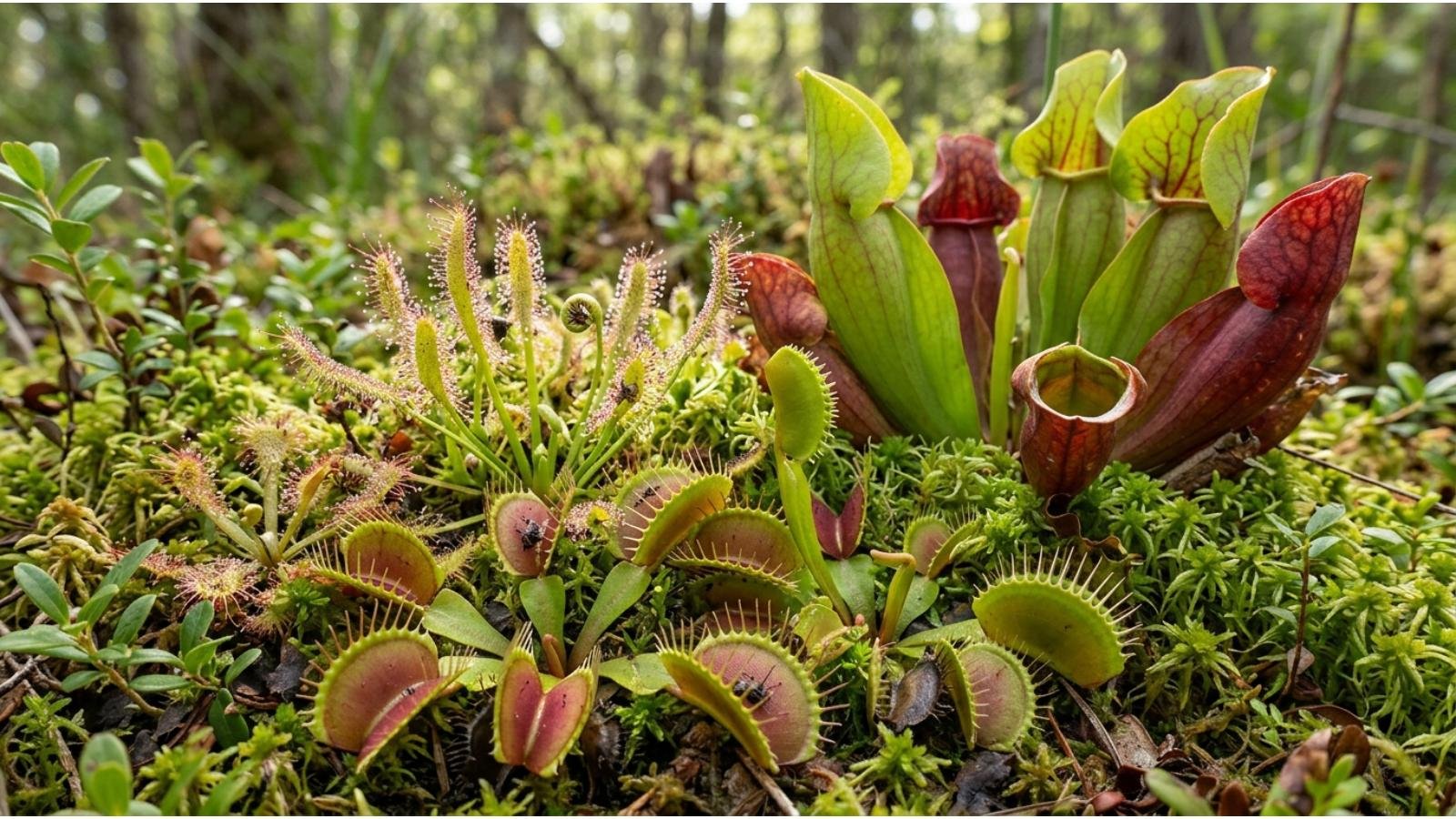
Butterwort is the common name for plants in the genus Pinguicula, a group of carnivorous plants known for their soft, sticky leaves.
The leaves produce a mucilaginous substance that can trap tiny insects. The plant then obtains nutrients from its prey, which is particularly useful because many Pinguicula grow naturally in nutrient-poor environments.
One important point for beginners is that Pinguicula is a diverse genus. Mexican, tropical, warm-temperate, and temperate species can have noticeably different requirements.
That is why a care routine that works beautifully for a Mexican butterwort may be unsuitable for a temperate species.
How Much Light Does Butterwort Need
Butterworts generally perform best in bright light, but the ideal intensity depends on the species.
Mexican Pinguicula are particularly suitable for bright indoor windowsills. High-intensity artificial lighting can also encourage strong growth and may produce attractive pink or reddish coloration in some plants.
A practical indoor setup is:
- Place the plant near a bright window.
- Give it plenty of bright indirect light or gentle direct sunlight.
- Protect it from intense, scorching afternoon sun, especially behind hot glass.
- Rotate the pot occasionally if growth becomes noticeably uneven.
- If using grow lights, provide strong consistent illumination without overheating the plant.
How to Tell If Your Butterwort Needs More Light
Light problems often show up in the plant before they become obvious to the grower.
A butterwort receiving insufficient light may develop:
- Pale green foliage.
- Larger, stretched leaves.
- Reduced dew production.
- Weak or elongated growth.
- Poor flowering.
California Carnivores notes that Mexican Pinguicula grown under stronger lighting can develop more pronounced coloration, while overly intense afternoon sunlight can be damaging.
Image Suggestion: A comparison showing a compact, colorful butterwort receiving adequate light beside a stretched, pale plant receiving insufficient light.

What Water Is Best for Butterworts
Water quality is one of the most important parts of butterwort plant care.
Use distilled water, reverse-osmosis water, or suitable rainwater rather than ordinary mineral-rich tap water. Pinguicula can be particularly sensitive to dissolved minerals and salts accumulating in their growing medium.
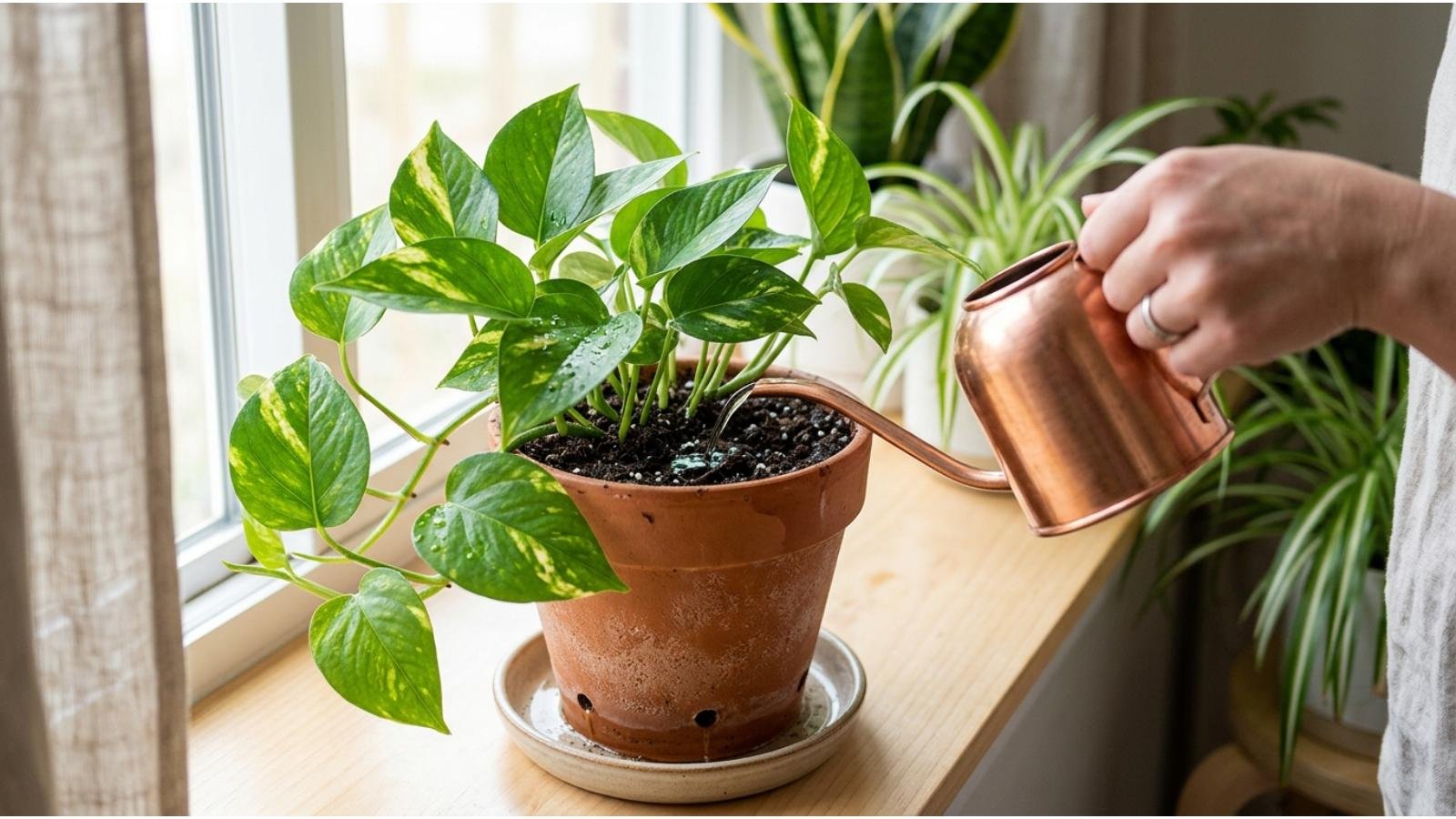
This is an area where ordinary houseplant habits can cause problems. A person may successfully water pothos or snake plants with tap water for years, then use that same water on a butterwort and gradually see the plant decline.
Should You Use the Tray Method
For many temperate and warm-temperate butterworts, keeping the pot in a shallow water tray is appropriate.
Mexican varieties are different. During their carnivorous growing period, they can also use a tray system, but their watering needs change when they transition into their compact succulent winter growth.
The safest approach is to identify the species or hybrid before establishing a permanent watering routine.
How to Water a Butterwort Step by Step
For a typical Mexican Pinguicula during active carnivorous growth:
- Use distilled, reverse-osmosis, or appropriate rainwater.
- Place the pot in a shallow tray if you are using the tray method.
- Keep the growing medium appropriately moist rather than treating it like a conventional dry-houseplant mix.
- Watch the plant for seasonal changes.
- When compact succulent winter leaves appear, gradually reduce watering.
- Resume more frequent watering when carnivorous leaves begin returning.
The transition period is particularly important because excessive moisture combined with cooler conditions can increase the risk of rot.
What Soil Is Best for Butterworts
Regular indoor potting soil is a poor choice for most Pinguicula.
Avoid mixes containing:
- Standard compost.
- Garden soil.
- Slow-release fertilizer.
- Heavy organic amendments designed for ordinary houseplants.
Mexican and tropical butterworts generally benefit from an open, low-nutrient mix. California Carnivores recommends combinations involving sand, perlite, vermiculite, peat, pumice, or similar materials depending on the species.
A commonly used starting mix for Mexican Pinguicula is:
- Equal parts peat moss.
- Sand.
- Perlite.
- Pumice or another suitable mineral component.
The goal is not simply to make the soil “dry.” The goal is to create a medium that provides adequate moisture without becoming dense and stagnant around the plant’s shallow root system.
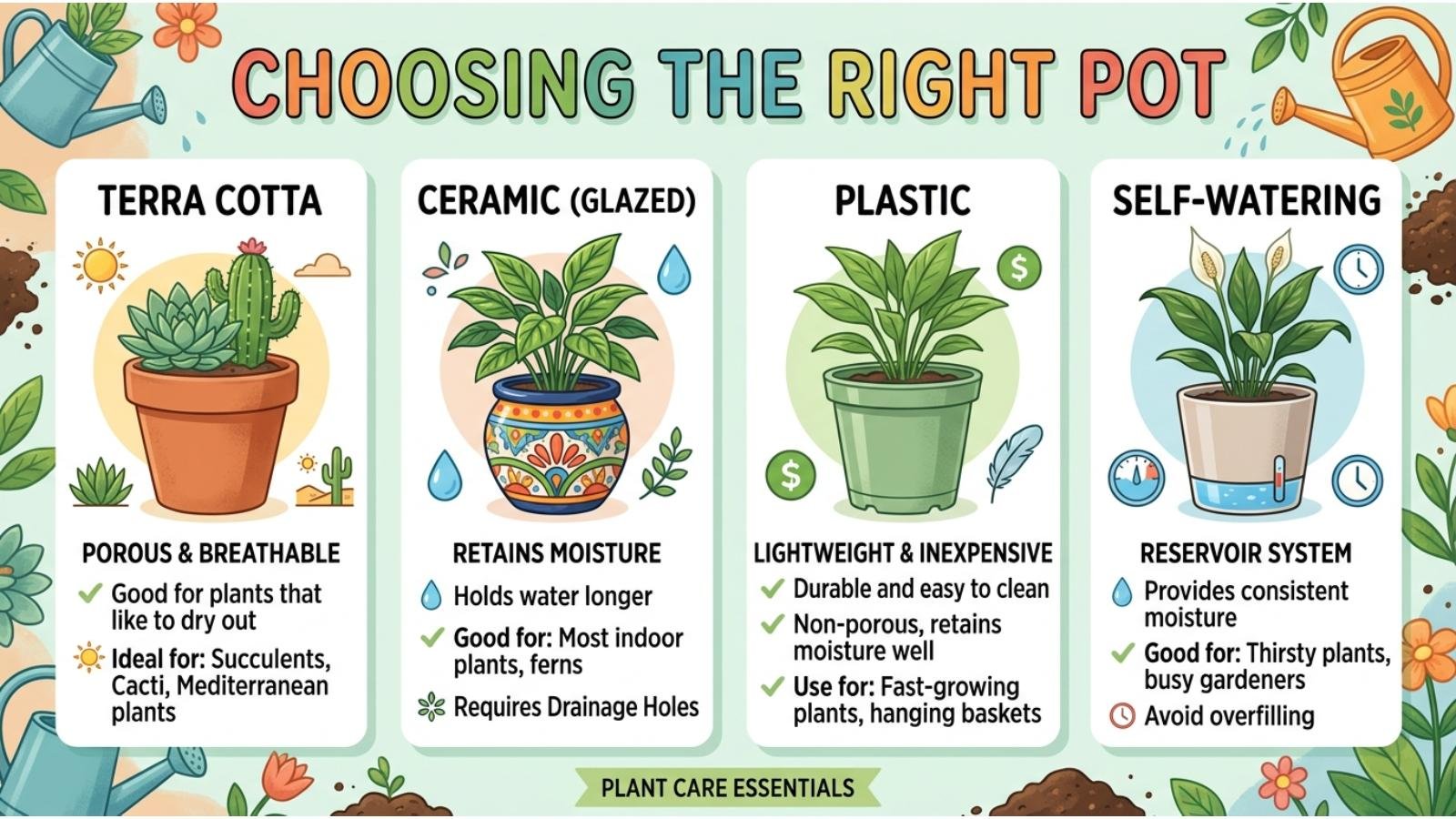
Choosing the Right Pot
Butterworts have relatively small root systems, so they generally do not need a large container.
Good options include:
- Small plastic pots.
- Glazed ceramic containers.
- Shallow planters.
- Certain specialized decorative containers.
Unglazed terracotta deserves caution because it can dry the growing medium rapidly and may contribute unwanted salts to the soil.
Mexican Pinguicula are especially interesting because their shallow roots allow them to grow successfully in unusual small planters when watering is carefully controlled.
Image Suggestion: A photo showing an appropriately sized shallow pot beside an oversized conventional houseplant pot.
Temperature and Humidity Requirements
Temperature requirements depend strongly on the type of butterwort.
Mexican Pinguicula generally make good indoor plants because they tolerate typical household conditions better than many temperate carnivorous species. California Carnivores recommends protecting Mexican varieties from freezing temperatures and notes that they can tolerate brief periods of higher heat when conditions are managed appropriately.
Temperate Pinguicula are different. Many need a cooler winter period and may enter dormancy.
This distinction matters because “butterwort” is not a single-care plant category.
You should identify your species or hybrid before deciding how cold it should become during winter.
Do Butterworts Need High Humidity
Usually, no.
One common misconception is that every carnivorous plant needs a sealed terrarium with extremely high humidity.
Many Mexican butterworts can grow successfully on windowsills without tropical-level humidity. California Carnivores specifically notes that Mexican Pinguicula prefer comparatively drier conditions and do not require high humidity.
Good airflow can actually be more useful than creating a constantly wet, stagnant environment.
If your plant is indoors, focus first on:
- Good light.
- Correct water.
- Appropriate soil.
- Suitable temperature.
- Air movement.
- Seasonal watering.

Do Butterworts Need Fertilizer
Usually, very little.
Butterworts are carnivorous plants, so they can obtain nutrients by catching small insects. Outdoor plants may obtain enough prey naturally.
Some experienced growers use extremely diluted fertilizer on the foliage of certain Mexican and tropical Pinguicula during active growth, but this is an advanced technique rather than a requirement for beginners.
For a new grower, the safer priority is correct water and growing conditions rather than aggressive feeding or fertilizing.
Never assume that more fertilizer means faster growth. Carnivorous plants are adapted to nutrient-poor growing media, and excessive fertilizer can damage sensitive roots or leaves.
How Butterworts Catch Insects
The leaves of Pinguicula are covered with tiny structures that produce sticky secretions.
Small insects become trapped when they land on the leaf. Digestive enzymes then help break down the prey, allowing the plant to absorb nutrients.
You normally do not need to feed a healthy butterwort by hand.
If the plant is grown indoors and catches few insects, that does not automatically mean something is wrong. Good light, suitable water, and proper growing conditions are much more important than trying to feed it constantly.
Butterwort Winter Care
Winter care is one of the most confusing parts of Pinguicula cultivation.
Many Mexican butterworts produce a smaller, tighter rosette of succulent-looking leaves during their winter phase. This is different from the flat sticky carnivorous leaves produced during active growth.
When this transition occurs:
- Reduce watering.
- Keep the medium on the drier side.
- Avoid keeping the plant continuously saturated.
- Continue providing adequate light.
- Watch for the return of carnivorous leaves in spring.
Not every Mexican butterwort enters exactly the same winter condition. Some remain in carnivorous growth, so do not force dormancy simply because winter has arrived.
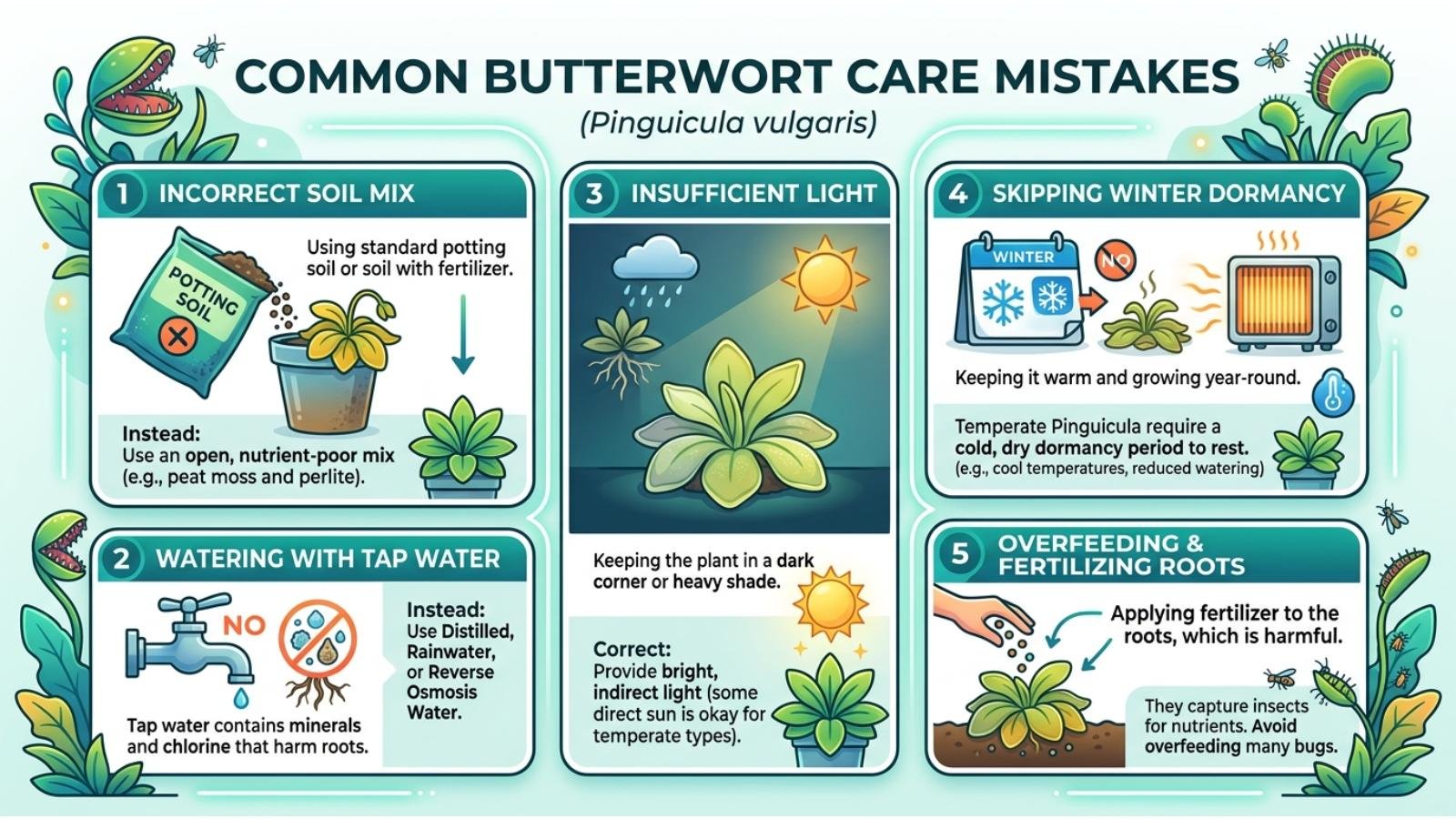
Common Butterwort Care Mistakes
Using Tap Water
Minerals accumulate over time and can damage sensitive Pinguicula.
Use low-mineral water instead.
Using Regular Potting Soil
Fertilized houseplant soil is not designed for carnivorous plants.
Use an appropriate low-nutrient Pinguicula medium.
Keeping Every Species Permanently Wet
This is particularly dangerous when caring for Mexican varieties during their succulent winter phase.
Their seasonal watering requirements can be considerably drier than their summer growth conditions.
Giving Too Much Harsh Sun
Bright light is valuable, but intense afternoon sun through hot glass can scorch foliage.
Gradually increase light rather than moving a plant suddenly from a dim room into extreme sunlight.
Using a Huge Pot
Butterworts have shallow root systems and generally do not need oversized containers.
Overfeeding
Butterworts do not need constant hand feeding to survive.
Fix the growing environment first.
Image Suggestion: An infographic showing five common butterwort mistakes, including tap water, ordinary potting soil, excessive sun, oversized pots, and winter overwatering.
Why Is My Butterwort Losing Its Sticky Leaves
If a Mexican butterwort begins producing small, compact, non-sticky succulent leaves, this may simply indicate its seasonal winter phase.
However, if sticky leaves suddenly disappear during the growing season, investigate the growing conditions.
Check:
- Light intensity.
- Water quality.
- Soil condition.
- Temperature.
- Recent changes in watering.
- Signs of pests or rot.
Do not diagnose a seasonal leaf change as a problem without first identifying the plant’s normal growth cycle.
Why Is My Butterwort Turning Green
Green foliage is not automatically a sign of poor health.
Some Pinguicula naturally have greener leaves, while stronger light can encourage coloration in certain varieties.
However, unusually elongated growth combined with weak coloration and little visible dew can indicate insufficient light.
Move the plant toward a brighter location gradually rather than exposing it immediately to intense midday sun.
Why Is My Butterwort Rotting
Rot is often associated with a combination of excessive moisture, unsuitable temperatures, poor airflow, or an inappropriate growing medium.
This is particularly important during seasonal transitions.
Mexican Pinguicula are more vulnerable when moving between carnivorous and succulent growth, and experienced growers recommend erring toward drier conditions as temperatures fall and daylight decreases.
If rot is suspected, examine the crown carefully and reassess the entire growing environment rather than simply reducing water without identifying the underlying problem.
How to Repot a Butterwort
Repotting is generally straightforward because Pinguicula have relatively small root systems.
A practical process is:
- Prepare a clean, appropriate low-nutrient growing medium.
- Choose a small container appropriate for the plant.
- Moisten the medium with suitable low-mineral water.
- Carefully remove the plant from its old container.
- Handle the crown and leaves gently.
- Position the plant near the surface rather than burying the rosette.
- Fill around the roots without compacting the medium excessively.
- Return the plant to suitable light.
- Resume the appropriate watering routine for its species and season.
Avoid aggressively burying the center of the rosette. The growing point should remain exposed.
California Carnivores recommends refreshing soil for Mexican Pinguicula because these plants are particularly sensitive to mineral and salt accumulation.
Can Butterworts Be Propagated
Yes.
Pinguicula can be propagated in several ways, depending on the species.
Leaf propagation is particularly interesting. Mature leaves from suitable plants can sometimes produce new plantlets under appropriate conditions. Some species also naturally form offsets or clumps.
Propagation success depends on species, timing, humidity, temperature, and technique, so beginners should first concentrate on maintaining a healthy mother plant.
Mexican vs Temperate Butterwort Care
| Care factor | Mexican Butterworts | Temperate Butterworts |
|---|---|---|
| Light | Bright light, often suitable for windowsills | Bright light, species dependent |
| Water | Moist during active growth, often drier in winter | Often wetter during active growth |
| Winter | Many produce succulent winter leaves | Many require a genuine cool dormancy |
| Soil | Open, airy, low-nutrient mix | Often more moisture-retentive depending on species |
| Indoor growing | Generally excellent | Often more challenging |
| Temperature | Usually frost sensitive | Many tolerate or require cooler conditions |
The most important lesson is not to memorize a single watering schedule. Identify the type of Pinguicula first, then match its care to its natural growth cycle.
A Simple Butterwort Care Routine for Beginners
If you have a common Mexican Pinguicula, start with this basic routine.
Light: Provide bright light, preferably a sunny or very bright windowsill while protecting the plant from excessive heat and harsh afternoon exposure.
Water: Use distilled, reverse-osmosis, or suitable rainwater.
Soil: Choose an airy, low-nutrient Pinguicula mix rather than conventional potting soil.
Pot: Use a small shallow container with appropriate drainage unless you specifically understand how to manage an undrained setup.
Humidity: Normal indoor humidity is often adequate.
Feeding: Let the plant catch insects naturally.
Winter: If the plant develops small succulent leaves, reduce watering and keep it on the drier side.
Spring: Increase watering again when active carnivorous leaves begin returning.
This simple routine avoids many of the mistakes that cause beginner butterworts to decline.
Frequently Asked Questions
How often should I water a butterwort
There is no universal schedule. Mexican Pinguicula usually need more moisture during active carnivorous growth and less during their succulent winter phase. Temperate species can have different requirements, so species identification is important.
Can butterworts live indoors
Yes. Many Mexican Pinguicula are particularly well suited to bright windowsills and controlled indoor environments.
Can I use tap water for a butterwort
It is best to avoid mineral-rich tap water. Distilled, reverse-osmosis, or appropriate rainwater is safer for long-term cultivation.
Does a butterwort need insects
Insects provide nutrients, but you do not normally need to hand-feed a healthy plant. Outdoor plants can catch prey naturally, while indoor plants can remain healthy when their basic cultural requirements are met.
Can I use Miracle-Gro or regular plant fertilizer
Do not use ordinary fertilizer in the potting medium. Some experienced growers use highly diluted foliar fertilizer on particular Pinguicula during active growth, but this is not necessary for beginners.
Why does my butterwort have tiny leaves
If the plant is producing a compact succulent rosette, it may be entering its seasonal winter phase. If the small leaves occur unexpectedly during active growth, review light, temperature, water, and soil conditions.
Does butterwort need a terrarium
Not necessarily. Many Mexican Pinguicula grow successfully on bright windowsills without the high humidity associated with closed terrariums.
How much sunlight does a butterwort need
Butterworts generally prefer bright light, but exact tolerance varies. Mexican varieties can perform well on sunny windowsills, while intense afternoon sun may need to be filtered or avoided.
Conclusion
Successful butterwort plant care comes down to understanding the plant’s natural growth pattern rather than treating it like a conventional houseplant. Start with mineral-free water, bright but appropriate light, a low-nutrient airy growing medium, and a small suitable container.
Most importantly, identify your Pinguicula before changing its winter watering routine. Mexican butterworts, warm-temperate species, and temperate butterworts can behave quite differently. Once you recognize those differences, caring for these unusual carnivorous plants becomes much more predictable—and their sticky leaves, compact rosettes, and delicate flowers become far easier to enjoy.
Related internal-link opportunities: Pothos Plant Care, Snake Plant Care, Prayer Plant Care, Jade Plant Care, Monstera Plant Care, and Carnivorous Plant Care.
Suggested featured image: A healthy flowering Pinguicula butterwort in a small shallow pot, photographed on a bright windowsill with visible dew on the carnivorous leaves.