Quick Answer
Croton plant indoor care focuses on bright light, consistent moisture, warm temperatures, moderate to high humidity, and well-draining soil. Place your croton near a bright window with plenty of indirect light, water when the top inch of soil begins to dry, and protect it from cold drafts and sudden environmental changes. Good light is especially important because insufficient light can cause colorful leaves to fade and new growth to become sparse.
Introduction
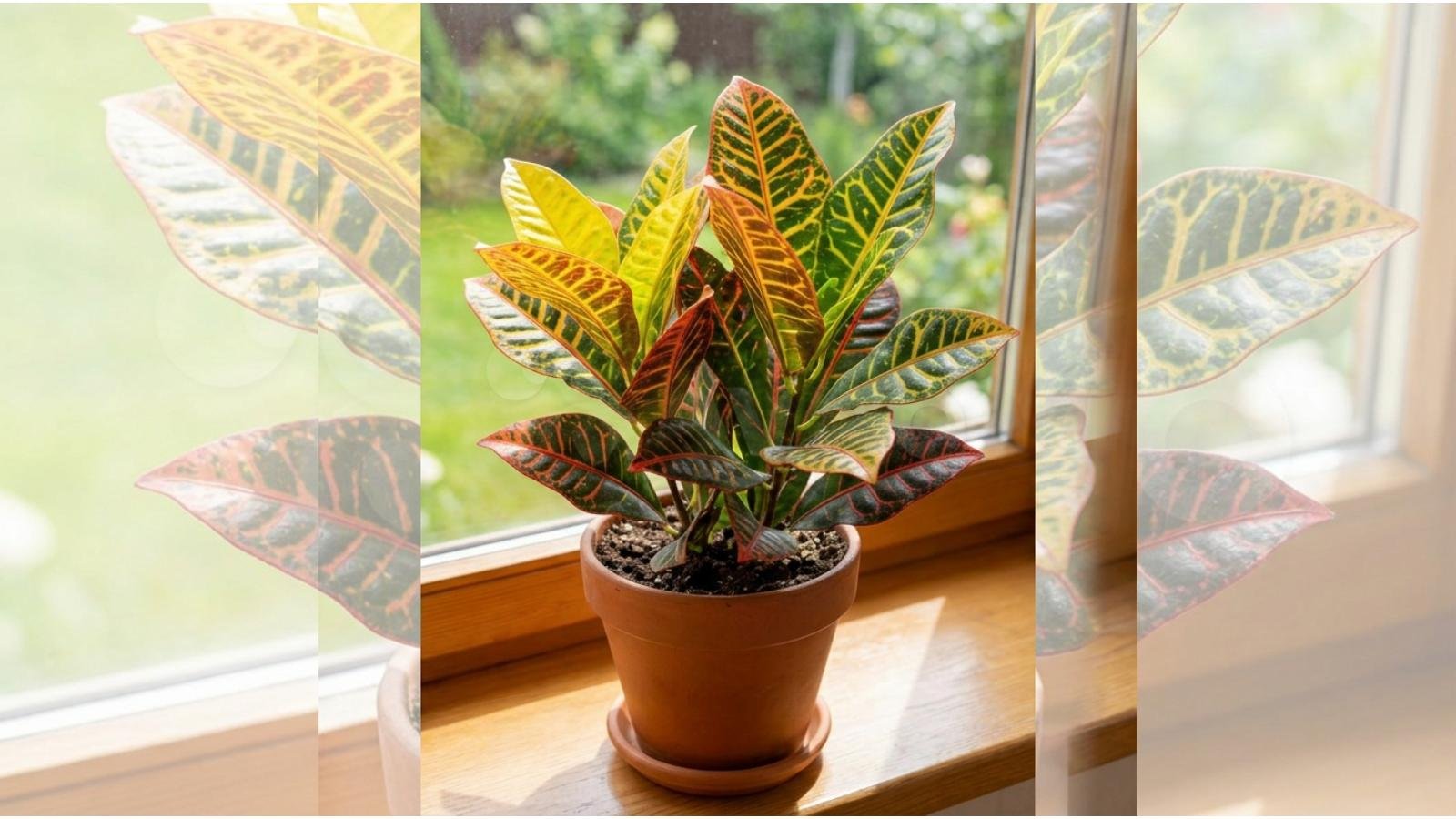
Crotons are popular houseplants because few indoor plants provide the same combination of bold colors, striking leaf patterns, and tropical character. Their leaves can display shades of green, yellow, orange, red, and burgundy, making a healthy croton almost look like a living piece of foliage artwork.
However, crotons can be surprisingly sensitive when their growing conditions change. A plant that looked perfect at the garden center may suddenly drop leaves after being moved indoors, placed in a darker room, exposed to a cold window, or watered differently.
Successful croton plant indoor care is less about following a rigid watering schedule and more about maintaining stable conditions. Light, moisture, humidity, temperature, and soil drainage all work together. Once you understand those relationships, caring for a croton becomes much easier.
Understanding Your Croton Before You Care for It
Croton is the common name generally used for Codiaeum variegatum, a tropical evergreen shrub grown indoors for its colorful foliage.
Unlike many houseplants that tolerate relatively low light, crotons need strong indoor light to maintain vigorous growth and attractive coloration. Their leaves are also responsive to environmental stress, which is why sudden changes can produce dramatic leaf drop.
This leads to an important practical lesson:
A croton that drops leaves is not automatically dying.
It may simply be reacting to a major change in light, temperature, humidity, watering, or location.
Give the plant stable conditions first, then investigate other possible problems.
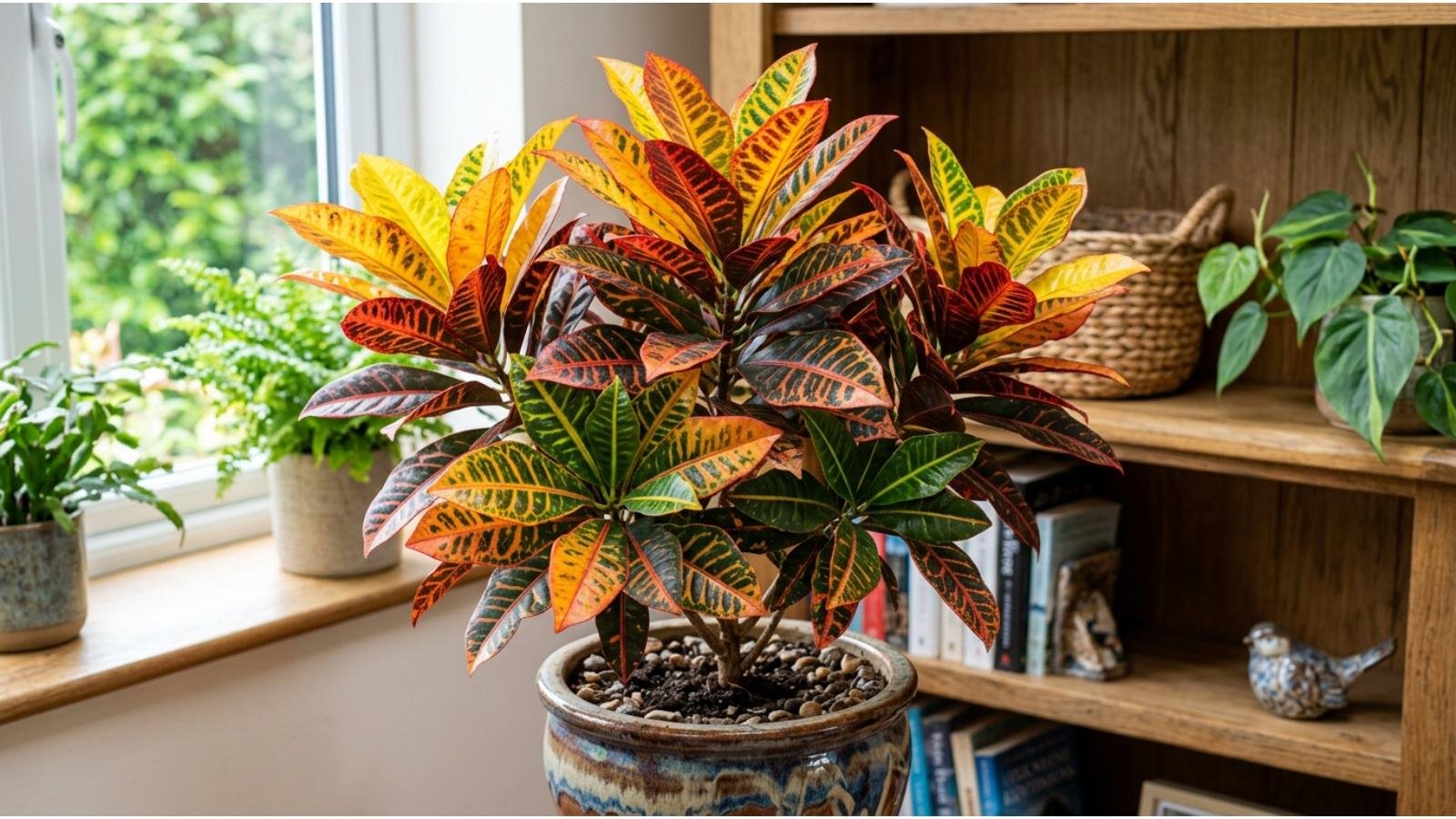
How Much Light Does a Croton Need Indoors?
Light is one of the most important factors in croton care.
Place your croton in a location where it receives plenty of bright light. A bright east-facing window can work very well, while a south- or west-facing window may provide stronger light that needs to be moderated depending on the intensity and season.
Crotons generally perform poorly when kept in a dim corner for long periods.
Signs Your Croton Needs More Light
Watch for:
- Fading leaf colors.
- Mostly green new growth.
- Long spaces between leaves.
- Weak or stretched stems.
- Slow growth.
- Leaves becoming smaller than expected.
A common beginner mistake is moving a colorful croton into a low-light room because it looks like an ordinary decorative houseplant. The plant may survive, but its foliage often becomes less colorful and growth can become sparse.
Can Crotons Handle Direct Sunlight?
They can tolerate substantial bright light, but indoor plants should be acclimated gradually if they have previously been grown under filtered light.
Suddenly moving a croton from a relatively dark room to intense afternoon sunlight can result in leaf scorch.
Practical approach: increase exposure gradually and watch the leaves. If you notice bleaching, crispy patches, or scorching, reduce the intensity or filter the light with a sheer curtain.
Image Suggestion: Show a croton in three indoor locations: low light, bright filtered light, and harsh unfiltered afternoon sun.
The Best Temperature for Indoor Crotons
Crotons prefer warm, stable conditions because they are tropical plants.
For indoor growing, keep them away from:
- Cold drafts.
- Frequently opened exterior doors.
- Air-conditioning vents.
- Strong heating vents.
- Very cold windows during winter.
- Sudden temperature fluctuations.
Temperature changes can be particularly stressful when combined with a change in humidity or watering.
A croton sitting beside a cold window may receive excellent light but still struggle because the roots and foliage are repeatedly exposed to low temperatures.
The best location is usually bright, warm, and relatively stable rather than simply the brightest spot in the house.
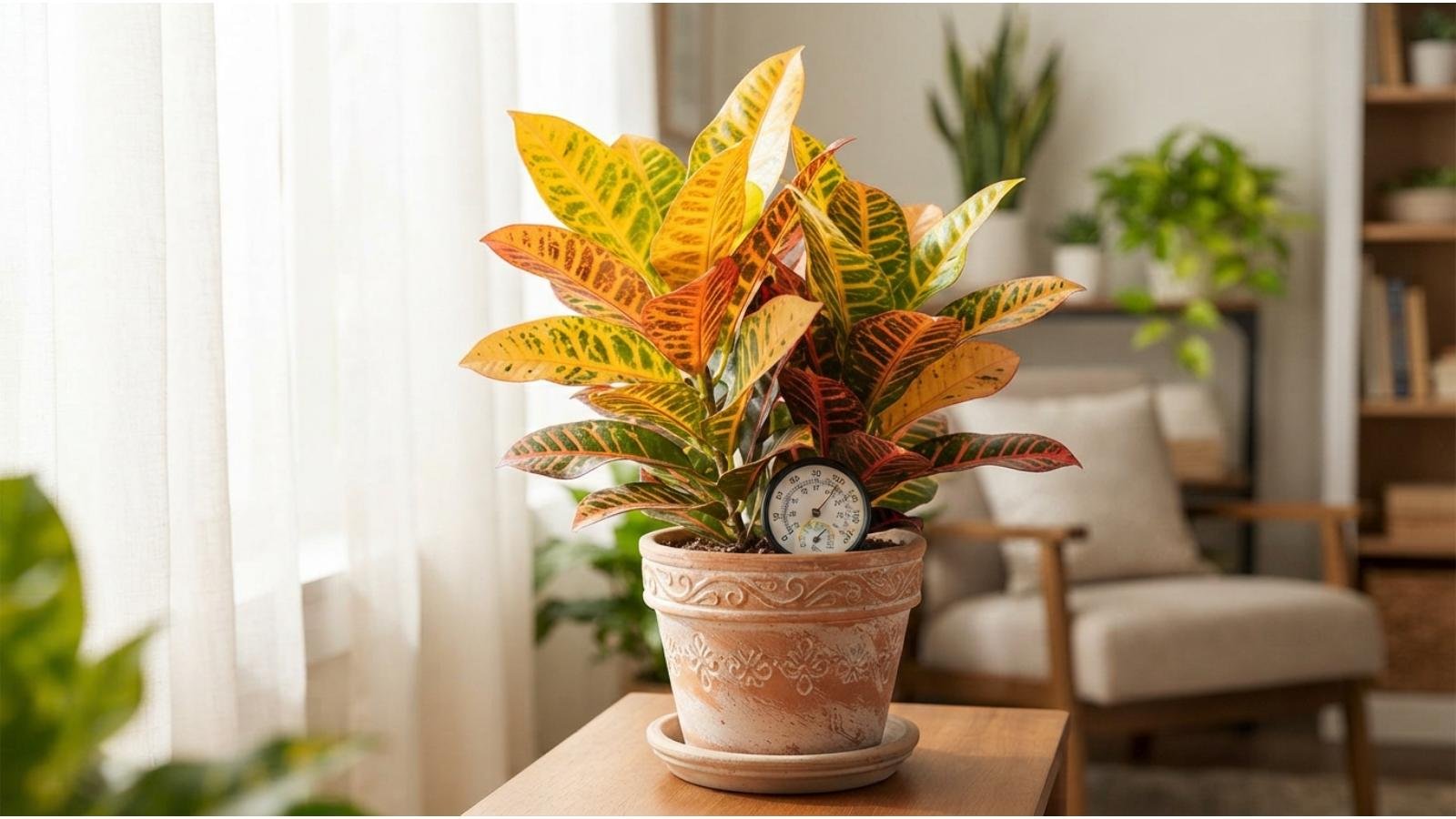
How to Water a Croton Indoors
Crotons prefer evenly moist soil during active growth, but they do not want their roots sitting continuously in water.
Instead of watering according to a fixed calendar, check the soil.
Insert your finger into the upper portion of the potting mix. When the top inch or so has begun to dry, check the plant more closely and water thoroughly when appropriate.
When watering:
- Pour water evenly over the soil.
- Continue until excess water drains from the bottom.
- Allow the pot to drain completely.
- Empty standing water from the saucer or outer container.
The goal is moist but well-aerated soil, not permanently wet soil.
Why a Fixed Watering Schedule Can Fail
A croton growing beside a sunny window may dry much faster than one sitting several feet away in a cooler room.
Season, pot size, soil composition, humidity, and plant size also affect how quickly moisture disappears.
Therefore, “water every seven days” is less reliable than checking the plant and soil.
How to Recognize Overwatering
Overwatering does not simply mean giving the plant too much water once. It often means the soil remains excessively wet for too long.
Possible warning signs include:
- Yellowing leaves.
- Soft or declining foliage.
- Persistent wet soil.
- Unpleasant-smelling soil.
- Leaf drop combined with consistently saturated soil.
- Weak or damaged roots in severe cases.
If the potting mix stays wet for many days, investigate drainage before simply changing your watering frequency.
How to Recognize Underwatering
A thirsty croton may show:
- Drooping leaves.
- Dry potting mix.
- Crispy leaf edges.
- Leaves becoming dry or brittle.
- Rapid wilting.
If the soil has become extremely dry and pulls away from the sides of the pot, water thoroughly and allow the excess to drain.
Repeated cycles of severe drying followed by heavy watering can stress the plant, so aim for more consistent moisture rather than dramatic swings.
Humidity Matters More Than Many Beginners Expect
Crotons appreciate moderate to high humidity because their natural environment is much more humid than many heated or air-conditioned homes.
Low indoor humidity can contribute to:
- Brown leaf edges.
- Crispy foliage.
- Increased water loss.
- General stress.
A humidifier can be useful if the surrounding air is consistently dry.
Grouping compatible houseplants together can also slightly increase humidity around their foliage, although this should not replace good ventilation.
Should You Mist a Croton?
Misting may temporarily increase moisture on leaf surfaces, but it is not a reliable way to maintain consistently higher room humidity.
For a chronically dry indoor environment, a humidifier is generally a more dependable solution.
Avoid keeping the foliage constantly wet with poor air circulation, as stagnant, damp conditions can encourage leaf problems.
Choosing the Right Soil and Pot
Croton roots need both moisture and oxygen.
Choose a high-quality indoor potting mix that drains readily rather than heavy soil that remains waterlogged.
A suitable mix should:
- Hold some moisture.
- Drain excess water efficiently.
- Allow air around the roots.
- Resist becoming compacted.
The container should also have drainage holes.
A decorative pot without drainage can become a hidden problem because excess water has nowhere to escape.
Does Pot Size Matter?
Yes.
Moving a small croton into a very large container can create a large volume of soil that stays wet for too long after watering.
Choose a pot only modestly larger than the existing root system when repotting.
Fertilizing Crotons Indoors
Crotons benefit from regular feeding during periods of active growth.
Use a balanced houseplant fertilizer according to its label directions rather than assuming that more fertilizer produces more colorful leaves.
Overfertilization can cause salt buildup in the soil and damage roots.
A practical routine is to fertilize during active growth and reduce or pause feeding when the plant’s growth naturally slows.
Always follow the fertilizer manufacturer’s recommended concentration and frequency.
Why Is My Croton Losing Leaves?
Leaf drop is one of the most common croton concerns.
The key is to look at when the leaf drop started and what changed immediately beforehand.
Potential triggers include:
- Moving the plant to a new location.
- Sudden reduction in light.
- Cold exposure.
- Drafts.
- Overwatering.
- Severe underwatering.
- Very dry indoor air.
- Root problems.
- Pest infestations.
A Useful Troubleshooting Method
Instead of changing everything at once, inspect the plant systematically.
First, check the soil. Is it bone dry, appropriately moist, or staying wet?
Next, check the light. Is the plant receiving enough bright light?
Then inspect the environment. Is it beside an air conditioner, heater, cold window, or frequently opened door?
Finally, inspect the leaves and stems. Look for pests, discoloration, unusual spots, or physical damage.
This approach is more effective than immediately adding water or fertilizer.
Croton Leaves Turning Green
Color loss is often associated with insufficient light, although individual cultivars naturally vary in their coloration.
If a previously colorful croton starts producing predominantly green leaves, evaluate its light first.
Move it gradually toward a brighter location rather than making a sudden transition into intense sunlight.
Remember that increasing fertilizer will not compensate for inadequate light.
Light drives the plant’s ability to produce and maintain the growth characteristics you are trying to preserve.
Croton Leaves Turning Yellow
Yellow leaves can have several causes, so avoid assuming that yellowing automatically means underwatering.
Check:
- Soil moisture.
- Drainage.
- Recent watering frequency.
- Light exposure.
- Temperature.
- Natural aging of older leaves.
If several leaves are yellowing while the soil remains wet for extended periods, excessive moisture deserves particular attention.
If only an occasional old leaf turns yellow and the plant otherwise looks healthy, natural aging may be involved.
Brown Leaf Edges on a Croton
Brown edges can develop when the plant experiences moisture stress or dry indoor air.
Consider:
- Increasing environmental humidity.
- Avoiding severe drying between waterings.
- Checking for excessive fertilizer buildup.
- Keeping the plant away from heating vents.
- Maintaining consistent environmental conditions.
Do not automatically increase watering every time you see brown edges. First determine whether the soil is actually dry.
Common Croton Care Mistakes
Moving It Too Often
Crotons can react poorly to repeated environmental changes.
Once you find a suitable location, give the plant time to adjust rather than moving it every few days.
Keeping It in Low Light
A croton may remain alive in inadequate light but lose much of the colorful foliage that makes it attractive.
Watering on Autopilot
Calendar-based watering ignores changes in temperature, sunlight, soil, and season.
Check the soil instead.
Using a Pot Without Drainage
Excess water needs an escape route.
Overfertilizing
More fertilizer does not automatically mean faster or healthier growth.
Ignoring Drafts
A warm room can still contain cold or hot microclimates beside windows, doors, vents, and radiators.
A Simple Croton Indoor Care Routine
Use this routine to keep maintenance manageable.
Weekly
Check:
- Soil moisture.
- Leaves for pests.
- Leaf color.
- New growth.
- The general condition of the plant.
Water only when the soil and plant indicate that it is needed.
Monthly
Inspect:
- Drainage.
- Root-zone moisture behavior.
- Dust buildup on leaves.
- Overall plant shape.
- New growth and coloration.
Clean dusty leaves gently with a soft, damp cloth when appropriate.
During Active Growth
Monitor growth more closely and provide appropriate fertilizer according to the product label.
During Winter
Expect growth to slow in many indoor environments.
Reduce watering frequency if the soil is drying more slowly, and keep the plant away from cold drafts and heating vents.
Seasonal Croton Care
| Season | Main Focus | What to Watch |
|---|---|---|
| Spring | Increasing growth | Rising water and nutrient needs |
| Summer | Strong growth and light | Heat, intense sun, and drying soil |
| Fall | Environmental transition | Reduced light and slower drying |
| Winter | Stability | Cold drafts, dry air, and overwatering |
The important point is that your watering routine should change with the plant’s environment.
A croton may need considerably less water in a cool, dim winter room than it did during bright summer growth.
How to Repot a Croton
Repot when the plant has genuinely outgrown its container or the existing soil has deteriorated.
Signs can include:
- Roots emerging from drainage holes.
- Roots densely circling the root ball.
- Water moving unusually quickly through the pot.
- Growth slowing despite otherwise suitable conditions.
- The plant becoming unstable in its container.
When repotting:
- Select a container only somewhat larger than the current one.
- Make sure it has drainage holes.
- Use fresh, well-draining potting mix.
- Remove the plant carefully.
- Inspect the roots for obvious damage.
- Place the plant at approximately the same depth.
- Fill around the roots with fresh mix.
- Water appropriately and allow excess water to drain.
Avoid repotting unnecessarily just because the plant has been in its current pot for a particular number of months.
Pruning and Shaping a Croton
Pruning can help maintain a compact appearance and encourage branching.
Remove dead, damaged, or unwanted growth with clean pruning tools.
If your croton has become tall and sparse, pruning can help reshape it, but light is equally important. A plant repeatedly producing weak, stretched growth may need better illumination rather than simply more pruning.
Wear gloves when pruning if you are sensitive to the plant’s sap.
Croton Pests to Watch For
Indoor crotons can experience common houseplant pests such as:
- Spider mites.
- Mealybugs.
- Scale insects.
- Aphids.
Inspect the undersides of leaves, leaf joints, and new growth.
Early detection makes pest management much easier.
If you see fine webbing, clusters of small insects, cotton-like material, sticky residue, or unusual bumps on stems and leaves, investigate more closely before the problem spreads.
Image Suggestion: Close-up diagram showing common croton pest locations on the underside of leaves and along stems.
Croton Safety Considerations
Croton is not considered a pet-safe houseplant. Its plant material can cause irritation and gastrointestinal problems if chewed or eaten.
Keep crotons away from pets and young children who may try to chew the leaves.
When pruning or handling damaged plant material, washing your hands afterward is a sensible precaution, particularly if the sap irritates your skin.
Can You Grow a Croton in a Low-Light Room?
You can keep a croton in a relatively low-light environment, but it is unlikely to perform at its best.
The biggest compromise is usually foliage quality and coloration.
If your room has limited natural light, place the plant as close as practical to a bright window or consider an appropriate grow light.
A grow light can be especially useful during dark winter periods or in rooms without suitable windows.
Can a Croton Recover After Losing Most of Its Leaves?
Often, a croton can recover if the underlying roots and stems remain healthy.
Do not immediately discard a leafless-looking plant.
Instead:
- Check whether the stems remain firm.
- Examine the soil and drainage.
- Look for evidence of root damage.
- Move the plant into suitable bright light.
- Maintain stable warmth.
- Avoid excessive watering.
- Give it time to produce new growth.
Recovery can take patience. Constantly changing its location or care routine can create additional stress.
An Expert Way to Think About Croton Care
Instead of treating every symptom separately, think of croton care as a balance:
Light + water + temperature + humidity + drainage = overall plant health.
For example, a croton in bright light may use water quickly. The same plant placed in a cool, dim room may dry much more slowly.
That means watering should respond to the plant’s environment rather than a fixed schedule.
This is one of the most useful principles for beginners because it prevents a common mistake: treating symptoms without identifying the underlying cause.
Croton Indoor Care Checklist
Use this quick checklist when your plant starts looking unhealthy.
- Is the croton receiving bright enough light?
- Is the top layer of soil beginning to dry appropriately?
- Does the container have drainage holes?
- Is excess water being removed from the saucer?
- Is the plant exposed to cold drafts?
- Is it directly beside a heating or cooling vent?
- Is the indoor air extremely dry?
- Are there signs of pests?
- Has the plant recently been moved?
- Has the watering routine recently changed?
- Is the soil staying wet for unusually long periods?
- Has the plant been overfertilized?
This checklist can help you troubleshoot before making major changes.
Frequently Asked Questions
How often should I water a croton indoors?
Watering frequency depends on light, temperature, pot size, soil, and humidity. Check the soil rather than following a strict calendar. Water thoroughly when the upper layer has begun to dry and allow excess water to drain.
Why is my indoor croton dropping leaves?
Croton leaf drop can result from environmental changes, inadequate light, temperature fluctuations, watering problems, dry air, or pests. Check what changed around the time the leaf drop began.
Does a croton need direct sunlight indoors?
Crotons need plenty of bright light and can tolerate significant sunlight when properly acclimated. Avoid suddenly exposing a plant accustomed to low light to intense direct sun.
Why is my croton losing its colorful leaves?
Insufficient light is a common reason colorful foliage becomes less vibrant. Move the plant gradually toward a brighter location and give it time to produce new growth.
Can crotons grow indoors all year?
Yes. Crotons can be grown indoors year-round when provided with appropriate light, warmth, moisture, humidity, and drainage.
Should I mist my croton?
Misting is not a dependable long-term solution for increasing room humidity. If your indoor air is consistently dry, a humidifier is generally more effective.
Do crotons like small or large pots?
Crotons generally do better when the pot is appropriately sized for their root system. An excessively large pot can retain too much moisture around the roots.
Should I cut off yellow croton leaves?
Remove severely damaged or dead leaves if appropriate, but first investigate why the leaves are turning yellow. Removing symptoms without correcting the underlying problem will not solve the issue.
How do I make my croton more colorful?
Provide strong, suitable light and maintain consistent growing conditions. Avoid assuming that extra fertilizer will create stronger colors if the plant is not receiving enough light.
Can I put my croton near an air conditioner?
It is better to keep crotons away from direct cold airflow. Sudden temperature changes and dry moving air can stress the plant.
Final Thoughts
Successful croton plant indoor care comes down to creating a stable tropical-like environment rather than chasing individual symptoms. Give your plant plenty of bright light, use well-draining soil, water according to soil moisture, maintain suitable humidity, and protect it from cold drafts and sudden changes.
Most importantly, learn to read the plant as a whole. Faded colors, leaf drop, yellowing, brown edges, and slow growth are clues rather than diagnoses. Check the light, roots, soil moisture, temperature, humidity, and pests before changing your routine.
With consistent conditions and a little patience, a croton can become one of the most colorful and dramatic foliage plants in an indoor collection.
SEO keyword ideas: croton plant care indoors, how to care for croton plant indoors, croton indoor care, croton plant watering, croton light requirements, croton humidity, croton leaves falling off, croton leaves turning yellow, croton leaves turning green, croton plant problems, croton plant fertilizer, croton plant soil, croton plant pruning, croton plant repotting, tropical houseplant care.